banking – Page 2 – Nick Grant

Tag: banking

  • The Unwilling Suspension of All Human Needs

    This is a story about the worst of all worlds…
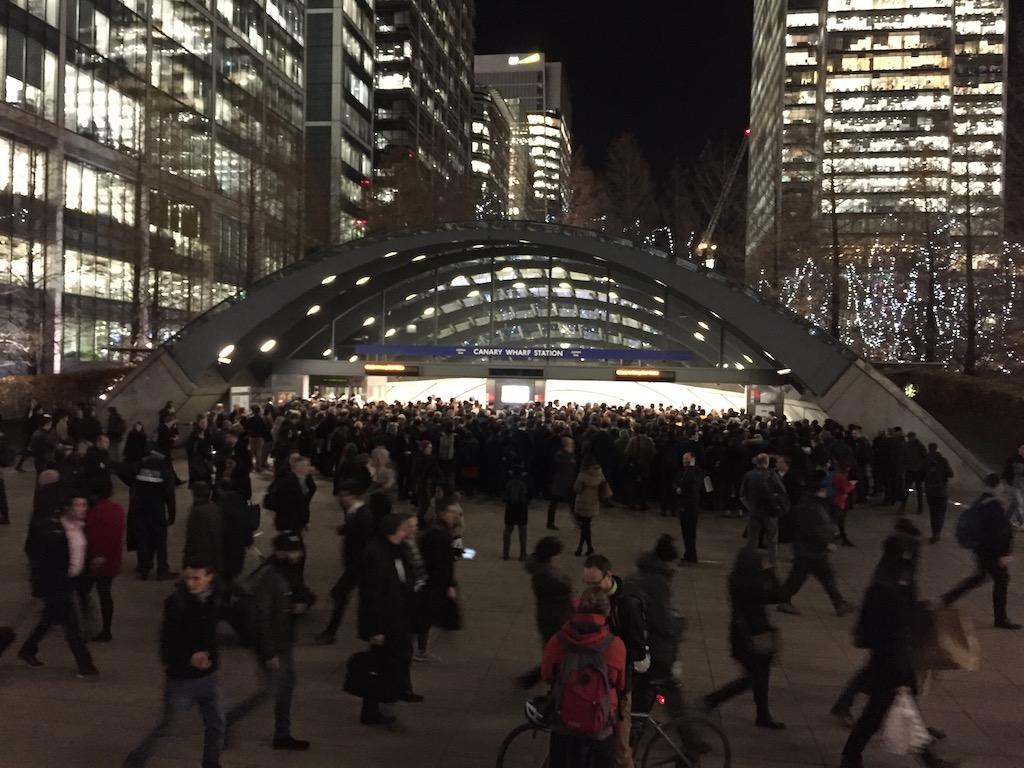
    Canary Wharf station crowd

    “I’m sorry but this bonus won’t be the megabucks you were expecting from your first job in the City of London” my boss said to me. I was 22 years old and I was glad to have a secure job with an old fashioned investment bank – we’d just been through the dot com crash and 9/11. When I was a younger man I erred on the side of caution. I had decided to quit doing IT consultancy and take a permanent job when I was 21 years old, because I could see the storm clouds brewing on the horizon. I sold out.

    The first couple of years of my full-time career were extremely frustrating. The speed that things got done at British Aerospace and the Ministry of Defence was painfully slow. I was already a very competent computer programmer before I started on a graduate training program as a junior programmer, so I’d already mastered the art of software development. There was very little to learn and my colleagues were intent on asserting their authority even if they were lacking any god-given talents – they were mostly insecure know-nothing fuckwits; bitter old men who spent most of their time energy trying to foil and thwart me because I was young.

    I then spent a year working for a startup before I went into IT consultancy, doing software development as a contractor. Those were exciting times where I learned a lot. However, I was still bored and quite unchallenged a lot of the time.

    The problem is that all software is essentially identical to a programmer. It doesn’t matter if you’re writing a computer game or torpedo guidance software for nuclear submarines… it’s all the same damn code. In fact, the best code a programmer is ever going to write is a computer game, because games programmers have to take advantage of the power of a computer to its maximum: sound, graphics and high-performance code which provides an audiovisual entertainment spectacle – a lot harder than anything else that a computer programmer can do.

    I’m a polyglot.

    That is to say I code in zillions of computer programming languages.

    But.

    They’re all the fucking same.

    All computer code compiles down to machine code ultimately, so whatever programming language you choose is just personal preference. There’s no point getting hung up about which particular language you have a fetish for, because they’re all the same under the hood. It all ends up as the same CPU instructions, at the end of the day.

    So.

    I decided to quit the rat race. I decided that I needed to get away from the profession which I’d already mastered long before I started my first full-time job.

    But the money.

    So. Much. Money.

    I was earning £470/day when I was 20 years old. I was working in Canary Wharf for Lloyds TSB. The money was transforming my whole identity and life prospects; my opportunities. I had won a golden ticket which admitted me to a socioeconomic group reserved for kids who went to private school and were otherwise bankrolled by their rich families. I’d smashed through the glass ceiling and broken into a world which I shouldn’t have been permitted to enter.

    Soon, skiing holidays and yachts. Soon, posh restaurants, taxis, fine wines and other accoutrements of the monied set, meant that I was wearing golden handcuffs. How could I give up this lifestyle?

    I hated capitalism; banking.

    I can’t believe how much I hated both enterprise software development AND the financial services industry. I buried my head in books about economic theory and the way the global financial markets operate, and the deeper I dug the more horrified I became by the whole charade. I couldn’t believe that the film It’s a Good Life portrayed a bank as a benign entity — lending out a grandmother’s life savings so that a sweet little young couple with a baby could afford to buy a house — when nothing could be further from the truth. Everything I saw was bullshit built on top of bullshit. Plus, I was bored. By then I was a senior analyst/programmer, but I hardly did any analysis or programming – we were just fat lazy capitalist bankers.

    Still I carried on, because the money was so good.

    I became involved with JPMorgan and the Depository Trust and Clearing Corporation (DTCC) and we processed over a quadrillion dollars worth of credit default swaps a year. 1% of a quadrillion is 10 trillion. So, if an investment bank loses a million dollars, that’s only 0.0000001%, which is what we call a rounding error. The numbers boggle the mind.

    I live my life by the numbers, despite the fact that it’s not much of a life at all.

    I earn something like 2.14 pence per second, which means that watching the pennies is a laughable idea. I’d literally lose money if I stopped to pick up a penny.

    It’s miserable.

    It doesn’t feel good.

    It’s inhuman.

    At least I’m no longer propping up and assisting some of the main players in the great global con which is capitalism and investment banking, but I’m not very far from ground zero. I’m still pretty close to the feeding trough.

    I have no idea what I’m doing, why, who it benefits, how I’d explain what I do to anybody, how I’d justify my existence on judgement day or how I’m able to look myself in the eye and feel good about myself. I don’t feel good about myself. I feel like a sellout.

    While others live authentic and fulfilling lives where they follow their dreams and pursue their academic fetishes or otherwise find work which is compatible with their identity and personality, I’ve been a mercenary for as long as I can remember. During my whole upbringing I was taught to value money ahead of everything else and to prioritise my earnings instead of my enjoyment of life, or any consideration of moral and ethical questions. My parents always put drugs and money as their number one prioriries – fuck children, friends, family and other things like that, so I suppose I’ve followed in their footsteps.

    The net result is this unfulfilling and frankly awful life, where I have no identity or set of beliefs which define me. I just do a job for whoever is going to pay me the most, but I don’t know why. All I know is that I learned to do this thing – computer programming – when I was a child and now it’s both the source of an obscene income, but also seems to be at the root of all evil – banking and capitalism could not survive without data, computers, software and the polyglot mercenaries like me who help them to ride roughshod over humanity.

    I keep telling myself: I only need to earn X amount and then I can quit the rat race and go and do something good; something meaningful; something rewarding. That day never comes.


    Tags:


  • An Essay on the Abolition of Interest Slavery

    This is a story about the money multiplier…

    Cash

    Let us imagine for a moment that I manage to obtain a banking license and start a brand new bank, but I don’t have any money. In this hypothetical example you want to buy a house valued at £100,000 – for the sake of easy maths – and you have a £10,000 deposit. Further, let us imagine that there are lots of people who would be glad to take out personal loans, overdrafts, credit cards and other kinds of borrowing, and pay high rates of interest. Let us set the central bank lending rate at 0.5%, the mortgage rate at 5% and the unsecured lending rate at 20%. With me so far?

    What I seek to prove to you is how capitalism is rigged so that those who control the money in the economy – the bankers and other capitalists – can make as much money as they want and not work at all, while the rest of us pay double. We pay with everything we earn and we pay again because we pay with our time and labour, which all ends up in the pockets of the capitalists.

    Here’s how it works.

    You go to your bank with your £10,000 deposit. You give the bank your hard-earned cash.

    Then, here comes the magic trick.

    Your £10,000 is a liability on the bank’s balance sheet. That is to say, if you were to deposit £10,000 the bank would be liable to pay you back as and when you demanded to have your money. However, the banks can do a little trick to turn a liability into an asset: It’s called the money multiplier.

    Banks only need to keep about 5% – or less – of the money that’s deposited with them. So the bank can lend out £9,500 of your £10,000.

    Then what happens?

    Well, that £9,500 comes back into the bank in the form of a deposit. Let’s say that our bank is paying a very generous 0.25% interest on their deposits. So, the bank has a £10,000 liability on one side of its balance sheet and a £9,500 asset – in the form of a loan – on the other side of its balance sheet, plus £500 in its reserve account. The loan brings in interest of 20% and the deposit attracts interest at 0.25%. The net monthly income for the bank is therefore £158.33 and the net monthly cost of interest payments is £19.79, yielding a very healthy £138.54 of profit every month for doing nothing.

    So that’s almost £140 profit every single month – £1,662 per annum – for doing absolutely nothing! But the best part is that it doesn’t end there.

    Because the bank now has a deposit of £9,500 it can now lend 95% of that. The bank can lend £9,025, making sure it keeps 5% in its reserves. The bank then has assets of £18,525, liabilities of £19,500 and reserves of £975. Somehow £18,525 has appeared out of nowhere.

    The two loans yield £3,705 a year, while the deposits only attract interest of £463, giving a net annual profit of £3,242.

    Three thousand quid a year for doing nothing!!

    Yes.

    That’s right.

    But it doesn’t end there.

    The bank keeps on lending money that it doesn’t have.

    A loan of £8,574, a loan of £8,145, a loan of £7,737, a loan of £7,351, a loan of £6,983… and so on.

    Eventually, the bank has made loans of nearly £190,000 from an initial deposit of only £10,000. The bank also has deposits of almost £200,000, but these attract very little interest. The annual interest payable on the loans is £38,000 and the interest payable on the deposits is only £5,000, so the bank has an annual profit of £33,000 for doing nothing.

    Now what?

    Well that person still wants to buy that house so the bank is going to need some money. Where’s it going to get the money? Well, no problem – it will borrow it from the central bank.

    The central bank will want some collateral as security against the loan, but that’s no problem because the bank has assets of almost £190,000 worth of loans bringing in £38,000 of anuual income, so it’s clearly a creditworthy institution. The central bank is happy to lend the bank £90,000 at interest of 0.5%. The bank can then use that money to buy the house, which it adds to its balance sheet as an asset.

    Now the bank owns a loan book of £190,000 worth of loans, cash reserves of almost £10,000 and a house valued at £100,000. It’s very important to note that the person who wanted to buy the house does not own the house – it’s the bank’s property!

    The bank now signs a mortgage contract with the house buyer for 25 years at 5% annual interest for a loan of £90,000. This loan will yield £4,500 per annum in interest payments for the bank, but it only costs the bank £450 a year in interest which it has to pay to the central bank, netting it a profit of £4,050 per annum, in addition to the £33,000 of other profit it makes from its loan book.

    Now the bank is making a total annual profit of £37,050 and they are doing nothing.

    Nothing.

    Meanwhile, the person who bought the house needs to earn at least £6,312 a year to pay their mortgage. The person who bought the house no longer has the £10,000 they saved up. The person who bought the house has not only handed over their savings and committed themselves to having to pay a large amount of money every month… now they have to go and get a job from the capitalists or else they’re going to be homeless! Remember, the bank owns the house, not the person who pays the mortgage – the witless idiot is now enslaved by capitalism.

    Also, there are more than 100 people who took out loans, credit cards, overdrafts, store cards and other forms of unsecured personal debt, who now have to work hard to pay off the loans at 20% interest. People have become indebted by an additional £190,000 because one person wanted to buy a house, but they didn’t realise they were going to get conned along with the rest of working-class society.

    The magic trick that gets used by the banks is called fractional-reserve banking, which it allows a very small group of capitalists who have a banking license to economically enslave the whole of society in debt-based indentured servitude.

    When loans are necessary to purchase basic survival needs – such as shelter – then there’s no other word for it except for slavery. Shelter is not a luxury. Shelter is not an optional nice-to-have.

    Insecurity about our shelter drives us into the open arms of the exploitative capitalists, who benefit doubly, because they earn money from us in the form of interest on loans and mortgages, and they have us right where they want us as an insecure workforce who desperately need to keep our regular income lest we be evicted and have our homes repossessed. The workers own nothing and the capitalists own everything. The rentier class have all of the wealth and do none of the work. Capitalism is the greatest crime ever perpetrated on humanity.

    I hope you’ve been able to follow along the basic maths, and you can see how rigged the game is. It’s quite simple to explain this horrific scam.


    Tags:

  • Universal Basic Income

    This is a story about late capitalism…

    Bank notes

    Having been part of the JPMorgan team who built a system to process more than a quadrillion dollars of credit default swaps per annum, and also the system to find out who was holding the pass-the-parcel when the music stopped, only to discover it was full of dog shit, I feel pretty responsible for the credit crunch and financial crisis, which has plunged us into a global recession many times worse than the Great Depression of the 1930s. I’m pretty disillusioned with capitalism.

    I’ve had front-row seats for most of the insanity of the past 25 years – dot com, Y2K, 9/11, credit crunch, financial crisis of 2007/8, Bitcoin etc. etc. – and I was a fully paid-up subscribing member of the 2% profiting handsomely from others’ misfortune with my snout deep in the trough.

    By 2008 I was sickened by the way I’d turned a blind eye and ignored my moral compass, because I enjoyed the wealth and privilege. I was able to buy a house, a yacht, a speedboat, sportscars and go on enough luxury holidays to help me set aside my misgivings about what the investment banks were doing to the global economy, by creating fabricated securities such as derivatives, which were somehow valued at a vastly greater sum of money than the aggregate value of all the precious metals, gems, land, property, cattle, food, commodities, industrial plant, machinery, companies and cash that exists on the whole planet. I was shackled with golden handcuffs – who in their right mind would give up their trophy wife and pull their kids out of private school, to slum it with the hoi polloi?

    I decided that I was sickened by the bullshit synthetic world of digital securities and digital bank balances, and the global computer network with all its software and data, which actually doesn’t create anything real or tangible. It seemed like the infamous tulip speculation bubble in the Netherlands during the 1600s. It seemed like utter insanity to place so much importance on a bunch of binary ones and zeros which exist nowhere but as a tiny magnetic bump on a disk platter, an electron in a memory chip or a photon in a fibre optic cable. The entire weight of the internet is estimated to be about the same as a golf ball, if you add up all the electrons. It’s madness to think that any of our digital scorekeeping – i.e. your bank balance – will matter at all when global warming really starts to bite.

    I quit my investment banking IT job at JPMorgan and I retrained as an electrician. I wanted to build real and tangible things with my hands. I wanted to learn a trade which couldn’t be outsourced or automated. I wanted to escape the virtual realm of high finance and software and into a field which could make a real difference in people’s lives. Try living for a day without your lighting, heating, hot water, power shower, cooker, dishwasher, washing machine, tumble dryer, kettle, toaster, fridge, freezer and the myriad other electrical appliances which you don’t even notice are there in your life, saving you untold time and physical labour.

    It turns out, we don’t value tradesmen as much as we value bankers.

    I could’ve scraped a living, but it was hard work with little reward. The work was dangerous and dirty and the general public expected to get everything for virtually nothing. I didn’t much fancy working my whole life with the threat of bankruptcy and my home being repossessed, never having enough spare money to enjoy what little leisure time I had. Economically, it wasn’t viable to be a tradesman, except as a kind of break-even hobby. It made no economic sense to use 100% of my brains and brawn, but receive so little reward.

    Subsequently, I’ve returned to making software systems for banks, doing so as a consultant and getting paid even more. I’ve been a leech on a leech, and the cash has poured in.

    Throughout this journey my priorities have completely changed. Instead of aspiring to acquire and accumulate vastly more than I would ever need, and fantasising about buying bigger and better houses, yachts and other material possessions, my fantasies have taken on a completely different guise.

    I’ve been fantasising about quitting the rat race, and having secure housing. I’ve been fantasising about having enough money to read books and write. I’ve been fantasising about having time and being free from the tyranny of the alarm clock and bullshit jobs.

    I’d live in a Soviet-style apartment and have beige products – no consumer choice – if I could be intellectually free. I’d travel on the bus and give up exotic foreign holidays if I no longer had to play along with the charade of late-capitalism, where we are all commuting too far, working too many hours, and living under constant threat of losing our jobs, losing our homes and subsequently being made destitute. Given the choice, I choose equality of outcome, not equality of opportunity.

    It seems pretty obvious that the equal opportunities experiment has run its course and it would be inhumane to continue. Free markets are efficient, but they are only efficient at stripping away people’s security, happiness, dignity and any hope of ever feeling content or satisfied. Capitalism is – by its very nature – a force which will price gouge humanity for the basic essentials, such as food, housing, transport, healthcare, medicine and to some extent education.

    Our poorest 50% struggle to afford the basics, while even the very rich are miserably struggling to attain the academic qualifications which will allow them to compete, lest they be trampled by the struggling masses, desperate to realise their opportunities. The competitive element of capitalism has turned us into slaves. Our lives our wretched and appalling.

    I desperately want to drop out of the rat race, but to do so would see me persecuted. I wouldn’t even be allowed to sleep rough and beg for food without being arrested and locked up. Society offers me no ability to house, feed and clothe myself, with any degree of security or quality of life. Working a zero-hours contract McJob is not going to earn me enough to pay rent and bills, buy food, travel to work and have any kind of life worth living. The theft of our time and freedom is an awful crime perpetrated against most of society. The chance to stop and smell the roses is denied to us when we do not have secure food and housing.

    The only viable solution that I can see is universal basic income (UBI). I just don’t see how else we’re going to be able to stop the terrible decline in living standards and save humanity from the tyranny of exploitation by the capitalists. It seems like we’re at breaking point when even the middle class children are becoming slaves to the capitalists, with enormous loans for their education, which might win them a low-paid job in a completely unrelated field from their university degree if they’re lucky – the unlucky ones end up unemployed.

    It’s a sad state of affairs when our fantasies revolve around basic needs, such as secure housing.

    It’s not my idea of a good time, sitting at home smoking cannabis and playing computer games, but I don’t see any reason why it’s not morally acceptable or right to allow people to do that, and not threaten them with homelessness and starvation if they don’t get a bullshit McJob and otherwise comply with the tyranny of late-capitalism.

    The idea that we live in a land of opportunity and that hard work will bring rewards has been proven to be a lie, and ever more-so during each passing year. It’s time to let people live lives of quiet dignity, rather than frantic futile desperation.

    It’s time to just give everybody enough money to live in peace.


    Tags:

  • Short & Sweet

    This is a story about burnout…

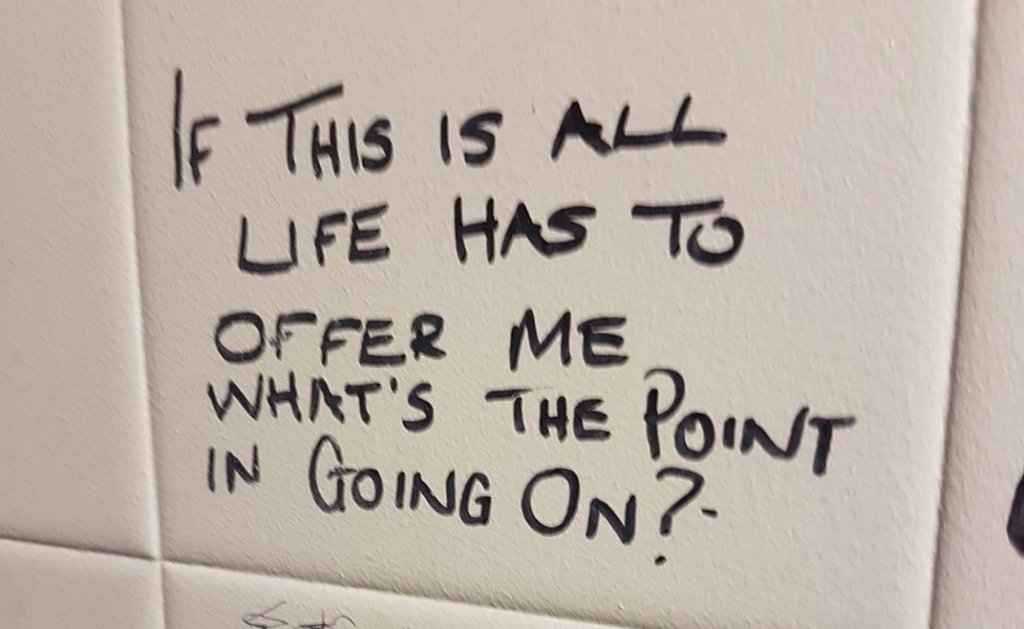
    Graffitti

    There’s a lie which we’re all guilty of perpetuating: Work hard and you can improve your life; if you work hard enough you can achieve anything. It’s not true and it’s wicked to repeat the lie, because we end up blaming ourselves for our appalling living conditions. “If only I’d tried harder in school” so many of us wail, but “if only I worked harder” is not something that a dying person ever says on their deathbed.

    It’s obvious that there’s a grotesque disparity between hard work, dedication, passion, productivity and personal wealth. If you’re going to try and argue that the owner of a large property portfolio works harder than a nurse, then you deserve a punch in the face. If you believe that the beneficiary of a trust fund, who doesn’t have to work at all, is somehow more deserving than the person who cleans toilets for a living, then you must be suffering from psychosis.

    I’ve heard it said that life is fair, because it’s unfair to everybody. Human afflictions don’t care whether you’re rich or poor – a billionaire still needs an ambulance and a cardiac surgeon if they have a heart problem, and money can’t buy them immortality. However, this does not seem to consider the great injustice of the world: that our efforts and actions will make virtually no difference at all. It doesn’t matter how badly you want to study at Oxbridge and enter a lucrative profession – if you were born into the wrong socioeconomic circumstances, you’re not going to be able to achieve your potential. It doesn’t matter how badly you want to elevate yourself from poverty, and how hard you work – you’re trapped and you’ll never escape.

    The media love to shove folklore heroes in our face. The media work very hard to assist our willing suspension of disbelief. Little girls think they’re going to be like Kate Middleton and marry a prince – the tale that we’re told is that she’s an ordinary girl and that any one of us could be plucked out of poverty, but it’s bullshit… she went to a very expensive private school. Little boys think they’re going to become ‘self-made’ men, and there are plenty of examples of entrepreneurs who claim to have not received any assistance in building their business empires, except that close scrutiny reveals that they had their risk underwritten by friends and family; they have access to wealth and connections that ordinary people don’t.

    You show me the success story and I’ll show you the unfair advantages that the person enjoyed. Nobody got to the top on merit. Nobody gets anywhere by working hard – it’s a lie.

    In fact, to work hard and assume that it’s going to lead to pay rises and promotions is a kind of mental illness: it’s called “Tiara Syndrome”. It’s a bit like the fantasy of a knight in shining armour coming to rescue us – a person who has Tiara Syndrome is expecting that somebody will come along and put a tiara on their head, just because they work really hard and they’re good at their job. Sadly, it doesn’t happen.

    Behind every fortune is a great crime. The only way to get ahead in life is to lie, cheat and steal.

    “The power of enclosing land and owning property was brought into the creation by your ancestors by the sword; which first did murder their fellow creatures, men, and after plunder or steal away their land, and left this land successively to you, their children. And therefore, though you did not kill or thieve, yet you hold that cursed thing in your hand by the power of the sword; and so you justify the wicked deeds of your fathers, and that sin of your fathers shall be visited upon the head of you and your children to the third and fourth generation, and longer too, till your bloody and thieving power be rooted out of the land”

    A Declaration from the Poor Oppressed People of England (1649)

    So, if we’ve been writing about this problem for the best part of 400 years, things must be alright, mustn’t they? Don’t fix what ain’t broke and all that. Why rock the boat?

    Life expectancies are starting to fall – people are dying younger. There’s a mental health epidemic. There’s an opioid epidemic. Living standards are declining. Billions of people live in poverty, and within our lifetime we’ll witness a Malthusian catastrophe that will dwarf any other mass extinction event seen on planet earth. If you thought the Ethiopian famine was bad, wait until you see what the next few decades have got in store for us. With high-yield modern mechanised farming techniques, we have plenty of food, but we are staggeringly bad at sharing things fairly. If you believe that the present situation of wealth disparity is acceptable, then you’re signing the death warrant for billions of people – a holocaust knowingly perpetrated on the human race, for no better reason than sheer unadulterated greed.

    Remember that none of the Nazis were allowed to say “I was just following orders” as any kind of defence. To fail to act and to say that you’re just doing what everyone else is doing, is immoral. To be passive and turn a blind eye, or to throw up your hands and say “there’s nothing I can do” is not acceptable. Yes, it’s our instinct to look after our own families, but the day is coming when that selfishness will backfire. Your kids are going to need a place to live. Your kids are going to end up in debt. Your kids are facing a shitty future, and your grandkids are going to inherit a completely hopelessly screwed situation – do you think they’ll agree with you, that it was right that you sat back and did nothing?

    If you think you’re helping your kids by instilling some kind of ‘work ethic’ in them and getting them to study hard, you’re making a mistake. Remember: nobody ever got anywhere by working hard. Hard work can be a useful thing, but we must consider what our labour is being used for – if it’s making weapons and oppressing people, then hard work is immoral when it contributes to the war on humanity. Sometimes the best thing to do is to withhold labour – to deprive the tyrants of the manpower they need to conquer and achieve world domination. Sometimes the best thing to do is conscientiously object; to nonviolently protest.

    I’ve thought long and hard about how I can make a difference. I thought about medicine. I thought about law. I thought about politics. I thought about science and engineering. I find myself in technology, and I’m desperately disappointed. No amount of smartphone apps and websites is going to address the problems at the root cause, which appears to be competition. Why must there be competition? Why do we have to measure and grade people, and declare that some of us are not worthy of consideration? Why do we have artificial scarcity and force people to fight over an artificially limited amount of so-called ‘money’? Why do we put artificial limits on the numbers of people who can pursue a certain professional discipline? Why do we want to have elitism? Why do 99% have to be told they’re shit and they don’t matter and they’re expendable, so that the 1% can feel special?

    I was on the fast-track. I was made unconditional university offers and allowed to skip entire academic years. I got onto a graduate training program 3 years sooner than any of my peers. I got pay rises and promotions so quickly that I was earning six-figures by the age of 20. I’m an example of one of those success stories that you might read about, that are supposed to make you believe that with enough hard work anyone can reach the top of the pyramid – be a CEO or a prime minister or a president, or a king or queen. It’s bullshit. Why would I turn on the system that’s given me everything I’ve ever wanted? Why would I bite the hand that feeds me?

    No amount of houses, sports cars, yachts, speed boats, luxury holidays and all the other trimmings of a wealthy life can ever make you quite feel like you’re content with the way things are, because you can never fully insulate yourself from the suffering and poverty that surrounds us. The fact that you’re reading this on a PC, laptop, tablet or smartphone, means that you’re one of the lucky ones – you’re somewhere that has electricity and the internet, which means there’s probably clean drinking water too. If you think about those less fortunate than yourself, they’re probably considerably well below your standard of living. Wherever you are in the pecking order, there’s always some unfortunate who’s desperately in need of help, because we’ve set up society to fail people – the very process of succeeding ourselves means trampling others underfoot to get ahead in life. It’s a zero sum game – for somebody to win, there has to be a loser.

    Life doesn’t have to be like this – so adversarial. There’s no limit on the number of “A” grades we can give out, or the amount of money we can print. There’s no limit on the number of doctors we can have. We live in a world that’s been artificially constrained to create winners and losers. There’s no need to have competition so inbuilt to society. Yes, we might see that nature is full of competition – survival of the fittest – but we’re not beasts. We’ve become super-intelligent and capable of producing vast surpluses of everything we need. With high-yield farming techniques and agricultural mechanisation, we can feed ourselves until we burst. With mass production and factories, we can have a virtually unlimited amount of goods – clothes and shoes and building materials, as well as pointless consumer crap that we arguably don’t need.

    Like the many utopians who I studied while doing the research for my second novel, I can see a world that’s jam-packed with all the technology that we need to improve the human condition, and elevate half the planet out of poverty. I can see that we already possess everything we need – we don’t need nuclear fusion or flying cars or any other sci-fi fantasies… we already have the means at our disposal, to improve our lives.

    As a person who wants to make a positive difference – to effect meaningful change – I find it very distressing that those who are working very hard to improve the world are being thwarted. Imagine all the effort put in by doctors, nurses, politicians, charity workers and myriad others who do what they do because they want to make the world a better place… but it’s not working, is it? The world is getting steadily more and more fucked up.

    If you think I’m seeing the world through a ‘blue filter’ and my depression tinges my perceptions, we only need to look at the hard data – homelessness, depression, anxiety, alcoholism, drug addiction, poverty, crime and all the other indicators we have of the health of our society are telling the same story: Things are getting worse, not better. Your kids will have to get into heaps of debt to obtain their education, and then they won’t be able to afford to buy a house. Your kids are going to struggle to find work. Your kids are going to struggle, full stop. Your grandkids are absolutely fucked. It doesn’t take a genius to extrapolate from the data and see where we’re headed. Things aren’t just going to magically improve without anybody doing anything. Don’t look to politicians to cure society’s problems. Don’t look to charity to cure society’s problems. Don’t look to the church to cure society’s problems. If any of the existing status quo members were going to do something to fix things, they’d have done it at some point in the last 400 years, wouldn’t they?

    I haven’t figured out what I’m going to do yet, but the best “not in my name” protest I can think of is to kill myself. The best way I can think of to register my objection with the status quo, is to end my life.

    Maybe I have a lemming-like instinct to kill myself because of overpopulation. Perhaps my genes are telling me to kill myself for the good of the species. Certainly the self-preservation instinct feels much weaker than the powerful emotions that tear through me, thinking about the futility of the oft-tried ways of making a difference.

    If there’s no opportunity to make a meaningful contribution, why go on?


    Tags:

  • High Availability

    This is a story about keeping the lights on…

    Bright city lights

    There used to be a time, not so long ago, when banks were closed at weekends and on bank holidays, and the only way to do financial transactions was with cash, or otherwise with cheques that used to take 3 working days to clear and could ‘bounce’. Today, we can do credit and debit card transactions 24 hours a day, 7 days a week, 365 days a year. Today money flows across the globe in the blink of an eye – pay for some sunglasses in Singapore and your current account will be immediately debited back home here in the UK.

    There used to be a time, not so long ago, when getting online meant phoning up another computer. We weren’t online all the time – we’d connect once in a while to check our emails, but the rest of the time our telephone line had to be left free so that people could call us. Likewise, computers weren’t always available to be connected to – the dial-up number might be engaged because somebody else was connected, or maybe the computer would be switched off or having maintenance done to it. Today, you can access websites 24 x 7 x 365 and you’ll never see a message that says the service you’re trying to access is offline because of maintenance or some kind of problem. That’s what “high availability” means.

    So, did we stop turning off the computers, or install some more phone lines or something? Did we get rid of the need to upgrade and do maintenance on the computers? Are the days of engineers having to take a service offline now gone? From a consumer’s point of view, that’s certainly the way it appears.

    In a post 9/11 world, disaster recovery is seen as an essential requirement for business. A terrorist organisation could blow up the headquarters of your bank, but to you as the customer, the computer systems have been designed so that things should function just like normal – business as usual as far as you’re concerned. Does that mean that computers are now bombproof? From a consumer’s point of view, it certainly seems to be the case.

    The reality is that behind the scenes there is a lot of redundancy and failover design so that if anything catastrophic happens, other parts of the system can take over from the parts that have failed. If a computer blows up, another one immediately takes over its work, seamlessly. If a hard disk fails, the data has been copied across a bunch of other ones so no information is ever lost. Software is designed so that it can be upgraded without the users even realising that it’s happened – you get new features on the websites you use all the time, but you never notice any interruption in the service. That’s high availability in action.

    Behind the scenes, there’s an army of developers, testers, devops, support analysts, network engineers, sysadmins, database administrators and other flavours of infrastructure engineers, who keep things running smoothly. To keep you plugged into the digital world 24 hours a day, allowing you to send and receive emails, text messages and naughty photos whenever you want, a huge stack of systems have been designed, built and maintained with the principle that they must be “always online”. It’s a bit like repairing a broken-down car while it’s still driving down the road at 100mph.

    The net result is that the main skill in IT is not creating the hardware and software anymore, but in keeping the lights on all the time – 100% uptime. Teams of people work in shifts around the clock just waiting for something to go wrong so that they can spring into action and fix it, even though faults are not fatal to the overall functioning of the system, and the users won’t even notice that there’s been a problem. Computers still fail and hardware still needs replacing. Things need upgrading; things need maintaining, but it all happens without anybody ever seeing a message that says “SERVICE NOT AVAILABLE”.

    Personally, I do not enjoy sitting waiting for something to go wrong. I’m currently working for a team whose role is to keep the lights on, and it got briefly exciting when the air conditioning failed and a whole datacentre shut itself down, but that was the briefest possible thrill. I’m like a firefighter in this modern world where modern fabrics, improved electrical safety and central heating systems mean that fire is an increasingly rare occurrence in the domestic home. I’m built to fight fires, but everything’s built to be so resilient. There are no crises that demand heroics anymore.

    I’m pretty much in the wrong job. I deal with machines all day long but I want to deal with people. I’m bored but banking is supposed to be boring – when it gets exciting it means stock market crashes and people not getting paid. I need variety but once you’ve grasped how to build a computer system, they’re all the same – I’ve built everything from torpedo guidance on nuclear submarines, to bus ticket machines and iPhone apps, and it’s all built exactly the same way. I am devastatingly depressed about my job. I think banking is 99% evil, with only 1% of it having anything to do with keeping people’s wealth safe from robbers or facilitating transactions that are easier than barter. I need to be solving problems, but I’ve already solved the same ones a million times, and if I do a good job upfront then there aren’t many to solve anyway. It’s a dismal existence.

    So, I sit at my desk and I get paid an obscene amount of money for doing nothing, just in case something goes wrong… which it very rarely does. I’m highly available, but like a disaster recovery site, hopefully I never have to spring into action, because things are really bad if I’m put to good use. It’s really horrible, sitting and waiting for something terrible to happen, and really wanting a crisis to develop because I’m so bored and under-utilised.

    I really need to find some kind of app which serves some kind of societal function, beyond stupid distractions from the point of living. Surely the point of living is to spend our brief time on this earth with our family and friends, eating, drinking and making merry, not chasing money and other made-up bullshit.


    Tags:

  • London is Full

    This is a story about immigration…

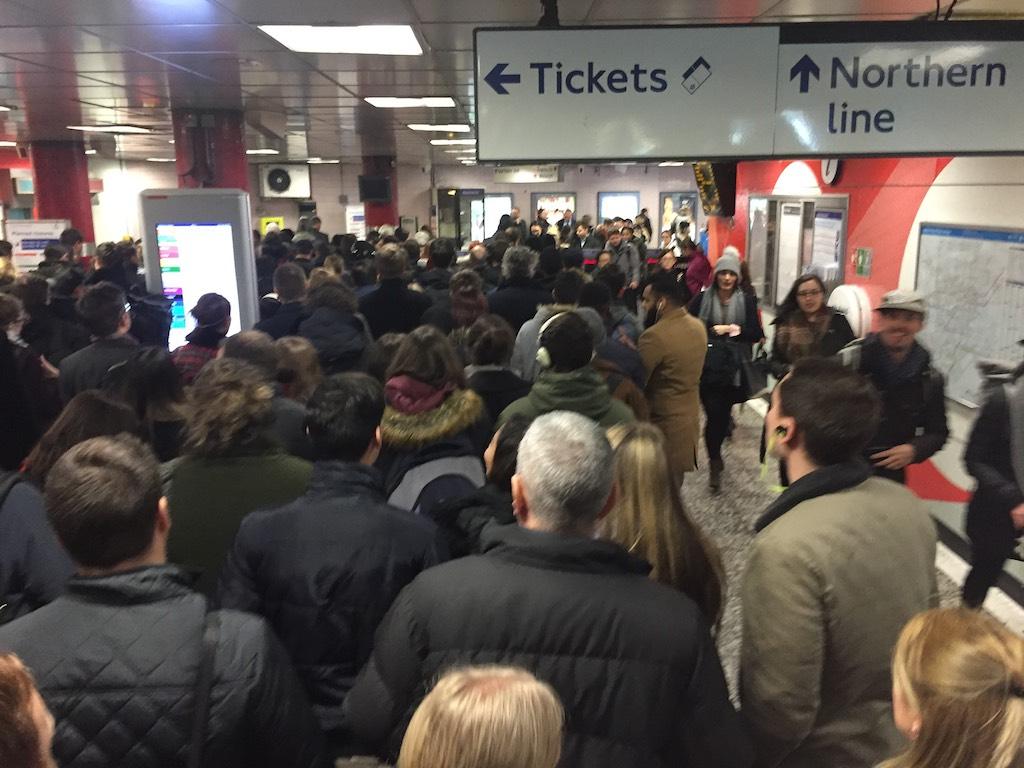
    Rush hour tube

    My journey home this evening took me from the western side of the Square Mile, along London Wall and past Moorgate, past Liverpool Street and into the East End. Suit-clad city workers scurried with their briefcases and brollies, desperate to return home to their families after a long day at the office. Overcoats were all navy blue, black and grey, in conservative styles designed not to attract attention; sensible haircuts, no piercings or visible tattoos.

    The crappy vegetable market that used to be virtually derelict now houses every designer brand and label that you could possibly imagine, from Barbour jackets to pairs of jeans which cost in excess of £200 a pair. Money is no object in the very place where a friend of mine used to sell knock-off copies of Calvin Klein underwear, three pairs for a fiver.

    The council flats – social housing – have all been sold off as part of Thatcher’s right-to-buy scheme, and all that money has flown off to the Spanish Costas, where the weather is better and the cost of living has remained lower.

    The East End boozer that I used to love because it was cheap and virtually empty except for a few local alcoholics, is now brimming with hipsters and charges more than £6 for a pint of beer. Instead of looking closed and disused the pub has had an expensive makeover and its customers are spilling onto the streets – standing room only.

    The pie and liquor shop, which sells jellied eels, is now a tourist attraction and there are people queuing out of the door, because it represents the very epitome of East London, despite the fact that East London is now epitomised by overpaid hipsters who do a bit of web development in trendy offices that used to be warehouses used by the cloth trade.

    Everything that the the slum-dwellers and council tenants wished to escape has now become fashionable and extremely expensive. To live in an overcrowded city that’s noisy and full of crime and pollution, seems like utter insanity. Why do people pay a premium to live in Central London?

    A hundred languages are spoken in London, which is double the number spoken in the next most multicultural city: New York. Within a ten minute walk of where I’m staying, I can eat food from at least 30 different countries. Away from the homogeny of the City of London, traditional dress indicates that there are ghettos where people are living very much as they would have done in the countries where their families originated – entire communities have been lifted and shifted to the centre of the UK’s capital.

    The Crossrail engineering project – the new Elizabeth line – will be jam-packed with commuters as soon as it opens. London cannot keep pace with the demands of its residents and workers. Infrastructure is creaking at the seams. Tube stations regularly have to be closed because of overcrowding. The roads are virtually at gridlock. The congestion charge and T-charge are doing nothing to change anybody’s habits. Deliveroo and Uber vehicles compete with black cabs and red double-decker buses, and more lorries than ever must deliver a relentless amount of ready meals and pre-prepared sandwiches for busy office workers who are too tired and stressed out of their minds to be able to cook for themselves.

    In a desperate struggle for space, gone is the spare bedroom. Gone is the place of your own. Gone is your own kitchen and bathroom. Airbnb makes every inch of spare space pay its way. Hostels and hotels are no longer viable business models. Everybody has to pay big bucks for barely enough space to sleep – we’re all living on top of each other; piled high.

    The official statistics say that London’s daytime population is ten or even twelve million. The truth is that nobody really knows. Every runaway goes to London. Every asylum seeker; every economic migrant. All roads lead to London, and London is where everybody ends up – the gravity is inescapable.

    I was working on a project which needed to work out how many people the company employed. The company who employed me thought they had about 700,000 people working for them, but the truth is that nobody really knew. You’d think such a thing would be easy, but it wasn’t. We had to use biometric data – fingerprints and facial recognition – just to stand a chance. Turns out, there are always more people on the payroll than you thought; more hands in the till.

    I work 0.3 miles from the Bank of England. You can never work more than half a mile from the Bank of England in the Square Mile, because it’s pretty much in the middle. It’s the feeding trough. All of us little piggies come to the feeding trough, because that’s where they make the money, and we get to gorge ourselves on it until we are fat.

    I keep coming back the City of London because capitalism keeps clinging onto power, and that means I need money. Where do you get money? The Bank of England and the City of London, of course – go and fill your pockets at the source of all the wealth in the country. The streets are paved with gold.

    One thing I notice when I keep leaving and coming back, is that there are always more and more people. There are huge skyscrapers springing up everywhere. I try to walk from one place to another via the same route I would have taken prior to the year 2000 and I find my way is barred. The shitty old office I worked in on Bevis Marks got replaced by a tower block that was supposed to accommodate 8,000 people, but has 12,000 working in it. There’s an insatiable appetite for financial services workers. I remember going home after the 9/11 attacks in 2001 and I’m pretty sure I had a seat on the tube. Things were civilised. There weren’t crowds of people. What I witnessed tonight – and every night – is far more harrowing in terms of sheer numbers of people competing with each other to get home; to get away from this place.

    When those two planes struck those two towers, we were convinced there were more planes headed for London. We were convinced that capitalism had had its day and that the subsequent stock market collapse had marked a changed mood – our appetite for the unrestrained free market had reached its limit. It seemed like the insanity of house price inflation and the asset bubble was going to burst. It didn’t.

    Now, we’re living in a strange type of dystopia. German bombs are not falling on London, but there’s a kind of resigned expectation that at some point terrorists are going to attack us. We go about our daily business with posters that constantly remind us to stay vigilant in the face of inevitable violence that will be perpetrated against the capital and its people. We are no longer living in Victorian Britain, but the slums are just as bad. Air pollution and overcrowding are terrible, and high stress jobs with long working hours has been proven to be a toxic health combo as bad as smoking cigarettes.

    For some, there will be a pot of gold at the end of the rainbow. London still holds the possibility of fame and fortune. Dreamers from all over the world beat a path to London, to attempt to make a name for themselves and line their pockets with money. If you can cope with the sensory overload, the invasion of your personal space, the danger and the stress, then you can get a real buzz out of pounding these mean streets. Fortune favours the bold.

    I had to get a tube train this evening, but the first one that arrived was too crowded for me to board. People behind me were pressed into my back and I was teetering on the edge of the platform. I asked if I could move back away from the edge, and one of the men who were shoving at my back looked at me like I’d asked if I could take a shit in his mouth. We gave each other an impassive non-aggressive stare, of course. Grudgingly, people allowed me to take half a step back from the brink of certain death. Reluctantly, I was given a few inches to spare between myself and the speeding trains and electrified rails.

    This is the world we live in. If you’re not living on the edge, you’re taking up too much space.


    Tags:

  • As Fast as Humanly Possible

    This is a story about the origins of [my] bipolar disorder…

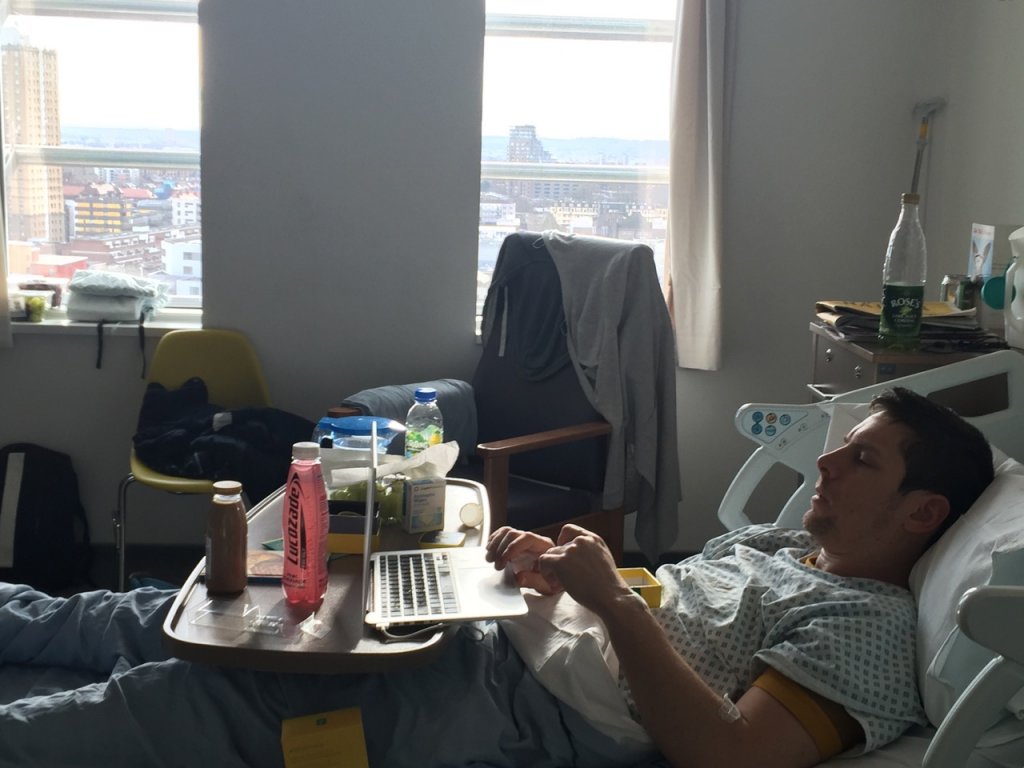
    Me in hospital

    Here are a couple of select conversations from the last year that might help you to understand the circumstances that influence my mood instability.

    Me: “I’d like to discharge myself from hospital, please”

    Doctors: “No. You are on a high dependency ward. You will die”

    Me: “It can’t be that bad. I want to discharge myself, please”

    Doctors: “Your kidneys aren’t working. You need dialysis. Your blood has dangerously high levels of potassium in it and you could go into cardiac arrest at any moment”

    Me: “But I need to go to work otherwise I will lose my job”

    Doctors: “You can’t work if you’re dead”

    Me: “I’m going to have to risk it”

    Why would I do such a staggeringly stupid thing? Why would I risk my life like that? It seems patently absurd, doesn’t it?

    For my whole career, bosses and shareholders have demanded only one thing: do more, faster.

    I decided that I was being exploited. I’m the one who makes the software. Without my software, there’s no product; there’s no business and there’s no profit. Without software that I’ve built, no amount of lawyers and salespeople and middle managers and jumped-up idiots with important sounding job titles, would have anything to do other than burn what little money the company had left. If the software is the product, then you’ve got nothing if you’ve got no software. If the software is what allows you to do thousands of times more volume than you’d be able to do without it, then you haven’t got a business if you haven’t got the software – your business model would collapse. Your business is software.

    I’m not saying that software is important. Software can’t build a house. Software can’t plant carrots. Software can’t dispose of your sewerage. Software is bullshit. However, most of the economy is bullshit – at least 85% bullshit here in the UK anyway.

    So, anyway, some jumped-up little twat with his daddy’s money comes up to me saying “I’m an entrepreneur and I’ve got a genius idea… I just need a geek to make the software”. On closer inspection the software is where the genius lies. When the business idea is examined with close scrutiny, it turns out that none of the important details have been figured out. Turning an idea into a working business – the execution – is something that gets figured out by the lawyers and software engineers. The “entrepreneur” just provides his daddy’s money, while he walks around with his chest puffed out pretending like he’s a serious businessman.

    The next thing that happens is that I say “how much money have you got to spend and when do you need to have a working product?”. The answer is always the same: “I haven’t got any money and I need it yesterday”.

    Where did the budget go for the software? It seems to have all been spent on employing a bunch of old schoolchums to do “brand consultancy” or “business development”. Basically, the directors fly all around the world attending conferences and “networking”, which is very costly because they’re running up huge expenses. Meanwhile, the geek is expected to churn out the software – “I don’t know what it is, but is it finished yet?” – as fast as they possibly can. It’s quite common now for very capable young computer programmers to work unpaid, or on slave wages, because they’re desperate to gain commercial experience. Some idiots even think that I’d enjoy working on a software project for free, like it’s a motherf**king hobby or something.

    So, I arrived at the situation where I would always work at top speed. I’ve pleased my bosses and shareholders, not because I give them what they want, but because I’ve generally been much faster and much cheaper than anybody they’ve used before. In short: I deliver.

    I was working so damn hard all the time and not seeing much of a reward for the dedication I put into my job, so I started to work for myself. I made software and I sold it. I made some iPhone apps and I sold them. One of my apps took me half a day to code and it was downloaded thousands of times. This made sense to me – the whole reason I work with computers is because they can do things while I sleep; a computer can perform many thousandfold tasks than I ever could. It makes sense that I would use a computer to leverage my talents and efforts.

    I didn’t quite understand that the whole reason why I came to be writing iPhone apps was because I’d been burnt out by my employer. I’d landed a hell of a project. The world’s biggest project, in fact – “Nick, would you mind creating us a system that can process a quadrillion dollars worth of credit default swaps, please? Have it done as soon as you can, please, there’s a good chap… we’ve got a global economy that needs wrecking”.

    I didn’t quite understand that I burnt myself out again writing iPhone apps. I coded as fast as I could. I catnapped and skipped meals. I worked 7 days a week. I knew that every moment that I wasn’t coding was another moment that my competitors were potentially going to release a similar app. I had to be first to market with my ideas. I had to be the first person in the Apple App Store with an app that did something that nobody else had thought of yet.

    I decided to start a proper business. I decided that I’d create a piece of software with a recurring license cost. I decided to create a piece of Software as a Service (SaaS) and then I’d be able to earn money while I slept, once I’d completed the system. I didn’t have any of my daddy’s money to spend though. I didn’t raise any money from friends and family. I just had me and my idea, my software engineering skills and 24 hours in every single day.

    I didn’t quite understand that I burnt myself out doing my startup. I didn’t understand that writing the software – the hard bit – was only the beginning of what I had to do. I had to raise investment to be able to market my product. I had to sell the product. I had to support the product. I had to do all the business administration. I had to raise investment to be able to afford to hire people, so that I didn’t collapse under the weight of all those competing demands. I didn’t go fast enough though, so I did collapse.

    With every burst of intense focus and effort, there would be a windfall. Particularly in investment banking, if you do a good job then you get a big fat juicy bonus. If you make an app that goes to #1 in the App Store charts then you get a windfall. Even if you do a startup, you can sometimes get a reward – my startup was at least profitable; investable.

    The pattern of behaviour was established. It made sense to me to work as hard and as fast as I could, because the rewards seemed to be there.

    When I run a software project – a team of people who work for me – then I put developer welfare as the top priority. I set realistic deadlines. I allow time for people to catch their breath. If the pressure starts to increase, then I move the deadline rather than asking people to work longer hours. Bosses should hate me, but I underpromise and overdeliver, and I run happy motivated high-performing teams. I get great feedback from the people who work for me.

    When I’m coding, I seem to forget about my own mental health. When I’ve got a tough deadline and a tough deliverable, I’ll work as hard as I can. I get scared. I think I’ve forgotten how to code. I feel like my skills are rusty and outdated. I feel old and useless. So, because of this fear, I go as fast as I possibly can.

    It hasn’t helped that I’ve never quite managed to gain a comfortable financial cushion that would allow me to feel like I can consider my health and general mental wellbeing, as well as just delivering the software. I always put work as my first priority.

    Me: “I’m going to go to London to do some IT consultancy for an investment bank”

    Psychiatrist: “But that’s what you always do, and you know it makes you unwell”

    Me: “But I need the money”

    Psychiatrist: “You need to look after your mental health”

    Me: “My mental health can wait. I’m nearly bankrupt”

    Psychiatrist: “Well go bankrupt then. Allow yourself time to recover”

    Me: “But then I’ll never be able to work in investment banking again”

    Psychiatrist: “That might be a good thing. It makes you unwell”

    Me: “Yes, but it also makes me rich”

    In the interests of completing the picture: I am not rich. The amount that I earn would make me rich if I could stay well for long enough to keep working, but the stress and the pressure also mean that I almost always get sick. It’s a horrible catch 22.

    So, I’ve completed another software system and it’s live – it’s up and running and people like it. My boss is pleased. Am I burnt out? Yes, I am a little. I had to bunk off work yesterday. In fact, I’ve bunked 3 out of the last 9 days. Is this the beginning of me starting to take a little more care of myself?

    The cycle is very much not over. I need at least another one or two decent length contracts before I have that all-important financial cushion. It’s going to take me until the end of the year to get back to financial security. It’s going to be months and months before the ever-present threat of running out of money goes away, even if some money is slowly starting to trickle into my bank account.

    It’s quite ludicrous that I was on collision course with certain bankruptcy, and now I’m solvent and I’ve delivered another project on time and on budget. Last year was the year where I gave up. Everything was just too damn hard. I had a great contract, then my kidneys packed up. I had an OK contract but the boss didn’t seem to realise he’d hired a bit of rock star at a bargain basement price. I got a contract, but I only just had enough money to be able to afford to go to work… I was running on petrol fumes.

    If you were to ask the most stable person you know to live my life, I guarantee that their mood would be unstable as hell. How can you expect anybody to go through the kinds of ups and downs that I go through, without accompanying high and low mood? My mood is a sane reaction to an insane world.

    I don’t think I have bipolar disorder. I think I’m a product of my environment.


    Tags:

  • Tortured Soul

    This is a story about the brain drain…

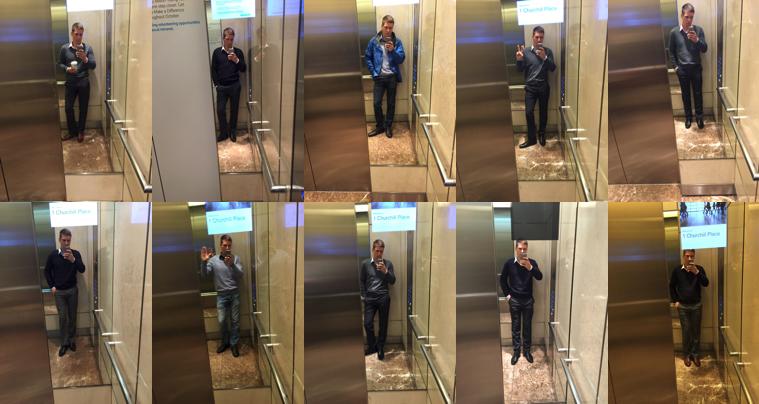
    Daily photo of me in a suit

    I should keep photos of myself wearing my ordinary work clothes off my blog. I should take more care to separate my professional identity from my blogging identity. I should ensure that Nick “Manic” Grant and the name that’s written on my CV can never be connected.

    To even write my proper name – as it appears on my passport and birth certificate – onto this website would risk appearing at the top of Google searches that prospective employers might do. I’ve been careful to separate my LinkedIn and never mention my consultancy company name. I rarely mention client names, and certainly not the names of clients who I wish to continue working for.

    However, I’m starting to slip. I’m starting to not care so much. I’m starting to prefer my real identity to the fake one that’s necessary to get a well paid job. I was finding it cumbersome to try to pretend like everything was A-OK in my world, and attempt to stop rumours spreading about me in the companies I used to work for. It was exhausting, trying to cover up my indiscretions. It’s been exhausting, leading a double life.

    One of the biggest double life issues I have is that I have nothing but contempt for capitalism and banking, and I completely fail to see the utility of computers and apps and software and data. Yes, in our super tech-heavy world, it seems inconceivable to say such a thing, but I definitely think humanity’s headed in the wrong direction. The mechanisation of farming and the industrialisation of food production are two examples of tech’s potential to feed the world’s hungry, but we’re not using tech to do that, are we? Instead, we’re using tech to create artificially inflated asset bubbles and an ever greater rich:poor divide. It eats me up inside that I’m involved, but I’m also shackled with golden handcuffs to the cash cow that provides a hefty income. What am I supposed to do?

    Many people think it’s churlish that I bite the hand that feeds me. Many people seem to think it’s not possible for me to have ethical concerns about what I’m involved in as a day job. Why don’t I quit and do something else? It certainly seems to upset me and cause me a lot of angst and anguish.

    As I’ve written before at length, I’m economically incentivised to get the most bang for my buck. I’m economically incentivised to sell my labour to the highest bidder. I need a place to live and food to eat, don’t I? So of course I’m going to plump for an employer who’s going to give me enough money to live, rather than one who would leave me starving, homeless and impoverished.

    I should be rich & retired by now. Here’s how my strategy to become rich went:

    2005

    Me: I’m going to invest all my money in gold

    Her: no

    Result: gold plus exchange rate of US dollar would have delivered 500% return on investment

    2008

    Me: I’m going to quit my job and write iPhone apps

    Her: no

    Result: we broke up. I made enough money from my iPhone apps so I didn’t have to work… until I got back together with her

    2011

    Me: I’m going to be CEO of a tech startup worth millions of pounds

    Her: no

    Result: my company continued to trade profitably and win big customers… without me

    2012

    Me: I’m going to invest all my money in Bitcoin

    Her: no

    Result: each Bitcoin is now worth $15,000. I would have paid about $5 for each Bitcoin. A $5,000 investment would now be worth $15 million

    2013

    Me: I’m going to invest all my money in Bitcoin

    Her: no

    Result: we separated and divorced. I’ve hardly had to work since then.

    In the absence of any good ideas to get rich quick, I always fall back on IT consultancy. I was getting £40 an hour when I was 19 years old, and then £470/day when I was 20. I was on-track to retire at 40, if I stuck with the consultancy gig, even though it was soul destroying.

    Now, it galls me that I’ve been so close to serious wealth so many times. It galls me that my ex-wife was such a toxic person that she’s fucked up a whole bunch of very decent ways I could’ve made a fortune. It galls me that I’m back doing the soul destroying day job, because my ex-wife held me back and sabotaged some very smart and shrewd plans I had. It galls me that I’m doing a job that I mastered a long time ago. It fucking sucks to only earn six figures and have to work like, maybe 35 whole hours or whatever, doing a really easy job.

    Of course, I’m deliberately writing in such a way that might cause offence. Many people dream of earning decent money, or having a shot at getting rich. Well, here’s the solution: do a job you really hate.

    I hate my job so very very much. I can’t believe just how flipping easy it is. I also can’t believe just how awful it is to be part of the capitalist machinery that’s wrecking the planet and the wellbeing of humanity. I’m involved in legal loan-sharking. I’m an accessory to murder. I’m guilty by association.

    I started out my career in defence – the military – so I’m no stranger to the ethical dilemma of working for a weapons manufacturer. I had to wonder to myself how I’d feel when lives were inevitably lost as a result of my software. It seemed wrong to think that I’d succeeded as an engineer, if I successfully brought about the death of the so-called ‘enemy’. My software was very definitely going to be used to kill people; nothing defensive about it at all.

    What should I be doing? Working for a charity? Working for an NGO or some other kind of humanitarian cause? What, like your chum Hugo from private school, who went off and built a school in Africa… he put that on his CV and now he works for a fucking bank because he’s not fucking stupid. Hugo tells all his chums that he’s done important work in the developing world, because he’s an insufferable tosspot; he’s a smug spoiled little shit, who’s never known anything other than wealth and privilege.

    You might hear my posh accent, or see the big name multinational companies I’ve worked for on my CV, and you might be mistaken for thinking I’m posh and spoiled and entitled and all the other things you don’t like very much. In fact, I’ve had to spend my whole career with ethical conflict in my heart. I’m a bleeding-heart liberal who puts on a sharp suit and pretends to be a banker. I have to think about the part I played in the 2007/8 financial crisis. I have to think about my part I played in the whole stinking shitpit that is capitalism. I could hide behind the defence: “I’m just an engineer” but I can’t.

    “I make the rockets go up. Where they land is not my department”

    I don’t think it’s a valid defence for an engineer to say that they’re apolitical; amoral. I write software that’s unopinionated, but I know what it’s going to be used for. I know that I’m donating my brainpower and brawn to an evil cause. I know that ultimately, I’m helping the rich get richer.

    I spend my days somewhat outraged that my time’s being wasted on trivial bullshit, that contributes nothing to society except for improving the apparatus that oppresses the planet’s poor people – tools to better extort money out of the 98%. I spend my days frustrated – I want to be doing something worthy, but I can’t.

    Of course I’m not going to jack in my job and go work for a charity. Charities pay shit money. Of course I’m not going to work for charity. Charities have failed to deliver any meaningful change. Impoverishing myself is the world’s most stupid first step towards any meaningful change.

    I’m frustrated and upset, because my ingenuity was thwarted so many times by my ex-wife that I’m now exhausted. I’m not a young man anymore. I was lucky enough to have a couple of moments of glory that proved my point – I can build valuable stuff that works – but now I don’t have the energy or the financial security to make another foray into something more worthwhile than the bullshit that passes for my day job.

    I’m trapped by debt that I ran up when I got sick. I’m trapped by the capitalist trap of high living costs. I’m trapped by the need to speculate to accumulate, but I’ve got nothing to speculate with. I’m hoisted by my own petard. The irony is not lost on me, of course.

    It’s torturous agony, working a job that I mastered 21 years ago. It’s torturous agony, solving the same problems that I already solved a million times over, knowing full well that everything is doomed to the same fate. Of course the global financial markets are going to collapse again, imminently. Of course, the whole bullshit system can’t be propped up anymore. Of course, the bubble has to burst. Bubbles always burst eventually. It’s physically painful in a way that’s hard to describe, knowing that the whole ridiculous house of cards is going to come crashing down again at any moment. I know it’s just anxiety and stress and depression, but it’s not made any better working for an investment bank, doing the same bullshit job that I was doing – I was so close to ground zero when the whole fucking financial crisis happened. I was feeling ethically challenged 10 or 11 years ago. I was feeling ethically challenged 21 years ago. Fuck my life, that I’m back doing the thing that I hate most, because it’s an economic necessity.

    Who’s to blame? Me presumably.

    Fine, pin it on me. I’ll take the rap.

    Imma kill myself.


    Tags:

  • Performance Enhancing Drugs

    This is a story about arms races…

    Pool table

    Being the only honest player in a game where everybody else is cheating is a fate worse than death. Where do you draw the line for cheating though?

    When playing pool, it’s a well known phenomenon that there’s an optimal level of intoxication to be a better player. Alcohol relaxes you, which means your muscles are less tense and the action of your arm should be smoother, delivering a straighter strike to the cue ball. Is it cheating to have a cheeky couple of pints when you’re playing pool down at the pub?

    Computer programmers are machines that turn coffee into software. Stimulants like caffeine and the other amphetamines – caffeine being indistinguishable from amphetamines when given intravenously – are well known for improving concentration. If most programmers are gulping strong coffee all day long, how’s anyone who’s caffeine-free going to compete with the rest?

    The combination of caffeine and glucose is proven to improve athletic performance by a remarkable amount. Given that energy drinks are not banned and can even be sold to children, how is anybody supposed to compete at sports unless they’re guzzling Red Bull?

    There’s a great deal of pressure on me to perform at the moment. My entire future rides on me doing a good job at work. If I fail, I go bankrupt and I become a leper: unable to gain well paid employment or even have a mobile phone or broadband contract, let alone rent an apartment.

    Therefore there’s a temptation to use substances to help me perform at the top of my game. With a strong coffee in the morning, I’ll be able to concentrate on writing code all day. With a few glasses of wine or a sleeping pill, I’ll be able to unwind and relax after a day of hacking away at complex computer systems. Uppers and downers. Round and round. Highs and lows. This is the life that we should all lead, isn’t it?

    I’m staggeringly well paid for what I do. Why would I want a lower paid job? Why would I want to be on average Joe wages when I could earn five times as much doing the same job? Why would anybody deliberately impoverish themselves? However, my high-risk, high-reward strategy demands that I perform to the best of my abilities. Without substances, would I have been able to get my foot in the door and hang on to a highly sought-after job?

    Thus, caffeine, alcohol, sleeping pills and tranquillisers circle like vultures. I need the effects of substances, in order to cope with the life that I’m built for – I’ve been in this career for over 20 years. How am I supposed to cope without the unhealthy coping tools that I used successfully… until I had a breakdown; a burnout.

    What goes up must come down. The candle that burns twice as bright burns half as long.

    It’s better to burn out than fade away.

    Even music has become performance enhancing. I listen to high-tempo dance music – blasting away at 130 beats per minute – in order to focus my mind and put myself into a trancelike state where I can concentrate on software code for hours and hours. What must the effect be, to be in such an unnatural state for so long?

    What must it be like to have a job that brings you into the unpredictable chaotic world of people and human interactions? What must it be like to have a job that’s full of intrigue and unexpected surprises? What must it be like to never have to fight your constant existential crises and suppress all invasive musings about the absurdity of existence, because you’re just a rat waiting for the next food pellet: when’s the next order going to arrive; the next email; the next patient; the next customer?

    As I do battle with boolean algebra every single day, there is no comforting wiggle-room of the humanities – computer says yes or computer says no; true or false. There are no shades of grey in my world – there’s a right answer and a wrong answer. I sit in front of three screens and I try to figure out the right answer. I can go for weeks without speaking to another person. It fills me with terror sometimes, thinking that the ultimate arbiter of whether I’ve succeeded or failed is a cold, rational and unthinking machine. It’s like playing chess against myself.

    Some would say I’m a success story. Isn’t the whole reason for paying attention at school and trying hard during your exams so that you can land a good job and get promoted into a position of seniority? Aren’t we all trying to climb the greasy pole and get a big fat wage packet at the end of the working week? Aren’t we all trying to compete and win? I won… didn’t I?

    I wouldn’t be so churlish as to say “it’s tough at the top” and of course, I’m laughably far from the top, but I’m sure there would be a plenty long queue of people who’d swap their salary for mine, so let’s not be too hasty. It’s worth considering just how destabilising my career choices have been to my mental health: feast & famine, boom & bust and the ever-present pressure to perform. Alcohol and caffeine are ubiquitous – as they are everywhere – but you haven’t seen alcoholism in the workplace to quite the extent I have, unless you’ve also worked in the City of London in investment banking.

    They say that banking greases the wheels of capitalism. Alcohol greases the wheels of banking.

    The most successful strategy that I could play right now would be to have have two or three strong cappuccinos every day at work, and at least a bottle of wine every night. I’m sure my career and my bank balance would benefit handsomely from such a strategy.

    I do worry about my mental health, but in this capitalist society, who has the time & money to stop and think about such a trifling thing? I’m reminded of this time last year, when I had to discharge myself from hospital against medical advice, to go chasing a banking IT contract. Money, money, money. Find an edge. Do whatever it takes!

    You understand, it’s not greed that drives me. This is the world we live in. We all need a competitive edge. I have no idea how to function in a world where I’m not compelled to use uppers and downers to help me perform. What do people even do without their morning coffee and their evening wine?

    I earned well over a thousand pounds for two days sitting in front of a computer screen thinking “what the f**k am I doing?”. I’m winning aren’t I? This is what winning looks like, isn’t it?

    I’m winning… aren’t I?

    Before I know it, I’ve had more than the magic two pints and I can’t hit a ball to save my life. I’ve gone beyond the sweet spot. I’ve had too much to drink and I’m just drunk. There’s a fine line between performance enhancing, and substance abusing. I wake up one morning and all I’ve got is a habit. A stimulant habit. An alcohol habit.

    We can all reach for substances to give us an edge, but you’re playing a high-stakes game. The bigger you are the harder you fall.

    It’s almost impossible to change the habits of a lifetime. Of course I’m going to reach for substances when I’m struggling. Of course I’m going to return to the same boom and bust lifestyle that’s served me so well, and also threatened to destroy me.

    Roll the dice.


    Tags:

  • Drug of Choice

    This is a story about cyclical patterns…

    Me with pills

    In 2014 I was homeless and addicted to drugs. I got myself a job at a bank, got myself a place to live and paid off all my debts. Then, I lost my contract. I went to a shop in Soho and bought two packets of a legal high powder and proceeded to undo all my hard work. Within a matter of weeks, I was back on the supercrack.

    In 2015 I was homeless and addicted to drugs. I got myself a job at a bank, got myself a place to live and paid off all my debts. Then, I lost my contract. I went online and bought two packets of legal high powder and two packets of legal benzodiazepine tablets. Within a month, I was back on the supercrack.

    In 2016 I had a lovely apartment. I was clean all summer. I went on holiday. I met an amazing girl who I was totally in love with. I wrote my first novel. I had a brilliant Christmas with my girlfriend and her family. Then, I got myself a job at a bank. My left leg swelled up to twice the size of the right leg, both my kidneys failed, I was put on emergency dialysis and I had to be admitted to hospital for a couple of weeks, on a high dependency ward. Then, I lost my contract. Within a fortnight I was back on the supercrack.

    In 2017 I had a lovely apartment. I took supercrack. I tried to quit the supercrack. I got depressed. I tricked my doctor into giving me California rocket fuel – a combination of venlafaxine and mirtazepine antidepressants. I went hypomanic and split up with my amazing girlfriend. I bought enough supercrack to last me two years. I went insane with stimulant psychosis and was thoroughly beastly towards my amazing girlfriend. I ran out of money. I moved to Manchester. I got another girlfriend. We broke up. I tried to kill myself. I spent a couple of days with a machine breathing for me in intensive care. I got sectioned and got locked up on a secure psych ward. I moved to Wales. I wrote 42,000 words of my second novel. I got myself a job at a bank. There isn’t enough time left in 2017 to get back on the supercrack. I’m worried I’m going to relapse in January. I haven’t lost my contract yet.

    Fluid in my leg

    If we dip into each year a little bit more closely, 2014 was a really dreadful one. I was an inpatient for about 14 weeks. I lived in a bush in Kensington Palace Gardens and slept rough on Hampstead Heath. I was in two rehabs. I lived in a 14-bed hostel dorm, but that was actually one of the highlights. I abused a lot of benzodiazepines and amphetamines, as well as the supercrack. I got in trouble with the police. Twice.

    2015 looks tame by comparison. Although I abused stimulants and ‘downers’, I had a couple of visits to a lovely family in Ireland, who looked after me. Strangely, it was working 12 hour days and working 7 days a week that exhausted me and tipped me into hypomania. I spent a week suicidal on a psych ward then suddenly decided to fly to San Francisco. I went straight to the Golden Gate Bridge, which I had contemplated jumping off. I was sober for 120 consecutive days. I deliberately got my contract terminated, because I had ethical objections to what the bank I was working for was doing. I started blogging.

    2016 is unusual – perhaps there is no easy pattern we can spot – because I got myself clean and into work much earlier than I’d managed in previous years. I worked a whole contract – notably not for a bank – without going mad and getting sacked. I got a good reference and my team were really pleased with the way I ran the project. My life was quite stable. However, I was a sneaky bastard. I was using supercrack and benzos in secret, and lying to my amazing girlfriend to cover up my drug abuse.

    2017 was off the charts. I’ve never been so sick. I’ve never been so close to death. For the first half of the year I had binge after binge after binge. I abused opiates, sleeping pills, tranquillisers, club drugs and stimulants. My drug abuse was definitely going to kill me. I had a physical dependency on benzodiazepines that looked impossible to cure – how was I going to escape from the death trap? I decided I couldn’t escape, so I took a massive overdose. The hospital gave me a 50:50 chance of pulling through.

    I’m worried that I’m repeating old patterns of behaviour. I always go back to the banks when I need money, because they pay so well and it’s the quickest way of digging myself out of debt. I’m living out of a suitcase, moving from AirBnB to AirBnB. It’s exhausting and stressful: factors that tipped me into hypomanic insanity back in 2015.

    What is unusual is that I’m going into the New Year with a contract in place: I have my job and it’s going well. I’m starting 2018 with money on the way, as opposed to the fear of bankruptcy and eviction. I’m going into next year with far fewer stresses than I’ve had for a very long time. Perhaps it’s good that there aren’t even any girls in the picture at the moment. Love and sex always have a bit of a destabilising effect on me.

    Writing this summary of my hit-and-miss boom-and-bust crazy life, I wonder if I’m doomed to forever repeat the pattern.

    One thing that’s notably different this year is living with a family. I care about them. I imagine what it’d be like if the kids asked “where’s Nick?” and the answer was that I was dead, or as good as dead because I’d relapsed onto supercrack.

    This year, I quit supercrack, tramadol, codeine, dihydrocodeine, diazepam (Valium), alprazolam (Xanax), zolpidem (Ambien), zopiclone and pregabalin. I was prescribed venlafaxine, mirtazepine and lamotrogine, but I don’t take any of them now. I had 30 consecutive sober days during October. In fact, I was sober from more or less the start of September to early November. My brain has been completely drug-addled at times, but I’m clean as a whistle at the moment – I’m unmedicated and I’m not taking any mind-altering substances. I don’t drink caffeinated beverages.

    I’d like to tell you that I feel wonderful, but I don’t. I have a cold. It’s winter. Winter is shit.

    You might look at all the times I’ve tripped up and conclude that I’m bound to trip up again. However, you might look at all the things I’ve fixed and conclude that I’m pretty good at fixing up my life when it’s fucked. All I’ve got to do is bring together all the different elements: friends and family, work and home, money and rest and relaxation, stability and exercise and hopes and dreams, love and romance and sex. Easy, right?

    If you’re wondering what my drug of choice is, and thinking that it’s supercrack, you’re wrong. Look more closely at the picture at the top of this blog post. What’s that thing in-between my legs? It’s not my male member, it’s a wine glass.

    Hello wine my old friend

    With closer examination of my entire adult life, we can see that alcohol features heavily. In fact my latest job came about as a result of being friends with a lovely guy who’s an alcoholic. We spent a week getting pissed, when I was supposed to be finding my feet with the new job. Somehow, I’ve managed to drink my way through a very successful career. Without booze I’m somewhat out of kilter. Without booze, how would I self-medicate for my mood fluctuations?

    Yes, without booze, my bipolar disposition rages out of control. I work too hard. I take everything too seriously. I fly off the handle.

    I’m not genuinely suggesting that booze is harmless or the cure of all ills, but it’s been such a big component of my adult life that I don’t really know how to cope without it. How would I have survived the recent stresses and strains of a 2,500 mile round-trip, to go and gather money from the latest bank I’m working for, without alcohol? How would I square away my deep unhappiness with the work I do, with the need to earn money, if it wasn’t for drowning my sorrows? Alcohol might be a terrible solution, but it’s the one I’ve got and I know it works.

    Is it lunchtime yet? I’m not an alcoholic, because I don’t drink in the morning. I just make sure I lie in bed until it’s after midday.


    Tags: