economics – Nick Grant

Tag: economics

  • Lightning Rod

    This is a story about empathy…

    Clouds

    I sometimes wonder whether I caused myself some long-term health damage by taking ecstasy tablets – MDMA – every weekend for approximately 18 months, when I was in my late teens. I think that whether it did or didn’t affect my neurological development, it certainly affected my personality and outlook; my approach to dealing with other people. I’ve adopted my attitude towards openness and honesty as a response to the empathy and trust I felt, due to the effect of mind-altering substances. I liked connecting with people at a very profoundly open and unguarded level. I liked putting my faith in humans and assuming that nobody wanted to hurt me.

    The net result in later adulthood has been a rather extreme set of values, by which I live my life. I’ve always favoured trust and a kind of blind faith that nobody’s going to screw me over. Throughout my twenties and thirties, I’ve always had a belief that I don’t need to bother protecting myself.

    It seems as if I made a decision about what’s important and what isn’t important. Like, I spend very little time deliberating over how to save a few pennies buying a particular food item. I spend very little time doing my taxes and other administrative tasks. I spend very little time on anything which doesn’t have a significant purpose. I don’t understand why people spend such an extraordinary amount of time doing things which are unpaid, unprofitable and are simply busywork.

    I flit between two modes: hyper-focussed, or incredibly bored and distracted. When I’m in the latter mode I feel hyper-receptive to current affairs. I feel as though world events are far more important than any of the daily nonsense in my life. I struggle to reconcile the absurdity of capitalism, rent, money, jobs and other trifling things, with climate change and the billions of people who are hungry. Entire days or weeks disappear and I seem to have done nothing more than become engrossed in the news, angered and saddened.

    The circumstances of my adult life have mostly sidelined me, with me helplessly spectating from my comfortable office. However, I’m acutely aware that my position in some very large organisations means that I’m complicit in the suffering that I see. I know exactly how close I’ve been to the epicentre of seismic world events, which have been catastrophic for humanity.

    I suppose that the physical damage that I’ve wrought, through pollution and war, is hard to connect with my day job, but it’s not hard to see that I’ve been very close to the money, which has greased the wheels of capitalism. The nature of my crimes against humanity are so hard to explain and esoteric that it would be easy for me to let myself off the hook, but if ever there was a case of a global conspiracy, it would be my participation in the brain-drain which is global technology, and its abuse as a mechanism of enslaving everyone.

    It seems harmless enough, all this geek stuff, but then I see the dreadful things which the internet has inspired people to do. I read the dreadful things people write and share with each other. I read the dreadful ideologies and manifestos of dreadful people. I see how the internet has connected dreadful people together, amplifying their dreadfulness.

    “Guns don’t kill people, people do” goes a popular slogan, but it’s not true… the people who make guns are just as culpable as the people who use them. The same has got to be said of social media influencers and the platforms they use. What started as a network for academics to share research has been invaded by the masses, and they’re not interested in improving their minds: they’re vile hateful people who gang together with like-minded dreadful shits.

    The internet has become highly efficient at refining both the best and the worst ideas. The most depraved and disgusting things exist and thrive on the internet in frighteningly huge numbers. The internet has turned one person’s subconscious bad thought, which lived safely in their brain, into a collective thought which is broadcast across the globe. It’s strange saying this as a libertarian left-leaning engineer, but I kinda feel like humanity is not mature enough to have the internet.

    I’m very well aware that my sanity has been very questionable during the last 6 years and my grip on reality is probably tenuous at best. I’m very well aware that my mental illness means I must surely think more like a terrorist or some other enemy of society, than I do like a regular person. I read about the world’s worst monsters and I check myself for similarities: delusions of grandeur, paranoia and irrational hatred of certain groups of people.

    I groan and hold my face in my hands when I remember things I’ve said and done. I know that I’ve been through some periods when I was ranting and raving about things. I know that my thoughts were an incoherent jumbled mess at times. I know that during very bad episodes of mental health problems, I’ve struggled with delusions of grandeur and paranoia. I can remember it all very clearly and I’m very embarrassed by my own behaviour.

    Today, I blend it fairly well with ordinary society. My colleagues at the office seem to have readily accepted me as ‘normal’. A substantial number of people deal with me and find my behaviour to be normal.

    Internally, I find it hard to process everything. My brain mostly screams that I should be doing something – anything – in reaction to the world I observe all around me, but I deliberately subdue my instincts because I’ve learned that if I keep still and keep my mouth shut, vast wealth floods into my pockets. I’m essentially bribed into knowingly participating in the maintenance of the status quo.

    It’s quite hard to sit and read the news and not react.


    Tags:

  • Misuse of Drugs

    This is a story about fit for purpose…
    Prescription medications

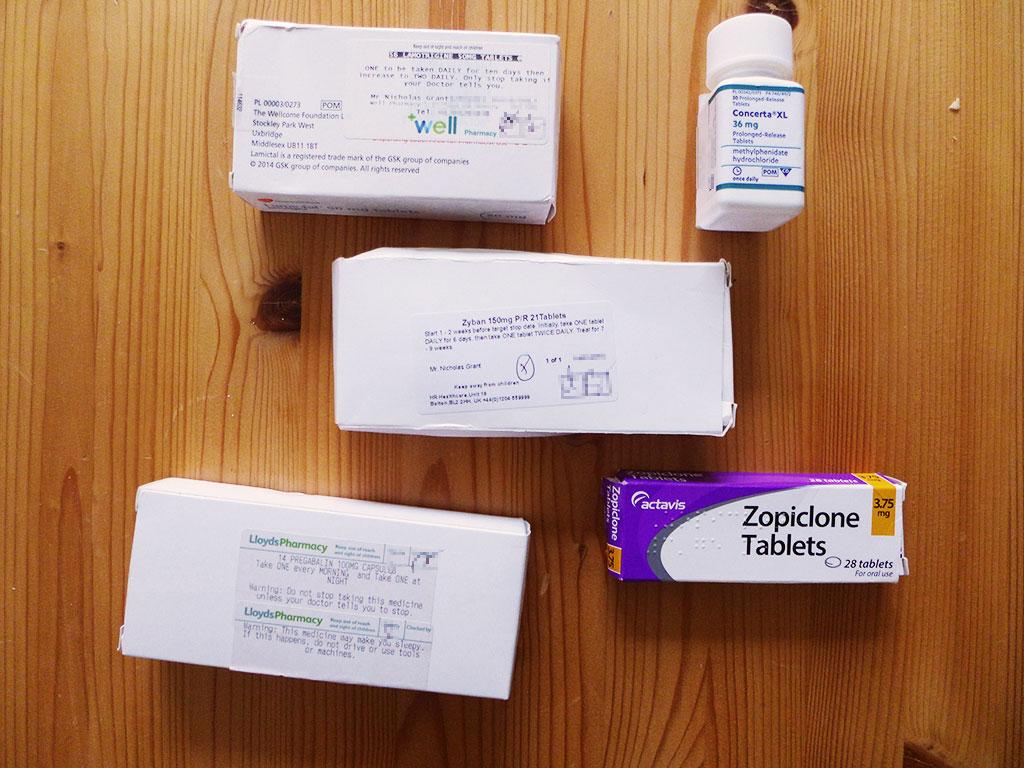
    Here are a range of prescription medications. Three of them are illegal to possess without a prescription under the Misuse of Drugs Act, because they are scheduled as “class B” and “class C”, respectively carrying a 5 year prison sentence, a 2 year prison sentence and an unlimited fine.

    So, 3/5ths of the medicines pictured here could see me locked up for somewhere between 2 and 5 years, if I didn’t have a prescription.

    The medication at the top of the picture is lamotrigine, which treats bipolar depression, as well as epilepsy. It has no abuse potential, but it does carry a high risk of causing a fatal skin rash.

    The medication in the middle of the picture is bupropion, which treats addiction to nicotine. It has no abuse potential, but it also carries a high risk of causing seizures, which might be fatal.

    The medication in the bottom-left of the picture is pregabalin, which treats neuropathic pain. It is addictive and can be abused. Pregabalin is a “class C” controlled substance, and anybody caught in possession without a prescription, will receive 2 years imprisonment and an unlimited fine.

    The medication in the top-right of the picture is methlyphenidate, more commonly known as Ritalin®, which treats Attention-Deficit-Hyperactivity Disorder (ADHD) and Attention-Deficit Disorder (ADD). It is addictive and can be abused. Methlyphenidate is a “class B” controlled substance, and anybody caught in possession without a prescription will be imprisoned for 5 years and receive an unlimited fine.

    The medication in the bottom-right of the picture is zopiclone, which treats insomnia and other sleep disorders. It is addictive and can be abused. Zopiclone is a “class C” controlled substance, and anybody caught in possession without a prescription, will receive 2 years imprisonment and an unlimited fine.

    So, if I didn’t have a prescription for all the medications on this table, I could be facing 9 years in prison and an unlimited fine, should the judge decide that my sentences should run consecutively, not concurrently, due to the gravity of my crime.

    Yet, millions of UK citizens receive the medicinal benefits of pregabalin, methylphenidate and zopiclone, and the quality of their lives is greatly improved. These tablets were developed as medicines by pharmaceutical companies, to treat medical problems. Substantial empirical evidence was gathered in many controlled trials, to prove that these medicines were safe and effective at treating the medical problems they have been licensed for.

    Indeed, these medicines have unexpected benefits beyond the purpose they were licensed for. Lamotrigine improves sleep quality. Bupropion is a fast-acting non-drowsy antidepressant, which also increase libido and enjoyment of sex. Pregabalin reduces anxiety and aids sleep. Methylphenidate improves concentration, allowing students to study harder and for longer periods. Zopiclone can prophylactically prevent psychosis and mania, by preventing sleep deprivation.

    It is very hard to argue that the Misuse of Drugs Act and the Psychoactive Substances Act are successful laws, because the evidence shows that the use of mind-altering substances remains entirely unaltered by legislation which seeks to discourage that behaviour, and harshly penalises those who break the law.

    If I approached my GP and asked for zopiclone to help me sleep, methylphenidate to help me concentrate at work, pregabalin (or any benzodiazepine) to treat my anxiety and zopiclone to treat my depression, they would flatly refuse all my requests.

    My GP would tell me that zopiclone is too addictive, despite my insomnia ruining my life. My GP would tell me that methyphenidate is too addictive, despite my inability to concentrate impairing my ability to be productive at work. My GP would tell me that pregabalin is not licensed to treat anxiety, and it’s too addictive, despite my poor quality of life due to anxiety. My GP would tell me that benzodiazepines are too addictive, despite my life-ruining anxiety. My GP would tell me that bupropion is not licensed to treat depression.

    Instead, I would be offered sertraline, which would allegedly treat my depression and reduce my anxiety. Sertraline is very slow to take effect and it has an emotionally-blunting effect, as well as affecting sex drive and ability to orgasm. Sertraline is not an effective treatment for anxiety. Sertraline is not an effective sleep aid. Anybody who has ever tried to quit sertraline will tell you that it is very addictive and the withdrawal side effects are intolerable.

    In short, doctors would offer me nothing.

    In short, doctors would tell me to go away, even though their medicine cabinets are stuffed full of medicines which have been extensively proven to treat the ailments which ruin my quality of life. The medications exist, but I would be denied a prescription to access those medications.

    This much like a man who is dying from a bacterial infection being told that he’s not allowed any penicillin, because a small number of people have a penicillin allergy.

    Then, there are medications such as diacetylmorphine and ketamine, which are considered essential medicines. Diacetylmorphine, more commonly known as heroin, is scheduled as “class A” which carries a 7 year prison term and an unlimited fine, if possessed without a prescription.

    How can we have a Misuse of Drugs Act which puts diacetylmorphine – a medicine routinely prescribed – into the same category as crack cocaine. Crack cocaine is fiendishly addictive and has zero medicinal use. Crack cocaine is so addictive, that it might even be considered to be “instantly addictive” and the vast majority of its users commit acquisitive crimes – muggings, thefts, burglaries – to raise money to pay for their drug addiction. Addiction is a medical condition, not a crime.

    How can we have a Misuse of Drugs Act which puts mushrooms into the same category as crack cocaine? In fact the law states that it’s magic mushrooms which are a “class A” controlled substance, which implies that the government believes in magic. Is that not utterly terrifying? Is it not utterly terrifying that our lawmakers are so mentally impaired that they would make specific reference in law to a certain type of mushroom which is “magic”. Like, are you for real? We actually have laws criminalising magic, in the 21st century.

    What would be a fitting punishment for anybody possessing a “magic” mushroom? Perhaps they should be made to climb a beanstalk grown from “magic” beans. Perhaps they should be lashed to a dunking seat and immersed underwater until they drown. Perhaps they should be burnt at the stake. These are the punishments that are most ususal for involvement in “magic”.

    We also know that behaviours such as sex and gambling can be addictive, but nobody imagines that gambling addicts inject decks of playing cards into their veins. In fact, gambling is widely permitted, advertised and promoted throughout society, despite its addiction potential. We are allowed to have sex, even though there is a risk of contracting sexually-transmitted diseases, and there is addiction potential.

    Terrifyingly, the government has now passed an Act of Parliament which criminalises:

    Things that cause hallucinations, drowsiness or changes in alertness, perception of time and space, mood or empathy with others

    Obviously, eating a big meal might cause you to feel drowsy. Being tired will make you drowsy and less alert. Being tired will affect your mood and make you more ‘snappy’ with others. It seems pretty obvious that children are a thing that causes drowsiness, changes in alertness, mood and empathy with others. Many mothers get post-natal depression (mood change) and many parents feel a great deal of empathy towards their children. Is the production of children going to carry the 7 year prison sentence, as the law states?

    The law helpfully tells us that:

    Food [doesn’t] count as psychoactive substances.

    But, hang on a second… aren’t mushrooms food? If I’m a mushroom producer or supplier, am I exempt from the 7 year jail sentence?

    Let us imagine that I cross-breed a “magic” mushroom with a regular mushroom, not thought of as “magic” by government lawmakers, I must surely be able to produce a non-magic mushroom, which I can supply as food, even though it might cause hallucinations, changes in perception of time and space and mood. Clearly if I used gene editing, I could produce a mushroom that was not “magic” at all – no witchcraft or wizardry necessary – and this could be bought and sold in the supermarkets as food.

    Fundamentally, the Misuse of Drugs Act and the Psychoactive Substances Act are flawed pieces of legislation, which are not protecting citizens of the United Kingdom, reducing crime, reducing antisocial behaviour, saving lives or reducing the burden on public services. In fact, it is categorically clear that the UK’s approach to mind-altering substances is a gigantic waste of money, which is also ruining countless lives, by criminalising people with medical conditions.

    The fact that we have the word “magic” in our statute books, criminalising mushrooms that are alleged to have “magical” properties, in the 21st century, is quite absurdly ridiculous. The fact that we have put “magic” mushrooms, diacetylmorpine and crack cocaine into the same “class A” schedule, carrying the harshest punishments. Diacetylmorhine is an essential medicine, administed every day by up to 130,000 doctors and countless nurses. Picking “magic” mushrooms to share with my friends is punishable by life imprisonment.

    I can understand that crack cocaine is an instantly addictive drug that drives most of its users to commit a very great deal of crime, because they are suffering from an illness. Therefore those who supply crack cocaine are committing a terrible crime, because crack cocaine exists for no other purpose than its abuse, and it’s abuse is so devastating that it ruins the life of the sick person and creates very many victims of crime. I can understand why supply of crack cocaine is punishable by life imprisonment.

    I cannot understand that “magic” mushrooms, which are not addictive, and its users commit no antisocial nuisance nor cause any burden on the state, and are an incredibly safe thing to eat with no fatalities attributed to their consumption, are seen as the same as crack cocaine in the eyes of the law. Those who supply magic mushrooms are no more guilty than a person who obtains a crate of beer, with which to share with their friends. 

    The antisocial behaviour of people intoxicated by alcohol, the addictiveness of alcohol and its adverse health effects, makes suppliers and producers of alcohol culpable for a very serious crime, which deserves harsh punishment, if we follow the logic applied to other mind-altering substances.

    To sell packs of cigarettes is possession with intent to supply an addictive harmful substance. The health damage caused by cigarette smoking and the antisocial nature of it, because of the harm caused to passive smokers by second-hand smoke, as well as the unpleasant smell of cigarette smoke, which also harms items of clothing and other property. Cigarette smoking places considerable burden on the state, who must invest significant sums of money into smoking cessation treatments, smoking prevention programs and treat the many smoking-related diseases. Smoking-related diseases shorten lives, cause early death and reduce the productive capacity of those who suffer from cigarette addiction. Cigarettes have a high economic cost to society. Suppliers and producers of cigarettes, cigars and loose tobacco are culpable for a very serious crime, which deserves harsh punishment.

    When the esteemed neuropsychopharmacologist Professor David Nutt was adviser to the government on its drug policy, he suggested – based on overwhelming empirical evidence – reclassifying all drugs based upon the health risks they posed, the harms they cause to society, and the economic cost of their use and abuse. He was forced to resign. Drugs are a politcal pawn and the government has no interest in the wellbeing of its citizens, with respect to drug use.

    We only need to look at Portugal, which took a scientific data-driven approach to its drug policy and has achieved:

    • 60% increase in uptake of addiction treatment programs
    • 90% drop in the rate of drug-injection related HIV infection
    • 45% decrease in the murder rate
    • Drug-related deaths dropped to 3 per million (in comparison to the EU average of 17.3 per million)

    The most [un]surprising thing of all is that drug use remained the same. People like to take drugs. LOTS of people like to take drugs. Alterations to the law do not affect people’s desire to take drugs. Drug laws are not a disincentive to drug taking, because drug taking has been a feature of human life since pre-historic times. People want to take drugs, hence why alcohol, cigarette and coffee consumption is ubiquitous and legal.

    2.5 million Xanax tablets were purchased on the black market in the UK. At least half a million people in the UK are using MDMA (ecstasy) on regularly, and on a single weekend, a million tablets could be consumed. Almost one million UK citizens are using powder cocaine, and most of them are affluent professionals.

    What we can learn from Portugal is that punitive drug laws have no affect on citizen’s behaviour. The criminalisation and harsh punishments are not a disincentive to illicit drug purchase and consumption.

    Legislation to criminalise the sale of alcohol – prohibition – was tried in the USA from 1920 to 1933, and it was an abysmal failure. Industrial alcohol was deliberately made extremely poisonous in 1927, causing innumerable deaths and making people blind. But people drank it anyway, getting literally “blind drunk”. Moonshine was responsible for vast numbers of speakeasy customers being poisoned: 33 people in Manhattan, NY died in just three days, for example.

    We can see from all historical evidence, worldwide, that every culture has used mind-altering substances extensively. Coca leaf chewing is common in South America. Tobacco smoking and chewing originated in North America. Betel nuts and areca leaves are chewed all over Asia. Khat leaves are chewed in Africa. Tea leaves a brewed in hot water in China and India. Coffee beans are roasted, ground and brewed in South America. Cannabis has been drunk as Bhang in India for more than 3,000 years, and the Egyptians were smoking cannabis 3,600 years ago. Opium was being consumed 5,400 years ago, by the Mesopotamians. Alcohol wins the top prize though, because it’s been brewed for at least 13,000 years – since the goddam stone age.

    The invention of distillation apparatus is a relatively recent phenomenon, but we should accept that human desire for intoxicating alcoholic beverages has been unwavering since the discovery of the fermentation process, and the invention of brewing methods. The body of archeological evidence overwhelmingly proves that beer and wine were present in human lives, continuously. Mass production of cheap distilled spirits pose new challenges, but we must remember that society does not adapt to scientific and technological advances with sufficient speed to avoid difficult periods of re-adjustment.

    The isolation of psychoactive molecules responsible for psychoactive effects, and the laboratory synthesis of those naturally occurring compounds, has resulted in highly refined and pure chemicals. The investment in high-volume chemical production for industrial and agricultural uses, makes the precursor ingredients for synthesised compounds extremely cheap, and therefore, drug supply can inexpensively meet drug demand, through mass-production. The very poorest people in the world are often able to afford to buy very potent and pure drugs.

    In 1804 Friedrich Sertürner isolated the morphine molecule from opium. In 1804 the world’s population was 1 billion and the average global income was $3 a day (adjusted for inflation). Today, 3.4 billion people live on approximately $3 a day, which means that there are 340% more people living in poverty on an increasingly overcrowded planet.

    We know from animal studies that stress and overcrowding affects behaviour adversely – “the behavioural sink” – and experiments have produced compelling evidence. Animals whose living conditions are intolerable, will prefer water laced with alcohol, cocaine, heroin and other addictive drugs. When the experiment is repeated with better living conditions, such as having other animals to socialise and have sex with, more comfortable bedding, exercise wheels and toys to interact with, then the rats prefer to drink the water without any mind-altering substances.

    Findings from experiments with overcrowding in rat colonies found the following disturbing results:

    Many female rats were unable to carry pregnancy to full term or to survive delivery of their litters if they did. An even greater number, after successfully giving birth, fell short in their maternal functions. Among the males the behavior disturbances ranged from sexual deviation to cannibalism and from frenetic overactivity to a pathological withdrawal from which individuals would emerge to eat, drink and move about only when other members of the community were asleep.

    The animals would crowd together in greatest number in one of the four interconnecting pens in which the colony was maintained. As many as 60 of the 80 rats in each experimental population would assemble in one pen during periods of feeding. Individual rats would rarely eat except in the company of other rats. As a result extreme population densities developed in the pen adopted for eating, leaving the others with sparse populations.

    Infant mortality ran as high as 96 percent among the most disoriented groups in the population.

    Translated into human terms, we see that the majority of the world’s population live in overcrowded cities. We see neglected and abused children taken into foster care. We see high infant mortality rates in the developing world. We see sexual deviancy. We see widespread manic-depressive symptoms and other psychiatric illnesses. We see men living lives of quiet, desperate isolation, withdrawn from the world and spending most of their time in their bedrooms, emerging only to grab a microwave pizza or use the toilet.

    One must remember that in the rat overcrowding experiments, there were no drugs or alcohol. The behaviour of the rats was a spontaneous response to their living conditions.

    Thus, we must conclude that the problems we see in society are not caused by drugs and alcohol, but the abuse of drugs and alcohol is caused by intolerable living conditions.

    In the west, the social problems we have are due to industrialisation and mass-production, which required high-density housing in close proximity to the factories, mills, textile manufacturers and steel works. The social problems were compounded by the service industries building tall office blocks in the business districts of major metropolitan areas. Property developers built high-rise housing blocks in cities which were already densely populated.

    Manhatten had a population of 60,000 people in 1800. Today it has a population of 1.7 million people who each earn $378,000 per annum, on average.

    Hong Kong Island had a population of about 3,000 people in 1842. Today it has 1.3 million people and a 2-bedroom city centre apartment would cost about $2 million to buy.

    Those are the affluent places.

    In the developing world, the social problems are due to the purchasing power of “soft” currencies. Only the US dollar, Japanese yen, European euro, Swiss franc, Canadian dollar, Australian dollar, New Zealand dollar and British pound, are considered to be “hard” currencies.

    Developing world nations need to build factories, mills, mines, railways, ports, power stations, which can only be paid for in hard currency, along with hospital and a university, fully equipped, staffed. The university needs a library full of books. Almost everthing has to be imported, and the suppliers want to be paid in hard currency.

    The developing world nations take out loans from the World Bank, issued in hard currency to buy what they need. The crop harvest, manufactured products and natural resources are exported to buyers who pay with soft currency. Labour is also sold using soft currency .

    $1 can purchase 8.3 minutes of labour in the USA. $1 can purchase 36 hours of labour in Ethiopia. The poorest and hungriest Ethiopians get paid 10 Ethiopian birr for 12 hours labour. A day’s wage is the same as the cost of the day’s food.

    $1 is exchanged for 30 Ethiopian birr. The dollar seller can pay 3 Ethiopians their daily wage, after they complete 12 hours labour. The Ethiopian birr seller can purchase $1 of specialist goods, specialist services, or hire a highly-qualified and experienced expert, from the richest nations. $1 could purchase 1 minute of time from a prospecting geologist to survey Ethiopia’s stone, ores, minerals, metals and gemstones. When the data is gathered, Ethiopia can then calculate the capital expenditure to purchase land, build processing facilities, buy equipment, and build supply infrastructure. Then they consider the cost the cost of paying for supply chain services. They calculate how soon they can be ready to start exporting. They calculate a sustainable export capacity and work out the anticipated lead time from initial purchase order, legally binding supply contract, agreed.  The operating costs are deducted from the expected income from the exports. It’s pretty easy maths:

    (Capital expenditure + operational costs + transport costs) – (average raw material market price x quantity of raw material available)

    This equation gives three numbers,

    1. How much money do we need spend before we see a single dollar

    2. How much money will be earned until all the natural resource is gone

    3. Proft (if any)

    Wheat to make flour with is $0.46 in the US commodities exchange. Coffee beans are $0.94/kg. Orange juice is $1.17/litre. Cotton is $0.71/kg. Raw sugar from sugar cane has by far the lowest market price, of $0.13/kg.

    Processing makes little difference: Alcohol made from cane sugar trades at $1.34/litre and refined white sugar trades at $348.

    So we can forget growing crops. The US and EU subsidise their farmers by purchasing their harvest, then dumping it in huge silos, or otherwise paying farmers a subsidy for not growing their crop, which is greater than the amount the farmer could expect to earn by selling the harvest. That’s economic warfare by the wealthy west on the impoverished developing world nations. The game is rigged.

    Then stone, ores, metal, precious metal and gemstones are worth considering.

    Iron ore trades at $89/kg. If you invested in heavy machinery and a processing plant: Copper trades at £3/lb, Aluminium at $1/lb. Nickel at $6/lb and Zinc is at $1/kg.

    This is because $1 can purchase at least 1kg of flour, which will feed a mother and child for a day. The hungriest poorest people will exchange 12 hours labour . Therefore $1 buys 87 times more labour in the poorest parts of the developing world, than it does in the USA. So $1 is offered in exchange for enough local currency to buy 1kg of flour. It costs 30 Ethiopian birr to buy 1kg of flour,

    The densest population on the planet is Tondo – a district in Manila – where you are never more than 2 metres away from another person. I’m 1.83 metres tall, so if I lay down to sleep, I would have 17 centimetres between me and the nearest person That’s disturbing.

    The developing world population has increased dramatically in the last 200 years, which is a lot of hungry mouths to feed, in countries which might not have clean drinking water, medicine, sanitation systems, and people live with a lot of hunger. See below:
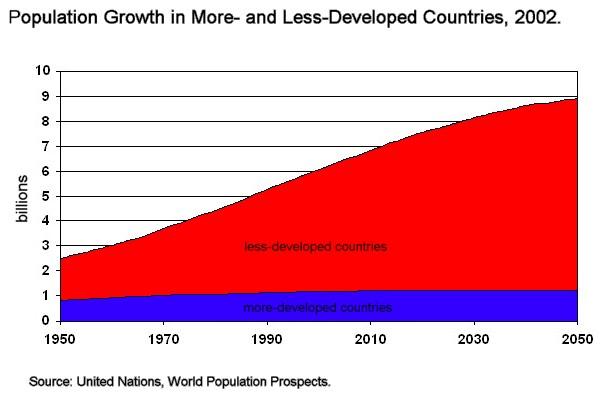
    World pop growth

    Can you see the trend? Poor nations are getting more populated, which drives down the value of their labour drives down the value of the crops they produce, and drives down the price of the the other commodities they can produce. In a system of global free-market capitalism: A hungry person will work harder for longer, than a well-fed one. A person who lives in a country with high infant mortality rates will have more children that a person with great well-equipped hospitals and doctors, in every city.

    It’s ludicrous to be criminalising things which would never exist if we paid more for our edible crops. For example, 1kg of opium resin is worth $2,506 if you buy it wholesale directly from the farmers in Afghanistan. That heroin has a market value of $6,600 in the USA.

    The drug problem is the inevitable conclusion of exploiting the developing world’s labour, crops and raw materials.

    I should really have written this as a series of blog posts, but I might is this in a non-fiction book I plan to write if I can convince somebody I like to co-author it with me. Or at least get a literary agent to find me a publisher and give me an editor.

    Side note: I started writing this on Saturday and it’s now Monday (well, Tuesday, technically) and I’ve hardly slept. I must publish this now, and proof-read and edit tomorrow.

    I hope you find these 4,000 words entertaining.


    Tags:  

  • Our Morals: The Ethics of Revolution

    This is a story about sedition and treason…

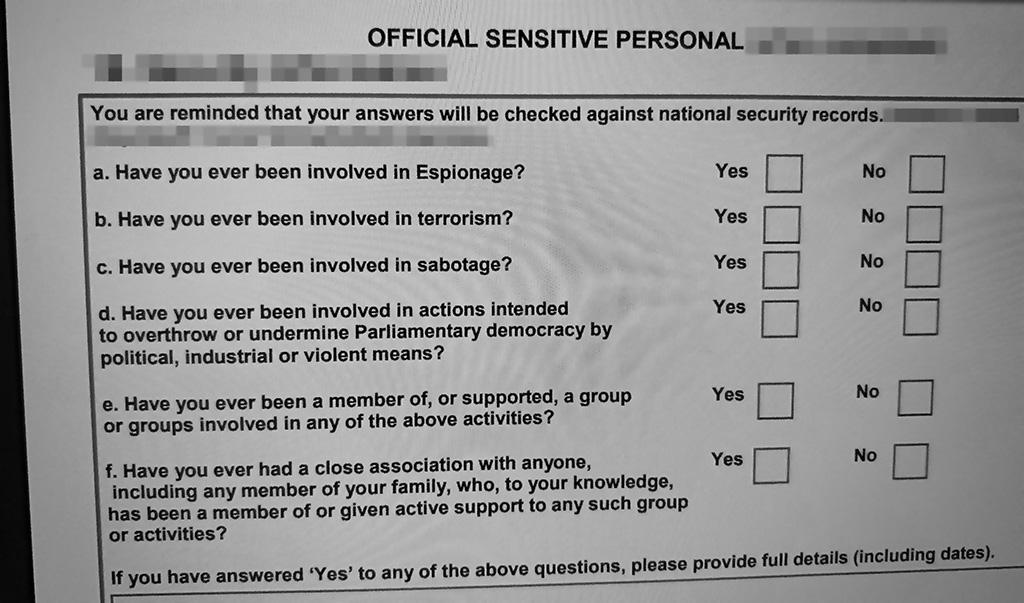
    Security vetting form

    Questions A, B and C seem pretty reasonable to ask. It seems like a good idea to ask people if they’re spies, terrorists or saboteurs, if they’re going to tell you the truth. It seems logical to assume that spies, terrorists and saboteurs are enemies of civilised society. It seems sensible to exclude spies, terrorists and saboteurs from positions where they could be a threat to public safety.

    Upon closer examination, spies and saboteurs could sometimes arguably be said to conduct their actions in a responsible way, in the course of the furtherment of their laudable objectives, in the absence of other available options. Spies exist when diplomacy and co-operation have broken down. Saboteurs exist when tyranny, oppression and exploitation are so great that a worker must throw their clogs into the loom, to save themselves and their kin. Without wanting to fall foul of the nebulous terminology, it would be remiss of me to acknowledge that a person could certainly understand the reasons for spying and sabotage – in a theoretical and academic sense – and perhaps even excuse those acts, where the outcome clearly results in a positive outcome for the greater good, according to utilitarian philosophy.

    Of course, I must tread very carefully.

    I have to watch my words.

    What on earth is question D getting at? I once destroyed my ballot paper as a political protest at the lack of a candidate and a party for whom I wanted to vote. Does that count as “[undermining] Parliamentary democracy by politcal … means”? Should I tick “YES” to this question? Is my spoiled ballot paper recorded in “national security records” which I’m reminded my answers will be checked against? Why even ask me if you already know the answer?

    Of course, the idea of asking people “are you a terrorist?” is pretty ridiculous, so why shouldn’t this same 66-page form ask vague questions which are almost impossible to answer, unless you think of yourself as such a perfect citizen and well-behaved patriotic loyal subject of Her Majesty Elizabeth II, Queen of the United Kingdom of Great Britain, Northern Ireland, its dependencies and its overseas territories.

    Do I believe in the Westminster system of Parliamentary democracy? Do I believe in democracy at all? For the purposes of my rational economic self-interest in the immediate short-term, within the context of filling in this 66-page form, which is of vital importance for the future of my career, the answer is “yes” for sure.

    Why am I using such cautious and measured words? Why am I couching what I say in caveats and disclaimers?

    The question arises: Is it irresponsible, socially destabilising or otherwise contrary to the interests of national security, to discuss the merits of ‘political change’ in a purely academic and theoretical context?

    Do scholars who study, think about, write about and discuss alternative political systems, imply some “intent” to overthrow or undermine Parliamentary democracy. For example, in the instance that a learned professor were to stumble upon compelling evidence that there is a better system for the decision making which is supposed to improve the human condition and the lives of the masses, then is that professor allowed to discuss it; perhaps even to promote the idea? What if other academics take an interest in that professor’s ideas, and they become supporters of the theory? What if this group of academics could be said to be a group of likeminded individuals, similarly swayed by the evidence and the ideas?

    Have I made myself into an enemy of the state by taking an interest in philosophy, politics and economics, which has forced me to consider the question: Is our Parliamentary democracy the best available option, or should we change to a different system? Does posing this innocent question constitute an act of undermining Parliamentary democracy?

    By the time we get to question F, I must surely answer in all truthfulness that I almost certainly would have – at some point in my life – had a close association with somebody who’s been a member of a group or supported a group whose intent could easily be interpreted as ‘offering an alternative’ to Parliamentary democracy. This is about as close as I’m prepared to go, to admitting something which is against my rational economic self-interest in the short-term, for the furtherment of my career objectives.

    Most of my friends are technologists. Many of my friends have created pieces of technology which must surely have undermined Parliamentary democracy. Many of my friends are the original engineers and architects – the visionaries – who are responsible for the birth of social media. What greater threat to the ruling elites has been born, since the invention of the printing press?

    Terrorism and violence are hard to defend; seemingly always unethical. It’s beyond the scope of this essay to discuss the ethics of violent rebellion by the victims of tyranny and oppression. I’m in too much of a vulnerable situation to say something like: “I can understand the reasons why desperate people might resort to violence, in the absence of all other options, like any cornered animal”.

    I may hold unspeakable views, which have no place in a civil position of public servitude. My upbringing in the company of academics, in and around the buildings of Oxford University, may well have scuppered any ambitions I might have of playing a role in the running of the country, and hopefully making a positive difference to as many lives as possible.

    Even within the walls of a British university, an academic may find themselves falling afoul of laws – new and old – which are designed to punish any agitators who might threaten societal stability and the established order. The power of the internet allows compelling academic arguments to be disseminated to vast numbers of people at incredible speed, and for the public’s imagination to be captured. Academic papers are no longer written in Latin and kept safely out of the hands of the hoi polloi, lest any revolutionary ideas they might be harbouring be provoked.

    Do I hold my tongue for the greater good – in support of a paternalistic and elitist establishment – because it will perpetuate the state of unhappy stability, which is at least preferable to civil war? Do I speak my mind, because to do so is a privilege afforded by the unpalatable actions done in the interests of national security? If I don’t take advantage of freedom of speech, am I really a patriotic citizen, loyal subject of Her Majesty and supporter of Parliament, given that wars are waged on my behalf so that I might enjoy the luxury of being able to write essays like this?

    I think I’m just going to tick “no” to all the boxes, because I can’t be bothered to have this conversation a second time, when I’m being interviewed by the thought police.


    Tags:

  • I Work Hard: The Proof

    This is a story about brainwork…

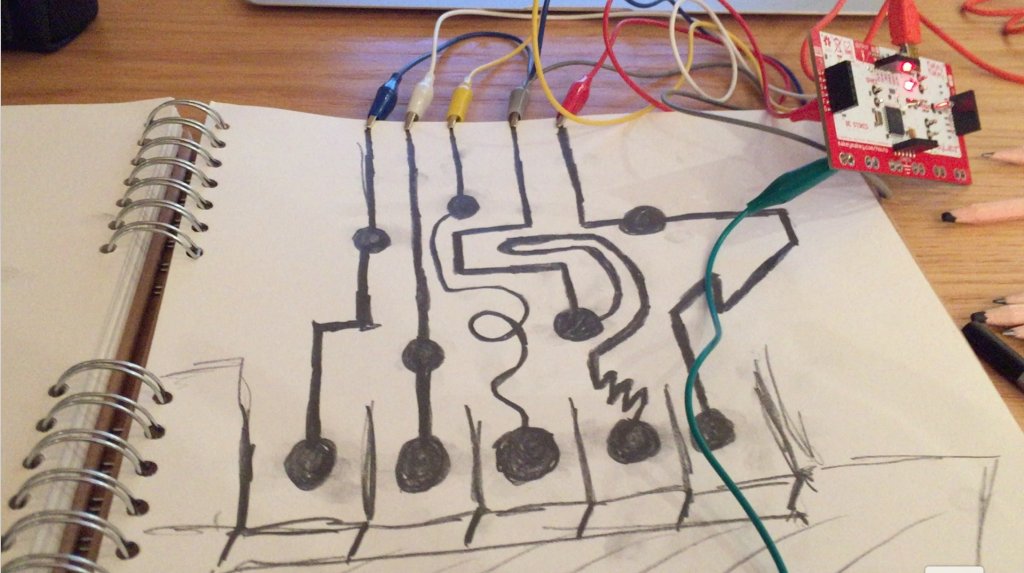
    Graphite piano

    In 2008 I became suicidally depressed. I’d been part of the project which had been at the centre of the global financial crisis: namely the trading of quadrillions of dollars worth of credit default swaps (CDS) which had grown in notional book value to be manyfold greater than the aggregate value of all the tangible things, such as precious metals, rare gemstones, property, factories, oil, gas, coffee, coins, banknotes and anything else which you could point at and say “that’s worth something”.

    The world had lost its mind.

    I knew it was coming of course. I had bought gold in 2005. I had negotiated a great mortgage in 2007 knowing there was a credit crunch on the horizon. In some ways I had tangible proof that I had been doing something valuable because I owned property, cars, boats and other things, as well as considerable amounts of liquid assets. In short: I was rich.

    I got rich from data and software. I got rich off the back of investment banking and derivatives contracts. I got rich off a whole lot of nothing.

    In 2008 it really felt like I’d presided over the most awful crime ever perpetrated against humanity.

    I’d worked hard and I’d done my job very effectively. I thought about the bigger picture and I knew – deep down – that what we were doing at JPMorgan was wrong, but I’m an engineer and I like delivering engineering solutions. If somebody asks me “can you do this?” then I want to be the problem-solving can-do guy who comes up with the solution and delivers a working system. Often times I stop and take a step back, and think about the context of what I’m doing – I consider the ethics – but that’s not really my job. I just design and build software systems.

    The whole “I just work here” or “I was just following orders” thing is how the Nazis managed to kill 6 million jews, so I’m not going to hide behind that flimsy defence.

    I know what I did was wrong.

    So, I decided to completely ditch investment banking. I decided to do something that was the polar opposite of investment banking. I retrained in the building trade.

    Instead of working in an office, I worked in customers’ houses. Instead of working to devise arcane and impenetrably complicated ways of moving imaginary wealth around the globe, I helped build houses for people to live in. Instead of working for a massive faceless global corporation, intent on destroying the worldwide economy and plunging us all into the deepest and longest recession in history, I worked for myself – I was a sole trader; a man with a van.

    I discovered that what I’d always suspected was true: I work hard.

    It’s hard to prove that you work hard, when all your hard work is hidden away behind the scenes. You have no idea how hard it was to build all the websites and apps that you use every day. You completely take for granted all the facets of the modern world, where you can speak to your phone and express your unique special snowflake personality on social media. The geeks and the nerds are derided as autistic-spectrum weirdo scum, who are all potential paedophile predator perverts who deserved to have a miserable childhood getting bullied at school.

    While we celebrate the doctors, nurses, firemen, policemen and suchlike, because their contribution to society is conspicuously obvious and easy to understand – like a game of cops & robbers – questions such as “what is the internet?” belie the hideous complexity of that innocuous 4-word question. If you’re looking for a convenient Google-provided soundbite synopsis that you can parrot to other people, in the vague hope of sounding intelligent, you’re doing a disservice to those geeks and nerds who you persecuted at school, who are the architects of the fourth industrial revolution.

    It’s very hard for me to prove to you that I’ve been working very hard during my 21-year full-time career. You’re quite likely to accuse me of not working very hard at all, because there are people out there who do a lot more physical labour, and what they produce is a lot more tangible and more easily understood in a childlike brain.

    It was immensely frustrating to me that I had no easily understood empirical evidence to prove how hard I work; to prove that I’m a busy bee.

    I started to write.

    I’ve written the equivalent of 22 novels over the course of 3 years.

    Of course a lot of what I’ve written is manic rantings, but one should be mindful that during the course of the 3 years I’ve also written a lot of software, and software doesn’t work if it’s wrong. One missing semicolon in millions of lines of code and the whole thing will be kaput. You should consider the fact that it’s a facet of my profession to write with coherence and attention to detail, because my editor has zero tolerance for mistakes: the computer can’t handle errors.

    It pleases me that I’ve produced 1.1 million words in my spare time as proof that I’m not an idle drug addict loser. It pleases me that I have a tangible asset, which vastly exceeds the length of the King James Bible.

    Would you accuse an author of a bestselling series of novels, as being unproductive and not working for their living?

    I say again: I’ve been writing in addition to my full-time day job.

    It’s true that sometimes I find my day job very easy and unchallenging, but there are other days when there are gremlins in the incomprehensibly huge and complex computer software systems, and those problems are very hard to diagnose and fix. Manual labour is governed by a simple and well understood set of physical laws: the energy requirements to lift and move heavy objects is quite easy to calculate. The amount of brainwork required to fix a problem with one of your beloved apps or websites – to give a facile example – which might affect millions of people, is not an easy calculation at all. If you think what I do is unimportant, you should see the public response every time Instagram stops working or Snapchat introduces a major change.

    My motivation for writing this is, of course, insecurity. I struggle with feelings of inadequacy and guilt. Imposter syndrome asserts itself and I wonder what the hell I’ve been doing with two decades of my life, with nothing to show for it except a lot of crummy software which almost nobody is aware even exists. I would struggle to explain to either of my grandmothers what I do for a living, especially now they’re dead.

    I exist in a strange part of the world. I’m a ‘tame’ geek who can speak plain English. I don’t surround myself with other technologists and I’m cursed with a bleeding-heart liberal streak and an inquiring mind, which causes me to question whether I’m part of the problem or part of the solution.

    Because of my guilt, work ethic and insecurity, I feel like I have to create a very conspicuous and public display of my productivity, which can be easily understood. Here’s the headline: 1.1 million words in 3 years.

    I write because I’m afraid that you’ll write me off as a lazy junkie waste-of-space loser who doesn’t do anything productive or useful. I write because I don’t see much other evidence that I ever existed or did anything notable; that I ever contributed to society.

    “Use your talent and energy for good” I hear you say. Yup. That’s working out really great for the oppressed workers, isn’t it? I’m so glad that charity has been so successful that it’s made itself completely redundant as a concept.

    I write because I haven’t decided what else to do, but I’m still thinking, of course. You might think that thinking is useless, but what is writing except for thinking on a page?


    Tags:

  • Insignificant Speck

    This is a story about sonder…

    Supermoon

    Is it useful to have a realistic appreciation of your own insignificance? Is it useful to correctly perceive that you’re not significantly different from any of the 7.6 billion other people on the planet, or the 108 billion humans who lived and died since homo sapiens first appeared as a new species? Is it useful to be conscious of your cosmological insignificance, where the entire human race will be obliterated so completely that it will be as if we never existed? Is it useful to understand the fundmental laws of physics well enough to know that there isn’t going to be a technological breakthrough which might allow us to travel to another star when our sun dies? Is it good to know that in the long run, nothing matters, because we live in a godless universe with no afterlife, and we are destined to be forgotten?

    Just as we might become aware that every other person has a rich and complex life of their own, we can equally become aware of humanity’s wider insignificance.

    Warp drives, wormholes, time travel, cryogenics and hypersleep are all lovely sci-fi fantasies, but we can’t even solve the basics, such as the fair distribution of wealth so that we can all have clean drinking water and enough to eat. There isn’t going to be a colony on Mars. We’re as likely to kill ourselves in nuclear armageddon as we are to die because of runaway man-made climate change. Yes, we’ve made great strides in science and technology in recent years. All those advancements are being used for killing each other in increasingly nasty ways.

    The population growth trends are easy to extrapolate, along with predictions about our ability to use the available land to produce food, leading to the unavoidably obvious conclusion that we’re going to have mass-starvation of billions of people, in barely a couple of decades. If you like to trot out the tired old lines about what a monster Stalin was, you ain’t seen nothing until you’ve seen what capitalism can do to billions. It’s already easy to see what industrial capitalist society has done to the environment, causing all manner of extreme weather events and natural disasters, which are anything but natural, because things are exacerbated by man-made climate change.

    It’s easy for me to write about the need to show some restraint and forego some luxuries, because I’ve been lucky enough to have enjoyed those luxuries for quite a long time. What about all those people who haven’t yet had a taste of Western imperialist decadence? Isn’t it unfair that those who’ve only ever known poverty and deprivation will never get to live a decadent lifestyle?

    Many in the guardian class would prefer it if you just damn well knew your place, and stopped trying to improve your standard of living. How else are the guardian class going to snobbily believe they’re a cut above the rest of the society, if every man and his dog is able to have a nice lifestyle? Get back in your place, you proletariat scum.

    Thus, we arrive at the new class warfare. We ALL think that we should be at the front of the queue, and we ALL know how to get there, thanks to the internet.

    The internet is a humbling place. Where else can you face such an enormous deluge of individual people who all think they’re special, unique and different? Everybody’s going what they think is an important opinion to share; that they have a voice that needs to be heard. Everybody thinks they’re good looking, talented, intelligent. Everybody thinks they’re capable of original thoughts and ideas; that they’re creative.

    It’s hard to maintain your own sanity when you see all those social media accounts controlled by all those individuals, who’ve carefully chosen their name, bio, profile picture, and then carefully creates and curates their own content, according to their personality and the image they wish to project. It’s hard to be a homo sapiens with the same hardware that evolved 350,000 years ago, when the population was 99.999% smaller and we didn’t have any technology except fire and pointy sticks. Our brains really aren’t built to cope with constant reminders that we’re an insignificant speck.

    We might hope to build up our social media following – our celebrity status – and begin to broadcast ourselves to big audiences, hoping to make ourselves feel somewhat less insignificant, but it’s delusional. A judge and jury might convict a person of a serious crime, locking them up for life, but all 14 of those people will die at more-or-less the same time, be cremated or buried. In 4 or 5 generations, those 14 people will be completely forgotten – the criminal will be indistinguishable from those who sat in judgement. For a psychiatrist to diagnose a patient as having delusions of grandeur, is also a delusion of grandeur – both are suffering from the delusion that they have any importance at all, when clearly they are both equally insignificant.

    Significance is an invention of the human mind, as a coping mechanism for the increasingly inescapable realisation that nobody matters, nothing matters, we’re all dead in the long-run and every piece of evidence that we ever existed is destined to be obliterated some completely, that even alien archeologists with futuristic gadgetry, would never know anything about our entire race; our whole history.

    It’s pure vanity to think that you’re important; that you’ll be remembered.


    Tags:

  • Universal Basic Income

    This is a story about late capitalism…

    Bank notes

    Having been part of the JPMorgan team who built a system to process more than a quadrillion dollars of credit default swaps per annum, and also the system to find out who was holding the pass-the-parcel when the music stopped, only to discover it was full of dog shit, I feel pretty responsible for the credit crunch and financial crisis, which has plunged us into a global recession many times worse than the Great Depression of the 1930s. I’m pretty disillusioned with capitalism.

    I’ve had front-row seats for most of the insanity of the past 25 years – dot com, Y2K, 9/11, credit crunch, financial crisis of 2007/8, Bitcoin etc. etc. – and I was a fully paid-up subscribing member of the 2% profiting handsomely from others’ misfortune with my snout deep in the trough.

    By 2008 I was sickened by the way I’d turned a blind eye and ignored my moral compass, because I enjoyed the wealth and privilege. I was able to buy a house, a yacht, a speedboat, sportscars and go on enough luxury holidays to help me set aside my misgivings about what the investment banks were doing to the global economy, by creating fabricated securities such as derivatives, which were somehow valued at a vastly greater sum of money than the aggregate value of all the precious metals, gems, land, property, cattle, food, commodities, industrial plant, machinery, companies and cash that exists on the whole planet. I was shackled with golden handcuffs – who in their right mind would give up their trophy wife and pull their kids out of private school, to slum it with the hoi polloi?

    I decided that I was sickened by the bullshit synthetic world of digital securities and digital bank balances, and the global computer network with all its software and data, which actually doesn’t create anything real or tangible. It seemed like the infamous tulip speculation bubble in the Netherlands during the 1600s. It seemed like utter insanity to place so much importance on a bunch of binary ones and zeros which exist nowhere but as a tiny magnetic bump on a disk platter, an electron in a memory chip or a photon in a fibre optic cable. The entire weight of the internet is estimated to be about the same as a golf ball, if you add up all the electrons. It’s madness to think that any of our digital scorekeeping – i.e. your bank balance – will matter at all when global warming really starts to bite.

    I quit my investment banking IT job at JPMorgan and I retrained as an electrician. I wanted to build real and tangible things with my hands. I wanted to learn a trade which couldn’t be outsourced or automated. I wanted to escape the virtual realm of high finance and software and into a field which could make a real difference in people’s lives. Try living for a day without your lighting, heating, hot water, power shower, cooker, dishwasher, washing machine, tumble dryer, kettle, toaster, fridge, freezer and the myriad other electrical appliances which you don’t even notice are there in your life, saving you untold time and physical labour.

    It turns out, we don’t value tradesmen as much as we value bankers.

    I could’ve scraped a living, but it was hard work with little reward. The work was dangerous and dirty and the general public expected to get everything for virtually nothing. I didn’t much fancy working my whole life with the threat of bankruptcy and my home being repossessed, never having enough spare money to enjoy what little leisure time I had. Economically, it wasn’t viable to be a tradesman, except as a kind of break-even hobby. It made no economic sense to use 100% of my brains and brawn, but receive so little reward.

    Subsequently, I’ve returned to making software systems for banks, doing so as a consultant and getting paid even more. I’ve been a leech on a leech, and the cash has poured in.

    Throughout this journey my priorities have completely changed. Instead of aspiring to acquire and accumulate vastly more than I would ever need, and fantasising about buying bigger and better houses, yachts and other material possessions, my fantasies have taken on a completely different guise.

    I’ve been fantasising about quitting the rat race, and having secure housing. I’ve been fantasising about having enough money to read books and write. I’ve been fantasising about having time and being free from the tyranny of the alarm clock and bullshit jobs.

    I’d live in a Soviet-style apartment and have beige products – no consumer choice – if I could be intellectually free. I’d travel on the bus and give up exotic foreign holidays if I no longer had to play along with the charade of late-capitalism, where we are all commuting too far, working too many hours, and living under constant threat of losing our jobs, losing our homes and subsequently being made destitute. Given the choice, I choose equality of outcome, not equality of opportunity.

    It seems pretty obvious that the equal opportunities experiment has run its course and it would be inhumane to continue. Free markets are efficient, but they are only efficient at stripping away people’s security, happiness, dignity and any hope of ever feeling content or satisfied. Capitalism is – by its very nature – a force which will price gouge humanity for the basic essentials, such as food, housing, transport, healthcare, medicine and to some extent education.

    Our poorest 50% struggle to afford the basics, while even the very rich are miserably struggling to attain the academic qualifications which will allow them to compete, lest they be trampled by the struggling masses, desperate to realise their opportunities. The competitive element of capitalism has turned us into slaves. Our lives our wretched and appalling.

    I desperately want to drop out of the rat race, but to do so would see me persecuted. I wouldn’t even be allowed to sleep rough and beg for food without being arrested and locked up. Society offers me no ability to house, feed and clothe myself, with any degree of security or quality of life. Working a zero-hours contract McJob is not going to earn me enough to pay rent and bills, buy food, travel to work and have any kind of life worth living. The theft of our time and freedom is an awful crime perpetrated against most of society. The chance to stop and smell the roses is denied to us when we do not have secure food and housing.

    The only viable solution that I can see is universal basic income (UBI). I just don’t see how else we’re going to be able to stop the terrible decline in living standards and save humanity from the tyranny of exploitation by the capitalists. It seems like we’re at breaking point when even the middle class children are becoming slaves to the capitalists, with enormous loans for their education, which might win them a low-paid job in a completely unrelated field from their university degree if they’re lucky – the unlucky ones end up unemployed.

    It’s a sad state of affairs when our fantasies revolve around basic needs, such as secure housing.

    It’s not my idea of a good time, sitting at home smoking cannabis and playing computer games, but I don’t see any reason why it’s not morally acceptable or right to allow people to do that, and not threaten them with homelessness and starvation if they don’t get a bullshit McJob and otherwise comply with the tyranny of late-capitalism.

    The idea that we live in a land of opportunity and that hard work will bring rewards has been proven to be a lie, and ever more-so during each passing year. It’s time to let people live lives of quiet dignity, rather than frantic futile desperation.

    It’s time to just give everybody enough money to live in peace.


    Tags:

  • CIP

    This is a story about preferential treatment…

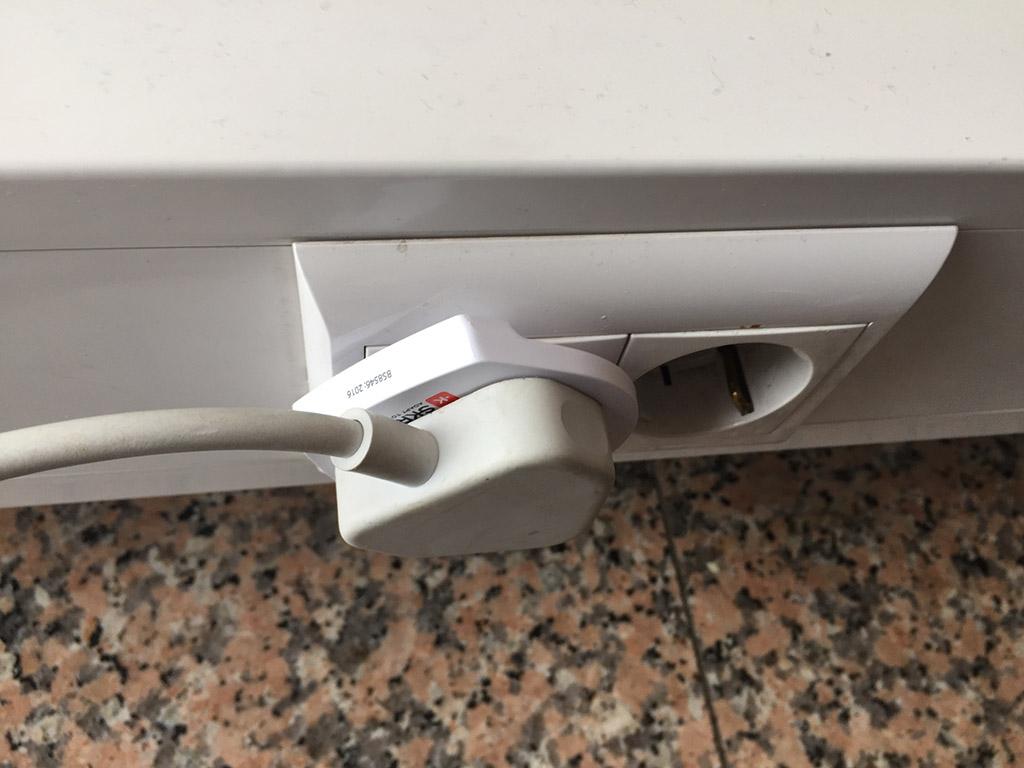
    European sockets

    If you Google Translate “Very Important Person” (VIP) into Portuguese, you get “Pessoa Muito Importante” (PMI). It seems like the Portuguese prefer the acronym CIP, but I can’t find a definition of what that stands for.

    Anyway, as well as getting to spend a couple of days with my friend, I also get to be his guest in the airport lounge reserved for frequent fliers. The big advantage of this is a comfy seat near a power socket, where I can do a bit of work, write this blog post, and otherwise kill time until my flight starts boarding, which won’t be for a few hours.

    Most of the conversation with my friend during Saturday, Sunday and today, has revolved around middle-class guilt and social conscience. Is it right, for example, that the most wealthy are able to hide their money in Swiss bank accounts and offshore, to shield it from taxation? As a proportion of a person’s income or net worth, it’s the poor who shoulder the biggest burden in taxes, fees and other things – such as exorbitant interest rates on loans – which prejudice the opportunities of the most disadvantaged members of society, to escape from poverty.

    A friend who’s a chartered accountant has decided to become an independent consultant, like me. We discussed the tax efficiency of owning and operating our own companies versus paying full income tax and National Insurance on our gross income. Surprisingly, we pay slightly more tax than those who are PAYE (Pay As You Earn) and have their taxes deducted at source by their employers.

    Also surprising is the laudable decision of some of my friends who have been lucky enough to become wealthy, to not hide their wealth offshore or in Swiss bank accounts – they’re paying their fair share and playing by society’s rules; they’re giving back to the economies which they profited from. You might say that “laudable” is the wrong word, but there is a considerable burden involved in the administration of complex tax affairs, and the bureaucracy of ensuring that governments receive all the taxes which they are due. Often times, it would be far easier to avoid taxes than to pay them, because there’s a whole industry which profits from providing simple and convenient services to the wealthy.

    Are we being philanthropic; altruistic? No, of course not. The thing that’s driving our behaviour is guilt. We feel guilty that we have been lucky when others have not been. Paying taxes doesn’t absolve a person of that guilt, but deliberately avoiding taxes is something extra that the lucky ones should feel guilty about.

    What about giving money to charity? Does that absolve a person of the guilt they feel about their fortune in life?

    The problem is that a clean conscience can be bought very cheaply. A seemingly large charitable donation might actually be only a tiny fraction of a person’s net wealth; a bit of ‘disposable’ income that wouldn’t be missed at all. Even more perversely, tax rules can make a rich person’s donation of “pocket change” look like a significant act of philanthropy, while a poor person’s unavoidable tax burden is by the far the greater contribution, and yet not recognised as such.

    Then, there’s the protective bubble problem. If you work on a secure campus or private estate and live in a gated community, you’re largely insulated from seeing poverty, homelessness and disproportionately protected from becoming a victim of crime. In fact, just living in a wealthy country, you’re insulated from the global wealth disparity created by the subsidies, import tariffs and other economic weapons which are employed to keep the rich rich, and the poor poor.

    After 3 days of chatting, my friend and I arrived at the conclusion that we’d have to go through 3 generations of misery to reach a state of global equality and social justice. When I say “we” I mean mostly the wealthiest 2% of people on the planet, which my friend is convinced we can count ourselves amongst; he and I.

    How can I disagree with him that I enjoy a life of wealth and privilege which 98% do not, when I’m sitting in a leather chair typing these words on one of my 5 laptops, enjoying free electricity, free food & drink as well as having the leisure time to craft this valueless contribution to the internet’s quadrillions of webpages.

    It’s OK though: I’m a CIP. I deserve preferential treatment.


    Tags:

  • Payday

    This is a story about triggers…

    50 pound notes

    Having money burning a hole in your pocket is thought to trigger relapses, but I think it’s the period of poverty that precedes it that causes the problems. Flush with cash after such a long struggle trying to make ends meet and not go bankrupt, who wouldn’t be flooded with relief and be significantly affected by such a rollercoaster ride? Our boom and bust, feast and famine world is highly destabilising to our mental health.

    Back in September I found myself jobless, homeless and without enough cash to afford to rent a place to live and support myself for long enough to get to payday. Mercifully a friend managed to get me a job in Warsaw in the nick of time, and I was just barely able to afford to be able to live in AirBnBs until I got paid – I escaped bankruptcy with just £23 left in my bank account the day before my pay finally started to arrive.

    Back in February I had to buy a car so that I could get to my new job, tax it and insure it. That nearly wiped me out.

    Back in March I had to rent a place to live, and paying the first month’s rent, deposit and letting agent fees again nearly wiped me out.

    I’ve spent April praying that nothing goes wrong – that I don’t lose my job and that my car doesn’t break down. I couldn’t afford any unexpected bills – I’ve been running on fumes, although it wasn’t quite as bad as when I got down to my final £23.

    My financial distress dates back to December 2016, when the Christmas and New Year period delayed me from getting back into work, and by the time January arrived I was very unwell – I spent 3 weeks in hospital on dialysis and promptly lost the job I’d just managed to get. Things got worse and worse, peaking in July when I had a very large tax bill to pay and I had to leave my apartment in London because I could no longer afford the rent. Out of desperation I took a job in Manchester, which turned out to be disastrous – I didn’t know anybody in Manchester and my entire life was in the hands of a company which ended up treating me very badly indeed. I tried to commit suicide.

    Working in Warsaw and London during December, January and February, meant I was incurring a lot of expenses, with flights, hotels, train travel, AirBnBs and the other costs of living out of a suitcase. I tried to live off pot noodles and other things that can be prepared without a kitchen, but economising can become impossible when you have to travel around from place to place – I had to re-buy all the things you generally keep in the kitchen cupboards, or carry food around with me without the contents of the open containers leaking and turning everything into a horrible mess.

    Finally, I managed to rent an apartment but it didn’t have a single saucepan, plate, glass, mug, utensil or cutlery item, let alone all the other myriad things which make a house a home, such as toilet brushes and a million other things you take for granted.

    To go on the journey from having less than nothing, to re-entering civilised society and having enough money to keep the wolf from the door, has been extremely stressful and exhausting. I’m still in the process of setting up my standing orders and direct debits so that the council tax, TV license, gas, electric, water, sewerage, broadband and all the other various utilities can be paid regularly every month. I’m still in the process of re-stocking the cupboards with all the things that are needed for daily living.

    Yes, my situation seems to be rapidly improving, but there’s still so much work to do and I’m still a long way from being comfortable and having a financial cushion in case there are any unexpected problems – there are many more sleepless nights ahead.

    I don’t mean to moan, because I’m very lucky – things have gone my way and finally getting paid some of the money I’m owed today has a big positive impact on my life. I can loosen the purse strings a little, although I still have to be very careful.

    There is of course an impulse to go mad now that I’m a bit more financially comfortable, but that’s a reaction to the relief I’m feeling, after so many months of having the threat of bankruptcy, homelessness and destitution hanging over me. My main impulse is to draw the curtains and not get out of bed for a month, because I’m so exhausted and emotionally drained after such a horrible rollercoaster ride.

    Because of the way I get paid, I’m not expecting another payday for another couple of months. If I can make it to the next payday it’ll be a huge milestone and I’ll very definitely be on the road to recovery, but I still have a very challenging time ahead of me.

    I hope you don’t think I’m moaning. It’s always a good day when you get paid.


    Tags:

  • Devolution

    This is a story about overcrowding…

    3D Printing

    In the animal kingdom resources are scarce. Food is hard to come by so the best areas to hunt and gather are highly sought after. Defending your territory requires a constant battle with other individuals who want to encroach. Controlling resources gives a surplus of food, which means that surplus can be used to rear offspring. Having a food surplus means you’re attractive to a mate – you clearly have the genes to protect your territory, which means you should be a good provider and your offspring should reach genetic maturity and be able to pass on your genes.

    In the animal kingdom, what’s good for the individual is generally good for the species. Territory disputes will result in fights, some of which may be fatal, but self-preservation instincts cause animals to prefer to avoid conflict. There is no ‘delicate equilibrium’ – the animal kingdom is a constant battle that ebbs and flows, and whole species are regularly wiped out, for no other reason than pure bad luck – the starting conditions and what happens thereafter are decided by the roll of a dice.

    When humans behave like animals, they revere violence, muscle, domination, cruelty, bullying, monopolies, power, control, conquest, shows of force, agression and all the other vulgar traits of a supposedly intelligent creature, which leads to rape and pillage when it is allowed to continue unchecked. We celebrate the rapists in our culture – the ‘hero’ soldiers and the meathead bullies; the 1% who control 50% of the wealth. We revere the bestial. We worship the animalistic.

    When an animal gets a food surplus, it then wants a sex surplus. It’s a common male fantasy to want a harem of females. Obviously, with there being an approximately 50:50 male to female population ratio, there are going to be men who are going to lose out. In the animal kingdom, those ‘beta’ males would fight with the ‘alphas’ for breeding rights. This is something that we see culturally celebrated – there are various rituals that seem to demonstrate that there’s a ‘victor’ in a simulated ‘battle’… it’s called sport. It’s a zero-sum game: for there to be a winner, there has to be a loser.

    We are not animals. We are humans and that is distinct and different, because we are self-aware. We are able to preserve knowledge between generations using spoken, written – and more recently – video as a communication mechanism. We have language. We have reason and logic and science.

    Prostitution is an evolutionary advancement. Prostitution allows anybody who is capable of generating value in society to be able to access sex. Prostitution allows sex to be traded with the smartest individuals, and not just the strongest. Having sex with the smartest is an evolutionary advancement, because it allows the species to develop at a rate that grows exponentially, because it is not restricted by selective breeding and genetic mutation – if smart people fuck, they raise smart kids… not because of their genes, but because of their upbringing.

    Clearly, we are in the middle of an evolutionary split. If you think about the big 5 tech companies – Alphabet (Google), Amazon, Apple, Facebook and Microsoft – then imagine how the founders of those companies would fare in the stone age, you’d be pretty sure that those guys would not get laid. The multi-billion dollar tech company founders are classic ‘beta’ males, aren’t they?

    Meanwhile, toxic masculinity has reached such epic proportions that the swollen muscles and tanned skin, that 100 years ago would have shown that you were a farm worker, and therefore poor and stupid, is now revered as attractive.

    One branch of society worships agression and bestial behaviour – fighting, war, muscle – while another branch of humanity is rapidly evolving and pulling away from the thick-skulled knuckle-draggers. Who’s going to win in a fight? You with your muscles and tiny brain, or me with my army of AI-controlled drones? Who’s going to win? The dirt poor idiots, or the richest smartest people on the planet?

    The geeks are inheriting the earth.

    Meanwhile, homosexuality seems to be the next evolutionary stage. Homosexuality means unlimited sex without having to engage in the bullshit drama that’s always created during bestial, animalistic, heteronormative fulfilment of the will of the genes. Procreation is a massive distraction from deep thinking and scientific discovery. A scientist can dedicate their whole life to research and pass on their knowledge through what they write and publish, so there’s really no need for any genetic heirs. We all benefit handsomely from the work of the geniuses who have lived and died before, whether they had children or not. Anybody is capable of reading the works of a great scientist and becoming one themselves. The birth of knowledge is far more important than the birth of beasts.

    Then, suicide. The candle that burns twice as bright burns half as long.

    The vast body of discovered knowledge is far greater than the human mind was evolved to cope with. We are not supposed to know the secrets of the universe. We are not supposed to understand that we are mortal creatures who are cosmically insignificant. To attempt to grasp the ungraspable is to destroy our own sense of wellbeing. There’s cold comfort knowing that we’re held onto the surface of a rock by the weakest physical force – gravity – while we orbit a ball of gas that’s a dying star in the vacuum of space, in a universe that’s so vast it’s beyond comprehension. We weren’t supposed to travel in motor cars. We weren’t supposed to fly in jet planes. We weren’t supposed to live in skyscrapers. Everything about modern life is anathema to us – it creates great anxiety and distress. Just think about how many people have a fear of flying.

    Suicide is a natural response for a person who can comprehend their own mortality and see that life is suffering. A smart person can see that their life is meaningless. A smart person can comprehend their insignificance in the universe. Once you’ve figured out that life is pointless, and life is suffering, then suicide is logical. The smartest humans will quickly assimilate enough knowledge to see that it’s not worth suffering and that death is preferable to life. The survival instinct is genetically programmed, to ensure survival of the species. If the individual is suffering, then of course their own individual suffering is more important than the survival of the species as a whole. In fact, the suicide of those who are prone to suicidal thoughts is better for the survival of the species, although the gene persists because it is intellect that makes a person more likely to commit suicide. Suicide is an intellectual’s best option, to end the suffering.

    Humans are incredibly adaptable, and we have learned to live with the anxiety-inducing awfulness of the modern world, where most of us cram into overcrowded cities for economic reasons. Most of us are living with cramped living conditions, crime, disease, pollution, noise, ugly buildings, bright lights, overcrowded transport networks and all the other terrible things that modern urban living has given us. We like to think we’re terribly technologically advanced, but we’ve simply gotten used to all the bad stuff that would leave stone age man whimpering; cowering in a corner with fear and overloaded senses.

    Devolution – de-evolution – is happening. Humanity has fragmented. The thick-skulled knuckle-draggers will drag themselves back to the stone age, because that’s where they feel comfortable. The stupid ones will have loads of children, and they’ll teach those children to be stupid. Stupidity is celebrated in the underclass.

    If you’re smart, you won’t have kids and you’ll kill yourself.


    Tags:

  • How to be a Philosopher

    This is a story about thinking…

    Thought bubble

    There’s a bit of a monopoly on thinking. I mean, you’re allowed to think and stuff, but you’re not allowed to share those thoughts. Well, you can share your thoughts but nobody’s going to care, because you’re a nobody. People want to know the opinions of a rich spoiled heiress who’s famous for having her sex tape plastered all over the internet, but not your opinions. People want to know the opinions of those whose opinions are already well publicised, and those who already have a platform and a group of devout followers. Nobody wants to hear any new thoughts, ideas or have their cherished philosophies challenged.

    Thus, we arrive in the quagmire of modern day living. We are heavily weighed down by our attachment to notions of what we consider to be virtuous, conferring greater social status and conforming to acceptable social behaviour – norms, if you like.

    If you wish to conduct a real-world philosophical experiment, try asking a person on a crowded bus or a train if you can sit where they’re sitting. There’s nothing written into law to say that you’re not allowed to ask if you can sit down without a socially accepted reason, such as being old or pregnant, and I very much doubt you were taught by your parents or in school that you shouldn’t ask for somebody to give up their seat for you, so where did the protocol come from? How did it become enshrined that we accept “they had it first” as validity for possession of something we desire?

    One might argue that thieves are an example of an antisocial behavioural pattern that, nevertheless, allows a person to get the things that they need in life, just as any one of us might steal the milk from a cow, or the seeds from a plant – we see numerous examples of behaviour that is criminalised and stigmatised in some forms, but accepted and even revered in others. Why is it that we call welfare claimants “scroungers” and “parasites” but we don’t we criticise bosses, managers, slave-owners and similarly idle people who profit from the labour of others?

    I feel compelled to caveat what I’m writing, and say that there’s a kind of absolute morality which decrees that any action which has a victim – rape and murder, for example – is always wrong, while theft and fraud could arguably be said to be victimless, because wealth always needs to be redistributed. In actual fact, in a godless world with no afterlife, there is no place for morality – when you’re dead you’re dead, so you might as well do whatever the hell you want, provided the profit to you is greater than the potential societally-imposed consequences.

    If you were asked to say what the prevailing philosophy of the present day is, what would you reply? Would you say that we are still religious and subscribe to the ancient belief systems of the major religions? Would you say that we have adopted the philosophy of the Ancient Greeks? Would you say that we have adopted modern politico-economic philosophies, which could broadly be described as socialist or conservative? How would you react if I suggested that we are like a rudderless ship at the moment – we have no guiding philosophy and we are led by vapid celebrities who are incapable of imagining a culture beyond wealth worship and superficial bullshit.

    The terrifying truth is that atheism and capitalism have won, ushering in an era of scientific progress, technological advancement and incredibly efficient industry, but without a guiding philosophy. Nobody seems to care that we’ve forgotten to ask a fundamental question: Why?

    Why are we here? Why are we doing what we’re doing? Why are we even alive?

    Ultimately, we may come to realise that we might as well live completely hedonistic reckless irresponsible lives, because it’s immediately rewarding and death is inevitable. In a godless world with no afterlife, what possible reason is there to consider anything other than maximising our pleasure, right now? There is nothing after this – we just die.

    Because it’s deeply disturbing to see your family and friends dying, and to know that we are mortal too, we arrive back at the need for religion: Comforting bullshit to allow us to cope with the fact that we’re soon going to die. Religion offers an answer where there is none to be found. Science needs no opinion on what existed before time itself, because the question is nonsensical. Science needs no opinion on where our consciousness goes when we die, because it seems self-evident that it doesn’t go anywhere at all – you just cease to exist.

    Taking the thought experiment – life without any guiding philosophy – to its ultimate conclusion, we can see that we might as well perpetrate rapes and murders and leave the surface of the planet scorched and barren, as we wring every ounce of pleasure out of the present instant. Who cares about tomorrow when we’re all going to die? This seems to have a ring of truth about it, when we consider the direction the human race is travelling in. Our laws are nothing versus the power of global capitalism, celebrity, wealth worship, drugs, slavery and the general abandonment of philosophies that sought to make the world a fairer place, where human excesses were curtailed and greed was considered sinful.

    There is a vacuum at the moment, left behind when we rejected religion as superstitious bullshit, which of course it is, but religion is also the glue between the pooh – religion at least gave us a kind of consensus of opinion about right and wrong, and why it’s better to live life with some view to improving the world for future generations. Governments, politicians and civil servants are not the right people to become a new church. We cannot rely on power-hungry busybodies to provide us with any kind of societal structure, because rules and regulations are nothing if there’s no guiding philosophy that people subscribe to. It’s a bit like speeding: we all know what the speed limit is, but very rarely do we feel like it applies to us, because rules are there to be broken.

    We have created a generation who believe in nothing and want to commit suicide. We have created a generation who are smarter than ever before, but who have nothing to look forward to, and we don’t have an answer for them when they ask: Why was I even born?

    If you’re looking to me for an answer to the big question – why are we here? – then I can give it to you but you’re not going to like it. In fact, it rather deserves a blog post of its own, although I’ve hinted at my answer when I mentioned the scorched earth, created by raping and pillaging all the planet’s resources, and the death of consciousness. I’ve written before about quantum immortality. You really don’t want to hear all that stuff again – it’s not very nice, even if there’s a pretty decent chance it could be correct and it’d be really easy to prove.

    Are you still looking for an answer to the big question? If you are then I have good news [sic]. The argument for not being hedonistic and short-termist is that one person can make a difference. Of course, one person on their own is just a blithering idiot who can rant and rave in isolation. We might see that those who live their lives as an example to others are often taken advantage of and lose out because they don’t cheat, steal and otherwise conduct themselves without a shred of moral decency. What’s the point in voicing an opinion in a world that doesn’t care who you are or and whether you live or die? Well, there’s a slim chance that your tiny contribution might become part of a bigger movement – a billion whispers become a deafening roar. In a world where no almighty church is going to impose itself on you and declare any wayward views heretical, we have both collective and individual responsibility to formulate our own life philosophies, that are hopefully capable of improving the world, rather than continuing to perpetuate patterns of behaviour that will destroy everything.

    Our current thought leaders have provided nothing except the perpetuation of the status quo, the nihilistic vacuum left behind by the decline of religion, and the boom of free-market capitalism. The free market believes in nothing. Politicians believe in nothing. We can no longer survive in a world where we are led by leaders who simply tell us what we want to hear. We can no longer survive as a species when we worship those who exhibit the least capability for free-thinking, the highest preference for elitism and the concentration of the monopoly on thinking in a few powerful hands.

    To call myself a writer, a thinker, an intellectual – these things are laughable, of course. However, why do you think that?


    Tags: