banking – Page 3 – Nick Grant

Tag: banking

  • Spectator or Participant?

    This is a story about being a groupie…
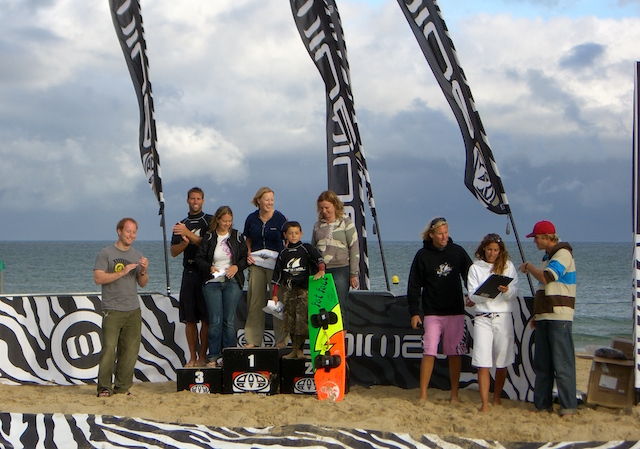
    Windfest 2007 Podium

    On the steps of the podium stand the winners of the 2007 Poole Animal Windfest. There is a girl and a boy for 3rd and 2nd place. If you look closely, where is the boy who won 1st place?

    In 2007 I was involved in building part of the software system that processed over a quadrillion dollars worth of toxic bullshit for JPMorgan, in a single year. Don’t get me wrong, it wasn’t a bad job and they didn’t treat me badly. In fact they kept a private driver waiting down by the seashore; engine running; waiting for the kitesurfing competition to finish. Then I jumped in the Mercedes with smoked glass windows and we sped off to Heathrow for me to catch a flight. I didn’t even have time to wash the salt off my skin or sand out of my hair… or collect my prize for winning the competition.

    There used to be a time when JPMorgan’s main office in Bournemouth had squash courts and a gym onsite. There was a bar. There were enough car parking spaces for everybody, so everybody drove to work. Then, they grew; and they grew; and they grew. Investment banks were – and still are – ludicrously profitable. The IT budget that paid for my little team of 30-odd people was circa $10m per annum. You’re never quite sure what the real numbers are though, when you work for an organisation with 130,000 direct employees.

    Slowly, prefabricated office buildings sprang up on parts of the car park. The bar, gym and squash courts were turned into office space. That was OK. We still had several tennis courts and a sports centre nearby with badminton courts and 5-a-side football pitches. You could park nearby in an overflow car park. It was still a great place to work, and nobody had a fucking clue what they were doing or what impact it would have on the world, unless they really stopped and thought about it.

    I’ve always been one of those pain-in-the-ass employees who does stop and think about the ramifications of everything that’s being done. When it turned out that senior management had decided to support outsourcing a lot of our software development, I was very vocal about my displeasure and concerns. I was a thorn in the side of everybody more senior than me, in the hope of JPMorgan seeing sense: cheaper employees do not equate to cost savings. You get what you pay for.

    So, I got landed with a stinker of a project. To train up about 20 brand new offshore employees, in Mumbai, and also to build a piece of software that was not only late, but was a critical component in a global initiative to get all the toxic bullshit warehoused in one place – a depository – so it could be figured out who the fuck owed who what, and how much? Who was holding the toxic debt? Who was bankrupt?

    How big is a million dollars?

    $1,000,000

    It’s hard to say, but it’s probably a few times bigger than the value of your house, or twenty times bigger than your salary. Now, let’s multiply that by a thousand.

    $1,000,000,000

    Now what you’re looking at is a billion dollars. 1% of a billion dollars is $10 million. You’d be pretty happy with $10 million, wouldn’t you? That’d set you up for life. Now, let’s multiply that by a thousand.

    $1,000,000,000,000

    This is quite obviously a trillion dollars. 5 trillion dollars is the value of all the world’s ‘money’ – the cash in your pocket, the coins in your purse, your bank balance etc. etc. Now, let’s multiply that by a thousand.

    $1,000,000,000,000,000

    We’ve reached a quadrillion dollars. 1% of a quadrillion dollars is $10 trillion, which is twice as much as all the ‘money’ in existence. So, how the fuck does JPMorgan process over a quadrillion dollars in a single year? Two answers for you: 1) Derivatives 2) Financial crisis of 2007/8

    A derivative is a financial instrument that derives its ‘value’ from an underlying security. By security, I mean something tangible: a fucking house or a metal coin that has its value stamped on it. Derivatives are just pieces of paper that say “in the event X, I will pay Y”… for example “if the stock market goes up, the value of this derivative goes up ten times as much”. Derivatives contracts have been created that have become more valuable than all the ‘money’ in the world. As much as a thousand times more valuable. This is just worthless paper, and nobody has the money to pay up: insufficient collateral.

    I know, right? Don’t stop and think about this stuff too much. Nobody else did. There was too much money to be made.

    So I get landed this stinker of a project, drive off from the beach at Sandbanks to Heathrow airport in a luxury car, in order to train 20 or so Indians on how to build a piece of software that’s going to be instrumental in the Financial Crisis of 2007/8. I’m an engineer. I solve problems. I stopped thinking about the madness of outsourcing to India when JPMorgan was already plenty profitable. I stopped thinking about the madness of there being quadrillions of dollars worth of derivatives contracts, when there was only $5 trillion of money in existence. I started thinking about software designs and who I had in my new team to build this software system.
    7 star hotel

    At some point, I was seduced. I was seduced by limo travel, private drivers, 7-star hotels, business class flights, everything paid for on expenses, company credit cards. I was seduced by everybody telling me what an important project it was, and what an honour it was to be in charge – the manager – when I was only 27 years old; so young & ambitious. Giddy with this seduction, I started to see the world in different colours. Things were rose tinted. I was sucked in. It was like I was dreaming.

    A year later, I’d woken up from a nightmare where I’d played a significant role in helping the Investment Banks to hold the world to ransom. “Pay up, or we’ll crash the global economy and plunge the world into a depression that will make the 1930’s look like nothing” they said. And the ransom was paid. Every government; every central bank coughed up hundreds of billions, so the bullshit could continue and none of the bullshitters had to lose a cent. In fact, the only people I knew who lost their jobs were the ones who were replaced by Indians I trained.

    I started thinking again. Big mistake.

    I took to the bottle. I drank every lunchtime and every evening. I was drunk most of the time. How could JPMorgan sack me or even reprimand me? What they’d paid me to do; what they’d asked me to do… they could never make that right. They just let me do whatever I wanted, which was mostly to go to the pub and get drunk. Nobody ever questioned it.

    As Bear Stearns was being taken over by JPMorgan – asset stripped under the auspices of being ‘rescued’ – I’d had enough. Building software for banks made me sick. I was sick at what they did to their own people. I was sick of what the industry was doing to the world. I was sick of producing nothing of value; helping nobody except the lucky few who knew how the con-job worked.

    Don’t get me wrong, I should have looked the other way; kept taking the fat bonus cheques and big salary; kept those golden handcuffs on – loose enough that they never chafe – but I wanted to get as far away from it as possible. The whole thing left me feeling like I had blood on my hands. Every company that went bankrupt; every person who lost their job; every home repossessed; every suicide due to financial worries… I was one of the co-conspirators who fleeced them out of their money and assets.

    Some colleagues stayed, but most of the cynical ones – like me – drifted away. Some died or at least nearly did, as they beat themselves up with alcohol for their sins. JPMorgan paid for a lot of people to go to The Priory to dry out. Those who couldn’t face working again were pensioned off early. You only had to work for a year, and then you were covered by a generous insurance policy so you never had to work again. Occupational health were busy, getting rid of an entire generation of engineers who had built the bedrock foundations of the global financial services empire, now shakily propped up using public money. Masses of public money.

    Ten years on, I watch in horror as those hastily made repairs to a fundamentally broken system start to crumble.
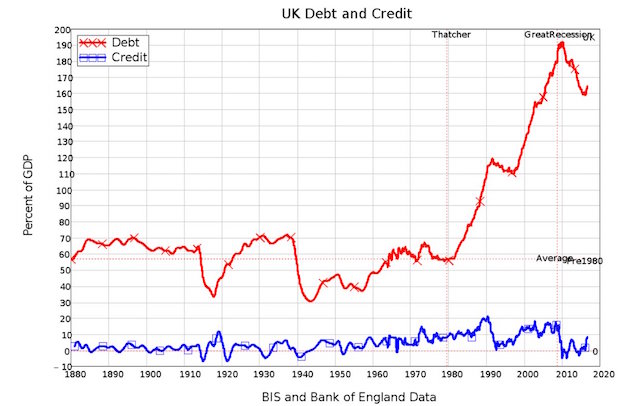
    UK debt

    Record high national debt and record low tax receipts. Our economy is 80% financial services – an industry that’s booming if you haven’t noticed. You probably haven’t noticed unless you work in the Square Mile or Canary Wharf. You’ve probably seen stagnant wages, a lack of jobs and insecure employment, such as zero-hours contracts. There’s always a McJob, if your self esteem is finally fully eroded by the capitalists.

    Brexit had a frontman – Nigel Farage – who was a trader from the City. Brexit had billionaire donors, like the stockbroker Peter Hargreaves, who literally said “insecurity is fantastic” – referring to his desire to see workers abused by their employers, in the interest of profits.

    I don’t wish to segue into commentary on current affairs, but you have to be aware who you’re dealing with. Who’s putting words in your mouth? Who’s planting ideas in your head, through the newspapers and TV channels they own?

    You have to wake up out of your nightmare.


    Tags:

  • The Path of Least Resistance

    This is a story about living an easy life…

    Level 39

    Our behaviour is shaped by circumstances far more than free will and conscious decisions. I suddenly stopped using my smartphone, looking at Facebook and writing. Did I decide to stop wasting time, pointlessly reliving old memories and making myself look like a fool on social media? No. I broke my wrist.

    My generation, and a few generations before me, found ourselves in the right place at the right time. No skill, hard work, good judgement or other factors are attributable to us other than being born in a rich country during a period of peace.

    The Americans wasted a lot of time and talent on the Vietnam War, which allowed Britain to become a world leader in banking software and the global financial markets. Silicon Valley is on the opposite coast of the USA from Wall Street. London has everything you need all in one place.

    British men have sheds, in which they tinker and invent things. There’s a proud tradition of geekery in Britain, which includes trainspotting, stamp collecting and pipe smoking. I’m a member of the last generation who were able to turn their geeky hobby and wasted youth into cold hard cash.

    Most parents have dismally similar plans for their offspring: to pressure them as much as possible to try hard at school, in the hope that they’ll survive the onslaught and be able to go on to university and become an accountant or a dentist or something… take up a profession. Medicine, law, architecture, surveying…. basically anything with a Royal Institute. Something to give you letters after your name. Something respectable.

    Barrowboys from Essex and the East End made a killing as stock market traders, because they already had an eye for a good deal and a head for numbers. Later, software became something that anybody could stumble into, if they had the aptitude.

    All those years at school and college proved a waste of time, when the fast-paced world of technology demanded magicians, wizards, sorcerers: anybody who could conjure up working computer software, no matter what their academic credentials looked like. The curriculum vitae was overlooked in favour of technical tests and whether a candidate knew the latest jargon.

    Briefly, the snobbery over Oxbridge graduates and the class of degree that one had attained, was overturned and the prized star employees in the multitude of software houses and consultancies that sprung up, were often self-taught and not considered academically gifted, in the traditional sense.

    Filial obedience proved disastrous, when many parent-pleasing academic high-achievers entered corporate law firms, only to find that the remuneration in no way compensated them for the hours that they worked and the pressure they were under. The story was the same everywhere you looked: hard work didn’t pay.

    Private school fees, university tuition fees and loans for maintenance, would all be far better off simply invested in property. Buy your kid a house and let them sub-let rooms out. They’ll be richer and happier in the long-run. House prices are an asset bubble that just refuses to burst: we all need somewhere to live.

    Now I find myself in the position where I haven’t been dismissed in disrepute from the professional body, to which I belong. I haven’t been struck off the GMC’s register, or expelled from the Law Society. I can still practice software and nobody gives a fuck, so long as I can make the magic happen.

    When it comes to imposter syndrome, and the sense that you can’t possibly be worth the money that the market is prepared to pay for your skills, there could be nothing worse than knowing that you took up your particular career, because it was a gift that was handed to you, requiring no effort: you just happened to have an aptitude and be in the right place at the right time. I can’t point to a fancy diploma that took me many years to obtain. I can’t rely on my membership of an exclusive professional body, to give me a sense that I’m somehow deserving of a certain salary or consultancy day rate.

    Following the path of least resistance has allowed me to find my place: where I’m most qualified to work and the market pays the most for my skills. However, I’m full of self-doubt. Am I too old for this game? Have my skills gotten rusty? Have I missed the boat on a new development, and taken myself up a technology cul-de-sac?

    I can point to exceptional things I’ve done as evidence that I’m no slouch, but it’s often hard for a salaryman to understand just how hard it is to run your own business, for example. In fact, having run your own business is something that is often held against you.

    I find myself somewhat trapped. Nobody will hire me as a permanent member of staff because I’ve been contract for so long. I can’t use my highest achievements to their fullest advantage, because they’re things that your 9 to 5 regular guy just won’t wrap their head around. I can’t even consider escaping and living a simple minimalist life, until I deleverage: I’m financially trapped.

    It’s strange that the path of least resistance would lead here, with me somewhat able to sit by the riverside, writing, but paying an extremely high price for the privilege.

    It’s almost the final straw, to break my wrist and be unable to even write.


    Tags:

  • The Dickhead of Docklands

    This is a story about the wanker of the wharf…

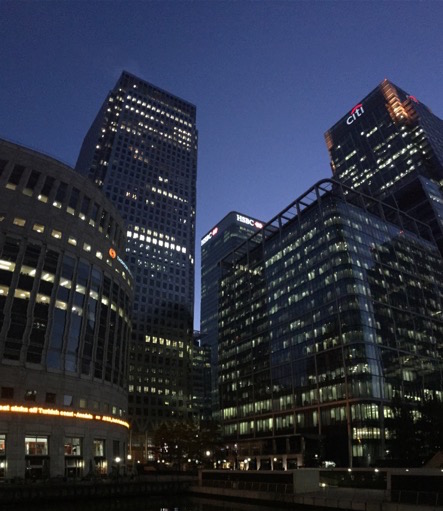
    Canary Wharf towers

    London’s financial services sector is the gift that keeps on giving. Through Y2K, the dot com bubble bursting, 9/11, 7/7 and the credit crunch, the good times never stopped rolling.

    I’m now experiencing deja vu. My very first contract in Docklands was at Harbour Exchange, working for Lloyds TSB. I wore a shirt with cufflinks shaped like taps. I thought I epitomised the height of business fashion. In my defence, I was only 20 years old.

    As I look around the glimmering tower blocks on the wharf, and look at their revolving doors leading into their fancy foyers, I realise that I’ve done at least two tours with so many of the companies: HSBC, JPMorgan, Barclays, Lloyds and others too.

    It’s good that these places will have me back. Why wouldn’t they? I left on good terms, with great references and a bunch of people who’d remember me and some of the things I did when I was there.

    But, I’ve started to burn bridges.

    I know how to play the game and keep my mouth shut; not rock the boat. I know that the whole banking world keeps you hostage with golden handcuffs. You’re ridiculously well paid, so you try to silence the voices in your head that say: what we’re doing here is just not ethical.

    You can immerse yourself in the propaganda, that says that the financial products that we offer are greasing the wheels of commerce, but you know that deep down, most of what you’re doing is helping the rich to hide their wealth and shield it from taxation. When you ask your customer what their source of wealth is, they’re not exactly going to say that it’s sweatshops and drugs, are they? They’re not exactly going to confess that their family is wealthy because they embezzled a load of money, leaving their fellow citizens starving.

    Even a close friend, who seems reasonably ethical banker, has helped his father – a judge – to hide the family wealth in an offshore trust. They had some problems proving that they controlled the money, in order to get a mortgage, but the bank was eventually satisfied. The people who work in banks are outsmarting the ones who work for the regulators and the taxman, so that’s why the rich pay very little tax, while the poor shoulder the burden of social programs. Socialism for the rich and capitalism for the poor.

    Am I a hypocrite? Am I ungrateful, when I bite the hand that feeds me? Well, the easy defence is just to say that if I didn’t do my job, somebody else would. Isn’t it better that I’m on the inside, trying to make things better, than on the outside where I would have very little power and influence. I could easily throw my clogs into the loom, if I thought that was the right thing to do.

    Fintech is a conflation of financial and technology. Fintech tends to mean the challenger banks and ecosystem that exists outside of the long-standing institutions. Arguably, I’ve been working on Fintech – financial services technology – since 1998, but yet I might get mocked by my startup buddies as working for dinosaurs. Indeed, one well-respected friend from the venture capital world, even wrote a blog post which suggested that my return to Canary Wharf was an admission of defeat; a failure.

    I do feel like a failure. Even though I just secured yet another contract for yet another massive bank, doing some cool stuff with AI and other bleeding-edge tech, and I’m going to be exceedingly well remunerated, I still feel like I sold out. I’m also really worried about my chequered past catching up with me. Instead of popping a champagne cork in celebration of my new role, last night, instead I have butterflies in my tummy and I’m incredibly anxious about getting everything signed, starting the job and making a good first impression, without any hiccups.

    My self-assured manner and my self-confidence has all been destroyed, replaced instead with self-doubt. I started looking for a new contract on the 30th of November, and it took all this time to get one. I take that pretty personally, and I worry that I’m not a competitive candidate anymore: I’m not making the grade, amongst the other contractors in the market.

    Obviously, when I actually start working these contracts, I realise that there’s a real lack of tech pedigree and good leadership. I realise that there is a need for my skills and experience, and I can add value.

    However, I struggle to play the game anymore. I struggle to keep my mouth shut for the benefit of my career and my bank balance. I struggle to let things go, for my own personal benefit. When I see wrongdoing and incompetence, I feel that I have a responsibility to the general public, to not just turn a blind eye. I feel like I have to act ethically… not because the regulators are watching, but because it’s the right thing to do.

    I struggle to do the work anymore. I don’t enjoy tech for tech’s sake. Often times I don’t really believe that tech is improving anything. Most projects are doing the same kinds of things that have been done time and time again, for years. You’d have thought that if we were solving real problems, we’d have solved them already and moved on to something more useful, like finding a cure for cancer. The banking problem – debit account A and credit account B – is not a hard one to solve.

    Who the hell am I, to sit idle for the whole month of November, writing a novel instead of trying to get a job. Who am I to arrogantly assume that I’ll be able to win another lucrative contract, instead of getting a regular job like everybody else does? Who am I to only work 4 or 5 months of the year? Who the hell do I think I am?

    Well, you’re welcome to hate me if you like. I’m a banker; a capitalist pig; a lickspittle of the wealthy elites who cause so much human misery.

    However, I’m an ideological misfit. I know that I’m well remunerated, but I don’t confuse that with value. I don’t feel valuable, I feel like I’m wasting my time building stuff that doesn’t help; it hinders. I feel bribed into doing a job, because I need the money. Aren’t we all? Yes, so why work a job that’s just as pointless, but get paid a lot less? Do you think that by depriving that massive corporation of yourself, you’re hurting them?

    Arguably, if we were to all take an ethical stance with our employment, and refuse to work for weapons manufacturers and banks, we would starve them of the manpower they need to function. However, humanity responds to incentives: if you couldn’t buy guns, somebody would start sharpening pointy sticks and selling them; if you couldn’t get a bank loan, loan sharks would lend money.

    The problem is when you follow a set of rules to their ultimate conclusion, you get some undesirable outcomes. Free-market capitalism might work when you’re conquering the Wild West and building all the critical infrastructure to colonise the New World, but what about when it’s all done, and populations start exploding? Is it right that being born into wealth or poverty is not a choice: inherited wealth and ownership determine everything.

    If we pressed the ‘reset’ button and set all the bank balances to be the same, how many would lose and how many would gain? Yes, it’s unfair that some who’ve worked very hard would lose out, but what about those who think it’s unfair that their inherited wealth shouldn’t be subjected to a Robin Hood tax? Surely it’s more unfair that some people have a lifelong trust fund income, while others have to flip burgers and still can’t afford to raise their families. Surely, there are more people who would benefit, than lose.

    So, eventually I arrive at the conclusion that we need to have debt forgiveness, or else civilisation will be destroyed. I mean, what are the wealthy even doing with all their ill-gotten gains? It’s dog in a manger behaviour that’s the problem here, not jealousy.

    In the rigged system we’ve built, success is not about hard work. The fable of the girl who swept the factory floor being promoted up the career ladder until she was eventually the CEO, is total horse-shit. We know that all the best jobs go to wealthy men from a handful of powerful families. You could bust your ass your whole life, and still have nothing to show for it except the little plastic stars on your McDonalds name badge.

    To say “twas ever thus” and blame human nature, is disingenuous. You don’t have to look very hard to see that civilisations rise and fall, based on the satisfaction of the hoi polloi. It doesn’t matter how high you build the walls: when enough people want to smash down your defences, you’ll find that even the most robust barriers are too flimsy to protect you.

    What do we really believe in? What cause are we fighting for?

    The top echelons of society are wealthy enough to have their every whim catered for, but what do they believe in? How many of our rulers are passionately engaged in the pursuit of something more meaningful than money?

    I wanted to save up and buy a house. I wanted luxury holidays and fine dining. I had become totally bourgeois.

    If we leave noble causes – like the search for scientific knowledge, world peace and hunger – to a handful of charity workers, while we ourselves fret about buying a bigger house or another boat, then our most educated and powerful portion of society is consumed by the consumer economy, which is intent only on separating fools from their money.

    Western civilisation will fall, as if knocked over by a feather, because we believe in nothing.


    Tags:

  • Head Office

    This is a story about referees…

    Office blocks

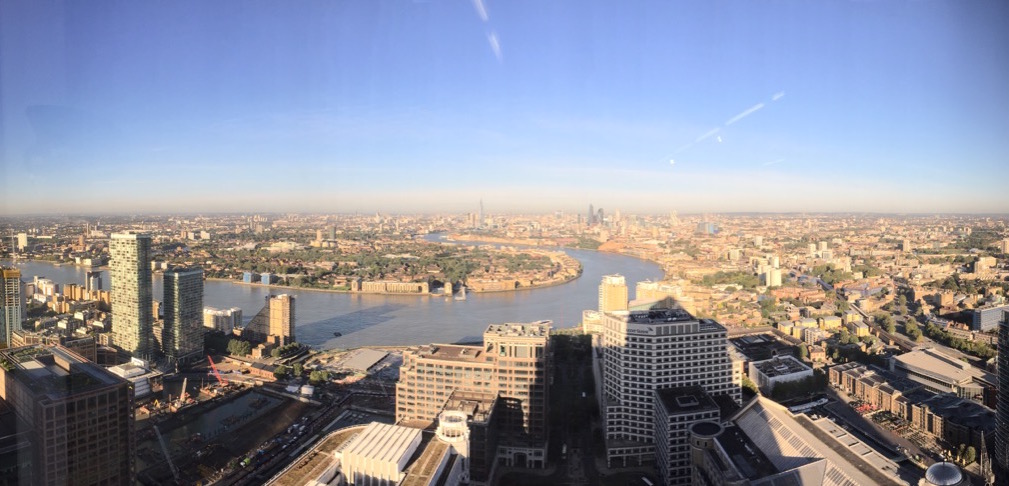
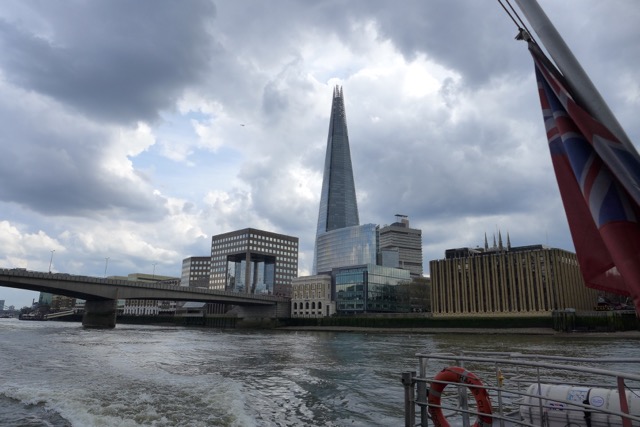
    Here’s me travelling to work by boat during the tube strike. But why do you even have to go to work anyway? Why do we need the fancy towers of glass, steel and concrete? Why do we need to move millions of people away from their homes and into the cities every day? Why do we need to inflict untold agony on a huge proportion of humanity, just so we can keep some office chairs warm?

    Imagine the global economy to be a game of football: the defenders are the police, army and healthcare professionals; the midfielders are the builders, farmers and fishermen; the attackers are the engineers and scientists. So, who’s the referee?

    The banks are the referee: they’re the ones keeping score.

    Banks are simply supposed to keep a tally – a balance – of who’s winning the game. That’s it. Nothing more, nothing less. You can play football without a referee, but it’s supposed to be a fairer game if you have somebody impartial to be in charge of the match, running it according to the rules and without cheating.

    Why the hell would over 80% of our economy be given to the people keeping score?

    If you think about it, most of what goes on at head office is administration. Administration never put food on the table or a roof over anybody’s head. Administration is an unnecessary overhead, not a business in its own right.

    For sure, administration is hard and complex, but that doesn’t mean it’s valuable. Just because you’ve been to business school and got your Masters in Business Administration (MBA) doesn’t mean you know fuck all about building a profitable business that adds value to humanity. In fact, you probably got a bit confused and you started to think that administration is the same as business.

    If you don’t pay your taxes, the government will shut you down. If you don’t follow the trading laws, your business is going to get big fines and may be forced to cease trading. However, following the regulations isn’t actually the same as running a business.

    It’s easy to believe that because your business is well administered, your book-keeping is well done and your taxes are all paid, that you’re doing a great job. In fact, that’s utter horse-shit. What does your business actually do?

    So much money is wasted building fancy head offices and filling them full of administrative drones. One office block I worked in actually had a worm farm in the basement in order to eat all the useless paper that was generated by the bean counters.

    Do we really need all these people doing bullshit jobs? Do we really need all these records and processes? Is it really helping humanity? Is it making anybody happier?

    Today, London was paralysed by a tube strike, but what’s the fucking point of those miserable journeys into the office anyway? What got done today? What wouldn’t get done if nobody turned up? Would the world end? Would people go hungry or not have a place to live?

    “But what about money? What about mortgages?”

    Fuck those things.

    There are plenty of resources. There’s plenty of land to build houses and grow food. There are plenty of rivers and reservoirs. There’s plenty of wind and solar energy to be harvested. Fuck sitting at a desk shuffling paper around. Fuck kowtowing to some bean counters.

    You’ve been mortgaged. The reason why you have to do a pointless bullshit job that adds no value to humanity, is because the natural world is being destroyed to create more phallic towers of concrete, full of administrative drones, to add some more fucking zeros onto the digital bank balance of a small-penised oligarch. Does that sound like a useful endeavour to you? Is that how you want to say you spent your life?

    It maddens me that we have to get up early in the morning in the middle of winter and struggle to get to ‘work’ on overcrowded commuter trains, because our bullshit economy worships the referees; the bean counters. The banks are supposed to grease the wheels of commerce, not hoover up all the fucking wealth.

    It disgusts me that the lawyers, accountants, bankers and other financial service leeches are wallowing in cash, doing precisely fuck all of any value, and mandating that humanity has to commute across the country twice a day in order to shuffle paper around a desk and move digital money in increasingly pointless complex ways.

    In financial markets, we talk about ‘naked’ positions. That is to say, the trading of a financial product with no need to do so except to try and make a quick buck in the global casino. Futures contracts were invented so that a farmer could sell his corn before it was harvested, in order to buy a combine harvester, and so that the corn flake factory knew exactly what the cost of their raw materials would be. Futures contracts were NOT invented so that some wanker who flies a desk could make an easy buck without so much as breaking a sweat.

    The whole fucking system has gone berserk. Money is supposed to be exchangeable for labour or scarce goods, but instead money’s just casino chips that have no use outside the global financial markets. We’re all paying a heavy human price for our financial services, accounting, legal and administrative world, where we’ve ended up toiling over ever-growing mountains of worthless paper, instead of trying to build a better life for ourselves and future generations.

    What the fuck are we doing, when our most brilliant minds go off to work in head offices, doing administrative and accounting type jobs, writing legal contracts, banking and other kinds of referee type bullshit? What the fuck are we doing, running a football match with 22 referees and a kid with two left feet who can’t kick a ball?

    Referees don’t make a football match. Head offices don’t make an economy.


    Tags:

  • Away From Keyboard (AFK)

    This is a story about real life, far from the Internet…

    Dusty Keyboard

    Are you familiar with the acronym “IRL”? By some definitions, it stands for: In Real Life. Many people believe IRL is a synonym for any human interaction that occurs face-to-face. Did you also notice that I always capitalise the word Internet? Ever wonder why I do that?

    If I speak to somebody on the phone, is that real life? If I send them a handwritten letter, is that real life?

    The distinction between ‘real’ life, and the life we live with technology mediating our interactions with each other, has become rather pointless. I’m no great fan of video chat, but it’s certainly an advancement on the telephone. All telephone calls are routed through digital exchanges, and the same infrastructure that carries your voice also carries the data of your Internet connection. There’s nothing much more real about having a face to face conversation, shouting through a wall at your neighbour, making a Skype call (who does that anymore anyway?) or phoning somebody on their mobile.

    The Internet is a real place, hence the noun. People can meet there, trade goods, gossip. “But you can’t physically interact” I hear you wail. “What about touch, smell, taste?” Yeah yeah yeah. Are you saying that the phone-calls you used to make on that old rotary-dial telephone weren’t real life?

    This is the beginning of a piece I’ve been wanting to write for ages. I made a note on my smartphone of the title, but I’d already been mulling the topic since a friend – who I’ve seen in real life only twice since childhood – made the very good point about the Internet being a real place. I was thinking about writing this well before a different friend – who I hadn’t seen in real life for nearly 20 years – posted an article on this topic on Facebook. The timing is too perfect.

    I’ve lived ‘online’ since I saved up my money from my job washing up in a hotel kitchen in order to buy a modem. When I bought my modem, the Internet wasn’t yet a big thing. Instead, I used to get magazines that had loads of phone numbers in them of dial-up bulletin boards. Using technology that predated the Internet in the guise we know it today, I used to be text-chatting online, electronically mailing people and playing online computer games, via bulletin board systems (BBSs).

    Then, I took to Internet newsgroups which were a popular fore-runner to the forums and social media pages we have today. I even met a rock climbing partner on a newsgroup. If you don’t think that putting your life in the hands of a random stranger off the Internet is real life then I don’t know what is.

    I spent thousands of hours reading and contributing to three kitesurfing forums. People who I first met online had countless evenings spent drinking, weekends away and holidays to exotic locations together. All of which occurred away from keyboard but it was very much real life. It was real when we were all talking to each other on the Internet all week long, during our dull office hours, waiting for the next time we could go to the ocean together.

    This is where things get super blurry. I have so many friends I’ve made through social media (newsgroups, forums) and a lot of old friends I’m able to still remain in some kind of contact with because we are connected via Facebook. Would I have been able to pick up an old friendship with school/college friends who I hadn’t seen for circa 20 years, if there hadn’t been some real and somehow tangible tie together, even if it was mediated by binary ones and zeros in the ether of the ‘cloud’?

    The dust has been gathering on my keyboard since I completed the first draft of my novel. I haven’t been blogging regularly for a while. I miss writing and I miss having an open dialogue with everybody and anybody on the Internet. The Internet has brought me friends and fortune. I’ve never regretted the investment of time I’ve made in channelling my creative energies into a public space that creates nothing tangible per se. What is software? What does it mean to publish a blog or a book online? If you can’t hold it, sniff it, lick it… if it doesn’t gather dust, does it really exist?

    There was one slightly embarrassing moment in my recent adventures Away From Keyboard.

    I was out for dinner with another friend. You could say I know him in real life because the first time I met him was face to face… or you could say I know him through the Internet, because he was introduced to me by somebody I know from an Internet discussion forum. Either way, it’s immaterial to the embarrassing story.

    Over dinner, my friend expressed his incredulity at the fact that the value of all the coal bought and sold is a tiny fraction of the total value of all the financial contracts (securities) that are created off the back of the physical commodity. So many more coal futures and options contracts are bought and sold by speculators, hoping to profit from a movement in the price of the commodity, versus anybody who actually wants the real coal. The dirty black lumps of carbon are almost unimportant… the ‘value’ in the financial markets dwarfs the heavy industry that mines coal out of the ground and ships it to power stations and for people to heat their homes.

    The embarrassing thing was that I went to speak and then I realised that I had nothing to add. I was left speechless. I’ve written at length on my blog about the staggering ‘value’ of the derivatives contracts versus the real economy. Is it me who’s splitting hairs, expecting us to care about food and housing and water and healthcare and transport? Is it me who’s the luddite, saying that the global financial markets are utter horse shit because it’s all just digital money in the Fintech ‘cloud’?

    Maybe the real embarrassment is that I’d had that conversation before, with a hedge fund manager and a director of an investment bank. We were on our way home from the airport, having been kitesurfing in real life with 20 people from an Internet discussion forum. I was just about to start work for JPMorgan, dealing with Credit Default Swaps. We thought that the financial markets were overleveraged and that there was going to be a crash. That was 2005.

    Did I put my money where my mouth was? Yes. I bought dollars at nearly $2 for every £1 I paid, and bought gold at $550/oz. One ounce of gold cost £225 back then. One ounce of gold is worth £920 today.

    The point is not to be a doom-monger or gloat in a “told you so” kind of way, but to try and express how tired I am by everything. Being Cassandra is shit. Churning out my thoughts into the ether has allowed me to say everything that needed to be said, but it left me kind of breathlessly shocked to encounter anybody who’d arrived at the same rational and reasonable analysis of a ridiculous situation. That’s one thing you don’t get when you’re lecturing the Internet: any kind of feedback that anybody agrees with you.

    So, what’s my closing conclusion? I’m back blogging, because I love writing, but aside from setting out my position clearly for posterity, some time away from keyboard is pretty handy to remind oneself that there are a lot of people out there in the real world who share my values and concerns.


    Tags:

  • Middle Management

    This is a story about earning money…

    Middle management

    In the agricultural revolution, the scythe, the plough and the mill brought about greater productivity in our fields, and put more bread in our bellies. In the industrial revolution, the steam engine, the foundry and great big machines brought about greater productivity in our factories, and put shoes on our feet. In the information revolution, the spreadsheet, email and meetings have brought about greater productivity in our offices, and put zeroes on the end of the bank balances of the mega wealthy.

    The average return on capital is exceeding the growth rate. This means that no matter how hard you work, the rich will get richer and poor will get poorer. If you are already wealthy, you will grow more wealthy, but for the rest of us our wages are falling in real terms.

    “The triumph of human capital over financial capital and real estate, capable managers over fat cat stockholders, and skill over nepotism is largely illusory.” — Thomas Piketty

    It’s a depressing situation, but sadly it’s true. We are now living in the era of the supermanager. The remuneration for those at the top of the pyramid is completely unhinged and insane. There is absolutely no way that the eye-watering salaries demanded by top executives, in any way reflects their productivity. In fact, quite the opposite.

    The National Health Service (NHS) has spent billions on re-organisation. The NHS is drowning under a sea of managers, while front-line services are cut back.

    The reason why economic growth is stagnant, is because productivity is an illusion. When nearly everybody is a manager, hardly anybody is actually doing any work.

    Managers only do three things:

    1. Any good news from their team, they just forward to their boss
    2. Any pressure / demands / requests / questions from their boss, they just forward to their team
    3. They think up ways to justify their jobs

    A manager has a lot of time to dream up creative ways of wasting everyone’s time, because they don’t actually do any work. A manager needs to look busy, so they come up with all kinds of time-wasting scams and schemes in order to justify their pointless existence.

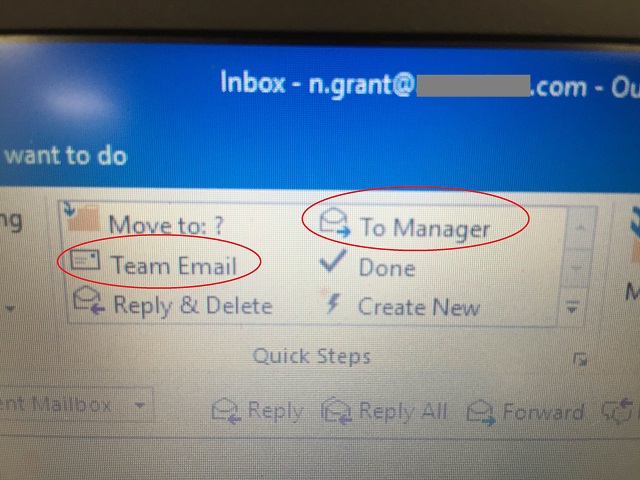
    Microsoft have actually cottoned on to the fact that there is a giant army of middle managers, who do nothing but forward emails up and down the chain of command. In the email program Microsoft Outlook, there are actually buttons that make it even easier to just forward good news to your boss, and to forward other requests and things to your team. I literally just need two buttons to do my job. I don’t even have to do any typing.

    People don’t like doing the typing.

    Everything’s a copy & paste job. Being a manager has become a job of forwarding emails and sitting in meetings because you’re bored. If you feel really pointless, you can do a Microsoft PowerPoint presentation to bore the shit out of everybody. Nobody writes concise emails that everybody can dutifully ignore because they’re pointless noise.

    There are a few idealistic young employees – unpaid interns – who do all the work, which is then re-hashed as it works its way up through the ranks of middle management. Every layer of management is careful to remove any reference that would give credit to the person who actually did the work. Managers pass things off as their own effort, although secretly they know that they don’t actually do anything.

    This is so much worse than Imposter Syndrome. Most managers are actually imposters. They’re there for the comfy seat, free coffee, warm office and hefty pay packet at the end of the month.

    It’s no wonder that lean startups are actually able to deliver great things: they’re unencumbered by the valueless people who try to add value when actually they do nothing of the sort.

    Trying to get a decision out of the chain of command is like trying to nail jelly to the wall. Managers know that the only way they’re going to get fired is if they make a decision that turns out to be wrong. The easiest way to be secure in your job is to avoid taking decisions. The very managers who were hired to be executives – high-powered decision makers – are actually avoiding ever making a decision, in case it ends up reflecting badly on them. No manager has the guts to actually make a decision and face the potential consequences. Middle managers are experts in avoiding all responsibility.

    We now have an office culture, completely dominated by a kind of ‘pass the parcel’ children’s game. Everybody knows that things are going badly because nobody is doing any work and nobody is making any decisions or showing any kind of leadership. Instead, the buck gets passed round and round, as everybody tries to blame everybody else, and avoid any responsibility themselves. Often, it’s the very people who are too busy doing the actual work who get blamed, because they didn’t have the time to play the silly game and cover their arses.

    You can be assured that when things go wrong, the blame will trickle down, until some poor sod on the front line is criticised for not staying on top of a totally unreasonable workload. Some poor scapegoat will be blamed, because they made a minor error, through exhaustion and stress.

    What’s remarkable is how few ‘executives’ actually face the chop themselves, when everything screws up. You would have thought that the whole point about receiving a big salary would be because you were the one taking responsibility, and therefore you would be to blame when things go wrong. However, there is absolutely no corporate accountability. It is the workers who are held accountable by their managers, because the workers are too busy to spend time justifying their existence and covering their arses.

    The most profitable thing of all is to sit idle, on a pile of money. You can never make a mistake if you simply earn interest on your capital. There’s nothing ventured at all, when your wealth is growing simply because you own the casino. House always wins.

    If you have wealth, if you have success, if you have an audience and fame, then you can leverage it to become even more wealthy. What – pray tell – is the innovative business idea behind Keeping Up With the Kardiashians? Presumably, some family who are completely lacking in wealth and fame would also like to be highly paid to be featured on reality TV? However, it is only those who already have wealth who are given the opportunity to make more wealth.

    This era of low growth and wealth worship is absolutely destroying society. The economy is run for a tiny elite with unimaginable wealth, while the vast majority struggle in dead-end careers that are stressful and boring.

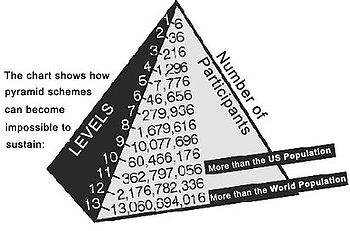
    Middle management is just a position in the lower order of the entourage of the oligarchs, royalty and fat cat plutocrats. Middle managers have bought into the belief that they are going to succeed in the capitalist’s pyramid scheme. Organisation charts give the belief that you are ‘only’ a certain number of layers of management from being the CEO, but it’s a con, because each layer of middle management expands the base of the pyramid by a factor of 10.

    Pyramid scheme

    Organisations have now started to throw around job titles like “Vice President” and “Managing Director”, and there are even CEOs who are not actually CEOs. An organisation like HSBC might have hundreds of “CEO”s amongst their 230,000 staff. It’s just a bullshit job title given away to make somebody think they’re getting ahead in the game.

    The fact of the matter is that while we toil in the hope of a promotion and a pay rise, we are wasting our time because we are becoming de-skilled and institutionalised. Our grandfathers could build houses and fix mechanical things. Our office-based service industry economy has left most people unable to even change a lightbulb.

    Come the revolution, when there are power cuts and the Internet stops working, how much use are your skills in forwarding emails?

    The middle managers might be able to justify their jobs today, and are attempting to stuff as much money in the mattress as possible, but it won’t be enough. Even property deeds, policing and the rule of law won’t matter when the masses rise up in anger at having been oppressed for too long. Even soldiers are feeling the economic squeeze, and will be unwilling to turn their guns on their own people, in order to protect the plutocrats.

    The unwillingness to address income inequality and share the wealth can only lead to popular uprisings.


    Tags:

  • Blogging at Work

    This is a story about office life…

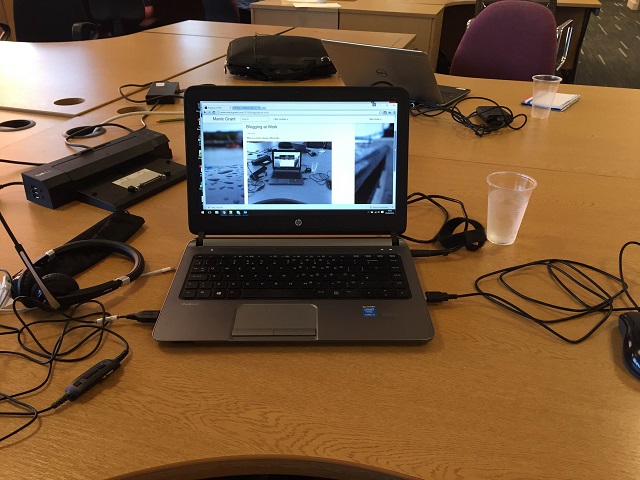
    Image within an image

    Look closely at the image above. It appears like I already wrote this blog post. It certainly feels like that. Haven’t we been here before? Deja vu?

    When you get stuck into a cycle, how do you break out of it? When the loudspeakers scream with feedback, because the sound that the microphone captures is being amplified and re-amplified, how do you reset, without cutting the power?

    My behaviour might look self-sabotaging, but I’m actually deliberately burning bridges so that I have no line of retreat back to the places that made me unhappy in the first place.

    When I worked in the City the first time around, I used to have 3 or 4 strong macchiato coffees every day. That’s 12 espresso shots. I used to get drunk most lunchtimes and after work. I needed 2/3rds of a bottle of red wine to get to sleep, after all that coffee.

    Uppers and downers, round and round. We rode the rollercoaster nonstop until we were sick. Every day, every week, every month, every year… they were the same.

    When I was in my early 20’s it wasn’t such a big deal. We used to tank up on caffeine, churn out a load of code that would form the backbone of the world’s economy, and then go get drunk to try and calm down a bit. We thought we could carry on like that forever, with our uppers and downers.

    I saw colleagues get sick with stress, anxiety, depression, alcoholism. Some of my colleagues needed liver transplants. Some of my colleagues died. The system chewed us up and spat us out.

    By my mid 20s I’d owned a yacht, a speedboat, sportscars… for some reason no amount of material possessions and status symbols seemed to quench the massive insecurity and frustration with life. Take a socially awkward, unpopular geek, sprinkle in wealth and the illusion that you’re being ‘successful’ in life, and you wind up with a pretty confused adult.

    While my schoolfriends paired off with lifelong partners and started to have children, I would suddenly decide that a loving relationship would be my salvation. I moved to a Surrey commuter town with a girlfriend, and started to play golf and generally start to think & act like a middle-aged family man. That was a bit of strange thing to do for a 21 year old.

    Back in London after my first experiment into becoming a happy adult had failed, I satisfied myself with extreme sports, Internet discussion forums and lots of holidays and weekends away with nice big social clan. The London Kitesurfers ‘club’ was a lovely thing to be part of for several years. However, I still felt that I was missing that ‘love’ piece of the puzzle.

    Some nice scientist kitesurfer girl seemed to tick all the boxes, and I launched myself with great intensity at a long-distance relationship that was never going to work. Relocating to the South coast, I quickly got involved with a geek girl who was into adventure sports: she seemed ideal, on paper.

    I set about building the framework for a comfortable family life: the house, the steady job, the sensible car. However, I ignored the massive red flag: my girlfriend was a mean person.

    I’m not easily dissuaded from my goals. Whatever obstacles I encounter, I just go around them. I’m a completer-finisher. I try to fix, improve, change, rather than throw things away or start again.

    Anyway, I was flogging a dead horse. No matter how many times I painted a perfect picture postcard of how life could be, I’d found somebody who was stubbornly resistant to the idea of being nice and kind and supportive of the person who potentiated a 5-star luxury lifestyle for both of us. There was plenty of space for us both to shine, but sadly, she wanted me to be subdued and subserviant. She had gotten used to being showered with praise and being top of her class. She wasn’t used to sharing the stage. She wasn’t prepared for both of us to be happy.

    I abandoned that life. I lost my business, my reputation with the major employers in the local area, my house and a substantial chunk of my wealth. I was fighting for survival, so I didn’t have the time to go and carefully unpick the things that I had spent years building. I had no need of a house and shedful of things. What was I going to do with all that stuff? It was an unncessary millstone around my neck.

    Now I find myself following a tried-and-trusted formula for wealth and ‘success’. I’m rapidly putting together a lovely home again. I’m rapidly rebuilding my cash position. I’m rapidly rebuilding my reputation. However, I’ve seen it all and done it all before. I’m just going through the practiced motions.

    “How did you know that was going to happen?” my colleagues ask me, like I’m some kind of clairvoyant. My ability to ‘predict’ the future is nothing more than making educated guesses, because I’ve been seen it all before. It looks prescient, but it’s no more amazing than somebody who’s learned from their mistakes.

    That means my day job is pretty dull. I finish people’s sentences, and I take great delight in giving people things they need before they ask for them. I’m ahead of the game. In the oft-quoted words of Wayne Gretsky, I’m skating to where the hockey puck is going to be.

    I’m aware that this seems very arrogant. I’m not delusional. I know I’m not special or different. I know I’m no smarter than your average Joe.

    I’ve done a ‘gap’ analysis, of my unsatisfying, unfulfilling and depression-filled life, and it seems like I need a dog, a cat, some kids and a loving supportive partner. If you ask children to draw a picture, they’ll normally draw a house, the sun, some clouds, their parents and brothers & sisters, their pets. It seems like a pretty tried-and-trusted formula for life.

    However, I even feel guilty about my cat living with my parents because he comes from a broken home. My cat, Frankie, has had to move house once in his kitty life, and I feel bad about the disruption and stress I caused him. I would love it if Frankie could live with me, but it would be cruel to make him live in a 4th floor apartment in a busy city. Having Frankie adopted by my parents, with their generous garden and surrounding Cotswold countryside, was the least bad option, but I still feel guilty.

    Can you imagine how bad I’d feel if I had kids and they had a stressful home life? Can you imagine how guilty I’d feel if I knew that I selfishly chose to have children because they would give my life purpose and meaning, but I failed to adequately consider that the world I bequeathed to them is dying?

    I’m running in autopilot at work. My brain is on tickover, doing my job. This unfortunately leaves a lot of time to consider the plight of the world’s poor and struggling people. I have a lot of time to think about war and preventable diseases. I have a lot of time to think about inequalities and morality. I seem to be like a sponge, sucking up all the pain, suffering, cruelty, anger, hostility, selfishness, greed and immorality that seems to characterise the human race.

    I could cut myself off from reading the news, but what would I do all day while I’m bored at work?

    I can read the news, and if I get caught then nobody’s really that bothered because I’m on top of my work and performing well. If I write my blog and try to stay on top of these feelings that threaten to overwhelm me, then I’m always nervous that my mask is going to slip.

    I’m flirting with disaster anyway, wearing a semicolon tattoo just behind my ear, that advertises my struggle with depression, anxiety, addiction, self-harm and suicidal thoughts and suicide attempts.

    When you have a problem, you can try to solve the root cause, or you can find a workaround. I know what the workarounds are. I know what the root cause is. I’m just not really satisfied that I can either do much about human nature and a selfish race intent on destroying itself, and neither am I very happy to attempt to insulate myself from reality, using drugs and money to put myself into a protective bubble

    Begging is illegal in the City of London. Canary Wharf is a private estate, so undesirable members of society can actually be thrown out of the rich little enclave. You can kid yourself that there aren’t any problems in the world, because you don’t see them – out of sight out of mind – but that’s why we got in this mess in the first place.

    What happens next is as much a question of morality as it is a question of personal survival. Is it better to have lived life with some values and standards, rather than just saying “I was just doing what everybody else was doing” as if that’s some kind of defence.

    I know this is very lecturing, and once you’ve got skin in the game you have no choice but to try and do the best for your tiny tots, but I have a choice. I actually choose not to get a dog, because they’re polluting (dogs need to eat masses of meat) and I choose not to have a family, because I can’t make any guarantees that there’s going to be a liveable planet for them to grow up on.

    It doesn’t make me a morally superior person. It’s just the way I personally think. I know parents are racked with worry about the kind of world that their kids are going to inherit. I do empathise with the stress and challenges faced by families. Doesn’t mean that’s an excuse for me to join in though.


    Tags:

  • Clean Conscience

    This is a story about immorality…

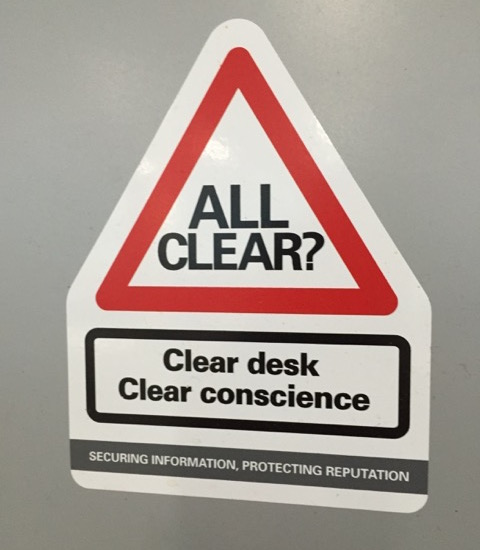
    Clear Conscience

    When the end comes, did you feed people? Did you clothe people? Did you shelter people from the storm?

    If you profited from human misery, you’re going to find it pretty hard to live with yourself, knowing that you’re about to die.

    If you didn’t build anything of consequence, or bring joy to people’s lives, the chances are that you were simply a perpetrator of human suffering.

    “Oh I just did the accounting”

    Yes, but you probably helped the loan sharks to kneecap ordinary people. Debt is slavery. Did you work for the banks, in raping the planet and taking all her natural resources in order to poison the very air we breathe? How are you able to sleep at night? Because you shredded all the evidence? What a load of horse shit!

    Have you extrapolated what you do, and considered a planet where we all perpetrated the same fucktardery as you do? It’s literally Hell on Earth when everybody is just a selfish shitbag.

    You can’t say “other people were doing it too” as any kind of defence. Morality is absolute, not relative. Just because you were surrounded with other monsters who were riding roughshod over the struggling masses, doesn’t mean that you are somewhat in the clear. Your conscience doesn’t lie: if you’re fucking people over, you’re a bad person.

    Unquestionably capitalism doesn’t work for the vast majority. When less than 70 individuals have more money than over 50% of the global population put together, you’ve gotta call out that system as utter bullshit.

    Sure, you’ve gotta pay your mortgage and your kids need shoes, but what the fuck kind of world are they going to inherit anyway if you’re just an immoral fucktard. It’s no defence to say “I was just following orders” or “I was just doing what everybody else was doing”.

    Stop. Think. Act.


    Tags:

  • Escaping the Rat

    This is a story about bullshit jobs…

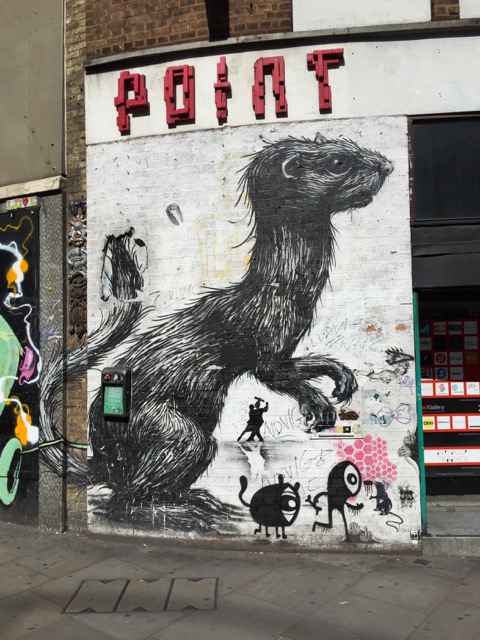
    Rat Attack

    In the east end of London, sandwiched inbetween Hackney and the area that used to be responsible for producing clothes and shoes, is the tiny oasis of Silicon Roundabout. The concrete mostronsities that sprung up in the postwar era, after the factories were bombed to shit, are now home to the darlings of the UK’s tech industry.

    TechHub, which is just a stone’s throw away from the Old Street roundabout, prides itself on not having a proper ceiling to conceal its air conditioning ducts. The desks are battered and constructed from scaffolding. The urban decay of the whole area is part of the appeal. I mean, you can work in a disused underground train carriage for fuck’s sake… some kind of hyper-trendy modern office.

    And yet, this hipster village borders the City of London, where the world’s investment banks and hedge funds headquarter themselves. Money is made hand-over-fist in London’s financial districts, and all of the profits are enabled by smart tech people. There isn’t a single cent that lines the pocket of a capitalist without some computer geek having written some software to make it possible.

    There are two kinds of brain drain in operation.

    Jaded City workers jack in the corporate humdrum of suits and 9 to 5, to head into the world of Hoxton, Shoreditch and Silicon Roundabout in order to grow a ridiculous beard and ride a bicycle with fixed gearing. Meanwhile, the very smartest are poached from the digital agencies and other parts of the thriving software community, in order to build the backbone of the financial system and re-architect the whole world economy.

    Sadly, the main conduits for smart people still deliver the bulk of those graduating with first-class degrees and 2:1s from the best institutions, straight into the hands of bloodsucking parasites.

    What was your degree in? Chemistry? Geography? Psychology? English? History? Epidemiology? Medieval iconography?

    Who fucking cares?

    If you’re smart enough to have risen to the top of your classes, you’re going to be hoovered up by the financial services sector, which dominates 80% of the British economy. Sooner or later, you’re going to find yourself working in a towering phallus of glass and steel, which is a monument to the stupendous stupidity of man.

    While red-braces wearing men fill their wheelbarrows with worthless paper, the rest of the world rumbles on, but is seen as unimportant compared with the “masters of the universe”. It’s obvious that you can’t eat a futures contract, or a derivative, but yet the bulk of the ‘money’ in the world is derived from legal contracts that are almost impenentrably complex. Clever little cunts just coming up with clever schemes to scam the ‘real’ economy out of their labour and productive output.

    How did it all begin?

    Well, at the Royal Exchange, a farmer decided to sell his crop of wheat before it had been even harvested. This was the original futures contract. From this grew options, swaptions, interest rate derivatives, exotic credit derivatives and every flavour of cuntery inbetween. It’s utter horse shit.

    Now, you work all fucking day and your salary isn’t even a rounding error on a balance sheet somewhere.

    The amount of cash in circulation is nothing. It’s meaningless. Financial services and the abolition of the gold standard means that the bankers are just adding extra zeros onto the end of everything just to prop up an utter horseshit system based on perpetual growth. As long as the masters of the universe are getting more zeros on their salaries and bonuses. That’s the real reason why anybody has to suffer austerity.

    Sorry about that.


    Tags:

  • Gold Rush

    This is a story about getting rich or dying trying…

    Irish Gold

    People come to London seeking their fortune. I went to Ireland seeking my salvation. In a way, I kinda found it.

    My life had fallen apart. I had lost a lucrative contract with Barclays through no fault of my own (the guy who terminated my contract was then sacked because of his stupid decision) as well as breaking up with my girlfriend, being evicted from my apartment in Swiss Cottage (again, through no fault of my own) and had once again found myself homeless and unemployed. Many friends took sides during my breakup, and I ended up suddenly alone.

    It was January, in the depths of a depressing British winter. No job, no money, no friends, no girlfriend, no nothing. I was fucked.

    A friend who I met in the summer, when I first became homeless, had returned to the emerald isle. He had generously made an open offer that I could go and stay with him and his family if I ever needed it, and oh boy did I need it. I was suicidally depressed and a big danger to myself. Camden council had been supremely unhelpful to a resident who they owed a legal duty of care, but they didn’t give a shit whether I lived or died.

    I guess a lot of unimaginative runaways go to London, and a huge proportion of them will end up in Camden Town. Camden is cool, undoubtably. Camden is full of wide-eyed young people, tourists, and huge amounts of recreational drugs, casual sex and music venues. It’s a great place to spend a summer on a shoestring, smoking strong cannabis and chatting up girls.

    I had made a couple of similarly Peter Pan-esque pals in Camden, in their mid thirties and working dead-end jobs on low pay, forced into living in hostels and dreadful squat-like houses with several people sleeping in every room. For me, it was a hugely novel experience, having been a wealthy IT consultant working in banking since I took my first big money contract at the age of 20, for Lloyds TSB in Canary Wharf. After 17 or so years of fabulous wealth, slumming it for a summer was almost fun.

    My girlfriend at the time was a waitress at an Italian restaurant. Despite having a degree in economics from the University of Bologna, she had rejected the rat race in favour of a minimum wage job and getting ridiculously stoned every day. She was fun and easy going, just so long as all you wanted to do was sit around while she chain-smoked joints, and have great sex of course.

    I wouldn’t say I outgrew my circle of friends, because I loved them dearly, but the stresses and demands of my contract at Barclays were not really compatible with the lifestyle of casual labour and the pursuit of recreational drugs. At some point, the worlds were going to collide.

    My girlfriend and most of my friends felt that I had arrogantly snubbed them, but in fact I was desperately dependent on our social circle for my wellbeing and happiness. When things all fell apart, I did too. I was devastated by the collapse of my social life, as well as losing the structure and routine of my employment.

    I ran away to Ireland, and my friend picked me up from Cork airport and took me back to the little village of Killavullen, that he and his family call home. Nestled in the hillside above the village, looking over the valley below and just at the edge of a vast forest, my friend’s family home is a peaceful idyll that is completely unlike the rat race of London.

    The timing was not ideal, and I arrived in the middle of various challenges facing the family, but they welcomed me and treated me with incredible warmth, kindness, care, despite the crises that they were dealing with. It’s not my place to be indiscreet about the family matters that I became aware of, but suffice to say the last thing they needed was some sick burnt out heartbroken citydweller suddenly thrust into the mix.

    My state of mind collapsed still further, as it became clear that there would be no reconciliation with my former friends: I was a pariah. There was nothing for me back in London, except a certain collapse in my will to live. My friend’s family insisted that I should stay with them until I felt fit and well enough to return home. I missed my return flight and didn’t book another.

    I tried to go along with the flow of family and village life, getting to know the people that my friend grew up with, and his family.

    My friend and I went panning for gold – I had bought him a kit while in England and had brought it over to Ireland for him – as well as climbing to the top of the ‘mountain’ that he lived on. We drove around the vast forest that covered the hillside, and explored the neighbouring villages, as well as nearby Cork city centre. Although I had visited Ireland twice before, I had missed the point about stopping to smell the shamrocks. I’m always in the mode of rush, rush, rush.

    We travelled to the huge cliffs at Old Head, and I stood there on the edge, having had a haircut, a shave, a bunch of hot meals and having slept in a warm comfortable bed in a welcoming family home for some time. Instead of wanting to jump off the edge of the cliff, I was actually happy to be alive.


    Tags: