writing – Page 15 – Nick Grant

Tag: writing

  • E = mc²

    This is a story about simplicity…
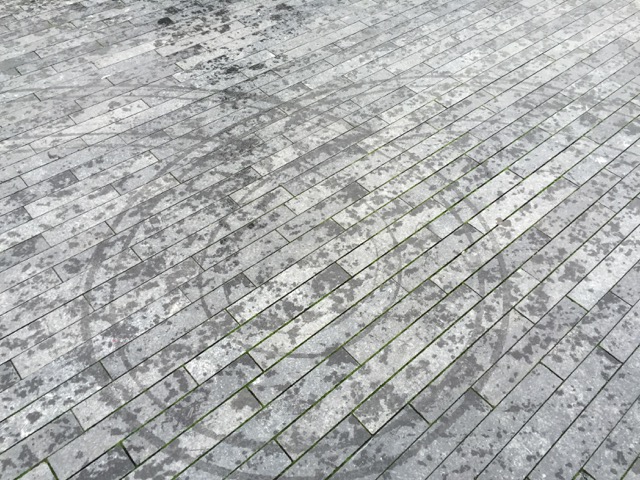
    Spiral

    A compressed spring is heavier than an uncompressed spring. When you lay down on your mattress, the springs of the mattress are actually getting heavier. When you get in your car, the springs of the suspension are getting heavier. When you wind up a clockwork watch, it weighs more. Wait, what?

    Yes, it’s as simple as I just said. When you squash a spring, the spring gets heavier. Any questions?

    Probably just one: whaaaaat?

    Well, it’s because of E = mc² you see.

    Oh, boring. It’s one of Nick’s crazy rants about physics. Perhaps he’s gone nuts again. Perhaps he’s having another hypomanic episode. Well, in some ways you’re right. But before anybody shouts “BANANA” at me [it’s my ‘safe’ word] you should really read on a little further.

    The reason why I race off on those hypomanic episodes is that most of the time, some evil passenger in my car keeps putting the handbrake on. People keep climbing on my back and making me carry them. People keep putting rocks in my pockets and getting me to drag their shit along for them. I’m basically frustrated as hell the whole time at the endless monotonous boredom and not being able to get on with my projects because of absolute bullshit. I just like to work on things and finish them, you see. If you tell me that you need something building, I’ll get on and build it, and give you a completed project, instead of sitting around with my head up my butt. I don’t really like sitting around with my head up my butt. I like getting on and building shit.

    And so, I become a compressed spring. The more that I’m held back, the more that I become coiled and squashed and full of energy, ready to spring forwards when I’m released. The time windows are very short, but I build a lot of cool stuff very quickly. I built iPhone apps that reached #1 in the charts in a matter of weeks. I built a gigantic summerhouse in my garden in the space of a few days. I don’t generally fuck about.

    “But why do springs get heavier when they’re compressed, Nick?” I hear you ask. It’s really easy to explain.

    Energy and mass are equivalent. Therefore, if you apply a weight to the top of a spring, and it squashes down, the energy that is stored up in that spring is stored as mass. More mass means the spring is more heavy. When you take the weight off the spring, allowing it to uncompress, the mass is converted back into energy, and the spring gets lighter again.

    That’s all that the equation E = mc² really says. It says energy equals mass [times the speed of light squared]. Energy-mass equivalence.

    OK… the speed of light squared is a pretty big number, so the amount of mass is pretty tiny compared to the amount of energy. So tiny that there isn’t a set of scales accurate enough in the whole world to measure just how much heavier our spring got, when we compressed it. The amount of mass that we created from energy, by compressing the spring, was teeny tiny.

    Equally though, you don’t need to turn much mass into energy to create lots of energy.

    When people talk about splitting the atom and nuclear weapons, I’m not sure what your average person on the street imagines. Perhaps they think that atoms are actually being destroyed to create the explosion. When a chemical explosive is detonated, the chemicals are rapidly being turned into gas, which is many many times more voluminous than the size of the solid or liquid explosives. This is not what’s happening during a nuclear reaction.

    The nuclei of atoms are held together by the strong nuclear force. Think of it like a door latch. The door latch holds together particles with similar electrical charge. I’m sure you remember playing with magnets, and you know that like poles repel each other. So, when you put the red end of magnet towards the red end of another magnet, they don’t want to touch each other. The strong nuclear force holds those two red ends together, stopping them from flying apart. This is much akin to our coiled spring.

    When the nucleus of an atom is split by being bashed into by another particle, a bit like a wrecking ball smashing into a house, then the ‘latch’ of the strong nuclear force is broken, and the particles with the same charge repel each other. The different parts of the atom fly apart because of this repulsion. It’s like those coiled springs are uncoiling.

    This means that energy is being released. Lots more energy than it took to unlatch the strong nuclear force that held the nucleus together. It’s a bit like a room full of mouse traps, all sprung-loaded and waiting to go off. It only takes one light little touch to cause one mouse trap to go off, and before you know it, they’re all setting each other off in a great big chain reaction.

    And that’s how a self-sustaining nuclear reaction works. A small amount of input energy is required to start the chain reaction, but once it’s started, there’s plenty of energetic particles flying around to smash into other nuclei and cause them to break apart. Less energy input was required than the amount of total energy output, and only a very small amount of the mass is actually being released, by the strong nuclear force being overcome, allowing the subatomic parts of the nucleus to fly apart.

    The same cascade reaction is used in a nuclear power plant as was used in the atomic bombs that blew up Hiroshima and Nagasaki. It’s called nuclear fission.

    So, how does this relate to anything? Well, whether it’s reading a stack of books about nuclear physics (this, by the way, was only the most basic introduction I’m afraid) or writing hundreds of thousands of words, I’m kinda a bit like that coiled spring, ready to unleash my energy on whatever I can when I’m given my chance, and I’m unlatched.

    I just need a small opening, a small opportunity, and I’ll run headlong at it. I’m so desperately bored by having to go at snails pace because of the limitations of the world around me. I live with constant frustration that I can’t go at a natural pace, and so I go twice as quick as I should do when I’m finally given the opportunity to get on with something.

    Had I ever gotten the chance to study theoretical physics at university, I would have read half as much in twice the time. Had I ever gotten to write at my own pace, with enough money behind me to keep a roof over my head, I would have taken twice as long and written half as much.

    I’m now wrestling with the problem that I’m pretty much working two jobs, and in one of them I’m trying too hard at to compensate for the lack of fulfilment in the other. My day job doesn’t challenge me. My day job gives me zero job satisfaction. And so when I get home in the evenings, I write and I write and I write. I’ve even taken to rattling off a couple of short stories every day while I’m at work. The one I wrote this morning was 6,000 words. That’s right. I just rattled off 6,000 words because I’m so damn frustrated and bored, but I’m still working a full time job as well as producing some 14,000 words a day. It’s too damn much and I’m going to burn out, but my day job is utter bullshit. My life is utter bullshit.

    It’s such a fucking rush, a hurry. It’s such a fucking struggle. Trying to put up with enough boring bullshit that I’ve got a lump of money behind me to allow me to take a break and work on something I love and I’m passionate about. Either that, or I just take the tiny windows of opportunity where I find them, and work as hard as I can and as fast as I can, before the bullshit catches up with me again.

    I honestly thought to myself that prison wouldn’t be so bad. So much time to read and write, and ponder stuff. Really, I’m a fucking prisoner at the moment. I can’t exactly get an interesting book out at my desk. Even when I’m writing, I’m doing it while looking over my shoulder. I’ve got to keep one eye on the boss, and be on my game in case I get asked to do something or somebody has a question for me. It’s so fucking tense you know? It’s compressing me. It’s squashing me. It’s making me dense and dark and heavy.

    I fantasise about living in a tent, unencumbered by having to make rent payments and keep the electric and gas switched on. What would I really need, in this day and age? You can do so much on a smartphone.

    I’m coming full circle. In a little over a month I will have been writing every day for a year. This whole thing started with me writing about some research I did on a public bench at a railway station. I think how different my life was then, and somehow I had much better quality of life, even though I was destitute.

    Do I want this? This life? This life of commuting on the morning train, and office chit-chat and the daily grind, and of looking busy at my desk and saying clever shit to impress the boss, and hiding in the toilets browsing the Internet, and writing short stories in a really small font to disguise what I’m doing, just to pass the endless boring hours, and watching the clock, counting down, counting down, down, down. Down to what? My premature death from the stress and anxiety of it all?

    Plenty of research has now proven that working a boring shitty office job is more unhealthy and lifespan shortening than smoking. Famously, people are suing their employers for the mind-numbingly dumb work they’re asked to do. It’s almost physically agonising. I’m being squashed. My very life force, my energy, my dignity, my passion, my personality… it’s all being squeezed out of me like I’m a tube of cheap toothpaste.

    I feel so sick and anxious. I don’t know how to continue. I know that fiscally it makes perfect sense to continue. It’s easy money, but it doesn’t look that easy when it seems to be the root cause of my mood instability. People either ask me to work too hard for too long, so I burn out, or they bore the shit out of me, so I eventually explode with frustration. The pyramid scheme of corporate life is destroying lives. My life is being destroyed.

    Oh God I want to throw up. This isn’t just a job you fuckers. This is literally fucking me up. I can’t do it much longer. I’m going to have a motherfucking breakdown. I can’t cope and I’m waving the white flag in surrender but yet the gunfire does not seem to pause.

    “Everybody needs to work”

    “You have a great job”

    “You’re so well paid”

    “People would love to have your opportunities”

    “Count your blessings”

    “Just another few decades and you’ll be rich beyond your wildest dreams”

    “Not long now”

    “C’mon it can’t be that hard”

    “You should try my job”

    “You’ve got things easy”

    “I’d love it if I was bored all the time”

    “You spoiled bratty bastard”

    “You earn 6 or 7 times as much as I do”

    “Why don’t you follow your dreams”

    “You’ve got nothing to complain about”

    FUCK OFF, FUCK OFF, FUCK OFF

    Argh! I can’t deny my feelings any longer. I fucking well did what I have to, to get out from a fucked up situation, and I got somewhat out of the way of the oncoming collision, but it’s been at great personal expense. I can’t express how much it’s killed me to put myself in a position where I might as well put my brain in a pickle jar and wheel my cryogenically frozen body into position at my desk.

    Imagine if I picked fruit and vegetables for a living, and I slept in a barn on the farm where I worked. I could keep some of the fruit and vegetables that I picked, and eat them. My labour would provide my contribution for my space in the barn, as well as enough beans, rice, pulses and meat to keep my protein and carbohydrate intake at a healthy level. I would be able to see, quite literally, the fruits of my labour each day.

    I live a life that could not be more opposite. I will never meet the people who use my software, and I don’t even create the software anymore. I manage a bunch of people to create software for me. And I don’t even see the people I manage face to face. They live thousands of miles away in some developing world country. I don’t even know what management is. I pretty much just say “you’re doing a great job. Keep going!” over and over again, to these poorly paid people who toil away, on the other side of the planet. Then some money is digitally credited to my bank balance, and I digitally credit it somewhere else to pay my rent. I never see actual physical money. I don’t ever carry cash. Coins are just an antique novelty to me.

    Modern life is making me unwell, I can sense it.

    I have embraced technology and science, and I understand it better than 99% of people. In abstract terms, I’m doing really well, and it looks insane to be dissatisfied with my lot in life, but how do I really define my existence? Can I define myself as a father and enjoy family life, when I have no children? Can I define myself as a builder or a soldier, when what I do is so ethereal and intangible? Can I define myself as a farmer or a gardener, when what I do is so unnatural?

    I’m a spring. That’s what I am: a rusty spring.

    I’m coiled up and compressed, ready to unspring, ready to bounce and boing.

    It’s fucking awful, let me tell you, being so unable to apply yourself to some useful mission, project or productive endeavour. It’s fucking awful, feeling so trapped and imprisoned. That’s why my thoughts turn dark and brooding so often. That’s why suicide is so often on my mind.
     

    Tags:

  • Death by Commas

    This is a story about punctuation…

    Childhood drawing

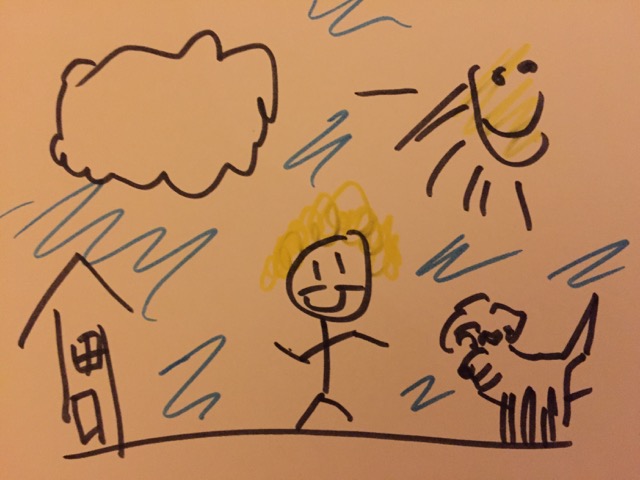
    When I was at primary school, aged 4 years old, I drew a picture of a visit to see my grandparents. Specifically, I remembered seeing my grandmother, with bleached blonde hair, and my grandparent’s dog.

    I was asked to also describe the family visit. Having written the story, I then considered the fact that I had not punctuated the tale. I knew that full stops – periods – were the most important punctuation mark, and so I proceeded to decorate my story with a few randomly placed dots.

    Having scattered my full stops throughout the prose that I had written, I then thought that the little dots didn’t look very big in comparison with my large and unwieldy handwriting. At age 4 years old, I hadn’t achieved a nice neat flowing form of handwriting. In fact, I was lucky if I could get my ‘b’s and my ‘d’s the right way around.

    In order to draw greater attention to my punctuative efforts, I then embellished each period with more emphasis.

    Unsatisfied with the balance between characters and symbols, I decided that I should just put a great big ball between every single word. Extrapolating from the rule that every sentence must be terminated with a dot, I reasoned that every word would benefit from being demarcated with a gigantic black mark.

    And so, a perfectly reasonable tale about me spending time with my bottle-blonde grandmother, became a rather bizarre study of how not to do punctuation.

    Punctuation, now, for me, is something technical. As a computer programmer, the use of a semicolon is quite essential to mark the end of a concise instruction for a computer to follow. A wayward full stop can cause many thousands of lines of code to fail to successfully be assembled into a computer program. When I write, I assume that I am programming the minds of my readers, and that I must use punctuation to precisely instruct their minds, or else they will reject what I write with a simple error message: syntax error!

    I was going to write you a lovely story this evening, about all manner of real-world matters that you could relate to, but instead I feel that I have to self-consciously apologise for the over-punctuation of my texts. I feel that what I have written to date is absolute garbage, because I haven’t had the time to read it all and trim away the unnecessary commas that I inserted in the interests of legibility and clarity.

    With the most casual of comments, a friend has drawn attention to the fact that I have a tendency to over-punctuate my prose, and it has caused me to call into question everything I have written to date. It’s hard, neither having an editor – a proofreader – nor having the time to be able to pore over my output, and perform some kind of quality control process, myself.

    If what I’m writing is unreadable crap, so be it. I’ve just got to get it out there at this stage, because it’s been bouncing around the inside of my cranium for far too long. I bitterly regret not making greater efforts to achieve a higher standard of writing that may have avoided ‘turning off’ many of the people whose opinion I would value, but I’ve been shooting from the hip. I connect my brain directly to my keyboard, and out it all pours.

    It seems like my love of commas has reached epic proportions. Even I think “maybe I have somewhat overdone it” when I glance briefly back over my text, before publishing. However, unless you have the time to read what you have written back again, and to test for the natural points where you would pause for breath, it’s very hard to put punctuation in and get it right first time.

    If my comma-heavy writing is destroying the enjoyment of what I write, I’m devastated. I’ve only ever tried to write in an accessible style; attempting to avoid pseudo-intellectual bullshit littered with words and a literary approach that is only ever designed to scream “fuck you! I’m smart!” at the top of my insecure lungs. Screw you, you English literature douchebags. Screw you, you fucking poncey twats with your past participles and split infinitives. Fuck you all to hell. Just write some fucking shit that people can read and understand. Fuck you with your use of a zillion words that your thesaurus told you would be equivalent to their more obvious counterparts. Fuck you and the horse you rode in on, for pontificating, posturing and your pomposity. Just write something readable for fuck’s sake.

    If what I write is unreadable, because of my over-eagerness to punctuate in such a way as to delimit each point that I make, then I feel that I have crashed and burned. I feel that everything that I have written to date is a dreadful failure, and I have screwed up in the most horrible way imaginable. I feel that I may have fallen at the first hurdle.


    Tags:

  • The First Million Words You Write Are Your Worst

    This is a story about storytelling…

    Cray supercomputer

    Doing the sane and sensible thing when you’re being driven insane is hard. I’m having to think creatively, in order to stick with a job that I hate because it’s really easy and really boring, but it pays the bills and it’s low stress (if you don’t count the boredom that’s driving me insane).

    I was writing my blog at lunchtimes, to break up the day, but I found that took away the thing that I look forward to doing when I get home in the evening. I also found it frustrating, being at my desk during lunchtime, when people could wander over and distract me. The City is not a relaxing place for those on their lunchbreak. Crumbs on the keyboard is the best you can hope for.

    So, I’ve decided to write short fictional stories once or twice a day, to fill the time. My blog is my therapist, patiently listening and never interrupting, while I pour my heart and soul out. My blog is where I work out all the mixed-up shit that happened in my life. My blog is a non-fiction record of who the hell I am and why I do what I do. My blog sets the record straight.

    But, I need a creative outlet. Writing my blog is kinda creative, but there are certain needs that have to be met. If something is bugging me, or coming to the surface from my subconscious and memory banks, I’ve gotta get it out, I’ve got to put it into words and start to make sense of everything. Writing creatively is different. Writing creatively is scratching that itch that I never get to scratch, as a software developer or leader of software development teams. Software is a science at the end of the day, and for sure it’s a black art, but it’s important that I don’t rely on my job for everything that I need.

    And so, today, I wrote the first fiction that I have done in my adult life. I don’t know why I’ve shied away from it. Perhaps it’s because I had seen it as childish, juvenile. Perhaps it’s because I was afraid that people would laugh. Perhaps it’s because even I would laugh, when I read it back again in future. So, it seems sensible that I would hide behind humour, satire. It seems sensible that I would use elements of fantasy, rather than trying to write anything serious, earnest.

    I don’t do role play. I don’t play Dungeons & Dragons. I don’t do any kind of fantasy at all, and wearing the corporate mask the whole time is very draining. It’s important to not take yourself too seriously sometimes. Wear fancy dress. Pretend to be somebody, something you’re not, just so long as it’s for fun. I don’t really do fun. My life is very simple: work, sleep, eat, repeat… plus some blogging.

    I’m not going to publish every one of my stories. In fact, until I know what to do with them, I’m unlikely to publish any of them. I’m going to publish the first one I wrote, in the vague hope that anybody’s reading and might have some feedback, but until I find my particular sweet spot, I’m going to keep things mostly under wraps.

    Anyhoo, if you’ve persevered reading this far, I shall cut to the chase and introduce the first short story I ever wrote in my adult life.

    It’s called The Sysadmin:

    The users were scared.


    The office expanded almost as far as the eye could see, with row upon row of birch veneer desks, in two large columns. The room was cleaved in half by a walkway running down the middle. The polystyrene ceiling tiles were dirty and many of them were broken. Fluorescent lighting bathed the room with a dim yellowish flickering illumination, which harshly lit the people and furnishings, whilst somehow not being bright enough to bring out the colour or definition of anything.


    Identical swivel office chairs each had their own character, through the damage they had sustained. Some had broken backrests, some were missing armrests, some had their once colourful fabric, hanging frayed from the edges of the jagged black plastic that was designed to conceal stained foam and how cheaply made these pieces of furniture were. Each chair had indecipherable markings that identified it to its owner. Some had initials scratched into the plastic of the backrest using a sharp implement. Some had letters or symbols daubed onto them using Tipp-Ex correction fluid. Some had rectangular sticky labels that were half ripped off, with a name now longer legible, written in felt-tip pen.


    The grey carpet was almost uniformly patterned with brown patches from spilled instant coffee, which had become so trodden into the floor covering that they were almost unnoticeable in the context of the shabby decay of the office. There was a stripe that was slightly browner, running down the walkway in-between the two columns of desks, that led to the coffee vending machine, water cooler, and a door marked “NO UNAUTHORISED ACCESS”.


    Clearly unnerved, but silently huddling together in the walkway and all looking towards the man who had just entered the office, the users were no longer at their desks. The users now stood wide-eyed, clustered in front of the man, but unsure what to say or do.


    “Hi, I’m the system administrator” the man began. “Did somebody phone IT support?” he asked, addressing the group as a whole, unsure of who to direct his question towards.


    The users mumbled to themselves almost inaudibly, but didn’t seem to be communicating with each other or the system administrator. They were nervous. Nobody wanted to speak up. Everybody knew, but nobody wanted to say.


    The users mostly looked the same, men and women, despite subtle differences in appearance. The women wore flowery blouses in muted pastel shades, sensible flat shoes and rimless glasses. Their wavy hair was tamed by hair clips and cut to a uniform length somewhere above shoulder high. They were all overweight and with slightly reddish cheeks. They looked flustered.


    One of the users spoke up. It was a man. You could tell he was a man, because he wore an off-white button-down shirt with a blue biro in the front pocket, like all the men. His shirt was wrinkled and half-untucked from his bulging waistline. His neck crumpled the soft collar, so that his head and body were just one bulging mass. There were coffee stains down his front and he had clearly wiped his hands on his trousers many times after eating. The hem of his stained trousers didn’t reach the top of his black scuffed shoes, and his white socks were showing.


    “It.. it.. it’s the… the…” he stutteringly began.


    The user looked around, with slightly wild eyes. He was desperately hoping that one of the other users would now speak up, but they all looked away and avoided his eye contact. Somehow, a gap had formed in the group around him, as if everyone had stepped away from him without anybody noticing. The user seemed to be attracting all of the inadequate light in the room. It was as if a spotlight had picked him out, and he now stood, floundering, all on his own.


    “I.. I… I… I’m not in charge here” he continued.


    “It’s OK, just tell me what’s going on.” said the system administrator.


    “I didn’t do it. It’s not my fault. We were all here, just getting on with our work” he started to protest.


    “Don’t worry, I’m not here to blame anybody. Just tell me what the problem is” the system administrator offered, as kindly as he could, putting on his most understanding and approachable face. “You can tell me” he said.


    “It’s the… it’s the…” the user haltingly continued, struggling to get a handle on his rising sense of panic, almost choking. He felt a sense of responsibility that he was totally unused to.


    “Please just tell me what the issue is. Somebody logged a call with IT support” the system administrator pleaded, now losing his patience.


    “It’s the MAINFRAME” the user blurted out. There was a sharp intake of breath from all the other users, as the man spat out the final word, even though they all knew.


    The system administrator rolled his eyes. “Really? What’s wrong with the mainframe?” he asked, as if a practical joke was being played on him. His face now betrayed a deep skepticism and the impression that his precious time was being wasted by a bunch of low-brow imbeciles.


    “It’s angry” the user said. “Yes, it’s angry” many other users now quietly agreed, in defence of their colleague. “Angry” and “it got angry” they all muttered, not really addressing anybody except the room they were all stood in.


    “Right, get back to your desks. I’ll take a look” the system administrator said. He stepped forward, having to push people out of the way, as clearly nobody was in any mood to return to their desks. The users were stood in a trance-like state, just muttering “angry” below their breath, and staring at the system administrator as he tried to pick his way through the crowd and make his way down the walkway in-between the two columns of desks, where all the users were still clustered.


    Walking through the office, up to the door marked “NO UNAUTHORISED ACCESS” the system administrator glanced back towards the group of users, who were still crowded together on the opposite side of the room, near the exit. They were all looking at him, in perfect silence and stillness.


    Reaching for the door handle, the system administrator was about to twist it and enter the restricted area behind, but he hesitated, and instead put his ear to the door. It sounded like… footsteps. But these were not the footsteps of your average light-footed person. It sounded like deep thuds of metal and rubber on concrete. DUSH! DUSH! DUSH! Would come the thumps of heavy machinery hitting a solid floor in a slow rhythm, and then stop, and then repeat again.


    In a moment of calm rational thought, the system administrator decided that perhaps one of the air conditioning units had failed, and the motors that drove it were now causing some kind of mechanical fault to create this racket. Immediately, he twisted the door handle and opened the door a fraction.


    Inside the restricted area, it was dark. Almost pitch black. This was unusual. The restricted area should have been well lit.


    The system administrator craned his head through the doorway. It looked as if the glass doors that allowed entry into the temperature controlled housing for the mainframe, were open. The doors should not have been open. The vibration absorbing shock mounts, that the mainframe sat on top of, were in the housing, but the mainframe was nowhere to be seen in the darkened room. The system administrator couldn’t see the whole room because he was just peeking in through the gap in the doorway. The thumping had stopped, and everything seemed eerily quiet. Where was the hum of the cooling fans and the chatter of the hard disk drives? Where was the bleep and crackle of the networking devices? Where were the blinking LED lights that signified the activity of the mainframe? It seemed like the restricted area was empty and lifeless.


    Then, a gigantic shape lunged out of the darkness. A humongous black box, big enough to fill a quarter of the room, suddenly thumped forward out of the corner, where it had been previously unseen due to the poor lighting. DUSH! came an earsplitting sound, as metal crunched into the reinforced concrete floor. A sudden scattering of red lights lit up across the front of the object as it thrust towards the door where the system administrator stood.


    Quick as a flash, the system administrator slammed the door shut and ran down the walkway in-between the desks. Almost scattering the statue-like users who were still milling around near the exit, he left the office. Just before the office exit door slammed shut behind him, the users heard him call back to them: “I think it’s hungry”.


    The users appeared to wake up, and now a mild kind of panic spread amongst them. They started to talk amongst themselves, while also shooting nervous glances towards the door to the restricted area.


    “Should we get out of here?” and “it’s dangerous, I don’t want to be in here when that thing escapes” they said to each other, in hushed tones. The users were quite calm in their indecisiveness. They mumbled to each other in low voices for several minutes, with no clear plan of action emerging.


    Then, the system administrator threw open the office door again. He struggled, getting stuck in the doorway. In his arms were bundles of grey cables, like a great mass of tangled rope. The users cleared the gangway for him, but nobody stepped in to help him. Finally overcoming the obstruction, the system administrator burst through the doorway, and made his way to the restricted area door, while tripping up and dropping cables along the way. He dumped the tangled mess next to the “NO UNAUTHORISED ACCESS” door, and then made several trips back up and down the walkway, picking up the cables he had dropped and adding them to the pile.


    Grabbing handfuls of cables, and massaging them into a giant knot, the system administrator now took hold of the door handle in one hand, while holding the beach-ball sized lump under his other arm. With a single fluid motion, he flung open the door to the restricted area and threw the cables into the room.


    The mainframe roared with a bloodcurdling mixture of computer fans that were spinning at maximum revolutions, hard disks that were clattering, network devices that were chattering and the screeching sound of the twisted metal of its frame. The front of the mainframe was an angry mess of red LED lights, that flashed furiously in the darkness. It lunged for the door, but the system administrator was too quick and slammed it shut, before diving to one side with his back flat against the wall, panting heavily.


    There then followed a graunching, crunching, high-pitched sound of plastic being stripped, broken, and metal being bent and torn, and then the low hum of fans and hard disks spinning. There were a few thuds and crashes, as the mainframe stomped around, and then things went quiet again.


    The system administrator repeated the procedure, of rolling up balls of cables and tossing them into the restricted area several times, before the pile was exhausted. The users watched nervously from the other end of the office the whole time, although they craned their necks in interest, trying to see what was going on.


    There was a moment of calm when the pile was gone. The system administrator and the users momentarily relaxed. Perhaps the mainframe was satisfied?


    Then, a roaring and stomping started, many times worse than it had been before. The speed of the steps was rapid, and it sounded like the mainframe was tearing the room apart.


    The system administrator looked worried, then pensive, and then he appeared to have a eureka moment. He sprinted energetically towards the office exit, hardly breaking his stride as he flung the door open and disappeared. Just as the door was closing, he called back to the users: “I think it wants dessert”.


    Some time went by, and the users were getting very nervous, as the mainframe set about destroying the restricted area. Several times, the door seemed to vibrate and rattle in its hinges, as if it was going to be blown wide open at any moment. The users started to back up against the opposite wall, trying to get as far away as possible, but still unwilling to leave the office.


    At last, the system administrator returned. He strode into the office carrying a brown cardboard box of modest size. He walked down the walkway, looking back at the terrified users with a cheeky grin. With a twinkle in his eye he produced a flat object, about 4 inches square, from the cardboard box. “I think it’ll like these” he said.


    The system administrator proceeded to slide floppy disks through the gap at the bottom of the door to the restricted area. The floppy disks came in various sizes. The bulk of them were 3 and a half inches, with a metal sliding part that protected the black plastic magnetic disk inside. A lot of them were 5 and a quarter inches, and had no metal protective part. The mainframe gave a grunt of approval each time that it was fed a disk, but its satisfaction was audibly less pronounced each time.


    However, the system administrator had saved the best until last. Producing some 8 inch and 3 inch floppy disks from smaller white cardboard boxes that had been concealed in the bigger brown cardboard box, he now fed the mainframe these rare delicacies. It didn’t take many before the mainframe started to sound positively delighted, with a crescendo of modulated digital signals gracing everybody’s ears.


    The system administrator disappeared into the restricted area, opening and closing the door quickly behind himself. Soon, soothing noises and words of encouragement could be just heard outside the room, and there were a few thud-like stomps, and then the sound of computer fans and hard disks whirring back into life. As he stepped out of the restricted area, the lights in the room were back on, the doors to the glass housing were closed and the mainframe was back on its anti-vibration mounting. The LED lights on the front of the machine flickered in ordered patterns, and a thick trunk of network cables that hung from the ceiling had all been plugged back into the gigantic black box.


    As the “NO UNAUTHORISED ACCESS” door closed behind the system administrator, hundreds of terminals blinked into life on the desks of the users. The office was now bathed in light from the computer screens that were displaying lines and lines of green text on a black background. The green glow seemed to soothe the nerve-jangled users, and they all went “aaahhh!” in unison, and started to slowly file back to their desks without prompting.


    The system administrator ambled up the walkway for the last time that day. Most users were now seated back at their terminals, busily performing calculations for the mainframe, happy again. He paused at the office exit and looked back over a sea of green screens, with users hunched over their beige plastic keyboards. The natural order of things had been restored.

    The end etc. etc.

    Anyway, I noticed that my story was 2,500 words, which is about 3 and a half times more than what I normally write. If I write two stories like that every day, plus my blog, I’ll be producing over 4 novels a month. That’s NaNoWriMo (National Novel Writing Month) on steroids. I think I’ll burn out.

    So, it remains to be seen what the sweet spot is for the length of the stories, and what I’m going to write about. Maybe I will be struck by the infamous writer’s block. Maybe my enthusiasm for the whole endeavour will fizzle. Maybe I will never find anything that I think people will enjoy reading.

    Let the games commence.


    Tags:

  • Paywalls and the Death of the Novel

    This is a story about dream jobs…

    Big in Japan

    Why aren’t nurses who work in geriatric care the best paid people on the planet? When humans are old and shrivelled up, senile, incontinent and are simply an inconvenience, getting in the way of children receiving their inheritance, geriatric nurses are there mopping up the poop and vomit, and generally trying to ease the suffering and discomfort of the age-ravaged creatures who are long past their sell-by date. On the face of it, palliative care seems a thankless task, and the low pay would certainly back that up.

    But what about nursery nurses and nannies? These people also mop up the shit and puke of those who can’t look after themselves, but the tiny tots that they care for are all cute and brand new. People who work in childcare are similarly badly paid, but maybe that’s because it’s supposedly fun and rewarding, playing with children all day.

    How can this be? How can it be the case that somebody who looks after those who are dying gets paid badly, but then so is a person who looks after those who have their whole lives ahead of them?

    Perhaps it’s the case that anybody who deals with human waste is badly paid. Certainly when we examine the remuneration of garbage collectors and cleaners, we find that these people who scrub human stains from the world, are very badly paid. The people who unblock sewers and those who work in sanitation are hardly big earners, and might in fact be in a similar pay bracket to the people who look after children and old people.

    You would have thought that having to deal with dirt, grime, death and bodily fluids would carry a pay premium that would see the people I just mentioned, amongst the highest paid there are, but this is not the case at all.

    Hang on though! What about musicians, poets and writers? Sure, there are a handful of successful individuals who are paid mind-bogglingly humongous sums for the art that they create, but the very vast majority of people who have chosen music and wordcraft as their profession, will find themselves very poor indeed. Think how many struggling writers there are. Think how many people there are who play in bands, but barely earn a single cent for their trouble. How many people reciting wonderful poetry are able to call it a well paid profession?

    So if writers and musicians are badly paid too, but they don’t have to deal with bodily fluids and rotting trash, then what exactly is the common link?

    Do you think it’s time spent studying? Do you think it’s qualifications? Well, many musicians will have spent tens, if not hundreds of thousands of hours mastering their instruments. Music theory is not trivial. Music theory and harmonics are governed by discrete mathematical rules. Can you really say that a corporate lawyer or accountant is more qualified than somebody who has dedicated their life to music? Of course not.

    So what is it? What is the rule that decides whether you will be well paid, or you will struggle to make ends meet?

    Well, my theory is that the more alien and dehumanising your job is, the more you will be paid. Humans have caring and nurturing instincts built into them. We will naturally feel sympathy for those in discomfort and pain, and we will want to help if we can. Humans have a dislike for waste and mess, and we will want to keep things clean and ordered. We have evolved the instinct to not live in piles of our own filth. We have even evolved the social instinct to create art that binds us together. Whether it’s trancelike-state inducing beats and chants, paintings on cave walls, or the telling of stories that are our very earliest form of preserving our history, myths and legends. It’s human to want to perform, to sing, to entertain.

    What innocent young child really can imagine that they would want to grow up and get a job massaging numbers in spreadsheets or editing the minutiæ of legal contracts? What the fuck does your bullshit job even entail? What the fuck is it going to say on your motherfucking gravestone? How the fuck would you even go about explaining what you do to your grandmother?

    And so, we now have an army of the living dead who are, in the words of David Bolchover, switched off, zoned out. This is the shocking truth about office life. Nobody gives two fucks about their job or their employer. There is no job satisfaction. The jobs are alien, dehumanising.

    What do these armies of disillusioned people do all day? Well, they read and they listen to music. Some of the most cultured art patrons that we are lucky enough to have in the world, are just bored people sat at their desks with glazed eyes, wondering what they’re going to have for lunch.

    But then what? What happens next?

    Well, these people start dreaming about becoming musicians, writers, artists, poets and pursuing all manner of things that will connect them with the aesthetic and creative elements that their bullshit daily humdrum gives them precisely fuck all of.

    What even is a journalist? Well, the clue’s in the name: journalist. As in day. As in somebody who writes a journal every day. That’s all it is. That’s all it takes to be a writer. You don’t have to be qualified to be a writer. Just write. Every day.

    There’s a myth that you can’t do anything without studying, that has been perpetuated by the professions. It’s true that you can’t become a lawyer or an accountant without studying, but those are bullshit jobs with bullshit professional bodies whose job it is to limit how many people enter the profession every year, in order to maintain false scarcity and prop up their salaries.

    It’s utter bullshit. We don’t need any lawyers & accountants. Without builders, there are no houses. Without farmers and fishermen, there is no food. Without weavers and seamstresses there are no clothes. Without lumberjacks and miners, there is no wood and coal to keep ourselves warm and to cook our meals. Everything else is just intellectual masturbation. Unnecessary bullshit made up jobs that add nothing of value.

    So, as people are realising that the fact that they didn’t go to an Oxbridge university to study English, or at least attend a creative writing course, but yet they can still write a blog and entertain their friends and family on Facebook and Twitter, the value of journalists has been completely eroded.

    Yes, it’s a shame that The Guardian and The Observer newspapers are going down the shitter, whether they add a paywall or not. Yes it’s a shame that a lot of friends and people who I know, who are extremely talented and have dedicated their whole lives to the pursuit of journalism and writing careers, are finding that there’s just no way that they’re ever going to earn a decent salary doing what they love.

    And that’s just it. That’s the kicker. That’s the real kick in the teeth. As soon as you do something you love, you’ll find there’s no money in it. We all want to be footballers, singers, food critics, cinema critics, writers, journalists, poets and every other job where you fuck about doing nothing more than entertaining, informing, educating, inspiring.

    We all love the thrill of the limelight. We all love dressing up. We all love exotic locations. We all love to seek new sensations. We all love to meet interesting people. We all love to talk and write about what we’re passionate about. We all love to make art that expresses our deeply felt human emotions that can’t be articulated using the blunt instruments of words.

    If you do what you love and it’s necessary, like nursing, then you’ll be paid just enough to survive. If you do what you love and it’s unnecessary, like art, then you’ll not be paid anything at all. It’s a race to the bottom. We can all stick a paintbrush on a piece of paper and produce something passably artistic.

    The arts used to be the preserve of the aristocracy, but with the democratisation of the arts through the digital medium, my crude drawing of a penis can be reproduced infinitely many times across every computer screen on the planet. I can write a library full of books, and they’re all immediately in print and available to be read by anybody, at any time, for free, because of the limitless power of the digital printing press that is the internet. Why the fuck would anybody pay anything for art anymore?

    Of course, scarcity still has value, and a few super-high profile artists will continue to produce original artworks in the form of paint on canvas, art installations and live performances. These artists are the courtiers in the entourage of the plutocracy. You have about as much chance of becoming one of these people as you have of being struck by an asteroid, twice.

    As the global recession deepens, the amount of people who are able to just about scrape a living as a freelance writer or a busker will drop away to nothing, and the arts will once again be the preserve of the sons & daughters of the very wealthiest, who have the monetary means to pursue things which society largely deems worthless.

    The Huffington Post has shown the future for journalism, where an army of bloggers are leveraged to provide the same kind of re-hashed reporting of the stories that are churned out by a handful of news agencies who are still able to have people on the ground. Your dreams of being a war correspondent are over. Even your dreams of being a lifestyle blogger are looking pretty hopeless.

    There is a vast oversupply of opinion and wordcraft and music and art and everything else that’s fun to create. There is no longer any room to do something you love. As soon as you derive any kind of job satisfaction, that’s going to be the last pay rise you ever get.

    Don’t you get it? It’s a race to the bottom. See you there!


    Tags:

  • Hit & Miss Quality

    This is a story about writing stuff that people want to read…

    Cartoon Doggo

    Firstly, let’s start with an apology. What I wrote yesterday evening was total rushed junk. I shouldn’t bother writing if I only have a tiny bit of time sandwiched in-between other commitments, or if I’ve got somebody peering over my shoulder. I really dislike what I write when I’m pressured.

    I was tired and cranky yesterday. I had planned to spend the day on the sofa watching the Wimbledon men’s tennis final and the Euro 2016 final, while getting drunk. Instead I was at a restaurant where you had to stand and queue to order your food and watch it be cooked in front of you. There was limited novelty, when I would really rather have been sat down with a waitress bringing drinks to me.

    Anyway, I’ve got a bunch of topics that I want to write properly about. I want to write directly about my experiences, rather than these long ranty opinion pieces that would bore almost anybody to tears.

    Upcoming topics include:

    • The Dark Web
    • The paradox: hard work vs. high wages
    • My ongoing experiments with abstinence from caffeine and alcohol
    • The trials & tribulations of being unmedicated for Type II Bipolar Disorder
    • Will this damn depression ever lift?
    • Am I going to go hypomanic again?

    Writing serves the purpose of giving my life meaning in an uncaring world and while working a day job that consists of endless pointless IT projects. Writing is my means of having some kind of insurance policy, in case I decide to suddenly end my own life. Writing is my mechanism for trying to articulate my distress and invite people to engage with me once again. Writing means that I’m an open book, and you can dip in or tune out, as you please.

    My purpose has been very confused. Am I writing to shame and embarrass my parents, in retaliation for everything they inflicted on me? Am I writing because I’m lonely, depressed, suicidal and I’ve run out of ideas for how to connect with the world? Am I writing to have a soapbox, in order to broadcast my opinions? Or, am I writing in order to share my colourful life experiences, in the hope that others who are going through tough times might benefit. Hopefully, it’s the latter.

    So, as I now start to think about the final couple of months of daily writing, to round off a complete year, I’m starting to figure out when is a good time of day to write, to fit with my work schedule and other commitments. I’m starting to figure out things that I’d like to write about, not because I’ve got an ulterior motive, but because I’ve got some interesting experiences to share.

    I might have totally turned off a bunch of people whose opinion I value very highly, and made this piece of writing into an impenetrable rat’s nest of deeply troubling psychological issues, but perhaps I can start to shape and hone things.

    I’ve prematurely declared that I’m going to turn over a new leaf and bury the hatchet too many times, so I’m not going to make any more proclamations of that nature. However, I don’t regret going on this extremely eccentric journey, and the incredibly personal things I have revealed about my twisted psyche.

    This could all be summed up as writing therapy that has been done in the public domain. But isn’t it so much more interesting and a little exciting, to let it all hang out in the breeze? How more publicly could I wear my heart on my sleeve?

    “For God’s sake, don’t encourage him” I imagine people saying. This makes me chuckle, and spurs me on to dredge the depths of my deeply repressed painful memories. Where will it lead? I have no idea.


    Tags:

  • Racing Thoughts

    This is a story about pressured speech…

    Race winner

    A lot of my life has felt like driving with the handbrake on. When I’m finally released from the crap that’s been artificially holding me back, I go off at breakneck pace, because I don’t know when the next time is, that I’m going to be thwarted by somebody who is simply getting in the way and slowing things down unnecessarily.

    Teachers at school need to pace their lessons so that most of the kids in the class can keep up. I’m not saying I’m the brightest, but school certainly didn’t stretch and challenge me to the point where I really had to concentrate or try hard. I had plenty of spare time to draw cartoons, write rhymes and stories, and to mess around with computers. It’s lucky that it worked out like that, because my computer skills have been far more marketable than any academic qualification ever would have been.

    I entered the world of full time work at age 17 as an experienced computer programmer who had written games, simulations and produced websites. It was a painful transition, because now I had layers of ineffectual middle managers, incompetently pushing paper and trying to justify their pointless existence. There’s one job: build the fucking software. I don’t need some pleb to ‘manage‘ me.

    When you make a computer game or a website, it’s a fairly creative process. You have to design the look & feel of the software, as well as actually write the computer programs that make it work. The success of a piece of software hinges on how useable it is by people. If people can’t intuitively use your software or website, it’s a failure.

    Making games is hard. If you can make computer games, you can do anything. Honestly, having written software that guides torpedos to blow up ships, I can say that computer games are way harder.

    So, I found the world of work to be extremely frustrating. I learned how to program in machine code at college. That’s the very lowest level programming language there is. All other computer programming languages compile down to machine code.

    Programmers try to keep themselves entertained by inventing more and more abstract programming languages… C becomes C++ and C# etc. However, it’s all just instructions in machine code that are executed by the computer processor… it’s all ones and zeros at the end of the day: boolean algebra.

    Am I blinding you with science? Really, please don’t switch off… it’s easier than you think!

    The whole logical thinking part is the easy bit. The hard part comes when you start thinking about how a human is going to use your software. You can guarantee that somebody will click the wrong button, or type something that you just weren’t expecting them to type. Attempting to guide and constrain humans into a machine interpretable set of predefined steps, is the biggest challenge, not the logical processes that happen in code.

    What happens when your whole job is to control the variables, and make software into something functional and boring… no weird and wonderful bugs… no unpredictable behaviour? In a way, once you have a few strategies for solving these problems, there is no challenge left in the job. It becomes a paint-by-numbers.

    There are probably more ways of developing a website than there are atoms in the universe. I pity the poor web developers who have to know tons of User Interface frameworks, but their job is essentially always the same: what colour do we want the fucking buttons?

    I could take no joy from the ‘creative‘ side of being a web designer. There’s no creativity. It’s just listening to the dumb ideas of your client, who has shit taste and no idea about what good design looks like. The client always wrecks the creative process, along with everybody else in the entire world, and their mother. Everybody’s got an opinion on something so subjective as the look & feel of a piece of software. You can’t take any joy in creating beautiful looking apps and websites, because you’ll never please everybody and the person paying the bill will always wreck things.

    So, having neglected my cartoon drawing for many years, I return to writing.

    I sit at my desk at my boring job, and I write. But I’m always looking over my shoulder. I’m not supposed to be writing. I’m paid an unspeakable amount of money to manage a software project, but I know that I’ll basically just make the lives of my developers fucking miserable if I micromanage them, so I just let them get on with things while I write.

    However, I’m always wary of who can see my screen. Is my boss going to suddenly appear at my desk and ask me what the hell I’m doing? How can I relax and write away, when I should be ‘working‘?

    And so, I hack away as fast as I can, to produce something before I’m interrupted, or somebody asks about what’s on my screen. I need my little creative outlet, or else I would go insane. I need to write.

    But, it’s frustrating as hell, trying to get all my creativity out in snippets of time that I grab in the dead time on the run-up to lunchtime, and before I need to prepare my evening meal and go to bed to start the whole miserable cycle all over again the next day.

    You might think that writing is a luxury, but it’s actually a necessity for me. It’s helping me to organise my thoughts and process what just happened to me. It’s helping me to deal with the fact that I have to work the most depressing boring easy job in the world, just to plump up my finances again, after a traumatic couple of years.

    So, I write, and I write lots. You might think that it’s self indulgent, and maybe you’ve got a book in you too, but you don’t have the luxury of sitting around writing. Well, if you were serious, you’d do it. I could rattle off 50,000 words in a week, I reckon. The words just have to come out.

    What’s super frustrating right now is how the quality really suffers, the more pressured I am. When I’m at work, when somebody is trying to talk to me, when I’ve said I’ll go out and meet somebody in the evening… it’s fucking agonising to have to rush. I write as fast as I can, but I don’t get the enjoyment from the creative process that I should do. I don’t get the full benefit.

    I’ve already written once today, but I’m writing again because I’m not satisfied. I’m not satisfied because I never got to consider my words. I’m not satisfied that I because got to review and refine what I wrote. I’m not satisfied because I was so rushed.

    But if I don’t get this stuff down, the lack of creativity and challenge in my day job is going to kill me.


    Tags:

  • 300,000 Words and Counting

    This is a story about quantity not quality…

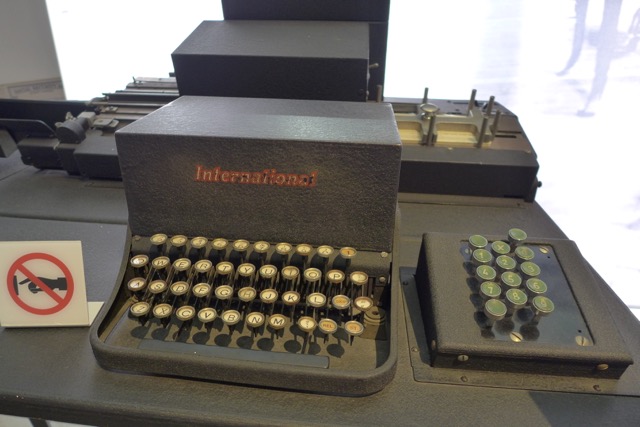
    Typewriter

    I just drank two bottles of wine and I can still hammer out 50 words a minute in typing tests, but when I connect my brain directly to a keyboard I’m probably getting a lot closer to 70 or 80 WPM. Of course, most of it is garbage.

    It shocks me that columnists and professional writers can command huge sums of money, for what is essentially an imperative for me. I have to write, otherwise I would go mad with all this crap rattling around inside my head.

    I have spammed friends that I admire for their literary and intellectual credentials, in the hope that they will validate that my contribution has some merit. However, I’ve yet to hit pay-dirt.

    It’s quite possible that I’ve caused myself a considerable brain injury, by abusing powerful narcotics for a substantial period of time, during a rather nasty and acrimonious divorce. I now have the displeasure of working a shit day job in order to replenish my finances, and otherwise I fill my days with copious amounts of alcohol and blindly firing out these missives into the uncaring void.

    So, I now face a crisis of confidence. I achieved my writing target of producing 300,000 words in less than a year. My other objective was to write for a whole year, but I feel massively discouraged, given how I feel like I’ve lost my way this year with any coherent thread that would draw readers into my narrative.

    I have little interest in the cult of quotes that sweeps the Internet with its retweetable content and endless motivational images, superimposed with trite platitudes.

    Whenever I achieve a goal that I have set for myself, I always suffer a depression, knowing that I’m once again purposeless. It might be 8 years ago, but I remember getting a couple of iPhone Apps to number one in the charts. I just thought “well, that was easy” and then I was completely lost as to what to do next.

    I’m wondering if a million words might be a cool target next. A million words is 25 novels. Why the hell not? If I wrote twice as much as I did in the last 10 months, I could be done in a year’s time.

    Imagine that. Imagine being the author of a million words. Imagine being the author of 25 novels. Would you feel proud? Would you feel like you achieved something? Would you feel like you made an impact, a contribution?

    Do you think that gifted amateurs are welcome in the creative world, or are they just drowning out talented and dedicated artists? Do you think that the mommy blogger should STFU? Do you think that to write, to paint, to play an instrument or sing… these things are the preserve of those who have been on creative writing courses, taken fine arts degrees, attended stage school?

    Is there a monopoly on creativity? Am I just another dribbling idiot, churning out low-quality crap in a sea of white noise, barely able to string a sentence together?

    Now that I’m writing simply for my own sanity and enjoyment, the pressure is off. I easily achieved the quantity goal I set for myself. Perhaps I can be a little more creative and playful, now that I don’t have a certain word count to aim for.

    I’m presently unsure whether my purpose is served on this planet, and it’s now time to kill myself. In a way, I want to see what happens when I hit the one year mark, but I’m also rather underwhelmed by the prospect of prolonging the agony of daily existence, if I’m just another pointless twat churning crap out into the ether.

    I look at lemmings, and I think there’s nobility in ending your life, when the world is clearly overpopulated by special little snowflakes.


    Tags:

  • The Open Source Brain

    This is a story about an ambitious project…

    Comic book bad guy

    How would you go about uploading yourself to the cloud? Have you thought about death, and what happens to your personality, your mind, once the apparatus of your body ceases to be a viable vessel for its preservation? Do you want to live forever?

    I unfortunately lost my original Google Mail account – grantnick@gmail.com – which I had since 2004. I’ve now accrued 6.6 gigabytes of email across my new accounts – nick@manicgrant.com and h@ckte.ch – which are both managed by Google and therefore fully indexed for search.

    Did you know that you can download all your data from Facebook? I’ve been a member of Facebook for the best part of 10 years. Facebook probably knows me better than any other piece of technology. It knows where I’ve been, and who I was there with. It knows who I talk to, and how regularly. It knows what I’ve chosen to share, as status updates, which are often quite personal and private.

    If you dig around in the old parts of the Internet, you can even find me in the Usenet newsgroups, writing under my own name, back in the 1990s. The old content of newsgroups has been preserved for posterity by Google.

    So much of my digital identity has been lost, as I moved off the dial-up Bulletin Board Systems (BBS) onto my first email addresses with CompuServe, America On-Line and Hotmail. I then made a bad habit of using work email addresses for personal mail. That means that when I left those companies, I left behind all my mail archives. All that content is now in the virtual trash can.

    Losing my Google Mail account felt catastrophic at the time. I even leveraged my contacts and managed to get David Singleton – Engineering Director at Google – to try to resurrect my account. However, I had been caught hacking, so I wasn’t shown any favours. My pleas that it was “white hat” were ignored, when I was in clear violation of the Terms of Service.

    I used to write on a forum for the British Kite Surfing Association (BKSA). That forum was then decommissioned, and all those old posts were lost forever. I then moved to the kiteboarder.co.uk forum, and you can still find my old content on there. I used to be one of the top contributors.

    But, would you even be able to reconstruct my personality, from all that email, and those social media contributions?

    What’s the difference between a film adaptation and the book it’s based on? In the film, it’s very hard to include much of the internal monologues of characters. Using a voiceover, a narrator, sometimes works, but often we lose the very thing that makes a book so wonderful – to know how the characters think & feel.

    When I’m writing something for somebody else to read, more often than not, I’m instructing somebody to act, or passing on information. It’s rare that I’m opening up and giving an insight to the inner-workings of my mind. In fact, with most interactions, there is a necessary formality. I’m sure my colleagues wouldn’t appreciate it if I polluted our emails with random thoughts and updates on my state of mind.

    I’ve always had a candid, open, style of writing and speaking. I leave little to the imagination about the way I’m thinking and feeling. However, it’s still a guess though, because there is actually very little opportunity in life to really open up and let the true essence of yourself flood out.

    Dark clouds

    We are always held back by that voice in our head that says: “but what will people think?“. We worry how we are going to be viewed, when we write, when we speak. We are constantly self-censoring and projecting things in a certain way, saying certain things, to try to maintain an image that we deem necessary for our relationships.

    “I can’t tell my boss that I’m on the verge of a nervous breakdown, because they will think I’m unreliable” we might say to ourselves. Or we might say “I can’t let this attractive person know that I have any faults, or maybe they won’t fall in love with me“. We might say “I can’t let my family know I’m on the brink of suicide, because that will stress them out“.

    The version of yourself in all those emails, videos, social media posts… it’s not a very true version of yourself. You’ve been constrained by social protocols. “How are you?” is always followed by “I’m fine thanks“. Nobody expects you to reply “I’m on the verge of killing myself. My life is misery“. Nobody will thank you for giving an honest answer.

    So what happens is we live a lie, and there is no true version of yourself in existence, except for the one inside your head that you never let anybody see.

    If we were to reconstruct you from everything you ever wrote, everything you ever said, we’d get a corrupt version of you. The version of you that would be digitally recreated would say and do all the right things, but the thoughts inside that virtual brain wouldn’t be right. All those things that you wanted to say, but didn’t, simply wouldn’t exist.

    I have to write 1,318 words in this post, and then I’ve hit 300,000 words. It was easy. A novel is considered to be a text that is over 40,000 words. I’ve written the equivalent of 7 novels, by that measure. It’s taken just 10 months.

    Would you find it easy, to dump the contents of your brain out, in all its gory detail? No, I’m sure you wouldn’t. Even when you’re writing a diary, you’re probably thinking “what if somebody read this?“. You even worry about what you think of you. You try to impress yourself. You try to hide your innermost feelings, even from yourself.

    The Internet is full of abandoned blogs. You can see a flurry of activity that normally spans a few months, and then peters out. You can see the sporadic posts, when a dead blog is resurrected, months or even years later. However, what’s rare is the person who writes consistently, reliably, regularly.

    There are piles and piles of blogospam out there, but can you really reconstruct a personality from any of them? There are people who blog about knitting, people who blog about their pets, people who blog about stargazing, people who blog about sports. Can I infer who you are, or who you were from any of this vast quantity of data? Do I really get a sense of the person, from your online persona?

    Search index

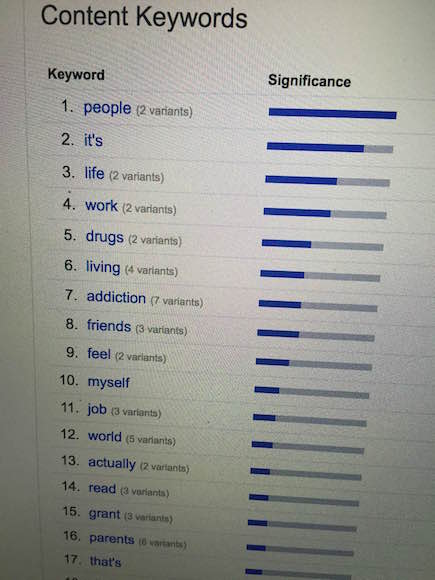
    Google has analysed my 300,000 words of content, and tried to figure out what I’m writing about. Google has tried to figure out what’s significant in this body of work.

    Somewhere in Google’s servers, everything I’ve written has been indexed for search. In a way, I’m already alive in the cloud. People from all corners of the Earth can find me, when searching for topics that Google knows are significant. Those seekers can know how I feel, what I think. They can delve into a very private world that you ordinarily would never get to glimpse.

    Do you want to live forever? Perhaps you already do. The recorded history of humanity survives death, even in the stories we tell about our dead friends and relatives, and influential members of a community. Somebody somewhere has seen your digital content, even if it’s just the electronic eye of a machine. Who knows where your data is going to end up?

    Those who educate, inform and entertain have a reach that goes beyond their family and friends. Those who put themselves out into the public domain have a reach beyond living memory.

    My mother looks after the archives of those few people who we deem to be culturally important enough to preserve, for the Bodleian Library in Oxford – one of the oldest libraries in Europe. While the library has a digitisation project, aren’t we looking at things the wrong way?

    107 billion people have been alive, ever. That means you’re part of about 7% of the human creative output that could ever be recorded. Writing is a relatively recent phenomenon, and the ability to output to a digital medium with no lengthy conversion process and no loss of fidelity, is something that has only come about in the lifetime of those who are alive today.

    When I write, it’s not as a medieval monk, in some priceless hand-scribed tome that will be squirrelled away in some private library. Instead, I write as a citizen of the planet. My writing is captured in the public repository of the Internet, and is accessible to almost every living soul.

    And, what advantage, the fact that what I have created has already been digitised? Well… my content is already in a format that’s friendly for machine learning.

    Speech recognition and optical character recognition can understand the spoken and printed word, but it’s slow. The cloud has already greedily swallowed my 300,000 words, and processed them in order to serve them up to any consumer who cares to use them.

    Is it arrogant and naïve to consider whether there is any merit in this hefty lump of text? Well, we are not going to know how Artificial Intelligence and machine learning are going to advance in the coming decades. Moore’s Law predicts the exponential growth of computing horsepower that can be bought for a fixed cost. However, the game changer is when computers are no longer programmed, but are instead taught how to do things.

    Skydive through the clouds

    How would I go about teaching a computer to be like me, to think like me, to speak like me? Well, it would be like teaching a child. I’d sit down and talk to the computer. We would have a conversation.

    However, how long would it take to speak to a computer, before you had provided adequate input? How long would it take the computer to process the sound into a stream of text? How long would it then take the computer to process the stream of text into a form that it can understand? How long would it take the computer to then crunch the numbers and attempt to say its first words?

    If I was going about this project, I’d want to provide a body of text in a consistent format. We all speak with different voices. We all have our own unique style. Language is a somewhat crude way of expressing yourself. Human communication is full of flaws, when it comes to transmitting the contents of our brains from one being to another.

    I could feed a computer with digitised books. I could feed a computer with Wikipedia. I could just let a computer loose on the open Internet. However, would it be able to cope, without context? How is the poor computer going to cope with all those different voices, different languages, different agendas, different writing styles? How is a computer going to get from the complete works of William Shakespeare, to understanding the inner-workings of the Bard’s mind?

    I’m sure we’re already within touching distance of having a computer system write a convincing love letter. We write great volumes of soppy crap to the objects of our affection. However, while the art of seduction and the emotional patterns of those who are engaged in the courtship ritual are not hard for our mechanised chums to understand, do we really know much about a person from their attempts to get their leg over?

    For me, there’s so much more depth to the human mind, than what we can see through forced interactions in the context of getting along with one another.

    There’s so much magic in the secret diary. From Anne Frank to Adrian Mole, and agony aunt columns, we voraciously devour anything that’s private and intimate. Words are normally a crude means of making any kind of emotional contact with the being that hides behind those glassy eyes.

    This essay is not an instruction manual on how a machine may pass the Turing Test, but when you build a computer system, you also have to think about how you’re going to prime it. What is your input data? Garbage in, garbage out.

    In a way, we have already succeeded. If I died tomorrow, and you wanted to know more about who I was, how I thought, what made me tick, you could do a lot worse than perusing the pages of this particular publication. If you can’t get a sense of who I am from these 300,000 words, is there really any hope that Artificial Intelligence will ever be human-like. If we can’t understand ourselves, what hope do machines have of understanding us?

    Now, the question is: did I write this, or did I get a computer system to do it for me?

    Bipolar computer

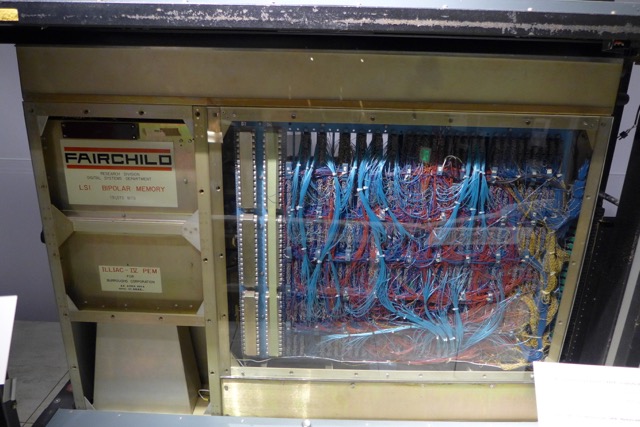
    The brilliant thing about AI, is there’s no wiring diagram, no schematics. Just like a brain.

    Tags:

  • Breaking the Fourth Wall

    This is a story about speaking to the audience…

    Shadow the cat

    Acknowledging the reader is not a great literary device, when overused. I think I have pushed most people away, by writing with a very lecturing tone. When I address my readers as “you” I normally have somebody in mind. I tend to be using this blog as a passive-aggressive device, to attack those who have wronged or offended me.

    When I write about “get a job” idiots, it’s because I’m highly offended, when I’ve had a 20 year career and been in full time education or employment since age 4. When my hackles are raised because somebody says “everybody has to work” it’s because I’ve probably put up with more shitty boring jobs than most people, and racked up more hours. Investment Banking is not known as a career for slackers. IT projects always demand you to pull some epic hours to get things over the line.

    When I write about the hypocrisy of my parents, it’s because they epitomise everything I would never want to become: lazy, underachieving, highly critical and negative people, who have always put their own selfish wants ahead of their children’s needs. When I look at the general decline in living standards of the younger generation, it triggers my deep sense of having had an enjoyable time as a child and young adult robbed from me. And for what? So I can now have a miserable boring job?

    There’s a Frank Zappa quote that I like, though:

    If you end up with a boring miserable life because you listened to your mom, your dad, your teacher, your priest, or some guy on television telling you how to do your shit, then you deserve it

    But, in the words of my Dad: “you’ve got to pay to play“. Of course, he forgets that his Dad was a wealthy accountant who very much paid for him to play.

    So, I’m working a job that I hate, because I needed money and I needed it fast. Here in London I can get an IT contract very quickly and easily, and earn 5 or 6 times more than the average wage. You might think it’s ungrateful, spoilt, to take this for granted and to even be unhappy, but after 20 years of playing the same game, using the same tried-and-trusted formula, there is no novelty, no surprises.

    When I was 20 years old, I was earning £400/day working for Lloyds TSB in Canary Wharf. I was doing exactly the same work that I do today. It might seem vulgar to talk about money, but maybe you need to know why I’m not exactly thrilled to get out of bed in the morning.

    There’s a high-water mark: an expectation, set by your experiences. I really don’t live any kind of jet-set life. I shop in regular supermarkets, I rarely eat out, I drink wine that costs less than £10 a bottle. I don’t pay for satellite television, luxury gym membership or in any way indulge expensive tastes. Even my suit is threadbare and worn out, and I wear cheap shoes.

    Some people need the status symbols, the trappings of wealth. Sure, I could plough my income into having a Ferrari, a speedboat, but you’re missing the point: I completely rejected the rat race, made myself destitute, and I loved it. The feeling of liberation from monthly downpayments on some material object, or mortgage payments on bricks & mortar, brought joy back to my soul.

    The highlight of my week was talking to the guy who shone my shoes. Under the grand arches of Leadenhall Market, by the futuristic Lloyds building in the City, this chap told me that he had quit his job as an auditor for Ernst & Young, and had become an actor. Sure, he was poor – having to shine shoes for £5 a pop – but you could see he was clearly in love with his life again.

    Puppet show

    You might see pictures of my fancy apartment, with its river views and think “flash bastard” and “that must cost a pretty penny“. However, you have simply been fooled by the image that I wish to project… in fact, I need to project. I get paid a lot of money because I’m successfully hiding the fact that I’m a desperate man on the ragged limit of control. Only the semicolon tattoo behind my ear slightly gives away the fact that I’m living a life of quiet desperation.

    In actual fact, the rent on my apartment comes to roughly double what it cost me to live in a hostel. Instead of living in a 14-bed dormitory with people who are on the very bottom rung of society, and having to share a bathroom and protect my few possessions from theft and spoil, instead I have an ample sized ensuite bedroom, storage cupboard and expansive reception rooms in which to relax in comfort.

    You would think that living in a hostel would be cheap, so paying twice as much does not sound unreasonable, correct? When you consider that I can safely keep my bicycle in my hallway, I have a central London parking space, and amazing views over the River Thames from my balcony, you must surely recognise the value for money that I’m getting.

    My one threadbare suit I only use for interviews, and the rest of the time I wear £50 trousers from John Lewis, no jacket and no tie. Somebody complemented me on my sharp attire the other day, and asked if my clothes had been tailored to fit me. I could only chuckle to myself, knowing that my outfit is entirely cheap off the peg stuff.

    My accountant must despair of me, as I always cut things mighty fine. There is no profligacy – every penny I spend is calculated, right down to the few bits of bling that are necessary to indicate that you have attained a certain social status. It’s just going to look a bit weird if you’re an IT professional with a cheap shit laptop.

    Hack a john

    The really frustrating thing is how easy it is to fool people. Everybody assumes that under the surface, everything is just fine. If you dress yourself up in the right clothes and pretend like everything is tickety-boo, people have no reason to suspect that you are one negative event away from killing yourself.

    I have no idea how I’m going to sustain the charade. Just because you’re settled into your little rut, and figured out a system to keep turning the pedals, doesn’t mean that I can do it. Smile and take the money, right? But what if it’s too easy? What if the formula has been so perfected, that life is a paint-by-numbers?

    I tried to teach a friend how to blag and hustle. I tried to show him the magic formula. I busted my balls to transfer as much knowledge as possible about how to play the game. He’s no fool, and knew a few of the tricks of the trade already. However, ultimately he let himself down, because of the subtle detail.

    There must be something that sets people apart. What is it that shatters the illusion? It could be something as simple as not noticing that your suit has still got the slit in the back of the jacket held together by a stitch of thread that you are supposed to cut yourself. It could be as simple as a cheap pen, or umbrella. It could be a single moment of self-doubt, or an answer to a question that clearly betrays the fact you’re blagging, because you fail to one-up the interviewer and blind them with things they don’t understand.

    It might sound like snobbery, but it’s actually the very essence of how people get into positions of authority. Having a shirt monogrammed with your initials, wearing an expensive wristwatch, carrying a Moleskine notebook, writing with a Mont Blanc pen, wearing the correct style suit and shirt and shoes. It’s all so shallow, but sadly it works.

    I’m part of a boys club, and there’s no way I can show my hand. There’s no way that my colleagues would be able to process the fact that I’m barely coping with mental health problems, the threat of relapse into drug addiction, and a desire to return to a simpler life when I didn’t have to grind just to pay taxes, rent and maintain a fake image of having my shit together.

    If I address the audience, it’s because I’m so lonely in the little stage-play of my daily life. From Monday to Friday, I’m putting on a poker face, and looking busy at my desk. I face the threat of being found out as a blagger, a hustler, at any moment. The homeless guy is not welcome in the club. There’s no room for anybody with a weakness, in the corporate dog-eat-dog world.

    Canary Wharf

    My colleagues tell me I’m doing a good job, and they like working with me, but I feel like a fraud when I submit my invoice for the week, and I think about how much time I spent on Facebook, writing blog posts, tweeting, reading the news and hiding in the toilet. I look at my timesheet, and it doesn’t reconcile with the amount of work I have actually done. Sure, I was present in the office. My bum was on the seat for the hours I declare, but I don’t feel productive or even useful.

    So, I cast out into the world, looking for a connection, desperate for somebody to acknowledge my existence. Even when I rub somebody up the wrong way, at least it means some of what I say is hitting home somewhere. Most of the time, I’m alone with my thoughts and lonely as hell.

    Every time I address “you” it seems to fall on deaf ears. I quickly forget that people have reached out, gotten in contact, because the conversation is so sporadic, unpredictable. This is such an unusual mechanism of communication, but what would I do without it? Friends have literally threatened to unfriend me on Facebook, because of the disproportionate amount of space I have consumed on ‘their‘ wall.

    I’m rambling, but I don’t want this to end. It feels like I’m talking to “you“. It feels like “you’re” listening. It feels like I have a human connection, an honest relationship, that I just don’t get for all those lonely, lonely office hours, where my whole focus is on trying to hide my depression, anxiety, boredom and desperate lack of purpose.

    Without this blog, I’d be stuffed. There’s a temptation to adapt my writing to be more appealing again. There’s a desire to drive up the number of readers, by writing things that I know will be like clickbait, and nice to read.

    However, that’s not my style, not my purpose. We’re having an intimate conversation, you & I. You might not realise it, but I’m thinking about hundreds of different potential audience members, as I write… trying to engage you… trying to connect.

    Even if this isn’t being read by the people I intended, at least it’s there. There’s something comforting, knowing that a little piece of me has been captured somewhere, in my own words. It feels like I’m at least winning, in the battle to leave a true account of who I was, and not become a convenient dumping ground for those who seek to abstain from any blame, for the part they did, or did not play in somebody’s life.

    I live in London. I’m practically an expert in turning a blind eye: ignoring the Big Issue seller, the clipboard-wielding survey taker, the collection tin rattling charity worker, the beggar, the pavement evangelist, and every other undesirable member of society who has fallen on hard times. I know what it’s like to have your head down because you’re so wrapped up in your own struggle, and so fixated on the rat race.

    I’ve considered the question many times: am I a melodramatic attention seeker? Are my cries for help completely unnecessary? Is my lot in life no worse than anybody else’s?

    Frankly, who gives a shit? I’m just about scraping through every day by the skin of my teeth. Not only walking out on a boring job, but potentially leaving this shitty life altogether. I know how decisive I am. I know how bold and brave I can be, once I have decided to do something. I know I could easily snuff out my life, in the blink of an eye.

    Doth I protest too much? Why take the chance?

    Isn’t this somebody else’s problem? Aren’t there pills for this?

    Yes, try clinging onto those pathetic get-out-of-jail-free cards, once the person has gone.

    Perhaps I’m dredging up emotions that could be suppressed? Perhaps the very act of writing is prodding at raw nerves, and actually keeping feelings on the surface that could easily sink back into my subconscious. Am I, in the very act of writing this blog, talking myself into depression and suicide? Well, the journal charts my moods, so you have all the data you need for the postmortem.

    I live for writing. I live for my browsing stats and my Twitter followers. I live for those few moments when somebody emails out of the blue, and acknowledges my existence. You would be surprised how few and far between those precious events are.

    Moan, moan, moan, right? Poor me, poor me, pour me another drink?

    Rainy London

    Perhaps Alcoholics Anonymous is the place for this, even though I’m not an alcoholic? Dylan Thomas wrote that an alcoholic is somebody who drinks just as much as you, but you don’t like them very much.

    Why do we push people to the fringes, the periphery? Why do we want the people who wail in distress to just shut up and go away? Do you think it completely meaningless, when somebody goes to great effort to explain how they’re feeling, and attempt to communicate with you, by whatever means they can?

    How long have I been doing this for? Shut up! Give up! Go away! Right?

    If something doesn’t immediately work, just quit, right?

    Hasn’t the message been received from you, loud and clear? You don’t care. You’re busy with your own life.

    Is it the bystander effect? Surely somebody else is going to do something? Not me, I’m not going to be first. I don’t want to get involved!

    What do you think’s going to happen? Are you going to catch my mental illness? Are you going to be made responsible for my life? Are you going to be shackled to me, forced to live with me, with me stealing food from your children’s mouths? Am I out to ruin you and your family?

    I feel like a dirty leper. I feel contagious. I feel a huge amount of pressure to pretend like I’m capable of just conforming, complying… when the truth is that things are getting worse, not better. My patience is worn thin. My energy levels have been exhausted. I’m later and later getting to work. I can no longer even pretend to be busy, and keep up the charade.

    Join a gym. Eat some kale. Go to a book club. Get a girlfriend.

    Can I chase away the existential dread with trivial frivolities, when the bulk of my waking hours are filled with such utter bullshit? Having a taste of freedom has perhaps ruined me. Knowing how the game is rigged, and how to play the system has left me reeling, with the shocking revelation of the pointlessness of it all.

    Even if – for the sake of argument – I’m a dimwitted fool, it still doesn’t take away the fact that my brain is in overdrive. I’m bombarded with thoughts in the empty hours where I am so unchallenged, so bored.

    You educate a person. You train them for a job. You stretch them and challenge them and titillate their interests, and then what? You put them into a corporate machine where independent thought is undesirable? You put them into a bland business environment where creativity is discouraged? You put them into the straightjacket of the working world, where innovation and ingenuity are unnecessary?

    Yes, I’m compliant, because I had a tax bill to pay, and debts to pay down. But every day is a simple test of patience. What’s going to win: am I going to commit suicide, run away from my pointless responsibilities, or simply sit mute in my chair trying not to scream for long enough that I have built up another nest egg to fritter away on more life-affirming pursuits?

    Life’s too fucking short for all this. The clock ticks down to the day I die, and what can I say I did with my life? I didn’t tell the boss to go fuck himself? I didn’t storm out of the office, yelling at the top of my voice that everyone is wasting their precious existence on pushing paper around their desk? I didn’t let the bank, the landlord, repossess their precious property and go live somewhere off-grid, to get away from the constant pressure to run just to stand still.

    I’m writing and writing, because there is no end until going home time. How do I fill these empty hours where I’m ‘working‘. Does anybody even care that I’ve churned out tens of thousands of words, at the expense of the companies I’m contracted to work for? Does anybody even notice, that it makes not a jot of difference, whether I’m fulfilling my job description or not?

    You’re going to look at the length of this essay and think “what the actual fuck, who has the time for this?“. I could put a cork in my mouth. I could curtail this bout of verbal diarrhoea. But what else would I do with my time? At least this wall of words – this tidal wave – records for posterity, the angst that might drive me to my early grave. At least people can see the kind of torture that my soul was subjected to.

    Suffer in silence? Fuck off.


    Tags:

  • Wall of Words

    This is a story about the final countdown…

    Laptop blur

    My target was 300,000 words in less than a year, and I’m almost there. There is certainly quantity, but the quality has been hit & miss.

    Why would I continue to write, when the number of readers I have has dwindled? I descended into ranting insanity during a rocky start to 2016, and then the ever-unpopular topic of politics.

    Well, at some point you’re going to make a breakthrough, turn a corner.

    Because Google has indexed all of my 292,000 words for search, people are finding this website from all over the world, and they’re able to explore the inner-workings of my mind, on a range of different topics: mental illness, addiction, banking, IT, childhood, and of course the running theme of a person who writes candidly, without self-censorship.

    I’m going to write more extensively on the topic of ‘open sourcing‘ the contents of your mind. You might think that I’m narcissistic, self-obsessed, but in actual fact it takes time & effort to sit down every day, compose your thoughts, and attempt to convey your feelings, the inner-workings of your own brain.

    Imagine if anybody ever wanted to create a ‘bot‘ version of me. How would you ‘download‘ my brain into a computer system, so that my mind could be simulated? There is no technology in existence today that can create a facsimile copy of my entire neural network, and no technology is likely to be possible in any immediate future, given the trillions upon trillions of nerve cell connections in your brain.

    However, the more you write, the more data there is for a machine to analyse. The technology for parsing natural language is very advanced. Also, how would you want to interact with me? Today, most of my friends communicate with me via text chat. If I had already created a bot version of myself, would any of my friends even know?

    My friends: how are you, Nick?

    My bot: I want to die. Every day is pain and suffering.

    You see… it wouldn’t be that hard.

    My friend Ben created a bot that can do certain tasks, like a Siri-style personal assistant, but wouldn’t it be so much cooler if you could interact with a virtual version of me that encapsulated my personality, my values, my unique thought patterns and writing style?

    Alan Turing famously came up with the Turing Test, where a computer attempts to convince a human that it is also human. As yet, no computer system has managed to pass the test.

    Instead of thinking about complex algorithms that can analyse a question, and formulate an appropriate response, shouldn’t we start by thinking about how we can capture a human mind, in digital form?

    Sure, we could take all your emails and Facebook status updates, and attempt to reconstruct your personality from data like that, but aren’t we constrained by social protocols and expectations? Besides, the computer system would be fooled by the fake image you wish to project.

    So far as Facebook thinks right now, the human race is full of happy smiling people who love their kids, never have arguments, and whose lives revolve around a culture of trite soundbites, quotes. So far as Twitter thinks, the human race revolves around clipped, concise 140 character retweetbait. Are we really a race defined by short witticisms?

    And so, this long-form verbose version of myself, where my heart and soul gets poured out onto these pages is hopefully highly representative of who I am, what makes me tick. I’ve tried to leave no stone unturned, no hidden characteristic and shameful secret undocumented.

    I still have a time-based objective – to write for at least 1 year – to complete, but I really feel like that’s not going to be hard. Writing has slipped seamlessly into my life, and I now depend on it to be able to manage my emotional state. Writing is like the best counsellor that money could buy, because the pages of this website are always here, ready to listen to me, as I pour my little heart out.

    Maybe I should STFU, but why? I’m not hurting anybody. This is a legacy. An insurance policy. If anybody’s ever standing around wondering “why?” it’s probably documented somewhere right here. The smoking gun is undeniably here for all to see.

    I know from public speaking, that the more you tell an anecdote or a story, the better storyteller you become, and the more engaging and entertaining you get. For sure, it’s addictive, putting yourself out there, once you get over the initial fear of embarrassment. However, how would you feel, if faced with the prospect of writing the equivalent of 5 novels in the space of a year?

    How should I feel about the vast quantity of white noise I have pushed out onto an overcrowded Internet? Should I feel embarrassed, ashamed, to have not contributed something more pre-planned and better executed? Am I simply polluting the world of words, with my own contribution that doesn’t come with a seal of approval from an institution? Where is my peer review? Where is my commercial or academic backer, to lend authority to my case?

    Perhaps we should all go on creative writing courses or get degrees in English Literature from University, before we are allowed to be let loose on a keyboard?

    No. Writing is democratic. Writing is human. Writing captures the very essence of who and what you are.

    I like my little time capsule.


    Tags: