writing – Page 14 – Nick Grant

Tag: writing

  • Take This Tablet 3 Times a Day

    This is a story about prescriptions…

    Tablets

    Are you underemployed? Are you unchallenged? Are you jaded? Are you disillusioned? Is your existence meaningless? Are you lacking purpose, goal? Are your ambitions, creativity, ingenuity and resourcefulness being thwarted? Are the prime years of your life draining away, washed into the gutter?

    I want to write 3 times a day, at least.

    I need to write 3 times a day.

    I get to work, nearly an hour late. I have a quick 10-minute call with my team. Then, I have nothing to do until lunchtime. If anything is going wrong I try and fix it, but my whole job is to try and steer the ship strategically so we don’t ever get into trouble. I’d love it if a big crisis kicked off, but I’ve managed things effectively, so everything runs itself with little drama. Sensible, but boring.

    So, I need to write something in the morning to get me through to my mid-day break.

    I take a 2-hour lunch. I get away from my desk and go and read a book somewhere. Sometimes I sit in the park. Sometimes I sit by the river. I’m only supposed to take an hour for lunch, but who’s going to question it when my team are so far ahead of the project deadlines and the client is happy?

    Then, I need to write something in the afternoon to get me through to home time.

    I stay on top of any queries. I’m watching like a hawk in case there’s anything I need to deal with. One strategy that I’ve employed in the past is to let things build up and build up until there’s an artificial crisis that I’ve created, and then I deal with the backlog in a flurry of activity. Through this strategy of putting things off I made a depressing discovery: most ‘work’ is unnecessary and can be forgotten about. Nobody’s going to die if the crap that I do doesn’t get done.

    When I get home, I have pent-up frustration that I haven’t been productive. My energy and enthusiasm for completing tangible tasks with meaningful output, has been completely unmet during office hours.

    Sometimes I draw. Sometimes I make music. Sometimes I make a video.

    What I really want to be doing is writing. There’s nothing nicer than relaxing on my sofa with my laptop, brain-dumping. I have so much to say, and there’s so little time. Words come flooding out of me. There’s no shortage of things I want to write about. Researching what I want to write about means that there is even more to write about. Research sets off a chain reaction. The number of topics that I’m passionately interested in grows exponentially.

    When I get home, I take off my suit and hang it up. I put on my civilian clothes. I relax, but I’m still not quite in a relaxed mood. It’s not like I want to go out for a run, or to go out drinking or dancing. I’m not quite able to shake off the shackles of the rat race, despite the fact that the last thing I would ever think about doing is flipping open my work laptop or giving my project a moment’s further thought.

    My thoughts revolve torturously around “how am I going to get up and do it all over again tomorrow?”.

    Drawing, music composition, video editing… these things require a considerable amount of effort. Writing is something I’m compelled to do. Freedom of expression is important, and I’ve allowed myself to be completely free to write, when time allows. I do not self-censor. The only people whose identity I’m careful to protect are my friends. The only people whose feelings I consider are those who care whether I live & breathe. It’s remarkably liberating, not caring if some mean judgemental family member takes offence. It’s terrifying thinking that every word I write could make me unemployable, but so exhilarating to thumb your nose at a job you have total contempt for.

    A simplistic analysis might conclude that I have transferred my ‘addictive personality’ to writing, but doesn’t our society applaud the workaholic? The serial entrepreneur who puts him or herself through enormous stress is lauded as a captain of industry, an engine for growth, a valued member of the economic community. Whatever I do, I’m unlikely to approach it half-heartedly. If I’m going to work a job and make money, I’m going to work as hard as I can, and make as much money as possible. If I write, I’m going to write until my fingers bleed and I have to be prised away from the keyboard.

    Society applauds my bipolarity. Not so much the depression, but the fact that I can achieve ‘overnight success’ during my hypomania means that I have no shortage of achievements in my portfolio. My shrewd opportunism means that cash windfalls have always carried me through the inevitable crash in my mood.

    In fact, the whole working world is structured to celebrate the person who does the heroic big push to meet the deadlines. The steady eddies who just quietly get on with their work, have nothing remarkable to help them to stand out from the crowd. Even the idea of working at the level of intensity that we do in academia and employment, is destabilising. Cramming for exams, dealing with unrealistic workloads, and then collapsing during the holidays, barely recovering before the next painful bout of work or study. Who cares if your nerves are frazzled, as long as you’re getting the “A” grades, right?

    The project I’m working on is being cancelled, because it’s failing. My team is way ahead of the deadline and our part is the big success of the project, but the other 7 teams have failed. It’s a big mess. An expensive white elephant. A big embarrassment for the consultancy and the end client.

    My attitude has been completely different to the projects I have worked on in the past. Normally, I don’t care what my official role & responsibilities are. Normally, I go and find the biggest fire and try to help put that out.

    I decided to adopt the attitude of focussing only on my responsibilities. I decided that I would concentrate on the job that I’d been originally been asked to do. I didn’t go looking for trouble. I didn’t tread on anybody’s toes.

    The net result is that I have happy bosses who are overjoyed with my work and I’m getting a good reference, but the overall project is a failure. Whether or not I would have been able to make a contribution to the success of the wider project is debatable, but I do have a track record of helping to turn around late or failing projects. I’ve made a habit of running into the burning building when all others are fleeing for their lives.

    It’s so bizarre and surreal that I’ve spent 4 months keeping a low profile, writing, doing as little as possible, and I’m far more appreciated than when I was working 14 hours a day, 6 days a week.

    I used to get rung up routinely every weekend, to run conference bridges and orchestrate things on the failing project I worked on before this one. When shit was hitting the fan, I was there rolling up my sleeves and at least trying to be a calm head, even though I obviously claim no credit for the hard work of my colleagues.

    That previous project ended with me finding out my security pass and access to email had suddenly been revoked and I was persona non grata with the senior management team who had previously been begging me for my help.

    This current project is finishing with the work that my team have produced being lauded as some kind of ‘jewel in the crown’. I’m being hailed as some kind of amazing manager, when in truth all I’ve done is sit unobtrusively in the corner of the office and write my blog.

    I’m certainly one of the highest paid writers that you’re ever likely to meet, but yet I was hired to run a software project, not to write.

    For all those people who say “art is just a hobby” you’re wrong. I spend the bulk of my time and effort writing, and being an IT consultant running a software project has been a little side project for me.

    People walk up to my desk to ask me a question, and I quickly minimise what I’m doing. I then give the first answer that pops into my head. My whole body language seems to suggest that I’m very busy and my time is precious, so there isn’t really a culture of lengthy discussions and debate in my team. It might sound horribly autocratic, but it certainly seems to get the software built and my team report a high level of job satisfaction. There is actually a great level of teamwork and mutual support in my team. The language we use with each other is very positive and complementary. We spend time applauding each other’s efforts and celebrating our achievements.

    So, I’m torn. Clearly I’m doing something right. It just feels so wrong.

    Imposter syndrome means doubting your skills and abilities. I feel like a double imposter, because not only do people tell me I’m doing a good job, but I know that I spend most of my time writing my blog.

    Things are coming to a head even more in my final week. My team are pulling together pieces of work that I asked them to do as part of a strategic plan, and it’s working. In the final analysis we will finish up with a piece of software that’s amazing quality and yet neatly packaged up to be thrown in the garbage. My team will all go off to new projects, knowing how to follow industry best practices and having seen them successfully implemented.

    So many things in software get hopelessly botched: Agile project management, test-driven development, code quality, technical debt, continuous integration, release management, production stability, automated regression testing and intuitive user interfaces. Even for me, it’s felt like a dream to see that some of these things can be achieved in a corporate environment.

    My usual attitude of agreeing with bosses – “yeah yeah yeah” – and then just doing things the way I was going to do them anyway is unchanged. The only difference this time is that I’ve used my spare capacity to work on a personal project – this blog – instead of trying to think about the wider project.

    It’s quite exhausting – faking it, looking busy, watching out for anybody who might look over my shoulder – while also attempting to alleviate the boredom and fight the uncomfortable feeling of knowing that you’re being unproductive, wasting time.

    On the face of it, it looks like a good prescription for stability, financial success. I’ve turned up to work every day. I got paid every week. What more could you want?

    However, how sustainable is it really, to live such a lie?


    Tags:

  • The Narcissistic Commerce of Writing

    This is a story about not reading enough…

    Bookie

    Writers don’t really want any more writers. Writers want more readers. You could write a brilliant book and find that hardly anybody wants to read it, let alone pay for it. I’m not writing a brilliant book. I’m churning out words into the ether. I’m not writing for self-aggrandisement. I’m writing because my self-esteem has collapsed and I’m suicidal.

    If I wanted to get rich from writing, I would write a “How to be a Better Writer” book, or I would run a creative writing course. Far more people want to be writers than there are paying readers to support their ambitions.

    We all want to be heard above the roaring waves in the sea of digital noise. This modern world is isolating, and it’s also disheartening when everything you do is compared against a global benchmark. If you microblog on Twitter, why don’t you have millions of followers? If you’ve written something, why isn’t it a bestseller? If you founded a little tech startup, why isn’t it valued at a billion dollars?

    What’s the difference between one blogger’s WordPress site and another’s? Now that we’re all competing on the same level playing field – the self-publishing revolution that is the Internet – isn’t it clearer than ever that the differences between human beings are marginal? I find it just as interesting reading a mommyblog as I do reading whatever is flavour of the month. In fact, I find the mommyblogs far more interesting than the pretentious wank pedalled elsewhere in the interests of clickbait.

    A clique of established writers tell me I don’t have anything interesting or high value to say. Whenever I read articles about National Novel Writing Month or other writing festivals, the message is the same: your writing is boring, low quality, narcissistic and you shouldn’t bother. In other words, clear off and make room for the established players.

    Well, guess what? Tough titties.

    I need writing and the community of people writing for non-commercial reasons. I don’t need to support people who’ve already achieved the thing that we all dream about doing: a job that we love.

    For sure, writing and the other creative arts are not a hobby. We need entertainers. We need people who are brave enough to share. To try and establish some pecking order and say that lesser mortals should keep their mouths shut and not share their content, is elitist in a way that I despise.

    I was saddened to read about how much trouble The Guardian and The Observer are in, especially in light of the fact that they’re newspapers that are supported by trust money, not by media moguls. The Guardian broke the Edward Snowden whistleblowing, and had GCHQ jumping all over them for their trouble. Press freedom is important, and the colonisation of journalism by advertising revenue hungry organisations, churning out human interest clickbait, is to the detriment of all of us.

    I lament the death of the novel, as we increasingly consume what we read in bite-size chunks that we ‘pay’ for with our eyeballs, thanks to the rise and rise of the Facebook news feed as the vast consumer of our spare time. However, to attack budding writers, and to effectively picket them and call them ‘scabs’ for writing free content, is not going to fight the rising tide. It’s inevitable that our reading habits will change forever. The idea of paying for a printed novel is all but dead except for those who have a paper fetish and like to advertise their pseudo-intellectualism by having large bookcases.

    I note that I passed 400,000 words and 1 year of blogging without even noticing. The supposed discipline and difficulty of overcoming writer’s block is largely overstated. It’s true that my writing is very lightly edited, but actually if you go back and read what I’ve written a few days later, you will see that I have been making myriad edits, corrections, revisions, improvements. But, in this content-rich era, who has the time to read anything once, let alone twice?

    Some friends derive a great deal of pleasure from reading their favourite books again and again. Those books must have been pored over by their authors, and certainly they are great works of fiction. However, just as we once bought a few high quality garments made by skilled clothes-makers, now we live in the era of fast fashion, where we now buy many cheap things to wear, that are quickly worn out and thrown away.

    Whether it’s wood pulp and ink, or cotton and dye, to waste those things is not sustainable on a planet of finite resources. However, the Internet is not running out of bytes. There’s nothing wrong with churning out page upon page of writing, which may catch the eye of one of the billions of readers. Even if it’s just some linguistics algorithm at Google that slightly improves its natural language parsing ability, by processing my words, then it hasn’t been a fruitless exercise.

    I don’t think people are reading less. I just think they’re reading fewer books. I certainly think that people are turned off by the endless intellectual masturbation of the elites.

    If there’s a shortage, it’s not a shortage of readers. I think there’s a shortage of candid tales written by people who are brave enough to actually write the things that nobody had dared to say, or had previously been allowed to publish.

    No matter what government stats say, there are undoubtedly painful societal changes afoot. There is so much contradictory data. How can quality of life be increasing and the amount of people with clinical depression also be increasing? How can we be so amazingly interconnected by technology and we feel so lonely and isolated?

    Writing has changed. Instead of writing a book, publishing it, and sitting back to enjoy praise and admiration, writing has now become a conversation. Interactions and discussions have replaced lectures and speeches.

    Sure, I’d like to see micropayments succeed, to replace the ad-revenue driven model that’s mostly hoovered up by Google & Facebook, so that my favourite writers can continue to pay their bills.

    However, just as the 15-hour working week has been predicted for a long time, writing and other creative arts are going to feel the pinch first. There are a virtually unlimited number of people who would rather be writers than picking vegetables in the fields, or flipping burgers.

    To call aspiring writers narcissistic, self-aggrandising spammers, is breathtakingly insulting. In a way, I’m an intellectual migrant, seeking asylum from the warzone of wage slavery. In a way, every ‘successful’ writer who tells me that I should stop writing, or mocks my work as low quality, is the same as somebody who says “bloody immigrants, coming over here, taking our jobs”.

    You’re damn straight I want to be a penniless writer. I want to smoke a pipe and wear a tweed jacket with leather patches on the elbows. Have you tried the working world? It’s fucking awful. I’ve worked harder than you, and that’s why I’m prepared to work for ‘nothing’… because it’s a damnsight more rewarding than the crap I’ve been doing for my whole career.

    You know what? People who have been having a tough time have reached out to me, and shared their stories. I would never betray their confidence, but people have confided their stories about depression, suicide, alcoholism, addiction and becoming jaded and disillusioned with wage slavery.

    I read an article saying how hard it is being a struggling artist in London, and the only comments on social media were “get a proper job” and “art is just a hobby”. While I disagree that art and entertainment are valueless, I do think that those who are upset about how their novelist ambitions are being thwarted should try writing something that is actually relatable.

    Of course it’s naïve as hell and a cliché to say “if my writing helps one person who is going through a tough time, it will have been worth it” but guess what? I think it already has. A number of private discussions have confirmed that there are plenty of people out there, lurking quietly, feeling like nobody understands what they’re going through, feeling like they’re the only one who’s going through what they’re going through.

    When I was struggling with mental health issues, suicidal thoughts, addiction, alcoholism and a lack of employment opportunities that were in line with my values and needs, I found a few books and blogs that helped me immensely. I gratefully hoovered up the words that few brave people had shared, and I felt less alone.

    I don’t want to pat myself on the back. I’m not declaring what I’ve done to be a success. I’m not saying I’ve saved lives or anything else so self-congratulatory.

    All I’m saying is that if you want the mommybloggers and every other wannabe writer out there to shut up, to make more room for your pretentious crap, then it’s you who should shut up, because like you say… there are already more than enough good novels out there.


    Tags:

  • I’m a Published Author

    This is a story about being a writer…

    Lorem ipsum

    I can hear the sound of a pencil snapping. I can hear the gnashing of teeth. I can hear the foam frothing at the mouth. I sense the fingers, poised over the keys, ready to launch into an angry tirade against me.

    “You’re not a proper writer”

    You’re right. I’m not.

    I don’t get paid to write. I don’t answer to an editor. I’m not dependent on anybody else to decide whether the work that I produce is worthy of publishing.

    So much of what I write is unworthy of publishing.

    I wrote an eBook earlier in the year. In fact, I stayed up all night writing 12,000 words in one marathon sprint, because a literary agent had asked to see the first few chapters of a book I was planning on writing. It was total garbage and I’m ashamed of myself. I’m ashamed of the crap that I produced.

    In my defence, I was in the middle of a crisis. I had been sick for several months and I wasn’t able to pay my rent. I couldn’t face re-entering the rat race. My flatmate had offered to make introductions in the book world – he’s well connected – and it seemed to make sense to my exhausted and drug-addled mind at the time. I would get an advance from a publisher and then write a book. Simple!

    I really don’t think that you can write a high quality work of literature when you’re burnt out, depressed and you’re on a comedown from the best part of 3 months of drug abuse. I cringe at what I wrote and who I shared it with, even though it was semi-coherant and just about readable.

    The concept behind this blog is sound: it’s a place where I can get the jumbled up things that are racing around inside my head into some structured form. I’ve tagged everything so that I can go back later and edit things. The reason why it’s done publicly is so that it’s not an isolating and lonely exercise. I not only have to tell the stories of the past, but I need to weave in the thoughts and feelings that threaten to derail me in the present day. In so doing, I’m able to keep moving forwards.

    The concept behind the book I hope to eventually write is sound. The world has plenty of happily ever after tales, fantasies and fiction. When I have been unwell, what I have found to be in short supply has been well written tales about navigating and surviving the underworld of mental health services, hospitals, government agencies, living on the streets and drug addiction. Who are you, if that doesn’t match the demonised images we have of the junkie, the hobo and the madman?

    We love it when mild-mannered Clark Kent tosses aside his geeky glasses and tears open his shirt, to reveal a superhero lurking underneath an unassuming veneer. Plenty of rich bankers snort cocaine in the toilets, but how many people can say they’ve been all the way to the bottom and back up again? Those who are ‘in recovery’ keep their dark past shrouded in secrecy and anonymity. We are so fearful of our reputations being tarnished and us becoming unemployable, that authentic stories are in short supply, unless you want to join the Alcoholics Anonymous cult.

    What I’ve written to date is full of bitter angry rants, blame and finger-pointing, lamentations about what might have been and endless repetition of the pain I feel over things I can’t fix.

    While what I’ve written is too unwieldy and repetitive, and filled with harsh words directed at my perceived persecutors, it’s about as honest and candid version of a “stream of consciousness” text as you’re likely to find.

    Many people consider themselves to be ‘curators’ and prefer to share links and quotations. So many texts will be peppered with the references to the source text that informed the author, as if we wouldn’t believe what was written without such things. I like to think that what I write is original content, but of course I have my influences. Of course I will be falling into the pitfall that every ‘new’ writer must also do, which is to think themselves original also, while producing very much the same work as those who went before them.

    The main reason why I’m not a writer – aside from the fact that I never attended some creative writing course – is that I don’t get paid by anybody else to write. I’m my own patron. I’m not writing for advertising revenue. I’m not writing for royalties. I’m not writing to impress my editor. Writing is a job I’m told. Well, that must suck.

    I wrote a piece that I thought would be popular, and published it. It was popular. It was really depressing just how popular it was. I decided that I would stop writing for me, and write something that I thought other people would like. They really liked it. That depressed the hell out of me.

    I absolutely loathe my day job. I feel unbearably compromised in my life, because I have to spend 40 hours a week bored out of my mind, trapped somewhere I don’t want to be. However, I’m well paid and I do have enough spare time to write a lot. I’m not happy about this, you understand? But it’s an arrangement that works a hell of a lot better than being completely flat broke, and also having to write crap that somebody else thinks is a good idea.

    I guess I have no artistic compromise at the moment. Soon, perhaps I will have the time, energy and good health to write the book that I want to write. Although the fear that it may be rejected by the gatekeepers – the literary agents and publishers – means that I would be more likely to write something popular than authentic, which isn’t the point at all.

    It’s important to me that I get to tell at least one story in a coherent way, well edited and with a dedicated investment of time, to produce a piece of work that can be easily picked up and read by anybody.

    Arguably, at the moment I have something better: a living document that is also an invitation for people to collaborate. I’m literally begging the world to reach out and connect with me, by sharing my very innermost thoughts and feelings, darkest memories, worst fears, frustrations and my hopes & dreams.

    I know I have gone rather off-piste at times, and I regret the period circa mid-December 2015 to the start of April 2016, but it’s still an interesting record of my messed up brain and horrible consequences of what was going on at that time, which can be read in-between the lines of those blog posts.

    Now I feel I am writing with fluidity and perhaps a little too much verbosity, but at least it’s hopefully clear that my mind is now unclouded and my mental health is markedly improved, even if I’m desperately depressed and suicidal.

    That sounds like a contradiction, but I do feel that I’m my truest version of myself that I can remember being for a long time. The depression and suicidal thoughts are very clearly linked to how trapped I am in a situation that feels desperately unpleasant.

    Yes, it would be easy to point at my well paid contract, my lovely apartment and the fact that in a couple of months my debts will be paid off and I’ll be free again. But, I feel like I already have everything I want: all I want to do is sit and write. The day job is a horrible distraction from the thing I really want to be doing: writing.

    Who knows where it goes from here. It certainly doesn’t seem like the right economic climate to be giving up a good job to enter into a highly competitive arena that’s notoriously badly paid. However, perhaps I’ve already arrived, because I just about have the means to bootstrap myself.

    I’m very grateful to both friends and strangers who have encouraged me in saying that they think I could write professionally, but perhaps I already do. I certainly put zero effort into my day job, and I’m putting every bit of spare time and energy I can into writing.

    Perhaps writing will never pay the bills ever again, because of the willingness of people like me to ‘work’ for ‘free’.

    To me, writing does not feel like ‘work’ and neither is it ‘free’ because I do get an enormous kick out of the feedback I receive. Writing is immensely rewarding. Not in terms of money I could use to pay my rent and bills, but in terms of making a tangible contribution to people’s lives and having that validated in the things that they tell me and the conversations that it starts.

    Perhaps I’m going to stop calling myself an IT consultant and start calling myself a writer, given that it’s where the bulk of my time and effort is invested.

    What do you think?

    Can I call myself a writer yet?


    Tags:

  • 21 Days to Go

    This is a story about clock watching…

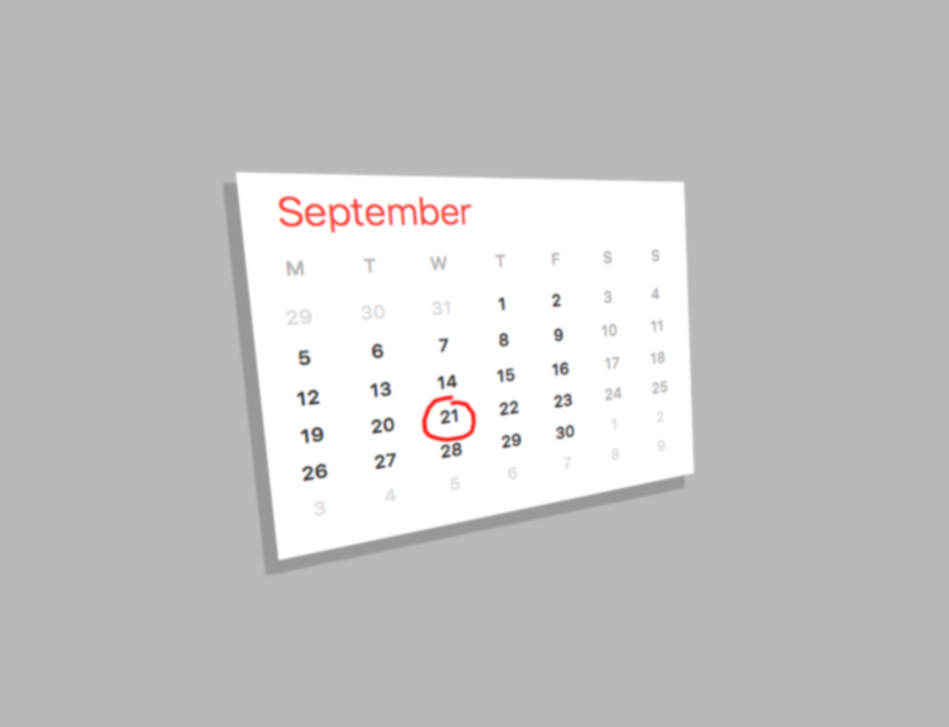
    September 21

    In 3 weeks’ time I celebrate a year of blogging [almost] every day as well as 6 months ‘clean’ (whatever that means). I’ll have pretty much proven my point that stress, anxiety, depression, hypomania, addiction, homelessness, destitution, social isolation and every other ailment that threatens every single one of us, can be swept under the carpet.

    My life is hideously painful: basically, Fuck My Life.

    Nothing has any purpose or any meaning. To volunteer at a soup kitchen makes a mockery of everything, if the vital exercise of feeding the homeless is seen as a fucking hobby. To spawn children because it’s fulfilling to nurture things, is to ignore the fact that there are already plenty of hungry mouths, the planet is fucked and existence is pain and suffering.

    I’m going to continue until the 21st of September, keeping everything the same, in the hope that my depression will somehow lift. I doubt that my mood will improve without medication, or impoverishing myself by setting myself on collision course with destitution and homelessness again. Who wants to be functional in a dysfunctional society?

    On the 21st of September, I have to make a choice: whether to continue for another couple of months, to possibly reach financial security and wealth again. Would loosening of the purse strings and retail therapy make life more palatable? It’s distasteful to say that money brings happiness, but it’s obvious that lack of money brings stress and anxiety.

    Through comfort eating and alcohol, I’m limping along. My waistline is suffering and I’m getting quite depressed about my physique too. It’s a vicious cycle, because depression is one of the reasons why I feel so drained and unable to stay active. You might think that a boring day at work should leave plenty of energy to do other things, but in fact quite the opposite is true: it’s so draining being bored all day.

    It doesn’t make any sense that I’m so exhausted and depressed. I do all the right things: good sleep hygiene, good diet, good routine. I do a lot of walking, some cycling. I occasionally see friends or have a little more interaction with my work colleagues than the bare minimum. I’m working my job, saving my money, paying down my debts. I’m a model fucking citizen.

    Yes, a lot of people find their lives mundane and boring, but if those people are as desperately suicidal as I am, then society is about to collapse at any moment, because I’m always just on the brink of either drawing the curtains and going to bed for 2 months, killing myself or running away, where nobody can send me a fucking bill or harass me on the telephone. If there are vast swathes of people who think like that, because they have a modest dislike of the rat race, society is utterly fucked and why the hell aren’t they speaking up?

    I had no choice but to speak up. I could have died in silence, misunderstood, and with people keen to mis-label me. At least by recording my thoughts and feelings in great detail, I have a fighting chance of dealing with hateful people who would wish me buried as a madman and an addict, even though I can clearly be neither if I’m holding down a highly desirable job, paying my rent, paying my bills. Can’t anybody see that the attempts to pigeon hole people are ridiculous, insulting and desecrate the memory of those who can’t stand the bullshit any longer?

    I steer clear of talking about conspiracies, because that’s the hallmark of somebody who has succumbed to paranoia. When a mind implodes, the vultures of organised religion swoop on the poor fool, and fill their head with all kinds of falsehoods about deities and miracles. Sometimes, when a person’s grip on reality is loosened by the relentless hardships of life, they will start believing that the universe is conspiring against them. Even though we are ruled by cruel and evil plutocrats with insatiable greed, no conspiracy could really work successfully to control 7 billion people.

    Instead, we are collectively the architects of our own demise. Every time we say “I was just following orders”, “I was just doing what I was told” and “I was just doing what everybody else was doing” we illustrate the fact that we hide behind pathetic excuses for behaviour that is to the detriment of the greater good. In the relentless pursuit of the impossible dream that we might one day be elevated from struggle and poverty, we actually collectively enslave each other.

    My aim is to play by the rules, so that I can die with integrity. I aim to cut away from the mainstream as soon as I have reached the point of break-even. To become fixated with the unattainable goal of ‘getting ahead’ is to make myself a lifelong slave. Who gives a shit if I can retire fabulously wealthy, if I gave away my youth and my health so cheaply?

    And so, I watch the clock tick down. I’m just killing time. All I’m doing is waiting. Waiting for the day that I can show that my point is proven: yes, it’s possible to look like a fine upstanding member of the community, wearing my smart suit and going to work in a fancy office. It’s possible to be valued immensely by the capitalist system, and very well remunerated. It’s possible to do without drugs & alcohol. It’s possible to do without doctors, medications and psychotherapists. Then, with everything we supposedly hold dear in life, I reject it all because I think it’s morally wrong to prop up a corrupt system that enslaves so many.

    The end of the collective insanity can only come to an end, when individuals are brave enough to vote with their feet and risk their lives and their livelihoods.

    So many poor fools are buying lottery tickets and working dead-end careers hoping for a promotion that will elevate them from a position of financial insecurity, into a tolerable situation. This mistaken belief that there’s some pot of gold at the end of the rainbow is akin to the donkey that keeps trudging along to try and get the carrot that’s suspended just out of reach… always just out of reach.

    You’ve got to pay to play, and you have to run just to stand still. Even the homeless are criminalised. Anybody who doesn’t conform is bullied and tortured. You’re damned if you do and you’re damned if you don’t.

    At some point, it’s time to give up.


    Tags:

  • One Track Mind

    This is a story about spreading yourself thinly…

    Boy in repose

    I write too much. I wake up and I want to write before I go to work. I want to write before lunch. I want to write in the afternoon. I want to write when I get home. I want to write when really I should be going to sleep.

    On paper, I’m not working very hard at the moment. I only work 40 hours a week. I’m only working Monday to Friday. However, there is zero creativity, zero problem solving, zero critical thinking and zero challenge in the day job. Therefore, I write whenever I can.

    By the time I get home, it’s like I’m a shaken can of fizzy soda and my frustration just explodes when I get in front of a keyboard. It’s a challenge to write concise 700 word ‘reader friendly’ pieces that would allow people to keep up.

    Anybody who reads one of my blog posts will probably think that I don’t do much proofreading and editing. That’s because I’m reliant on a couple of friends to cast their eye over what I’ve written, and spot anything I’ve missed. I’m so keen to publish, that I just hit the button, and then go back and re-read what I’ve written.

    I know that often times when I read something, the smallest spelling and grammar mistakes can make me judge the content to be garbage. I can’t help but judge the author, if they weren’t able to make a passable attempt at the basics.

    Because I’ve been quite successful in my career, I arrogantly assume that my skills are transferrable to whatever I try. It’s been humbling to learn some really basic things in the last couple of years. You might laugh, and I hope you do, but here are a couple of things I only recently got to grips with:

    • Lose and loose – I don’t think I ever used “lose”. I knew how to pronounce them, but I would more often than not write “loose” when I meant “lose”
    • Complement and compliment – I very rarely mean that something complements something else. What I mostly talk about are compliments
    • Less and fewer – I think I instinctively knew the difference, but I still have to proof-read before I spot the occasional mistake
    • Capitalising mum & dad – I knew that there were instances where these needed capitalising, but I didn’t know the rule
    • Capitalising Internet – I always used to capitalise it. Then I stopped. Then I realised that I’d misread what a friend had written about capitalising it, so I had to start capitalising it again

    There’s a tendency to want to try and use big words that I recently learned. There’s a tendency to want to show off. I want people to think I’m smart. I want people to think I’m a good writer.

    However, I do love George Orwell’s advice on writing, and in particular when he says never to use a long word when a short one will suffice.

    My writing is probably filled with clichés, mixed metaphors, dangling participles, split infinitives and lack of the subjunctive. However, the quality probably falls somewhere in-between Earnest Hemmingway and the comments section of a Britain First Facebook post; although quite possibly closer to the latter than the former.

    It’s quite exhausting, working a full time job and also writing 3 or 4 times a day. I put a lot into it. I genuinely open up the taps and give it my all when I’m doing it, even if the editing that I do is a slow process of refinement that happens over the course of several days. I refine. I make lots of little tweaks and changes. I read, re-read and review what I’ve written and then I try to polish the turd.

    Of course, I’m careening out of control. I have no idea where I’m headed or why. I can easily be distracted from one idea or theme by some pressing emotion. Powerful emotions keep bubbling up, causing nauseating repetition and laboured points to crop up again & again.

    Probably my favourite authors are those who have been published posthumously. In particular Robert Tressel and John Kennedy Toole. This is not because of some morbid fascination, but actually the fact that there’s something desperately frustrated that comes across in The Ragged Trousered Philanthropists and A Confederacy of Dunces. There’s something wonderful about Tressel’s 250,000 word book, because it labours the same point over and over so many times – it’s almost unreadable, but well worth persevering with, because you want to know how it ends.

    Joseph Heller’s sarcasm, irony and dry wit makes Catch 22 impenetrable at first. Every sentence packs a powerful punch. You have to understand Heller’s humour before you can make any headway with the plot. In terms of the density of what he packs into that novel, it’s a breathtakingly good work of fiction.

    Of course I don’t compare myself to, or even attempt to emulate these authors. All I know how to do is record my stream of consciousness as best as I can, in the hope that I leave some small mark on the world. I feel so worthless and insignificant sometimes, when laid low with depression and low self-esteem. I live with the crushing fear of dying as a misunderstood person whose memory would be desecrated by my persecutors.

    I leave no descendents. Who’s going to tell my story accurately?

    That’s why I write. The closer I feel to losing my will to live, the more I write.

    Publish or perish.


    Tags:

  • 31 Days to Go

    This is a story about goals…

    Calendar

    A friend of mine said in 2010 that he was going to blog every day for a year, to see if had the discipline to be able to write a book. He achieved his goal and now has 2 books published, as well as continuing to write his blog for over 8,000 subscribers, and tweet to nearly 4,000 followers. He’s an inspiration.

    What’s impressive about what a couple of friends have done, is that they’ve managed to blend their professional expertise with things that they’re passionate about. A couple of inspirational friends’ blogs include a mix of creative writing, photography, their hobbies, as well as being part of their work portfolio.

    Given that I’m passionate about mental heath, addiction and homelessness, and ways of improving the lives of vulnerable members of our society, that rather clashes with my day job of being an IT consultant to a bunch of elite and uncaring capitalists. My colleagues would shit themselves if they knew what was going on behind my neatly presented and unassuming façade.

    I wandered up a bit of a career cul-de-sac. “Do what you love and money will follow” is just utter bullshit. There are so many people in caring professions, or very creative people, who are absolutely flat broke. Hate the boring shit that you do and money will follow has most certainly proven itself, over the years.

    You’ve got to be quite flukey to hit that sweet spot, where you love what you do and you’re well paid to do it. Please stop telling people who are demotivated and disillusioned with the rat race to quit their jobs and do whatever they want. Cottage industries are allowing people to just about eke out a living, but only as a form of charity where we feel that we should support our friends and family in their dreams. Of course we don’t really want to buy all those cupcakes or hang those revolting paintings on our walls, but we feel that we should do our bit to support them.

    When you get yet another charity sponsorship request, and you can see all the names of your friends and colleagues who have donated, you are duty-bound to make a similar contribution. What are you really contributing for? Are you contributing for the good cause, or are you contributing so that your friend or colleague can delude themself that they’re making a difference.

    While charities tell us they’re being innovative and making a difference, with everything from rock concerts to gamification, the reality is that the rich:poor divide is growing. Charity has failed. The middle classes give away pocket change. The working class are forced to donate through taxes on their stupidity, like the National Lottery. However, the rich are absolute selfish c**ts.

    And so, I find if very hard to reconcile the rhetoric of the world – “do what you love” – with the reality of needing to pay my rent and bills. I find it very hard to ignore the pragmatism of working for somebody who will pay me the market rate, versus being exploited by somebody else because I enjoy what I do.

    I write this blog, because there is no other outlet that will pay for my creative output. I can draw as many cartoons as I want, write as much as I want, sing, dance, record videos of myself… everybody else is doing just the same, and it all costs absolutely nothing.

    Some writers on Reddit said that I should see writing as a job, and pointed out that if people are prepared to work for nothing (and so many are) then of course the wages will tend towards zero. Only the high-profile columnists and established authors with the marketing power of a publisher behind them, will be able to keep their heads above water and be heard in the midst of the deafening white noise.

    I’m 11 months into my little project and I have over 6,000 Twitter followers and my blog’s been read in nearly 100 countries worldwide. However, it’s hardly like I can quit my job and declare myself to be a writer, even though I love writing and mental health is an important issue: an epidemic.

    I need to grind out the next month.

    One month from now, I will almost have reached financial security for the first time in 3 years. I will have had 6 months clean, which is a big deal, because I’ve been limping along with relapses for so long. I will have also been writing every day for a whole year.

    My mental health is in a shockingly bad state. The stability of my life still hangs by a slender thread: how would I pay my rent and keep a roof over my head if my contract was unexpectedly terminated? The state of my finances is improving every day, but I’m still several months away from building up any kind of safety net.

    However, one more month and I have something to celebrate: the wolf will be somewhat further from the door.

    Doing “Go Sober for October” was probably a mistake, because I rely on alcohol to cope with stress and anxiety. Being stone cold sober landed me in a psychiatric hospital, because I had zero protection: nothing to cushion the blows and relentless pressure from the horrible hostile cut-throat business environment.

    Yes, in theory I could go a little easier on myself, but in practice it’s not true. I have a narrow window to make things work. When your mental health is unreliable, it’s a good strategy to get rich quick. It doesn’t look unusual to have a string of short contracts, but my mood disorder would stand out like a sore thumb to some HR person, poring over the gaps in my CV, if I was in the dreaded arena of permanent employment (a.k.a. worker exploitation).

    I’m being a scrappy little hustler, and clawing my way up the cliff face. I might make it. I might fall to my death. Let’s wait and see what happens.


    Tags:

  • Spammer

    This is a story about empires…

    Get Rich Quick

    Spammer used to have a simple definition: somebody who sends out millions of unsolicited emails. Now, the term has been somewhat corrupted to mean anybody who threatens to take eyeballs away from your little fiefdom.

    Yes, you managed to install phpBB and get a discussion forum going, or maybe you moderate a subreddit. Well done. Gold star.

    Everybody on the fucking Internet is competing for a bit of eyeball time. A personal blogger sharing their shit is no more of a spammer than yet another fucking subreddit or discussion forum. One Twitter user is indistinguishable from another. Everybody is just churning shit out into the ether, hoping to be heard, and hoping to engage in discussion.

    When you examine the motive of people who cry “spammer” at every opportunity, you’ll see that it’s much akin to religious thought leaders who say you can’t believe in any other gods apart from theirs. The whole point is to lock people into your little cult.

    The internet is fair fucking game. If somebody finds more interesting content elsewhere, anybody who cries “spammer” to try and prevent people from leaving the little walled garden they have created, is just an absolute empire building idiot. Content is king.

    For sure, bots that create links to stuff to try and drive up advert impressions and clickthroughs are the scourge of the earth, but all content creators are equals. In fact, the unpaid blogger is more likely to churn out quality content than the paid clickbaiter and the guardians of the forums, whose job it is to try and keep people marooned on the tiny islands in the sea of quality content.

    The spam that isn’t spam is “worthless noise” until somebody stumbles on it and decides it has value. All anybody can do is create high quality content and hope it one day gets discovered. Yes, it’s spam and “noise” until a sufficient quantity of people engage with it, but that doesn’t mean it’s garbage… it’s as equally valid as anybody else’s contribution.

    This is the great meritocracy of the Internet. Anybody can self-publish, and people aren’t subject to the gatekeepers who make sure that only their chums make it into print.

    Dance like nobody’s watching? Yes. And also write like nobody’s reading, and don’t let anybody tell you you’re a spammer.

    In a way, the vast pools of users on sites like Facebook, Twitter and Reddit are somewhat contrary to the ethos of the Internet. Instead of each maintaining our own websites with our own content, we have given way to the era of the moderator and the administrator… little Hitlers who preside over their domains, cultivating their power base but contributing nothing of value.

    It’s really hard to get heard on the World Wide Web, but content is king and high quality content will always prevail over banal commercial tripe.

    Yes, there’s a war on ordinary netizens, with them being told that their content is boring and nobody cares. “Stop blogging and shut up. Nobody cares” people are told, with their dismal visitor numbers, while meanwhile some clickbait bullshit is being viewed millions of times.

    Do not be dissuaded, I say. Through perseverance, the crap that only exists to capture our eyeballs for long enough to glance at an advert, will be the stuff that gets condemned to the dustbin of history, as the true spam.


    Tags:

  • Content is King

    This is a story about monarchy…

    Inflatable Crown

    I lied about the monarchy thing, OK? Actually this is about search engine optimisation (SEO).

    Do you want to know how you reach the top of Google search, so you appear on the first page when people are looking for you and your shit? Well, there used to be some neat ways to cheat the system, but now sadly, you’re going to have to flex those fingers and get writing.

    Google uses some things like meaningful domain names (thisismyshit.com is more meaningful than this-is-my-shit.co.xyz, for example) as well as well named pages, titles etc. Also, having links to your site from other highly ranked pages is also important.

    However, some poor c**t has got to do the typing.

    It’s all well and good getting links to your site from other highly ranked pages, but who the hell wrote the crap that got those pages highly ranked in the first place? All the early-adopters of the web built pages packed full of actual meaningful shit, and then Google indexed those pages.

    Now, we have the rise of the link-building bots and the Search Engine Optimisation (SEO) specialists. There are an army of fucktards out there, posting comments on blogs that are just links, as well as every other scam to get Google to increase the search rank of their client’s sites.

    I’m not sure if you’ve found this, but sometimes when you’re searching for stuff, you find a lot of sites that are nothing but meaningless tosh. This especially happens when you’re looking to buy something and you’re putting quite a specific technical search term into the box. You’re inundated with fucking content aggregation sites that add absolutely nothing to your life and in fact detract from your entire search for meaningful content.

    You might not see it, but there’s a massive scrap going on in the digital realm for your eyeballs. Even though you’re only worth a few tens of dollars each year to advertisers, when you scale that over billions of freetards, there’s quite a lot of profit to be made. Facebook is absolutely wiping the floor with the competition. We are all heavily wedded to social media for our daily fix of baby pictures and Facebragging.

    How do you compete in this sea of noise?

    Writing a witty webcomic or doing some hilarious web videos is a terrible idea. The fact of the matter is that the written word is still the most indexable thing for search. How does anybody’s first foray onto the interweb begin? Normally a Google search is the way that that vast untapped market of digitally naïve people are stumbling into the technological future. If you write stuff – on a regular website – at least you know it’s discoverable by search.

    Facebook and Twitter are utter bastards. It’s very unlikely that your witty posts and tweets will ever see the light of day. Facebook and Twitter are walled gardens. The business model of the dominant social media brands is to keep you locked in through your investment in their platform, and the fact that all your friends are similarly locked in.

    However, the vast quantity of user-generated content has to see the light of day sometime. Even the administrators of hugely popular Facebook pages are going to wonder why they’re not getting particularly rich, but Facebook makes a brilliant rake from their creative endeavours.

    Twitter is utter shite. You might have thousands, tens of thousands, hundreds of thousands and even millions of Twitter followers. What fucking difference does it make? Is anybody actually getting heard or discovered through Twitter? No.

    The established players are hoovering up your creative output, storing it, and hiding it where nobody can see it.

    There’s no denying the impact that can be made by publicly publishing the output of your endeavours in plain text on the open web, where the search engines can make it available to billions of people. Raw words are searchable. Your written content will be discoverable to the whole of humanity.

    Don’t fall into the trap of throwaway videos. Write. And write some more.


    Tags:

  • School Holidays

    This is a story about taking a break…

    Ballyvolane House

    This time last year I was charging around Ireland, exhausted and stressed out of my mind to the point where I was losing my marbles, because I’d had such a rough ride up to the point that I finally got out of the country for a few days break.

    August is a dreadful time to get anything done. The French have the right idea, basically taking the whole month off work, leaving the cities and heading for the coast. I peaked a little early this year, because I wanted to be on holiday while celebrating my birthday.

    A friend raised the very valid point that becoming engaged in debate is exactly what I’m looking for when I’m courting controversy. To say that I’m shitposting or attention seeking would be untrue, but there’s certainly a reason why I don’t just keep a private journal.

    Now that I’m in my mid-thirties, most of my peers have spawned offspring, and that means they’re taking their snot-nosed little shits on holiday. Can you sense the provocative sarcasm? Certainly the irony in my tone has not come across effectively at times, causing offence to stressed out mummies and daddies over my irreverence towards the magic of parenthood.

    Every so often I reconsider whether what I’ve been writing is balanced and fair, and occasionally somebody tells me I’m out of line or otherwise gives me feedback that directs my attention towards points of view I hadn’t considered.

    However, now we are in the middle of the school holidays, I definitely feel like any attempts to address my critics would fall on deaf ears. Most of my child-encumbered chums are too busy trying to stop their offspring drowning while in the paddling pool or World War III from kicking off in the back of their family-sized car packed with infants and infant paraphernalia.

    Unless you’ve met me during your sprogged-up years, you’re not going to know that I’m actually poking fun. For my own amusement, I’m assuming a caricature: that of the footloose and fancy free bachelor, who is too much of a cultured citydweller to be bothered with mopping up sick and pooh. In actual fact, if you have met me during your years of parenthood, I hope you think I’m at least a little bit sympathetic to the trials and tribulations of raising unruly offspring, and it’s obvious that I actually like kids.

    Ironically, those friends who genuinely are footloose and fancy free and have rejected the commitments of family life, have also missed the point. While they are off partying around the world, with buttloads of disposable income and zero fucks given for how the other half live, they’ve ignorantly chided me for not being more grateful for my lot in life. A couple of pals who life has conferred considerable good luck upon, have deigned to give me a lecture on homelessness and the struggles of the working class… presumably while also sipping champagne on a yacht and completely failing to see the irony.

    The irony is not lost on me, no matter what you might think, and believe me when I say that I do consider those who have not been fortunate in life when I bemoan my own situation. I hope that I always give an adequate nod to say that I acknowledge my own fortune that I haven’t had my limbs all cut off and lemon juice squeezed in my eyes while my testicles are removed with a rusty spoon. My God I’m so glad that didn’t happen to me. Oh how terribly fortunate I am. I can hold up a prompt sign if you like, so you know when I’m being sarcastic.

    I have this strange habit of directing what I write at various groups of people or individuals, which must be very confusing as a reader, but it’s also confusing for me as a writer. Who am I writing for now? My passive-aggressive attacks on my parents, and my rebuttals of my critics, have fallen on deaf ears. It’s the school holidays and everybody’s off on the beach or at a country show.

    I could stop, regroup, and even take this opportunity to actually write on themes rather than using my writing as a vehicle to deal with the demons of my mind and argue aloud with the thrust of my critics words, even if they’re not reading or responding.

    There’s something satisfying in knowing that you’ve won the argument, whether your opponent listened and responded or not. So many people are terrible at debating anyway, believing that contradiction is the same thing. “No it isn’t” then “yes it is” repeated ad nauseam. Yawn!

    And so it is, I feel like I’m talking to myself, and this feeling is further exacerbated by the summer break and the “calm before the storm” moment I’m facing, where I feel like I’m shouting into an empty room, but I also know that I’m closer than I think to making a breakthrough.

    Taking a break can so easily mean the abandonment of a project, and the web is littered with abandoned blogs. I might not have achieved much, but I’ve certainly achieved a degree of consistency.

    I’m so close to turning a corner, and yet it feels like I’m getting nowhere during a lonely school holiday where everyone is distracted spending time with their families in the sunshine while I plug away at an unfulfilling job and continue to bare every aspect of my soul on the public Internet.

    I could stop, but then I would be like Wile E. Coyote when he runs off the cliff. It’s only when he stops running and looks down that he falls. If that cartoon coyote just kept running he would be fine.

    That’s the discipline of the completer-finisher. That’s my discipline. I don’t stop. I don’t give up. Not until I achieve something. Not until I reach some kind of goal. The project’s not done. I have to continue even if it’s bleeding me dry.

    Anyway, void, I know you’re always here listening to me and it’s mighty therapeutic to be able to talk at length. Feels a bit weird continuing to blog away when so many people are off on their summer holidays, but there we go!


    Tags:

  • Alan the Alcoholic

    This is a story about destiny…
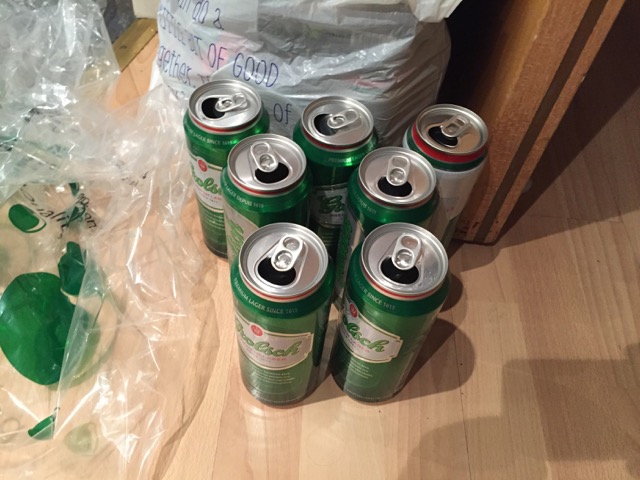
    Beer cans

    I’ve been writing short stories all this week to fill my boring days at work. I wasn’t going to share them, because I already share thousands of words every week, but this is one of my better efforts.

    Anyway, without further ado, please allow me to introduce The Factory:

    * * *

    His mother had warned him that if he didn’t try hard enough at school he would have to work in a factory, but this conflicted with Alan’s day-to-day experience with his teachers. Alan’s teachers always told him that he had amazing potential. Alan’s teachers always told him that if he just applied himself, he would be a brilliant student. Perfect! No effort required then, until the exams actually counted for something. Why burn yourself out over mock exams and other work? Keep your gunpowder dry until the real battle.

    Was it lazy? Was it arrogant? It seemed smart to Alan to not bust his balls on extra homework and every essay and assignment. School was going to go on and on for years and years, and then there was university after that. Yes, it was generally assumed that Alan would be going to university, because he was a sharp cookie. Just needed to apply himself. Just needed to try a bit harder. Why bother trying until the day of his GCSE exams, his A-levels, and his entrance examination for Oxford or Cambridge? Why break a sweat until then? Why get anxious about tomorrow’s problems, today?

    Whenever Alan did turn it on, concentrate, try hard, he found that he was showered with praise and good grades. His experience bore out everything that the world told him every day, except his mother’s prophecy that he would end up working in a factory.

    But now he worked in a factory.

    In the factory, there were warehousemen who drove fork-lift trucks, ferrying pallets of supplies around the factory buildings, or loading the boxed up products being dispatched to the wholesalers. There were machine operators, who pressed oversized industrial buttons, to start and stop the various plant that mixed chemicals in huge vats, pumped liquid, or carried things on conveyor belts. The machine operators were responsible for hitting the big red STOP buttons in the event of an industrial accident, so they were slightly higher paid than the warehousemen, who only had to have a fork-lift truck driving license.

    The lowest paid workers in the factory were those who performed repetitive manual labour that could not be easily automated. The manual workers took cans off the conveyor belt, stuck a sticky label on them, and then loaded them onto another conveyor belt. The manual workers picked out any cans with dents or loose lids, and put them onto large trolleys marked “Quality Control” which were wheeled to another area, where somebody else would check to see if the product could be salvaged or not.

    There were the supervisors, who had risen through the ranks by doing one of the many jobs in the factory for 25 years or more. That was about how long it took to get promoted. If you had stuck it out for 25 years, and you’d managed not to make a fool of yourself, you were pretty much automatically promoted into a supervisor role. It was well understood, and it was the reason why many people were sticking with their low paid jobs, holding out hope for that promotion. The supervisors were paid marginally more than their colleagues, but the big bonus was that they didn’t have to do any work anymore. The supervisors would march around, clean and smelling fresh, putting ticks on a checklist clipped to their clipboards.

    Supervisors would escalate issues to management. Management were all the sons, daughters, husbands, wives, boyfriends, girlfriends and close friends of the family who had originally owned the factory, or another factory. To enter into management, you had to be born into management, or marry into management. There was a legend, often told, of the boy who used to sweep the factory floor who got promoted to be a manual worker, then a supervisor, and then a manager. This legend was the lottery-winning chance that everybody in the factory secretly hoped for, but of course it was a myth. Whenever new managers were needed, only people who were already managers would be eligible for the role. Can’t get the job without the experience, can’t get the experience without the job. That was the Catch 22 that kept the riff-raff out of the boardroom.

    But, there had been a new role that had been created, that nobody felt qualified to do. Some of the managers had hired family members, friends, to try and do the role, but nobody had been able to perform the duties required. There had been several rounds of telephone interviews to screen candidates. Human Resources had then called in promising candidates to understand if they had the right cultural fit and commitment to the mission of the company, to be suitable. Then junior management had held some day-long sessions where candidates fought it out with each other, in some real-world scenarios that had been set as a test. Then, finally, there were several more face to face interviews with senior management, before at long last the CEO personally vetted the remaining handful of hopefuls, and selected a winner. A job offer was dispatched and the factory’s newest recruit joined the team. However, every person they had recruited to date had left, soon after starting their new job.

    It was time to try the open market. Jobs were routinely advertised on the open market, but invariably it would be somebody known to somebody else who would be recruited. You had to know somebody. Any candidate from the open market was there just to make up the numbers, and to pay lip service to the idea that there was some meritocracy to the process, but everybody in management knew that unless you were already in management, your face simply didn’t fit: you weren’t part of the club.

    And so, the unprecedented step of hiring somebody on the basis of their Curriculum Vitae was made. Their aptitude and qualifications were actually considered on merit, and the interviewers actually mulled over the answers to the questions that were asked. The management team was getting desperate. It was time to hire somebody who might be capable of doing the job, rather than simply recycling the same pool of people who had been born into privileged positions. Management were out of ideas, because they had only ever taken their ideas from an insular pool of people with the same background. It was time to try an outsider.

    Alan had been through the same gruelling rounds of telephone interviews, HR grillings and face to face meetings with various junior and senior managers. Alan had suffered the same dismissive attitudes, because he had never held a management role, because his family had never owned a factory and gifted him a job. Everybody who interviewed him let him know, subtly, that he wasn’t cut out for management because he wasn’t part of the club. However, begrudgingly they had been forced to recommend their favoured outside candidate. Alan had been chosen for his strengths, not because of nepotism. Management were not happy about this. This was not the way things worked.

    Finally, the CEO had awarded Alan the job. The CEO knew that the factory had little choice. It had an unfilled role that was very important. Nobody from the pool of those with managerial experience had proven able to perform the duties. Of course none of the supervisors could be promoted. That would be ridiculous! Alan had good grades and had studied at Cambridge, so on paper he was a cut above everybody else that they had interviewed, except the one thing that would normally disqualify him from ever entering management: that he actually had to apply for a job, rather than just being gifted one by his family.

    Alan’s roles and responsibilities had been explained to him at length during the interview process, but now he had an HR meeting to discuss his salary and his final job description.

    “There’s been a slight change” said Sandra, the HR woman. “There’s actually just one thing we need you to do” she explained. Sandra pushed a piece of paper with some text printed on it over the desk towards Alan. “Is this some kind of joke?” Alan asked.

    The salary negotiations had taken a new direction now that Alan knew that his intended role had somewhat changed. Normally, candidates enthusiastically accepted pretty much whatever was offered in terms of remuneration by the time that they had reached the point of a job offer. The purpose of the interview process was to make a candidate so relieved when the stress and the anxiety of the whole awful ordeal was over, that they wouldn’t want to risk losing the job offer when it was on the table.

    “I want twice as much money” Alan plainly declared.

    “Ridiculous!” Sandra had replied. “You’d be paid more than the CEO if we gave you that much” she spat, contemptuously.

    “But look at what you want me to do” Alan pleaded. “What you’re offering just isn’t enough to do that”.

    Eventually, Sandra had backed down. She was shocked. She’d never actually had to negotiate with somebody before, and even when candidates had tried, she just held her ground and they gave in. She’d met people like Alan before, but she’d never come up against such stubborn determination. His attitude had seemed to change completely when she told him what his new role would entail.

    Alan started his new job with something of a sense of happiness. He was going to be paid an obscene amount of money. He couldn’t believe his luck. Even though Alan knew that the size of his paycheque bore no relation to his actual value as a person, he still felt special and appreciated to be receiving such healthy remuneration for his efforts. Alan was almost cocky and arrogant, knowing that he was the highest paid person in the factory. He was the highest paid person he knew. He calculated how much he was going to earn every hour, every minute, every second… it was a lot.

    Three supervisors met Alan at the factory gates and gave him a brief tour of the facilities. Alan was soaking up his surroundings with glee. It was nice to feel part of something. It was nice to see the efficiency of everything, as cans and boxes, and crates and vats of liquid were ferried around the warehouses, and vast quantities of products were stacked up ready to be dispatched to customers.

    Alan was shown to the testing room. Everything had been prepared for him.

    The testing room was a cube in the corner of one of the cavernous warehouses, with a door labelled “TESTING ROOM” in bold black text. The testing room had a round silver door handle, and a piece of plastic that could be slid so that the words “IN USE: DO NOT ENTER” could be displayed, or hidden when the room was unoccupied.

    “Yes, it’s ready to go. Please start when you’re ready” one of the supervisors said, gesturing towards the door.

    Alan slid the plastic so that “IN USE” was displayed, and stepped inside the room, closing the door behind him.

    Inside the room, there was black folding chair in the centre, and 4 blank walls. The walls had a slightly glossy shiny look to them. There was a sharp chemical smell in the air. An extraction fan whirred above, sucking away the fumes. Alan sat down in the chair, and begun to look at the walls.

    After 12 hours, a loud whistle blast could be heard throughout the factory, including inside Alan’s room. The factory workers queued up to clock out of their shift, and then disappeared out of the exit to the car park and bus stop. The supervisors jumped in their battered old cars and drove home. The manual workers queued up in the rain to catch the bus. Alan queued up for the bus too: he would have to wait for his first paycheque before he could think about buying a car.

    The next day, Alan arrived and made his own way to the room. He opened the door and there were a couple of men in there who were just packing up their things. One of the men said “all ready for you” and then the room was left vacant. Alan slid the sign to show “IN USE” again, closed the door and sat in his chair, waiting for the factory whistle while looking at the glossy walls.

    After 11 or so hours, Alan started to wonder if his eyes were playing tricks on him. Were the walls slightly less glossy? There certainly seemed to be patches where the walls looked somewhat more matt. There were areas that were still shiny and reflecting light, but there were large parts that seemed to no longer have the same sheen. Before he could think about this much longer, the factory whistle blew and everybody left for home.

    Alan had a troubling night of sleep, wondering what he was doing. Had he made a mistake in taking this job? It was certainly very well paid, but it wasn’t at all what he imagined he would be doing for a living. He started to think about the nice new car he was going to buy himself with his first paycheque. Yes, just focus on the money, he told himself as he drifted off to sleep.

    The following morning, two men were just leaving the room as he arrived. They were carrying rollers, brushes and cans of paint. “Morning!” they cheerily called to Alan. “Morning!” Alan enthusiastically replied. It was nice to be greeted by his colleagues. They seemed happy to have him there.

    Inside the room, it had been repainted in a wonderful bright new colour. This made Alan joyously happy. This minor change in his environment and routine was well appreciated and his whole 12 hour shift passed quickly. Alan felt noticed, cared for. Perhaps his doubts about this career were misplaced.

    In the evening, Alan considered taking out a car loan. I mean, now that he had found a job that he enjoyed and was well paid, surely there would be no risk in taking out some finance to allow him to have a reliable vehicle to transport him to work? It would be a nice treat that he could have now, rather than having to wait until his paycheque. He would be able to drive to work rather than taking the bus. That would be a big improvement in his quality of life, not having to stand and queue for the bus in the rain.

    Now the working week was nearly done. Alan felt really happy about the approaching weekend as he rode the bus on his way to work.

    The painters were leaving his room again when he arrived, carrying their brushes and rollers. Wow! This was exciting, Alan thought. “What colour have they painted my room today?” he wondered.

    Inside the room, the walls were the same colour as the previous day, Alan felt sure. What the hell? Were his eyes playing tricks on him? Was his memory fading? Maybe the paint simply needed a second coat, but it had looked pretty good yesterday, he thought.

    Alan’s 12 hour shift was spent pondering the conundrum of the paint colour. Strangely, he was almost but not quite able to enjoy watching the glossy sheen of the wet paint change to a matt texture, as it dried. He made a little game, of checking each of the slower drying areas intermittently, to see if they were still shiny.

    Friday brought another almost identical day. The painters were leaving as Alan arrived, and the colour was unchanged. The only thing that was different was that Alan was now certain that no further coats of paint had been required in order to give even coverage. The walls had been adequately coated with paint the day before. This extra coat of paint was wholly unnecessary, for even the most diligent decorator.

    Clocking out of his shift, Alan was troubled and locked into his own mind, questioning what he was doing and why. His eyes were glazed over and not engaging with the faces of his colleagues as they left the factory. On the bus ride home, Alan started to shake off his doubts and just enjoy the fact that work was over until Monday. It was the weekend and he could relax, knowing that he had successfully got though his first week, and he was a little closer to his first paycheque.

    The weekend was overshadowed with niggling doubts. Alan had been planning on going to the car dealership to enter into a finance agreement and arrange to take delivery of a brand new car. Instead, Alan was almost in a daze, unable to shake off the feeling that his new job was not quite what he had bargained for. Were things going to change? For sure, on that day that the walls had been repainted, he had felt that things were going to be OK, but then the end of the week things had made no sense.

    By Sunday evening, Alan had started to become quite anxious about the week ahead. If the colour of the walls changed again, that would be better, but it still didn’t really answer the question of what he was doing there. If the colour of the walls didn’t change, he would be forced to question what the purpose of his role was. He knew that it was important that he didn’t ask difficult questions or voice his doubts, and he didn’t want to risk that big salary. How long could he hold his tongue?

    On Monday morning, Alan felt extremely tired even though he had not stayed up late or slept especially badly. He felt tense. His muscles ached. He felt butterflies in his tummy. Why would he be so anxious? His job was easy and he’d made it though the first week with no problems. There was no reason why he couldn’t continue day after day, week after week, year after year, decade after decade. Think about all that money he could save up for retirement. Think how rich he was going to be.

    Alan arrived at work with seconds to spare. He was almost late. The room was empty, but the walls were shiny and wet with fresh paint. The painters had obviously left shortly before Alan had arrived.

    For the first three days of the new week, the paint remained the same colour but it was always freshly repainted. Alan never saw the painters again because he was arriving later and later to work, questioning what on earth he was doing and how he could carry on without understanding the purpose of it all. It was so meaningless, so purposeless, so lacking in rational explanation, so wasteful. He was the highest paid person in the factory, and yet he didn’t understand the importance of his role. In fact, his role seemed pointless to him. He persevered, thinking about the money and the new car.

    On Thursday, he was torn between just quitting his job or marching into the boardroom to demand answers from the senior management. He knew that either option would pretty much spell the end of his career.

    Arriving exceptionally late, Alan turned the handle and opened the door of the testing room a fraction. Inside, the walls had been repainted a different colour. Alan was flooded with a disproportionate amount of relief that something had at last changed. It had been more than a week since the colour had been altered, and even though it had happened once before, he was now overjoyed that it had happened again. It had seemed like forever that he had lived with the same colour of fresh paint, day after day.

    On Friday, the wall colour changed again, and now Alan was almost ecstatic. He felt giddy with the waves of emotional relief that swept over him. He was almost drunk with feelings. Everything seemed to make sense, even though they didn’t. Everything seemed to be slotting into place, even though they weren’t. Alan spent his whole shift daydreaming about driving his new car, and resolved to rush to the dealership first thing on Saturday and sign the car finance papers.

    Alan’s sleep was very disturbed with excitement about getting a new car. Of course, he would not be taking delivery for some time, but that’s not what he was thinking about as he fitfully slept until the earliest possible opportunity he could get up and rush to the dealership when it opened in the morning. At the dealership, Alan borrowed far more money than he had originally intended. Buoyed with the optimism of last couple of days at work he’d just had, in stark contrast to his misery and anxiety at the start of the week, Alan felt that he must purchase the very best car that he could afford, in order to give everything some meaning.

    Then, as soon as the door of the dealership had swung closed behind him, he felt a sense of regret, rising panic. What had he done?

    Now his weekend was doubly anxious. What if he had another week where they didn’t change the colour of the walls? What if he lost his job before he got paid? What if the new car was not as wonderful as he hoped it would be.

    Alan tried to console himself in daydreams about him driving the new car. Alan tried to picture how much happier he would be, owning and driving a new car. It didn’t seem to be quite enough to settle his deep sense of unease, that he was now trapped into his job in order to keep up the repayments on the car finance. The thought that he now had no option but to stay in his job, or else face both unemployment and insolvency, was a terrifying amount of pressure.

    The following week was sheer agony. The colour of the walls remained the same every day, even though they were freshly repainted for all five days. Alan tried to lose himself in daydreams about taking delivery of his new car, and driving it for the first time. He tried to imagine the new car smell. He tried to imagine tearing off the plastic that protected the brand new seats, like tearing of wrapping paper at Christmas. But it didn’t work. Time dragged incredibly. Every second felt like a minute. Every minute felt like an hour. Every hour felt like a day. Every day felt like a month. The week felt like a year. A year of pain. A year of staring at the blank walls, wondering what he had done, but feeling completely trapped by his finance agreement.

    Alan made it through a second week that was much the same. He dare not arrive late, for his financial security depended on him keeping this job. He dare not raise his concerns with senior management, for he needed this job. He was locked in. He had to keep quiet and just keep doing what he was doing.

    When he woke up on Saturday it was 3pm in the afternoon. He hadn’t gone to bed late, but the stress and anxiety were exhausting. He was wrecked by the constant tension, the constant worry, the constant doubt. He was lolling around in bed, not really wanting to face the day because he was too emotionally drained. And then he remembered: he could collect his new car today.

    Instead of joy, Alan felt trepidation. He procrastinated in getting ready and travelling to the dealership. There was too much riding on this. If he didn’t enjoy his new car, his life was over. How on earth could a new car solve the misery of his day to day existence? No material object was capable of resolving his crisis, surely?

    Arriving late, the car dealer was only just able to complete all the paperwork in time to let Alan have the car that day. Alan thought he was going to literally collapse and die when he was told that there might not be enough time before the dealership closed, and he’d have to come back another day. Perhaps the dealer had seen the grimace on Alan’s face, and had been taken aback. Instead of being fobbed off, the dealership had pulled out all the stops to get Alan his car, while he sat exhausted in the waiting room.

    At last, Alan was handed the keys and led to the car park where his shiny new car was ready to go. The paint colour wasn’t quite the same as the one he specified and the dealer had forgotten the upgrade to the wheels that he had been promised, but he didn’t care. Alan wasn’t going to refuse to take delivery now, when he’d been working for so many years to get this prize; or so it felt. Alan signed his name and stepped into the driver’s seat. This was finally happening.

    It was certainly nice, like he had imagined, being in a brand new car with the smell of plastic and foam. Everything was unmarked, blemish free. Alan had to pinch himself to be reminded that this was not one of his many daydreams he had been having in anticipation of this day.

    Driving to work, Alan drew envious stares from fellow work colleagues who he had previously taken the bus with. He apologetically cringed, knowing that they were thinking how flash he was, displaying his wealth so obviously like this. He felt like a traitor, having taken the bus with the ordinary factory workers, and now flaunting his privilege, while his co-workers were soaked from the rain. However, it had been a remarkably enjoyable journey to work despite the traffic. Alan arrived at his room feeling remarkably relaxed and happy.

    Now, Alan spent 12 hours waiting to be able to enjoy his drive home. The anticipation of it almost seemed to make the time go slower, but at least he was carried through the first half of the day with a bit of happiness from his drive to work. He fantasised about perhaps going on a long drive at the weekend.

    The week dragged, but it was not too bad. As an added bonus, the room had been repainted on Thursday in a new colour. Alan’s week was almost tolerable. This could be sustainable, he thought.

    Another couple of weeks passed with Alan’s car getting a little bit dirtier, scratched and dented from the daily commute and people carelessly opening doors in the car park, or brushing past his vehicle with sharp protruding zips or studs on their clothing, damaging the paint. Inside the car, it was littered with discarded coffee cups from Alan’s commute, which now seemed painfully slow as he queued in traffic. The bus zipped past him in the bus lane, as he sat fuming at the wheel. Driving to work was an added pressure, an added anxiety.

    The same nagging doubt about what he was doing, became bigger than the novelty of driving to work, which had quickly become the norm. The changes in wall colour were as routine as anything else. Alan simply spent 12 hours sat in his room questioning his very existence, and trying to will himself to think about the money, which was very much less than before, because of his borrowing obligations. Working to pay off his car loan really did not seem to make any sense except in the context of his job, which also didn’t make any sense.

    In a way, Alan hankered for the days when he used to take the bus, because he didn’t have the pressure of having to drive himself and the crippling financial burden of the loan he had taken out to buy the car. Of course, the car was now well careworn and uncared for and was worth a tiny fraction of what Alan had paid for it. He would never be able to repay his debts by selling his car. He would have to keep the job, in order to keep up his loan repayments. He was trapped, and it was destroying him, knowing that he was damned if he did, and damned if he didn’t.

    Alan started to drink heavily. At first in the evenings, to deal with his anxiety at facing the working day. Then he started to drink at the weekends, to deal with his anxiety at facing the working week. Then he started to drink in the mornings in the car park, so that he would be drunk at work and the day would pass quicker. Alan had no problem hiding his drunkenness at this stage, because he was inebriated around-the-clock. He would never let the alcohol levels in his bloodstream drop, because he would start to get the shakes and start throwing up. He had woken up in the night, soaked in sweat, when he had suffered an epileptic fit in his sleep.

    Now physically dependent on alcohol, Alan’s his body would complain with horrific withdrawal symptoms and seizures if he stopped drinking. He was also psychologically dependent on intoxication to be able to cope with the monotony of his job. Sobriety was barred to him, because he was unable to continue to work without alcohol, and he needed the job to pay for his loan. Alcohol numbed the stress and anxiety of the situation.

    His mother had warned him that if he didn’t apply himself at school, he would amount to nothing, and would be a manual labourer in a factory. He was now the highest paid person in the factory, and higher paid than even the CEO. He had a lovely car, and he was on top of his finances. His credit rating was sky high. He could borrow as much as he wanted, to buy a house, a boat or whatever he wanted. However, he was now wary of borrowing any more, knowing that it would shackle him more to the job that had driven him to alcohol. There was no way out. Material things brought temporary relief, but only at the expense of further tying him to a pointless job that denied him any sense of purpose.

    People asked Alan why didn’t he just retrain as a circus juggler, or a bricklayer? Perhaps he could be a flower arranger, or a concert pianist? Did these people not understand that those salaries would never allow him to service his debts? Did these people not realise that it costs money, on rent and tuition fees, to be able to retrain, and all Alan’s money went on rent, debt and alcohol. “Why don’t you save up some money and go travelling?” people asked. Saving money meant less alcohol, and it was only through alcohol that Alan could make it through the day. He was mortgaging his health in order to keep his job, in order to repay his debts. Couldn’t people see he’d love to dream. Alan was not short of dreams and ideas, but how could he pursue them when he was so trapped?

    Riding the wall of death, faster and faster, round and round. Alan had to keep drinking more and more in order to maintain his intoxication, as his body became more and more tolerant to the copious amounts of alcohol he imbibed. Three bottles of wine every day. Cans of super strength lager to keep him topped up. Then a bottle of whiskey every day. Then two bottles of vodka every day. Then he lost count. There were bottles in his gym bag, in his car, littered throughout his flat. He had hip flasks in every pocket. He lived in constant fear of running out of alcohol and getting the shakes, having a fit at work that would cost him his job.

    Nobody seemed to notice that Alan was tanked up on alcohol the whole time. He was functional. He was turning up to work and doing his job just like he’d always done. He was reliable, dependable. He was uncomplaining. He didn’t ask any questions. He was the perfect employee. Moulded to fit his job perfectly. He had filled his role better than anybody in senior management could have possibly hoped for. The CEO was overjoyed with Alan’s appointment, and the work that he was doing. He was worth every penny of his salary, even if Alan felt worthless.

    Knowing that he was an alcoholic and unable to function outside the narrow remit of his role, Alan was even more trapped than before. There was no way that he would find another job. There was nobody who needed somebody with such specific skills and experience. There was nobody who could afford to pay Alan the salary that he needed. There was no way that a functional alcoholic could hide their problem throughout the gruelling interview process. There was no way that a functional alcoholic would be able to start doing something new. He was just surviving on muscle memory, on practice and routine. Alan’s brain was shot to pieces.

    Alan wondered if suicide would be preferable to his existence. He knew that he was slowly committing suicide anyway. Soon his liver would be destroyed. Soon his health would fail completely, and he would quickly die. Wouldn’t it be better to do it swiftly, before he got hospitalised and he painfully slipped away? Death would be unpleasant, as his organs failed one by one and his body gave up due to the ravages of alcohol. Surely it would be better to just kill himself quickly.

    Stockpiling paracetamol from the chemist, buying boxes two at a time, Alan gathered hundreds of pills.

    There was no moment of doubt when he did it, swallowing handful after handful of white tablets, washed down with whiskey. Alan had selected a fine single malt to end his life. Leaving no suicide note, he had however tidied up his flat and set his financial affairs in order. Everything would be found neat and tidy, when the police were sent by the factory to see why he hadn’t turned up for work at all that week.

    Of course, people were sad when he’d gone. “He could have been anything he wanted” they said. He had amazing potential. He just had to apply himself to something. The world was his oyster. There were so many opportunities.

    Nobody saw how trapped Alan was, and he had known that he could never explain. People would never understand how he could be so trapped, when he was so well paid and so good at his job. He was steady and dependable. He never rocked the boat. He never complained. He just got on with his work.

    His mother didn’t mention her prophecy about the factory at the funeral. Many of his work colleagues attended the burial, and it would have been insulting to talk about factory work as undesirable. There was also a subtle point that Alan’s mother had missed: he had ended up working at a factory, just as she had warned, but she had been proud of him because it was a prestigious role.

    What Alan’s mother had failed to understand was that the men who manually laboured in the factory felt like they made a difference. Every full lorryload of product that left the factory felt like some small achievement. Even a full day spent sticking labels on cans and transferring items on conveyor belts felt somehow useful.

    However, Alan had never figured out what the purpose of his role was. He knew that he was well paid, and that he was a valued employee, but he didn’t know why. Alan had been unable to place himself anywhere in the grand scheme of things. Alan had never been unable to get over the most basic reduction of his job description to the simplest possible explanation, which was now chiselled into his gravestone in commemoration of his great work: 

    “He watched paint dry”

    * * *


    Tags: