oxford – Nick Grant

Tag: oxford

  • How to Become Irreverent

    This is a story about the values you raise your children with…
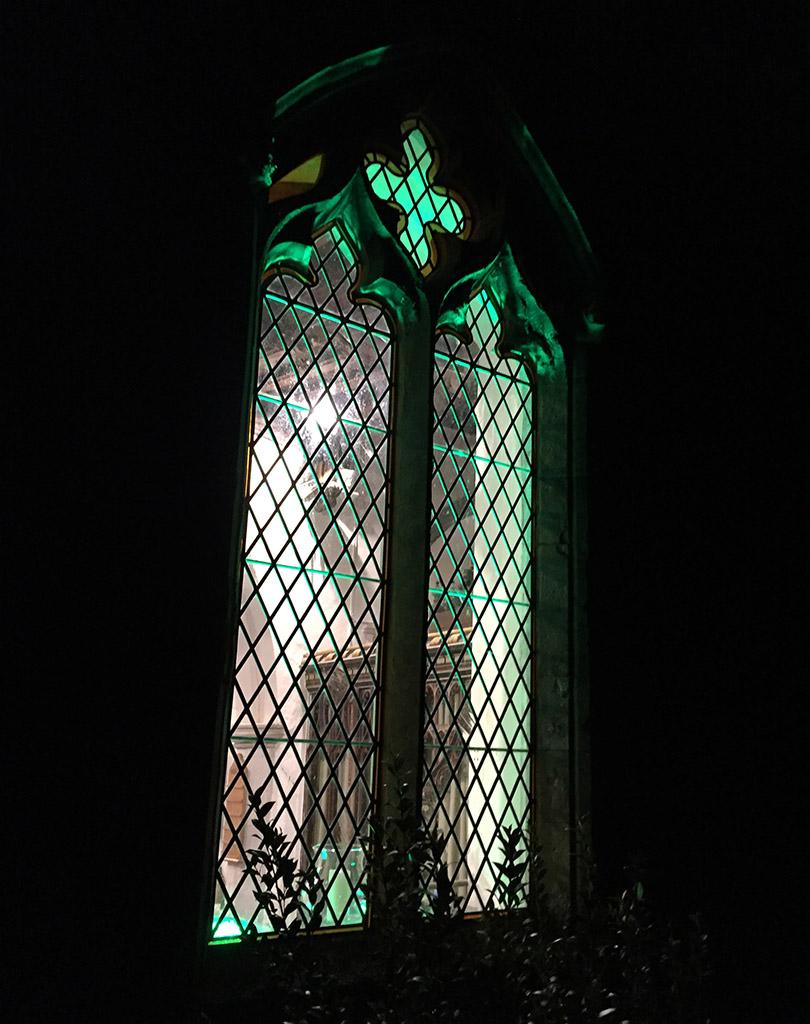
    Church window

    It seems like I have had the sentimental attachment most of us feel towards everything we revere in society systematically thrashed out of me. If you pick one thing that summons feelings of safety, security, comfort, respect for authority and faith in the divine/spiritual, then I will tell you how exactly how I came to question everything: every institution, everything sacred, every tradition, every profession, people who are normally considered beyond reproach and ultimately even existence and its purpose.

    Starting with my birth, I’m literally a bastard. I was born outside of wedlock. My parents never married and always planned to remain unmarried, such that I took my mother’s surname instead of my father’s. Ironically, my mother had once been married, and I have the surname of her ex-husband instead of her maiden name. Confused? Imagine trying to explain that to your fellow pre-schoolers when you’re 3 years old. I didn’t really understand it at the time, but I understood that I was different; unusual.

    My schools would often address letters intended for my parents to Mr & Mrs Grant, and my father would always tell me that I was the only Mr Grant in the house and therefore the letter was addressed to me. My mother would tell me that she was no longer Mrs Grant and she was Ms Grant. “Why not Miss?” I would ask, and she would explain that she had been married, and Miss was only used by women who hadn’t been married. If anybody telephoned the house and asked to speak to Mr Grant, my father would hand the receiver to me and say “it’s for you”, which it never was, of course.

    I understood that there was divorce and some of my school-friends were raised by a single parent, or a step-parent. My peers would often ask if my father was my step-father, to which I would reply “no”. Nobody could understand how I came to have a different surname from my biological father, or entertain the notion that I could have been given my mother’s surname, not my father’s.

    At some point, a fairly clear question formed in my mind: “why aren’t my parents married?”. 

    The reasons why people get married had become quite clear in my mind, for the very simple reason that I had endured years and years of people’s reactions that suggested that not getting married was very atypical behaviour. Nobody wants to feel unusual; freakish. Nobody likes to feel odd.

    When I posed my question – “why aren’t you married?” – to my parents, they replied with their own question: “why should we get married?”. I had a pretty easy answer for them, as I’ve explained: because that’s what everybody else does. “Do you want to be like everybody else?” my parents asked. “Yes” I replied.

    [I just burst into uncontrollable sobbing. If it wasn’t what you experienced, I don’t think you can begin to understand what it’s like to spend your entire childhood as the freakish weirdo; the odd one out… the one who’s different from everybody else]

    Having covered marriage there is a natural segue into the topic of religion, and the origins of my atheism.

    For a number of formative and important childhood years I lived in an attractive terraced house in an area called Jericho, on one of the most desirable roads in central Oxford. These houses are the most expensive in the world, far exceeding real estate prices in London, San Francisco and Hong Kong, in terms of their affordability. However, these £1.5 million houses were bought by the first wave of gentrifiers, when academics and young professionals with families started to move into slummy areas because they couldn’t afford family homes in the more desirable parts of the city.

    When your immediate neighbours include an MP, a barrister, a heart surgeon, a City banker and a number of promenant Oxford dons and professors, their children were raised in an environment which was knowledge-rich and encouraged the exploration afforded by a curious rational mind; critical thinking. Nobody went to church. My friends, whose father was a consultant at Oxford John Radcliffe Hospital, went to Quaker “friends meetings” occasionally, but my peer group – the sons and daughters of the intellectual elite – had little place for God and church in their lives.

    We should rewind a little bit, back to the village our family lived in before we moved to central Oxford. If one were to imagine the most quintessentially English picturesque Cotswolds village, with the manor house, the village green, the workers’ cottages, the post office and village shop, the village pub, the village school, one should not forget the church and its graveyard. The church’s presence and influence is not to be underestimated. My religious indoctrination began as soon as I started school, with the vicar regularly present. Village social events are very often church-linked, like harvest festival, and of course everybody who grew up in such an idyllic village wants to get married in that particular church, have their children baptised there and be buried in that graveyard.

    Essentially, the church’s opportunity to exploit a child’s vulnerable immature mind were scuppered by my father. For everything that the church had a comforting but incorrect explanation for, my dad cited a lack of evidence and instilled in me the skepticism which gradually became integral to my developing personality: “show me the evidence”.

    When we moved to the centre of a city whose university is globally recognised for its academic excellence, I never encountered another simple-minded fool who had been persuaded to believe in Gods and other aspects of religion, which are so obviously irreconcilable with the pursuit of knowledge. Religion encourages ignorance but I had been raised to question everything and remain skeptical until I had seen convincing proof. “What are atoms made of?” I remember asking one of my friends who lived on my street. “Quarks” he replied. We were perhaps only 5 or 6 years old – the product of a childhood immersed in academic culture, as opposed to the sentimental and traditional.

    The disturbing and unpleasant consequences of an irreverent life can impose themselves on a child at a worryingly young age. I’ve already been uncontrollably sobbing about just one thing – the tradition and sanctity of the institution of marriage – and I haven’t even mentioned how a child deals with the concept of mortality and threat of death without the comfort of religion.

    A US Air Force pilot who drank at the village pub which my parents later bought and now live in, drunkenly boasted about the ability of the United States to wipe humanity off the face of the earth. I was definitely no older than 4 years old. With my friend with whom I had discussed subatomic particles, we talked about the temperatures which could be reached near ground zero of a fission or fusion nuclear bomb, and how the radiated ‘heat’ (electromagnetic radiation) had instantly vaporised human beings in Hiroshima and Nagasaki, with only their shadows left behind, permanently etched into the walls of buildings.

    If you believe you live in a Godless world with no afterlife you naturally want to know what everything’s made of if God didn’t make it; you want to know why it’s here. How did it get here? Why is it here? You start to pick everything to pieces by iteratively asking what each thing is made of: humans are made of cells, and cells are made of molecules, and molecules are made of atoms, and atoms are made of quarks and leptons… and you can in fact keep asking the question. There’s good proof that the electron is not a fundamental particle, as had originally been thought.

    When your schoolmates are smart-arse little shits, because their parents are brilliant academics, teachers and school loses its awe and authority. If you’re being taught science that’s almost 100 years old, and sometimes even 200+ years old, the whole exercise is nothing more than a box-ticking exercise to be endured.

    The other thing to consider is that my parents used illegal drugs on a daily basis, and had strong views about the legitimacy and usefulness of the law, certainly in the instances that suited their own addictions. As with many drug users, they were very paranoid. They viewed the police as corrupt and not to be trusted – the enemy. My father’s criminal conviction for drugs not only poisoned his views on the police, but also made him very anti-American, as he believed he would never be allowed to enter the country due to his criminal record.

    [I’m crying again]

    It was only because of first-hand dealings with the police that my viewpoint changed from skepticism due to lack of evidence: the police had never caused me any harm, and in fact I had never had any dealings with the police at all for most of my adult life. You might be surprised to learn I adore and respect the police. My accumulated experience of police encounters has consistently shown that they are some of the most kind, patient, empathetic, forgiving, reasonable people, who have always gone out of their way to bend the rules and simply help as opposed to ever enforcing the letter of the law.

    One shouldn’t mistake my respect for the men and women of the police force for reverence. I would never for a minute expect that a 999 call is somehow going to be the answer to my prayers. I don’t feel safer or more secure, knowing that I can call for police assistance. I wouldn’t feel any more comfortable in a stressful situation if there was a police officer present. Of the very many police men and women who I have had first-hand dealings with, they have always treated me very fairly and kindly, and it’s quite clear that they deal on a daily basis with a huge number of very vulnerable and damaged people, which they do so with incredible compassion – they are the living embodiment of humanity not deities who should be worshipped and revered.

    [More crying]

    So if I don’t revere priests, vicars, teachers, headmistresses, marriage, religion, military superpowers, soldiers, the police, the law and my own parents, what else is there left for me to lack reverence for?

    Cumulatively, I’ve spent almost 6 months having my life saved in hospital – often in high dependency and intensive treatment unit (ITU) wards. Shouldn’t I revere doctors; surgeons?

    I think that if there was one thing that would make almost anybody feel more secure and happy in a stressful situation, it would be knowing that there’s a doctor present. It’s such a clichéd question: “is there a doctor here?”.

    To explain my irreverence for doctors, we merely need to explore the reasons why I have ever had to deal with one, and the outcomes of those interactions.

    Having been lucky enough to escape congenital abnormality, it doesn’t take a rocket surgeon to figure out what I want from a doctor and why. You don’t need to spend 5 or 6 years at medical school to know that the human body has been dealing with pathogens since the species first came into existence. You hardly have to be brain of Britain to figure out whether you’re dealing with a viral, bacterial, fungal or parasitic infection, and furthermore, which is likely to be treatable. In actual fact, I’ve never been to my doctor for antibiotics: every infection has always cleared up on its own. Fungal and parasitic infections can be dealt with without a doctor obviously: head lice shampoo is available in every pharmacy, without a prescription, for example.

    At the age of 28 I went to my doctor wanting treatment for depression, but I knew which specific medications I was prepared to try and which medications I didn’t want because the side effects were not acceptable. Having my choices limited only to SSRIs provided firm evidence that doctors were an obstacle to be overcome, not a panacea.

    When we think about the first time I was hospitalised, do you think I didn’t know that I was going to end up there and what the problems were going to be? Do you think it was an accident that I ended up in hospital?

    Again, you don’t need to spend 5 or 6 years at medical school to know that the human body needs water, salt, glucose, proteins, amino acids, vitamins, minerals and myriad trace elements, or else the bodily functions haven’t got the fuel, carrier fluid and raw materiels they need. You don’t need to be a doctor to know that human body temperature needs to be homeostatic as much as possible – much like every other measurable thing in the human body – and any extreme variation too high or too low is going to have dire consequences.

    When you are making choices in full knowledge of the likely consequences, medicine ceases to be lifesaving magic, and instead it becomes another simple case of what do you want and why?

    One must consider the very last time I was hospitalised to truly understand my irreverence.

    Not only had I quite carefully pre-planned my suicide attempt, when I arrived at hospital against my will, I gave very clear instructions: do not put activated charcoal into my stomach, do not perform gastric lavage, do not intubate, do not provide life support and most importantly of all, do not resuscitate. “Do you know what’s going to happen?” the A&E doctor asked. “Yes. I’m going to die of a combination of organ failure and serotonin syndrome, with a lot of seizures” I replied. “Do you think you’ll be unconscious? Do you think it’ll be painless?” the doctor asked. “No. I expect that it will take a long time to die and I’ll be conscious and in a lot of pain for most of it” I replied. Then I started having seizures.

    Doctors see a lot of people who are scared and they don’t understand what’s happening to them. They’re desperate for somebody who seems to know what they’re doing and what they’re talking about; doctors are an authority figure. I have no doubt that for feckless simpletons and those who lack access to medicine, the arrival of a doctor or a priest/shamen/witch-doctor is incredibly soothing and comforting. If you don’t know what you want and why, your reverence is misplaced, but it may still ease your passage from life to death.

    When shit goes bad, who are you going to turn to? If you have to pick your team of people to survive on a remote island, who are you going to pick and why?

    Why revere anyone? Why kiss anyone’s arse and tell them they’re great because they did the study and training that you could’ve done if you wanted to. You could have passed those exams. You could have gained those qualifications. You could have followed that path if you wanted to. If you wanted it bad enough, you could put on that uniform; you could get that job title; you could prefix or suffix your name with the bit that tells the world just exactly why everyone should drop to their knees and worship you.

    Nothing’s sacred to me. I could do your job if I wanted to.

    I’m not smarter than anybody. I’m not better than anybody. That’s the whole point: I’m lucky enough to not have anything that’s holding me back; limiting my potential.

    I really don’t recommend telling your kids they can follow their dreams and be anything they want to be. I really don’t recommend telling your kids to question everything, and understand everything about how the universe works, to the point where they reach the very bleeding edge of scientific research. I really don’t recommend raising your kids to challenge the status quo and resist the urge to fit in with wider society and their peers.

    Take it from me: there’s a mind-destroying kind of cold uncaring “nothing matters” bad feeling that comes from being too rational; too much of a free-thinker. Take my word for it: understanding the absurdity of existence will destroy your mental health.

    You should probably experiment with hard drugs. That’s probably way less likely to fuck up your life than going down the rabbit-hole of picking everything to pieces and trying to reason from first principles and pure logic.


    Tags:

  • How to Break Your Children’s Hearts

    This is a story about respecting your elders…

    My granny

    Who’s the responsible one round here? Who’s got to carry the can, at the end of the day? Who’s got to live with the consequences of bad decisions, and clean up other people’s mess?

    There isn’t a class war going on. There’s a generation war.

    The baby boomers drove around in gas-guzzling cars, burnt dolphins to stay warm, dynamited the glaciers, blew up nuclear weapons under the polar ice caps, and generally whizzed around the globe spraying deadly chemicals on everything and saying “FUCK YOU GRANDCHILDREN, HA! HA! HA!”.

    I remember at school, when I was 10 or 11 years old, me and my friend Ben used to write long rhymes about saving the environment, and read them out at school events. We basically urged a modicum of control over the unmitigated climate disaster we saw all around us.

    Growing up in the Thames Valley, huge numbers of my friends were asthmatic. Particulate emissions from internal combustion engines, gathered in the river valley, and in central Oxford the percentage of kids suffering from respiratory conditions was at the highest level in the country.

    My friend Ben’s parents had responsibly given up smoking for the health of their children, but mine would not listen to my pleas to stop wasting a significant proportion of the family income on something that was destructive to the health of us all. It was selfishness, plain and simple.

    I still vividly remember one time when I begged my Dad to stop taking drugs. “Do you expect me to be a boring old fart?” he asked, incredulously. The tragic thing is, that I didn’t need him to take drugs to look ‘cool‘. It was his own insecurity and pathetic attempt to impress young family members like my cousin Sue, that meant that he thought he was some kind of counter-culture hero, just because he took addictive drugs.

    My Dad was adamant that I should not get to go to University, nor my sister, even though him and my Mum both enjoyed a free University eduction. My sister and I were both educated in state schools, even though my parents enjoyed the option of private/selective schooling.

    My parents had substantial financial help from my grandparents to purchase their first home. No such help has been forthcoming from our parents, and indeed I bought my house without any financial support from my parents, as well as paying for my wedding & honeymoon out of my own pocket. My sister has – as a percentage of her income – possibly been even more financially independent than me.

    As kids and adults, my sister and I have certainly been very economical, responsible, mature, in ways that my parents don’t even come close to. We’ve paid our own way in life. We’ve grafted harder than my parents could possibly imagine.

    And for what? So that my parents’ generation can tell us that we’re profligate, reckless with money, irresponsible, lazy? My parents’ generation tell us we should save money for a rainy day, when the pensions that they draw bear no relation to the actual amount of money that they’ve saved up. The baby boomers are hoping to have hefty final salary pensions that far outstrip the amount of money they’ve paid into the schemes, to the point of causing a massive black hole in the nation’s finances.

    Dinosaurs

    The upper-class Victorians used to say “children should be seen and not heard” but those children were reared by wet-nurses, nannies and au pairs, plus all the other servants. If you don’t have servants to rear your children, you don’t get to say such obnoxious things, because you’re the only person in your child’s life.

    Infant mortality used to be very high, so ordinary Victorians cherished their children. Having a healthy child was a blessing, and something to be celebrated. There wasn’t this strange culture of worshipping people with old-fashioned ideas, who sat idle for 30, 40 years, just criticising everything. Yes, we’d all like to retire and just sit around in our favourite chair reading shit newspapers and being mean to everybody, but the retirement age was always supposed to be just 1 year more than the average life expectancy.

    Our economy is structured around the ‘grey pound‘. After the banks, the most powerful institutions in the country are the pension funds. These massive piles of money, managed by asset managers and institutional investors, for the benefit of their pension-drawing clients, decide everything about how this country is run. When we talk about things being run for the benefit of shareholders, those shareholders are mostly pension funds.

    If anybody ever says to me “what have you given back to your parents?” or  “be grateful your parents gave you the gift of life” I’m going to struggle not to scream in their face with rage.

    My whole life has been generating value for shareholders. Every penny and pound of profit that I have generated for my masters has gone into dividends and higher stock prices, to inflate the asset value of a pension fund somewhere. My whole life has been toiling to allow the baby boomers to have a life of idle luxury, not that they’re fucking grateful.

    But you know what? Things have gone way too far.

    The older generation has fucked up the environment, fucked up the economy and demanded that young people suffer austerity, University tuition fees, job insecurity, wage stagnation, eye-watering rent, impossibly over-inflated house prices and listen to a sneering arrogant bunch of lazy grey-haired cunts telling them they’re lazy and stupid the whole fucking time.

    They say you should be nice to your kids because they’ll choose your nursing home. Damn fucking straight, but you don’t get to have 20 years of idle luxury before you go so damn senile that you have to be put in a home, so that your hard-pressed children can continue working all hours to pay for your profligacy, laziness and arrogance.

    Yes, it’s true that a huge proportion of wealth has been diverted into the hands of a few eye-wateringly rich families. However, WHO THE FUCK WAS ASLEEP ON THE JOB WHEN THAT HAPPENED?

    Why the hell is it me who has to go on political marches, to demand that wealth is more fairly redistributed? My parents were too busy sat on their fucking arse taking drugs and reading books and newspapers to actually get off their lazy backsides and engage in the political process, for the good of the country and the good of us kids and grandkids.

    Don’t pretend like voting to leave the EU is somehow in the best interests of the country and future generations. One lazy pencil cross in a box doesn’t make up for the idle years spent enjoying a free University education, job security, high pay, reckless drug taking, low cost of living, great housing, foreign holidays, new cars, superb pension and lots and lots of disposable income. YOU HAD IT FUCKING EASY, YOU STUPID OLD CUNTS.

    As you can tell, this is a fairly calm and measured response to being sold down the river, and having my future destroyed by a bunch of people who won’t be around to suffer the global warming and economic depression.

    Literally, almost everybody I know my age or younger suffers from depression and/or anxiety. What a legacy!

    Global warning

    We used to sing “he’s got the whole world in his hands” but where is your fucking God now?

    Tags:

  • The Emulation Game

    This is a story about imitation and flattery…

    Daily Information

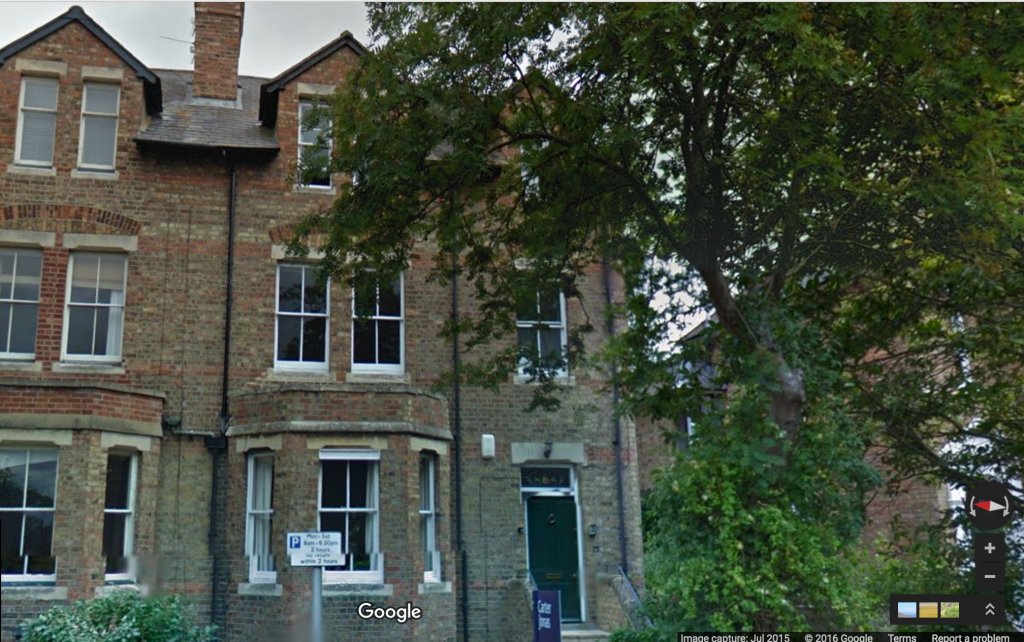
    What’s through that door? Well, probably my entire career and every golden opportunity that will ever be presented to me, throughout my adult life.

    That North Oxford house, if I’ve identified it correctly, used to be the headquarters of Daily Information. It was here that on one midweek night, computer games ceased to be a solitary bedroom activity, and instead became an opportunity to socialise.

    So important was this place in my childhood, that I can still remember the code for the door behind the front door, that would lead up to my friend’s parents’ office, which was above the offices of Daily Info.

    The main office itself was a fascinating place. There were zillions of flyers and posters pinned up on the wall, as examples of the desktop publishing and reprographics business, which also produces a popular “What’s On?” guide for the Oxford area. There were also instructions on how to operate the many pieces of equipment and notices for the staff who worked there. It was a complex ecosystem, so unlike a home stuffed full of static ornaments and pictures.

    There were piles of photocopier paper, and cardboard sheets in all colours and sizes. Printer cartridges, ink ribbons, toner, and daisy-wheel heads were piled up on shelves, or stacked nearby the cream-plastic machines that they served. Half-finished print jobs lay on the tops of every available flat surface.

    But, the main event, and the thing that a group of geeky and otherwise introverted kids, had gathered there for, were the many computers. There seemed to be screens and keyboards everywhere. There were PCs and there were Macs, and they all had mice and colour screens, which was a big deal back in the 1990’s, when people still used to do word processing on green-screen terminals that couldn’t play games.

    Yes, it was the computer games that we were there for, and between my friend, his mum, and a few willing staff members, they had always managed to coerce all the computers into playing amazing computer games. It was like the most fantastic treasure trove of an amusement arcade, with unlimited tokens to play again and again.

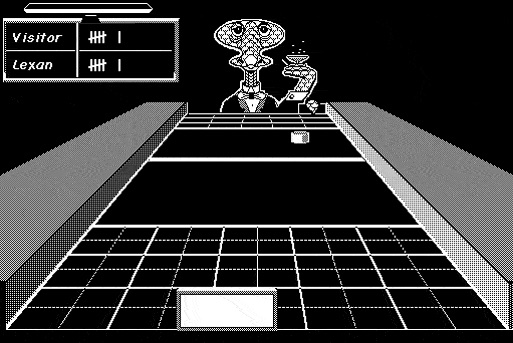
    There were single-player games, like Shufflepuck, where you had to play air-hockey against a whole host of fascinating characters of increasing difficulty and deviousness. This was an interesting use of the computer mouse, which mirrored your hand’s movements with the on-screen mallet, to try and send an air-hockey puck sliding into your opponent’s goal.

    However, the thing that I enjoyed the most, was co-operating with other kids to try to solve puzzle games. These were mainly of the point-and-click variety, where you guided an animated character through a world that you could interact with, using a number of verbs, like “push“, “pull“, “open“, “close“, “pick up“, “walk to” and “use“. These delightful creations included such titles as The Secret of Money Island and several Indiana Jones inspired games.

    We would would pair up, with one of us operating the mouse, while the other pressed keyboard shortcuts to choose the different operations, while you tried to figure out how to solve the puzzles, which generally involved walking around, opening doors and boxes, picking up items, and then figuring out what to use the items on, or how to combine them together to make some new kind of object.

    Shufflepuck Cafe

    I idolised this friend who ran the event on a midweek evening, and tried desperately to imitate all the things he seemed to do so effortlessly. I read the same books. I tried to write and contribute articles to a school magazine that he had founded. I tried to learn how to become a programmer, and to create music using a MIDI keyboard, plugged into a computer. I wanted to play all the computer games he liked, which were often the Lucasarts point-and-click adventures, rather than ‘shoot-em-ups‘.

    The bitterness that is so evident at times in my writing, could have ended up repressed and perhaps revealing itself in even more ugly forms, had computing not become a social experience for me, as well as a creative outlet.

    Writing has never been my strong suit. When I was about 13 years old, I wrote an article about a computer game that I’d never played, in a desktop publishing program that I was learning to get to grips with. It got horribly mangled as paragraphs got moved around. “Were you on drugs when you wrote that?” my friend asked me, having reviewed it with another friend of his who I never met, on account of him going to a different school. I was put in my place, although not maliciously.

    Everything I ever did was a pale imitation of what my childhood friend did, however, it was still immensely fortuitous that I had this role model in my life.

    By writing computer programs nearly every day throughout my teens, I gained enough experienced to get a job as a junior programmer, some 3 years ahead of my peers. A few years later, there was a skills shortage because of the Y2K millennium bug, and I was able to get a very lucrative contract. Having held a graduate position for a prestigious corporation, and also been an IT contractor before the age of 21, I was then able to break into financial services and banking, which is normally off-limits to anybody without a good degree from one of the top Universities.

    It should be remembered that there are many talented geeks, plugging away at code in their bedrooms. The difference between those who are ‘tame‘ and able to play nice with others, is whether they have had adequate social contact. I was certainly rather removed from healthy social bonds by too much screen time, spent in isolation in a darkened bedroom, hunched over a keyboard.

    Through people like the friend I idolise, the joy of computing became a joy of using technology to have a shared experience, to use computers as a mechanism for social bonding. Even though I had to move away from Oxford because my parents relocated the family, I was able to reproduce a little of the magic I learned at Daily Information and the social group that clustered around this one charismatic friend.

    I learned how to connect computers together using coaxial cable, and I used to have groups of friends get driven over to the family home, with their PCs. We used our paper rounds and washing-up jobs, in order to buy the equipment necessary to allow our computers to ‘speak‘ to each other, and so we were able to play co-operative games, with each of us operating our own computer.

    LAN Card

    As a bunch of 14/15 year old spotty nerds, having these early “LAN” (network) parties was amazing, even if we were cooped up indoors for whole weekends, waging virtual warfare against each other. Games like Doom were popular with us, where we just attempted to kill each other, but the pecking order was soon established, and the one-on-one combat soon grew tiresome.

    We moved onto games like Command and Conquer where we could have two teams, each in their own “war room” connected by an extra-long cable that I had bought for the specific purpose of separating us, so that we couldn’t hear each other’s tactical discussions. A game would last over 12 hours, with us playing right through the night.

    Because of the inspiration to write and to publish, plus the few social skills I had developed and the exposure to the reprographics and ‘typesetting‘ industry, as a teenager I was confidently able to get a Saturday job for a little company that was like a smaller version of Daily Information, in Lyme Regis, called Lymteligence (yes, it had one ‘l’ missing, which wasn’t very intelligent).

    I had used money from my washing-up job at a local hotel to purchase my first modem and get connected to the World Wide Web (Internet) after a rather crappy old modem had completely failed to give a connection to my friend back in Oxford, who I was desperate to stay in contact with. For hours, my friend had patiently allowed his phone line to be tied up, while I tried to coerce some antique piece of hardware that I had bought at a car boot sale, into connecting with my distant friend’s computer, but alas, he finally convinced me to give up.

    At Lymteligence I learned how to author websites, writing the code by hand. I created a website for The United Kingdom Men’s Movement. I remember feeling ethically challenged, as I typed up some of the bitter words of men who had suffered painful divorces. Thinking about it now, I feel that I myself could have been driven into the arms of this movement, had I not had a healthy social outlet for my technological skills.

    Although it’s shameful to admit, and a little creepy, I would try to keep tabs on my friends I had left behind in Oxford, by being a bit of a lurker on the rapidly developing Internet. However, by doing this, in a way I was able to stay abreast of advancements and trends that would otherwise have passed me by.

    “Social media” means Facebook, Twitter and Instagram, today, and perhaps Snapchat and Vine. In fact, there is probably a movement that’s already begun that’s going to kill these technology giants, that I’m not even aware of yet. I’ve always been a bit behind the curve.

    However, back in the day, social media meant bulletin boards, forums and websites like Friends Reunited. I have no idea how I managed to maintain a toe-hold of social connection with old friends, throughout the disruption of moving away and then our adult lives, but the Internet always provided a way.

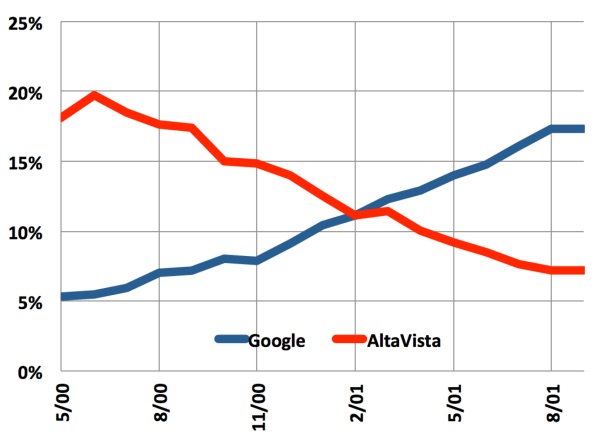
    Google vs Altavista

    It used to be the case that the search engines, of which Google didn’t feature prominently until surprisingly recently, used to be very good at digging out which particular corner of the Internet your friends were hiding in, provided they were using their real name, and that name is quite uncommon… and my role model friend is blessed with quite a unique name.

    Now that we tend to do most of our Internet social activities on Facebook, you’d be surprised to learn that your privacy is actually very well protected, and you have a reasonable level of control over what people can and can not find out about what’s going on in your world.

    In 1999/2000 I was living in Winchester in Hampshire, UK. Things were going well with my career, but I was struggling socially. Through a housemate, we ended up in the NUS (student) bar at Winchester University. I was leaning up against the table football table, when somebody behind me challenged me to a game. I turned around and realised that it was one of my fellow Daily Information computer club friends, and a guy who I went to school with since about the age of 5.

    Reconnecting with an old schoolfriend was great. I had been back to Oxford, in order to show off my company car and boast about how well my career was going, but it was crushing inadequacy and a sense of loneliness that had driven me to go back there. I had even been quite evil and immature, and had wanted to exclude certain friends and monopolise other friends’ time, in order to try to salve my insecurity. I was still a deeply troubled, lonely person, expressing that in very unhealthy ways.

    Shortly after that chance meeting, I picked up a local newspaper and read that somebody had been electrocuted, while trying to take a short-cut underneath some parked railroad carriages, in order to get back to his University halls of residence. It was our childhood friend. Killed, through a momentary lapse of judgement, while under the influence of alcohol and the excitement of a fun night out in town. Tragic.

    This put me – the lurker – in a really strange position, in terms of grieving. I later discovered through the Internet that my friends were attending the funeral, but because of the sense of distance and the shame of admitting that I had been somewhat jealously following our old social group from afar, like a stalker, I didn’t know what to do. I procrastinated until it was too late, and the funeral was over.

    There used to be so much stigma associated with using the Internet as a means of human connection. Admitting that you met your partner through Internet dating was likely to instigate stifled sniggers and snide remarks about axe-murderers and weirdos. I guess I am a weirdo though.

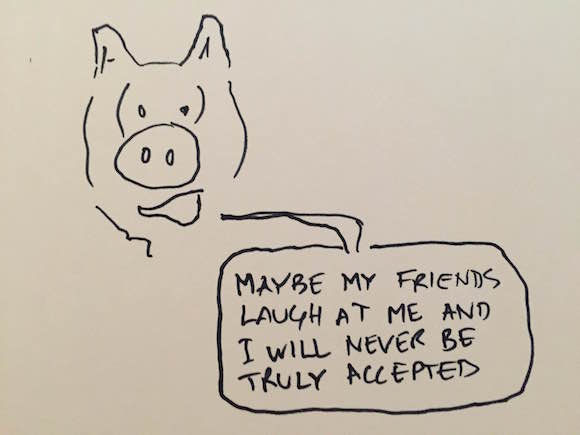
    Senor Peeg

    I don’t know whether it’s a British thing, or perhaps a function of a lonely childhood and being a needy, oversensitive person, but I’m kinda always struggling to articulate my needs and ask for what I want. I don’t even admit to myself, what my fears and unmet needs are.

    Writing this blog has been a journey for me, but it’s taken me further than I would have ever expected. One leg of the journey was 5,351 miles, and took me to the hometown of a bunch of my idols and role models.

    Is it creepy, is it weird, is it an unpleasant amount of pressure, knowing that in some sense, a friend is looking to you for guidance and direction? It must be, a little. Why the hell do I never seem to have grown up and gotten over childhood infatuations?

    For me and at least one other friend, our mutual friend has provided at least some of the inspiration for our careers. In a way, I at least owe this friend a debt of gratitude for my financial security and the fact that a lot of doors are open to me, for career opportunities. I know that he shared with me at least a twinge of regret for having perhaps nudged one of our friends down one particular technology path.

    Who knows what are going to be the knock-on effects of the connections we make with one another. Who could have foreseen that I would have taken the wealth that I generated so effortlessly in the highly paid tech sector, and use it to implode so spectacularly in my mid-thirties.

    Of course this is not about blame, but instead, I feel this great sense of responsibility. I feel that there are certain individuals who I am crippled with shame, to imagine reading my sorry tale and thinking “what kind of monster has this guy turned into“. I imagine their disappointment, and it slays me.

    Where do we look for guidance and inspiration from in the world? Our parents? Well what if your parents don’t provide it? In fact, what if your parents provide a cautionary tale for how not to live your life? I don’t want to go into the details again, of why I don’t want to follow in the footsteps of either of my parents, but suffice to say, I’ve always been looking to people outside of my family, to provide feedback and inspiration in my life.

    So, I’m fessing up. That’s what this whole blog has been about. I’m playing up like a kid and wanting to test my boundaries. When is some parent-like figure going to stand up and say “stop that!” so that I know I’ve gone too far? When is some authority figure going to step in, and tell me that I’m out of line, and give me some guidance on how I should think, act, speak?

    Being given stacks of cash, relatively few responsibilities and no social structure around you, to tell you when you’re taking things too far, when you’re getting yourself into trouble, when you’re wandering too far from the flock, when your ideas are getting too outlandish, when unpleasantness is rearing its ugly head. You probably take it for granted, the checks and balances that exist around you.

    So, I’m making an appeal, to people from every period in my life, from every stage in my development: from childhood to adulthood, from Oxford, to Dorset, to London, to Cambridge, to San Francisco, to Prague, to France, to Brazil, to New Zealand. I’ll travel round the world a million times, if somebody can just reach out and give me some kind of reality check.

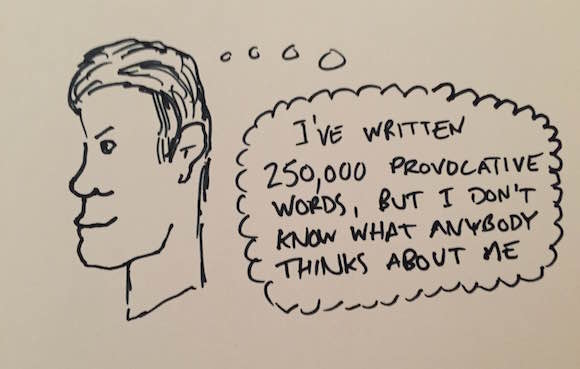
    I’m pouring my heart and soul out into the chasm of the Internet, hoping to make a connection with people, hoping to trigger some kind of response. I have no idea how I’m received. I have no idea how I’m perceived.

    Yes, it’s needy and yes, it’s kinda pressuring people to say something where it seems impolite to even ask for feedback. We have lots of phrases that kinda shame people into keeping their mouths shut, like “emotional blackmail” and “attention seeking“. If somebody even came out and accused me of such things, at least I’d have something to reflect on.

    Everytime I ask somebody a direct question, they seem to think that the kindest thing to do is to spare my blushes, but I don’t know whether to trust my own instincts, or actual concrete feedback that I’ve received.

    For example, I was living with some friends, and it was only over dinner one night, when I had moved out of their house, that my friend finally let me know what he really thought and felt. The fact that the truth was suddenly unleashed was brutal. There was real pent-up frustration and having it all released all at once was too much to bear.

    I just contradicted myself, didn’t I? What an awful, needy, demanding person. I want honest feedback, but I want it little and often. I’m asking for people to give me a reality check, but I’m also admitting that the last time that a close friend fired both barrels at me, I nearly committed suicide. Who wants that kind of responsibility?

    But, you know, the takeaway from this is that I didn’t commit suicide, and even though that friendship was really badly damaged, at least it moved things along. I was in limbo before… really unsure of what was real, what I’d overheard, what was being said behind my back. It’s an impossible way to live, like that.

    I think

    I’m adrift in a vast ocean, with no tether to any fixed objects. I have no point of reference. I couldn’t tell you which direction is which, and where I’m travelling from or to. I’m rather lost.

    A friend got in contact earlier in the week, and offered their impression of something I wrote – noting that I had become bitter again – as well as some advice. I can’t stress enough how this was like gold dust to me.

    I’m not sure you realise how disconnected from the world I’ve become. I don’t have any normal healthy friendships anymore, or regularly see people who I’ve had a long-term relationship with, knowing me for years, so they can comment on how I’ve changed. So many people have become just another ‘like‘ on Facebook.

    As a friend who I chatted to via Facebook messenger today said, we know what all our Facebook friends position on Britain leaving the EU is, but we don’t know what’s going on in the lives of those who are not sharing anything personal, except political opinions. There’s a vast difference between the occasional reminder that somebody is still alive, because they’re active on social media, and actually looking somebody in the eye, when they give you the British knee-jerk reaction of “I’m fine” when you ask how they are.

    I appreciate I’ve written a lot, and huge amounts of it is virtually unreadable. Also, long bitter rants are not exactly pleasant reading, nor do they paint myself in a particularly favourable light. Who wants to know that angry venomous twisted person, hunched over their keyboard, blindly firing resentful and blame-filled missives into the void.

    If you’ve persevered this far, I’m ashamed of myself. I think about all the stuff you must’ve read, and what you must think about me, but of course this is conjecture. I admit, I am trying to cajole you into giving me some feedback.

    You know, I often think about how immature and childish I am. I often think that everybody is in the same boat, and we’re always going to be left wondering how other people perceive us, and what people really think about us, to some extent.

    It’s easy to dismiss a lot of what I’m wrestling with, as just a standard part of the human condition. I’m also reflexively programmed to offer up neutralising statements, as standard, such as “I don’t think I’m special and different” and “I know that my life is no more stressful and turbulent than yours“.

    The engine that drives this verbal diarrhoea is the fact that I do feel insignificant and worthless. I’m driven to try to anchor myself back into the world of the living, given that I have been hospitalised so many times with suicidal and self-harming behaviour. In a lot of ways, I feel justified in telling people who want to guilt-trip me into suffering in silence to shove their “you’re not special, shut up” statements up their arses.

    How does one go about fixing the very real and practical things, such as figuring out how to live amongst your friends once again? Sure, I can reconnect with people, but if they don’t like who I am and what I say, what hope is there of there being any lasting relationship?

    Anyway, this stuff is always cringeworthy and difficult to read, so I’m going to leave it there, as an open letter to my friends and acquaintances. An appeal to human connection, and the feedback that is essential for social bonds.

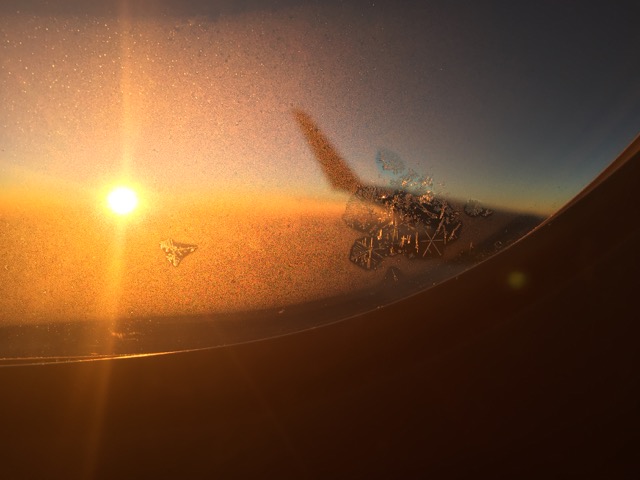
    Ice window

    It’s mighty cold when you’re out in the thin atmosphere of the outsider, frozen and clinging onto life.

    Tags:

  • Waterworld

    This is a story about the hungry tide…

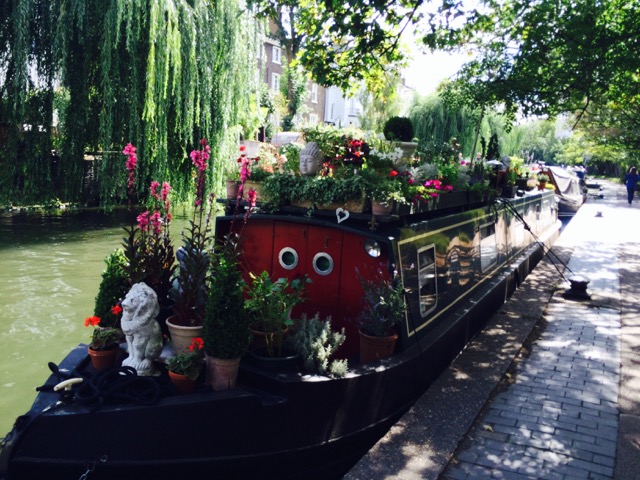
    Camden Canal

    Humans are supposed to live near water. It’s so essential to life, that I think that we find tranquility when we are near the source of something we can drink, wash with and watch life go by, carried by the currents.

    Growing up in an area of Oxford called Jericho, the canal was a moat-like border, to the West. There was a footbridge and one road bridge, but those were the only ways of getting across to the far bank, besides swimming.

    A short walk up the canal would bring you to Port Meadow, where the river Thames snakes its way through the flood plains of the flat valley bottom. Although it’s the second longest river in the United Kingdom, it’s quite a different beast in Oxfordshire than it is in London.

    By the time the Thames reaches the Isle of Dogs, it’s close enough to the river mouth that the tides affect it in quite a pronounced way. At low tide, there are some fairly sizeable beaches that are revealed, accessible from ladders and steps down from the riverside footpaths.

    Growing up in central Oxford, the only discernable change with the Thames was when the river burst its banks and Port Meadow flooded. Then, a huge area of green field became a massive lake. One year the lake even froze, and you felt OK walking on the ice, because you knew there was a grassy field just beneath: you weren’t going to fall through and get sucked under by any river current.

    The Oxford canals froze too, and although we hefted bricks and stones onto the ice to try and smash it, it would have been fairly crazy to try and walk on the ice. I do remember driving my radio controlled car on the ice, and how much fun it was to make the little toy spin doughnuts and do huge drift slides.

    No Fun

    Presumably dogs and ball games could only take place in Mill Quay if the water is frozen over. I hate these signs that basically say “NO FUN“. Growing up in the 1980’s in central Oxford meant lots of playing on the streets, in the parks and on Port Meadow. Usually involving water bombs, smoke bombs or other incendiary devices.

    In London a strange kind of separation of society exists, where big groups of kids hang around near their high-rise social housing, but they are more than unsupervised: they are completely ignored by the entire adult population. This is completely reciprocated. As a white middle-class thirtysomething person, you’re completely invisible to huge groups of teenagers, hanging around doing their own thing. The impoverished kids and the wealthy professionals co-exist within metres of each other, but neither group acknowledges the existence of the other.

    The Isle of Dogs is in the London borough of Tower Hamlets, which is one of the most deprived areas of the UK. You only have to step one street inland from the riverside apartments, to see a totally different side of London to the gated communities that line the Thames.

    Bow

    There’s something nice about not feeling totally surrounded. Here is a city of 8 million permanent inhabitants, plus the millions more who make up the commuters, tourists and those who are unofficially living here. When you’re in a basement, with several flats above you, surrounded by houses and offices on all sides, it’s easy to feel rather hemmed in.

    By reaching the very top of a skyscraper, so there is nothing but the open sky above you, or by reaching the water’s edge, so there is nothing but an expanse of water on one side of you, you can turn your back on the chaos and overcrowding of the city, whenever it pleases you.

    Sure, there’s the occasional ferry, canal boat, pleasure cruise or whatever, but water represents enough of a barrier to most ordinary folks caught up in the rat race that it’s nice to watch the boats go past in a way that can’t be said of watching stressed commuters scuttle down underground passages.

    What the hell am I doing, living in a riverside apartment I can no longer afford, since my last contract ended? Well, if you’ve never had to sleep rough or in a hostel, you should try it sometime, with your work clothes and all your worldly possessions. Try commuting to the office from under a bush or after spending the night in bunk bed with one bathroom and 13 other dormitory friends, in different states of alcohol and cannabis intoxication.

    Homelessness, poverty… these things tend to connect you with chaotic environments that do not exactly improve your mental health and capability to rebuild a life, return to work, get back to health, wealth and stability.

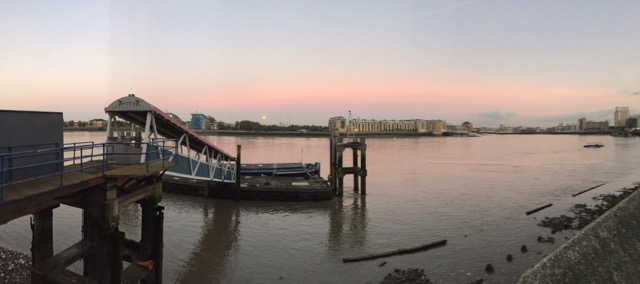
    Supermoon

    When I was working, I was getting up at 7am to take a run by the Thames, and pulling some fairly serious hours spent working on an extremely stressful project. Do you think that’s possible when you also can’t sleep and relax at home, and it takes ages in a cramped tube, overground train and bus to get back to your miserable hovel?

    When we talk about standard of living, what do we really mean? If you choose a job you love, expect to be underpaid and overworked. If you choose a job that pays well, expect to be bored and stressed. If you choose to be working in 2016, expect to have little job security and for your cost of living to be vastly more than it would have been for your parents, at the same age.

    We just don’t have the spare time. Our partners are not at home doing housework, and come and pick us up from the station at a reasonable hour, and we have some time at home to play with our kids, eat, even do something else with spare time. Now we get home just in time to kiss the kids goodnight, and then we shovel whatever we can into our exhausted mouths before collapsing into bed, before all too soon, the alarm goes off and we start all over again.

    We’re enslaved to fixed core working hours, and the idea that we can ever reach some imagined future sustainable state, by pushing ourselves to the maximum output that we can manage. Working 80 hour weeks in the hope of getting enough pay rises to be able to slack off a bit in our greying senior years.

    When was the last time that you took the Thames Clipper to work, even though it takes longer than the tube? When was the last time you walked to work, across one of London’s many amazing bridges, just to admire the beauty of the architecture, even though it would add another hour or two to the length of your working day?

    Uphill river

    If you look really carefully, you can see a rainbow in the clouds above The Shard, created by sunlight refracted through glass at the very top

    Tags:

  • Fashion Failure

    This is a story about dress sense…

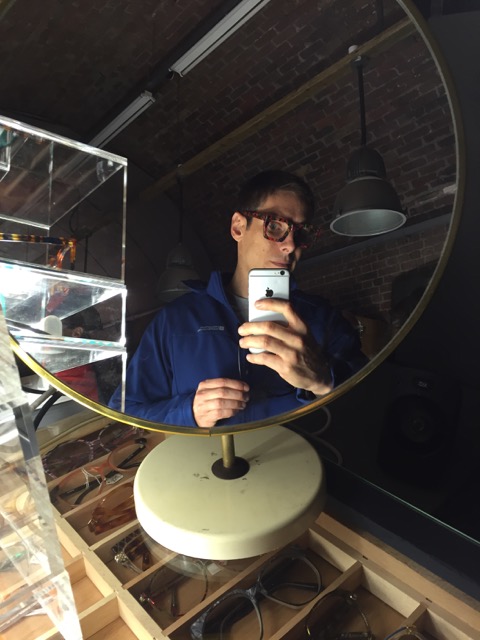
    Four Eyes

    I’m interested to see that the BBC are running a series of programmes about identity. It’s a topic that I think about a lot.

    While watching a documentary recently, a man who was being interviewed said that he never realised that children were just little people, with their own unique thoughts, tastes, opinions. feelings and experiences. It wasn’t until his own children had grown into adolescence and adulthood that the penny had dropped that they weren’t dollies or toys.

    Occasionally, I worry that men who have owned dogs may become frustrated with children, given that a child has human genes, which don’t predispose it to respecting the alpha of the pack, like a dogs genes would. Once a dog knows its place, it goes wild for praise and affection from the top of the pyramid, or will lower its head and tail in shame, if the alpha is apparently displeased with it.

    To the dog owner who has taken time to establish the pecking order with their dog and train it somewhat, children look unruly, argumentative, difficult, badly behaved. We’re talking about a fairly major species difference though. A dog may feel like a surrogate child, in that it invokes a caring, nurturing response from you, and the release of the bonding hormone, Oxytocin. Children are far less likely to jump on you and try and lick your face or hump your leg. They’ll probably wander off to play with their toys once they’ve been fed.

    Parenting must be incredibly difficult, and especially so if you haven’t studied evolutionary biology to even a basic level. It’s probably not until you’re outnumbered by your offspring that the penny would drop that you are just a blob of trillions of cells, all expressing the same DNA. The blob constitutes an organism designed to replicate copies of genes. Once you’ve reproduced more than a couple of times, it becomes clear that your purpose is spent. You’ve carried out the will of your genes, in making more copies of them.

    There are some wasps that can inject a psychoactive substance into a spider, to get the spider to weave a home for the wasp, before becoming a tasty snack. In much the same way, every gene in your DNA sequence is most likely to be there because it increases the probability that you as an organism will make a home for some genetic clones, and then become the food provider for your offspring organisms that carry your genes.

    Reap what you Sow

    I remember when families used to wear matching tracksuits (or ‘shell‘ suits as they seemed to be known then) and it’s still uncommon to find families wearing matching outfits. I believe it’s quite a common trend in the United States.

    We quite like belonging to family, clan or tribe, as social animals. It’s a more complex form of group behaviour than the wolf or dog pack, and all wearing the same identifying clothes can increase your security, your sense of belonging to the group.

    And so it is, we might continue to wear the family shell suit, while it suits us to belong to the family. Getting your meals provided, a roof over your head and maybe your shell suit washed is a big bonus when you’re a child without the means or maturity to support yourself. However, certainly as a young adolescent male, you’re going to have to get pushed out of the childhood bosom of the family and tribe, in order to maintain genetic diversity and avoid the risk of incest.

    A girl who stays close to home, and maintains strong and close family ties, is quite normal, and fits with everything else we see in nature. However, boys should at some point become men, and become more distant from their blood relatives in the interests of finding a mate and starting their own family, and hopefully a long bloodline in a clan or a tribe. This is what we are evolved to do.

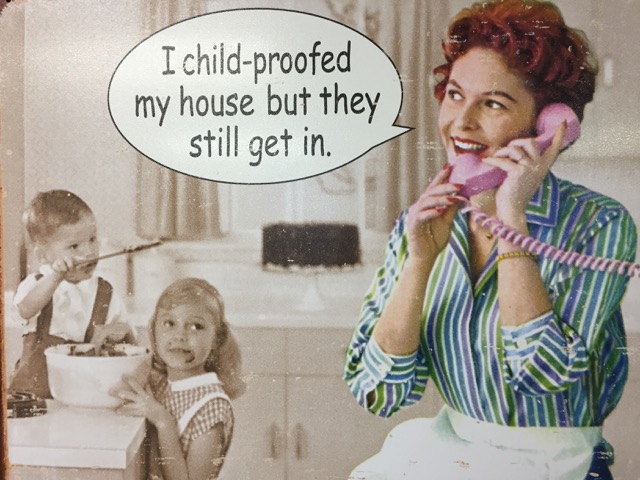
    Child Proof

    Jumping ahead to the modern day, we are still governed by the same genetics and evolutionary advantages of organising ourselves into families, clans and tribes, but we have much extended the period of childhood and adolescence, as well as making the gene pool vastly more diverse, especially in cities. Road travel, rail travel and air travel have meant the intermingling of people from all continents. The transition from village living to commuting or city living means the modern tribe is all but extinct in the wealthier nations.

    However, boys still need to become men at some point, and this requires the acknowledgement of a unique identity. You can’t choose your son’s clothes and dress him forever. You can’t expect your son to live at home forever, despite the financial convenience.

    In some ways, dress sense is a measure of maturity, or at least how long that person has been allowed to develop their own identity, free from parental influence. I know that the idea of giving gift vouchers is vulgar to some people, but the idea that somebody could know the subtle nuances of my tastes and pick out an item of clothing that I would select myself seems highly unlikely.

    Because of highly unfortunate circumstances surrounding the collapse of my marriage and subsequent divorce, I have had to go cap in hand to those with money in order to bridge gaps in my income. Does it seem right that creditors would dictate how a 36 year old man dresses, or where they live, or how they furnish their home? Aren’t those things part of an adult’s identity, and wholly unique and owned by that individual?

    It might seem ungrateful to not want to live back in the family home, and be fed and dressed by my mother, and have my lifestyle under the close scrutiny of my father, but I can’t stress enough how destructive that is, when you’re in a house in a village where you don’t have any of your own friends, where you’ve never lived, where you’ve never worked.

    There should be gratitude to just have a roof over my head, clothes on my back, right? Is it pride that keeps me from capitulating, and regressing to a state of childhood adolescence, turning up at my parents door, destitute?

    I’ve barely been able to afford more than a pair of new shoes, in my non-work wardrobe in the last year. A relatively vast sum of money was expended on getting myself a flat, even though it represents excellent value for money in London, where the jobs are. Do these things seem like profligacy to you? Does it seem arrogant, spoiled, greedy, to expect to have a home (or a share of a home) I can call my own and to dress in a manner of my choosing?

    Cycle Lane

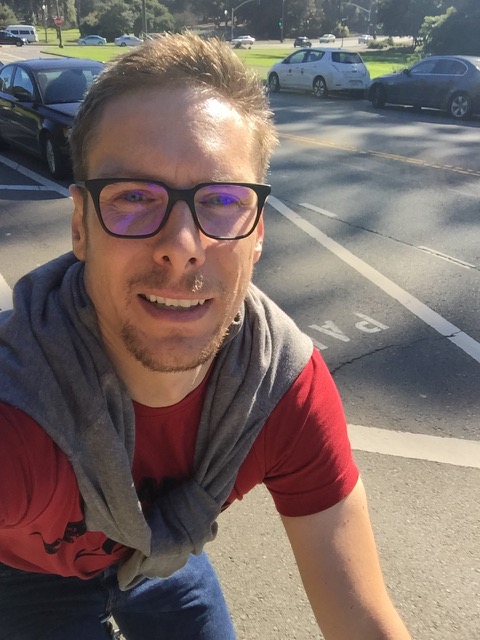
    I bought my glasses with money my parents gave me as a housewarming gift, for which I’m incredibly grateful. The T-shirt was a birthday present from a girl nearly 2 years ago. The bicycle is on loan and the fact I’m in San Francisco is a business expense

    Tags:


  • Locks on Doors

    This is a story about a desire for privacy…

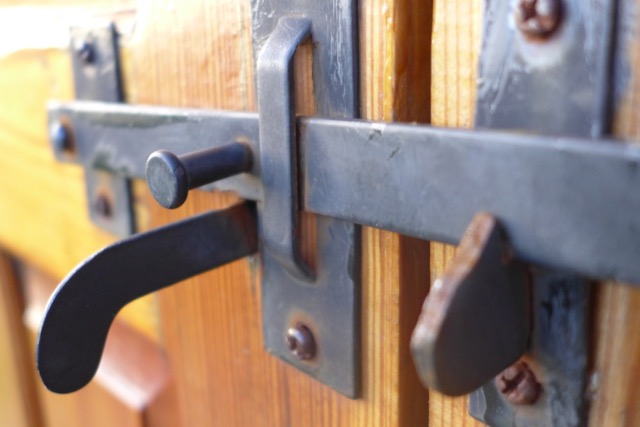
    Door Latch

    I’ve pretty much given up on the idea of having any personal privacy and instead swung to the other extreme of making most of my life completely public. Our family has never had any locks on bathroom/toilet doors and finds the notion of knocking before entering another family member’s bedroom to be a baffling concept.

    It might sound odd, but this issue grew and grew to become psychologically traumatic for me, and when I’m unwell, I can become obsessed with the idea of people bursting into my bedroom or bathroom at random, leaving me feeling vulnerable and under threat. I appreciate that this is not exactly rational thinking.

    My ex-wife had demanded that my parents take me away from the home I owned, the bedroom that my parents put me in had one half of the door lock, but not the other half. I fashioned something that would fit in that lock from a roll of sellotape and had made myself a crude ‘front door lock‘. Something I was quite used to having from 7 years as a homeowner, and several other years with my own flat.

    When my Dad came to randomly burst into this bedroom, he found that the door would not immediately open. Instead of saying, “Hello, can I come in?” or even “Hello”, he marched downstairs and phoned the police. It was me who tried to initiate a conversation with him, which he roundly ignored. It wasn’t until the police arrived that I found myself having a normal human conversation.

    For anybody struggling with the concept of human communication, it goes like this:

    • First, greet or otherwise attract the attention of the person you wish to communicate with, using their name or saying “Hey!” or “Hello!” or some other form of greeting or conversation initiator. This avoids saying things when nobody is expecting to be addressed or otherwise communicated with – they might be distracted or busy talking to somebody else.
    • Secondly, once you have succcessfully established a dialogue, you may then raise your topic of discussion: ask a question, make a statement.
    • Finally, if a response was expected, you should receive one. Otherwise, after a reasonable wait, you may ask if you were heard and understood correctly.

    It doesn’t seem that complicated for the vast majority of the 7 billion souls who crawl over the surface of the planet every day.

    Also, there are fairly universal taboos that are not times when communication normally takes place, throughout this large human population: when a person is bathing or showering, when a person is getting dressed or undressed, when a person is having sex or masturbating. Those are normally not acceptable times to expect to hold a normal conversation or interact in a communicative way.

    I honestly don’t think that it was the fact I didn’t grow up in the Swinging 60’s that means that I follow the human communication protocol and respect the taboos of most people. I’m fairly certain that most people would have some problem with my parents entering your bathroom while you’re taking a shit, for example.

    Keep Out

    You might have heard about acid flashbacks people get, when they have a really bad trip on LSD. One example might be feeling like ants are crawling all over your body, and then that imagined event might occur again, purely psychologically with no drugs in your system, simply because it was so traumatic when it happened.

    Similarly, now I’m in my own flat again, and I have a lock on my en-suite bathroom door, I still have attacks of paranoia about people bursting in randomly, unannounced. This has led me to screw 6″ screws into the door woodwork, and other acts of keeping my bedroom door physically closed. This has become obsessive and frantic, at times where my underlying psychological trauma has been exacerbated with drugs and lack of sleep.

    My flatmate is actually the first person I’ve ever met who can calm me down and get me to realise that there is no threat, and it’s all imagined, and put down my tools and whatever else I’m fashioning a barricade out of and start to relax and feel safe in my own home again.

    I don’t think it takes a professional psychologist to understand that if somebody feels under threat in their own ‘safe‘ space, it only takes fairly limited reassurance that the human protocols of knock before entering are going to be observed, before the distressed individual starts to feel better.

    Attic Attack

    That’s the view looking down from my attic in my old house. As you can see, there is no ladder or steps lowered to ascend or descend. I climbed into the hatch without the aid of either. The more you shout at a person and corner them and traumatise them and use the police to do the human part of speaking to somebody, knocking, talking etc… the more you drive them into a state of complete psychological trauma, fear, madness.

    The psychological damage can be repaired, and the self-protection response doesn’t have to be triggered to the full extreme, and it gets better over time. My friends Will & Jess, who had let me stay in their guest bedroom, pretty much left me alone until my leg was mostly healed and I was sat in their lounge, before having a normal human conversation about how it was probably time I started looking for my own flat. They were very delicate and considerate with my feelings. They were kind and considerate. They helped and repaired psychological damage.

    I have no idea how 5 people can co-exist with a total loony in the same house, and nothing was really said, but they were very discreet and I’m sure they were kind enough to tell a few white lies to save my blushes. I can’t thank them enough for doing that for me, although just like applying the brakes on a supertanker, it takes some time before a person can start to feel safe and unthreatened after a long period of trauma and stress.

    You certainly won’t get an aggressive response back from me, however you choose to deal with me, but you may find me trying to burrow my way under your floorboards or pretending to be a pair of curtains or something else equally bonkers, as an absurdly twisted response to the extreme threat that I wrongly perceive.

    Aggresssion rarely solved any problems in the world.

    Thwarted

    Direct action might be disruptive, but you can never be sure that the consequences will be positive, and not simply drive behaviour underground and close off open and honest dialog. You can also never be sure whether a person is trying to disrupt/interrupt their own behaviour, unless you really know what you’re looking at, when you peek into their private world.

    Tags:

  • Role Models

    This is a story about setting a good example…

    Yogi Bear

    If you take drugs in front of your children, you are a sh1t parent. Period. No ifs. No buts.

    If you are high on drugs, drunk or otherwise intoxicated, stoned, coming down, craving drugs or generally in a f**ked up state because you are abusing drugs and alcohol, then you are an inconsistent parent, and this sends very mixed messages to your children, which affects the development of their personality.

    Your children are like sponges. Little rabbits have big eyes and big ears. They can pick up on the variations in your mood. They can sense the instability caused by drink & drugs. It affects them.

    If you smoke your drugs or cigarettes in a confined space with your children, even worse. Drugs are measured in the body using a unit called mg/kg. That’s milligrams of drugs in the bloodstream per kilogram of body weight. I don’t know if you’ve noticed this but children are a lot smaller than adults.

    If two adults are smoking in a car, and there is a small child present, that child may be forced to smoke the equivalent of several boxes of cigarettes for even a short car ride. Nicotine is a horribly addictive drug. Imagine addicting that child and making them go through nicotine withdrawal over and over and over again, when the child doesn’t have a clue what’s happening to them or any ability to explain what they’re going through.

    My friend’s parents used to call me Nicotine, as a nickname, because I used to stink like an ashtray. My parents were always driving somewhere, smoking. I was just part of the baggage being lugged around. I felt like a burden. My parents just wanted to get drunk and take drugs. I was an accident. Oops.

    If you are a sh1t role model for your children, they will want to run away from home as soon as they can and never come back.

    I don’t know if this is coming across, but I don’t think my parents are very responsible. I don’t think they are very good role models.

    It’s unbelievable, but they actually think they are cool for taking drugs. That seems rather immature to me, but then I’ve always felt like I have to be more mature than them, because they’re not very responsible.

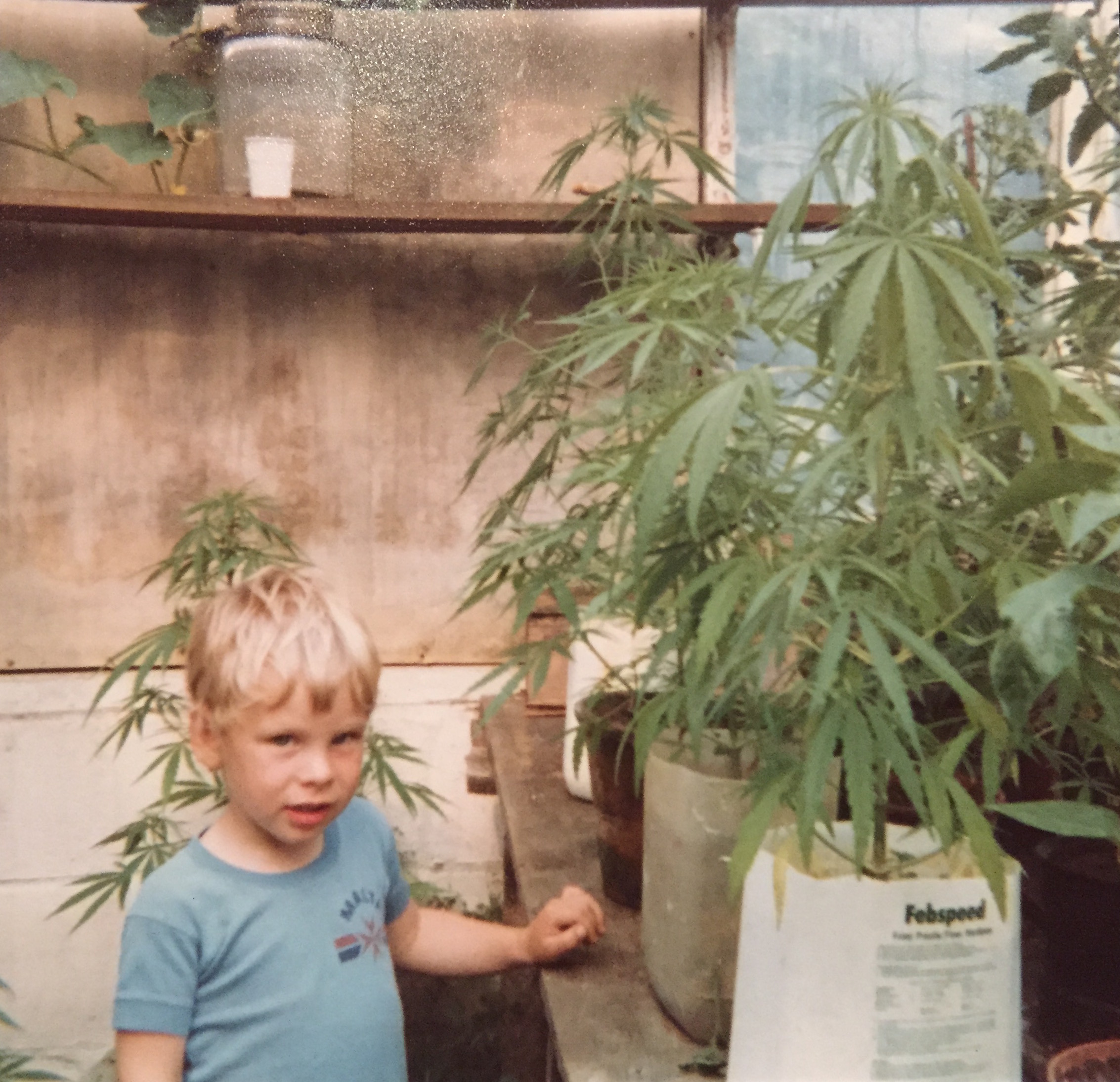
    Greenhouse

    I left home as soon as I had a job and enough money for a flat, age 17. I couldn’t wait to get away from such bad role models. They are liars and hypocrites and they are lazy and project their inadequacies onto their children, who are hard working and mature and responsible.

    I don’t know if this is coming across, but I’m very disappointed with their behaviour.

    Parents must try harder. All my friends in my generation are very responsible parents. I think the baby boomers could try taking a leaf out of our book. Don’t try and roll it up and smoke it though, like you usually do.

    Did you know my own father refused to read anything I write? Pretty p1ssed off about that.

    “La la la, I’m not listening” I imagine him saying while putting his fingers in his ears. How childish.

    And parents wonder why their kids run away from home and never want to come back. Tsk!

    That is all.


    Tags:


  • The Price of a Life

    This is a story about obvious consequences…

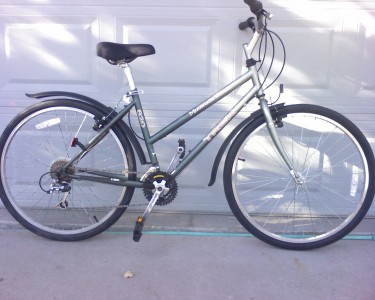
    The boys version was a good bike

    The Trek 820 mountain bike was excellent, and cost just over £300 in 1993. This was apparently too much for my Dad to pay, so he stole a girl’s bike.

    Having removed the family to the middle of a remote part of the UK, on very steep hills on the Devon/Dorset/Somerset borders, away from all my friends in Oxford, I was then expected to get to school and do my paper round on this bike, as well as making new friends at the school which was part of my 6 day a week gruelling punishment for being the son of a couple of lazy dope smokers.

    Averaging about 50 miles a day on some of the UK’s steepest gradients. I can tell you a lot about lactic acid burning in your legs. I can tell you a lot about gritting your teeth and grinding the pedals, through all seasons, through all weather.

    One thing I can tell you about children, is that they are extremely good at spotting other children who are different. Usually bullying and social exclusion are based on these perceived differences. I can tell you a lot about both of those things.

    I’m going to hospital now, because I’m suicidally depressed. It seems like the responsible thing to do, even though all I really want to do is run myself a hot bath and slice my arms open with a kitchen knife, to get at my radial arteries. The pain must flow out of me somehow. The thoughts are invasive. I can’t block them out.

    At least my parents got to save £300 (or maybe less if they actually bought me a bicycle second hand). Are they responsible?

    Tags:

  • Appearances Can Be Deceptive

    This is a story of unintended consequences: opportunities and serendipity…

    Brains

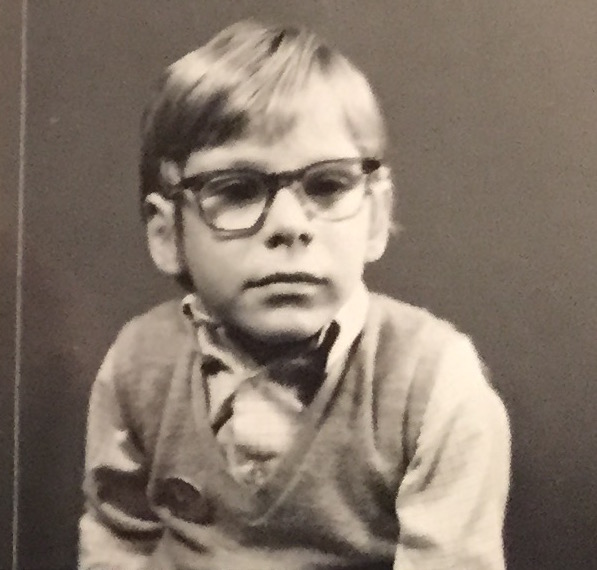
    The National Health Service is a wonderful thing. Universal healthcare, including free dentistry and glasses for children and vulnerable members of society. I benefitted from this, but not in the way that might seem most immediately obvious, from the picture of a bespectacled little version of myself, above.

    My parents were kind enough to not only care deeply about my eyesight – which was tested at a very young age – but also to impress upon me the importance of having ‘adult’ mannerisms: remembering my P’s and Q’s (“please” and “thank you” for anybody not brought up in the Victorian-era), thanking my host for letting me stay, complimenting the chef on meals, and other forgotten social protocols from previous generations.

    The combination of a ‘bookish’ appearance, precicely enunciated diction and good manners, plus a whole repertoire of “party tricks” could be guaranteed to have adults coo-ing and clucking over a “lovely polite little boy”. This was borne out of nothing more than any son or daughter’s natural desire to please their parents.

    I went to the local state school, in Jericho, Oxford, an area which was rapidly being gentrified by middle-class educated families who had discovered that the rental and house prices were excellent value, compared to the rest of central Oxford. This was on account of a stigma of living in “working-class terraced houses” near the canal and derelict, decaying industrial infrastructure of the City.

    In 1930’s Oxford, Jericho would have busled with coal carts, bringing up sackloads from the canal to heat the large, draughty houses of North Oxford, and the pall of coal smoke from Lucy’s Iron Works would have hung close to the water, and through the comparatively narrow terraces, versus the grand wide boulevards of St. Giles and Broad Street.

    Being ‘right-on’ liberals and socialists from humble backgrounds meant these families did not have the means to pay for expensive housing and private school fees. So it was, I ended up going to school with the sons & daughters of heart surgeons, Members of Parliament, bankers, lawyers, accountants and of course, academics, who achieved their place in the world by hard work, not by nepotism.

    Amongst my primary school friends, Danny’s Grandad, had been instrumental in bringing universal healthcare to the people of Britain, and in so doing, had ‘cursed’ me with the glasses, which I didn’t appreciate the value of at the time.

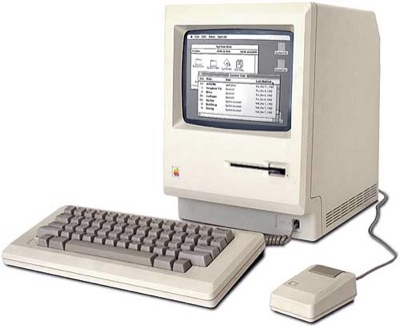
    When playing at the house of another friend, Joe, we were allowed to play on his Dad’s Apple Macintosh Plus. Joe’s Dad, Paul, is a famous Zoologist who used the Mac to author papers with the likes of Richard Dawkins. Joe’s mum, Anna, was a Systems Analyst, and my career aspiration – to drive a coal lorry – was inadvertantly redirected into the world of computing from this point, circa 1986 (age 6).

    I'm a Mac

    I can remember those first experiences with a WIMP (Windows Icons Mouse & Pointer) as so intuitive, so natural. It was joyful. Bell Labs invented the transistor, which gave us the modern computer, rather than the collossal rooms of valves that went before. Probably equally important is the work of Xerox in inventing the mouse, and finally Apple, for making a packaged instrument that can be operated by a 6-year-old. “It just works” really is as true today as it was back then.

    Sometimes – in fact most of the time – seeing is believing. But this sometimes isn’t enough. We also need the pretty packaging. Our computers need to have a rainbow-coloured piece of half-eaten fruit on them. Our nerds need to have a pair of spectacles and talk like they’ve swallowed a dictionary.

    Original Copyright Theft

    No, I am not comparing myself to Steve Jobs. My career is only just getting interesting. Plus I don’t wear enough black.


    Tags:

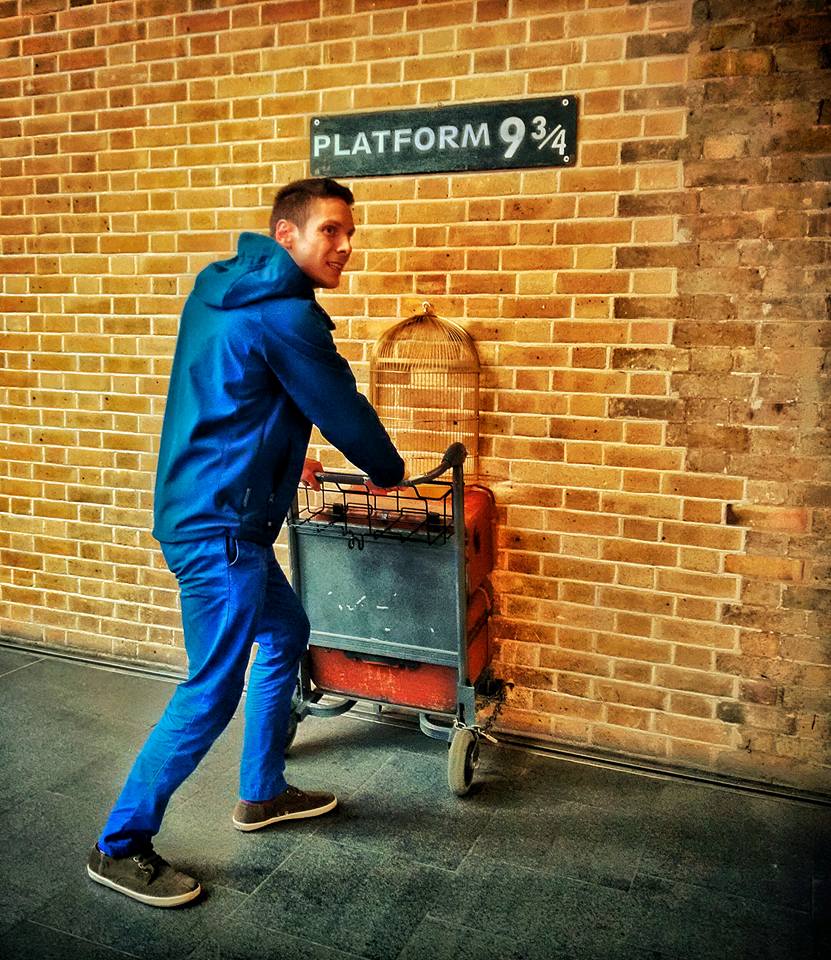
  • Platform 9.75

    This is a story of personal development, mistakes and unanswerable questions…

    King's Cross School of Physics

    I wrote something on the platform of King’s Cross, doing the minimum necessary research, all from my smartphone. It wasn’t me being smart, or my phone, but the programmers, engineers, physicists, philosophers and authors of all the content, who selflessly published into the public domain, via the Internet, which enabled me to do this.

    Of course, there had to be a seed too. That seed was Oxford, and the academic sons & daughters who attended state comprehensive during my childhood, including Ben Werdmüller (CEO of Known, where you are reading this post) who taught me how to program a computer and not just use it for consuming video games. Technology then became both my means of consumption for literature (e.g. Cornell University’s ArXiv library) but also low-fi tech, such as the Microfiche film I used to view the first photographs of the Middle East, at St Anthony’s College, Oxford Univesity.

    Ben’s father, Oscar, was at St. Anthony’s, with my mother, Gillian. This connection has serendipitously given me a career, a love of photography and an appreciation for the physical books, photographs and human relationships, which can be obfuscated by computer screens and Microfiche viewers. Oscar & Ben also inspired in me a love of sport and teamwork, which is only coming to the fore in the 36th year of my life. Debbie, Ben & Hannah inspired in me a love of writing, drawing and creativity that would normally have been stifiled by my move into a technical industry.

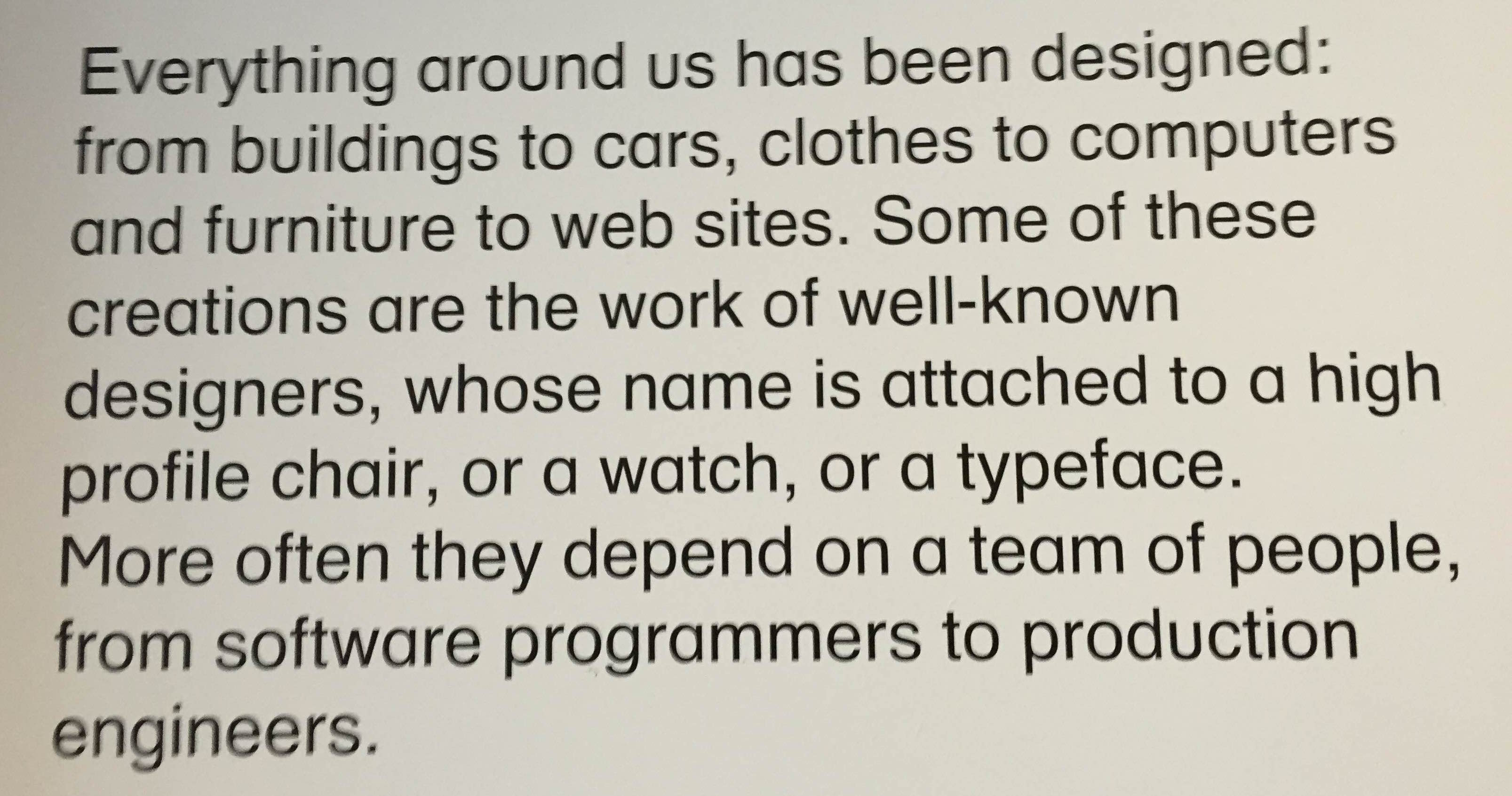
    Design Museum Quote

    The Werdmüller/Monas family’s book of drawings by the children – Ben & Hannah – was one of the most precious objects I have ever had the priviledge of handling. Now my own mum looks after priceless manuscripts and first editions of every book ever printed, for the Bodleian Library, Oxford University. These connections are easy to overlook, if you hadn’t lived 36 years in my shoes, which is understandable. We all have our own outlook. We are all independent and unique observers in the Universe.

    Thanks to a great piece of writing by Ben, it dawned on me that what I do with my ‘head start’ in computing is often indistinguishable from magic for the vast majority of people, who are playing catch up. Ego and humility always duke it out in my brain, depending on whether I consider my own unique experiences and opportunities, or whether I compare myself to an ‘average’ set of experiences and opportunities.

    So are ordinary people able to stay abreast of developments in theories pertaining to the fundamental nature of reality? Can a kid from a state comprehensive school read and understand the literature that is published in books and academic papers? The jury’s out, but I can highly recommend J S Bell’s Speakable and Unspeakable in Quantum Mechanics for anybody who would like to read about the probability of a Physics PhD’s socks being of different colours.

    In the interests of my own reputation… I don’t think I’ve ‘solved’ or ‘discovered’ anything. Just a curious mind.

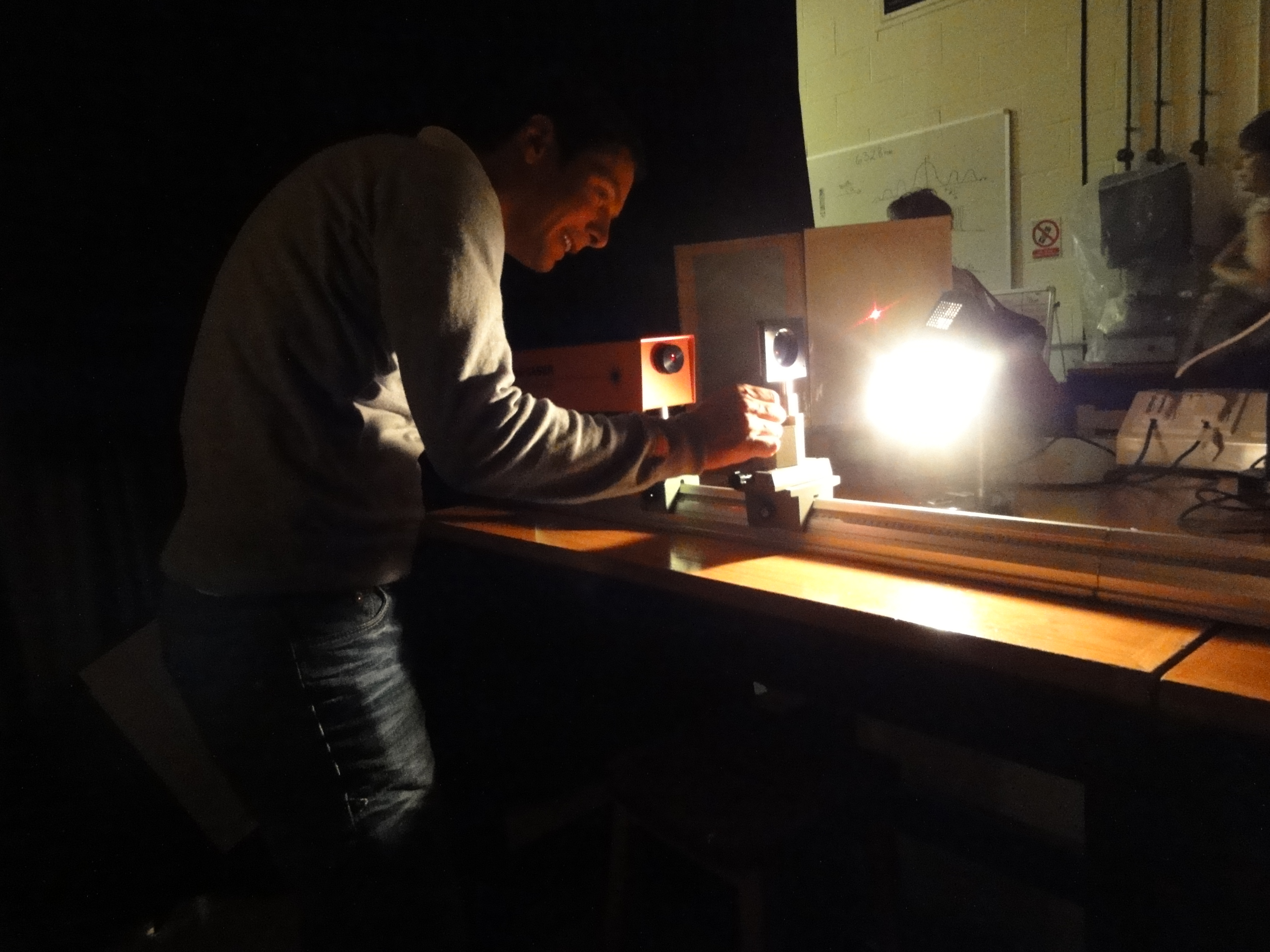
    Quantum Eraser Experiment

    Nick Grant repeating the classic “Quantum Eraser” interferometry experiment with a laser and polarising filter, at the Cavendish Laboratory, Cambridge, UK (July 2011)

    Tags: