hospital – Page 4 – Nick Grant

Tag: hospital

  • You’ve Got to Pay to Play

    This is a story about artistic integrity…
    Chess board

    He who pays the piper calls the tune. Does the piper ever get to play, for their own amusement and freedom of expression?

    If you look at my life strategy, it’s pretty insane. I’ve picked a career that uses skills that I mastered as a child, and I now find the job mind-numbingly boring, easy and soul-destroying. I’ve picked an industry which is essentially just keeping a running total of who owes who what: simple addition and subtraction. I’ve chosen maximum income, for minimum effort. My life is constrained – certain rules have to be adhered to – but I have set things up so that I can jump through the pointless hoops as effortlessly as possible.

    My theory is, that if I were to mix work and pleasure, then it would break my heart whenever I had to compromise. Let’s imagine my passion in life is painting. I’d like to paint 1970’s sci-fi inspired futuristic cityscapes, clinging to the rocky surface of distant planets. Those paintings are very intricate; detailed. The attraction of that art, for me, is the sense of scale that’s given when you paint thousands of tiny windows on the buildings, and lots of tiny people in space suits, wandering around in their futuristic world. However, there’s probably only a niché market for such paintings, and they’d take hundreds of hours to paint. Commercially, I’d be far better off splattering a canvas with bright primary colours and calling it abstract modern art – it would take far less effort and would have a much broader appeal. In order to pay my rent, I’d be economically incentivised to produce crap that I hated, because it would be much more profitable.

    My strategy is to earn a lot and not work very hard, so I have lots of money and spare time to pursue whatever passions I have, without compromise.

    Of course, there is always compromise.

    Luckily, there is a Nick Grant who is a rapper, a Nick Grant who is a photographer, a Nick Grant who is an expert in sewerage processing, a Nick Grant who is a lecturer in American Studies at the University of East Anglia, a Nick Grant who’s a toastmaster, a Nick Grant who’s an expert in credit risk management, a Nick Grant who’s a researcher in the Elementary Particle Physics department at the University of Warwick, a Nick Grant who’s the CEO of Severn Trent, a Nick Grant who’s a Labour Party candidate, barrister and head of legal services for Sainsbury’s, a Nick Grant who’s the concertmaster of the San Diego Symphony Orchestra, a Nick Grant who’s the strategy director for Cancer Research UK, and there’s even a series of fictional Nick Grant Adventure books by Jamie Dodson.

    This means that I can pretty much write whatever I want on the public Internet, under my real name, without the fear that most salary earning wage slaves would have, that our employers will discover our deepest darkest secrets, prejudicing our career progression and perhaps even jeopardising our employment.

    However, ex-colleagues from places like JPMorgan and HSBC occasionally visit this site, and pick up juicy tidbits about the implosion of my life and see the thrashing of my legs, beneath the surface of the water, when I’m swanning about trying to look as serene as possible in my professional capacity. I have old bosses as friends on Facebook and following me on Twitter.

    I took an insane gamble. Instead of locking down my social media to only friends who can be trusted to not gossip with anybody connected with my former employers; instead of editing and censoring myself; instead of setting up a pseudonym – a pen name – I write under my real name, with real details that leave me no plausible deniability, to say “it isn’t me” and “it must be another Nick Grant”.

    I guess there aren’t that many people who leave the privileged and highly paid world of financial services and IT, in pursuit of the risky dream of doing something more rewarding in an intangible way. Earning bucketloads of cash is all the reward you’d want, right? Why would you want to earn less money being an electrician? Why would you want to have all that stress and risk your life savings, trying to start your own company? Why would somebody who’s been a steady dependable 9 to 5 worker, with decades of dedicated service under their belt, suddenly lose their mind and end up in psychiatric hospitals, drug rehab and homeless?

    So many of us dream of making a big change in our lives, but when we face up to the reality of the risks, sacrifices and effort involved, we decide that maybe the timing’s just not quite right… maybe we’ll do it next year, or the year after. We end up boring our friends and family with our grand plans that will never be implemented: forever on the drawing board.

    When somebody is mad enough to unshackle themselves from the golden handcuffs and give something a proper go, it’s big news. There are hundreds, if not thousands of bored office-working drones, who are fascinated to know the details of the trials and tribulations of anybody who had the guts to follow through on a plan to retrain in a completely different field, or start a business. When you quit your soul-destroying job, you’re the underdog; David taking on Goliath – your former colleagues want to live your exciting life, vicariously. Former colleagues are rooting for you to succeed. Former colleagues want to know if you fail spectacularly, to re-affirm that they made the right decision, staying in their nice safe boring jobs.

    Bootstrapping means taking on projects where you’re not beholden to somebody for the funding. The whole point of me doing a job I hate, is that it’s provided the dosh to do whatever I want without having to kiss ass, kowtow and do things in a way that they approve of. The whole point of founding my businesses with my own money, was so that I could run things exactly how I wanted, without investors and lenders breathing down my neck and making stupid suggestions about my business plan.

    When it comes to a personal memoir type project, where I’m pouring my guts out, I’m somewhat burning the bridge back to the straight-laced world of boring jobs for boring people with boring lives. I have a CV that says I’ve worked for various companies and I have various qualifications. People who get salaried jobs by sending off their CV and going for interviews, are not allowed to have exciting lives where they do things that don’t neatly fit into boxes. The world that provides my income has a strict rule: fit in or fuck off.

    So, I made a decision. I decided FUCK IT. I decided that I would just write whatever I wanted, whenever I wanted. I would be myself, I wouldn’t censor, I wouldn’t edit and waste time considering what the drones of the corporate world of wage slavery would think about my unorthodox life.

    And so, with practice, my passion and – dare I say – my skill, is to document my innermost thoughts and feelings, publicly. It might not be art and it might not be commercial, but it sure as hell isn’t compromised. I have moments of fear, where I think that I need to hide my blog, put a sticking plaster over the semicolon tattoo behind my ear, find out just precisely what my former colleagues are prepared to say about me: put them on the spot and say “look, do you judge me on the good work that you saw, or on the secret life that I chose to reveal to you?”

    It drove me paranoid and crazy, trying to maintain a squeaky clean perfect professional image, whilst also dealing with all sorts of awful things in my private life. It exhausted me to the point where I lost my mind, covering up the fact that life outside the office was chaotic and unstable, and I didn’t want anybody to know that I was just about surviving in grotty student flats, hostels, hotels and friends’ sofas. I didn’t want anybody to know that my engine had run out of petrol and was running on fumes. I didn’t want anybody to know that I had no margin for error, no safety buffer: my finances were on the brink of total disaster.

    Why should anybody know these things? If I get stuff fixed up and pick up where I left off, then who would be any the wiser? What people don’t know can’t hurt them, can it?

    However, it hurt me. It hurt me every time a friend thought it was hilarious to tell my ex JPMorgan colleagues things that considerably damaged my reputation. It hurt me every time the grape vine managed to spread gossip about my attempts to find job satisfaction. “I heard you’re an electrician now!” a colleague from HSBC who I hadn’t spoken to for 6 years, said to me when we connected on LinkedIn. How the fuck do people find this stuff out?

    “Oh you were in The Priory… like some kind of rock star. So cool!”

    Not cool. That kind of stuff colours people’s opinion of you. They make assumptions and whisper behind your back. “Shall we invite Nick to the pub at lunchtime?” somebody says. “No, better not… he’s a recovering alcoholic, isn’t he?” [I’m not, by the way]

    What I write is repetitive. I have no idea what chapter of my life you’re going to walk in on. I have no idea what I’m going to be writing about when you dip into my private world. So, I cover the same theme over and over again: I am me.

    I’m no longer the straight-laced perfect employee with the immaculate CV. What are those gaps in my employment history? Well, in the context of me being your wage slave, that’s none of your fucking business. You don’t pay me enough to bribe me to act a certain way and to gag me. You don’t pay me enough for me to compromise my integrity, my identity.

    I’ve suffered enough boredom and I’ve been patient for long enough to have earned the right to be myself; the right to be creative; the right to express myself without hesitation; the right to not have to wear a mask; the right to not live in fear of negative judgement.

    What happens if and when the worlds collide? Well, I’ve set the challenge: it’s up to other people to decide whether to judge me on what they see in the office versus what they discover through my candour, in a totally unrelated context.

    I’d love to make it into print. I have a penchant for debate, and strong views about government and society. At some point, my ambitions to be an author and to get involved in politics are going to be realised. Every word I write on the public Internet makes me more discoverable to somebody, somewhere, on some topic or other. If I simply wanted a book deal or to raise my profile, I could compromise and conform; I could channel my energy into being commercial and popular.

    What does it mean to be authentic? You think it’s some fucking option that we all have? You think it’s a fucking lifestyle choice?

    To be authentic is a risk and it’s a privilege. You could lose friends and fall out with your family. You could lose your job. How are you going to find your true voice? The voice that speaks with childlike honesty; fearlessness; tapping into your live stream of thoughts, rather than the lines you’ve memorised; the act you’ve learned to play. It takes practice, to be able to express what you feel, rather than say what you think people want to hear. Many of us are disciplined to engage our brains before our mouths: to hesitate, withhold and communicate in a manner that conforms to social norms. We are coached and bullied into hiding our unique outlook and personality.

    If I make myself unemployable, I’ll be forced to try and monetise the things that I have a natural aptitude for. At the moment, writing is effortless, but I could push myself to write with more purpose, spend time editing and reconnect with some literary agents I started conversations with last year.

    If I find myself barred from the land of boring jobs and immaculate CVs, then my energy – my creative output – will have to be expressed in ways that come naturally to me, not just easily. In a way, I’ll be unbounded; unleashed; unchained. Of course, it invites hypomania to come and destabilise everything, but at least my crazy projects usually result in cold hard cash in my pocket and something else to add to my portfolio.

    I’m scared. I can’t play the game any more. I have a contract – ink dried on paper – and I can do the job with my eyes closed. I’ve been in hospital enough times with kidney problems to know when I’m in trouble, and to know when I can look after myself. I can’t humour everybody with this “my health comes first” bullshit anymore. I’m the guy who’s pissed copious amounts of blood on more than one occasion, and done the calculations: how long have I got before total organ failure will kill me? I’m the guy who knows when I’m in deep shit, and when I can take a calculated risk.

    What scares me more than anything is going through all the same old shit I’ve been doing since I was a teenager. What scares me more than anything is playing the same fucking games, wearing the stupid fucking mask, and acting and speaking the lines I’ve learnt and spoken a zillion times before.

    I’ve got a fairly simple plan: conform and comply just enough to get what I want out of some rich fucking banks who I don’t give two shits about. The last thing I want to be doing in the world is help some dinosaur of a bank run a simple software project at snail’s pace, but they’re going to pay me a king’s ransom to do it, and it gives me a tiny taste of freedom… I put up, shut up, suffer the boredom, and the reward for my patience is that I keep a bit of integrity; a bit of dignity; a bit of identity.

    Maybe I should do this job or that job, people suggest. Wouldn’t I be great as a carpet salesman, or a tyre fitter? Isn’t my natural calling in life to be a supply chain analyst or a fork lift truck driver?

    Maybe it’s the mission of the company that I need to get right. Selling people financial products they don’t need or want, and profiting on the margin between the borrowing rate and the lending rate, using fractional reserve banking, is hardly going to give you a warm fuzzy feeling, is it? Perhaps I should work for a charity that’s managed to help a handful of individuals and a large number of donors to feel better about how disgustingly wealthy they are and ignore the fact that the gap between the rich and poor is growing. Perhaps I should simply find my place in the whole fucked up mess, where I can delude myself into thinking I’m making a positive difference.

    But, I’ve seen too much. I know too much. I know that things are rotten to the core and it sickens me to emotionally involve myself, when everybody wants you to just STFU, keep your head down, do what you’re told, not rock the boat and don’t for god’s sake solve any problems at the root cause.

    Writing’s the only time I can let rip and not get bogged down by the wilful ignorance and DGAF attitude of those around me. I’m not saying I’m superior and I’ve got all the answers, but I’m saying that when I get a hunch and I set out to prove my point, I’ve got plenty of examples of things I’ve done that have worked, when I’m free from constraints and naysayers.

    I love this quote:

    “People who say it can’t be done should not interrupt those who are doing it”

    Somebody’s gotta be positive. Somebody’s gotta do the math, calculate the risks and take a chance. Somebody has to be brave and stick to their guns. Somebody has to persevere through the setbacks. Somebody has to keep going when the way ahead looks blocked, to figure out how to overcome the obstacles.

    I also love this quote:

    “It is not the critic who counts; not the man who points out how the strong man stumbles, or where the doer of deeds could have done them better. The credit belongs to the man who is actually in the arena, whose face is marred by dust and sweat and blood; who strives valiantly; who errs, who comes up short again and again, because there is no effort without error and shortcoming; but who does actually strive to do the deeds; who knows great enthusiasms, the great devotions; who spends himself in a worthy cause; who at the best knows in the end the triumph of high achievement, and who at the worst, if he fails, at least fails while daring greatly, so that his place shall never be with those cold and timid souls who neither know victory nor defeat” — Theodore Roosevelt

    I feel gagged. I feel cheated out of the opportunity to demonstrate the best of my abilities; to tap into my creativity and problem solving skills. I feel jealous of those people with inherited wealth, trust funds and other advantages that allow them to dispense with the wearisome world of bullshit jobs, and instead they can flounce around reading interesting things, writing, debating & discussing, composing, painting, drawing, sculpting and generally expressing themselves.

    To have those prizes just out of reach, because of the demands of societal conformity, is agonising to the point where it makes me want to give up. I’ve worked hard enough for long enough that I should be in a different position. I’m left miming the same actions that I’ve done a thousand times before, in order to keep the money flowing, the rent paid and the food on the table, which is like some kind of psychological torture.

    I know it sounds ridiculous, but I knew I would get a contract fairly quickly, and I know that I will be able to run the project really well, very easily. I’ve seen it all before; done it all before. I can see all the way to the end: no surprises. Because it’s all just a means to an end, it makes it that much harder. I’ve got nothing to prove, and the fact that I’m employed to solve the same old problems in the same old way, time & time again, simply proves that they might as well just give me the money and not bother with the project, if they’re not going to listen to the experts who know how to build better systems than these follies; these white elephants.

    I’ve got this easy money contract all lined up. I know what the hell is going on with my kidneys. I’ve been in hospital enough times with rhabdomyolysis to know when the numbers say I’m fucked, and when the numbers say I’ve dodged another bullet and I’m fine & dandy. I know when I’m in big trouble and in desperate need of assistance, and I know when my tough little body is patched up and working again.

    It’s been agonising, to string this client; this consultancy; this agent along, while I’ve been in limbo: who could have predicted that it’d take nearly 15 hours of dialysis before my kidneys rebooted? Was I ever worried about my life, my health? You’re asking the wrong question. You’d have thought that if you pissed absolute jet black liquid and you couldn’t feel your foot or your calf, you’d be straight over to A&E, but it doesn’t work like that if you’re already at the limit of what you can take.

    I phoned my client and said I wasn’t going to make the 30 minute induction and I was too sick to start work that week. Chances are, that was the end of that: they’d just cancel the contract.

    Things in my life are either there to be endured, they’re an adventure, something good that’s happening, or I’ve had enough and I’m going to self destruct.

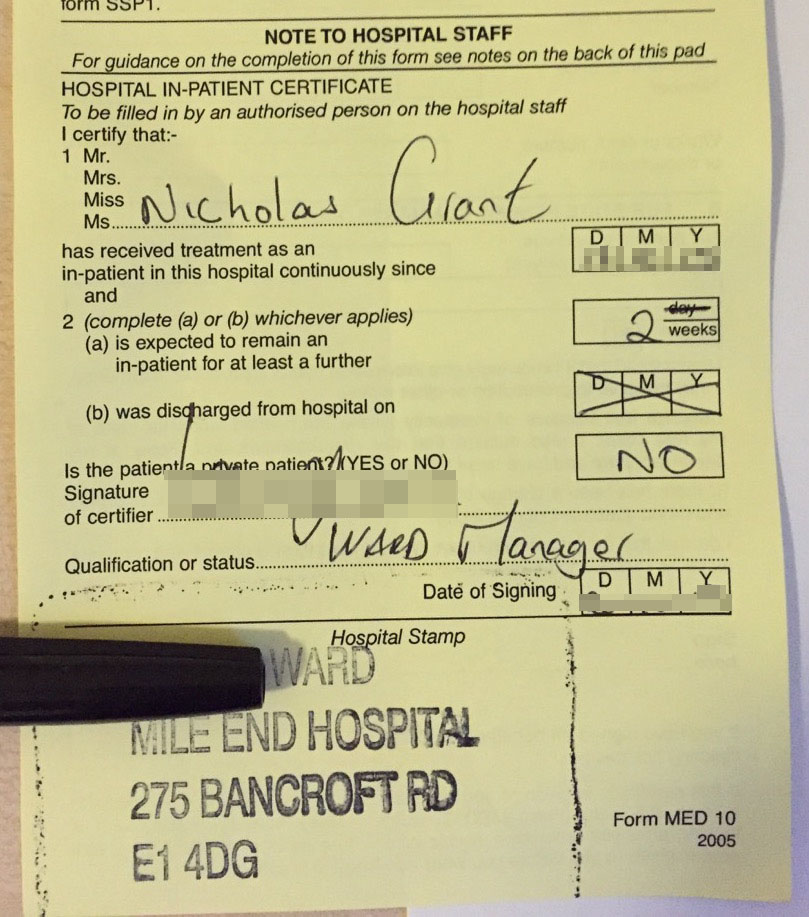
    Being in hospital again has been part adventure – I’ve never had dialysis before – partly something good, in terms of her seeing first hand the shit that I’ve been through a bunch of times. But there’s the actual boring work that has to be endured if I still have a contract by the time I get discharged. There’s the self destruct threat, because I’ve solved all these problems before. Everything’s been overcome, so far as I can see. My client will wait until Monday for me to start work, my blood tests are stable and my kidneys are definitely working.

    I had no control over whether the client would wait for me to get well. I had no control over when my kidneys would reboot. To discharge myself would have been suicide, so it didn’t matter whether I lost the contract or not.

    Nobody can see that the recent acute kidney failure is not the root cause of the problem here. Why did I let the problem get so bad? Why am I not afraid of a catastrophic chain of life-changing or life-ending events? My kidneys are working AND the client says I can start work on Monday, but why would I trust my knowledge, experience and the blood test data, and discharge myself, when I could just get another job in a few weeks or months? Why don’t I avoid all risk, act like a sensible normal person, and just do everything I’m told?

    There’s a delicate chain here: I was lucky that my client has waited this long for me to get well, I was lucky that my kidneys recovered quickly, I’m lucky that I have a job that’s easy money, I’m lucky that I don’t have to suffer more agents and interviews, I’m lucky that I’ve got a financial lifeline that fixes my cashflow, I’m lucky that this contract keeps me within touching distance of the day when things are stable again, and I have the opportunity to think about doing something rewarding, challenging, creative and everything else I need as the antidote to 20 years of office boredom.

    The ticking time bomb exploded, but it was unseen. I couldn’t hang on any longer. I couldn’t take any more delays and setbacks. My patience for being depressed, stressed and running out of runway, without success at securing a job (that I didn’t really want anyway) had expired. I’d been strung along too long. Christmas and New Year slowed everything down and stopped progress, so the agony was drawn out longer than I could take.

    Somebody’s going to end up not getting what they want.

    The doctors want to discharge me with blood tests that show my kidneys are clearing the remaining backlog of toxic crap out of my blood on their own. They want me to have an operation to have a dialysis line put in my jugular vein. They want to do more observation, without dialysis, to know how my kidneys are doing without any assistance.

    Her and our friends want me to follow the doctor’s advice, and treat my health as if my life hangs by a thread. They care about me. They don’t care about my client. They know that there will be other jobs.

    I want good quality sleep in my own bed for a couple of nights. I want to try on my ankle splint and get used to getting around on crutches. I want to make a plan for how I’m going to get to work during the tube strike. I want to figure out my medications so I’m not fuzzy-headed and sleepy during the day. I need to not have to start all over again. I need to balance the small risk that my kidneys might take a long time to clear the backlog of creatinine, against the big risk that I can’t be out of work any longer, and I can’t face starting the job hunt all over again, without depression and stress destroying me.

    Yeah, I’m going to feel shit. I was always going to feel shit. I’m going to wish I was more well rested. I’m going to wish things worked out differently. I’m going to wish I could just press the fast forward button and be 6 months further through the year, and everything’s gone exactly how I know it’s going to go, but I don’t have to suffer the boredom, the monotony and the ridiculous deja-vu of solving the same problems in the same way, over and over again.

    What’s the alternative? I can’t cut & run. I can’t switch career. I can’t chase some stupid pipe dream.

    Some people think I’m a know-it-all. Some people think I’m reckless and stupid. Some people think the answer to all my problems is to do the things I’ve tried before: regular salaried jobs, doctor’s advice, safe & sensible behaviour, conformity to the norm.

    All I can tell you is, I can make dumb decisions and get myself into deadly situations, but I’m also a bit of an expert in recovering from some very harrowing shit.

    It’s a bit unfair to ask people who care about me – both loved ones and professionals – to allow me to take what they see as an unnecessary risk, but the flip side is a complex web of psychological risks and consequences that are almost too hard to explain.

    If I seem impatient, foolish, arrogant, entitled or somehow like I deserve different treatment and life opportunities to everybody else, all I can say is this: at some point you can’t keep trying anymore, you give up and you slip away. At some point, it doesn’t seem worth the struggle and the stress, just to line somebody else’s pockets and allow them the freedom to pursue their artistic creative ambitions and generally waft around having a lovely time.

    If I get what I want, start my job tired and in pain, work for at least 6 months, bored out of my mind and upset that I wasn’t well rested and properly prepared; but at least the cashflow hole is plugged, my stress starts to go down, I start to relax about the purse strings, I can show my love and appreciation for the people who I care about and who care about me, I can start to improve my work:life balance and I can start to dream about longer-term ambitions, without torturing myself because things are so far out of reach.

    If you think I expect this to happen overnight, you’re wrong. I’m forecasting 6 months to stabilise, 6 more months to build up a healthy safety cushion, and another year before I can even dare to dream and start to think about a less soul-destroying life.

    As I wrote before, I’ve got some amazing pieces of the puzzle in place – more love and support than I’ve ever had in my adult life – but I still can’t afford to have other important things slip away for the sake of an acceptably small risk and some short-term pain, discomfort, exhaustion and a bit of extra stress. There is no perfect solution.

    There is one thing that nobody can take away from me right at the moment: I’m a penniless writer.
     

    Tags:

  • Taking the Piss

    This is a story about filtration…

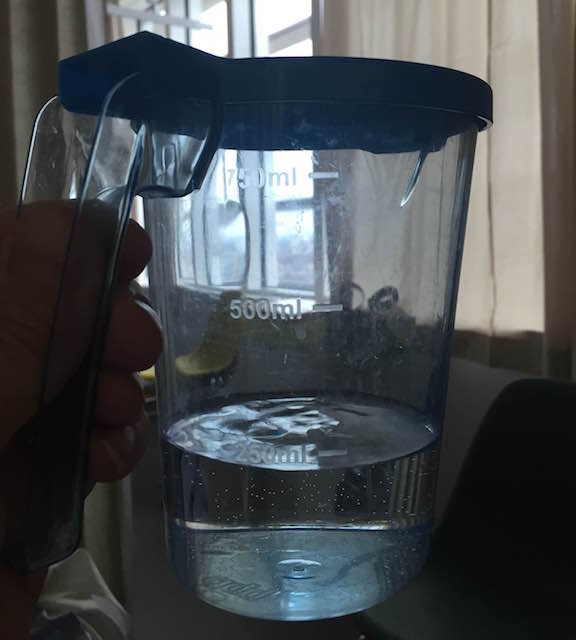
    Water jug

    Muscle damage causes the release of myoglobin. The kidneys try to filter out the myoglobin, but it causes damage to the renal tubular epithelium, causing acute kidney failure. Creatine kinase (CK) is an enzyme and a marker that allows muscle damage to be detected by a blood test. Creatinine is a waste product produced in your muscles, normally eliminated by your kidneys. High levels of Creatinine in your blood indicate kidney failure.

    So, we know that a muscle of mine must have been damaged, because my CK reading went higher than the test was able to measure. We also know that my kidneys had failed, because my Creatinine levels were also off the charts.

    Dialysis has cleared the backlog of all the toxic crap that was damaging my kidneys and had caused them to fail. My kidneys are now a bit better and I’m now making pee.

    The question is, are my kidneys working efficiently enough to remove all the creatinine that my muscles are creating? Also, is the original muscle injury still chucking out a load of toxic myoglobin, which is injuring my kidneys?

    So, I measure how much I drink, and I measure how much I pee, and hopefully there isn’t much difference – at least my kidneys should be able to get rid of the fluids and stop my body from swelling up. Also, my blood gets regularly tested. The creatinine, which is currently at about 1,000ppm, needs to drop to around 100ppm. My CK should reduce slowly over time, and certainly not increase. Provided all those things are happening, I can stop dialysis and let my body heal itself.

    If my creatinine is not going down, or starts going up, then my kidneys just aren’t recovered enough to be able to cope on their own. If my CK starts going up, then I still have some kind of muscle injury that’s going to cause my kidneys to fail again, unless I have regular dialysis to filter the toxins out of my blood.

    So, every drop of pee counts. The more I drink and the more I pee, the more creatinine and CK gets carried out of my body, making life easier for my kidneys and increasing the likelihood that I can recover without any more medical intervention.

    I’m currently trying to build up a data set of blood test results, drink consumption and volume of pee, so that I can demonstrate to the doctors tomorrow that I don’t need weeks and weeks more dialysis, and I can go start my new job on Monday.

    So, cross your urethras for me that I can do it, and get my pee up to impressive volumes and get that nasty creatinine and CK flushed out of my system naturally, so I can go home tomorrow or Saturday.

    I also get to have a rubber tube that’s been inserted 24 centimetres – over 9 inches – into my groin region, removed from my body. I’m hoping to avoid having to have a similar tube inserted into the jugular vein in my neck.

    Lots at stake. Pray for pee!


    Tags:

  • One Week in Hospital

    This is a story about affordable care…

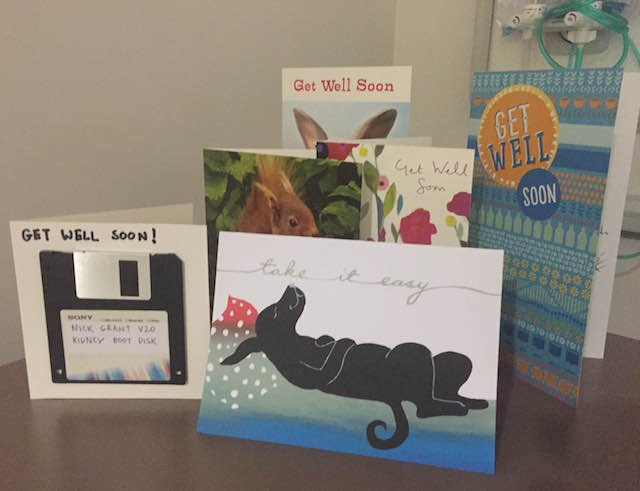
    Get well cards

    I’ve been able to roll the dice a few times – following my dreams and chasing my ambitions – because of progressive liberal socialist policies put in place by the Labour government of 1945: most notably, the creation of the National Health Service.

    I chose to leave an extremely well remunerated job with an American investment bank, with amazing private medical insurance and a brilliant team of occupational health doctors. That US-style of healthcare certainly gave me access to the very best treatment, whenever I needed it, but it was part of a “golden handcuffs” deal: a job that was so much better than anything I could get anywhere else, that I had to be insane to quit.

    Life is a balancing act. You can have loads of money, but no time to spend it. You can have loads of time, but no money. You can have job security, but you’ll be bored and constrained. You can have freedom and be your own boss, but you will carry all the risks and responsibilities. You have to choose what works for you.

    While one friend has parked his tech startup dreams and has taken a salaried job, another couple of friends have just sold their tech startup. In the space of 6 years, I made myself sick with stress, trying to run my own tech startup; I went back to my old job at the American investment bank and stayed sick until I started rebuilding my life in London as an IT consultant. In the space of those 6 years, my friends had countless sleepless nights and worked relentlessly to build their startups to the point where they were worthy of investment or acquisition. In the space of those 6 years, my friend who originally introduced me to the tech startup ecosystem, built a bunch of cool tech and very gracefully pivoted into a job that really suits him, working for a company he really admires. In the space of those 6 years, my friends from the technology accelerator program we attended in Cambridge, raised millions of pounds of investment and sold their company to a tech giant.

    Friends went to Silicon Valley to follow their tech dreams. One friend had to break up with his girlfriend. Another had to move his young children away from the family support network, and live with the risk that the USA would reject him and his family’s request for residency. Imagine if I had moved to America. How would I ever afford the medical bills, when things have gone badly wrong? I would have been bankrupted many many times over!

    Nobody’s keeping a seat warm for me in a cushy job because I went to a posh school and a prestigious university. I have no trust fund or family money behind me. Running out of money has meant homelessness. Starting a business had to be profitable from day one.

    There’s just no way that I would have been able to pursue the opportunities that I have, without the National Health Service. In theory the UK and US are lands of opportunity, where anybody can start a business and become rich and successful. In practice, it’s almost impossible unless you’re already quite wealthy. The consequences of failure are just too much to bear, for most people.

    My current business is consultancy. If I’m sick, I don’t get paid. If I don’t have a client, I don’t get paid. However, I’ve calculated that I only need to work a few months of the year to earn the same as as the ‘secure’ job I gave up. It’s a calculated risk. I might end up not being able to pay my tax bill. I might end up not being able to pay my rent. But, when things go well, they go really well. The odds are in my favour: if I can just get two or three contracts in a row, not get sick, maybe have some projects that run longer than expected, then I’ll suddenly be way way way ahead of where I would be if I’d just plodded along with the golden handcuffs on.

    I sat awkwardly on my leg and it went numb. My foot became swollen. My leg swelled up all the way above my knee. My kidneys shut down. I was admitted to hospital and put on dialysis. I haven’t had any income since September. Surely this is why it’s best to have a nice ‘secure’ job?

    I’ve been stressed and depressed about losing a lucrative consultancy contract. I was literally about to start working again when I got sick. Contractually, I have no rights: the company could just award the contract to somebody else. I was going to have to start the search for a client all over again, meaning yet more loss of earnings.

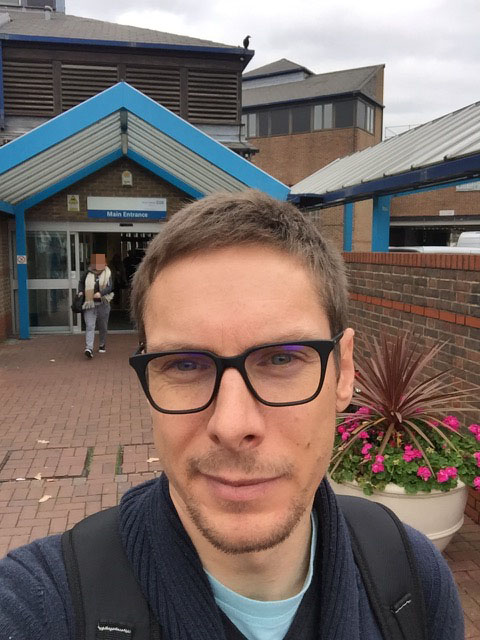
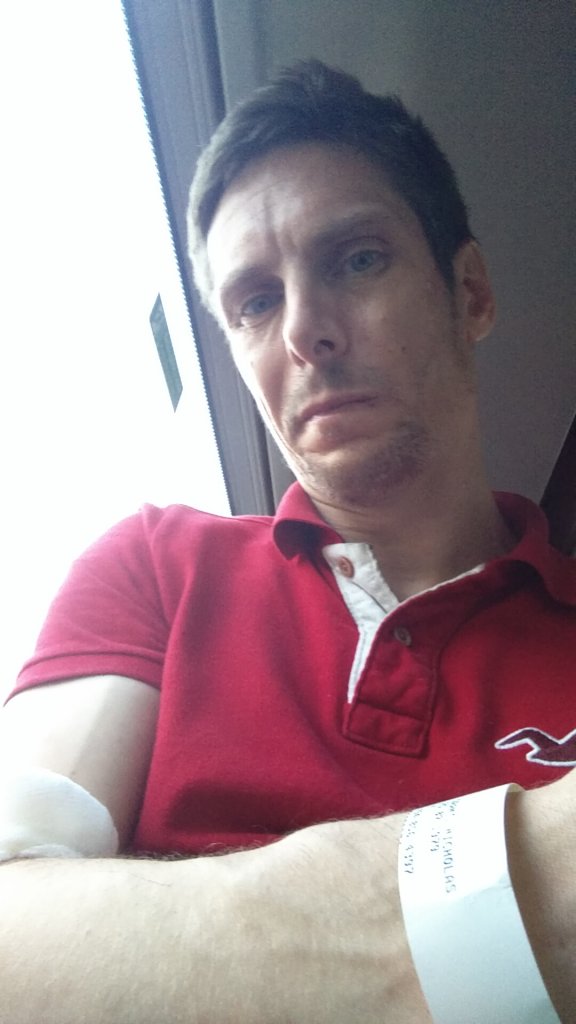
    Here I am in hospital. I’ve been here for a week.

    I was seen by a doctor within an hour of arriving at Accident & Emergency. I’ve had two private rooms with amazing views over central London. I’ve been seen by top consultants, surgeons, registrars, nurses, phlebotomists, physiotherapists. I’ve been wheeled around by porters and served meals by catering staff. My bedding has been changed and I’ve been given clean gowns and towels. Numerous medications have been dispensed. I’ve had ultrasound scans and my blood has been scrubbed clean and drained of dangerous toxins by dialysis machines. My blood pressure, blood oxygen, pulse and body temperature has been monitored around the clock. Even the amount I drink and piss is meticulously recorded by the staff on the ward.

    Nobody has ever asked me for my medical insurance details, credit card or discussed how I plan to pay for all this world-class treatment. Nobody is going to send me a bill when this is over.

    As luck would have it, my client has decided they will wait for me to get better, so I can start my contract. Imagine if I wasn’t able to take that contract in the first place, because of the risk of getting sick. Imagine if all the profit from my contract got wiped out by a humongous medical bill. How is anybody supposedly ‘free’ to become rich and successful, if they can’t predict when they’re going to get sick and how much it’s going to cost?

    This story is really a re-telling of three stories. The story of the friend who inspired me to follow my startup dreams and who inspired me to write about the importance of the National Health Service for social mobility; the story of the friend who succeeded, after 6 years of sacrifice, blood, sweat and tears, with countless sleepless nights and untold stress; and the story of me, who couldn’t handle the chafing of the golden handcuffs, and got unwell because of the combined stress of running a tech startup with an unsupportive partner and unsupportive family.

    I’m now lucky enough to have reconnected with old London friends, repaired friendships that were damaged or neglected when I got unwell, made new friends who are incredibly loyal and caring, and I have found an amazing lady who makes me feel loved to bits and completely accepted for who I am. Her family have welcomed me with open arms and most of the get well cards I’ve been getting have been from her family, along with offers of help to get me back on my feet.

    While the welfare state is deeply flawed and it’s an impossible task to get the social support that you need, as a single man whose life is imploding, the National Health Service has been the glue between the pooh, holding my shit together and just about keeping me alive. When you add in an amazing girlfriend, her family, loyal and caring friends and the rest of the social fabric that a person needs, you finally stand a chance of getting your life back.

    I read with great dismay that the US Affordable Care Act (a.k.a. Obamacare) is being repealed. What the actual fuck, America?

    If you wanted a case study for a society that’s as close to perfect as you’re going to get in an imperfect world, we should look to London. 300 different languages are spoken in London schools. The tower blocks of Canary Wharf sit in a London borough that’s 46% Muslim. There are cycle superhighways, driverless trains, an underground railway that moves 5 million people every day. The Metropolitan Police are humble public servants, who protect the vulnerable and take people to hospital, involve social services and mental health crisis teams, rather than flashing their badges and drawing their weapons. The whole city exudes tolerance, inclusion and diversity: it’s in London’s DNA.

    You might mistakenly believe that London is a city for the rich, but it’s not: because of the National Health Service. The NHS employs 1.7 million people, and funded properly – like it is in London – it shows that socialism and multiculturalism can be made to work. The last piece of Britain’s nationalised socialist infrastructure, not to be wrecked by the greed of capitalism; the NHS is a fly in the ointment for the Tories who want to sell everything off for private profits and damn the lives of British citizens.

    I want the railways re-nationalised. I want the energy companies re-nationalised. Most of what comes out of Westminster is good for London but bad for the rest of the UK. What we’re seeing is one rule for Londoners and another for everybody else. London gets state-owned public transport where 100% of the profits are re-invested in infrastructure. London has a remarkable set of public services that create jobs as well as keeping the residents well looked after. Socialism for London and capitalism for the rest of the UK… that sucks.

    In my week in hospital, I’ve realised that London truly offers an enticing vision of a near-utopian society, so unlike the ugly one pictured in the dark minds of the populists. London is a European city, connected by train to Paris and Brussels. London is a mercantile centre, where East literally meets West at the Greenwich meridian line: the perfect time zone to deal with both Japan and San Francisco in the same business day. The peaceful co-existence of so many cultures in one crowded city is a modern miracle. I live here because of the immigrants, not in spite of the immigrants. London simply wouldn’t function without its chaotic diversity.

    Getting used to living in London is hard. The congestion is hard. The clash of cultures is hard. Seeing people who look and act differently is hard. Processing the humbling fact that the world is huge and complex is hard. Realising that you’re in the racial minority is hard. Living a small, neat, efficient, considerate, reserved life, where you quietly observe and ask questions, as you discover your fellow Londoners have had incredible journeys, arriving here and building their lives, is hard. It’s hard damn work, letting all this chaos and complexity assault your senses.

    I don’t want private hospitals, private health insurance, medical bills, policemen carrying guns, offensive foreign policy and an economy that offers no hope of escape from the socio-economic background you’re born into, except for a tiny handful of sports stars, lottery winners, rappers and criminals. I don’t want private prisons stuffed full of black people being used as slaves. I don’t want a world of “us” and “them” with torture, pre-emptive strikes, invasion of sovereign nations, regime change and covert ops to destabilise other nations.

    In a week in hospital, I’ve benefitted from everything that’s great about Great Britain in the European Union and London’s huge immigrant population. Only a tiny handful of the staff who’ve saved my life were born in Britain. Only a tiny fraction of the medical supplies and equipment were designed, tested and manufactured in the UK. I’m a stone’s throw away from mosques where alleged firebrand hate preachers are supposedly plotting against the British people. Whitechapel Market is crowded with women wearing full-face veils, but I’m just another Londoner to them. If there’s an exemplary organisation to demonstrate multicultural society working perfectly, doing life-saving work, it’s the National Health Service.

    Affordable care not only saved my life, but it’s keeping my hopes and dreams alive, so I don’t have to take a zero-hours contract McJob flipping burgers, just in case I get sick.


    Tags:

  • Nice Place to Die

    This is a story about fear of death…

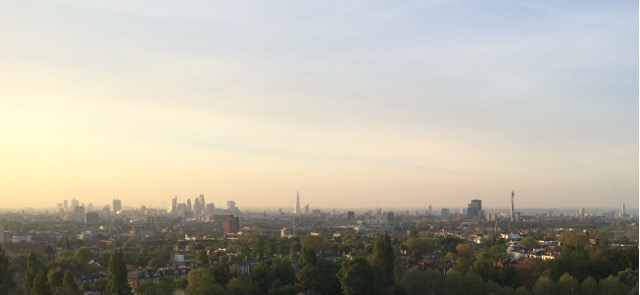
    London panorama

    I had 3 major admissions to the Royal Free Hospital on the hills of Hampstead, overlooking central London. I snapped this shot after waking up with canulas in both my arms, 10 cables attaching me to an ECG machine, a motorised drip pump shoving fluid into me as fast as it could go. I was a pincushion from all the blood samples that had been taken.

    Doing a quick body scan, my right leg was horrifically swollen. My right knee was damaged. The operation to reunite the two halves of my calf muscle, repair 4 severed tendons and reconnect 2 nerves, was still healing. I had a big burn on my lower abdomen. There was throbbing dull pain just under my ribcage at the front, and either side of my back, where my liver was torn and my kidneys were failing. There was fluid on my lungs. My chest was tight and constricted.

    Was I scared? Did I call out for a loved one? Did it bother me that my prognosis was pretty grim? Do you think it even crossed my mind that I might die alone, except for one or two strangers in the mostly empty ward?

    The photo captures the sun low in the sky, not long after dawn.

    As long as I die in London, I know I tried my best to find my way back to the land of the living. I have no fear of death in London. Nobody dies of shame in London. If you can’t find your will to live in London, you can slip away peacefully. You’re never truly alone in London.

    I had a 4 hour operation under general anaesthetic to fix the injury inflicted upon me by my parents. I travelled home on the bus on my own after a few days recovering in hospital. My leg was in plaster cast, held in severe dorsiflexion and was not weight bearing. I was as weak as a kitten. I let myself back into my friend’s house, hopped up the stairs to the guest bedroom and collapsed in bed.

    I had already spent several days in Oxford John Radcliffe Hospital in their high-dependency care unit, while they tried to stabilise my muscle damage and save me from kidney failure. I’d made my way back to London with a blood sodden bandage that was little better than the field dressing that I had improvised with sanitary towels and a dressing gown cord, before paramedics arrived. I had assumed that despite the wound being down to the bone, it was nothing that a couple of stitches at a minor injury clinic couldn’t fix. It wasn’t me who called 999. I was just trying to get back to London.

    Back in London and finding myself with a spare evening before my operation, I had gone to a adventure sports film festival, hobbling along with my lame leg. The severed tendons meant that I was not even able to raise my foot any more, and it dragged and caught on kerbs and steps, causing great pain.

    Having never experienced a general anaesthetic, I felt the same trepidation that I felt before my first skydive or another extreme leap into the unknown. However, there was never any doubt that it was something I couldn’t face on my own. Just go along with it. Trust to fate, skilled professionals and technical equipment. Blind faith.

    You should see the way I ride my bike. One slip and you’re a goner, when you thread your way in-between the massive heavy goods vehicles, transporting steel beams for the construction of Crossrail. The double-decker bus drivers are amazingly skilled and seem to manage to not squash too many cyclists. However, when you mix together the debutanté Über drivers in their Toyota Priuses, hard-up black cab drivers, various small delivery vehicles, plus the unpredictable mix of abilities of people driving around central London, it’s no wonder that paramedics call bike riders “organ donors”.

    When I hear that yet another of my fellow commuters has hurled themselves under a tube train, I burst into tears. It’s too much to bear, thinking that some of my fellow Londoners have reached the end of their rope too. Perhaps those less personally affected by suicidal thoughts are the ones who tut about how selfish it is that a huge underground station has to be evacuated so that the human remains can be bagged and carted off to the coroner. The disruption to the capital’s transportation network seem huge, but there are so many other veins and arteries in the heart of the nation, that people find alternative routes quite easily, with minor delays.

    I’m not emotional when it comes to my own death.

    I have fantasised about going on a scouting mission to a nearby tower block that has an open-air balcony with a 40 floor drop. My only concern would be landing on some poor unfortunate on the pavement below – hence the need to check the drop zone in advance.

    I would never throw myself in front of a train. It would be too traumatic for the driver and the people on the platform. Even people on the train would feel a bump and judder as the wheels crushed bone and flesh. I know they would. People have described to me exactly what it’s like for a tube train to run over a passenger, and I’ve had to run out of the office crying. Strangely, I don’t cry for myself.

    Jumping off a bridge in London would be pointless. None of the bridges are high enough, unless you were able to scale Tower Bridge.

    Killing yourself in a public place is a bit selfish though. It’s bound to leave a big mess to clean up and cause distress for an unpredictable number of people.

    I didn’t want to commit suicide while I was staying with friends. I felt that it might have been seen as some negative reflection on their hospitality, and would leave bad memories in the guest bedroom where I had been staying, which would tarnish their home.

    I’m mindful that whoever I’m living with is burdened already with the uncertainty over whether my resolve to keep myself alive and well is not slipping.

    When I am seized by the sudden urge to take myself and a sharp knife to the bathroom and open my radial arteries into the bath, I worry if I would cry out in pain as I dug into the joint on the inside of the joint of my arm, searching for the blood vessels with the sharp point of the blade. Then I worry whether I would be able to contain the mess within the bath, as my heart pumped my circulatory system dry.

    Before I have gone any further with these thoughts, I realise that it would be grossly unfair to leave the discovery of my body and handling the police to a friend who doesn’t deserve such a responsibility.

    I think about setting myself aflame with petrol, in political protest at capitalism, inequality and social injustice, right in the centre of Canada Square. I think about how desperately agonising it would be to be burnt alive. I think about how suffocation would be as deadly as the heat, as the flames consumed all the available oxygen. Gasping for breath, and in unimaginable agony, death would be neither swift nor immediately assured. Dying of the burns over the course of the coming days would not be a great way to contemplate any last regrets.

    It’s the halfway situation that’s the problem. A failed drug overdose so often results in organ failure and a much slower and more painful death than originally intended. Being knocked off your bike while wearing a helmet could mean paralysis rather than death. I know what it’s like to score my arms with a razor blade. I know what it’s like to wonder what the scars are going to look like when they heal. I know what it’s like to experiment to see how deep you have to cut to reach the veins. However, so many cuts will stem the bleeding enough to preserve life, despite leaking profusely at first.

    If you spend any time in psychiatric instituions, you meet suicide survivors. Most have had their stomachs pumped or filled with activated charcoal. Many will have their wrists bandaged. Scars from previous half-hearted failed attempts and self-harm, indicate a certain revolving doors nature to our treatment approach. Some of my fellow patients confide in me that they are saving up the very pills that were prescribed to them to prevent their suicide, so that they can have another go. One guy saved his tablets for 8 months and had things well planned except for an unexpected visitor. He was in intensive care for several weeks. He now faces a life of dialysis because his kidneys failed due to the toxic load. He was planning on attempting suicide again at his earliest opportunity.

    I met a beautiful young Australian paramedic in hospital. You would have thought that she would value life higher than anybody, but the lesions to her neck indicate that she’d used her medical training to attack her jugular veins.

    I read that media coverage of suicide can trigger a spate of copycat suicides. Newspapers are discouraged from reporting on the suicide method used. It’s said that jails are like universities for criminals to swap tips and make connections. Could it be that mental health institutions are the same for the suicidally depressed, with more people being likely to end their lives using ideas gleaned while in hospital?

    Frankly, there isn’t much stopping a resourceful person from finding a way to kill themself. I’ve considered everything from inert gas to the application of an electrical current across my chest to send me into ventricular fibrillation. The one that is most appealing is drifting off to sleep and not waking up.

    There’s a famous quote by one of the few people who survived jumping off the Golden Gate Bridge, where they said they regretted it as soon as they had let go.

    When I once took a drug overdose, there was a momentary twinge of regret that could have lasted about as long as it would have taken me to fall and hit the water, having jumped off a high bridge. There was a period where I would have been able to eject the toxins from my body, if I was suddenly determined enough to save myself. Instead, I then found myself accepting my fate, and a strange calm came over me before the chemicals hit my bloodstream. I was resigned and relaxed about whatever happened next. Death or organ failure. I didn’t care.

    It was only after a couple of days when my paralysis temporarily lifted and it was clear that the only way I was going to die was very slowly through the accumulated damage to my body, malnutrition and dehydration. I was pissing copious amounts of blood, and I knew I had to make a choice: an agonising slow death where I could be discovered, but it would definitely be the end of my kidneys, or a trip to the hospital and re-evaluate the situation.

    I tidied my room. Took a shower. Packed my bags. Called a taxi. Sat in Accident and Emergency for hours.

    When I was examined I was immediately admitted and I spent nearly 3 weeks in hospital.

    It wasn’t the right time to die. This was before I had worked my contracts at Barclays, HSBC and my current client. This was before I had somewhere nice to call a home of my own again. This was before I put together a 370,000 word document that explained who I was and how I arrived at the decision to take my own life.

    I lay on the floor, semi-paralysed, and I thought about what kind of message I could scrawl in my incapacitated state, that would make it clear that I knew what I was doing. The circumstances leading up to that moment were a mess. It was too ambiguous. Even a suicide note would be seen in the context of great misfortune and stressful events in my life leading up to that point.

    I had planned on starving myself to death or in some way doing myself in on the 1st of January, as some kind of protest at the way that we surmise a suicide with a neat soundbite that’s supposed to explain all the reasons why somebody took their own life:

    • “depression”
    • “financial worries”
    • “drug problems”
    • “broken heart”
    • “loss of status”

    Take your fucking pick.

    Without a conversation, we desecrate the memory of a dead person, by trying to oversimplify the complex problem of what could drive a person to arrive at the decision to kill themself.

    In Japan, suicide is an honourable thing. The act of seppuku might be a protest over a decision or a preferable fate to torture. Preparation for the act includes writing a death poem.

    Do you really want to be that crazy old homeless guy, yelling “I used to be somebody” as the world pays no attention and the streets finally swallow you into anonymity?

    All glory is fleeting, but obscurity is forever.


    Tags:

  • Right to Die

    This is a story about euthanasia…

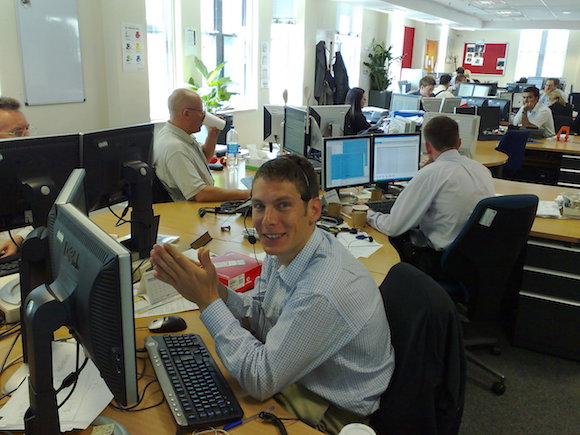
    Nick at work

    I need to cover what I’m about to write with a hefty preamble, full of caveats and other disclaimers, because there are so many considerations with this issue, but it’s an issue I need to tackle.

    Firstly, let’s consider this: nobody really wants to die.

    For people who are in pain and other kinds of physical discomfort, or are otherwise afflicted by diseases, injuries or genetic problems that mean their quality of life is terrible, or certainly going to end up terrible: these people do not want to die. Those people would dearly love for a cure or some kind of relief from their symptoms that doesn’t come with intolerable side effects.

    Clearly people who want to prematurely end their lives in a dignified manner, have exhausted all treatment options, and their future looks bleak: pain, discomfort, infirmity, senility and disability.

    Alzheimers and other kinds of incurable degenerative brain diseases carry the added worry that the sufferer will no longer be of a sound and rational mind when the illness reaches its late stages, and they will burden their carers, while perhaps not even being able to recognise their loved ones any more.

    Let’s also consider this: some people have hope, while others do not.

    Yes, there’s always a chance of a miracle cure. Yes, there’s always a 1-in-a-trillion shot that God might personally intervene to remove the horrible afflictions that he originally cursed you with.

    Most people love life and can’t bear the thought of being torn from the arms of their loved ones. Most people cry out in fear, when they think they’re about to die. Most people fight to survive.

    There are people who have gone through many bouts of surgery, chemotherapy, radiotherapy, transplants and who take bucketloads of medications with horrible side effects, and generally battle through awful sickness and pain, holding out hope that their ailments will be at least treated well enough to prolong their lives a little longer.

    Some people might spend a long time on a transplant list, barely surviving, while oxygen and dialysis just about preserve them while they wait for a donor match. An agonising race against time happens: will a donor arrive before the illness kills the poor helpless person who can only sit and wait?

    I feel like I should use softer language, to cushion the blows for every person who’s lost a child, parent, friend, partner, relative. Death is painful, and all the more so knowing that a person had so much more life left in them. Death can be so cruel. People so deserving of more life can be snatched away, while others who are seemingly careless with the gift of life can seem so selfish and ungrateful for their good fortune to have been spared by the gods.

    And it’s the ungrateful ones I want to talk about.

    What do you do with the alcoholic who ‘wants’ to drink themself to death? What do you do with a suicidal person?

    The footballer George Best famously received a liver transplant, and then proceeded to court controversy when he was caught drinking again. Instead of demonstrating his gratitude for his stay of execution, by becoming teetotal, he was clearly the same person – ungrateful for life some might say – as he was before he received an organ donation.

    What do you do with somebody who is determined to kill themself? Do you put them in a straightjacket and keep them in a padded cell indefinitely, just so that they can die of old age in an asylum?

    It might be the case that a suicidal person is in perfectly good physical health and does not abuse drugs or alcohol, but they are nonetheless determined to end their own life prematurely.

    There’s a general belief that telling people that their lifestyle is much akin to suicide, will curtail their health-damaging behaviour. Doctors mostly seem to take the route of saying “if you keep drinking, you’re going to die young” to alcoholics. While most people would think that this would shock somebody into cutting down their drinking, in fact there’s little evidence that it has any affect at all.

    Similarly, telling suicidal people “you’ve got so much to live for” and “it’s just your depression telling you lies” and other statements that make perfect sense to people who are not suicidal, is also ineffective. The only thing that has proven somewhat effective – as far as short 12-week studies paid for by pharmaceutical companies can tell – is psychoactive medication.

    Smoking causes many preventable diseases, and is a big killer, but yet people still choose to smoke even though it’s expensive, makes you smell and stains your teeth. You would have thought that the large “SMOKING KILLS” health warnings on packets would cause people to stop smoking immediately, but no.

    You know what one of the most effective smoking cessation treatments is? It’s the antidepressant called Wellbutrin (marketed as stop-smoking drug Zyban and generically known as Bupropion).

    Why would an antidepressant be a good treatment for smokers? Well, let’s consider two things: firstly, people smoke because they’re missing something. Take smoking away, and a smoker’s life is now incomplete. Removing nicotine and the habit/ceremony of smoking leaves a void in that person’s life. Also, you’ve got to be fairly depressed to do something that’s clearly a threat to your health, and possibly your life.

    Wellbutrin is a fast-acting antidepressant, unlike anything we can get on the NHS. Instead of making people feel sleepy and emotionally numbed, Wellbutrin has been proven to offer a number of improvements in the lives of patients, including their sex lives. Wellbutrin is France’s most popular antidepressant.

    What do you really want from an antidepressant, other than to relieve your symptoms of depression now when you’re feeling it? Being told that a medication might take 6 to 8 weeks to become effective, and then having to suffer your symptoms that whole time while you’re waiting is no use at all! Some depressions will lift naturally after a month or two anyway.

    But what goes up must come down. After some weeks or months taking Wellbutrin, many patients experience panic attacks and insomnia. Plus there’s the obvious problem of having to stop taking the medication at some point, and suffering the comedown (sorry, I mean withdrawal syndrome).

    Yes, the difference between ‘drugs of abuse’ and ‘prescribed psychoactive medications’ is precisely zero. Every medication that has an upside also has a downside. Addiction and habituation with prescription medications is just as much of a problem as with street drugs. The only difference is medical oversight and quality control.

    And so, I arrive at the situation where I’m perfectly well aware that I can get short-term relief for the symptoms of my depression, in the form of a pill from my doctor. However, I’m equally aware that to go down that road is to have a lifetime dependence on medication for my sense of wellbeing. Basically, do I want to be a medically sanctioned drug addict? None of the stigma, but all of the same behaviours.

    You’re right, I wouldn’t have to lie, cheat or steal to feed my habit. I can wander into my pharmacist, and get my uppers over the counter, and carry on like I’m a fine upstanding member of the community. Did you know that even heroin addicts are completely functional members of society, when they can get a clean high quality supply of the opiates they need? When doctors in the UK used to prescribe heroin, there were none of the antisocial problems that we instinctively associate with drug abuse today.

    Of course, I’m not advocating drug abuse, but then I’m also pointing out that the flaws that afflict a smoker, a drinker, a junkie and even a depressed person… they’re all rooted in the same psychological need to cure an invisible illness.

    Pretty soon, I will have spent a year where over 75% of the time I was using no psychoactive substances at all, except for alcohol. A period of 115 consecutive days – 32% of the year – I was completely teetotal. For the whole year I had no tea, coffee, cola, energy drinks, or caffeine containing headache pills (more common than you think). I’m completely unmedicated.

    How do I feel? Awful.

    It seems to me like I have a choice: suicidal depression, or drugs (i.e. medication, coffee & alcohol etc.)

    I know that a scientific study with one participant tells us nothing, but equally I’m not a group, I’m me. You can’t dismiss my individual findings, that are true for me. I’ve gathered the data during a 20 year career, and I’ve come to the conclusion that my life is unliveable in its current form.

    When you are conducting a scientific study, you have to control the variables. Thankfully, I’m an ideal test subject for this.

    Since the age of 17, I’ve been a very well paid software engineer. For sure, during the first couple of years it took me a while to get my salary up to a decent level, but since the age of 19 I’ve never had to worry about money. Also, I’ve done pretty much the same thing for all my career: sitting at a desk, tapping on a keyboard, making software.

    I’ve had the same running crisis my whole career. When I was 19, I was bored so I applied to university and was offered places at some very prestigious institutions to study psychopharmacology. I decided to stick with the money, and keep selling my soul to the highest bidder.

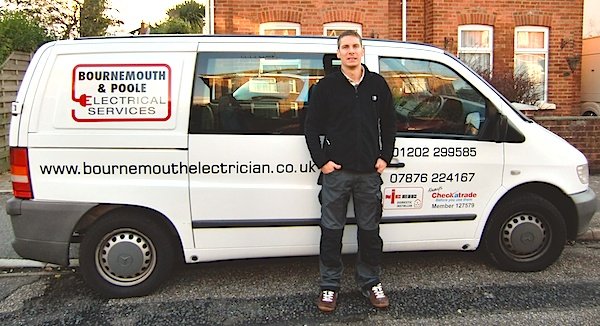
    When I was 28, depression had crushed me to the point I was on my knees and unable to turn up and do the same office bullshit anymore. I retrained as an electrician and started my own company.

    Man with van

    As a self-employed tradesman, I loved what I did, but I was grossly underpaid for the level of responsibility I had. Ordinary members of the public think that tradesmen are out to rip them off. In reality tradesmen are highly trained professionals whose job it is to stop houses burning down and families being electrocuted or poisoned by carbon monoxide.

    The freedom of not having a boss, not having a 9 to 5, Monday to Friday routine, and not having to sit in the same damn chair at the same damn desk, pushing the same damn 102 keys on the same goddam keyboard… all of those things are just as great as they sound. However, getting paid peanuts to do dangerous dirty work is also not great either.

    And so, I returned to what I’m experienced and qualified to do.

    I earn staggering amounts of cash for moving my mouse around and looking busy at a desk. However, I used to earn £470 per day when I was 20 years old, doing computer programming for Lloyds TSB back in the year 2000. My job is exactly the same today, doing the same damn computer code for HSBC, JPMorgan, Barclays or any other damn bank.

    But maybe the problem’s banking? Nope. I’ve written computer code for nuclear submarines, torpedos, school computer networks, trains, parking ticket machines, busses, security guards, shop assistants and just about every other weird and wonderful industry you can think of. I’ve written in dozens of programming languages, for dozens of operating systems, on dozens of form factors. It’s all the fucking same binary 1s and 0s and boolean algebra under the covers. All code is made from the same nuts and bolts. It’s fucking boring.

    And so, I can be a miserable exploited worker on a low wage, doing something I take pride in but knowing that I’m undervalued. I can be an overpaid and underworked software developer / scrum master / development manager / IT director. I can be a stressed out startup founder working my arse off to line the pockets of the venture capitalists who are going to get filthy rich at the expense of my health. I can be a destitute bum, a tramp, a hobo. Which would YOU choose?

    I particularly object to the idea that I have to drug myself up, just to fit in with the bullshit jobs economy. I object to having to be high on antidepressants just to be able to cope with the same bunch of fucktards making the same fucking mistakes I’ve seen a million times over, in the job that I’ve mastered and brings in obscene amounts of cash. I object to having to be high on anxiety medication, to cope with the insecurity faced by the underpaid and undervalued front-line members of society who build your houses, look after you in hospital, grow your food and perform every other truly useful function that we need.

    Even to work in civil engineering would frustrate the hell out of me. Crossrail, the multi billion dollar project improve London’s cross-capital transportation, is rather pointless because it will be at full capacity on the day it opens, because London is already packed full of idle fucktards like me, clogging up the world with pointless makework jobs. Do we really need any more offices and office workers? Do we really need any more service sector jobs? Do we really need such a bloated financial services sector, with its equally parasitic support industries of corporate law and accounting? It’s all such utter bullshit.

    And so, I’m damned if I do and I’m damned if I don’t.

    In my 20 years of full time work, I’ve become worn down with it all. I’m exhausted. I’ve tried a number of things, and I find that bullshit prevails everywhere I look. My heart is broken by all the bullshit that trumps everything else.

    I’m exhausted, and I’m depressed and I’m suicidal.

    Yes, I know some people are grateful for their lives and what little quality of life they can squeeze out of their existence. Yes, I know that I have good physical health and I’m reasonably young still. Yes, I know that there’d a queue that stretches around the planet, of people who would love to have my job.

    So, if I choose to reject all that and end my life because I feel like I have no quality of life, is that morally wrong?

    You can’t even level the accusation of me that I don’t know suffering, and I don’t know poverty. I’ve lived homeless in a park, destitute, penniless and surviving on charitable food donations. I’ve woken up in hospital numerous times in pain and discomfort. I’ve had numerous scrapes with death. Shouldn’t all that stuff make me grateful to be alive? Guess what? You have absolutely no idea. Guess what else, I have a very good idea, because it’s already all happened to me.

    I wasn’t born with a silver spoon in my mouth. I went to state comprehensive schools. I wasn’t gifted jobs by any friend or family member. I had no head start in life. It’s true that I have no obvious disability or disadvantage either, unless you count a couple of drug addict alcoholic parents, but I still had other family members, teachers and friends who were nice to me. It’s not a fucking competition. The point is that the variables are controlled. I neither had advantage nor disadvantage, but yet I arrived at this point, here, now, today.

    It’s not like we can say this is just a short-term crisis. Like this will fucking blow over.

    It’s not going to blow over. For 20 fucking years it’s been the same. The same shit, different day.

    Yes, there were times that were actually pretty good, but guess what… they weren’t sustainable. I liked living in a hostel with a bunch of other homeless people. I liked not having a job and being a bum. I liked having no responsibilities. Who wouldn’t? But that’s not real life. We don’t get to have a freebie just because ‘real’ life is killing us. It still cost £120 a week for my bunk bed in a dormitory that slept 15 people, with one fucking bathroom between us all. My current rent is only £240 a week and for that I get a double bedroom, an ensuite bathroom, a kitchen, a dining room, a dual-aspect lounge with panoramic views over London and a balcony overlooking the river Thames.

    I should be happy, but I’m not. Happiness is not a choice, no matter what you read on some bullshit Internet meme inspirational quote.

    All the right pieces are in place. My doctors are chuffed to bits that I don’t drink, smoke, abuse drugs or in any way engage in health damaging behaviours. My blood pressure is amazing. My cholesterol is low. My eyesight, hearing, teeth, joints… all of it is perfect.

    And yet, my mental health is in ruins. I’m so depressed. I’m so suicidal.

    I’m doing everything right, and yet everything feels so wrong.

    Of course I feel guilty for feeling like this. What the fuck am I supposed to do though?

    Honestly, I feel like I want to spend the next 30 days convincing people that the most humane thing is to let me end my life. Honestly, despite the things that should be really great in my life, nothing feels great. Nothing feels good or nice. Nothing works. Nothing is working.

    There’s still the possibility of just running away and absenting myself from all responsibility, but then when I’m dirty and sick from a life of destitution… when I die then, will anybody understand? A tramp, a bum, a hobo, a junkie, an alkie… these people are all too easily dismissed by society.

    What happens when highly paid banking IT consultants start dying? Well if they’re white middle class thirtysomething men… not much. Who cares? Probably just a selfish socialite, having a tantrum because they can’t do whatever they want, one newspaper article basically said, in the wake of one death.

    What the fuck is anybody supposed to do about this fucked up life that we’re supposed to live?

    I really don’t feel like I can live this bullshit rat race anymore, and the alternative is a long slow death, shunned by society and marginalised.

    In the long run, we’re all fucking dead anyway.

    Apologies if I’m triggering raw and painful feelings about your beloved family member or friend who is busily fighting for survival, or who lost their battle. I really don’t mean things disrespectfully, but I can’t lie anymore. I feel this stuff and it’s undeniable.

    Call me narcissistic needy spoilt white middle class brat if you like, if it’ll make you feel better. It certainly won’t make me feel any worse, but isn’t that so terribly melodramatic and attention seeking?

    Can you understand, how exhausting it is, having to justify your feelings and apologise for wanting to be dead the whole fucking time?

    It’s a one-way ticket and for sure it needs careful thought, but aren’t we being a bit unfair, shutting down the conversation by guilt-tripping people into hiding their feelings? Perhaps suicide is a smart choice for people who feel that they have no quality of life.


    Tags:

  • Indoctrinated & Institutionalised

    This is a story about brainwashing…

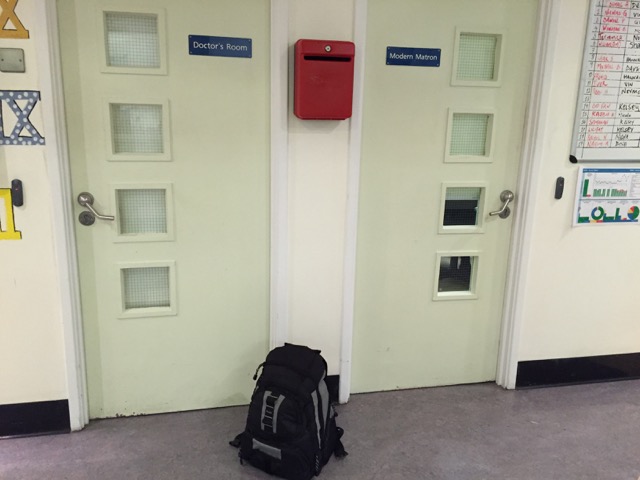
    Psychiatric hospital

    How do you think that somebody who has worked for the best part of 20 years in the investment banking technology sector, mostly as an IT consultant, would re-adjust to being under lock and key in a psychiatric hospital? The answer is: very easily.

    Hospitals and the NHS are a home from home for anybody who’s worked for an organisation with hundreds of thousands of employees. The ways that large organisations function are largely the same. The way that systems and processes are supposed to control large numbers of people, are nearly identical.

    Being in the loony bin was welcome relief from the bullshit day job, but it’s not like I had absented myself from all responsibilities. I still had to have my wits about me to avoid being medicated against my will and put under a ‘section‘ – involuntary commitment to a secure facility, by rule of law – which could have seen my 2 week voluntary stay extended anywhere from 28 days to 6 months.

    How did I manage it so easily? Perhaps it’s because I knew I could leave any time I wanted to, but perhaps it could be because nearly 20 years of going to a shit office to do a shit job, has kinda prepared me for the monotony, rhythm and routine of spending weeks on end trapped somewhere I don’t want to be.

    There was a danger that just the very act of asking to leave could have triggered the doctors to decide to force me to stay longer. I knew that I had to remain calm, and give the medical team  enough of a peek at my psyche to be able to make a judgement that I was safe to release back into the wilderness.

    The psychiatrist who took me under his care was in two minds, after 6 days, whether he was going to insist on ‘committing‘ me, so that he’d get 28 or so days to poke around inside my head. Naturally, most people would freak out, if they found out that their liberty was about to be taken away from them. It’s a game of brinksmanship: who’s going to blink first.

    Obviously, we don’t ‘commit‘ people any more to asylums. Instead we detain them under a section of the Mental Health Act, and put them in secure psychiatric facilities. You’re no longer a loony in the loony bin. You’re a “service user” in a “care facility“. Of course, I’m not saying that the function is not useful or should not be trusted. I’m just pointing out that the names of things have been changed.

    Bizarrely, if you say “I’m going to kill myself, I need to be locked up” you are very unlikely to be locked up. If you walk up to the hospital reception desk and use their phone to contact the switchboard, ask to be connected to the bleep holder for Psychiatric Liaison, and explain frankly your situation, you will have an amusing conversation with the poor Psychiatrist who has to follow official channels, but you’re not going to get anywhere. The times that I have been admitted as an inpatient to a psychiatric facility, it has just taken time & patience. Only the truly desperate will sit in Accident & Emergency for 13 hours just patiently waiting for help.

    Conversely, if you say “I’m not mad, I’m fine” once you’re in the system, or in any way try to rush the process along, you’re going to end up held down on the floor with somebody injecting Risperidone and Haloperidol in you, and you might wake up 40 years later, shuffling around the corridors of some institution, with the marked side effects of powerful psychiatric drugs causing you to make involuntary facial movements.

    You can’t fight the system. You can’t fight the frustrating fact that you’ll never get ahead in life and must instead sit at a desk keeping a seat warm, just so that your boss can appoint somebody from outside the company to come in and be incompetent at the job you were hoping to be promoted into, even though you were experienced and qualified to do it. You can’t fight the frustrating fact that your miserable boring existence, helping the rich get richer and the poor get poorer, is making you pretty depressed, and you really want to fuck everything off and watch everything burn down.

    Who is mad and who is sane? That doctor who just declared you to be mentally ill probably talks to their imaginary friend called Dob or Gob or Dog or Dod (or is it God?) who really knows? There’s no proof that their imaginary friend exists, just like the doctor has no proof that the voices you hear aren’t real and you aren’t actually the Son of Dob, resurrected on Earth.

    The invisible line between sane and insane is very blurry, when billions of people genuinely believe in magic, invisible entities that don’t exist, and have absolute faith that some children’s fairy tales are actually instructions that should be devoutly and literally followed to the letter as some kind of prescription for life.

    It seems highly irreverent to say it, but people need to speak up, because the loonies are actually in charge of the asylum, when we elect and hand over power to people who believe in their invisible friends, fairy tales and magic.

    By the way, for the record, I don’t hear voices and I don’t think I’m Jesus. But then, saying that kinda makes me sound a bit mad, doesn’t it?


    Tags:

  • Alcohol as a Mood Regulator

    This is a story about counterintuitive results…

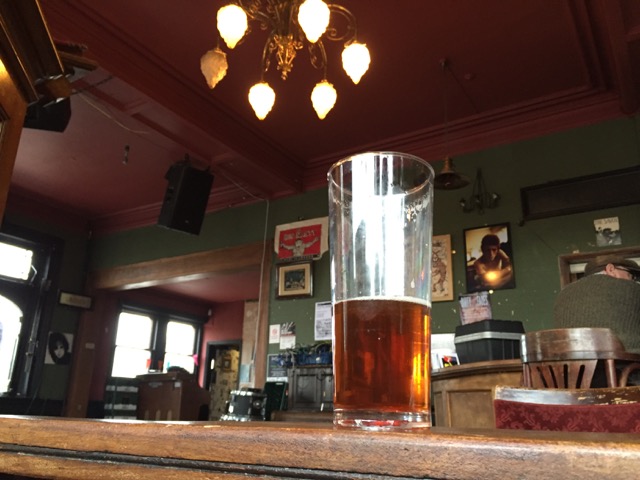
    Pint in the pub

    Conventional wisdom tells us that sobriety is the route to salvation. If you’re being treated for substance dependency, most approaches are abstinence-based. But what if these approaches are totally wrong?

    I had ‘too much‘ to drink last night, but yet this morning I was on time to work for the first time in ages. I was also on top form during a 2 hour meeting that was highly pressured and intense. Clearly my work performance, my productivity, was improved by alcohol, rather than hindered.

    Alcohol works for me as a substance that I can titrate the dose of to control my mood fluctuations. When I quit drinking last year, my anxiety levels became unbearable after 30 days sober, and I had to go into hospital and be on suicide watch. I then went hypomanic and quit a well paid job, and did a bunch of other mad shit, before finally relapsing onto hard drugs and slashing my forearms with a razor blade, after 101 days sober. Hardly an encouraging result.

    The fact of the matter is: my job is boring and shit. My life is empty, unfulfilling and stressful. Of course I need something to help me cope with an intolerable daily existence. How the hell am I supposed to get through the crap I’m going through without a chemical crutch.

    Just about everybody you know has some kind of substance that they depend upon to cope with modern life. Maybe it’s antidepressants, sleeping pills, tranquillisers, opiates. Maybe it’s cigarettes, tea, coffee, coca-cola, Red Bull, beer, wine, spirits. Maybe it’s cannabis, cocaine, amphetamines, heroin, MDMA, GHB, M-CAT or any one of the myriad other legal and illegal drugs. Humans love drugs.

    Clearly, I know what my ‘drug of choice‘ is, and I know that there’s no way that I can use it in moderation. Thankfully, alcohol is not something that I’ve struggled to live without, except where life choices that are forced upon me – such as having to work a shitty job – demand that I find some kind of coping mechanism.

    I don’t have any kids or pets, so I get no natural endorphins. I don’t have any time or money to pursue sports or go to the gym, so I get no natural endorphins and adrenalin boosts. My job is dull as ditch water, so I don’t even get any kind of thrill from my work.

    But, good news! I’ve found a formula that worked for me for years & years & years & years: self-medication with alcohol.

    Yes! Hurrah for alcohol. It kept the lid on my hypomanic episodes for years.

    Basically, the reality that we must all face up to, is that modern life is so fucking shit that we’ve all got to be drugged up and drunk to get through it.

    I could get my cat back from my parents, and get some plants to water and care for. I can soon get a car and some new kites, and go and get my adrenalin and endorphin fix at the beach. However, without those things, I’m forced into puting chemicals into my body, to allow me to keep my shitty job and keep functioning in this crazy society that values corporate profits more than mental health.

    My life really sucks, but I’d rather drink a few bottles of wine and keep my highly lucrative contract, so I can escape the rat race at some point, rather than have another repeat of last year’s failed experiment.


    Tags:

  • Psychiatrists Hate This One Weird Trick

    This is a story about what happened next…

    Shake your meds

    Ordinary person discovers this one weird trick. When they saw what happened next, they were AMAZED!!!

    So, I’ve been accused of being anti-psychiatry, but in fact I’m not. The discovery of chemicals that can cross the blood-brain barrier and affect your perception of the world, has been incredibly important for the understanding of neurological functions, as well as the pathology of mental illness. It’s also true that pharmacological interventions are priceless during episodes that would otherwise be unmanageable.

    For the record, my own diagnoses have included:

    • Clinical depression
    • Type II Bipolar Disorder
    • Anxiety
    • Stress
    • Borderline Personality Disorder (BPD)

    I’ve been treated with:

    • Antidepressants
    • Antipsychotics
    • Mood stabilisers
    • Anxiolytics / hypnotic sedatives
    • Sleep aids

    Then having read a meta-analysis of psychiatric treatment outcomes by Robert Whittaker in his books Mad in America and Anatomy of an Epidemic, I decided to embark upon an unethical study, with me as the test subject. I decided to go completely unmedicated.

    The general public often associate unmedicated mental health patients with some wild-eyed looney, who has slipped their straightjacket, ducked the tackles of the hospital orderlies and legged it out of some mental health institution. There is an assumption that people with mental health problems are homicidal maniacs, and a danger to the public. I’m here to dispel that myth.

    Going unmedicated is not something I would ever advocate. The withdrawal effects from psychiatric medication are likely to be severe and unpredictable. It’s not something that should ever be done without consulting your doctor. However, I did it, and this is my account of what happened.

    Firstly, coming off medication is hard. Really hard. I’ve had comedowns from drug abuse that haven’t been as bad as coming off anxiety medications, for example. What goes up must come down, and there’s no avoiding the fact that coming off a ‘feel good‘ medication means that you are going to feel bad. Really bad.

    Fundamentally, that’s why many of us take medication, isn’t it? To feel normal. To feel better than we would do without it. That’s certainly how I got mixed up in the whole world of mental health in the first place… because I felt terrible. I was exhausted and suicidal and depressed and demotivated and I didn’t enjoy anything. I needed happy pills, because all my happy had leaked away somewhere, and I was just spending 14 to 16 hours a day asleep, and the rest of it in bed hoping that the world would go away.

    The thing is, the unnatural ‘happy‘ pills destabilised me, and my mood then swung too happy, and entered a mood cycle of alternating periods of depression and hypomania. Enter the mood stabilisers. It’s starting to sound like a story about the old woman who swallowed a fly, isn’t it? For those who are unfamiliar with the story, she then swallowed a spider to catch the fly, and then something else to catch the spider and so on, until she swallowed something so large it killed her.

    The problem with trying to treat human moods with medications is that the brain has evolved to be homeostatic. That is to say, the brain has evolved its own mechanisms to maintain stability, and anything you introduce artificially will quite naturally destabilise those systems.

    Underpants on the head

    The stability of your moods can also be destabilised by supposedly normal things. We are all supposed to be able to cope with the pressure of exams, work, domestic duties and so on, but for some of us, it will all become too much. Is this mental illness, or are these ‘nervous breakdowns‘ actually something that threaten to blight the lives of every single person? Is it a lottery as to whether the stress will become overwhelming?

    I self-medicated for stress for years, using copious amounts of alcohol. Of course, at work you then have to compensate for the foggy mind caused by a hangover, so you start to drink strong coffee. I was probably having the equivalent of about 12 shots of espresso every single day. The amount of caffeine contained in those shots was practically the same as being an amphetamine addict, and indeed my boss at the time – who got me into this destructive lifestyle – had the racing speech and fast jerky movements that you would associate with a speed freak.

    When I moved onto harder stimulants, including a drug that would keep me awake for over a week at a time, I found that my mind was not as robust as I had assumed it would be. I managed to induce within myself, symptoms that were unmistakably schizophrenic.

    Consumed with paranoid delusions, hearing and seeing things and with completely warped perceptions, I was very mentally unwell indeed. This divided medical opinion. Some professionals wanted to treat me as if I had permanently damaged my brain, and had now become a schizophreniac. Others could see that the symptoms were likely to abate, if I just got some sleep, had some food & drink and started to detox and let my frazzled brain recover. Thankfully, the latter was the correct opinion.

    Does that mean that all schizophreniacs can recover and live normal unmedicated lives? No, sadly not. I’ve seen quite a lot of people who have been suffering acute episodes of mental illness as a result of circumstances or substance abuse, and these people have recovered as soon as they were removed from the situation that landed them in hospital. However, there are clearly some patients who are either too badly damaged, or have some other pathology that is driving their illness, and medication is necessary to control the psychosis & mania.

    Hospital Note

    For my own part, I have lived without caffeine for many years now, and I try to keep alcohol consumption to a minimum. I’ve been medication free for a few years, but I have dipped back into both sedatives, sleep aids as well as powerful stimulants, during times of crisis. It’s been a few months since the last time I dabbled with anything psychoactive, and I’m still suffering rebound anxiety and depression.

    Life is incredibly hard right now. I’m stalked by suicidal thoughts all the time, and stress is almost unbearable. I would dearly love the comforting embrace of a chemical security blanket. I long for intoxication. However, despite the hard, sharp edges of daily existence, at least my emotions aren’t blunted and I feel like I have wonderful mental clarity.

    Every day is a struggle, and my perception of time is completely warped. I feel like this depression is going to last forever, and I assume that everybody hates me and that I have nothing to offer the world, and I’m never going to be happy ever again. However, I’m able to be very rational, and I can see that my perceptions have merely been warped by my mood, which is partly because I’m still recovering from the abuse of sleeping pills, anxiety drugs and stimulants.

    It would be easy to write off my tale as that of a drug addict, but that’s not really the story. In actual fact, self medication with ‘bad‘ chemicals was only very recently, and well after I was diagnosed with various mental health problems and had already been taking ‘good‘ chemicals (i.e. medications). All psychoactive chemicals are inherently destabilising.

    Self medication is a disastrous path to go down, but all attempts to force your moods to go one way or the other without changing the environment that you’re in, will be doomed to failure. I wanted happy pills so that I could remain in the rat race, and maintain a standard of living that I had gotten used to. However, what I really needed was to escape that bullshit world.

    Propping up my ailing mental health so that I could continue to work a job that I hated and that bored the shit out of me was a dumb choice. Mental health is too precious to fuck about with using pills and potions. If you’re not feeling great, that’s probably because you need to get out in green spaces more, eat healthier, get some new friends, ditch that mean abusive partner, disown those horrible parents who never congratulate you on your achievements and always give you a hard time, and quit trying so hard to impress people and be somebody you’re not.

    This is my prescription for life: be myself and tell everybody to shove their ill-informed opinions about my life up their arse. Nobody’s an expert in my life and how to live it, and so many of the so-called experts are actually unhappy themselves, nor are they bringing happiness to the lives of the people they advise. Judge people on their results.

    Fundamentally, there is an epidemic of mental health issues, and nobody is curing anyone, so trust nobody except for yourself, and do what feels right for you.

    Discharged from hospital

    I discharged myself, because I was in hospital voluntarily. I’ve had several ‘section’ assessments but never been sectioned under the Mental Health Act. However, I’m an unmedicated mental health patient on the loose, so look out!

    Tags:

  • Runway

    This is a story about getting airborne…

    San Fran Sunset

    In startups, we talk a lot about runway. That is, how much money you have left to pay all your bills before you go bankrupt. The thing about doing a startup is, you don’t make money from day one. You raise some money, build a product then try to get the revenue up higher than the bills… and you need to do all that before you run out of runway.

    Most ordinary working-class folks know a lot about runway. They know that they have to pay their rent, bills and then make the remaining money last for things like food and transport, until payday. Every single month there is uncertainty about whether they’re going to be able to get to work, if their money runs out before payday. That’s called running out of runway.

    A lot of low-paid jobs pay weekly. That’s useful for something called cashflow smoothing. It means that your cashflow looks like lots of little peaks that aren’t very high. If you got paid the same money on a monthly basis, you’d see a massive spike on payday, and then cash would slope down, down, down for a whole month, before spiking again.

    If you run a limited company or a public company, you could pay yourself wages, weekly, monthly, whatever, but wages attract income tax. Income tax is 45% for people in the highest tax band. So if I wanted to do some cashflow smoothing, it’s going to cost me 45% of the money I worked hard to earn. That’s quite a waste of money if there’s another way to pay myself that doesn’t attract such high taxes.

    Generally, I have to work for a month, then I can invoice my client for the days worked. My invoice is payable within 30 days, but it basically takes a whole extra month to get the money into my limited company.

    Ok, great. Now I can pay myself wages… but I’ll have to pay 45% tax and loads of national insurance. On the one hand, I really need some cash, because I’ve already lived for over two months without a single penny of income, but the main person who’s going to get rich out of that arrangement is the taxman.

    So I work another two months, plus the month for the invoices to be paid. That means that I have three months worth of invoices paid into my limited company. Now it’s time to pay myself a dividend. Limited companies can pay dividends from their profits once every quarter. So, to maximise your dividends, you need to have 3 months of invoices paid into your limited company.

    But that means that you’ve been working for 4 months, and not been paid a penny. Harsh man. However, the tax savings are considerable. This is not about me being a tightass with taxes. I always paid full taxes, and then when I got sick, there were no state benefits available to me, despite being under the limit for savings etc. etc. The state safety net just didn’t exist when I was homeless and penniless, so fuck the government. I now save the tax and try and set it aside for when I’m sick.

    Now, OK, you have your dividend… 3 months pay. You’re feeling pretty rich, right? Well, if you’ve been living in a hostel, you might like to now get a flat. That’ll be 6 weeks rent as a deposit, a month’s rent in advance, and probably about £500 in estate agent fees. There goes £6,000 of your hard-earned cash.

    What about how you lived for those 4 months with no income? How did you do that? I guess you probably had to borrow money. So, you use your remaining dividend to pay off all those debts you ran up, staying alive.

    So, what now? Well, you’ll have to work for another 4 months, and then pay yourself another dividend, and live off what’s left after you got yourself a flat and paid off your debts. Oh, there isn’t anything left? Oh dear.

    The thing is, the system is fairly well tuned to fuck you. I can borrow money more cheaply than the tax, but the interest is compound, so it works out about the same. I could take a wage and pay the tax, but then I’ll have less money left to pay off the debts. Between the banks and the taxman, you’re f**ked.

    It’s true, each quarter things get a little better. I was planning on working for about 9 months, and then I would have been quite nicely sorted, but if you think that it’s stressful waiting for payday, try waiting for 4 months for payday.

    That’s the life of an IT contractor. I’m an IT contractor. That’s what I do, for a living. Yes, I could bake bread, stack shelves or work in a warehouse… are you fucking stupid? There’s nothing wrong with those jobs, but if I wanted to burn money surely it would make more sense for me to do some IT contracting and then literally set fire to £50 notes. Jeeps, you must have a degree in Economics from Oxford if you think that it’s a smart idea to not work the highly paid job I’m qualified and experienced to do, and instead work a job that doesn’t cover my cost of living and is stopping me from getting the highly paid job that I’m qualified for. I’m sure that you’ll be getting a tenured professorship any day now, with original thinking like that.

    My cashflow is lumpy, and I don’t have much runway, but at least this time I have the flat already, and a friend who can count higher than the 3 deformed stumps on their retarded hand has helped me to make sure I don’t end up driven to suicide by the stress of being let down by liars again.

    My plan was to start the contract hunt in the second week of January, when people were coming back from their holidays. I’m over 2 weeks late and sick as hell, but it’ll be OK. I somehow got the HSBC job looking like this:

    Discharge

    Yes, that’s a hospital wristband. Arms are pincushions as usual from double canula and providing a gazillion blood samples (June 2015)

    Tags: