hospital – Page 3 – Nick Grant

Tag: hospital

  • A Tale of Ten Beds

    This is a story about how nothing really mattress…

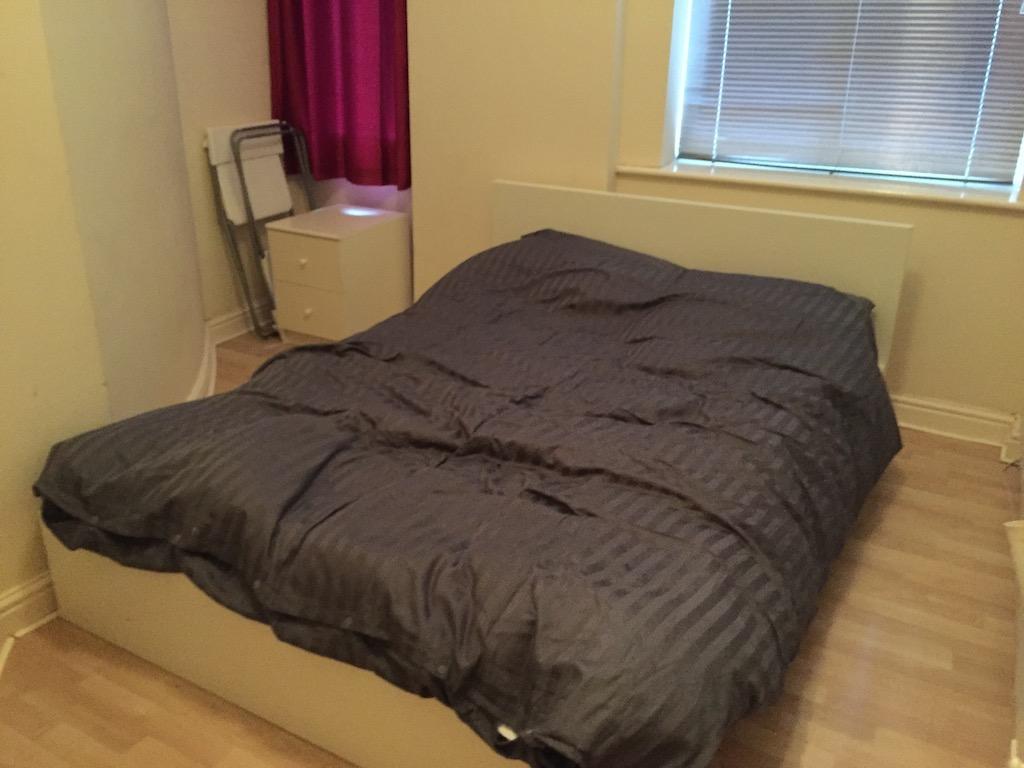
    Double bed

    This is the last double bed I slept in, 27 days ago. That’s my brand new bedding with brand new pillows and a brand new duvet. I moved to Manchester with nothing more than my laptop and a bag of clothes. New life – clean slate. This is the apartment where I tried to kill myself. It was a miserable place and I’m glad I never slept there again.

    I woke up on Saturday 9th September, and I was miserable. I wrote a blog post in this bed, about how miserable I was and how close I was to committing suicide. It was prescient.

    The next bed I lay upon was owned by a guy who I had become friends with through my girlfriend. My girlfriend at the time was of no fixed abode – sofa surfing with a guy who she met on a dating website. I’d travelled to this friend’s apartment to see my girlfriend. We lay kissing and cuddling on our friend’s bed. Then, we broke up.

    Coming home to my miserable apartment, I didn’t get into bed – I took a massive overdose and lay on the bathroom floor in the dark, waiting to die. The next bed I laid upon was in the Accident & Emergency department of the nearest hospital.

    I’m presuming – because I was unconscious – that I stayed on the same hospital bed, as I was transferred from A&E resus to the Intensive Treatment Unit (ITU) and then to a High Dependency ward. I was on life support. I was having seizures. I don’t remember any of this.

    I vaguely remember having to scramble across onto a different bed, to move me out of the High Dependency ward and onto a general ward. I remember this because there was a bag of my piss sloshing around that had to be moved too, and there was a tube coming out of my penis, which I had to be careful not to entangle with anything. The tube that was going up my dick yanked my male member around – it wasn’t a comfortable experience.

    From hospital I was thrown in a police cell. There was a ‘bed’ made of concrete painted with light blue paint – the same glossy paint that adorned the floor and walls of the cell. To slightly soften the hard concrete, there was a thin blue foam mat, which was wipe-clean. I did not sleep.

    Driven home by the two police who had interviewed me – at 2am in the morning – I finally got back home at 3:30am. My sleep medication was nowhere to be found and I’d had a traumatic day – sleep was impossible. I lay awake on my bed, waiting until the earliest possible moment I could go to the office and try to find a work colleague – I was in a desperate situation and I needed help from somebody friendly and sympathetic to my plight: alone in a strange city with no friends or family; no smartphone, laptop, debit card, credit cards, cash or driving license.

    After a second dreadful day I was pretty fucked up, as one might expect of somebody abandoned in such shitty circumstances. As sleep deprivation reached the 40+ hour mark, I ended up back at the same hospital’s Accident & Emergency department that I had been in 5 days earlier.

    Another day, another hospital bed. This one I came round face down on, with my wrists handcuffed behind my back, after having received an intramuscular injection of 4mg of lorazepam. It was approximately 3am in the morning – now 6 days after my original hospital admission.

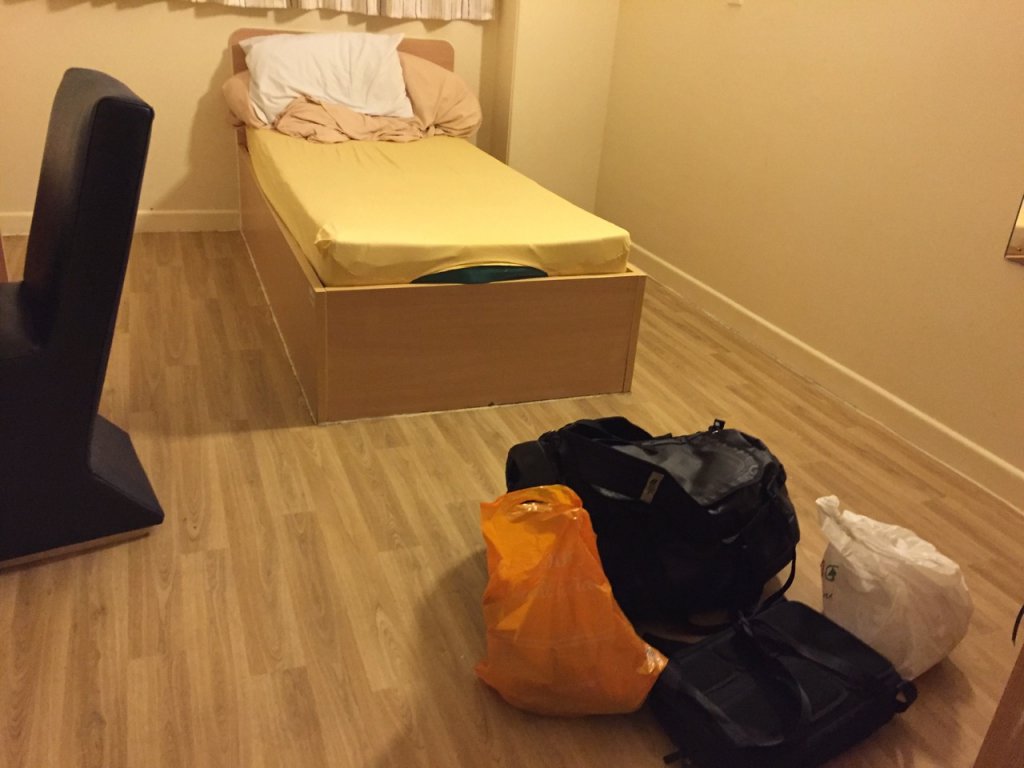
    Sectioned first under a 136 (up to 72 hours) and then upgraded to a section 2 (up to 28 days) I was then taken to a secure psychiatric facility with airlock-type doors, to stop anybody escaping. I was given a private room that was quite nicely appointed, with a writing desk and an ensuite wet-room.

    Psychiatric intensive care

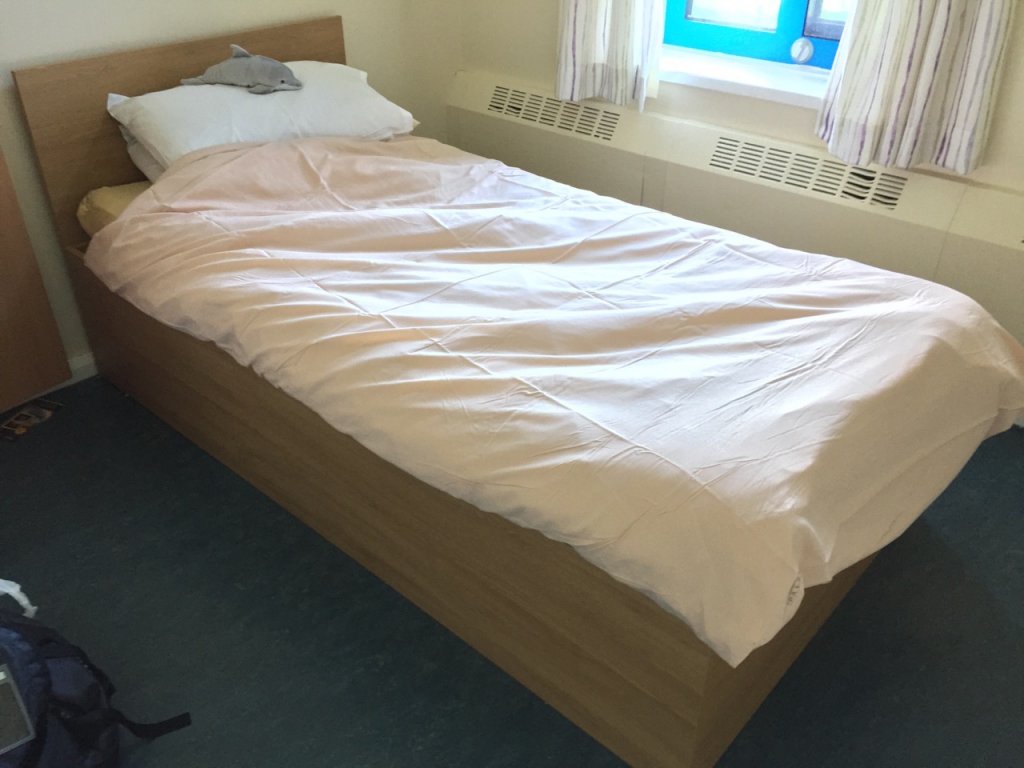
    Having blearily come round in the early hours of the Tuesday morning, it was now Thursday night. I finally had a single bed in a comparatively peaceful environment in which to collapse and sleep, mercifully with the assistance of some zopiclone to calm my jangled nerves and soothe me into my slumbers.

    Gone were the bleeps and hisses of the machines that were keeping people alive, on the Psychiatric Intensive Care Unit (PICU), replaced with the sound of alarms, slamming doors, shouting and running in corridors, as my fellow patients were restrained by staff. I found it somewhat comforting, to know that my crisis was no longer at its peak.

    After 8 days on the PICU, I was transferred to an acute psych ward. It was terrifying.

    With me in hospital I had two Apple iPhones, two Apple Macbooks, a Nintendo Switch and £1,150 in £50 notes. It’s not really recommended to have that amount of valuables on your person, in amongst some very poor and deprived people. The wealth disparity was vulgar.

    My guardian angel facilitated the return of my surplus iPhone and Macbook – Apple were excellent and refunded me with no quibbles.

    I begun life on the new ward in a private bedroom, but I didn’t have an ensuite shower and the TV blasted right next door for 19 hours a day, at full volume. At first, I was too tired to care and I could sleep through the dawn chorus of utter bullshit television a million decibels, but then it started to keep me awake, leaving me less than 5 hours of shut-eye per night.

    Psych ward TV torture chamber

    Then, the dreaded dormitory. Dorms are a mixed bag – very dependent on the luck of the draw, in terms of your fellow occupants. Security is a massive concern, as nothing more than a privacy curtain separated my personal possessions from anybody who’d care to have a look through my bags. Snoring can be a pain in the arse, with one person able to keep everybody else awake listening to their noisy slumbers. Thankfully, my dorm buddies weren’t too bad.

    This morning I woke up to “second; minute; hour; power; shower” repeated over and over, as a poetic dorm buddy wrote a new rap. That was 5:15am. It was still dark. He was pretty loud. He’s sleeping now – snoring.

    Today, I’m bustin’ out of the psych ward. Watch out, general public of the United Kingdom – I’m going to be moving among you again as a free man.

    Psych ward dorm

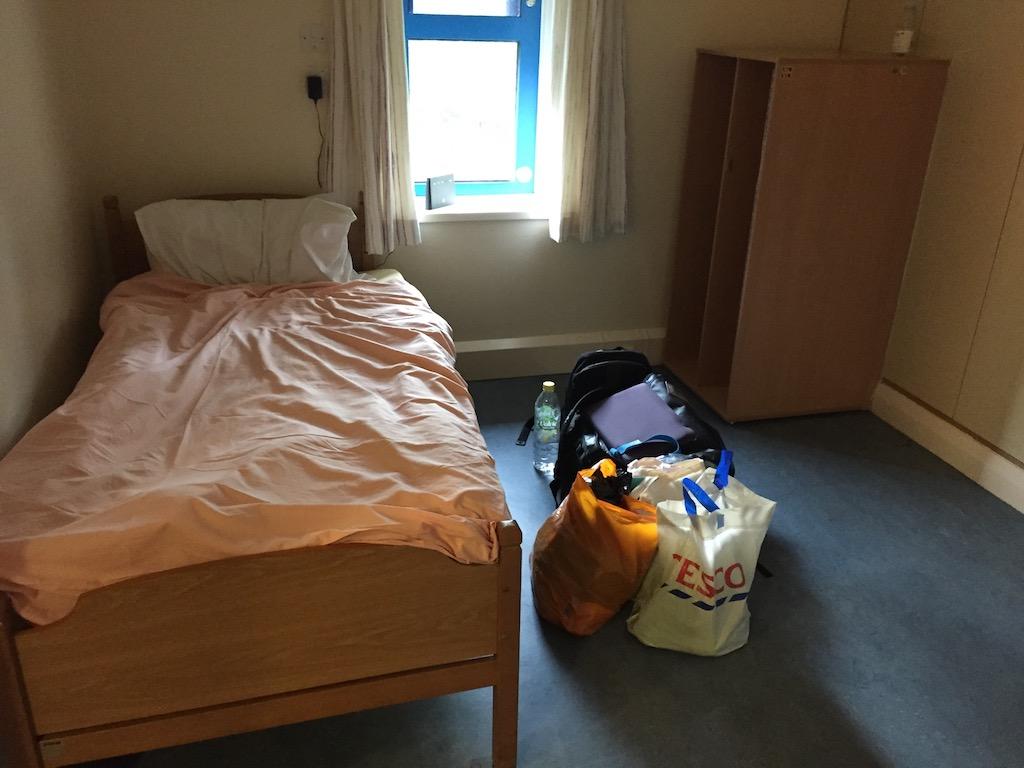
    This is my current bed. I’m lying on it as I type this. I don’t know what the bed or the room I’m sleeping in tonight looks like – I’ve never set foot in the house I’m going to travel to this afternoon. It’s a leap in the dark, as is my wont.

    Some of my few remaining worldly possessions are here with me in Manchester and some are in London. I’m surprised that I haven’t lost more of my valuables. I can’t quite bring myself to do the maths, to figure how much money I’ve lost on this crazy jaunt to the North of England. What does it matter? I’m alive and about to be accepted into the fold of a kind family who are taking me in – the IT consultant who lost his mind in a city where he didn’t have any friends or family. It’s unlikely that I’d have ended up homeless, but I wasn’t relishing the prospect of being chucked off the psych ward and into a dreadful bed & breakfast, in some shitty suburb.

    The very definition of “my” home and “my” bed has been smashed to smithereens. Tonight will be the tenth bed I’ve lain upon in less than 28 days, including several hospital beds and the concrete slab that passes for a bed in a police cell.

    Distress flares were fired off and a good samaritan is coming to rescue me from a fairly dire situation.

    Tonight, I sleep in a normal house for the first time in what feels like a very long time.


    Tags:

  • Care Quality

    This is a story about being inspected…

    A tivities

    Today the psych ward is being inspected by the Care Quality Commission (CQC) and the staff are so nervous that some of them feel physically sick. I try to reassure one nurse that they’re doing their best, despite staff shortages and rampant drug use – the synthetic cannabinoid called Spice is ubiquitous throughout prisons and psych wards.

    There’s always somebody peering over your shoulder, sneeringly judging you. Is it any wonder that paranoia takes hold in a mind, destroying it? The United Kingdom has an exceptional ability to track the movement of its citizens, using simple conventional CCTV – no spy satellites even needed.

    In the free West, we deride the Stasi and the KGB. We talk about China’s vast number of people employed to snoop on their own citizens, but we don’t acknowledge the work of GCHQ and the NSA. Have we forgotten Edward Snowden’s revelations so quickly? The Government read your fucking emails and the police – the regular ordinary police – have a backdoor into Facebook to read all your private messages.

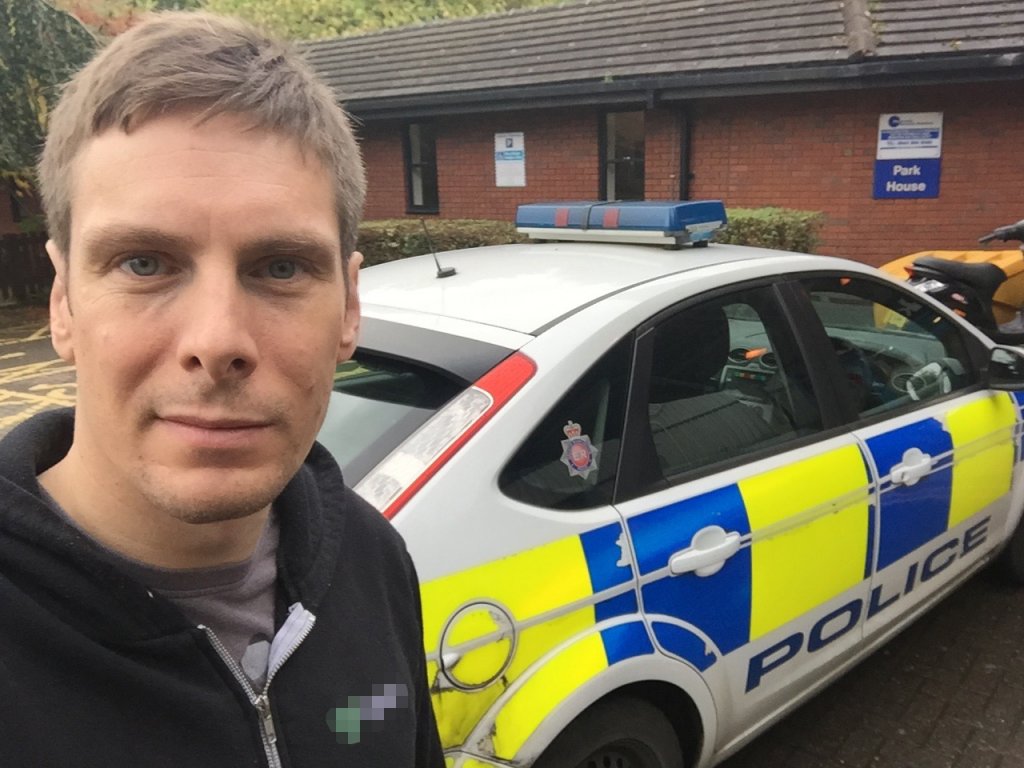
    Nothing to hide, nothing to fear. If you believe that, why do you feel stressed if a police car is following you when you’re driving, and a sense of relief when the police overtake you and disappear over the horizon? You have insurance; you’ve had your car’s roadworthiness tested; you’ve paid your road tax… nothing to worry about, right?

    It was only a short time ago that I was deeply indoctrinated by my schooling, that had shaped me into a meek conformist – I was fearful of defying any of society’s rules and regulations. A family friend wanted to go fishing with me, and I said we needed to obtain a permit. “Our prisons are full of people who got caught fishing without a license” this friend laughed. “What are you in here for? Murder. What are you in here for? Fishing without a license” he continued jovially.

    The city centre is crammed with 50,000 protestors preparing to march. I walk past a police cordon and I can hear a police officer yelling at me that I can’t go the way I’m going, but I know that he’ll be busy dealing with my obedient friend who will have stopped per the instructions. I keep walking, pretending to be unable to hear the entreaties to return. The policeman lets my friend go and we walk to the head of the march.

    Police car

    I’m sure that anarchy would be a disaster for sick and vulnerable people. I have no desire to see civilised society crumble. We can’t all do whatever the fuck we want, whenever the fuck we want. Perhaps if everybody acted like I did, it would be the end of the world as we know it.

    “Don’t walk” says the sign in the United States. I jaywalk with gay abandon. Even in Manchester people look at me like I’m mad and suicidal, for the way I cross the road. However, it’s done with such confident aplomb that nobody challenges me. I notice that people who are surrounded by plenty of steel and glass and plastic, such that they would suffer no injury at all if they killed me to death with their motor vehicle, do not give a single fuck about whether I live or die. In London, a motorist will slow down or even brake, to avoid killing a pedestrian, but these provincial plebs treat human lives with no such sanctity.

    To live in a crowded city is to be humbled by humanity. To be detained against your will on an underfunded psych ward is to humbled, also. In the city, you are forced to confront your pathetic meaningless existence, as an ant crawling in its nest would be, if it had the faculties to perceive itself and its surroundings. But an ant’s nest is akin to a row of gleaming skyscrapers, insofar as being a testament to what can be achieved by a society working together. On the psych ward, you are forced to confront your powerlessness over forces greater than yourself – society will exclude its troublemakers.

    Perhaps you think I would endorse heroin being sold in supermarkets and that babies’ pacifiers should be replaced with crack pipes?

    As six police officers pinned me to the ground and my bum was injected with lorazepam, in the Accident & Emergency department of a hospital, I noticed a cleaner and a security guard nearby – some of the lowest paid people in society are often completely unacknowledged for the role they play in maintaining the division between the peasants and the aristocracy. My face was inches from the floor, but the policeman’s trousered knee on my head was clean and so was the linoleum. Circles of red and green blinked at me – the police bodycams, videotaping the whole gruesome specatcle. I’d fallen from grace, but I hadn’t slipped anywhere near the bottom – it’s a long way down.

    A friend whose judgement I trust and respect, tells me that I should drop the bad boy image of “the guy who got fucked up in Manchester”. She knows that people are watching and I’m misrepresenting myself. She knows that people are lazy and won’t look any deeper than the superficial image that I present.

    Is my life – and the way I document it – by accident or by design? Do you imagine that when I’m writing, I don’t think at all about how things are going to be perceived? The joke’s on you if you don’t read what I write with the prerequisite pinch of salt.

    If you just dip in at random – like a care quality inspector – then you will get a random impression. On a good day you’ll get a good impression. On a bad day you’ll get a bad impression.

    Violent restraints

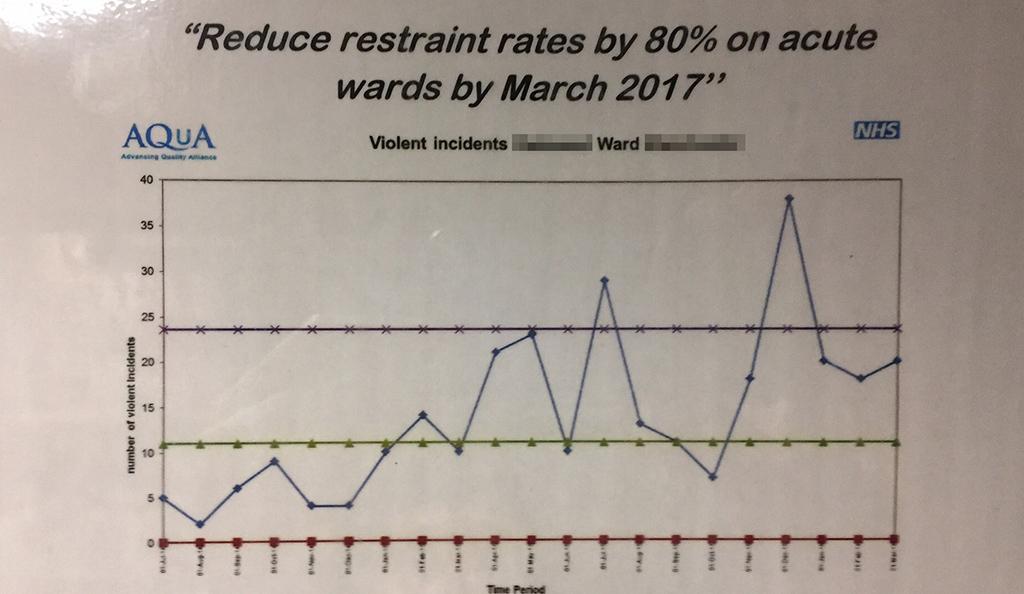
    Do you think the graph above shows that things are improving? No. No it does not. Things are getting worse. Much, much worse. The data above shows conclusively that during the period under examination, there was a fourfold increase in the very metric that was supposed to be cut by 80%.

    Do you remember blue tablet man? Well, anyway, he assaulted a nurse for giving him a yellow tablet (5mg of diazepam) instead of a blue tablet (10mg of diazepam).

    A drugs dog sweeps the ward. The patients believe the dog can sniff out cigarette lighters. I ask the handler if the dog can sniff Spice and he confirms that it can. There’s Spice everywhere on the ward, despite its deleterious effect on the mental health of susceptible individuals – prodromal schizophrenia can turn into fully-blown psychosis under the influence of the powerful synthetic cannabis, making it all the more concerning that it’s so widespread on an acute psychiatric ward.

    The patients here are the lucky ones and they know it. Everybody agrees it’s better to be here with a warm dry bed and three hot meals a day. Everybody agrees it’s better to be here, where the chances of being beaten up and/or robbed are minimal. With winter on its way, months of unimaginable suffering lie ahead of Manchester’s homeless population, which has increased 1,100% in just 7 years – and a huge number of them smoke Spice.

    Abandon hope all ye who entered the world from the mid-1990s onwards. What are the prospects for the youth of today, and the glut of graduates who were promised that indebting themselves and spending three or four years at university would be a good move?

    Does it not seem like an obvious reaction to a decline in living standards, to retreat into drugged-up oblivion?

    We’re sifted and sorted and dissected by tests. We’re examined, inspected and measured in every conceivable way. We never have any respite from the world’s desire to label us, grade us and monitor us. The pressure to meet the expectations placed upon us is relentless. Some of us will crumble and have nervous breakdowns or be paralysed by anxiety disorders. Some of us will rebel and kick back at the suffocating environment that’s desperate to eject and marginalise anybody who doesn’t neatly fit in a box. Lots of subcultures have sprung into existence, with members exchanging knowing looks – these people are so much happier now that they have rejected the stereotype they were supposed to embody.

    It saddens me that the hard-working staff on the ward are anxious and on best behaviour, when the other 364 days a year I know that they try their very hardest. This is just one of many psych wards, where the macro problems are greater than anything that can be influenced in the microcosms.

    If you’re going to randomly dip in, be careful to not make a lazy judgement based on a small sample size.


    Tags:

  • Promoting Health

    This is a story about being counter-productive…

    Fire alarm

    95% of my fellow patients smoke cigarettes. There’s nothing to do on the psych ward, so I can see why they would. Cigarettes are a way to pass the time; to deal with boredom; to relieve some of the stress of being locked up with a load of mentally ill people; to self-medicate for all manner of problems.

    Nicotine is fiendishly addictive and a psych ward is not the right environment to kick the habit. As a non-smoker I’m well aware that I’m not involved in the activity that dominates the lives of my fellow patients – obtaining tobacco, rolling cigarettes and harassing the staff to be let outside to smoke.

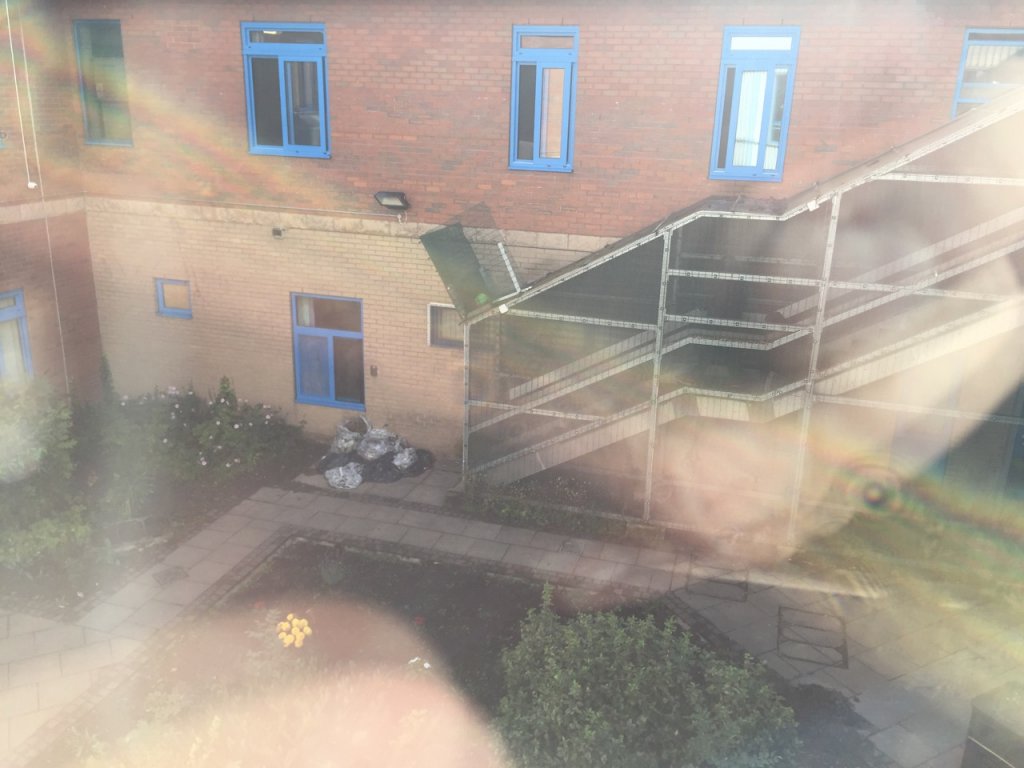
    There is a small outdoor area which can be accessed via some steps, enclosed in a cage so that nobody can jump and injure themselves, or attempt to escape. Every hour, the door to the steps is opened for 15 minutes, and the smokers all cluster around the top of the steps, getting their nicotine fix. Nobody goes down the steps into the outdoor area – they remain in the cage.

    I challenge the staff – why don’t they leave the door open the whole time? Nobody could escape from the outdoor area, because it’s surrounded by high fences. The outdoor area is well covered by CCTV, and it’s no harder to keep an eye on people than any other part of the ward.

    The standard response from the staff is that it’s “promoting health” to deny nicotine addicts access to the only place they’re allowed to smoke. I call bullshit on this, because there’s no data to support the hypothesis. “Look around – everybody smokes… nobody is smoking less because of this rule” I say. The staff argue that the NHS can’t be seen to be “promoting” smoking. This is a completely ridiculous idea. The nurses and support workers hand out the cigarettes and cigarette lighters – the NHS is intimately involved in the whole process of smoking, far more than if the patients were given the choice as to how they dealt with their addiction.

    Steps down

    I’m in a dorm with 3 other men. It’s a lot quieter than the single room right next to the TV – the TV blasted out for 19 hours in every 24 at full volume. The noise was unbearable. My fellow patients in my dorm report that they’re lulled off to sleep by the rhythmic tapping of my keyboard, as I pound out these words. I was concerned that I was being a noisy nuisance, but they reassure me that it’s quite the opposite – it’s a kind of white noise that’s relaxing, like hearing raindrops falling on the roof or hitting the windows, driven by the wind.

    A guy is coming out of my dorm, but he doesn’t sleep in my dorm – he has his own room. What’s he doing down at this end of the ward? Then, my nostrils are assaulted by the smell of smoke. I push the door to the bathroom open and it stinks – there isn’t even a decent extractor fan to get rid of the smell. I write a note and secretly pass it to a nurse, pretending to pass her my laptop to be charged in the office. I scurry away down the corridor but she yells after me “tell XXXXX about the smoking in the toilet” waving the note, right in front of the guy I’m dobbing in. I cringe – does she not know that snitches get stitches?

    Another nurse comes to our dorm and she starts accusing one of my dorm mates of smoking in the toilet. I leap to his defence. “Who was it?” she asks, and then bellows out his name when I whisper the answer. The fact that many of my fellow patients have a criminal past and have been in prison, does not seem to concern the staff members. Perhaps there aren’t fights in here. Perhaps they never see any violence. Perhaps my fears are unfounded. Am I being paranoid?

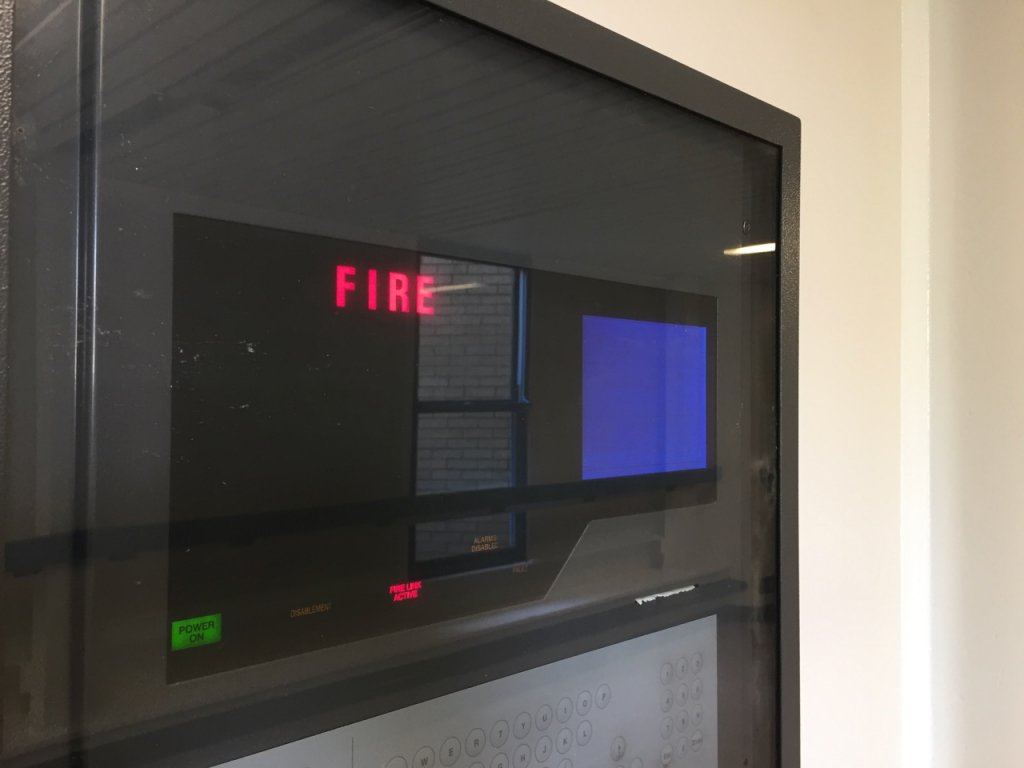
    The fire escape is padlocked shut, there are no fire extinguishers or sprinklers, the break-glass buttons are enclosed in plastic boxes that prevent the fire alarms from being set off – a fire in here would be catastrophic. Yet, I am certain that there are at least 2 cigarette lighters that are being used in my dorm. The patients smoke openly when the staff are doing their handover between shifts, when there’s absolutely nobody around.

    I make subtle enquiries with my fellow patients – how do they feel about the restrictions on smoking? Everybody agrees that the restriction on access to the outdoor area is more about control than it is about “promoting health” – they feel that the staff have created a system that allows them to exercise dominion over their inmates. “Smoke time!” demands one of the more aggressive patients, banging on the window of the office. “Calm down! Stop shouting!” yells back a staff member. This is an artificial and avoidable situation – why does it exist, when it’s creating conflict between staff and patients, and making people stressed and unhappy?

    When I was confined to the ward I would have made use of the outdoor area to walk around, get some fresh air and get some natural light. However, I couldn’t get past the gaggle of smokers clustered around the top of the steps. To leave the door open all the time wouldn’t create this ridiculous situation, where all the patients are fixated on this controlling aspect of their lives.

    It’s saddening, to see 19 men all hanging around waiting to be given a lighter and be let out, like they’re animals; pets.

    In defiance of the pointless draconian controlling bullshit, a handful of patients have smuggled cigarette lighters and tobacco into the ward – it’s not hard when some patients are allowed unaccompanied leave from the ward. “Have you got any bottles or lighters on you?” a nurse asks me when I get back from an outing – I’m not breathalyzed or searched, even though I’m carrying a bulging bag.

    I suppose the privilege of being allowed to leave the ward could be revoked, as a punishment for misbehaviour. The chance of being discharged early and allowed home is also under threat, for any patient who’s troublesome. Most patients are here for a 6-month stay. It’s up to 6 months, but it’s more often longer, not shorter. The reaction to not being allowed to go home is rarely handled well – can you imagine that people who are unwell are able to remain calm and represent themselves clearly and articulately, when their liberty is at stake?

    In terms of mental health, nothing could be more stressful, adversarial and paranoia-inducing, than having doctors and nurses discuss you behind your back, having been peeked at through the curtains every 15 minutes – patients are literally spied on and judged. Life, liberty and free-will are all interfered with in an institutional environment that’s a cross between a prison and a school. Notices on the wall tell us they promote “independence and well-being” while also telling patients the very strict times that they need to be at the dispensary hatch to get their medications. At 8:54am I’m harassed by a nurse to go for my 9am meds… I’m well aware what the time is and also well aware that to be early is to be turned away empty handed. At 11:54am I’m harassed to go and stand in line for some food which is not even being served until 12 noon at the earliest, and is often delayed.

    I’m aware that I’m lucky to have a sought-after psych bed – many people who are having a mental health crisis will have no access to inpatient care. To bite the hand that feeds me seems churlish, but I do feel sorry for my fellow patients who can’t articulate their frustrations effectively.

    The only patient I know to have attempted to file a complaint is the guy who’s relentlessly trying to get 8mg more Subutex out of the doctors… unwilling to go along with the treatment that will wean him off his opiate addiction and quite determined to sabotage his recovery, perhaps.

    Nobody’s stopping smoking because of the “health promoting” rules around access to the outdoor area, but I’m certainly missing out on exercise and fresh air because of it.

    It all looks rather counter-productive to me.


    Tags:

  • Gone Fishin’

    This is a story about being observant…

    ECG stickers

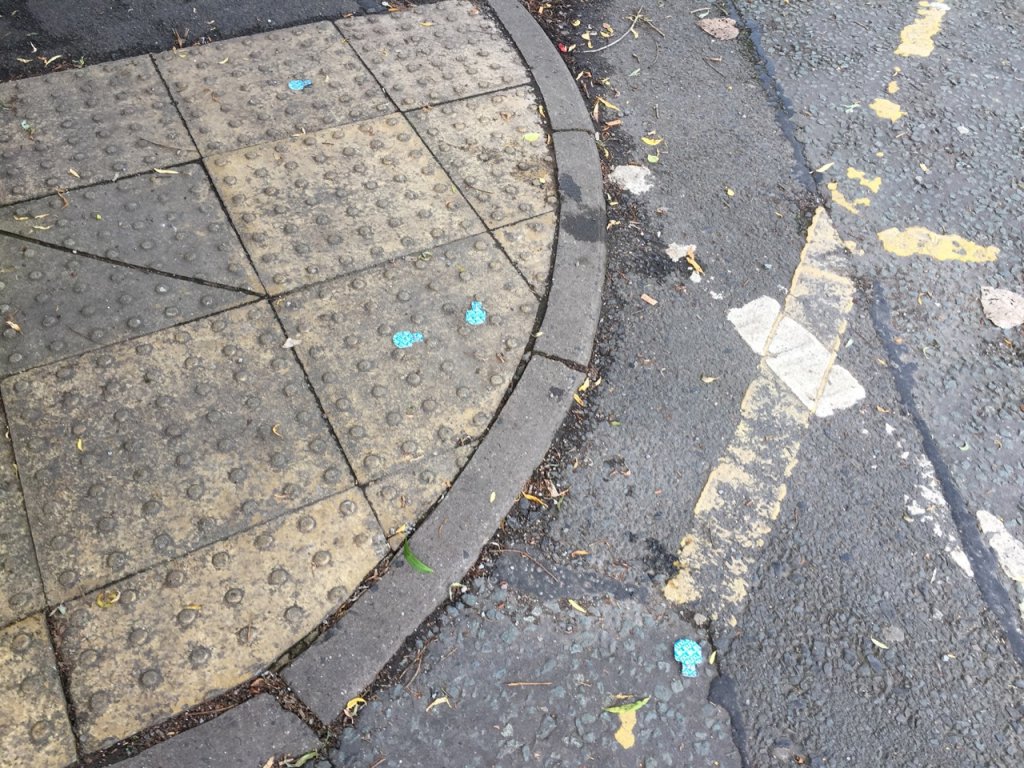
    Where do blue tablets actually come from? Well, presumably they are pooped out by blue fish, like the ones that can be seen swimming here on the pavement and road. Can you see them – the little blue fishies?

    With our Sherlock Holmes deerstalker hat on, puffing from our pipe, we might deduce from the proximity of a large hospital and the lack of water, that these are not actually fish. What could they be?

    An electroencephalogram (EEG) is a graph of what’s going on in our head, quite literally. En kephalé means “in head” in Greek, and the gram bit means “written down”. Electro should be relatively self-explanatory.

    Were these fish involved in seeing what was going on inside somebody’s head? No, I don’t think so.

    An electrocardiogram (ECG) is a graph of our heartbeat, as denoted by the cardio part.

    In order to know what our heart’s doing, we are all very familiar with the stethoscope, but there’s a more accurate test that doesn’t depend on human hearing. The muscles that pump the 4 chambers of the heart never stop unless you go into cardiac arrest or otherwise die. Muscles give off tiny electrical impulses, and these can be measured with highly sensitive equipment – an ECG machine.

    So what about these fish? Well, it looks like they’re the little sticky electrodes that are put on each of your ankles, arms and across your chest around your heart. When you are hooked up to an ECG machine, you’ve got a stack of cables attached to you.

    One of my fellow patients at the hospital was in such a big hurry to get rid of these stickers, after having the health of their heart measured, that they tore them off and discarded them onto the floor, quite possibly in a fit of rage at having been cared for by one of the finest healthcare systems in the world. It’s quite understandable that having received lifesaving treatment that’s free at the point of use, this individual should have ripped these electrodes off their body and tossed them onto the road and pavement – that’ll teach society a lesson, now that a street sweeper will have to come along and clean up this trash!

    We might note that there are only 4 stickers, and we can presume that these are the ones from the person’s wrists and ankles, which would have been most conspicuous. Perhaps it wasn’t until the person explored their body later, that they found 4 more on their chest – one of which was lurking around on their left hand side and might not even have been discovered until a later date.

    Debate rages in the United Kingdom, about whether we should have penalties to discourage people from treating the National Health Service disrespectfully. We could charge people for a no-show to a General Practice (GP) or outpatient appointment. We could charge people for any visit to Accident & Emergency for trivial matters that could have been treated at a minor injuries clinic, or perhaps did not require medical attention at all.

    There is evidence that we are starting to allow a two-tier society to emerge where none is supposed to exist. Doctors’ waiting rooms have plush leather seats for ‘VIP’ patients – who are paying for private consultations – while the NHS patients sit on hard wooden chairs. For an operation, paying to go private might mean skipping waiting times, even though it will be the same surgical team, in the same hospital, with the same equipment and in the same operating theatre. Although it’s not supposed to happen, surely some of the waiting times are because private patients are queue-jumping?

    Those at the bottom struggle with zero-hours contract minimum wage jobs, with the purchasing power of their pay packet decreasing every month, due to inflation. Things are not a lot better on the next rung of the ladder – an NHS Clinical Support Worker’s salary tops out at around £15,000. That’s £259 a week. Ouch. My rent in London was £480 a week. The wealth disparity is disgusting, isn’t it?

    While the cost of housing and the cost of energy – electricity and gas – is skyrocketing with double-digit percentage increases, wages barely increase at all. One only needs to look at the use of food banks, to see that the little people are struggling – people who clean your toilet, scrub your floor, wipe your bum, cook your food, stack your shelves and scatter rose petals along the privileged path that you walk. But, these spoiled brats still vote for a ruling elite who care nothing for the wails of distress that are now becoming a deafening scream of pain.

    The bulk of the BBC was moved up to Manchester a few years ago, and it’s been quite evident that it’s had an effect on the mindset of the people who work for the broadcaster. In London, the homelessness problem is inconspicuous in wealthy districts, but in Manchester – where homelessness has soared 1,100% in just 7 years – the problem is inescapable. The BBC has shown a number of documentaries which accurately reflect exactly what I have seen and experienced: there are vast numbers of people in dire need of assistance.

    Who wants a McJob that doesn’t even pay enough to be able to rent a room in a shit apartment, and have any life at all? Does it surprise you that people are smoking strong synthetic cannabinoids which allow them to escape the stress and hopelessness of a hideous reality that nobody in Government seems to want to address.

    There’s a crisis that’s going on all around us. Pull back the covers and human tragedy is unfolding underneath.

    This is not a “wake up sheeple!” alarmist or sensationalistic think-piece, but in actual fact an unfliching and painfully truthful account – I bear testament to what I’ve seen – of the shocking disparity between London and the South-East, where our wealth is concentrated, and the rest of the United Kingdom where things are very grim indeed.

    We talk about the ‘Westminster Bubble’ and I can attest first hand what it’s like. At the beginning of this year I was at the grand headquarters building of Her Majesty’s Revenue Collectors (HMRC) and it had been refurbished to an incredibly high standard. I was taken to an extremely grand room, which was capacious enough to hold at least 50, maybe even 100 people, but only had me and the two people interviewing me. Otherwise this space was left empty and unused, so far as I could see – perhaps a metaphor for all the empty homes that have been bought by foreign investors in London.

    Meanwhile, it was barely two years ago that I was in social housing apartment (council flat) in London, which was in such a poor state of repair that there was literally 2 inches of water that one had to paddle through, in order to use the toilet or a terrible shower that barely worked. It’s quite clear where our tax money is going – tax breaks for millionaires, not houses for nurses.

    Bursaries for nursing have now been removed, so our nurses will emerge with the best part of £60,000 of debt when they qualify, which will further reduce their take-home pay. The interest on a student loan of that magnitude is more than 12% of our nurses’ starting salary of £22,000, which means they will sink deeper and deeper into debt each year.

    Who will mop up your sick, piss, vomit, blood, mucous, pooh, give you a sponge-bath in bed, say soothing things and give you painkillers when you cry out in agony, come running when you press the call button and generally make you as comfortable as possible when you’re unwell?

    As comrade Corbyn said: a millionaire in their mansion is going to need an ambulance if they have a heart attack, just like anybody else.


    Tags:

  • Congratulations!!! YOU ARE THE MILLIONTH VISITOR TO THIS WEBSITE

    This is a story about winning a prize…

    Visitor stats

    This week’s big climber in the UK top 40 is a new single from the National Health Service. This band has been churning out smash hits since 1948 and is loved by tens of millions of fans. Here on Top of the Pops tonight, you’ll see a live performance from this sensational act. Keep watching to find out what the UK’s number one hit single is, at the end of the show.

    Here on this page are the dry words of a deranged individual. How will you choose to interpret them?

    Language is a rather crude and imprecise tool to fully express ourselves. Ambiguity creeps in and the thoughts and feelings of the author are not communicated with high fidelity – each reader will arrive at a different impression from the text.

    As a software engineer who’s been building systems for some of the world’s biggest companies for over 20 years, I could easily copy Uber’s dastardly tactics of diverting any web requests from a certain region of the country – e.g. a specific city in the North of England – in order to display a different page.

    Most of my readers are using smartphones or tablets. Readers who are using Windows XP and Internet Explorer are quite unusual, and it’s easy to flag up those anomalies – they stand out in the data that I gather about my visitors.

    It’s not hard for tech companies and technologists to present something that has been customised and tailored for each visitor. You might think that you’d see the same Google search results as somebody else, for example, given the same search terms, but Google works very hard to identify individuals, even in their anonymised dataset.

    Traditional print-media widely reports that we are living in social media bubbles, where we are fed things that we like, because we’re more likely to share that content and spread it ‘virally’. What is less well reported is how wedded we are to the walled gardens that we live in – Facebook, Twitter, Instagram, Snapchat et. al.

    How long are you going to keep reading for? There’s nearly 700,000 words here. Are you gonna read it all?

    The best defence against anybody who would seek to jump to the wrong conclusions and make silly assumptions, is to present more data than can be reasonably processed – information overload – such that the farcical nature of reducing the complexities of life to some pathetic synopsis, are exposed as pure stupidity.

    Of course, we would all love to feel that we understand all the laws of the universe. I’ve fried my mind with stacks of books and papers on theoretical physics, attempting to understand the fundamental nature of reality itself. Emotionally, I don’t want to admit defeat, but digging deeper only seems to reveal even more unfathomable weirdness. Some of the quarks are called strange, charm and beauty. I love that.

    Are you bored yet?

    Can you not see that my intention is to create a maze of complexity that’s impenetrable? It’s not possible to know my mind. Even for me, I struggle to understand fully why I say and do the things I do. If it’s hard for me, it’s going to be impossible for you to dissect or categorise me; to judge me and to simplify me into something that can be captured by written language on a sheet of paper. What are you going to write in your report or your email?

    There’s mockery and disdain here, but if you dig a little deeper I hope you see that I don’t have disrespect for anybody whose intention is to help and support me, and I have no intention of damaging my own treatment and recovery, nor anybody else’s, nor cause any difficulty for the hard-working staff of the National Health Service and the ancillary support services.

    Today, I’m a free man – an informal patient – but that puts me in an additionally vulnerable situation. I could be discharged from the hospital without a discharge plan – no place to live and no income. I’m sure some pen-pusher somewhere sees the opportunity for a quick win – am I just a statistic on a monthly report?

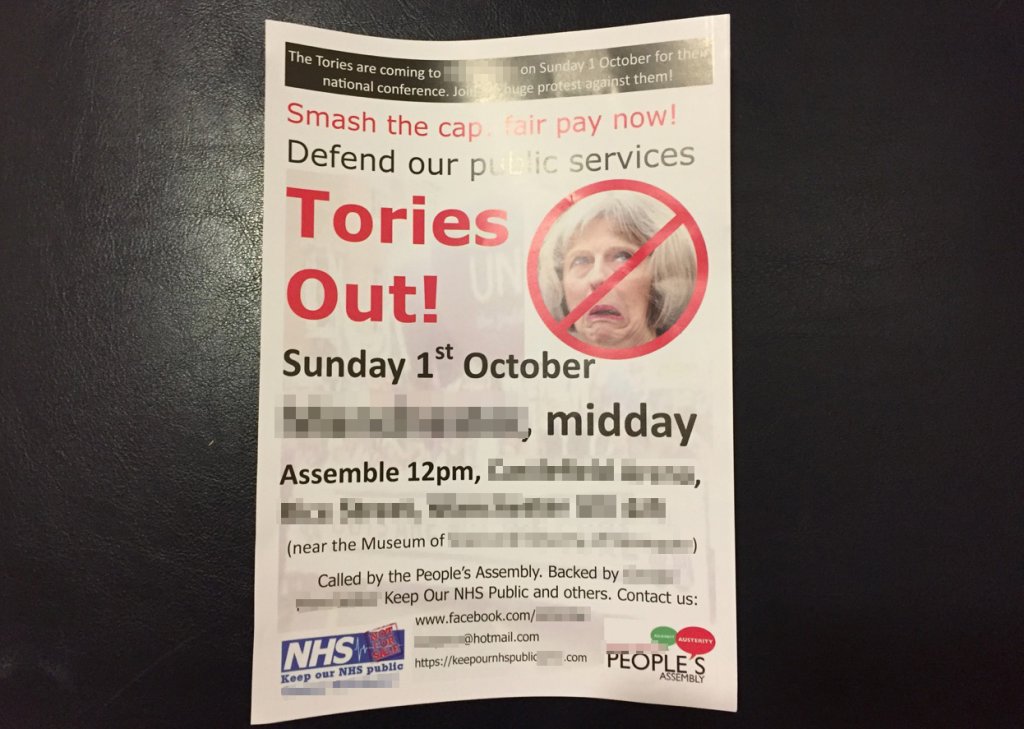
    Tories out

    It upsets me that front-line staff have been cut, while middle managers have plenty of time on their hands to justify their pointless existence. The managers have survived the cull, the pay freeze and the excessive demands placed on the over-stretched people who actually do the damn job. Police, NHS workers, teachers – to name but a few – are getting a bum rap.

    The first thing that I’m excited about doing with my newfound freedom is going to a protest at Tory cuts and austerity, to co-incide with the start of the Conservative Party conference, in a certain Northern city. The establishment are coming to me, and I will thumb my nose at them and boo them. A friend suggested that I could throw eggs and if I got in trouble with the police, they’d probably just bring me back to hospital on a section 136… put that in your damn report.

    “Risk to the community – possibly going to throw eggs at Theresa May, to protest against cuts to front-line services and damage to the NHS, as well as undue stress on the police and other workers who care for and protect our most vulnerable members of society”.


    Tags:

  • Blue Tablet

    This is a story about customer service…

    Bedside table

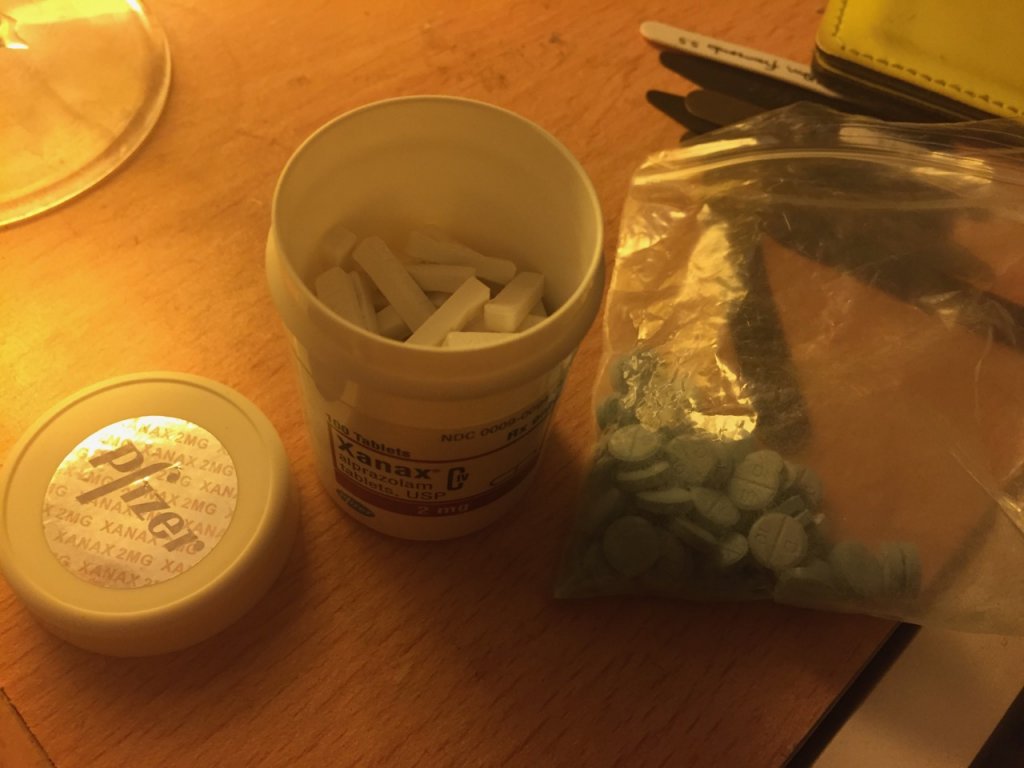
    Amongst a small group of my friends, we have all found that a medication called pregabalin – marketed as Lyrica in the UK – has been useful to us, but also has adverse side effects and is difficult to stop taking. Pregabalin is quite good at combatting anxiety and improving sleep, which are obviously the desirable effects: most of us have stress in our lives, and struggle to get enough high-quality sleep. Personally, pregabalin is an effective treatment for the phantom limb pain I feel, due to damaged nerves – I can’t feel my left foot. Pregabalin is far better than the opiate painkillers, which left me sweating and nauseous at times. However, stopping taking pregabalin leaves me feeling anxious and gives me insomnia – what goes up must come down.

    Soon pregabalin – “the new Valium” – will be scheduled as a class C controlled substance, which makes it much harder to obtain a prescription, and possession without a prescription could be punished with a criminal conviction.

    Here on the psych ward, a man screams for a “blue tablet”. Perhaps more blatantly obvious as an addiction, another man attempts to wheedle more Subutex (buprenorphine) out of the staff – he’s been droning on about having his dose restored from 8mg to 16mg, because he is being weaned off the synthetic opiate he is addicted to. I can hear this guy, who is obviously no stranger to our prison system, chopping and snorting drugs his room. The man who screams for a “blue tablet” is actually asking for a 10mg diazepam pill – blue in colour – which is Valium. Our screaming friend decides he wants to leave hospital, and the staff tell him he can’t leave because he’s going to take heroin. “It’s my body! I do what I want!” he screams. Then, he starts getting abusive.

    Early on in my hospital detention under section 2 of the Mental Health Act, I ask a nurse if she can nip to the shop to get me a 4-pack of beer. We lock eyes for what seems like an eternity. I maintain a completely straight face. Then, we both snigger and she regains her composure. She jokes that we should have a big piss-up on the ward. With a different nurse, I tell her with a straight face that they have forgotten my methadone and she immediately unlocks the cabinet containing the opiates that are so coveted by some patients here… I hastily tell her that I was joking, but she still continues to search my medication chart. Do I look like a junkie? I certainly don’t have track marks on my arms or other identifying features of an injecting drugs user, such as abscess scars.

    A doctor comes to take my blood. She doesn’t shut my bedroom door. Three men, who I know were heroin users, peer into my room and I feel bad that I didn’t ask the doctor to close the door or get up and close it myself – surely the sight of a needle going into a vein is going to be a terrible trigger. There’s good evidence that addicts’ brain reward pathways are activated when they see drugs and drug paraphernalia for just 33 milliseconds, which is less than the 40 milliseconds that a single frame of cinema film is shown for.

    Having been detoxed from my physical dependency on benzodiazepines and alcohol, I find that I crave nothing more than a few drinks in the evening – some wine or some beer – to take the edge off the stress and anxiety of my situation and help me relax during what is a fairly dreadful clusterfuck of issues with employment, housing, accommodation and my health. However, I don’t want to sabotage my treatment and recovery.

    I’m incredibly grateful to the NHS, for accidentally detoxing me while they were treating my deadly deliberate overdose – my suicide attempt. Being physically dependent on a medication is to be shackled to it – to stop taking it would cause seizures and potentially death. There wasn’t a ‘buzz’ that I was chasing with booze & benzos. I was using mind-altering substances to soothe my jangled nerves: self medication.

    Am I glorifying drug taking, or making light of serious matters? Don’t be so ridiculous.

    An epidemic of illicit opiate use sweeps across the United States, with the number of overdose deaths and addicted babies born, skyrocketing in the past few years. An epidemic of mental health issues has pushed the services that are there to support those who become unwell, to breaking point. Only a wilfully ignorant person would turn a blind eye to what’s happening all around us.

    Carfentanil – a synthetic opioid – is so powerful that an aerosol of it could be sprayed in a packed metropolitan area and cause hundreds of people to die from respiratory arrest. This drug is being sold as an adulterant in bags of heroin, in the United States today. In the UK, carfentanil’s less potent – but still deadly – chemical cousin, fentanyl, is quite common now in batches of street heroin. If you’re worried about terrorism and weapons of mass destruction, these things have already arrived on the shores of the US and UK, in the form of incredibly deadly chemicals that are available for sale to anybody with the money.

    My fellow patients are unrelenting. There’s been a 2-day nonstop assault on the staff, as the patients attempt to get a tiny amount more synthetic opiate out of the doctor. There’s not much else to do on the ward, and whatever medications the doctor has decided to write on their chart will remain fixed for a whole week. I guess they’ve got nothing to lose apart from their 30 minutes of escorted leave from the ward. One patient has done a runner, sensing that the doctor’s decision has not gone the way he would prefer.

    “You’ve not done anything wrong. You can come back and you won’t be in any trouble” a stressed looking nurse is saying down the telephone, to the patient who has gone AWOL. Meanwhile, a patient takes breaks between harassing the staff for 8mg more Subutex, in order to chop and snort lines of white powder in his room – presumably he has a plentiful supply of his own drugs, which he wishes to supplement with a legal prescription.

    I try to calmly await my section tribunal, despite the chaos outside my bedroom door.

    It should be noted, that the quality of care does not vary with one’s behaviour – the staff are supremely professional – but good manners are declared as the number one thing that every staff member wants, on a notice board that tells the patients a little more about the team of people who look after us.

    Good manners cost nothing.


    Tags:

  • #FoodPorn

    This is a story about peaks and troughs…

    Bacon barm

    I’m in the middle of a warzone. “I WANT TO GO HOME” yell multiple angry men, who are considered unsafe to be out in the community. It’s all kicking off on the psych ward, because today is ward round with the doctors. Today is the culmination of a week of waiting and hoping; hoping that today will be the day that the consultant decides to grant some liberty to the men who are detained here – the top doctor is all powerful.

    Ward round is supposed to be 10 minutes per patient, but I’m a psychiatric anomaly – completely unmedicated, yet compliant, articulate and reasonable. The staff – nurses and support workers – report that I have been polite and well mannered. It’s rare that a middle class person winds up on an NHS psych ward – my fellow patients are all victims of poverty, and their mental health conditions make them most unmanageable indeed.

    Having moved from an 8-bed Psychiatric Intensive Care Unit (PICU) to this ward that sleeps 20+ men, the intensity of what’s going on around me is much greater, even if there isn’t the sound of struggling patients being dragged down the corridor to a padded and soundproofed isolation booth. At least on the PICU I could lock my bedroom door and feel a little safe. Of course, the staff opened a little peep hole every 15 minutes to check I was still breathing, but it was a much less stressful environment.

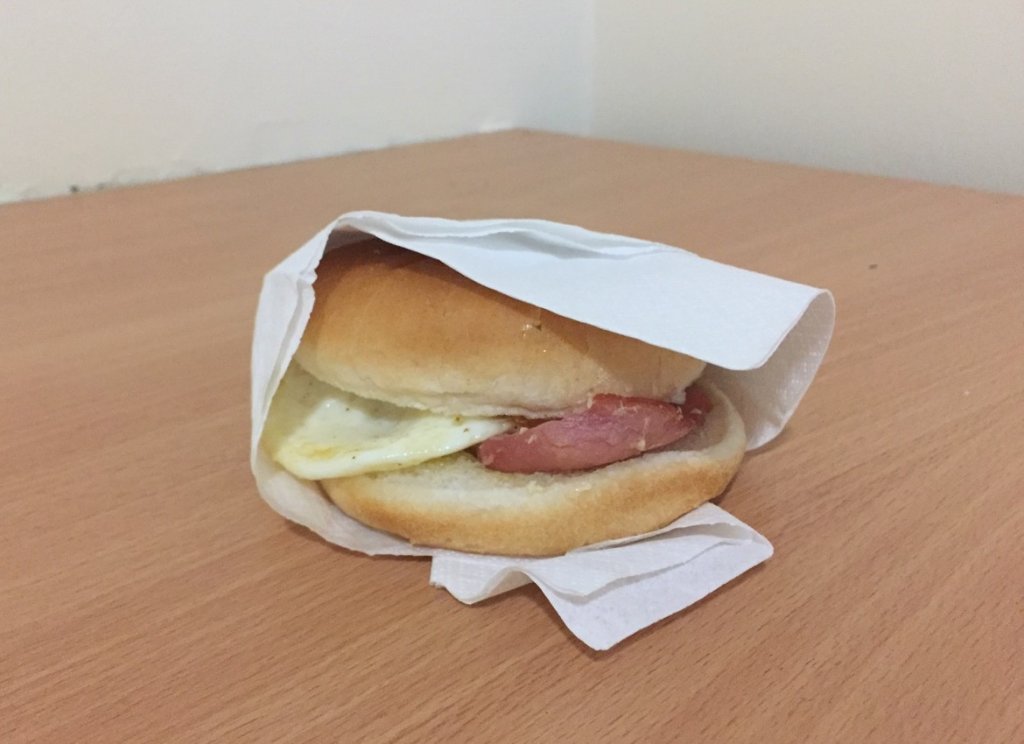
    The world’s most terrible shower was one of my big disappointments, as I repeatedly pressed a push-button to get a pathetic dribble of water that could barely wash away the soap from my hair. At least the water was warm, I thought. Then, a nurse knocked on the door and offered to make me a bacon & egg barm (roll) and I was pleasantly surprised. Returning to my bedroom, I was greeted with the delicious sight of the lovely breakfast snack pictured above.

    A lot of people have presupposed that the food is terrible on the psych ward, but it’s actually very decent. Through my turbulent journey of the last few years, I’ve eaten a lot of hospital food. When you’re on a general NHS ward, you actually get a spectacular choice of meals, plus kosher and halal options too, which I can highly recommend.

    Beans on toast

    Because my ward round time overran, I missed lunch. I asked if the staff were making any trips to the local shop – my permission to leave the ward has been cancelled due to the fact that I’m a suicide risk – and if they could get me a sandwich.

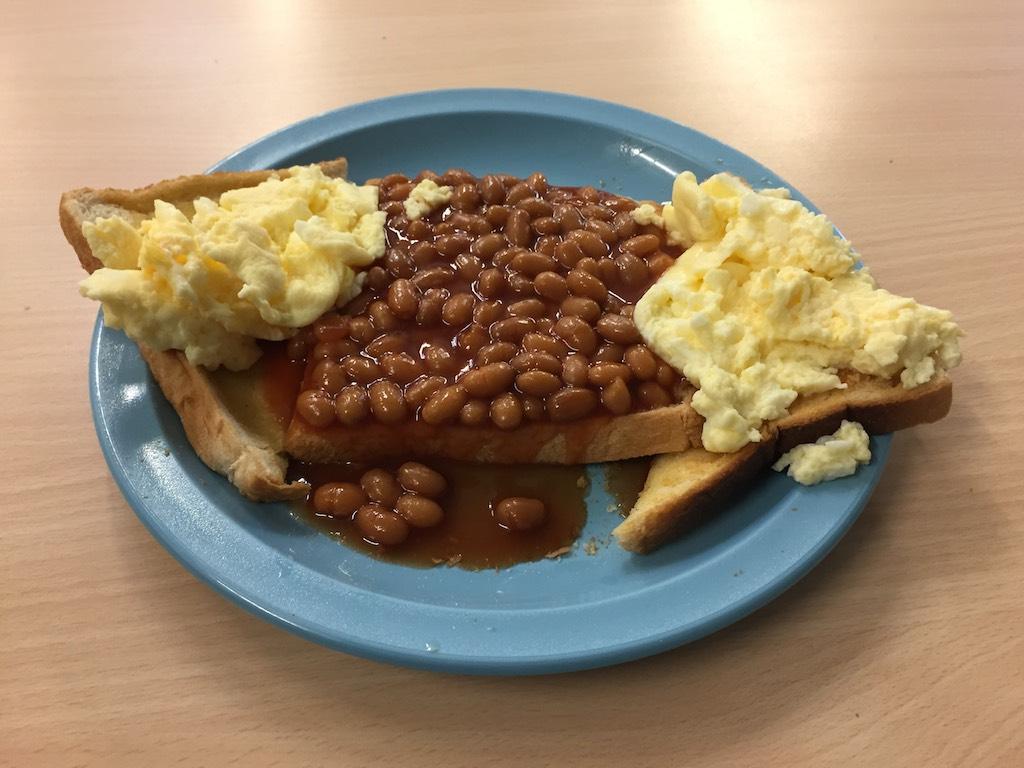
    Despite the commotion, somehow a kind nurse managed to make me beans on toast with scrambled eggs. I was actually more disturbed by the disruption of the routine than I thought I would be. The amount of stuff that’s happening all one one day is insane. The clamour for the doctor’s attention is just as bad as you’d think it would be, given that everybody’s been locked up all week and only this one guy has the power to allow anybody off the secure ward.

    These two meals – breakfast roll and beans on toast – are unlikely to be in line with the NHS’s ambitions to reduce salt, sugar, fat and other unhealthy things from patients’ diet. Salt sachets are liberally sprinkled onto all the regular food we get, replacing the salt that would usually be added by the chef – the net salt consumption must surely be the same. There was something delicious about these beans, in their sweet tomato sauce on white bread. The carbohydrate content of this meal must have been huge, even though it was virtually fat-free except for a light coating of margarine on the toast.

    The fluctuations in blood sugar and medications are very pronounced. From 10pm to 9am, no medications are dispensed, but they are dished out throughout the day. From midnight to 6am, the smokers are not allowed to cluster around the doorway that leads to the tiny outdoor area surrounded by high fences, in order to get their nicotine fix. Tea and coffee is decaffeinated, but I quit drinking hot drinks quite a few years ago. The fluctuation in the importance of days of the week, is all fixated around Tuesdays, when ward round happens. The tension in the air is palpable – patients want their freedom.

    Being a non-smoker, the passing of time is marked by food and sleep for me. Masturbating in the world’s shittest shower is not something I’ve even brought myself to do, yet, although the sexual needs of the 20+ men on this ward can’t be magicked away with medication. There’s clearly an undercurrent of sexual tension, which reveals itself in inappropriate ways… however, can we view the natural urges of these men – myself included – as wicked and wrong, when they are simply part of our biological make-up?

    Three hot meals a day. None are particularly photogenic, but I devour every last bite. The pleasure of eating is one human thing that can’t be denied to us, despite the dining not being haute cuisine. I’m grateful for the safety of this NHS psych ward, and the food I receive at taxpayers’ expense.

    My ensuite bathroom has no shower, but at least I don’t have to share a toilet to dispose of the digested remains of what I shovel into the hole in my face. I barely chew, but mealtimes are the three happy moments in my day, which is otherwise just spent waiting… waiting.


    Tags:

  • Perception and Reality

    This is a story about therapy…

    Ward activities

    Everybody’s an expert on my mental health, it seems. I need to be exercising more, eating a balanced diet, abstaining from alcohol and mind-altering substances BUT not the ones the doctors want to give to me. But which doctors? Every doctor has a different idea of how I should be treated – which doctor should I listen to? Perhaps somebody else knows, because people have some very strong opinions on what I should be doing, considering that only a handful of individuals with whom I am still in contact, have known me for any length of time and have followed along. Only I know what I’ve tried before and what I haven’t – what works and what doesn’t.

    Here, there’s a student nurse whose dissertation investigated the benefits of exercise, in terms of potentiating – that is to say improving – the efficacy of medications. Not considered for a single second, was the control study which would have investigated the efficacy of exercise alone. This student nurse, who I find passionate and intelligent, was eager to suggest that I tried sodium valproate or lithium – both life-shortening medications prescribed to people who have regular episodes of mania where they believe they’re Jesus reincarnated etc. Everybody thinks they’ve got a cure to a problem I might not even have – it was under a very dark cloud that I entered hospital, one must remember.

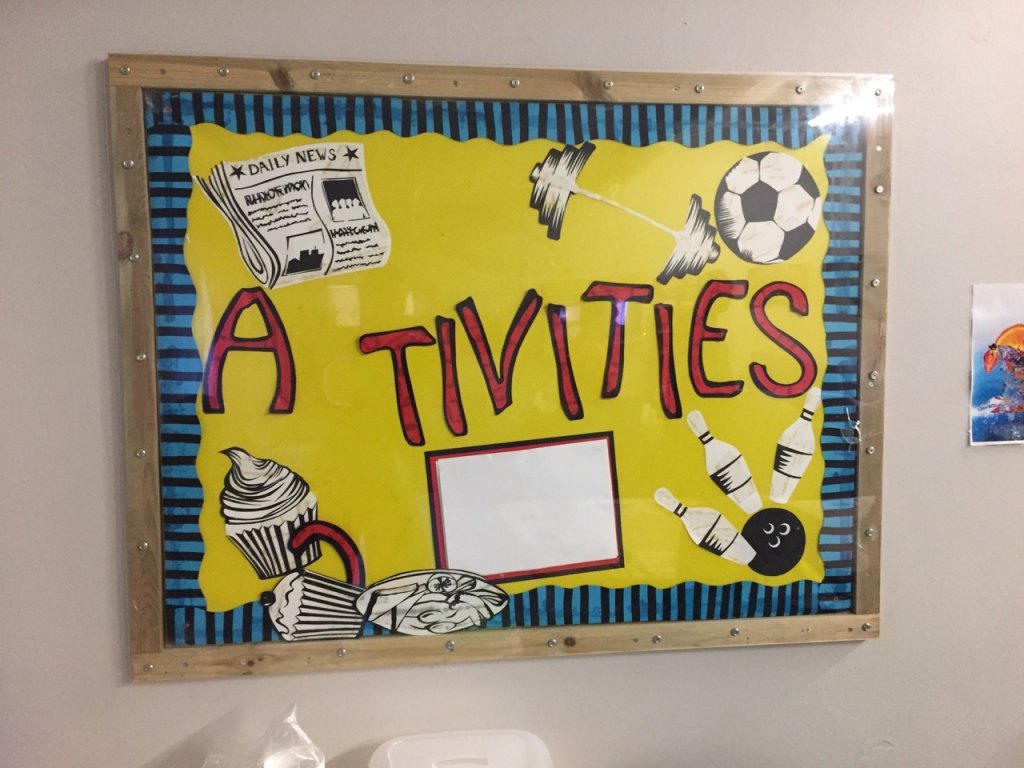
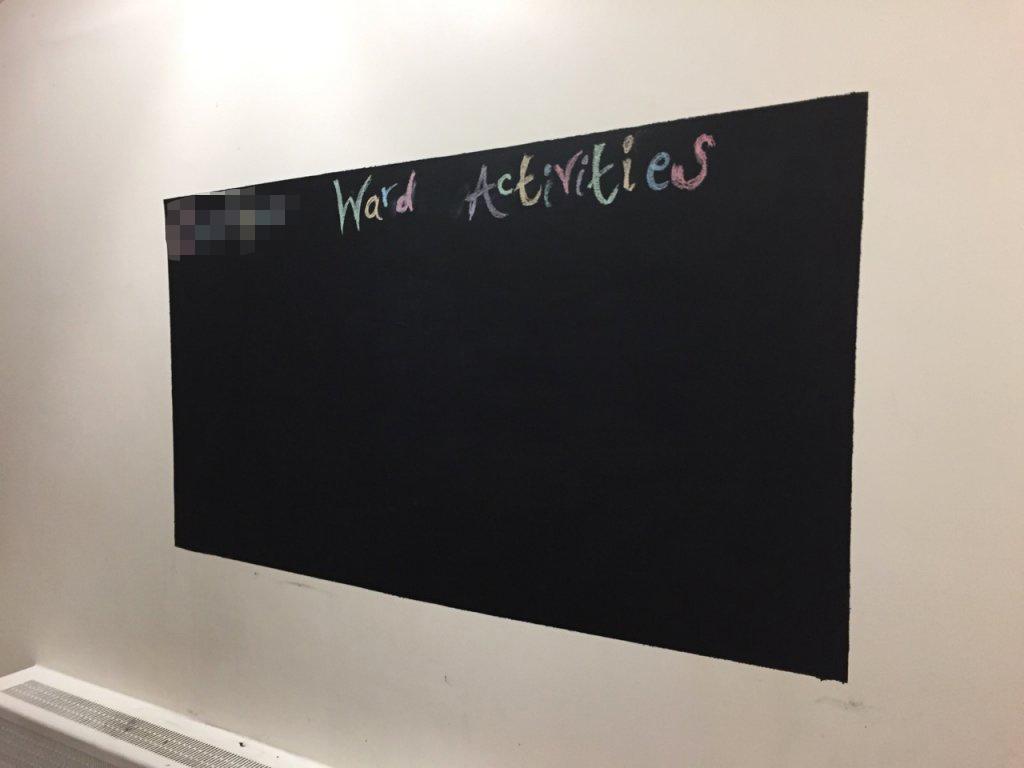
    Externally, the perception of a psychiatric ward is that it must be a place of therapeutic activities and meetings with doctors to fine-tune my medications and cure me of my madness, making me safe to release back into the community again. Internally, my fellow patients perceive staff members as persecutors, jailers and masters of everything from food & drink, to bedtimes and bathtimes – a cross between a policeman, a teacher and a parent. Certainly, to have a blackboard on the wall is an incredibly dated nod to the classroom days of our youth. Note that the list of activities for the ward is completely blank, which I find quite accurate… not that I’m complaining.

    The UK’s stringent fire regulations for institutional buildings – hospitals, schools etc – mean that they look very similar. A company that manufactures and supplies the fixtures and fittings for a school will probably also supply those same items to a hospital. Everything needs to be built to last in this incredibly abrasive environment, where the footfall in the corridor would destroy even the most hard-wearing of floors, laid by a contractor who normally worked in regular houses. The finish is not just high standard, but the selection of the materials used has been honed over the years to create an interior that is easily mopped and wiped down, and very hard to damage.

    As a patient, I find myself recalling my schooldays, as a dinner lady ladles goo onto plastic plates and I sip juice from containers that are identical to those that I had in my boyhood. Just like school, nothing much really happens except for crowd control. There is a little sifting and sorting, so the naughtiest boys end up in the shittest parts of the hospital, and the golden child will find themselves in the top class. However, it must be remembered that staffing a hospital is a job to quite a lot of people, and over the many years that they will work their job, any ill-founded notions of making a difference, will be thrashed out of them by the system. Nothing changes very much or very fast in massive organisations – you can’t fight the system, or else you will drive yourself insane… that goes for both patients and staff.

    It’s very hard to not be driven mad by being hospitalised. It’s a chicken and egg situation. For sure, nobody gets hospitalised without putting some effort into it. It’s very hard to get a psych bed in the UK, unless somebody’s gonna pay £5k/week for you to go into a private place. Of course, the patients here are here for a reason, but I have also experienced the terrifying moment where I realised that my liberty has been restricted. I just heard the jangling of a massive bunch of keys, carried by one of the staff members, as she passed my bedroom door. If I was to draw back my curtains, I would see bars on my window, to stop anybody climbing in or out. There are constant reminders that I’m here under lock & key, and to escape would require a little more social engineering (or climbing) than another secure ward that I was on in 2015, where I could have just walked out behind somebody who was leaving the ward, and then run away. To run away now, I would need to request an escort off hospital premises, and then I would simply get an Uber or perhaps I might have arranged a local cab company to have my getaway car waiting. I came into hospital with £1,150 in crisp £50 notes, so I have the financial means to grease whatever palms I need to.

    Why would I want to escape though? Yes, you’re right – to discharge myself prematurely would be a mistake. This isn’t a very therapeutic environment, because staff spend so long spying – quite literally – on patients, which is absolutely dreadful for mental health: creating an us & them culture and exacerbating even the slightest hint of paranoia. If you value your dignity, privacy and liberty, psych hospital is not for you. There aren’t any therapeutic activities. However, it is a safe place where my rent and bills are paid, I get 3 free hot meals a day, I get my own bedroom/office type thing which is quite generously proportioned and has an ensuite bathroom, and I don’t need to cook, clean or otherwise worry about the responsibilities that burden nearly every other creature that was unfortunate enough to have been born.

    Sounds nice, doesn’t it? Perhaps you too would like a stay – mandated for up to 28 days on a section 2 – in the hotel “psych ward”. Perhaps you imagine that it’s a calm and restful place, where I get to sleep lots and read books. I think perhaps you’re getting confused with that holiday you took to Tuscany last year. On a psych ward, you get woken up in the middle of the night by alarms going off, staff running in the corridors, yelling and screaming. On a psych ward, music blasts at top volume from patients’ bedrooms, because headphones are not allowed lest we strangle ourselves with the cables. On a psych ward, one must evaluate the level that one’s fellow patients are intoxicated by their cocktail of medications, and whether one has the energy to engage in their psychoses that are extremely repetitive – I’ve been here a week and I’ve learned a little of everybody’s “thing”… their particular identity on the ward, which is characterised by an apparent madness, which is why we must remain here. I wonder what mine is? The staff tell me that I’m lazy – always just sitting with my laptop. Yes, that must be me right? Probably just watching mindless Netflix rubbish on it, right?

    Ward rounds – when important decisions about “leave” are made – happen on Fridays and nothing else happens apart from waiting and hoping. Most patients here are hoping to get some leave. Some have not left the ward for nearly 6 months – considered too much at risk of running away, if they were allowed out of this super secure part of the hospital, accompanied by a staff member.

    Gossip is rife, and everybody on the ward knows that I arrived with a wad of cash and was granted leave from the hospital almost immediately. I try to downplay these things, and now people have forgotten. When takeaways or shop orders are being placed, I feign not having any money, in the hope that I can alter my perception in the eyes of my fellow patients and the staff. I remember being called into the office, simply because some of the senior staff members wanted to have a look in my envelope, containing all those fifty pound notes. It’s totally vulgar, and an accident of the illness that was stimulated into existence by the ridiculous sleep deprivation, stress and disruption to my medications and routine, over Tuesday / Wednesday / Thursday of last week, which followed my near-fatal suicide attempt… it should be expected that my behaviour would have gone a bit haywire, under the crushing pressures I faced.

    Perhaps I will be “stepped down” to a less restrictive ward today. I had to pack my bags last night, because I thought I was being moved. I should have remembered that nothing happens very quickly in the National Health Service, but sometimes if you’re quick, you can nip in before the system decides that actually you’re getting ahead far too fast. I’m not really in a rush to go anywhere though – this ward is perfectly decent and I know the two spots where I can get 3G signal.

    I’m here to recover, but I’m not here to feel completely isolated. Who do I know in the local area who can come visit me? Two months ago I’d never set foot in this city, and the company I’ve been working for has cut all contact and has been skulking around in a most unusual manner. I have nobody – it’s a real ball-ache for any of my friends to travel, just for a 2 hour visiting slot. Even my fellow patients, who are locals, do not have visitors – the hospital environment is not exactly somewhere people would like to spend their free time.

    Should I immerse myself in the daily rhythms and routines of the hospital? Should I hang around by the door to the kitchen, looking for food scraps to be tossed out? Should I hang around by the door to the yard, hoping to be let outside? I’m not a fucking dog. I find it immensely useful to maintain contact with those who are still in full possession of their marbles, while I’m in an environment where staff humour the patients – “is it Tuesday today?” one asks, and is told that yes it is, even though it isn’t… is that useful, helpful, therapeutic?

    I was very sick when I was brought in, without a doubt. Some incredibly stressful things still hang over me, like Damocles’ sword. I have little power to influence the speed of my recovery, nor the speed with which those who have wronged me are forced to offer recompense. At least I’m in a safe place to pursue what is rightfully mine: to get money that is owed to me and recover my possessions. I’m in a safe place to make arrangements for housing and income, so that I don’t fall flat on my face, as soon as I leave.

    I’m glad I’m here, at the moment.


    Tags:

  • Two Contrasting Weeks

    This is a story about comfort zones…
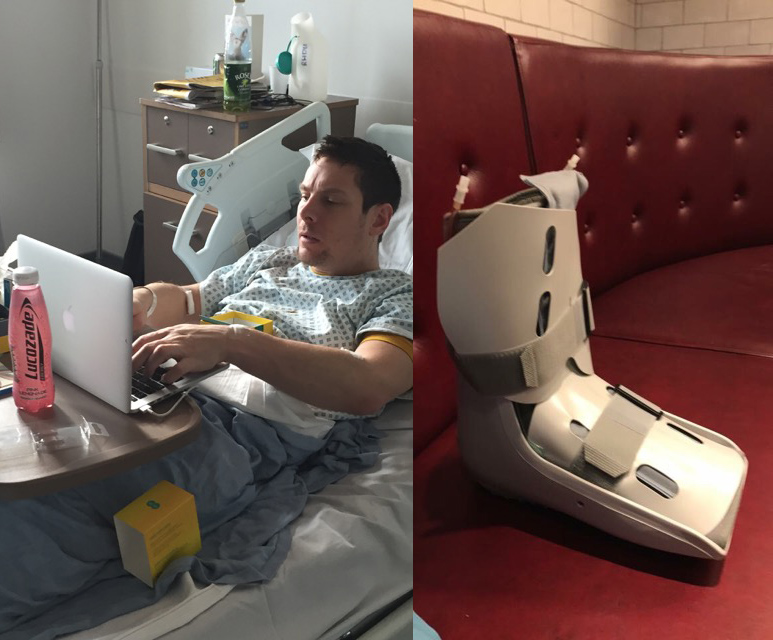
    Montage

    Relax and put your feet up, I’m about to tell you the tale of two sedentary situations.

    I’m institutionalised. Put me inside a hospital or a head office, and I’ll feel right at home.

    Most people don’t like hospitals: they associate them with pain, death and stress. Most people don’t find hospital relaxing; quite the opposite in fact. Hospitals are places of mysterious rhythms and routines that seem chaotic to most people. There are different sounds that all the machines make when they’re working, and when they’re making noises that indicate that something is going wrong. There are different NHS staff, in different roles, in different clothes, who appear at different times.

    My week in hospital that I’m going to tell you about – although I spent the best part of two weeks in hospital  – sounds kinda nice, because I was never really afraid or outside my comfort zone. I find the functioning of complex organisations to be fascinating. I love observing the systems and the people, trying to second-guess what’s going to happen next, and what’s going on behind the scenes. I like asking loads of questions and adding whatever I can learn to my growing body of knowledge that allows me to feel more in control of my destiny and more able to know what to expect next, than the tense, anxious and extremely tedious waiting game that most patients face on the National Health Service.

    Once one has resigned oneself to the maximum speed that a massive organisation can function at, the whole hospital experience becomes quite meditative. Sitting in Accident & Emergency, you can fill your time sneakily looking at the other patients in the waiting room, and trying to guess what symptoms they reported to the reception staff when they arrived. Shortness of breath, chest pains, numbness in one side, drooped face, earlier seizures, unconscious or otherwise delirious patients will normally arrive by ambulance, but any walk-in presentations will obviously jump to the front of the queue. Then, there are the people with minor injuries who have put up with their trivial ailments for days or even weeks. The reception staff aren’t allowed to tell them to fuck off, so these idiots must sit for hours on end, only to be told off for wasting valuable NHS resources, quite rightly. In the middle, there are nasty workplace injuries, DIY accidents and total wildcards. You usually get seen by a triage nurse within an hour.

    Having been admitted into Accident and Emergency, there is a brief flurry of activity while routine blood samples are taken, and perhaps you’re hooked up to a drip. A barrage of questions is fired at you. Examinations seem to be probing and thorough. Surely these professionals are going to have this problem fixed in no time?

    It’s always a mistake to believe that important things are happening and it won’t be long before the right diagnosis is reached and the right treatment is administered. One should be aware that the function of A&E is to rapidly assess whether you’re about to die, whether you might need to be properly admitted to the hospital, or whether you can be discharged swiftly, suddenly and brutally.

    Once on a ward, a certain amount of orientation and induction is necessary, but all wards function with great similarity. All nurses are grateful if you don’t press the call button all the time, for trivial things, as well as being cantankerous and discourteous. Remembering one’s Ps and Qs at all times is a pleasant distraction from boredom, pain and discomfort. There will be shifts, and it’s important to be mindful of when these shift changes occur. The NHS staff see so many patients come and go, and many are lucky enough to only have a very short stay in hospital, so there will be a certain initial reluctance to absorb you into the system: the ward wants to spit you out undigested.

    Having overcome some initial resistance, you can relax into hospital life. Your day begins with your vital signs being measured. Then blood samples are taken. Then there is the hullabaloo of breakfast, ridiculously early in the morning at 7am. Then, there is nothing. All of that disturbance keeps the night shift staff briefly busy before they hand over to the day shift. The day shift hope to be able to ease their way into the working day gradually. Consultants start to appear at around 10:30am, followed by a gaggle of registrars and junior doctors. The most important time of the day arrives: choosing your lunch and dinner for the next day. By the time that lunch is served, you can’t remember what you’re going to get because it wasn’t long ago you had to choose what to eat tomorrow. The meals are pleasantly bland and easy enough to eat. Mealtimes are something to look forward to, even if the food is far from gourmet. Expecting much to happen during the day, in terms of treatment, is a mistake. Anticipation of treatment that has been promised can only lead to frustration and disappointment. The NHS does what the NHS does, and it does it at its own speed. Things cannot be rushed or expedited. Complaining or asking staff when things are going to happen or what’s going on, will only piss them off and ruin their day. Dinner arrives surprisingly early. Treatment can be sprung upon you at the end of the day, just when you thought you were going to have a relaxing evening, or you can have a lengthy wait until you get your pain medication and anything to help you sleep. Dropping off to sleep is not easy, especially as the day shift will hand over to the night shift loudly at the end of your bed, and there will be more vital signs being measured before you’ll be left in peace to try to get some rest.

    And so, my week in hospital consisted of lying on a bed that had buttons that could make me sit up or lie down, with no effort required at all. I was able to elevate my bad leg, to reduce the swelling. I was brought paracetamol every 4 hours, tramadol every 6 hours, and 2 hot meals a day. There were few unexpected interruptions, and if I was well enough, I would have been able to read, listen to music, browse the internet and watch films & TV, pretty much all day, all evening and as late at night as I wanted. I could stake a piss without even having to get out of bed. Friends travelled to see me. Doctors came to my bedside, and I was wheeled to wherever I needed treatment, by hospital porters. I was under no obligation to do anything, except to get better, and all my basic needs were met. My lovely girlfriend augmented the hospital care, so I wanted for absolutely nothing. Blissful, right? I could have stayed for a month, and I would have even earned £676 (I pay myself minimum wage).

    —

    Why then was I in such a hurry to discharge myself? Why would I leave the lap of luxury, and risk my health and even my life, by leaving the safe confines of hospital?

    Well, that’s a topic of discussion I’ve covered at length in prior blog posts, so I invite you to peruse the archives.

    —

    People rarely change their bank. We open current accounts in our teens, and we keep them into adulthood. Some of us even opened special accounts when we were children, and we have a certain nostalgic brand loyalty for the bank that we’ve been a customer of since we were youths.

    The ‘big four’ or ‘big five’ high-street banks have not changed for my entire lifetime. We have (in alphabetical order) Barclays, HSBC [Midland], Lloyds [TSB], Royal Bank of Scotland and Santander [Abbey National]. These banks hoover up 85% of all the current account banking customers in the UK.

    Just like current account holders, people join these banks when they’re young – often their first job – and tend to stay loyal. Many people who I deal with on a day-to-day basis have worked for 15, 20 or 25+ years for the same bank that’s been so good to them that they’ve never felt compelled to leave. Everybody bitches about their job, but a bank employee knows that they’re very well looked after and they’d be mad to go off in search of a better job.

    I’ve worked for 3 of the big 5, and they’re institutions that I feel very at home in. Some people might think that I work in a rather high-stress environment, where it’s imperative that I’m up to date with the latest cutting-edge developments in my field, and I need to perform in an exceptionally demanding role. The truth is, once you’re in the door, you’re in for good. You get your feet under the desk, and adopt the right kind of jaded resignation, that everything is going to be slow, sloppy, shit and a massive festering pile of neglected crap that nobody gives two fucks about, and you’ll fit in just fine. Moan as much as you want – everybody does – but for God’s sake don’t go on any crusades to change or improve anything. Just settle in, get comfortable and enjoy the masochistic experience of being in a world where not a lot gets done and the right answer is always “no”.

    A lot of people get into technology and engineering, because they like to fix things and make stuff that works. They like to build stuff. They like the feeling of completing a technical project, throwing the switch and seeing their hard work put into action. A bank is a terrible, terrible place to build anything that will ever see daylight.

    Having come to terms with the fact that any ambitions you had of building useful things that people might actually use, will be forever thwarted by a bank, you can begin to enjoy the ridiculous game. You command millions of pounds of budget, and you will achieve nothing. When you estimate how long you think it will take you to do something, you double your original estimate, double it again, and then double it one final time for good luck, and it’s still not long enough. When you are asked about the feasibility of doing something, or whether you have any spare bandwidth to perhaps do something extra, you instinctively say no; it can’t be done; no chance. Nobody ever got fired for saying no. In fact, people start to love you and think you’re great at your job, if you get really good at saying no.

    Delivering pieces of important technology, 100% working and of high quality, in short timescales and with hardly any resources, is liable to cost you your sanity. “It can’t be true” colleagues will proclaim, even as the results are staring them in the face. From denial, your colleagues will move to the belief that it’s a one-off fluke, or they will hate you. Colleagues will mainly hate you for making them look like totally incompetent blundering slowcoach fools. Nobody ever made friends and got ahead in a bank, by doing a good job. Finding yourself burnt out from the exertions of persuading people of the merits of doing things properly, without pointless delays, you find yourself suddenly alone; isolated. You may create some kind of mythical; legendary; cult status around yourself and your achievements, but you have no future with the bank: the bank doesn’t want your type, and it will unceremoniously eject you.

    You can work for a bank for as long as you like, provided you just go along with things. Never challenge anything. Never push for change. Never go the extra mile. For sure, banking demands that you be seen to be going the extra mile, but it’s all just for show; part of the act.

    So, if you want to be really successful in your banking career, you learn the rhythm and routine of your department. You learn when your boss arrives at work, and you get to your desk before him or her, and leave with them in the evening, making pathetic small-talk. You learn who’s got kids, what ages they are, and what stressful childcare arrangements are a pain in the arse for your colleagues. You learn how everybody gets to work. You learn whether they’re morning people or night owls. You learn their interests: topics to get them talking; things that enthuse them. You learn who takes their job seriously; who’s ambitious; who’s jaded and demotivated. You learn who drinks heavily, smokes, gets stoned. You learn who’s lived, and who’s been insulated. You learn who’s worked hard, and who’s had advantages. You learn when to make yourself scarce and blend into the background, and when to promote yourself. You learn the things that need to regularly get done, and you discover many things that don’t need doing. You learn how to do just enough to please the handful of important and influential people, and how to avoid having to do any pointless busywork.

    You can’t prepare yourself for boredom. There is nothing in the world worse than boredom.

    My first week back in the office was 4 days of boredom. I’ve seen it all before, done it all before, and I’m the master of minimal effort. The only problem is that I need to look busy to make a good first impression. I forbade myself from reading the news on my laptop. I tried really hard to not look at my phone too much, and to pretend to be busy.

    My boss and his boss, both sit right next to me. My boss is a nice guy who seems to have a paternal nature. The big boss talks too much and doesn’t realise that I find him amusingly stupid. I listen, make the right noises and say some encouraging sounding things, but I’m completely failing to disguise my contempt for this fellow, but luckily he’s the only one who fails to see my total lack of respect for him, except for my bosss. I endeavour to make my boss feel that my number one priority is in supporting him in making our team look good in the eyes of the big boss. I try to make the big boss feel in control, while diverting any respect he commanded away from him. There’s a mutiny in progress, but nobody will realise until it’s past the point of no return.

    Virtually nothing can be achieved in 4 days in a bank, and I’ve achieved far more than anybody expects of me, even though I’ve spent a considerable amount of time in the toilets, browsing Facebook and writing amusing things for my friends to read. I invested as much time as I possibly could in developing a good relationship with my boss and my team, but I have nothing of value to contribute yet. Aside from dazzling my colleagues with my all-round technical knowledge, my main task is to stay the fuck out of their way and not disrupt things too much.

    Regrettably, I’ve had to take Friday off work. Making a good first impression can only be done once, and the lasting image that my colleagues will have of me – the guy wearing the robocop ankle splint – will now be tainted with the fact that I had to take time off work, giving the impression that I’m unreliable and prone to sickness. Damage to your image like that can be irreparable.

    Sometimes, it’s desirable to be known for being unhelpful, regularly late to work and somebody who leaves on time in the evenings. Being somebody who walks out the office door, even when there’s a major crisis, is the sign that you have become perfectly adjusted to bank culture. However, the clever ploy is to try hard at first, to develop an image of being a hard worker, but in actuality, you are avoiding work and responsibilities at all costs. In time, you will have the best of both worlds: being thought of as dedicated and useful, but actually adding no value at all.

    My foot has been steadily getting more and more painful through the week, and I’ve been popping painkillers throughout the day. I’ve passed the week in a dreamlike state; heavily medicated. Having strong coffee in the morning to make me sharp and alert enough to make a good first impression, has meant that I’ve been able to stay awake in some horribly boring meetings, but it has made me a little hypomanic, causing me to be far too outspoken at times, but I think I’ve got away with it.

    I’ve earned more in a single day in the office, than I would for almost a whole month of being in hospital. That kind of cash does motivate you to get out of bed in the morning, and to stay at your desk with your mouth shut, when really you can’t stand being in the office.

    You’d think it wouldn’t be that hard, being a bit bored, going to a few meetings, talking to people, saying fairly standard things that are obvious. Having the exhaustion of being unwell, plus being in pain and discomfort, make things hard for sure, but in a way, it’s been an excuse to be fucked up on drugs for 4 days and get paid an obscene amount of money for the privilege.

    It seems fairly clear that if I can dial the intensity down to 4 or 5 from 11 – and the dial only goes to 10 – and ease my way into a gentle routine that I can just about cope with, then I’ll be able to blend in for years. There’s no reason why I wouldn’t be liked and respected. There’s no reason why I can’t be perceived as doing a great job, even though I’m not doing anything useful. That’s the main thing I need to remember: I’m specifically there to not do anything.

    Saying the right thing at the right moment – being the smartest guy in the room (as someone I know once jibed) – comes easily to me, and it does unfortunately command a disproportionate amount of respect versus doing some real work instead.

    —

    I’m not sure which week was more comfortable. Certainly hospital was more physically comfortable, but I was highly stressed about losing my lucrative hard-won contract and being too tired to be able to function when I started work. My job is extremely easy and I anticipate no problems, except coping with boredom and my propensity to blow a fuse with frustration at the snail-like pace that everything moves at.

    Sleeping in my own bed has been far superior to the hospital bed, but getting up in the morning is never pleasant. However, my lie-ins were so ruined in hospital – by irritatingly early breakfast and the like – that I have actually been getting ready for work, relatively painlessly.

    Commuting is hell, but because I know it’s hell, I’m able to impassively observe the shit that I’m going through; detach. Commuting is the price that one must pay, if you wish for your gross income to exceed a year’s average salary in the space of just 8 weeks.

    How can anybody handle such contrast? It’s insane. It’s surreal.

    How can I walk out of a hospital, against medical advice, and go straight into a brand new job where they’re oblivious of just how sick I am and how messed up my brain is by strong medication? Can’t they see that they have an imposter in their mix? Obviously not.

    That, effectively, sums up the bipolarity of my life. The ups and the downs. The highs and the lows. What more extreme example could I come up with?


    Tags:

  • Pants Like a Japanese Flag

    This is a story about the rising sun…

    Dirty bin

    My toes are literally a bloody mess. I have new smart formal black leather work shoes, that have not been broken in. I have been wearing an ankle brace on my left foot, because the muscle, tendons and nerves are all screwed up and it’s difficult and painful to walk on that foot when I can’t raise it and the muscle at the back of my leg – particularly around my hamstring – is swollen and tender.

    I get up and strap this contraption to my leg, which involved pumping up some inflatable bubbles. One of the little inflatable pouches has developed a leak. Without the pouches being inflated, it seems that the velcro strap around my calf just slides down, and the plastic cover that goes over the top of my foot and up my shin, seems to work its way out of position and start giving me incredible pain. Basically, the ankle brace isn’t really designed for walking 15,000 steps, commuting all over London and having to travel to fucking hospital every night after work for pointless blood tests.

    To cap everything off, what nobody realises is just how close to breaking point, self sabotage, suicide, fucking myself up and everything that entails, I was. It’s almost as if the universe has decided to throw all the consequences of a full on don’t-give-a-fuck supercrack relapse at me, except that never happened. That’s not to say I wasn’t all prepared to press the fuck it button in the event that the job hunting fiasco carried on a moment longer. That’s not to say that I wasn’t already at the end of my rope. I was fucked off with everything. I was stressed and depressed and I’d reached my limit. Life was unsustainable.

    Life is unsustainable if you can’t pay your rent, pay your bills, buy food, afford to leave the house. Life is unsustainable if you’re on collision course with bankruptcy that’s going to make you unemployable. Life is unsustainable if you’re doing everything that’s within your control to do, but those things that are outside your control are not going your way, and there’s no way you can make anything go faster or create a different result.

    I got my result. I got my contract. I started the new job and I like it. I’m very happy with what I’m doing and who I’m working with. I’m overjoyed that my bank balance is moving in the right direction again, and I’m earning more than I’m spending to simply be alive. It costs money just to stand still. It costs money just to breathe the air and look at the moon and the stars. It costs money just to drink the rainwater. Finally, I’m getting money in again, and it’s flowing in fast, which it needs to do because who knows how long my health can take this fucking rollercoaster bullshit.

    Anyway, two weeks ago, I went from being suicidally depressed and giving up, to the point where I literally though there’s no point even bothering going to hospital. I’d been pissing grey-black liquid and then it stopped. I stopped pissing. It was clear my kidneys had packed up. My leg/foot was fucked: numb, hanging limp and useless, and swelling up like a motherfucker. My trouser snake was seriously traumatised and had swollen up to the point where it was an almost unrecognisable blob of badly damaged flesh. There was skin that was literally peeling off, revealing pink rawness underneath. There was plenty of blood, of course.

    The hospital wondered why I was resistant to the idea of a catheter. The doctors puzzled over why there was so much blood in the tiny bit of urine I managed to squeeze out as a sample. The catheter point came up again and again, but ‘luckily’ my bladder was empty, because my kidneys had completely failed. The doctors scanned with ultrasound, and found not a single drop of wee in my bladder. My kidneys were well and truly knackered.

    This is the sort of shit that’s supposed to happen if I go on a 10-day supercrack bender, where I end up hiding under my own bed and barricading every door in the house. This sort of shit only happens when I stop eating and drinking, and only ingest highly toxic chemicals that are known to be super destructive to poor kidneys. I had become so well practiced in the routine of the binges, that I knew exactly what shade of dark brown and metallic smell of blood, my urine had to have to indicate that it was time to either go to hospital or perhaps have a drink of some water and stop killing myself with deadly chemicals.

    The really fucking annoying thing is that all that fucking happened this time is that I sat on my leg a bit funny. It’s so fucking ridiculous. I’d been drinking isotonic drinks and generally looking after myself, avoiding deadly Chinese supercrack. What the actual fuck? How can this be the worst ever fucked up that I’ve ever ever been? Why the fuck does this have to co-incide with my chance to work my way out of the shitty situation I’m in? Why does this have to fuck up my plans for some nice meals out, holidays and to just generally enjoy not shitting myself about running out of money? All I have to do is turn up to work, and not fuck up for 5 or 6 months, and everything’s fucking peachy again. I can do that. I’ve done that loads of times.

    Why do I have to work so fucking hard for this? Why do I have to fight the doctors all the way, to understand that it’s not just a job, but there’s my whole sanity and will to live on the fucking line here. There’s my whole fucking livelihood and future on the line here. It doesn’t matter how much I wave the “serious medical problem” card, nobody gives a shit: it’s a commercial market. I’ll replaced overnight, with no qualms. That’s business. That’s the way of the world I work in.

    The fact that I’m turning up to work, not looking too bad, and just about able to cope with the foot, kidney and cock problem, is a fucking miracle. The fact I haven’t just said “OK, it’s too fucking hard” and killed myself in a blaze of supercrack glory, is a fucking miracle. I’ve got the fucking stuff. I don’t even want to take it. I want this fucking job.

    Maybe that’s the point.

    Maybe that’s the test: how bad can I want a job. I’ve never really wanted a job that badly. I’ve just wanted the fucking money, and really all I’ve wanted is to be able to take supercrack. The job has been just a means to an end; and that end is supercrack.

    How can you just pause your addiction for 6 months, 9 months, 12 months, and then pick it up again? Well, it’s the same skills you develop when you get a boring as fuck full-time permanent job. You learn to put up with you fucking shit job for fucking years don’t you? Same fucking thing. You just count down the hours, minutes and seconds, until it’s time to get the party started. I can pick up and put down my addiction just as easily as you pick up and put down anything: a meaningless thing you didn’t mean to pick up, and you hastily just put it back and never give it a second thought. Scary, isn’t it?

    I’ve got some shit worth fighting for. I’ve got rid of a flatmate who was leeching away my cash. I’ve got a lovely girlfriend. I’ve got a nice place to live – albeit rented. I’ve got this well paid contract on a quite interesting project with quite interesting people. I’ve got money coming in, just in time to stave off any financial problems and replenish my dwindling savings. I’ve got the opportunity to have a nice lifestyle of eating out, travel and generally not stressing about money, and sharing that with a wonderful girl.

    However, it’s a pill that’s too bitter to swallow, to have all that smashed up and taken away, right in front of my very eyes.

    My kidneys will recover on their own, in time. My one-eyed trouser snake is recovering surprisingly fast, although it’s still out of commission. I can live with the foot/leg problem – albeit by using copious amounts of pain relief. I can tolerate the risks. I can do the job. I can make it fucking work.

    The demands of the fucking hospital are tipping me over the edge at the moment. The lengthy trips across London after work for blood tests are the very last thing I need. The stressful arguments with doctors who don’t understand the reality of needing money to pay rent and bills, otherwise being evicted and bankrupted. Didn’t these stupid fucks ever play Monopoly? You can’t stand still. You have to roll the dice. It costs money just to be in the game – to be alive. You’ve always got to pay somebody. There’s always somebody sending you a bit of mashed up tree that’s been pressed into flat thin white rectangles, covered with inky hieroglyphics, demanding your money. There’s always a bill for breathing.

    I know how to win at this stupid game. I know how to get loads of fucking money, so you can beat those cunts who keep sending you envelopes, demanding money with menaces. “Give us all your money or else!”

    I can get in front. I can get to the point where life is enjoyable again. I can beat the stress and anxiety.

    Except I can’t, because my kidneys are being slow to recover.

    Slow to recover.

    That’s all it is.

    I’m pissing plenty.

    My kidneys are making plenty of wee.

    My potassium is safely within the limits.

    There’s not a fucking problem. Leave me the fuck alone and stop making me do extra shit, because I’m maxed out commuting to my job, and making a good first impression on my first week.

    If you want to fucking help me out, you can figure out what the fuck is wrong with my leg/foot. You [doctors] didn’t even scan it, did you? You were far too busy saving my fucking life by getting my kidneys rebooted, but you didn’t realise that my life was already under threat of suicide. It says in my notes that the last time I was in hospital, it was a psychiatric admission because I couldn’t keep myself safe. That was two weeks in hospital, and this kidney shit only lasted 10 days, although I must admit that I discharged myself early. It all matters though. You can’t ignore the psychological damage that you might do, and the risk to somebody’s life that it might create.

    I can tell you with almost certainty that my kidneys will recover on their own. I can also tell you with absolute certainty that I will self-destruct, if my hard won contract gets fucked up and I’m left without that all important income, job, routine, workmates, self-esteem and all the other good stuff that goes along with having a purpose in life.

    Fuuuuck. what have I got to do? Change my mobile number? Move house?

    I just want to be able to nip to Guy’s and St Thomas Hospital – near my work – for any fucking essential shit that needs to happen, after work. I can’t be traipsing all across London for some fucking bullshit belt & braces crap.

    Like I say, I’ve got the gun pointed at my temple, and my finger over the trigger, itching to pull it. Just give me an excuse. Make my fucking day.


    Tags: