capitalism – Page 3 – Nick Grant

Tag: capitalism

  • Burn Rate

    This is a story about buyer’s remorse…
    Ikea bed

    A large part of my day was spent buying things of a very boring domestic nature. I bought curtains. I bought a vacuum cleaner. I bought an iron, ironing board and washing airer. I bought some plastic bins which organise my recycling into plastics, paper & cardboard and glass.

    I got a bit carried away and started buying things which I have no urgent need for. I bought a coffee table. I bought a couple of lamps. I even bought two deckchairs for the garden, because it’s been a beautifully sunny day and I thought I should be enjoying the brief period of nice weather in the UK, instead of being indoors.

    I bought extra glasses, plates, cutlery and other little things, like nice wooden coat-hangers and some tiny shelves to put my toiletries and things on in my bathroom. I bought a new toilet roll holder, because the suction pad on the old one seemed to have failed completely.

    I bought pillows and bed linen.

    Who knows how much I spent.

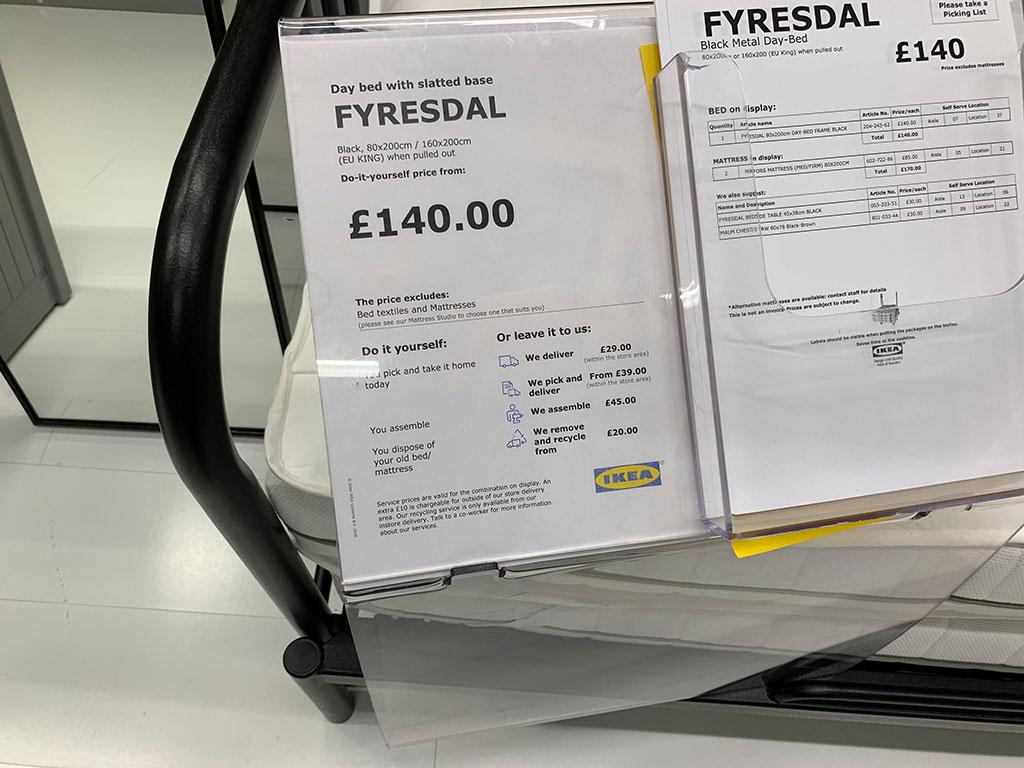
    While I was in Ikea I was looking at a sofa-bed which cost £140, which sounded very reasonable to me. I am not a price sensitive person. Whether something sounds “expensive” to me has been shaped by the privileged wealthy existence I’ve led. More than £20 on a bottle of wine is “expensive” from a wine merchant, but does not seem expensive in a restaurant. My purchases are generally categorised as either approximately £1,000, less than £500, approximately £100, or less than £50.

    When buying something for around £1,000 I simply ask myself “is this a valuable thing?”. For example, my laptop cost me £1,400, but I bought it without hesitation because I use it every single day and it’s a tool of my trade – why would I even think twice about buying the very best available?

    When buying something for under £500, I think much more carefully. Generally at this price point I make a lot more buying errors. I bought a £200 vacuum cleaner today, simply because it was a good brand. I have no need for a good vacuum cleaner – I only hoover once a month and I live alone so my house doesn’t get very messy – so I could easily have managed with a £60 hoover, but my wonky thinking says “why worry about the £140 price difference? Just get the Dyson”.

    When buying products for circa £100, I don’t make a lot of buying errors. My coffee table cost £90 and it’s definitely worth £90 to me. To spend time trying to find a cheaper coffee table I like just as much would have been a waste of time. My curtains cost £90 and they’re perfectly good curtains. In fact, the curtains block out the light really well and it was a really simple purchase – they were the right size and I didn’t even check the price – I knew that they’d cost somewhere between £50 and £150. Perhaps if I’d got to the checkout and they turned out to be £200 I’d have felt like I made a mistake and should have thought about the purchase more carefully, but at £90 I feel like I’m much happier that I have curtains in one of my guest bedrooms, rather than no curtains – the value is hard to measure, but I’m definitely getting more than £90 worth of value out of the curtains.

    Most of my purchases are less than £50, obviously. There are subtle gradations not worth exploring – for example, if I was charged £6 for a takeaway coffee I would think “damn that was expensive I won’t go there again” but I wouldn’t worry about it too much, but if the coffee was £4.50 then I wouldn’t care. Similarly if I bought a sandwich and it cost £4.50 then I would pay the money and not worry about it, but if it was £6 then I’d be thinking “damn that’s an expensive sandwich”. To think about my price insensitivity at this level is too much detail to write about in the scope of this essay.

    So, with the sub-£50 purchases, I spend more time thinking about things than the purchases which are circa £100. If I’m choosing a really nice bottle of wine, I’ll agonise over the choices and probably buy a bottle costing no more than £25. Similarly, if I see some bed linen that I like but it costs more than £50 then I’ll see it as overpriced and gravitate towards items which are priced less than £50. I bought a set of plates and bowls for £25. I bought a set of cutlery for £25. Comparable items could probably be bought for £10 less – saving me £20 overall – but I still feel like I got value for money. When I was unpacking all the knives, forks, spoons, etc. then I was thinking how much of a difference it’s going to make to my life, to have an adequate amount of stuff to fill my dishwasher without leaving myself with nothing to eat with. Every purchase I made today under £50 felt like very good value for money, including an iron which will get very little use. Why do I need a fancy iron and a fancy ironing board, when I do so little ironing? It simply seemed like good value for money that I was able to buy high quality items for under £50.

    Cumulatively, I’ve burned through a ridiculous amount of cash getting myself set up in my new house.

    Most people, when they move into an unfurnished home and they don’t have any kitchenware or other things like that, will buy things little by little. Most people will spend a lot of time choosing every single thing they have in their house. I’m not like that.

    Of course, I’m particular about what I buy. I’m fussy about things. I’m house-proud and I like to think I have good taste. I very much wanted to share photos of all the little things which are slowly turning my house into a lovely home, but that will have to wait for another day – I don’t want to spoil the surprise.

    The catalyst for my money-spending and nest-making is that I have two beloved friends coming to visit soon, and I’m a house-proud person. I got this gorgeous house because I knew that it would immensely improve my self-esteem to be surrounded by some material representation of the hard work that’s gone into getting myself this far in life. It might sound superficial and flawed, but it’s very upsetting to be a smart person who’s worked hard, but seemingly has little to show for it. If I’m showing off to my friends – that I have good taste – then I don’t care. I want to look after them and make them comfortable in my home. I take enormous pleasure from being a host.

    I can’t stop to think about how much money I’ve spent getting my life rebuilt. I don’t see the value in totalling up all the money I’ve burned. What use would it be? I could have scrimped and saved a little here and there, but I’ve not been profligate. Every single stupid domestic item brings me a little bit of joy, even if it’s a washer/dryer, a vacuum cleaner or an iron… all these nice things cumulatively give me a nice life, which seems to correspond with the dedication to my career.

    I rode my bike to meet a friend earlier in a local park for a picnic – a bike which is worth more than my car – and it brought me such a huge amount of pleasure to ride a bike which has been so heavily customised by me. The bike was one of the last purchases I was able to make before I became totally homeless, and yet I never regretted spending a significant sum of money on it. As I cycled home this evening, there was indescribable joy in the enjoyment of a bike which had spent a long time unused – when I was very sick – but has now been fixed up, and I’m able to use for the purpose I designed and built it for: urban life.

    My colleague commented that my bike was “exactly what [he] expected [me] to turn up on” and that’s completely the point. My home and my bike, for example, are an expression of my identity, and it’s a deeply unhappy situation when we’re forced – for example – to wear clothes which don’t fit us and are not to our tastes. We should not underestimate the psychological damage that’s done when we’re forced into situations which clash with our identities.

    My burn rate is obscene, but I’m aligning my identity with my surroundings, after a very long period where I was caused a great deal of distress by the economic limitations imposed upon me. Of course, I slept rough, slept in hostels and wore the cheapest clothes I could lay my hands on, in order to be alive today, but we shouldn’t underestimate how intolerable that situation was at times. We shouldn’t dismiss the self-esteem damage which drives people to commit suicide, as something which we can easily get over by simply suspending our identities and our need to choose our clothing, our home furnishings and decorations, which seem like such superficial things, but on closer examination, I can tell you for certain are vitally important.

    I’m sorry if you’re on a low income and what I have written seems disrespectful towards money, and indeed towards you and your struggles. Perhaps the money I “waste” is offensive to those who would gladly trade places with me, and would make much more considered decisions about spending… they would spend much more time bargain hunting, scrimping and saving.

    I have a very unusual attitude towards money, perhaps because I can tell you precisely what exactly money is and where it comes from, because of my many years working in the banking industry, and of course because I’ve experienced long periods where I had more money than I needed… but please remember that I’ve also lived at the other extreme, where I was homeless and penniless. I do know how to live on a very tight budget, and indeed live on no money at all – I’ve run out of money plenty of times.

    I shudder to think how much I’ve spent recently, but I know that it’s been a long time since I made a foolish frivolous purchase. Sure, I have a lot of nice things but all my recent spending has been on very humdrum domestic items.

    My approach to live is the same as it’s ever been: high risk, high reward. As I slowly recover from years of illness and chaotic life, my surroundings do not look humble and ordinary. Why the hell should they? One slip-up and everything comes tumbling down, so perhaps I shouldn’t be splashing the cash, but at the same time, why would I want to settle for mediocrity when I’ve worked so hard to achieve something special? It would be the most miserable thing, to end up with a life I could’ve easily had, without any hard work.

    Of course, in conclusion, I must add that I know how much of a charmed existence I live. Lady luck has been kind to me. I hope that if you were to really get to know me – what I’ve been through and how hard I’ve worked – and you were to see the life I lead, then you’d say that I’m not entitled or spoiled; that my lifestyle is not excessively lavish, luxurious or recklessly profligate.

    I’ve written three times as much as I intended, whilst sipping a glass of red wine from a bottle which cost somewhere between £5 and £35… but I can’t tell you how much it cost because I’m pretty price insensitive in that price range.

     

    Tags:

  • Debt Made Me Rich

    This is a story about borrowing money…

    Private bank

    If you speak to anybody on low and middle incomes, they will tell you that debt is bad. Particularly, poor people are made incredibly poor through money-lending practices. Amongst the economic bottom 50% of people, you will hear them say things like “watch the pennies and the pounds look after themselves” and “don’t borrow money” and generally disparaging comments about the whole business of going into debt.

    Poor people are wrong about debt.

    Borrowing money can make you rich.

    The problem is that the terms on which poor people are offered borrowing facilities are grossly unfair. The richer you are, the cheaper it is for you to borrow money. The poorer you are, the more expensive it is for you to borrow money. At a certain inflection point, it becomes uneconomical to borrow money, because the terms are so bad. Generally, poor people can only borrow money on such incredibly bad terms, that it’s a trap – they shouldn’t take those loans, because they’ll end up worse off.

    Thus, we have a paradox. If you’re rich, you should take the cheap loans you’re offered. If you’re poor you shouldn’t take the “credit” that you’re offered, because it’s always a really bad deal which will leave you worse off.

    We are living in an era of ubiquitous legal loan-sharking, where tiny debts can ruin lives and cause suicides.

    Small loans – interest-free or at very low interest rates – can make an incredible difference to a poor person’s life. The costs associated with being poor are horrifyingly unethical: the poorest in society will have to pay numerous punitive charges and borrow money at extortionate rates of interest, as they desperately struggle to meet very basic day-to-day costs, which would require borrowing facilities of a very meagre amount.

    Imagine if we gave every poor person a £1,000 interest-free overdraft facility, for the purposes of cashflow. Of course, the worry is that people would borrow that money and spend it frivolously – on consumables – but if we study the behaviour of the poorest members of society, we can see that they are incredibly economical with their money. It’s amazing how the poorest can make so little money go so far, and generally when they get into a financially distressed situation, the sum of money which has tipped them over the edge is pilferingly small.

    How we stop people from using their £1,000 borrowing facility to buy themselves a stupid gadget, or spend it on drugs and alcohol, is not a question I think we need to answer. I think that we are all equally capable of being financially reckless and irresponsible, and the answer to the risk of a few, is not to impose a horrible life on vast swathes of society.

    It angers me that the richer I get, the more money I can borrow, and the cheaper it is for me to borrow it. It’s unjust. The poorest segment of society is being harshly punished for no good reason, except they’re unfortunate enough to be poor, which is not their fault.

    In fact, being able to borrow enough money to live for 2 months without a salary, and pay rent and deposit on a new place to live, would allow people who are trapped in low-paid jobs in deprived parts of the country to be able to relocate. A temporary bridging loan to cover those expenses, while the person has a gap in their earnings and extra expenses, would allow people to move, who otherwise are completely trapped because they can never miss a paycheque, and they can’t afford to save up the rent and deposit necessary to move from one home to another.

    Debt made me rich, because I’ve been lucky enough to go into debt while pursuing financial opportunities. Through borrowing, I’ve been able to move to find well-paid work. Without credit facilities, I’d have been bankrupted and therefore unable to work through any temporary dip in my earnings. On average, my earnings are great, but once you’re in the situation where each monthly pack packet is immediately spent on rent and bills, you are completely trapped and it’s impossible to escape.

    Debt is dangerous, for sure, if you’re using your credit cards to live an unsustainable high-roller lifestyle, but I doubt that many people are so foolish as to do that. Should so many people be made to suffer a horrible existence, because we’re so afraid that people will be financially reckless if we give them the freedom to move around and get better jobs? It seems as though it’s another example of capitalism not being efficient at all – people are not free to sell their labour to the most competitive bidder, because they are so horribly trapped.


    Tags:

  • I Love My Job

    This is a story about having a métier…

    Hospital bed

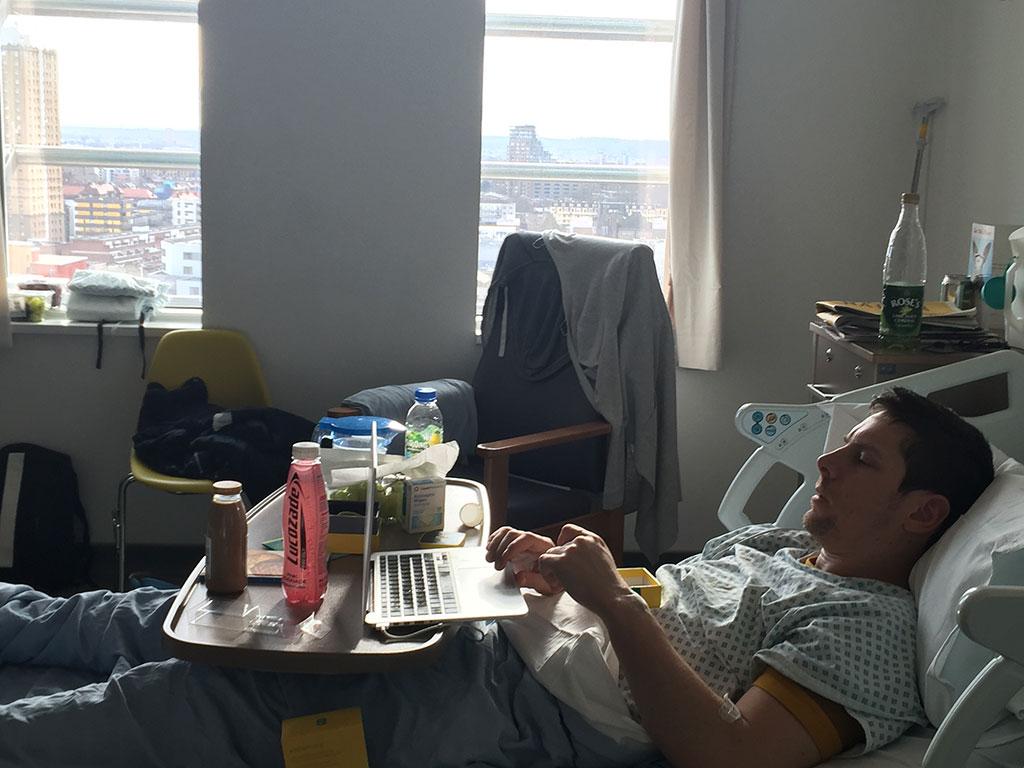
    It feels strange to be writing this, but I’m really loving my job at the moment. I’ve always been a bit of a workaholic, but I often get depressed and demotivated when I’m not empowered to do my job effectively. I have often complained about being bored and unchallenged – a common consequence of working for very large organisations – but after a difficult ‘bedding in’ period I usually find myself in a role where I’m adding a lot of value, which I find very rewarding.

    I’ve written so often in the past 15+ months about how much I detest the rat race and the coercion of capitalism, forcing me to work when I’m very sick. Not long ago, my kidneys failed on more-or-less the day I was supposed to start a new job. My life hung in the balance, as the amount of toxins in my bloodstream put me at continuous risk of cardiac arrest. Whether my kidneys would ever function again was doubtable and I had weeks of emergency dialysis, lasting several hours a day.

    I discharged myself from hospital against medical advice, because of the coercion of capitalism. I need to work. I can’t afford not to work.

    That period in hospital was a major setback. I exhausted myself, persuading the company I was about to start working for to wait for me to leave hospital, which they did… but I had to leave hospital at least a week before it was safe to do so. My recovery from such a traumatic medical emergency was not straightforward – my left leg was not working properly due to nerve and muscle damage and I was in immense pain. It took months before I was able to walk very far without it causing me a great deal of agony. Work was impossible.

    A company asked me to build an app for them, with a very tight deadline, which I did, but my financial situation was precarious and I was still very unwell. The pressure was too much and I tried to end my life.

    A friend recommended me to the company he was working for, to build an application for them, which I did. I had a tight deadline, which I easily met. Strangely, the company decided to extend my contract, but the work was finished so I was incredibly bored. My colleagues worked in Warsaw and I was in London, so I had nobody to talk to – I was very isolated. I was still recovering from the suicide attempt.

    Another friend recommended me to another organisation. Again, there was a project with a deadline, which I completed early. I enjoyed that project, but I’d had to move house and I was rebuilding my life in a new city. The preceding events had left me in a very financially precarious situation, as well as isolated from friends. I finished the project, but my life was unstable – I got sick, broke up with a girlfriend and my personal life fell apart, although I managed to minimise the impact at work.

    I started work with the current organisation. I did so out of desperation, because I was in danger of losing all the progress I’d made to getting back to health, wealth and happiness.

    I lived in a hotel for months. It was awful.

    It was quickly apparent that there were people I enjoyed working with, and there were plenty of challenges to keep me busy, but my personal life was very badly broken. The work was good at times, but my brain chemistry was not healthy, and some days were very torturous. I struggled to find pieces of work which would keep me entertained and motivated. My mental health was a hit-and-miss affair.

    I struggled onwards, setting myself some major milestones: I wanted to take a holiday in October, to beat the winter blues. I wanted to take a holiday during Christmas and New Year, to get some more winter sun and because my relationship with my family is irreparably broken. I wanted to come back from holiday and carry on working, to cement my gains. I knew that I had to move house and settle somewhere – to have some security and put down roots.

    I suppose I always manage to make myself useful in any organisation, given enough time to get my bearings and manoeuvre myself into a role where I’m empowered to make a difference. The place where I currently work seems to have gleefully put my skills to good use, and I feel like I’m in the right place at the right time. I do stuff that I think will be useful and I’m rewarded for it, even though I’m rarely doing what I’m ‘supposed’ to be doing.

    I worry that disaster will strike. I worry that my big mouth will get me in trouble. I worry that the personal risks that I take – staking my reputation on my decisions – will backfire one day, if I make a mistake. I know that my employment is precarious; temporary. I’ll be kicked out as soon as I’ve served my useful function.

    I have a great deal of extra pressure on me now that I’ve made a commitment to a new city. My financial security would quickly collapse if I lost my source of income. My mental health would be likely to deteriorate very badly, with a major setback.

    I’m not sure why I’d lose my job when I am enjoying it, being very productive, doing useful work and being seemingly well received – well liked – by my colleagues, but I do have a propensity for getting carried away and doing stupid stuff. The springtime has often proven difficult for me in the past. I need to work very hard to keep my mood as calm and regulated as I possibly can.

    On a Sunday night when I’m usually dreading Monday morning, I’m actually feeling very happy to be starting a new working week. I feel motivated. I feel like I have a purpose. I feel empowered to do a good job.


    Tags:

  • British Summer Time

    This is a story about the tyranny of alarm clocks…

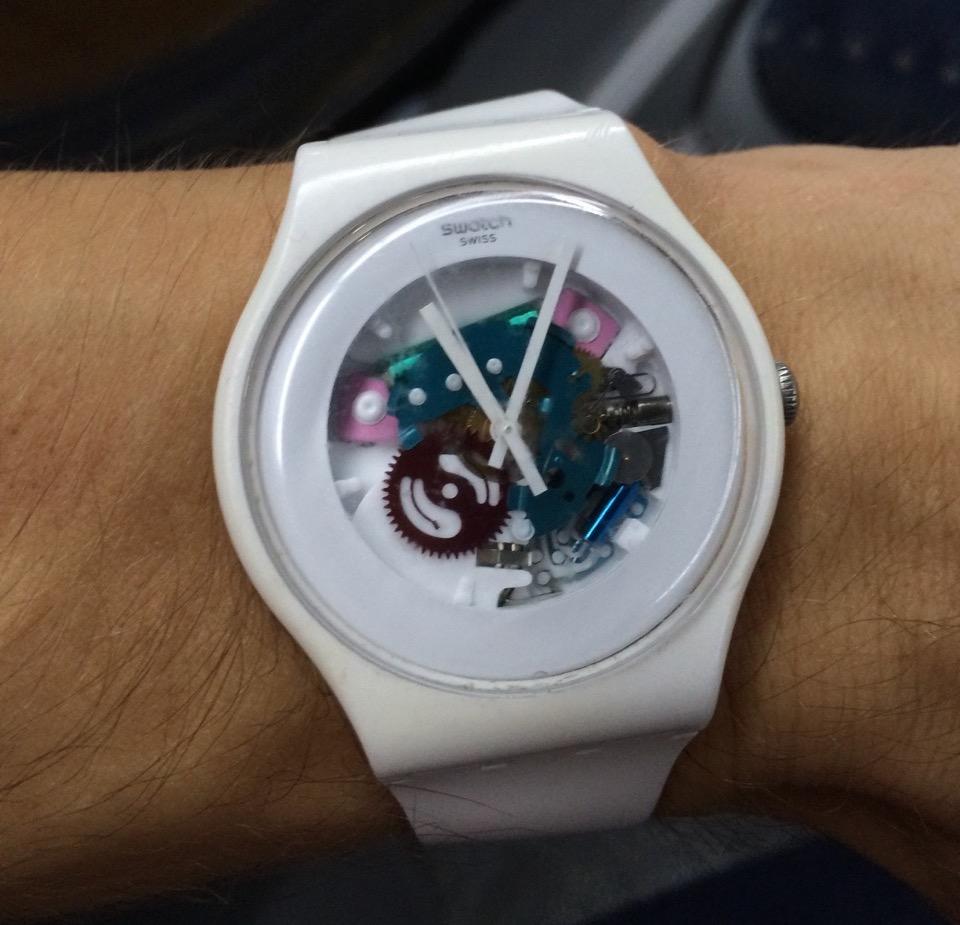
    Wristwatch

    Before the clocks sprang forwards I had bludgeoned my body clock into co-operating with the social jetlag imposed upon me by society. Society is run in favour of “early birds” not “night owls” despite there being a 50/50 split between each different genetic variant. If you want to earn decent money for doing easy work, then you have to suffer the torture and torment of complying with hours of business which are incompatible with your body clock – it sucks.

    Because I am unafraid to prescribe myself whatever medications I need, I have access to sleeping pills, which are a fantastic invention for “night owls” like myself, who are coerced into working office hours which are fundamentally incompatible with my DNA. It’s as if I was a coeliac forced to eat exclusively gluten-containing foods, when there are plenty of other foods available but they’re all prohibitively expensive. I could get a job which would better suit my body clock, but I would have to take an 80% pay cut, or maybe even more than that. Sleep medication has provided me with a solution to end the torture which I had to endure for the best part of 20 years.

    The clock change – to British Summer Time – has been shockingly disruptive to my routine. Before the clocks changed I was waking up before my alarm clock and getting into work early, with great ease. Now my alarm clock jolts me out of my peaceful slumbers and I am immediately filled with dread at the prospect of having to leave my bed. One hour does not sound like a huge amount, but an extra hour in bed is hugely beneficial to my health, given that my body clock is not compatible with “early bird” office hours, at a fundamental physical genetic level.

    To live in a perpetually jet-lagged state is torturous, and I am angry about capitalism’s tyranny, in forcing me to comply with its schedule, rather than my own body’s schedule. I’m handsomely financially rewarded for the suffering, but it often seems like inadequate recompense for the unpleasantness of every single morning, which I have to endure.

    Further disruption to my schedule has been seen in my writing, where I completely forgot to write a blog post one day – it feels like I have less time in the evenings to do everything I need and want to do, after work. It feels like I have nowhere near enough time to deal with essential admin, do chores, write my blog, catch up with friends and get to bed early enough to avoid sleep deprivation.

    I’m attempting to shift my body clock to the new schedule, but it’s not a quick process.

    I’m also attempting to reduce my dosage of sleeping tablets, which means it takes longer for me to fall asleep, and my sleep quality is much reduced. I was very late to work on Monday, Tuesday was a struggle, and today was OK but still not wonderful. I hope that by the beginning of next week my body clock will begin to comply with the new regime.

    As far as having an “extra hour” of daylight after work, it is very nice to be driving home earlier, but it’s still pretty chilly and the weather is changeable, so I don’t yet feel enthusiastic about being outdoors in the evenings. It’s going to be a while before the temperatures lift enough for me to think about making use of the local parks, or perhaps cycling somewhere. Given how little time I have for the essentials – such as meal preparation – I can’t see that I’ll be doing much with my evenings, while the start to my day is so painful: the alarm clock is such a rude intrusion on my sleep.

    It might seem inconceivable that a single man with no children should complain about having no spare time, but my primary concern is getting enough sleep to make my 9 to 5 office job bearable enough that I don’t lose my mind. It’s essential that I keep in the routine of my job, because it provides the money which is digging me out of a hole, and it provides the stability which is useful for my health and wellbeing.

    Ultimately, I still want to find a way to make life work for me, and no longer be tyrannised and coerced into the unpleasantness and boredom of the bullshit world of an office job, but a great deal of compromise is necessary for the foreseeable future, so I shall have to put up with it.


    Tags:

  • Paper Trial

    This is a story about being swamped by bureaucracy…

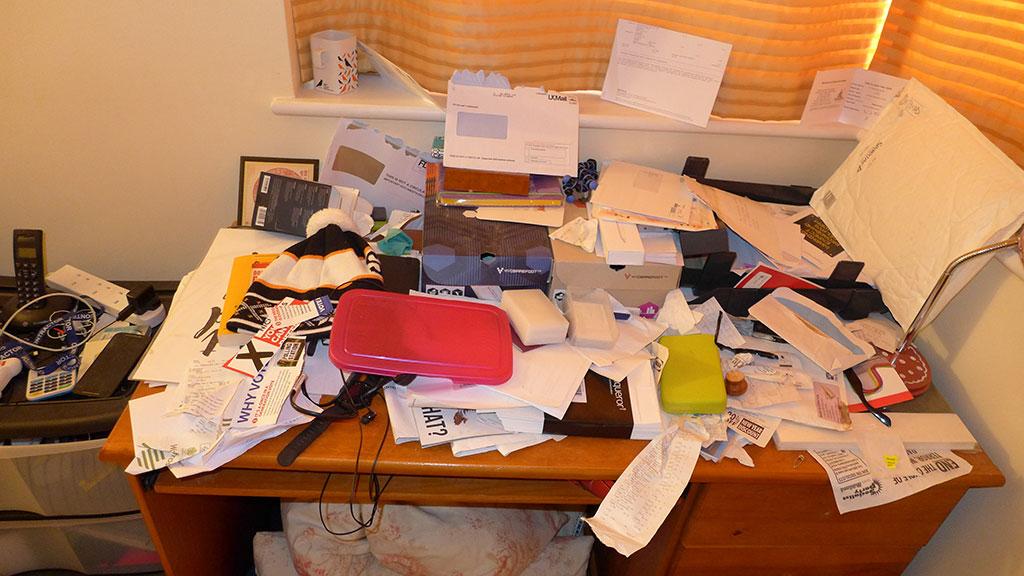
    Paperwork

    Once my administrative affairs are in a neat and tidy state, it’s not too hard to stay on top of things. As various demands for money with menaces arrive, I can deal with them more-or-less on the spot, and my life ticks over with only a small amount of time required each day to open mail and pay bills, or complete other bureaucratic tasks.

    Moving house, especially as a business owner, is a seismic event.

    The more frequently a person moves, the more the administrative burden grows, until it becomes almost unbearable. Each previous address requires a significant amount of effort, to convince the various suppliers of gas, electricity, council services, broadband, telephone, water, sewerage, home insurance and a billion other things, that you are no longer liable for the bills. Each new address immediately demands that some payment is made in advance, and it is a very manual process to automate the collection of future payments, such that bills don’t become a monthly ordeal.

    As a business owner, I have a responsibility to change the adress on no fewer than 5 different government services, which ensure that I am compliant with taxes and my duties to the public to be transparent as a director and shareholder.

    As a car owner, I have a responsibility to ensure my drivers license has my current address, my car is also registered at the correct address and my insurance is updated to the current address.

    All kinds of things like mobile phone contracts, bank accounts, life insurance policies, home insurance policies, subscriptions to various services and other similar stuff, all has to be changed to my new address.

    If I want to visit a doctor or a dentist, I will have to register locally, and they will want to see some proof of address.

    The administrative burden of being a British Citizen is bad enough, but the deeper into civilised society you get, the greater the amount of work is required to handle all the consequences of moving house. Failure to remember any one of the very many things – such as a TV license – can result in huge fines for non-compliance with the duty we have to keep our records up-to-date and stay on top of all the millions of letters which get sent every day, demanding money with menaces.

    I accept that I receive a great deal of services in return for my money, but because my life is supported by a patchwork-quilt of organisations, each making their own unique demands to be dealt with and paid in different ways, the complexity and effort involved becomes quite staggering.

    For some segments of society, they are paid in cash, they pre-pay their gas and electric by loading “credit” onto a key, which they slot into the meter in their house, they buy mobile phone credit in shops, and otherwise they’re relatively free from the burden of the very many organisations which I regularly have to deal with. Moving house, for some people, is as simple as moving their stuff – nobody will be chasing them for money, simply because they forgot to tell anybody they were moving out.

    When my life became chaotic, I got very badly behind on my administrative duties, but I did manage to avoid total disaster. My paperwork is a dreadful mess, but I can find the relevant pieces of paper that I need, eventually. The process of getting on top of things is extremely distressing, but I usually manage to make the effort required before I’m overwhelmed with punitive fines and costs added by organisations, who seek to profit from people who are swamped by the unfair burden placed on individuals.

    Individually, the demands being made do not seem unreasonable, but cumulatively it becomes an absolute nightmare. I count 24 items on my todo list for today alone, all of which are urgent and essential, and delays would be very costly. If I was unwell for a month or two, I could easily be financially ruined by the bloodsucking parasites who hope to profit handsomely from a mental collapse; the circling vultures.

    I opened two letters which recently arrived, and was gobsmacked to see demands for £3,000 worth of services I haven’t even received yet plus I have decided to defer other costs which most people would consider essential, such as insuring the contents of my home. When I add up all the charges I’ll have to pay, for example for getting a new driving license and for changing my car insurance address, it amounts to a sum of money which would be financially ruinous for most ordinary people. No wonder so many are in financially distressed situations, having to borrow from loan-shark payday lenders just to cover ordinary everyday household expenses.

    I am fortunate that my dogged determination to protect my credit rating and persevere through a period of illness which would have seen me bankrupted, unemployable, unable to rent a home and unable to get gas & electric supplied – plus all the other unseen consequences of having a black mark against your name – has now seen me emerge from a very precarious period in a much more financially robust situation, where I won’t be forced to borrow money to cover unexpected expenses, I hope.

    It seems like a very rigged system. Those who are struggling are very harshly punished, further compounding their misery and stress, and destroying any hope they might have of escaping their predicament.

    I don’t understand why it’s not possible for me to simply put a vast sum of money into a bucket and let the bloodsuckers and the vultures squabble over who has a valid claim for it. It upsets me that such a heavy burden falls on me to do the work of figuring out all this crap for these organisations, lest they inflate their demands for money so much that they’ll ruin me, despite my ability to pay – I’m able and willing to pay, but for god’s sake make it easy for me, can’t you?

    The pile of mail that’s accumulated in my new house, even though I’ve not yet told anybody I’ve moved, is quite frightening. The complexity of running a modern life is too much, on top of the demands of commuting and working a full-time job. It’s unfair to ask a single person with no support, to plough through the bureaucratic bullshit.

    I can see why people kill themselves over seemingly trivial things. Life is pretty easy when you have a settled and secure home life and everything is set up so that it ticks over with almost zero intervention, but you must understand that life’s not like that for me – I’m swamped with paperwork, and a single error can easily be compounded to result in a demand for life-destroying sum of money, once all the bloodsuckers and vultures have added their unreasonable fees.

    It might seem silly to worry about “just a bit of admin” but in actual fact, it determines my entire life outcome. To ignore any one single thing could cause a cascading catastrophe, and see me destitute, homeless; ruined. Living with constant housing insecurity is unimaginably awful, compounded by the ridiculous situation of all the various organisations making competing demands all at once.

    I’m in the depths of admin hell.


    Tags:

  • I’m Sick Of Waiting

    This is a story about losing patience…

    Washer

    I suppose I am becoming acutely aware that there has been a very high cost associated with the ups and downs of recent years. The cost is mostly financial, but that has a drastic effect on every single area of my life. We live in a financially obsessed global economy which is reluctant to forgive debts, and in fact enforces its debts to the point of causing widespread suffering and death.

    I borrowed from a friend in order to stave of bankruptcy and total destitution. The financial system would have ruined me and left me for dead. The black mark against my name would have made me unemployable and unable to rent a place to live. The consequences would have been unimaginable, unless you yourself have truly experienced the brutality of capitalism, and the harsh reality of having less than zero money.

    In order to dig myself out of the hole I’ve had to work very hard, but unfortunately the value of the pounds and pence in my pocket are eroded by the capitalist system, faster than I’m able to generate income.

    The system is rigged.

    I’m well aware of how badly rigged the system is because I was caught on the wrong side of history – I was suckling at capitalism’s teet, and I was fed by the biggest fattest pig of them all. I was at ground zero during the financial collapse of 2007/8. I had ringside seats. I was part of the inner circle.

    I can’t feel sorry for myself, because I’ve got blood on my hands.

    I knew that I was involved in something very corrupt and immoral. I knew that I was involved in something that was completely in contradiction of the needs of society and humanity. I knew that I was seeing the very worst excesses of capitalism. However, I didn’t quit until it was too late. I put my pride as an engineer before my instinct to reject what I could see in front of me – I had a system to finish building, and I couldn’t stop myself. I concentrated on doing my job, instead of stopping and blowing the whistle.

    Did I see anything I could’ve actually stopped? No.

    The complicity is so widespread that nobody can stop capitalism. So many people profit so handsomely and benefit excessively that capitalism’s an unstoppable force. As my colleagues counselled me: The only person I’m hurting is myself.

    Still though, I know instinctively that only a small segment of global society benefits from capitalism, while most people are exploited, forced to suffer and die.

    What’s staggering is that I can work very hard for 15 consecutive months and effectively get nowhere. It’s remarkable how strongly capitalism has resisted me having a very modest standard of living. I simply want to live a debt-free existence, free from the tyranny of slave-drivers. I don’t want Damocles’ sword dangling over me anymore. I’ve worked hard enough in my lifetime to be granted some respite from the pressure, the stress and the exhaustion.

    Every year a mountain of expenses are rained down onto my head. These are expenses that have to be paid just to be able to continue to play the game. This is the price of being alive, which is extremely high.

    I only feel indebted to my friend. I don’t feel like I owe anybody else anything at all.

    Once I pay my friend back, I’m not sure what I’m going to do.

    At the moment, I’m not sure I can carry on.

    It’s been too exhausting to get to this point.

    Anyway, it’s all hypothetical at this stage. I still have another three or more months before I can fully repay the debt to my friend. I have to keep going so at least the trust and faith that my friend had in me can be proven to not be misplaced.

    It shamed me to lose my status symbols – like my house – and it was very damaging to my self-esteem. Now, I simply wish to pay back a friend so I can die with some dignity.

    I’m being a little melodramatic. I could have paid my friend back a long time ago, but I’ve been trying to make life feel worth living. I had a couple of very nice holidays in the autumn and winter of last year. It did feel momentarily nice to enjoy the fruit of my labour, but the choice to do that has delayed the day when I’m debt-free again.

    Perhaps my mood will improve as the weather improves. The clocks spring forward at the end of the month and the days are getting longer. Warmer weather will lift my spirits. Perhaps I will even have a pleasant summer.

    My weekend has been full of chores like grocery shopping, installing my washing machine, doing laundry and getting my hair cut, but perhaps I’m a little grateful that a couple of major pieces of the puzzle – my job and my home – are in place, even if there’s an enormous amount of work ahead of me.

    I toss ideas around in my head, like starting dating again, or getting a kitten. I’m not completely depressed and suicidal. I can picture a more pleasant and bearable life in the not-too-distant future, but it’s going to be stressful to get hold of what I want.

    Why shouldn’t I have everything I want right now, I sometimes ask myself. Why haven’t I got everything, when at some point in my life I’ve had all the things, which cumulatively add up to everything I want. Why hasn’t everything come together at the same time?

    It’s a bit spoiled brattish and unreasonable to expect to get everything, but I always compare effort and suffering with payoff. Where the effort and the suffering don’t result in any payoff, then I question what the point of being alive is.

    I know there are lot of people in the world who don’t seem to be getting a fair payoff for their effort and suffering, but still they carry on. Some of them are happy. Good for them.

    I suppose I’m unhappy being exploited and I’m unhappy doing the exploiting, which puts me in rather a difficult position. How does a person avoid either?

    My assumption has always been that one day I’ll see an opportunity to live my life free from exploitation, but increasingly I’ve come to recognise that it’s impossible, except through suicide. Perhaps my outlook will change if I fall in love or find some purpose, but at the moment I’m just sitting and waiting, and I don’t like what I see happening all around me.

    I think I’m deeply depressed, which is understandable given the stress and the trauma of recent weeks.


    Tags:

  • I Hate Renting Houses

    This is a story about the rentier class…

    Assured shorthold tenancy

    I spend a lot of time dealing with brain-dead individuals who think they should get paid a lot of money for jobs they’re thoroughly incompetent at, as well as being so utterly unbelievably stupid that they would put a Terms of Service contract onto their website, which was stolen from a fast-food restaurant.

    Unfortunately I have to deal with lettings agents who think it’s OK to charge the best part of £400 or more, for putting a document in a photocopier and then filling in a couple of blanks, such as the name of the tenant and the amount of rent payable.

    Like, I mean, how much do you actually think you should get paid for filling in 5 pieces of information onto a document you don’t understand, and doing a bit of photocopying.

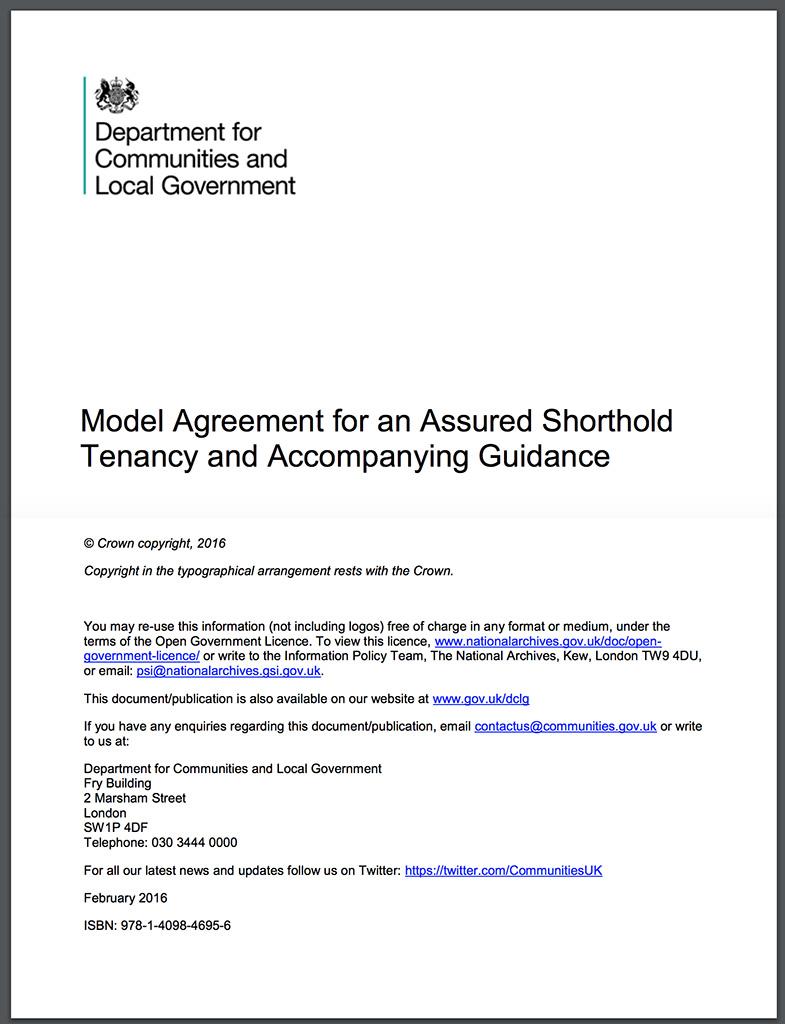
    The UK government has helpfully provided a very nice model contract, for anybody who is looking to rent out their home. This document includes all kinds of useful guidance, such as “it’s not OK to demand sex in lieu of rent” for f**kwits who think they can write whatever the hell they want into a contract, and it somehow supersedes the laws of the country.

    You cannot, for example, draw up a contract that allows you to punch me, stab me and/or kill me, and avoid punishment for the crime, because I signed a so-called waiver. I cannot waive my rights using civil law. The criminal laws of the country will always take precedence over any contract law. That is to say that my statutory rights are not affected by any bullshit piece of paper that I sign.

    When you buy a pair of shoes, you’ll sometimes sign a piece of paper that says you can’t return them and get a refund. However, that doesn’t affect your statutory rights, and you’re quite within your legal rights to return the shoes if they’re faulty or defective in some way.

    The law defends us from all sorts of unscrupulous unethical chancers who want our money but don’t want to work for it – in short, they want our money, but they’re not going to do any work to get it. Those people are called the rentier class who believe they’re entitled to money for nothing.

    The rentier class piss me off.

    I just want to have a place to live. I want to have a secure home. That’s all I want.

    Here is an email, which I took the time to research and write on my goddam Sunday afternoon, when I’m supposed to be relaxing:

    Dear XXX XXXX,

    Many thanks for showing me around XXXXXXX on Saturday afternoon, and your prompt reply to my queries was greatly appreciated. I am interested in renting the property as it adequately met my requirements, but I felt I should write to you with regards to keeping a pet cat. The answer you supplied is not satisfactory I’m afraid.

    I must draw you, your agency and the landlord’s attention to the matter of UK law, when it comes to the keeping of pets. The Consumer Rights Act (2015) stipulates that the keeping of a pet cannot be reasonably refused, unless the pet would cause a nuisance to the occupiers of neighbouring properties or significantly increase wear and tear to the property. According to the Unfair Terms in Consumer Contracts Regulations (1999) The Office of Fair Trading deems a “No Pets” clause unlawful.

    The law is very clear: “[a] landlord cannot exercise a blanket ban on pets”. Your quote “the Landlord has stipulated No Pets at the property” which is an incontrovertible piece of written evidence of unlawful behaviour on the part of the landlord, you and your agency.

    The property is unfurnished and has hard floors throughout, such that the keeping of a cat would clearly not increase wear and tear to the property. A cat would certainly not cause a nuisance to the occupiers of neighbouring properties. I noticed several neighbourhood cats during my visit to the property.

    Given that the landlord has unreasonably refused for me to keep a cat at the property, which is an unlawful contravention of The Consumer Rights Act (2015) as a goodwill gesture I am prepared to offer a modest increase to the deposit and an additional contract clause whereby the tenant accepts any responsibility for pet damage to the property. This would give the landlord an exceptionally high level of protection, for the incredibly unlikely event that an ordinary domestic cat might cause damage or additional wear and tear. This extra money would be held in the Deposit Protection Scheme (DPS) in addition to the substantial deposit already proposed by your agency.

    Naturally, the Assured Shorthold Tenancy agreement would be amended, so that it is contractually stipulated that the keeping of one single cat was permitted. Any additional pets would require consent from the landlord, which is standard practice.

    It is not my intention to turn the landlord’s property into a zoo. It would be perfectly reasonable – for example – for the landlord to refuse the keeping of a large dog, which would be likely to bark loudly and thus cause annoyance to the neighbours.

    My request is most reasonable and the UK courts will robustly defend my legal right to keep a pet cat. I hope you will forgive me for reminding you again that it is not lawful for a landlord to “exercise a blanket ban on pets and should not turn a request down without good reason”. 

    I humbly suggest you and your agency thoroughly familiarise yourself with the laws of England and Wales pertaining to landlords, tenants and letting agents, such that your future business is conducted lawfully. The necessary statutes which you and your agency should familiarise yourself with are: The Landlord and Tenant Act (1985), Consumer Contracts Regulations (1999) and Consumer Rights Act (2015).

    I advise you to inform your client of any laws which he or she might not have been aware of, such that any more unlawful behaviour might be avoided in future. Perhaps you might then be so kind as to respond again to my question about keeping a pet cat, when you are next able to speak to your client.

    It disappoints me that your agency who charge fees of £311.54 for the simple preparation of an Assured Shorthold Tenancy agreement, should be so woefully ill-informed of the laws of the United Kingdom. Ignorance of the law is no defence in court. I am especially disappointed that you are charging a substantial professional fees for your services, when you are conspiring with your clients to break the law.

    My advice is offered at the cost of a leisurely Sunday I could have spent spent relaxing, so I hope you appreciate the effort I have made in providing you with a comprehensive summary of how to conduct your business and advise your clients, without breaking the laws of England and Wales, which would be financially costly and reputationally damaging. Consider my free advice to be a goodwill gift.

    I assure you that my only intention is to rent a property, with the statutory protections afforded to me by UK law, such that my right to live in peaceful enjoyment of the property as my home is not legally infringed. It seems like a reasonable request to me. Would you agree?

    I trust this message finds you well and I hope to receive a reply at your earliest convenience.

    I hope you had a good weekend.

    Kind regards,

    Nick

    That’s my politest possible way of saying you can’t fuck with me, you rentier class c**t. And demanding to enjoy the same freedom in life that those who were born with a silver spoon in their mouth get. We should not have a two-tier society, where the rentier class don’t have to work, and the rentier class should not make unreasonable demands, such as disallowing the proletariat the comfort of having a pet.

    Rant over.


    Tags:

  • Employment Status

    This is a story about fitting neatly in a box…

    Form

    “Are you in full-time employment, part-time employment, self-employed, full-time student, retired or unemployed?” the person on the end of the phone is asking me. What should I reply?

    Technically, I’m in full-time employment. Let’s proceed with that conversation and see how we get on, shall we?

    “OK. Can I have your manager’s name or somebody who we can contact to verify your employment and your salary, please?” the person on the end of the phone asks. What should I reply?

    Technically, I’m employed by the board of directors. Given that I’m the managing director – the CEO – then the reply is that they should contact me to verify my employment and my salary. Let’s see how we get on with that, shall we?

    “I don’t understand, sir. Are you self-employed?”

    Technically I am not self-employed. I have an employment contract with a company and I get paid a salary by that company. The company which employs me is a legal entity, which was incorporated, has memorandums and articles of association, a board of directors (me), shareholders (me) as well as employees (also me). The company has its own bank account, compiles and submits annual accounts to the relevant authorities, and operates as a limited company, which is very different to being “self employed”. I’m going to tell them I’m not self-employed, because that would be fraudulent. Let’s see how we get on, shall we?

    “OK. Who should we write to who can verify your employment and your salary? Do you have a human resources department?”

    Technically the company does have a human resources department, as well as every other department that a person might imagine exists in an organisation – finance, accounts payable, accounts receivable, sales, marketing, IT, operations, admin, customer support etc. etc. – so this person on the phone could certainly write to one of these departments. Let’s see if they’d like to write to my accountant and see how we get on with that, shall we?

    “So your accountant can confirm your employment and your salary?”

    Technically, anybody can confirm my appointment as company director, because it’s a matter of public record. My salary is not the same as my financial compensation so we’re going to have to have that particularly difficult conversation now. Let’s see how we get on, shall we?

    “So how much do you earn each month?”

    Technically, I could earn £702 in one month and 20 times that amount the next. My financial compensation is based upon the company’s profits, which are variable, and it’s the decision of the board of directors as to when dividends will be paid and how much they will be. Let’s try explaining that, shall we?

    “So you’re self-employed? Or do you work in sales? I don’t understand”

    Technically, part of my job is sales, in that I am responsible for selling my company’s consultancy services. I do not, however, “work in sales”. My financial compensation is not based on commission or targets or any of that other crap. I am not self-employed and I am getting rather frustrated about having to repeat myself with this person on the end of the phone.

    I could relent, and either misrepresent myself as “employed” with a salary based on my average earnings over the past 3 years, or I could misrepresent myself as “self-employed” which is going to result in them asking me to show them detailed account statements, proving a steady stream of income.

    What I really want is for the person on the end of the phone to understand that I’m in the box marked “other” and the way to find out what they really want to know – can I afford to make a monthly payment? – can be answered by my chartered accountant, who’s professionally obliged to give truthful and accurate answers.

    That I have to answer these questions at all comes about whether buying a car on finance, applying for a loan, applying for a mortgage or even changing from one mortgage provider to another. Given that even the wealthiest amongst us are not able to afford their houses without at least some part mortgaged, the neat set of boxes, which do not include “other” causes a lot of stress and hassle – it’s surprisingly difficult to navigate parts of society, where most other people do neatly fit into one of the boxes.

    Obviously I hope to one day be rich enough to buy a house in cash – which will probably be a tiny cabin in the woods – but for the time being I’m forced to suffer this arduous form-filling exercise and rigmarole with people on the telephone, who are using systems which are unable to cope with us “others”.

    Perhaps this is capitalism’s way of nudging me towards a minimum-wage McJob, just so I can avoid this kind of hassle.


    Tags:

  • Our Morals: The Ethics of Revolution

    This is a story about sedition and treason…

    Security vetting form

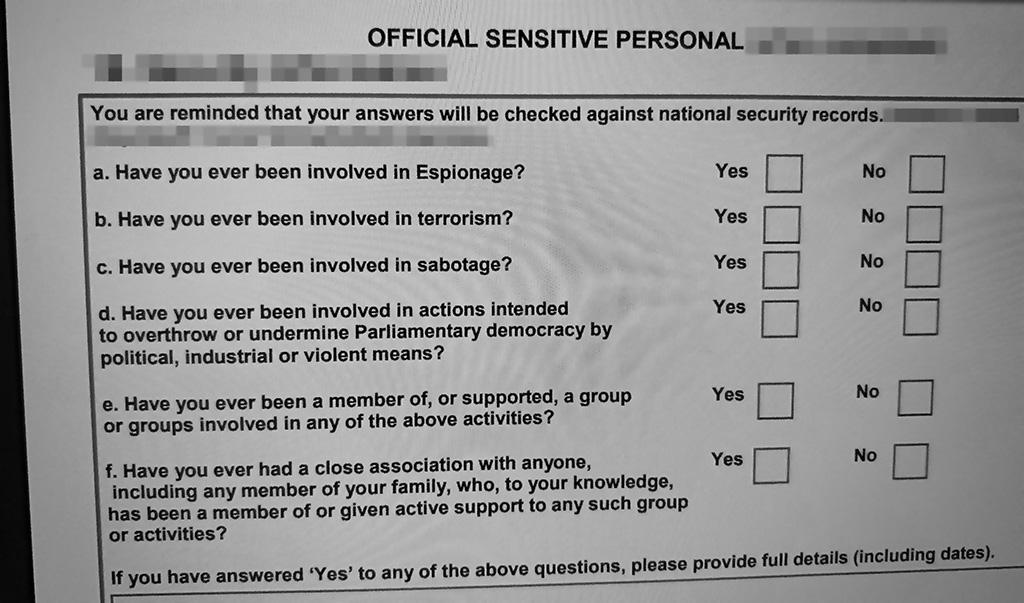
    Questions A, B and C seem pretty reasonable to ask. It seems like a good idea to ask people if they’re spies, terrorists or saboteurs, if they’re going to tell you the truth. It seems logical to assume that spies, terrorists and saboteurs are enemies of civilised society. It seems sensible to exclude spies, terrorists and saboteurs from positions where they could be a threat to public safety.

    Upon closer examination, spies and saboteurs could sometimes arguably be said to conduct their actions in a responsible way, in the course of the furtherment of their laudable objectives, in the absence of other available options. Spies exist when diplomacy and co-operation have broken down. Saboteurs exist when tyranny, oppression and exploitation are so great that a worker must throw their clogs into the loom, to save themselves and their kin. Without wanting to fall foul of the nebulous terminology, it would be remiss of me to acknowledge that a person could certainly understand the reasons for spying and sabotage – in a theoretical and academic sense – and perhaps even excuse those acts, where the outcome clearly results in a positive outcome for the greater good, according to utilitarian philosophy.

    Of course, I must tread very carefully.

    I have to watch my words.

    What on earth is question D getting at? I once destroyed my ballot paper as a political protest at the lack of a candidate and a party for whom I wanted to vote. Does that count as “[undermining] Parliamentary democracy by politcal … means”? Should I tick “YES” to this question? Is my spoiled ballot paper recorded in “national security records” which I’m reminded my answers will be checked against? Why even ask me if you already know the answer?

    Of course, the idea of asking people “are you a terrorist?” is pretty ridiculous, so why shouldn’t this same 66-page form ask vague questions which are almost impossible to answer, unless you think of yourself as such a perfect citizen and well-behaved patriotic loyal subject of Her Majesty Elizabeth II, Queen of the United Kingdom of Great Britain, Northern Ireland, its dependencies and its overseas territories.

    Do I believe in the Westminster system of Parliamentary democracy? Do I believe in democracy at all? For the purposes of my rational economic self-interest in the immediate short-term, within the context of filling in this 66-page form, which is of vital importance for the future of my career, the answer is “yes” for sure.

    Why am I using such cautious and measured words? Why am I couching what I say in caveats and disclaimers?

    The question arises: Is it irresponsible, socially destabilising or otherwise contrary to the interests of national security, to discuss the merits of ‘political change’ in a purely academic and theoretical context?

    Do scholars who study, think about, write about and discuss alternative political systems, imply some “intent” to overthrow or undermine Parliamentary democracy. For example, in the instance that a learned professor were to stumble upon compelling evidence that there is a better system for the decision making which is supposed to improve the human condition and the lives of the masses, then is that professor allowed to discuss it; perhaps even to promote the idea? What if other academics take an interest in that professor’s ideas, and they become supporters of the theory? What if this group of academics could be said to be a group of likeminded individuals, similarly swayed by the evidence and the ideas?

    Have I made myself into an enemy of the state by taking an interest in philosophy, politics and economics, which has forced me to consider the question: Is our Parliamentary democracy the best available option, or should we change to a different system? Does posing this innocent question constitute an act of undermining Parliamentary democracy?

    By the time we get to question F, I must surely answer in all truthfulness that I almost certainly would have – at some point in my life – had a close association with somebody who’s been a member of a group or supported a group whose intent could easily be interpreted as ‘offering an alternative’ to Parliamentary democracy. This is about as close as I’m prepared to go, to admitting something which is against my rational economic self-interest in the short-term, for the furtherment of my career objectives.

    Most of my friends are technologists. Many of my friends have created pieces of technology which must surely have undermined Parliamentary democracy. Many of my friends are the original engineers and architects – the visionaries – who are responsible for the birth of social media. What greater threat to the ruling elites has been born, since the invention of the printing press?

    Terrorism and violence are hard to defend; seemingly always unethical. It’s beyond the scope of this essay to discuss the ethics of violent rebellion by the victims of tyranny and oppression. I’m in too much of a vulnerable situation to say something like: “I can understand the reasons why desperate people might resort to violence, in the absence of all other options, like any cornered animal”.

    I may hold unspeakable views, which have no place in a civil position of public servitude. My upbringing in the company of academics, in and around the buildings of Oxford University, may well have scuppered any ambitions I might have of playing a role in the running of the country, and hopefully making a positive difference to as many lives as possible.

    Even within the walls of a British university, an academic may find themselves falling afoul of laws – new and old – which are designed to punish any agitators who might threaten societal stability and the established order. The power of the internet allows compelling academic arguments to be disseminated to vast numbers of people at incredible speed, and for the public’s imagination to be captured. Academic papers are no longer written in Latin and kept safely out of the hands of the hoi polloi, lest any revolutionary ideas they might be harbouring be provoked.

    Do I hold my tongue for the greater good – in support of a paternalistic and elitist establishment – because it will perpetuate the state of unhappy stability, which is at least preferable to civil war? Do I speak my mind, because to do so is a privilege afforded by the unpalatable actions done in the interests of national security? If I don’t take advantage of freedom of speech, am I really a patriotic citizen, loyal subject of Her Majesty and supporter of Parliament, given that wars are waged on my behalf so that I might enjoy the luxury of being able to write essays like this?

    I think I’m just going to tick “no” to all the boxes, because I can’t be bothered to have this conversation a second time, when I’m being interviewed by the thought police.


    Tags:

  • Insignificant Speck

    This is a story about sonder…

    Supermoon

    Is it useful to have a realistic appreciation of your own insignificance? Is it useful to correctly perceive that you’re not significantly different from any of the 7.6 billion other people on the planet, or the 108 billion humans who lived and died since homo sapiens first appeared as a new species? Is it useful to be conscious of your cosmological insignificance, where the entire human race will be obliterated so completely that it will be as if we never existed? Is it useful to understand the fundmental laws of physics well enough to know that there isn’t going to be a technological breakthrough which might allow us to travel to another star when our sun dies? Is it good to know that in the long run, nothing matters, because we live in a godless universe with no afterlife, and we are destined to be forgotten?

    Just as we might become aware that every other person has a rich and complex life of their own, we can equally become aware of humanity’s wider insignificance.

    Warp drives, wormholes, time travel, cryogenics and hypersleep are all lovely sci-fi fantasies, but we can’t even solve the basics, such as the fair distribution of wealth so that we can all have clean drinking water and enough to eat. There isn’t going to be a colony on Mars. We’re as likely to kill ourselves in nuclear armageddon as we are to die because of runaway man-made climate change. Yes, we’ve made great strides in science and technology in recent years. All those advancements are being used for killing each other in increasingly nasty ways.

    The population growth trends are easy to extrapolate, along with predictions about our ability to use the available land to produce food, leading to the unavoidably obvious conclusion that we’re going to have mass-starvation of billions of people, in barely a couple of decades. If you like to trot out the tired old lines about what a monster Stalin was, you ain’t seen nothing until you’ve seen what capitalism can do to billions. It’s already easy to see what industrial capitalist society has done to the environment, causing all manner of extreme weather events and natural disasters, which are anything but natural, because things are exacerbated by man-made climate change.

    It’s easy for me to write about the need to show some restraint and forego some luxuries, because I’ve been lucky enough to have enjoyed those luxuries for quite a long time. What about all those people who haven’t yet had a taste of Western imperialist decadence? Isn’t it unfair that those who’ve only ever known poverty and deprivation will never get to live a decadent lifestyle?

    Many in the guardian class would prefer it if you just damn well knew your place, and stopped trying to improve your standard of living. How else are the guardian class going to snobbily believe they’re a cut above the rest of the society, if every man and his dog is able to have a nice lifestyle? Get back in your place, you proletariat scum.

    Thus, we arrive at the new class warfare. We ALL think that we should be at the front of the queue, and we ALL know how to get there, thanks to the internet.

    The internet is a humbling place. Where else can you face such an enormous deluge of individual people who all think they’re special, unique and different? Everybody’s going what they think is an important opinion to share; that they have a voice that needs to be heard. Everybody thinks they’re good looking, talented, intelligent. Everybody thinks they’re capable of original thoughts and ideas; that they’re creative.

    It’s hard to maintain your own sanity when you see all those social media accounts controlled by all those individuals, who’ve carefully chosen their name, bio, profile picture, and then carefully creates and curates their own content, according to their personality and the image they wish to project. It’s hard to be a homo sapiens with the same hardware that evolved 350,000 years ago, when the population was 99.999% smaller and we didn’t have any technology except fire and pointy sticks. Our brains really aren’t built to cope with constant reminders that we’re an insignificant speck.

    We might hope to build up our social media following – our celebrity status – and begin to broadcast ourselves to big audiences, hoping to make ourselves feel somewhat less insignificant, but it’s delusional. A judge and jury might convict a person of a serious crime, locking them up for life, but all 14 of those people will die at more-or-less the same time, be cremated or buried. In 4 or 5 generations, those 14 people will be completely forgotten – the criminal will be indistinguishable from those who sat in judgement. For a psychiatrist to diagnose a patient as having delusions of grandeur, is also a delusion of grandeur – both are suffering from the delusion that they have any importance at all, when clearly they are both equally insignificant.

    Significance is an invention of the human mind, as a coping mechanism for the increasingly inescapable realisation that nobody matters, nothing matters, we’re all dead in the long-run and every piece of evidence that we ever existed is destined to be obliterated some completely, that even alien archeologists with futuristic gadgetry, would never know anything about our entire race; our whole history.

    It’s pure vanity to think that you’re important; that you’ll be remembered.


    Tags: