writing – Page 4 – Nick Grant

Tag: writing

  • New Website

    This is a story about dusting off the keyboard…

    Dusty keyboard

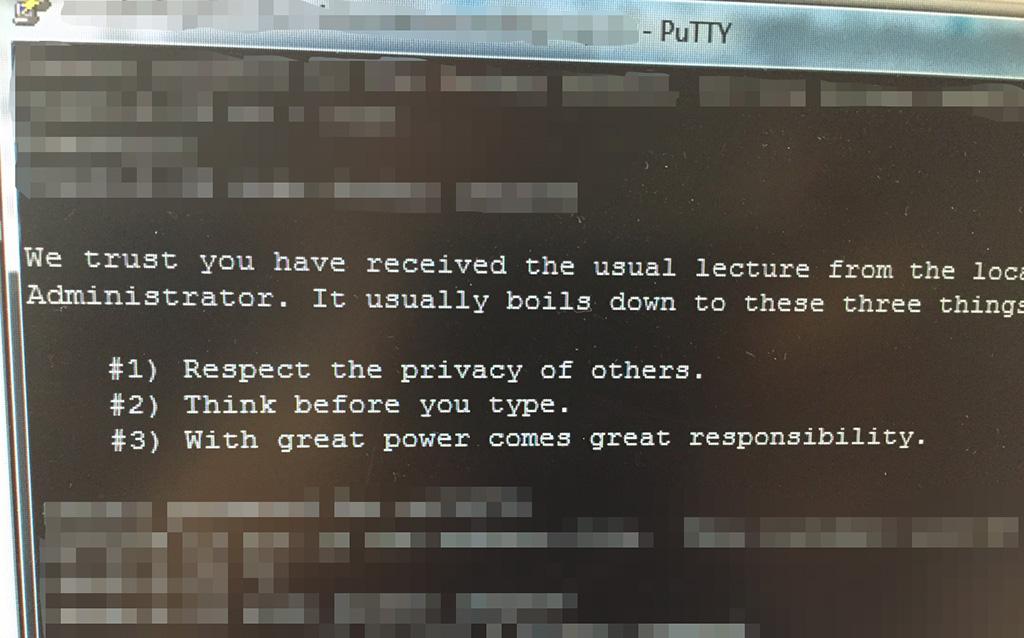
    If you are reading this then something fairly major has been achieved – I’ve managed to migrate 1.1 million words and 10,000 photographs from one one part of the internet to another. For anybody who uses WordPress or Blogger dot com or some other type thingy, you might not find that very impressive, because your website is hosted by some mega-corporation and all the technical complexity is hidden away from you, but my website uses a piece of software written by some old school-friends – it’s a startup – and it’s now hosted by little old me, typing undecipherable commands in green text on a black screen, in scenes reminiscent of The Matrix.

    I made a commitment about 4 years ago to use my friend’s new startup as my home on the internet, and it still my home to this day: his startup powers my website, but it’s now me who’s responsible for “keeping the lights on”. My friend kindly used his time and money to keep me running, but I always felt guilty about it, especially as my site has grown and grown in size.

    “The cloud” is a bit of nebulous concept. Basically “the cloud” just means “other people’s computers”. My website is hosted in “the cloud” which means that if the power fails at my house, or somebody breaks in and steals all my computers, then my website doesn’t go offline – security and uninterrupted power are somebody else’s problem.

    Your eyes are probably well and truly glazed over by this point, but it’s a big deal – I did some stuff which I usually get paid to do, which I’d really rather not have been doing in my spare time, unpaid, and now I have the ongoing responsibility of maintaining my own little bit of “the cloud”.

    There’s a great fear that I might have lost something precious during my migration from my friend’s hosting to my own hosting. It certainly wasn’t a straightforward procedure. Everything appears to be working OK, but given that it’s just me myself and I, it’s hard for me to do much testing – I’m relying on regular readers to report anything that’s not working.

    You might notice that my site is now “secure” – complete with a little padlock up in the browser bar. All this means is that if ever you were commenting on one of my blog posts, the data that’s being sent would be encrypted, which is useless given that your comments would appear publicly anyway, but people like to see “secure” sites, even if they don’t store any personal data. It feels a bit more professional that I’ve properly “secured” my site with encryption.

    So, this is the new old. Everything should look pretty much identical. If it’s 100% identical, then I’ve done a great job and I’m really happy.

    It’s a strange thing, to have done lots of work “under the hood” but nothing that anybody can really see, but that’s what I’ve done for a living for the past couple of decades, so I shan’t bore you with the details… although I already have.

    Bear with me if there are any teething problems and do drop me a line if you spot anything not working – I’d be really grateful, because you readers are my beta testers.

    If you’re reading this, then great!


    Tags:

  • Life Lived Publicly

    This is a story about open secrets…

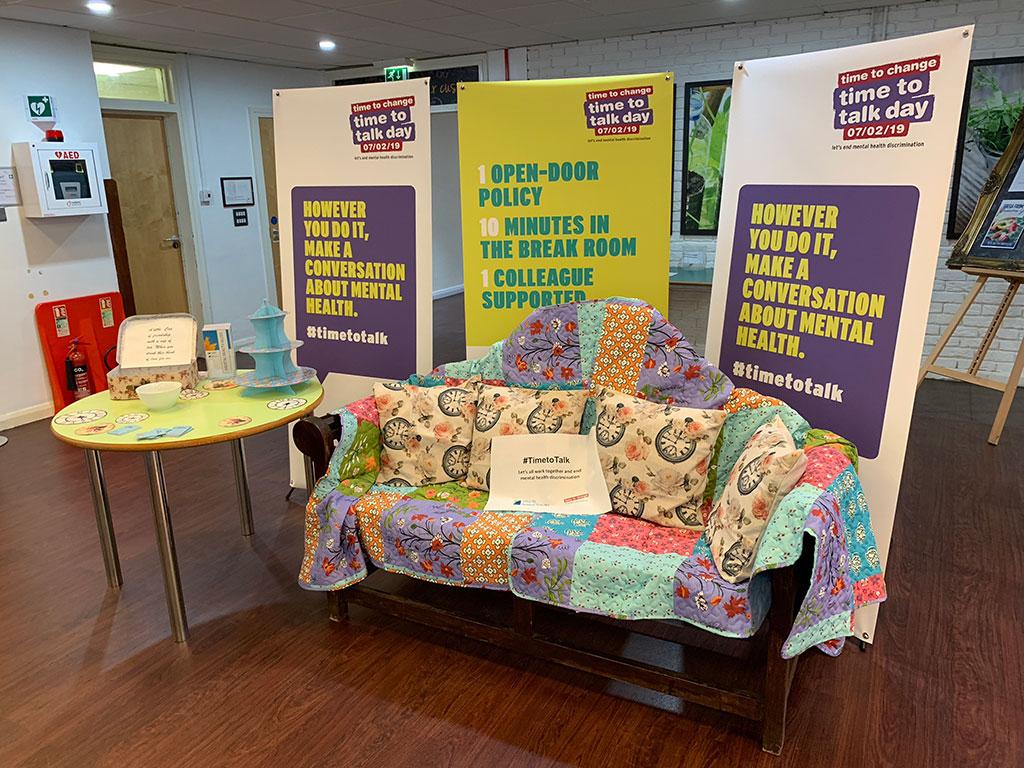
    Time to talk

    A date asked me if she could read my blog. She already has enough information to be able to easily find it on Google: all you’d have to type would be “Nick bipolar blog Cardiff” and I pop up as both the 2nd and 3rd hits. I’ve decided to go “full disclosure” on my dating profile and tell people that I have bipolar disorder, because it’s something pretty important to know about me. I also say that I write a blog and spend a lot of time on Twitter. That’s quite a lot of information to give away, which easily leads to this absolute goldmine of everything you’d ever want to know about me, and a lot that you really would probably rather not know.

    There’s a great imbalance if somebody has access to a great big cache of totally candid and brutally honest writing, which confesses every single innermost thought, expresses every single insecurity and exposes all my vulnerabilities.

    Usually, when getting to know somebody, each person reveals themselves little by little, and each person slowly forms an opinion – there’s a limited amount of information available from which to form a judgement. Also, we present ourselves in either the way that we would like to be perceived, or in the way that we perceive ourselves. If we have pretentions, we present that image. If we have insecurities, we also make those known in subtle ways, or we attempt to hide them. If we wish to be insincere, we can lie and boast. If we wish for things from our past to be forgotten, we can omit those gory details from the account we tell.

    Given that it is my well-practiced habit to write without self-censorship on a daily basis, and to use this blog as a coping mechanism during some very difficult times, I’m exposed in a way that most ordinary people are not. A glance at somebody’s Instagram account is going to reveal very little about their state of mind. A glance at somebody’s hand-picked photographs, selected to present an enviable glamorous adventurous lifestyle, does not in any way hint at what life’s really like for the person who controls that account.

    A glance at my blog reveals a fairly dismal picture of me at the moment. I’m quite overwhelmed with seemingly mundane things, such as administrative paperwork and other fairly simple tasks associated with getting a new home into good working order – assembling flat-pack furniture and suchlike. I complain about being single and lonely, and isolated: lacking in an adequate social life. I have also regularly mentioned suicidal ideation, usually triggered by minor inconveniences and frustration, borne of my unrealistic expectations of how quickly I should be able to restore my life to health, wealth and prosperity, complete with a new girlfriend, having only just very recently moved to a new city.

    Because I never write with the mindset of “what if somebody from work or somebody who I wanted to date read this?” it means that I’m at risk of being judged harshly by people who might walk in on a particular chapter of my life and quickly gain an unflattering impression of me.

    I don’t write to impress work colleagues. I don’t write to impress potential girlfriends. I write because writing is an integral part of my life, and writing publicly is now “normal behaviour” to me, although I’m well aware that most people wouldn’t share what I share, because they’d see it as a risk to their reputation – it’d make them more vulnerable, less safe and secure, and they see privacy as something desirable.

    I found privacy to be unhelpful. I found that privacy meant that nobody knew how close to suicide I was, which was a very dangerous state of affairs, and I found that privacy led to me becoming increasingly isolated and paranoid – I was terrified of anybody finding out that I was unwell, which spiralled out of control. The more I worried about people finding out that I was sick, the more sick it made me.

    The answer, as it has turned out to be, was to write everything down and publish it so that anybody can read it. My illness was by no means “cured” overnight by taking that course of action, but over time, old friends and new ones have been able to engage with me and I’ve maintained a toe-hold in the land of the living. The most unusual thing – making my entire life an open book – has turned out to be one of the most important things to give my life stability, structure, routine and access to a vast number of supportive caring individuals, who’ve intervened at critical moments during the 4 years I’ve been writing… including one crucial moment which literally saved my life.

    The question about whether I should allow prospective girlfriends to read this blog is perhaps bound up with the question about whether people who’ve had difficult life experiences are “broken” and are therefore “worthless”. If you believe that people should suffer lifelong punishment for their mistakes, then perhaps this blog is perfect to share with prospective girlfriends, because I’d never want to date anybody who’d harshly judge me for things which happened in my past which I have no ability to change: my time machine is broken.

    If anybody is looking to go digging for dirt with a negative mindset – hoping to discover that I’m a terrible person who’s done terrible things – then I think that those people won’t be disappointed. My behaviour has regularly fallen short of perfection and I’m deeply disappointed with things I’ve said and done in the past; I do carry regret and remorse; I’ve made innumerable mistakes.

    I wonder how much I differ from, say, a man who abandoned his young children and wife to run away with a young woman who he was having an affair with – an utterly devastatingly despicable piece of behaviour, ruining innocent lives and making a mockery of solemn vows of lifelong monogamy and dedication to a spouse, plus the dereliction of dutiful responsibilities – versus my mistakes which bear no such hallmark of obnoxiousness. Yes, I’ve caused a great deal of distress during times when I was extremely sick, but I assure you that no amount of digging will unearth evidence that I’m some kind of selfish evil man, lacking in empathy and remorse. In fact, a thorough reading of my blog reveals that I often reflect upon events from my past and wish that I had acted differently, and I am critical of my own behaviour, attempting to acknowledge my own flaws and spot common mistakes, so that I might learn from them.

    This is a highly defensive piece, but it’s a highly stressful time. My job is going very well and I would dearly love to start another relationship. Having this vulnerability – in the guise of this blog – is highly inadvisable, but I’m loath to bury it, given how important it is to me as a coping mechanism and a way to keep concerned friends informed of my state of mind.

    I might write another synopsis of “the story so far” for those who are dipping in for the first time, because it upsets me that it’s impossible to see the bigger picture without reading approximately 1.1 million words, and I don’t like the idea of being judged on a handful of skim-read recent blog posts, mostly complaining about mundane and trivial matters.

    Of course, none of us wants to be misunderstood, and my writing is perhaps the most desperate attempt to avoid that situation, given that I’ve felt so close to death for so long. However, ironically, it’s pretty damn hard to get to know me – to understand me – because I’ve written so much and for so long.

    If you’ve read as far as this point, what can I say? Thank you. The comfort I get from knowing that my thoughts and feelings are not trapped inside my body, unseen, is immeasurably valuable to me.


    Tags:

  • 700 Words or Fewer

    This is a story about attention spans…

    Flip flop

    Counterintuitive though it may sound, it’s harder to write less than more. That’s not to say that it’s hard to write infrequently or not at all – it’s actually very hard to have the discipline to write every day – but writing something more than a journal of the day’s events, and keeping it short and sweet is surprisingly difficult.

    I used to keep a list of writing prompts, should I ever be short of an idea for something to write about. Once I had established the habit of thinking “what am I going to write today?” I find myself planning my writing from the moment I wake up, until the moment I finally have chance to get in front of a keyboard in a suitable environment.

    I’m self-conscious about writing on a train, where a passenger might be sitting next to me, reading my words as they are formed. I’m self-conscious about anybody watching me produce these little essays – it’s a private process, even if the end result is published publicly. Nobody ever gets to see the words I delete, or the sentences I restructure. Nobody ever gets to witness the pauses as I consider how I’m going to phrase a particular passage. Nobody knows how many times I doubt myself, and scurry for the dictionary to check that a particular word definitely means what I think it means.

    My meandering thoughts could easily become jumbled and rambling. Often I do ramble and wander off at tangents, but I try to stick to a certain theme. I try to write an introduction, then an exploratory part, then a conclusion, or at least a wrap-up of some kind. I try to end with some degree of satisfactory summing-up instead of just petering off.

    From the very outset, I decided that I would treat my blog as an exercise in expressing myself in the most straightforward language I could muster. I loathe clumsy, lengthy sentences, which are hard to follow and must be re-read by somebody who’s determined to decipher what I meant, as precisely as they are able to. I have succeeded when I put across my points in simple, concise and unambiguous terms, which does not necessarily preclude using a manner of communication which is verbose and littered with words not in common circulation. However, I would very much feel that I had failed if I send my readers reaching for a dictionary every few paragraphs.

    Of course I’m now very well practiced at expressing my inner monologue, which makes me a bit of a one-trick pony, but I do wish to communicate and not only record my thoughts for posterity. I’m keen that as many people as possible understand what goes through my head, and feel as if they know me intimately.

    The intimacy and the honesty are vitally important to me. It’s incredibly rewarding to have opened myself up in this way and been received so positively. On the rare occasions when I do catch up with friends on the phone, I’m so pleased when they are aware of what’s going on in my life and I don’t ever find myself answering the usual range of clichéd questions about how my job is going etcetera etcetera. We can cut to the chase and talk about the things which really matter, which is vital when I spend a lot of time contemplating suicide.

    Meaningful close friendships – good relationships – are grounded in emotional intelligence and the willingness to talk about our true feelings and our values, rather than having superficial conversations about trivial distractions. I’m sure there are people who’ve known each other for their whole lives who have rehearsed a kind of social interaction protocol, which enables them to speak to each other at length while never really scratching the surface. This is how people kill themselves and their friends are left with nothing but shock and bewilderment, because they never saw it coming – all that talk about football and soap operas was never going to provide the scope for somebody to announce that their life is misery and they’d rather be dead.

    I have eight words left now.

    The end.


    Tags:

  • After The Mania, Regret

    This is a story about the consequences of a mood disorder…

    Bipolar memory

    Having had a mood disorder – bipolar – all my life, with its symptoms perhaps becoming indisputably obvious from adolescence onwards, I’ve had a lot of time to reflect upon the regrettable consequences of things that I said and did when I was experiencing hypomania or mania.

    As a child I had little opportunity to do anything which had any particularly negative consequences. I took risks I suppose and I established a pattern of frenzied activity followed by melancholic lethargy. The intensity of my early hypomania was triggered by the rare event of being able to spend time with friends, when so much of my childhood was spent bored while my parents took drugs and got drunk. The excitement of escaping the boredom and oppression of being trapped in a house or a car with drugged-up or drunk dribbling morons, was so great that I would talk rapidly, be unable to sleep and I exuded so much energy that my friends and their parents were alarmed by this behaviour, which was uncharacteristic of how I acted at school, for example.

    School terms were long and they were unbearable. For whatever reason, I was bullied constantly. School was something to be endured and I treated it in very much the same way that I treated my parents’ negligence – I lived inside my own head, bored but attempting to entertain myself with my own imagination. I was incredibly patient, given the unpleasantness of my school days and the time I was forced to spend with my parents, who were so incredibly selfish that they destroyed most chances I would’ve had to form meaningful long-lasting friendships. Every school holiday, and indeed many weeks and months of term-time, my parents would remove me from the company of my peers, because they wanted to get drunk and take drugs in an isolated rural location, where they thought they would be safe from the criticism which they would draw for the neglect they were showing me; they attempted to hide their disgusting disgraceful behaviour.

    My parents’ folie-a-deux, which I see now was a toxic co-dependency, motivated by their addiction to alcohol and drugs, was clearly very formative and shaped my character. I became a patient plotter, who could put myself into a trancelike disconnected state to endure the interminable boredom of being trapped with a pair of dribbling moronic drug addict drunks, with no friends to play with – deliberately isolated from my peers.

    This is why I do not celebrate mothers’ day – because my mother is nothing more than an alcoholic drug addict with bad taste in men, and I wish I had never been born.

    Luckily, modern society reveres those who have bipolar tendencies. How would anybody be expected to pass their school examinations, university finals or write a dissertation, unless they were able to cram and work hard in short and intense periods, having the academic holidays to then collapse on the brink of a nervous breakdown, to recover? How would anybody be expected to undergo the the awfulness of attempting to get a foot on the first rung of the career ladder, and the dreadfulness of the 9 to 5 office grind, unless they could muster the manic energy to be enthusiastic in numerous interviews where you’re expected to lie about how excited you’d be to join Acme Corporation and their widget manufacturing business? How can you get ahead in your career, when you are so thwarted by your colleagues and the dreadful bureaucratic nature of organisations – with their “can don’t” attitude – except by having periods of intense focus and effort, which no stable level-headed person would ever undertake in their right mind? How could you quit your job, start a company and make it successful, unless you had some kind of screw loose, which drives you to work 100+ hours a week and not give up on something until the results are delivered?

    Nobody much cares about the periods of depression that regularly occur in the life of a person with bipolar disorder, because we celebrate achievements and we hide our failures. We pretend that we never screwed up. We pretend that we never got sick. According to our CVs and our LinkedIn pages, we are perfect infallible human beings, who are completely flawless. Because people with bipolar disorder regularly have episodes of hypomania or mania which are full of boundless creative energy, they have an impressive list of achievements under their belt. Nobody ever lists their depressions on their CV or LinkedIn.

    Moving house and breaking up with my last girlfriend has left me exhausted and all alone in a new city. I have a work colleague who is reasonably friendly, but a very busy family man, and I have met one new friend, although they don’t live very nearby. It’s hard to describe how lonely and isolated I am – physically – because few people ever reach this point in their life without taking some kind of evasive action. It’s very unnatural for humans to go to strange places and leave themselves totally cut off from social contact, beyond the minimum necessary to get money and buy food.

    The flurry of activity which pre-dated me moving house was prompted by stress, and it contributed to the exhaustion and depression I’m feeling now. Also, I feel embarrassed that my grand plans to work on projects presently lie abandoned and the people who I was in contact with have been neglected for quite some time. It’s very damaging to my self-esteem to know that my behaviour is so conspicuously unpredictable and unreliable, which leads people to believe that there’s little value in the investment of a deeper and more meaningful friendship. When I crash, I cannot face the pressure of maintaining contact, so I disappear and I’m overwhelmed with guilt over the people and projects which are being neglected.

    Sometimes, mania prompts me to say regrettable things. I particularly use Facebook as a ‘safe space’ to rant when I’m struggling with my mental health, because at least it keeps my regrettable words contained in a place where they’re not publicly accessible. My friends can respond and calm me down, and I’m not left scrabbling to delete things which were inadvisable to write and publish publicly. My friends – if they’re real friends – would take my words with a pinch of salt and not unduly categorise me as a madman and a lost cause.

    It’s deeply worrisome, knowing that my mental health can collapse and I can act regrettably. It’s an unsettling and insecure state of affairs, knowing that I could easily destroy the good reputation I have and the respect of my colleagues, if I was to show a little bit too much of my illness. I keep things relatively neatly partitioned: my blog is where I write honestly, but always mindful that my words are subject to public scrutiny. Facebook is where I write things which are almost always a cry for help, or in some way symptomatic of the very bad mental health problems I’m dealing with. Work is where I spend a great deal of effort “acting normal” and attempting to show a reliable consistent side of myself, despite dreadful inner turmoil and very difficult events in my personal life.

    One might say that this entire blog is regrettable, given that it’s easily discoverable by my work colleagues, but I do not speak ill of anybody or the organisations I’m involved with, and I do not bring my profession into disrepute – I think that my conduct is perfectly acceptable, and I’m prepared to defend it on the grounds that I find it immensely therapeutic to have this outlet, and the support of people who are kind enough to read my words and send me kind messages.

    I have a lot of regret. I admit that I could have made much better choices in a lot of situations. I don’t hide behind my mental illness as an excuse. I’m perfectly capable of accepting that my behaviour has been regrettable and that I should have handled things differently.

    Why then continue to write like this? The answer is complicated: I have no idea what would happen if I didn’t have this single thread of consistency in my life. Rightly or wrongly, I credit this blog with bringing me things which have saved my life: my guardian angel, the people who got the emergency services to save my life during my most recent suicide attempt, the family who looked after me when I was jobless and homeless, and some of the friends who I speak to on a regular basis, who all only know me because I put myself out into the public domain – they reached out to me and rescued me, in their own ways.


    Tags:

  • Making A Fool Of Myself

    This is a story about safeguards…

    Mr Happy

    There is an oft-quoted statistic about 93% of communication being non-verbal. When I write, you cannot hear my tone of voice and you cannot see my body language or facial expressions. When I write, I do so in advance of your reaction, so I am unable to tell whether what I am saying is being well received or whether it is causing people to recoil in horror and disgust.

    It’s damn hard being live-wired into the fabric of the internet. It’s not easy using public writing as a coping mechanism.

    I get home and my anxiety levels are sky-high having spent a whole day in an office trying to act normal and keep my mouth shut. I get home and I’ve usually spent the bulk of the day trapped in my own skull with my thoughts bouncing around inside my head. I get home and I’m suddenly very alone, but I’m in an environment where I can somewhat relax and be myself. The net result is an outpouring of jumbled thoughts and feelings, which get typed and published onto this website, for the entire world to see.

    Because of the incredible disruption of moving house and things which have greatly disturbed my brain chemistry, I have an ever-increasing amount to say, in a desperate attempt to occupy my mind and bring some structure to my life. My routines are sacrosanct to me but I have little control in my work environment, where I must conform to bland office mediocrity and keep my head below the parapet, so my writing is the part of my routine where I blow off some steam. Unfortunately, there’s a great deal of pressure to be released.

    I’m aware that my daily word count has been creeping up little by little, to the point where I’m easily blasting out 1,500 or 2,000 words at a sitting. Nobody wants to read that much. Instead of writing short sweet little blog posts, I churn out disturbing half-formed thoughts from the depths of my subconscious, which reveal a side of me that nobody ever directly acknowledges in themselves, let alone writes about at length.

    Instead of finding a dark corner of the internet to lurk in and turning my insecurities into hate-filled invective directed at a common chosen target, replete with the jargon of a particular online community, instead I have developed a reflex where if I think it, I remember it and I write it down. My daily writing reflects all the unspeakable things which any person might think but never say. I say the things because of my increasing isolation.

    I’m lucky enough to have a great number of friends online who I could chat to, but I feel as though I’m poisoned and that I must cut off the limb which the venomous snake bit. I feel as though I have to purge myself of toxicity. I feel as though I must try to vent all the terrible things I’m feeling, in order to feel better.

    I write out of sheer desperation.

    I doesn’t seem to matter how much I write – it doesn’t make things better, but sometimes it makes things worse. I write because it’s a well-established habit and pattern of behaviour. I write because it helps me to get my thoughts in order. I write because it helps me feel in control of my life. I write because I’m proud that I’m creating something. I write because it gets a reaction. I write because it gives me a connection to people. I write because people respond. Sometimes, however, people don’t respond and the lack of reaction is distressing.

    I push very hard. I push myself. I push others.

    I’m not sure if I’m pushing people away, but I certainly stopped engaging properly with people.

    I feel so overwhelmed with the enormity of the task of getting my life back in good order – financially for example – that I’ve whittled away everything which doesn’t fit to a very austere and minimalistic routine. I eat, sleep, work and write. Most other people have their families, friends, kids, pets and other such things in their lives, but my life has been reduced to a crude cartoon.

    I reached 700 words and I promised myself I wouldn’t write any more.

    Please, tell me if you’re still listening; still reading.


    Tags:

  • Modern Art

    This is a story about creativity…

    Crack

    Those who are blessed with independent wealth – trust-fund kids – may groan at my unoriginal and clichéd ideas. Those who have been lucky enough to attend public or private school (confusingly similar things in the UK) have been educated to be discerning snobs who act as a kind of judicial panel, deciding collectively what is to be mocked and derided as worthless, because it has clearly originated from the lower echelons of society.

    We may study a piece of text and detect traces of vocabulary, style and grammar use, which indicates the author did not have the benefit of an expensive education, and as such we decide that their words are meaningless. We presume that the author holds detestable values and baseless immature views which have not been properly forged in the crucible of a fine university’s debating society. We discern a certain lack of intellect from any impression we form of a person of being from a more humble background than our own. We prefer to only read works by those who are posh and impeccably well-presented in their homogenised manner of written communication.

    We can quickly tell if somebody does a lot of writing, or if their writing style is a clumsy attempt to put their spoken words down onto paper.

    Who has enjoyed the privilege of being able to read a very great deal, write an enormous amount, and have somebody paid to pore over their words? English is part of the mandatory school education of every child in the UK, yet as a nation we manage to produce many millions of people who don’t know the difference between homophones such as “your” and “you’re”, which the public and private schools would not tolerate.

    While an expensive education might give every child who attends those fee-paying schools a posh accent, an extended vocabulary and better grammar, it does not assure an academic future. Many children will prefer art to the prescriptive subjects, where there are right and wrong answers.

    The position of power, gifted by privilege, is to decide what the “wrong” answers are in an area where there is no such thing as a “right” answer. With no more qualification than a posh accent and some snobbery, one can embark upon a career as an art critic, quite unwittingly.

    Art exists in late capitalism as another rich man’s hobby, like yacht sailing, horse riding, game shooting, vintage motor car racing and skiing. While some of the hoi polloi might have adopted those leisure pursuits in imitation of the wealthiest segment of society, a number of mechanisms exist to ensure that the poor man’s version is inferior in every way, and not to be mistaken for things which are reserved for the wealthiest families. As such, the act of patronage is contained within that small group of individuals who speak in the manner of their patrons.

    Who can really afford to write or paint for long enough to master the craft, without making creative sacrifices in order to be commercially successful? How many brilliant artists have been forced to become draughtsmen or take dismal tasteless commissions from gauche clients? We might love our favourite comics and assume that the artists are living happy, authentic lives which are true to their beliefs, but those who have seen it as a purely artistic endeavour find unhappy outcomes if they ever need to monetise their talents.

    I can afford to give away my words for free because I have another source of income, but it means that my writing will never be anything more than an open journal – a daily diary which is publicly accessible. I don’t have the time and energy to plan, execute and promote a piece of serious art, and I am forced to sell the most productive years of my life in order to pay rent and bills. I like to think that I am developing my craft, but the skillset for creative writing is quite different from the stream-of-consciousness which I produce.

    Innumerable photographers have captured an image of themselves every day for considerable lengths of time, and countless more writers have kept daily journals. What I do is neither imaginative nor original. It would be easy to say that my writing is not art, or it is bad art.

    It angers me that I should be denied the opportunity to be an artist. It angers me that my considerable creative talents and boundless energy for artistic projects, is thwarted by economic factors. I need to pay rent and bills, so I must sell my labour, but if I were to attempt to combine my job with my desire to create art, then I would be creating products not art.

    What is art?

    For me, I want to turn an exceptional period of my life – addiction and near-death – into a piece of art. My experiences have been so extreme that few people who’ve shared similar experiences have survived with their sanity intact and enough of a grasp of the English language to express themselves clearly on a piece of paper. Many people are lost to religion and other capitulations of the mind, or simply embroiled in family life, such that the difficult task of creating a piece of art which conveys some of the suffering endured, is rarely completed.

    We might assume that a particularly rousing motivational speech or an incredible painting resulted from some God-given talents, but that’s complete hogwash. We are a product of the surrounding environment and things that has driven us to repeat behaviours until they are innate. Anybody who says “I can’t draw” has not practiced enough. When we look more closely at child prodigies, we see that their pushy parents are the reason why that child practiced a skill enough to become talented. There are no gifts – everything must be paid for.

    My own so-called “gift” is a perseverance for tapping on keys in such a way which is mandated to be harmonious. A piano will happily play incorrect chords but if you press the wrong computer keys you will simply be told “command not found” or simply “error”.

    While I know that my writing doesn’t get tested with the rigorous logic of boolean algebra, I feel confident that I can master writing as a lucrative craft, through practice and repetition, in exactly the same way that I taught myself how to program a computer as a child. I am certain that the skill of creating hundreds of thousands of lines of programming code which assemble together to make a functioning piece of complex computer software, is transferrable to the task of writing a few tens of thousands of words which produce a coherent story.

    Few would disagree that music is an artform, but music is a piece of code executed on a machine – whether it’s the notation on a piece of sheet music, or the laser-etched indentations on a compact disc, the creativity of the artist is coded and played through an instrument which adheres to strict rules. A grand piano only has 88 keys, while my keyboard has more than a hundred.

    It’s true that we’ve entered an era where almost anybody can call themselves a photographer or a writer, given the ubiquity of smartphones and the ease-of-use of apps which allow us to publish our photos and our words.

    I offer up the photo at the beginning of this essay and these very words because I find both aesthetically pleasing and to have deep and profound meaning, beyond what you see at face value. In my text I offer up a glimpse of my inner turmoil, but I can never fully capture the full extent of every thought that races through my mind. My photo captures a moment that has immense meaning for me, but the viewer could never possibly know or guess correctly what that meaning is, which makes it a piece of art because it could only have been created by me, the artist.

    “What even is it? I could take a photograph like that” I hear you say.

    Yes, you could take a similar photograph, but it would have none of the meaning behind it, so therefore it would not be art.

    “What are you even rambling about? I could write down my thoughts like you” I hear you say.

    Yes, you could write down your thoughts, but they’d be quite different from mine and you wouldn’t have the same motivations, so therefore it would just be yet another blog post from yet another blogger.

    How can I claim to be creating art? In truth, I don’t. I worry a lot that I’m wasting my time and creating a lot of meaningless noise. I worry that my creative energies are squandered on a pointless folly. However, this is still an impressive monument, whichever way you look at it. How many people have managed to write and publish more than a million words in a single document, with a consistent methodical approach, with regularity and with something interesting to say? How many people have catalogued their thoughts so thoroughly?

    Not many.


    Tags:

  • Why I’m Building NickBot™

    This is a story about projects…
    Nick Grant

    I work with a whole bunch of people who will automate anything you can possibly imagine – they’re obsessed with automation. I suppose I’m an unusual engineer in the sense that I don’t share the enthusiasm my colleagues have for robotic, repetitive, automated processes. If I do something just once I’m often satisfied, so I start looking for the next new and novel experience. I suppose that’s why my skills are always in demand: Because most engineers want to build something that they think is going to last forever, but in reality there are always unforeseen problems. I take particular pleasure from diagnosing and fixing the gremlins that were never supposed to exist, making software scale up in ways it was never designed to do, and doing the dirty work of keeping the lights on.

    How I came to be working as a software engineer and how I came to be a writer, has nothing to do with the pursuit of a childhood dream. I was simply inspired by a schoolfriend. Whatever he was interested in – which was writing, journalism and computing – was something that I became interested in.

    It seemed obvious to put my programming skills to good use, once I’d found a problem that I wanted to solve: How do we let people who feel worthless and suicidal know that we care that they’re still alive? It seemed like technology could easily solve this problem.

    I built something.

    It was just software. There was a Facebook page and a Twitter account, and behind it was a little piece of software.

    It worked.

    But, nobody really cared.

    People build cool apps every day. In fact there are thousands of new apps being released every day. When I started building iPhone apps in 2008, there were just a handful of new apps every day, and everybody with an iPhone could check out the new apps to see if there were any good ones. Now, there are not enough hours in the day to download and try out all the apps that are released. We are completely overwhelmed with a deluge of new apps and websites that spring up every single day.

    So, I decided to build something that very few people could build: A project so ambitious and substantial, that nobody except an eccentric rich fool would embark upon, because it was nothing but a folly. I decided to write.

    People write every day. There are millions of people who call themselves writers. Some of them will actually publish. There is vastly too much published each day, to be able to read it all: It’s the same overwhelming deluge problem, faced by anybody hoping that their new app will get noticed, in a crowded market.

    However, the combination of vast amounts of experience, with an enormous variety of different technologies, plus the hard work of having written and published a substantial body of text, could provide a reasonable launchpad for something.

    It takes next to zero effort to set up a Facebook page or a Twitter account. Thinking of a name, choosing a profile picture, writing a short bio… all those things are easy.

    Building a following is something that’s fairly easy to do, but is not quick to do. You have to offer something that people want, and you have to keep giving people what they want, so they keep coming back, until you reach the point where growth becomes organic; viral.

    So, writing every day is the bait; the lure. You’ll see it all the time – suddenly your favourite funny meme page, cartoon strip, inspirational quote tweeter or Instagram influencer is trying to sell you something. It’s the old bait-and-switch trick. Sometimes you follow artists, but artists need to eat. You might be offended that they try to sell you a T-shirt, a mug, a book or some other branded merchandise, but how the hell do you expect them to pay their rent?

    So, that leaves me.

    I’ve kinda got the time and money – as well as the skills – to take on a ridiculous project that has no profit potential: Build a folly.

    But what is this folly?

    Perhaps it’s already built, for me, at least. I tried to kill myself but strangers from the internet saved my life. When I was about to go bankrupt, a stranger from the internet lent me money. When I was about to become homeless, a stranger from the internet offered me shelter. Lucky me.

    I can’t tell you to follow the same path that I did, if you’re in trouble, because that would be recklessly irresponsible. I nearly died so many times. I could so easily have ended up penniless and sleeping rough.

    I need to do something I hate doing: automating stuff.

    It seems like a nice problem to have, to have gathered a group of people who have enough empathy and compassion to go out of their way to save another person’s life, but I also know that I ended up in the situation where I was totally alone in a strange city, and I tried to kill myself. I’ve had enough brushes with death to know that those people we sorta-used-to-care-about can drift away and become I-wonder-what-ever-happened-to people. In fact, it’s an inescapable inevitable part of persistent depression leading to suicide, that the people whose lives are at risk, will withdraw from actively staying in contact with their support network.

    After a while, we get tired of tagging our friends in the Facebook comments section of things which remind us of a certain person. After a while, we get tired of sending messages that go unanswered. After a while, we get tired of ‘liking’ their stuff, but seemingly getting nothing back. All the attention dries up very quickly, when we go quiet and disappear into the darkness.

    What I want to build is something that accumulates the longer somebody has retreated inwards, cutting themselves off from the world. What I want is to build something that focusses the attention and reminds those-who-used-to-care that there’s somebody slipping away. What I want to build is something that aggregates all those people who care into a miniature ad-hoc crisis support group.

    Am I explaining this well enough?

    When I was in a coma on a ventilator, in a hospital intensive care ward, I had no idea that I was being discussed. I had no idea that people from all over the world had been in communication with each other, trying to find out if I was OK. Friends, old and new, learned of my predicament and they tried to find out what they could: Where was I? Was I OK? Was I alive? What happened?

    However, I had a very poor prognosis. My chances of survival were 30 or 40% according to the medical team who saved my life, when I spoke to them afterwards.

    It occurred to me that technology and automation could do a lot of the “heavy lifting” of figuring out who’s drifting away, allowing us to respond and bring the people we care about back into safety and security, away from the dark place and the death.

    Prevention is better than cure.

    Suicide prevention is better done before somebody is suicidal, in my opinion, from my personal experience.

    It’s very hard to answer that “I wonder what happened to…” question for everybody we’ve ever cared about, because in the modern world we tend to travel further and move more often, in order to study, work, find love and find a place that suits us in an individualistic society, where traditional families and communities have almost ceased to exist.

    The answer to the problem is to use technology to sift through the noise and find the really important pieces of information, while that information is pertinent.

    It’s no use finding out that somebody was horribly depressed, while at their funeral.

    We have busy lives, and if I build anything, it should make our lives easier, not be another nagging, pestering and irritating thing, like spambots, chain emails and invitations to play Farmville on Facebook.

    I am blessed with, what amounts to the time and the money to work on the project, as well as the people I need, insofar as I’m already well remunerated for work which I find very little effort. It will be a pleasure to work on something which I feel like the world needs, although I appreciate that sounds horribly arrogant and conceited. I apologise for the worthiness which accidentally spills from my mouth, when I speak on this topic.

    Anyway, consider this a declaration of intent. My first fumbling stab at a plan. Some doodles on a napkin, so to speak.

    Please write and tell me what you think of the idea.

    Thanks,

    Nick


    Tags:

  • Open Source, Open Data

    This is a story about hacking…

    PuTTY

    How do we reconcile the concept of privacy, and our supposed desire for it, with the moden practice of sharing images of ourselves and our loved ones and publishing intimate pieces of information about ourselves and our identities, so publicly on Instagram, Twitter and Facebook?

    Some people choose to maintain several versions of themselves. They have decided how they wish to present themselves – digitally – for different audiences, and they presume that the computer systems they use have sufficient privacy safeguards so that those worlds will never collide. Incredible trust is placed in those who build those computer systems and guard that data.

    Those of us who are living double lives, or perhaps even triple, quadruple, quintuple or more lives, must have a shape-shifting and highly demanding existence as they constantly context-switch between their different identities.

    How do they remember the different lies they’ve told to different people? Which parts of their life are common to all their identities, and which parts belong only to one distinct segment? How must it affect these people – psychologically – to maintain so many alter-egos, avatars and characters that they have created, which add up to a life with extra pieces left over if they were all combined into a single identity? Which are the pieces that don’t fit? Which bits would that person have to give up if they were forced to unify themselves into a singular entity?

    I can speak only for myself.

    At work my identity is an open secret. Any of my colleagues can quickly and easily find this website, which contains every bit of information that most people would consider worthwhile keeping private. We generally don’t want our colleagues at the office knowing about the less flattering things which have happened to us in our lives. We generally seek to avoid the prejudice which is still prevalent in a society where we live with the mistaken belief that our data is held safe and secure in computer systems, and the foolish notion that secrecy is assured.

    Secrecy is not assured. Quite the opposite.

    My knowledge of the limits of what is possible with a computer system, in terms of keeping data safe, comes from the place which society would deem most important: the bank vaults where all our money is kept. Capitalism’s biggest fear is that a hacker could penetrate the inner sanctum of the banking sector and annul all our debts. The banks quite literally have all the money in the world to keep that money ‘safe’ which means they have manyfold more resources than any would-be bank robbers or philanthropic debt-erasers, keeping everybody out of their vaults.

    I often wonder if my stance is due to the fact that the man who has nothing, has nothing to lose.

    However, the origin of my exhaustive efforts to document the most private details of my life, came from when I had a lot to lose. In fact, the fear of loss is what nearly drove me insane. I realised that the threat of the dreaded event – losing my money and damaging my reputation – was sufficient to create a great deal of paranoia, which was impossible to control because of the insatiable appetite of people around me for the gory details of my private life. I became a human interest story and the only solution I could see was to take control of the story by writing it myself.

    Writing a little bit isn’t going to help.

    Writing your version of events isn’t going to help.

    Writing the story of your life isn’t going to help.

    I decided that the only way that I was going to regain my sanity and my dignity was by making myself into a publicly accessible resource. I have emptied the contents of my brain into the public domain, but this is an ongoing process. Unfortunately, I can’t just upload everything in my head to the cloud. I have to type it. Even if I typed until the day I die, there will still be things that die trapped inside my head, but at least I tried.

    The more I have gone along with this journey of emptying out my head onto the pages of a public document, the more I have seen the benefit of doing so. The more honest and open I have been, the more candid and frank, the more comfort I have felt knowing that the greatest amount of data generated which pertains to me and my life, has come from my brain via my keyboard.

    Before I started to write this blog, the bulk of my private intimate personal data was held by private companies and government institutions, who knew where I spent my money, where I travelled, who I spoke to, what I went to the doctor about, what medications I took, what my credit score was, where I had lived and where I was living and an enormous amount of other things too, such as how frequently I visited websites, what kinds of things I looked at on the internet and just about every single word of communication ever exchanged between me and another human being.

    This sounds like paranoia. This sounds like insanity.

    All I know is that I’m glad that I live a single life with a single identity and I’ve made myself publicly accessible. I’m glad I’ve published all my so-called secrets. I’m glad I’ve put my unflattering side into the public domain. I’m glad that those who would like to quickly and harshly judge me, so that I could be easily dismissed and cast aside, have a repository of all the dirt they’d ever possibly want to find, if only they weren’t so lazy and stupid as to not bother to think to look in the most obvious place for it.

    I enjoy living my life in plain sight. I enjoy having open secrets. It gives me pleasure and a sense of security.

    I’m in the process of migrating my website and all my 1.1 million words to a new home, which will hopefully be a seamless transition for my readers – I’ve decided to utilise my technology skills to cement my digital legacy. I hope that I can move what I’ve written to a place where it can be easily migrated to newer technology platforms as and when they emerge, much like old cine films were transferred to VHS tapes and then transferred to DVD discs, to preserve those memories for posterity.

    It might seem horribly arrogant and conceited to think that anybody gives a damn about what I’ve written, and that my writing should be preserved, but there it is: The modern age, where we take photographs of our food and share them with the other 7.6 billion people on this planet via the internet.

    I’ve found the internet to be a place of friendship and connection, and of people who do care about what I write, so it’s with little embarrassment that I admit to my efforts to preserve my own legacy.


    Tags:

  • It Doesn’t Have To Be So Complicated

    This is a story about putting pressure on yourself…

    CPU die

    When we see a completed masterpiece – a great book, a magnificent painting, or even an app or a website – then we can be fooled into thinking that its creators must have envisaged the end result from the very beginning, and worked methodically until the work was done and ready to be unveiled to the public.

    What we don’t see are the unpublished drafts and the unedited rough manuscripts. We never see the layers of paint beneath the top layer, where the painter’s brushstroke might have been misplaced. We quickly forget how ugly and buggy the early versions of software are, and how few features they had.

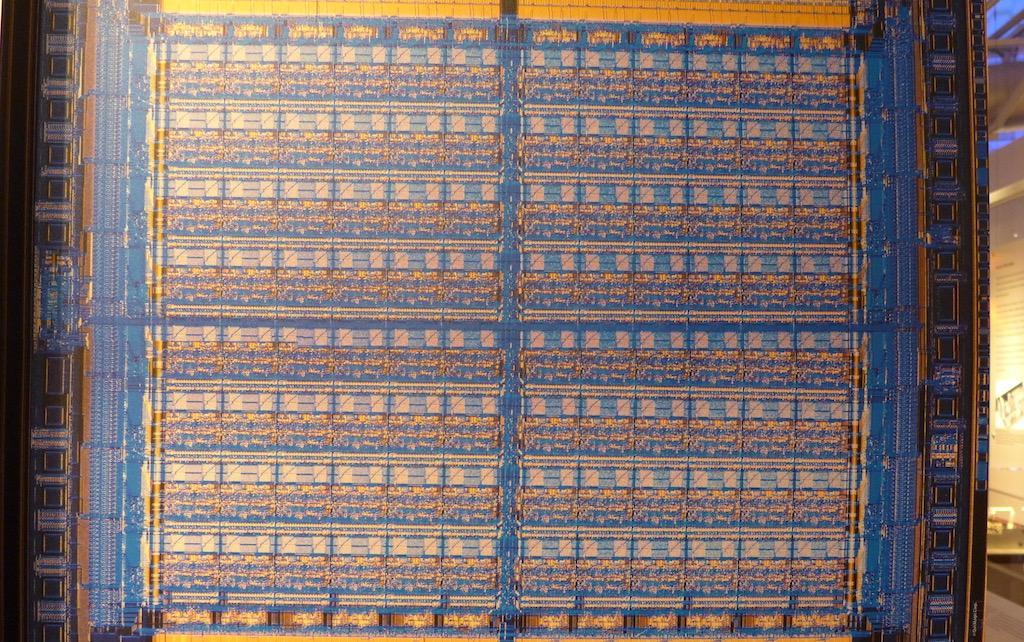
    We also forget that complexity is built upon complexity. The author depends upon a typewriter, paper-making and book-binding, along with typesetting, ink making and a thousand other innovations, which allow their words to be neatly condensed into the final product. The painter depends upon the many pigments which had to be discovered, as well as the paint-maker who will create the oils, acrylics and watercolour paints, and the canvas maker who will create the surface onto which the masterpiece will be painted, layer by layer. The software engineer depends upon the CPU, memory chips, hard-disk drives, motherboards, a screen, mouse and keyboard, plus an operating system and myriad other pieces of software, which enable them to code their apps and websites.

    We only see the finished versions, and we do not see the vast complexity which is hidden behind. We do not see the thousands of years of discovery, innovation, invention and craftsmanship, which have evolved and progressed with iterative improvements, until the day when even a lowly common man or woman, with little money, can create something which would have been considered a rich man’s hobby, not very long ago.

    I desperately want to demonstrate to the world that I have a mind that can encompass enough of science, technology, engineering, mathematics as well as much more practical things such as paper-making, book-binding, typesetting, and the inescapable physical world, where food, water and energy cannot be delivered via your broadband internet connection. I can build shelter. I can fix a vehicle. I have knowledge that extends well outside the narrow confines of STEM. I want the world to know that, because I’m insecure and I feel like I was briefly written off and abandoned – assumed to be a piece of expendable human garbage.

    I’m not going to push myself to write so much today. I need to tell myself that it’s OK to write a little less on days when I’m either too sick, too tired, or unable to make enough time to write something that I think is worth publishing.

    I’ve decided to allow myself to publish shorter pieces of writing, when circumstances demand it. Not everything I publish needs to be an essay.

    I put immense pressure on myself to produce things which are impressive, or at least somehow ‘magical’ creations. Many people have now learned how to create a website using tools which have simplified the process, making it as easy as sending an email, but the way it works is still mostly ‘magic’ to them. We don’t need to know how to fly a plane in order to be a passenger, but we should still appreciate that the pilot spent a lot of hours learning their profession, and so we shouldn’t underestimate the skill involved in every safe landing, which we often take for granted.

    Laid bare on these pages, dating back to September 2015, we can see the development of my writing style and the discovery of the topics I’m passionate about. We see how I refined my writing process and how my thinking has developed. I could have done this process by writing private journals and unfinished novels, but instead I offer up my stream-of-consciousness as an “open source” piece of software, complete with all the ugly early versions which were full of bugs and didn’t have many features.

    It’s hard to find the time and the energy to write every day, but it’s a lot easier if I allow myself the freedom to simply unload a few thoughts and feelings onto the page, without worrying too much about whether it meets some arbitrary quality standard, which I’ve imposed upon myself voluntarily.

    It was very kind of friends who’ve stuck with me through periods when I stopped writing, to greet my return with enthusiasm and remarks which greatly encourage me that my writing is being well received by people who I care dearly about.

    It needn’t particularly complicate my day, or add unnecessary pressure, to get in front of a keyboard and bash out a few words… even if it’s the merest dab of paint onto a huge canvas, it does at least cumulatively contribute to the finished artwork. I would hate for my readers to think that I’ve abandoned blogging.

    Thanks for reading. It means so much.


    Tags:

  • Milestones

    This is a story about arbitrary goals…

    Dashcam

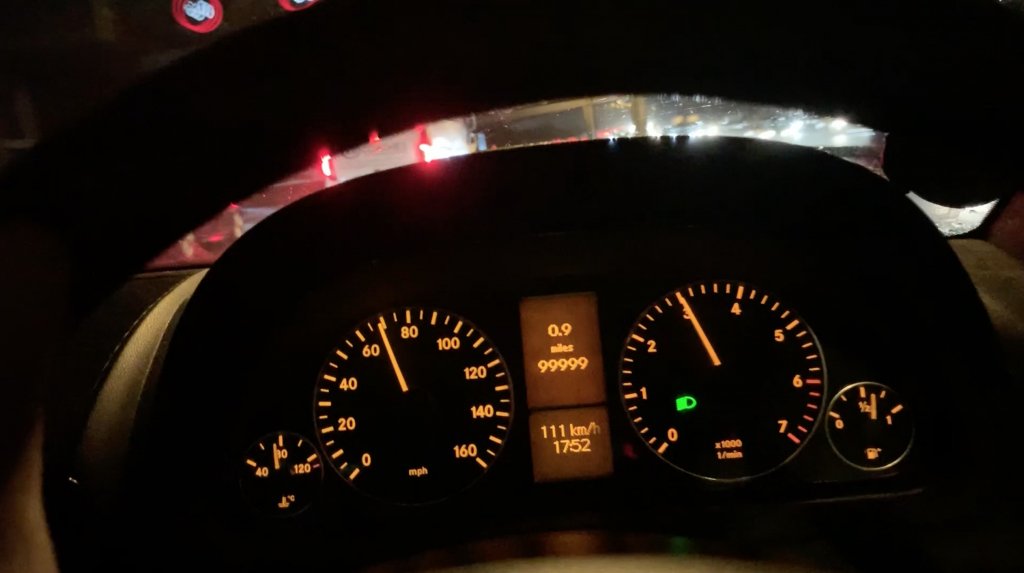
    Why was I so bothered about capturing the exact moment that my car completed 100,000 miles? Why would I take the risk of videoing this non-event, while driving at 70mph on the UK’s busiest motorway, while heavy downpours made driving conditions particularly treacherous? I guess the motivation must stem from the same place that has motivated me to write more than a million words on this website. I guess I’ve become obsessed with arbitrary achievements.

    How do we measure success?

    A colleague of mine regularly pleads poverty and accuses me of living a life of “fabulous wealth and luxury” because I’m childless, to which I retort that wealth can be measured in many different ways. Am I not poor for lacking the adoration of the children I’ve spawned? Is my life not lacking the riches of the filial affection, obedience and eagerness to please, which parents enjoy in abundance? Could there be anything more valuable than the pleasure of hugging and kissing your children?

    I’ve decided to start writing again.

    I’ve decided to start writing every day again.

    Why the hell would I do that?

    How does it profit me, to write every day? Where is the payback? What is the benefit?

    Almost every single person has wrestled with the question: what is the meaning of life? What is our purpose? What set of values should I live my life in accordance with? What should I attempt to achieve, during my short mortal existence?

    Examination of human behaviour overwhelmingly demonstrates the ubiquitous answer to that most difficult question: Why are we here? It seems to be that most humans want to spawn as many offspring as possible, and they pay little regard to the consequences to society, global humanity’s quality of life or indeed the ethics of making a conscious ‘free-will’ choice to create another mortal creature with the capacity to perceive its own mortality, inheriting an overcrowded planet on collision course with unimaginably awful catastrophe.

    Yesterday I attended the funeral of a close friend who chose to end his own life. It’s my intention to write less on the specific subject of his suicide, but it’s worth noting that he struggled with the absurdity of existence and the psychological challenges of living in an age of scientific enlightenment and atheism, where our purpose in life seems largely driven by feelings of inadequacy and insecurity, created by late capitalism in order to turn us all into wage-slave consumers – part of the apparatus which will eventually destroy global civilisation, instead of delivering the much-vaunted “age of leisure” that we were promised.

    Why do we want a bigger house, a newer car and children who will soon learn that their parents will die, and who will also die in pain and suffering? Why do we want more digits in our pay packet and bank balance? Why do we want to accumulate more and more pieces of paper with numbers written on them, supposedly designating some kind of ‘score’ to demonstrate that we’re ‘winning’ at the game of life?

    My own reaction to the absurdity of modern life has been to invest a significant proportion of my intellectual capacity and precious time, in order to create a website which captures my stream of consciousness in all its ugly gory detail. This website could be characterised as the ultimate folly: Serving no clear purpose, while consuming valuable resources. Perhaps I should be spending my time changing nappies and driving my precious little darlings to school in my gas-guzzling 4×4 truck, except that we understand that would also be a fool’s errand, because at some point those children will inherit all the existential angst and will have to confront not only their own mortality, but also watch me – their beloved father – getting old, frail and dying in pain and suffering.

    Don’t have kids. Kill yourself.

    You can do what you want. I advise you not to follow my advice. However, if you’re truly a person of any intellect, possessing a moral compass and the ability to make rational decisions based upon overwhelming evidence, ask yourself if you’re just a helpless blob of chemical compounds, being manipulated by your genes towards procreation, like every living creature that ever existed for hundreds of millions of years. Do you want to be an amoeba? Certainly, I see no difference between an amoeba and the 100+ billion humans who have lived and died since homo erectus sprung into existence 1.8 million years ago.

    If you really believe that you’re justified in having the sapiens as part of homo sapiens name of the species to which you belong, then you’d better start demonstrating some damn wisdom beyond that of the humble amoeba.

    My current life plan is to work and write until I have sufficiently proven that I’m a competent, capable, productive, valuable member of society, and that I can not be easily dismissed as a flawed individual or a fool. Then, having achieved that, I can kill myself, leaving behind a substantial body of written work for anybody who cares to know why I would choose to use contraception for my whole life, and why I would choose to end my life in a pre-planned manner, concluding this absurd existence with some dignity.

    So, I must write and I must work. It’s time to get busy again and resume my writing routine.

    I’m not sure what the next milestone is. I feel like 1.5 million words is a good objective, given that it would be approximately twice the amount of words than are contained in the Bible, which amuses me.


    Tags: