addiction – Page 6 – Nick Grant

Tag: addiction

  • A Few Short Words About 2017

    This is a story about the past year…

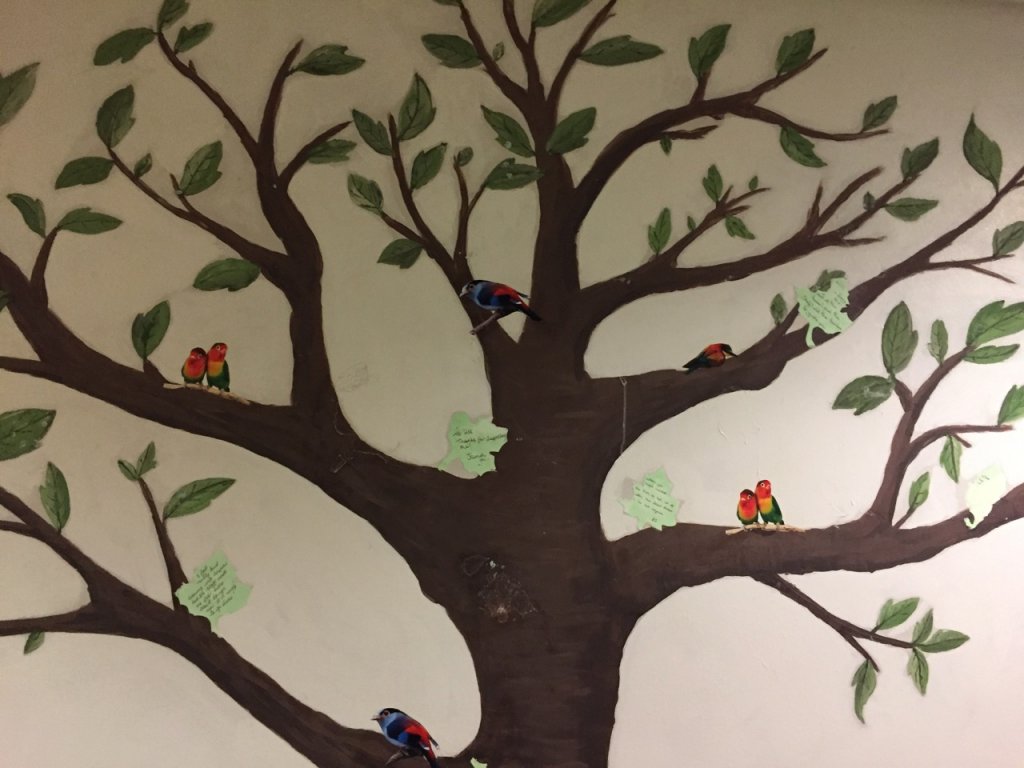
    Recovery Tree

    As I searched for an image that aptly represented the last year, I realised that I would struggle to find one. Should I use a photo of fireworks over London taken from my balcony? Should I use one from one of my visits to hospital? Should I use a photo that represents something abstract: addiction, travel, work, recovery or something else? Should I use a photo that reminds me where I was a year ago versus where I am today?

    I’ve selected this picture from a psych ward. The tree is supposed to be decorated with leaves which have a handwritten message from patients who have successfully recovered and left the ward. There aren’t many leaves on the tree.

    I’m regularly criticised for being deliberately glum. Perhaps my negativity is a choice. Perhaps I wouldn’t be so stressed, anxious and depressed, if only I decided to be fit, healthy and happy instead. Perhaps I could also decide that I’m a millionaire too, while I’m at it.

    I should be happy that I survived 2017. The odds certainly weren’t in my favour. Whether it was kidney failure, addiction or suicide that claimed my life, there was sure to be something that was going to kill me. I should be happy to have made it through another year, shouldn’t I?

    What about prospects? I start 2018 with friends, living with a family, with a roof over my head, with a job. Looking at the hard numbers, things look rosy: I earn a lot and it’ll take less than a year to replenish my finances. Most people would be chuffed to bits to have the opportunities that I have.

    Tonight will be my 5th night without sleeping pills and my 3rd without painkillers, having partially relapsed because the pills were helping me with stress and anxiety. I enter the New Year relatively free from drugs, medications and other substance abuse problems. Of course, I will drink. I will probably drink for the whole of 2018. I have no intention of becoming teetotal, although I do need to reduce the amount I drink.

    The list of New Year’s resolutions that other people are begging to make for me is endless: join a gym, do some volunteering, eat more kale, do yoga, smile, pet a dog, kiss a baby, punch the sun etc. etc.

    It might seem like I’m bloody minded – intent on being miserable – but really, I’m not. It might seem like I’m ungrateful, but again, I’m not.

    2017 has been what it’s been. It’s been a hell of a ride. I’m content just to say that I’ve survived it and that I have no intention of a repeat, given the choice.


    Tags:

  • Cold Turkey 2

    This is a story about sequels…
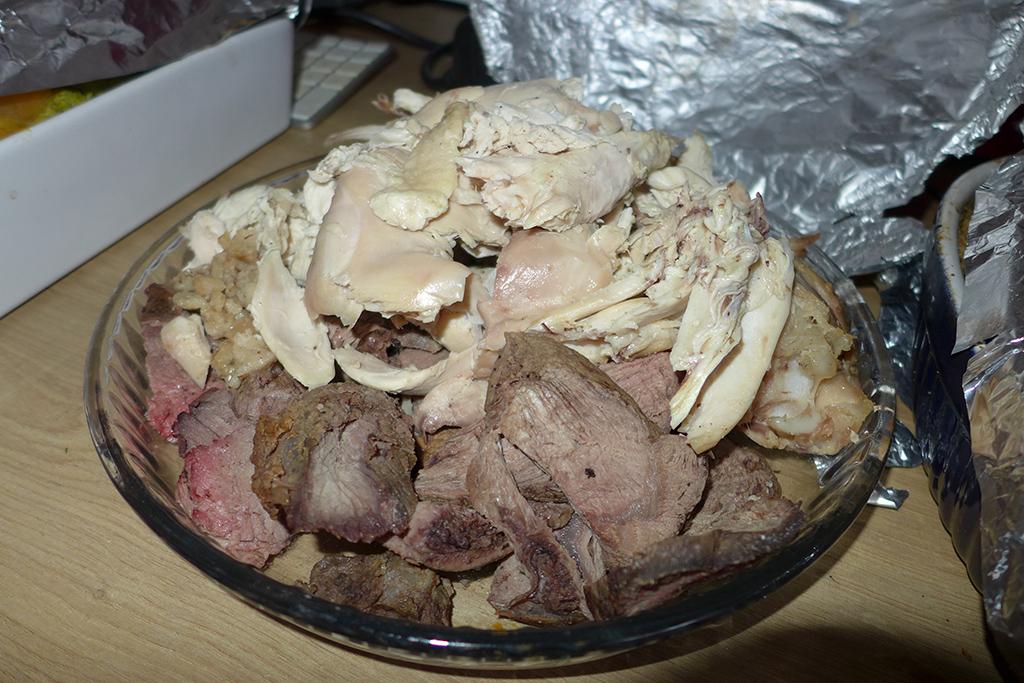
    Leftovers

    Two years ago, I was experimenting with my blog. I thought it would be profound to write a public suicide note, record a video and go jump off the Golden Gate Bridge. I thought I would get sacked from my job and illustrate how the stress would push me into acts of extremism. I decided to sleep rough close to the skyscraper I had been working in. I thought I was going to starve myself for 25 days and spend Christmas Day in a tent. I thought I was going to kill myself by going on hunger strike.

    For 25 days I wrote an advent calendar type series of blog posts. The whole thing was leading up to the punchline: boxing day. Really, what I was doing was building up to the revelation of the truth: that I’d had problems with addiction. It was a big admission. It took a lot of courage to be honest.

    Why did it take me so long to acknowledge my problems with addiction?

    Generally, addicts don’t get a very favourable hearing. Addicts are amongst the most stigmatised people on the planet. If you’re looking for a sympathetic non-judgemental ear, it’s probably best if you don’t mention any addiction problems you’ve had until somebody’s got to know you.

    So, people had to get to know me.

    My friends, family and work colleagues knew me. Those people who’ve gotten to know me have seen that I’m an OK person. I’m not a monster.

    But am I a monster?

    It’s surprising how little it takes for us to question everything we ever knew about a person. Sometimes, there’s a revelation about a person that can completely shake our perceptions of them. Suddenly, it’s as if a person we knew well is a stranger to us, and not just any stranger: a horrible nasty stranger who’s going to rob us and kill our children and eat them. Everybody knows that addicts leave a trail of HIV-infected needles lying around everywhere they go, especially in areas where children play. Everybody knows that addicts enjoy nothing more than random acts of killing. Also, if you discover that somebody’s had problems with addiction, you can pretty much forget everything you ever knew about them.

    Hang on a second though.

    How quickly can you completely re-evaluate an entire person and decide that they’re a completely worthless hopeless junkie, who’d rob you without a moment’s hesitation in order to score their next fix? How long does it take to write somebody off completely and dismiss everything you ever knew about them? Why are junkies just so damn easy to hate and what happened to the person you used to know?

    While there are some very unfortunate people whose morals will be corrupted by their addiction, that’s not the case for most addicts. Not every addict is a liar, a cheat, a thief and somebody who would recklessly endanger the lives of your precious children. Not every addict is flakey, unreliable, untrustworthy, unscrupulous and immoral. Not every addict is worthless, hopeless and doomed to forever seek and take drugs. Not every addict is a menace to society, and should be treated like a leper: shunned from work, friends, family and all the other things that give us a functional life. Not every addict should be marginalised and demonised.

    Of course, I write with a vested interest. I don’t want to be mistreated. I don’t want the stigma attached to me.

    So, why don’t I share my stories of addiction anonymously? Why don’t I join Alcoholics Anonymous and Narcotics Anonymous and Cocaine Anonymous and Crystal Meth Anonymous, and while I’m at it Gambling Addicts Anonymous and Sex Addicts Anonymous? Why don’t I keep quiet and just pretend like I’m normal? I don’t even take drugs.

    Nobody thinks that gambling addicts inject packs of cards, so why is it that when you think of me – an addict – you immediately imagine dirty needles? Where did the OK Nick that you used to know go? Why did you eject the pleasant memories you had of me, and replace them with an imagined version of me, where I was mugging grannies for their life savings?

    It’s necessary for me to concentrate on the prequel to my story, in order to receive a fair hearing. I need to explain that adverse childhood experiences, an abusive relationship, stress, burnout and mental health problems, all created a fertile environment in which to grow a substance abuse problem. I need to explain that my mood instability – bipolar – predisposed me to reckless sensation seeking, such as substance abuse. I need to explain that my motivation was self-medication, not getting high. I sought relief from symptoms, not enjoyment. I was trapped and I needed a way out. I chose the wrong one. I made a mistake.

    We might take a quick glance at a situation and utter the words “why don’t they just…?”. Why don’t they just what? Leave their abusive partner? Stop moping around and get out of bed? Stop taking drugs? Move somewhere else? Sort themselves out?

    When you’re secure and happy, everything looks pretty easy. All people have gotta do is get a house, a job, a sexual partner, friends, hobbies and interests, a loving family, a supportive environment, a healthy lifestyle, coping mechanisms, substantial financial resources and favourable socioeconomic conditions. That’s it. That’s all. Just get on and do it!

    For some, remaining addicted is not about the ongoing want for drugs, it’s actually slow suicide.

    That last point is worth re-iterating. One of the reasons why some people won’t stop taking drugs, is because they don’t want to live anymore. They literally don’t care if they die. I would say that most addicts are very well aware that their addictions are going to kill them, but they carry on anyway – they’re committing suicide, slowly.

    Looking at teens and twentysomethings who smoke, we might see that there’s a general belief that “it’ll never happen to me”. In our youth, we tend to believe we’re pretty indestructible. By that same token, we might assume that a drug addict believes that they’ll be one of the lucky ones, who addiction will spare. I don’t think that’s the case.

    As an addict, it quickly becomes apparent that control has been lost and you’re on collision course with health problems and early death. Repeatedly, the addict will have extremely aversive experiences which scream loud and clear that the path of addiction is going to lead to death and destruction. Do you think every lecture about what an addict is doing to themselves falls on deaf ears?

    Equally, do you think that addicts just don’t care? Do they want to die?

    Committing suicide – including addiction – is not about wanting to die. Suicide is driven by hopelessness and inescapable awful feelings. If life only has pain and misery to offer, why wouldn’t a person choose early death? If building any kind of liveable tolerable life is an insurmountable task, what hope is there? Who’d want to spend the rest of their life miserable, depressed, anxious and in pain?

    It’s easy to say “keep putting one foot in front of the other” or “take things one day at a time” because you don’t have to live through that misery. It’s easy to ask somebody else to tolerate the intolerable, because it’s not you who has to suffer: it’s them. Eventually, a person can conclude that there aren’t going to be any good days, or that the few pleasant times don’t outweigh the multitudinous bad times. On balance, one might conclude, life’s not worth living.

    When you’ve made that decision that life’s not worth living, it’s pretty hard to find any reason to not have that next hit of drugs, even when the drugs are killing you.

    I write to you today clean, sober and with no intention of obtaining and taking drugs.

    However, I think it’s highly likely that I will take drugs again, both recreationally and abusively. The number of protective factors – friends, family, work, money – have increased, but my life is still very badly broken. There are innumerable things that predispose me to relapsing onto drugs, and on the flip side there is a huge list of things I’ve got to fix or get in my life in order to have enough on the other side of the scales to balance things out. I look to the year ahead: what do I have look forward to other than hard work, living out of a suitcase, paying off debts and otherwise scrimping and saving? I’m sorry, but I’m not exactly thrilled by the prospect of living off sandwiches that I’ve made in a hotel room, spreading the mustard with a shoehorn.

    But, perhaps also there’s a desperate desire to self-sabotage because life was simpler as an addict. Even the synthetic cannabinoids have enough of an attractive intoxication for addicts to jettison the stress and strain of paying rent and bills, and having to hold down a job, in favour of homelessness. The bureaucratic burden of civilised society is wearisome and ridiculous. The form-filling and pointless makework of bullshit jobs is absurd. It’s not just about the drugs – it’s also about dropping out.

    You’d think that dropping out would be a terrible thing. You’d think that the shame of the loss of status would be unbearable, but it’s liberating. You know that you have to work hard to keep up your mortgage or rent payments. You live in constant fear of losing your job, which would quickly lead to eviction. When you become homeless, it’s a relief – a thing you feared the most has happened, and it’s not as bad as you thought it would be; somehow you manage to cope.

    I’m averse to the idea of a miserable dead-end McJob. I’m averse to the idea of spending any more time stressed out of my mind, helping my boss get richer; helping my landlord get richer. I’m averse to the idea that the peanuts that most people get paid, in any way compensates them for giving up the prime years of their lives. I don’t see that society is working well for most people. I see that stress, anxiety, depression and other mental health problems are rife. I see that suicide is the biggest killer of the group of people who are our most productive members of society. That’s not fair.

    So, I need to find a middle way. I need to find a way that’s not suicide, not drug addiction, but it’s not a miserable dead-end job either. I refuse to get a bullshit job that pays peanuts. I’d rather die.

    At the moment, I’m clean from drugs and I’m working a very well paid job. I’m learning stuff. It’s stressful, but it’s not boring. I’m increasing my value – my employability – as well as doing a good job. It feels fair.

    I’m starting 2018 at a considerable disadvantage. I’m deeply in debt. I don’t have a girlfriend. I don’t rent or own a home. Why bother?

    It’s been 6 months since I had an addiction. I’m clean. Why would I even write about addiction? I’ve won, haven’t I?

    In fact, addiction is always there: a dependable companion. Very little effort is involved in resuming an addiction. Addiction will always be everything you expected it to be. Addiction never disappoints. Conversely, a happy functional life with all the components necessary to make it work, is very very far out of reach; almost unattainable. You might think that because I’m only 6 months away from putting a lot of the pieces in place, that it’d be easy. 6 months is no time at all, right? In fact, 6 months without all the things you take for granted, might as well be a billion years. It’s never going to happen. Try getting in a bath filled with ice cubes. Try holding your hand over a naked flame. What you perceive as quick and easy is not quick and easy when you’re in pain.

    My present situation might look infinitely preferable to my life as an addict, but it’s not. Addiction could last me forever – until the day I die – but what I have today is only temporary; it’s fake. I can’t stay where I am forever. My contract will come to an end and I’ll have to find another job. I’ll need to rent or buy a place to live. I need to keep moving around: 3 and a half hours on the train, one-way, and moving from hotel to hotel, AirBnB to AirBnB… always moving on. I’m tired, even though it looks like I should be well rested. I’m stressed, even if it looks like things are going in the right direction.

    Addiction’s there as a one-stop-shop. Addiction means that I can stop pedalling so damn fast. Addiction means relief. Addiction means there’s an end in sight. I’d be a liar if I didn’t admit that when I’m alone with my thoughts, I don’t immediately think that addiction is infinitely preferable to the mountainous task ahead, to merely build a mediocre life of disappointment and depression; boredom and bullshit.

    Going cold turkey doesn’t prove anything.


    Tags:

  • Drug of Choice

    This is a story about cyclical patterns…

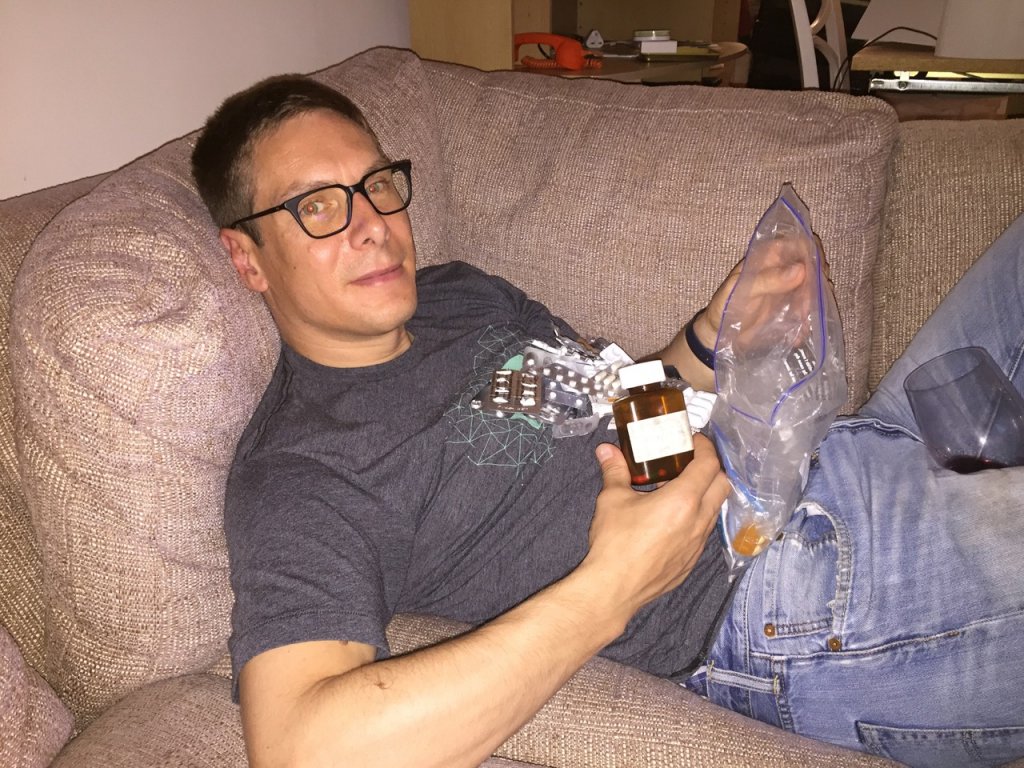
    Me with pills

    In 2014 I was homeless and addicted to drugs. I got myself a job at a bank, got myself a place to live and paid off all my debts. Then, I lost my contract. I went to a shop in Soho and bought two packets of a legal high powder and proceeded to undo all my hard work. Within a matter of weeks, I was back on the supercrack.

    In 2015 I was homeless and addicted to drugs. I got myself a job at a bank, got myself a place to live and paid off all my debts. Then, I lost my contract. I went online and bought two packets of legal high powder and two packets of legal benzodiazepine tablets. Within a month, I was back on the supercrack.

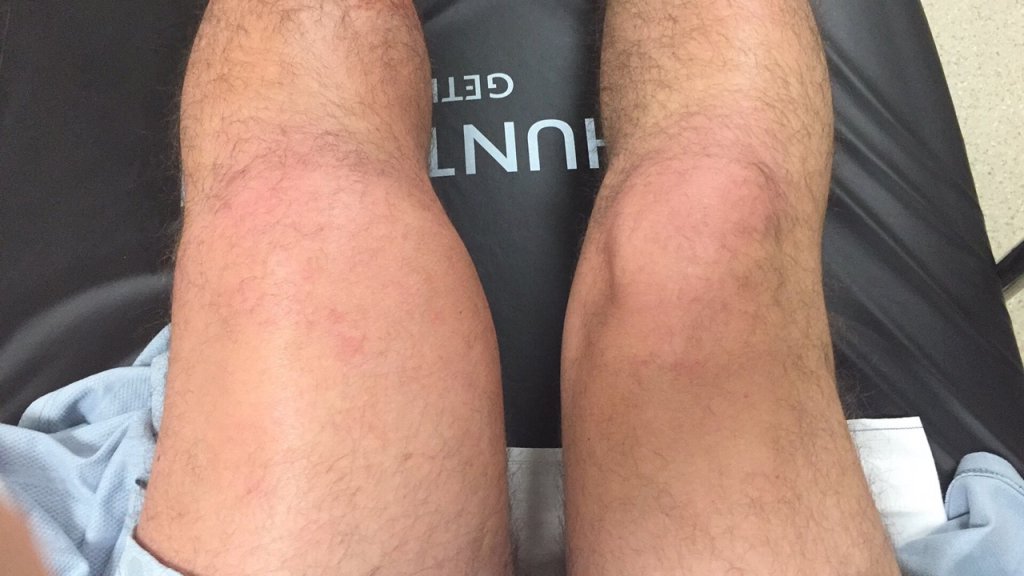
    In 2016 I had a lovely apartment. I was clean all summer. I went on holiday. I met an amazing girl who I was totally in love with. I wrote my first novel. I had a brilliant Christmas with my girlfriend and her family. Then, I got myself a job at a bank. My left leg swelled up to twice the size of the right leg, both my kidneys failed, I was put on emergency dialysis and I had to be admitted to hospital for a couple of weeks, on a high dependency ward. Then, I lost my contract. Within a fortnight I was back on the supercrack.

    In 2017 I had a lovely apartment. I took supercrack. I tried to quit the supercrack. I got depressed. I tricked my doctor into giving me California rocket fuel – a combination of venlafaxine and mirtazepine antidepressants. I went hypomanic and split up with my amazing girlfriend. I bought enough supercrack to last me two years. I went insane with stimulant psychosis and was thoroughly beastly towards my amazing girlfriend. I ran out of money. I moved to Manchester. I got another girlfriend. We broke up. I tried to kill myself. I spent a couple of days with a machine breathing for me in intensive care. I got sectioned and got locked up on a secure psych ward. I moved to Wales. I wrote 42,000 words of my second novel. I got myself a job at a bank. There isn’t enough time left in 2017 to get back on the supercrack. I’m worried I’m going to relapse in January. I haven’t lost my contract yet.

    Fluid in my leg

    If we dip into each year a little bit more closely, 2014 was a really dreadful one. I was an inpatient for about 14 weeks. I lived in a bush in Kensington Palace Gardens and slept rough on Hampstead Heath. I was in two rehabs. I lived in a 14-bed hostel dorm, but that was actually one of the highlights. I abused a lot of benzodiazepines and amphetamines, as well as the supercrack. I got in trouble with the police. Twice.

    2015 looks tame by comparison. Although I abused stimulants and ‘downers’, I had a couple of visits to a lovely family in Ireland, who looked after me. Strangely, it was working 12 hour days and working 7 days a week that exhausted me and tipped me into hypomania. I spent a week suicidal on a psych ward then suddenly decided to fly to San Francisco. I went straight to the Golden Gate Bridge, which I had contemplated jumping off. I was sober for 120 consecutive days. I deliberately got my contract terminated, because I had ethical objections to what the bank I was working for was doing. I started blogging.

    2016 is unusual – perhaps there is no easy pattern we can spot – because I got myself clean and into work much earlier than I’d managed in previous years. I worked a whole contract – notably not for a bank – without going mad and getting sacked. I got a good reference and my team were really pleased with the way I ran the project. My life was quite stable. However, I was a sneaky bastard. I was using supercrack and benzos in secret, and lying to my amazing girlfriend to cover up my drug abuse.

    2017 was off the charts. I’ve never been so sick. I’ve never been so close to death. For the first half of the year I had binge after binge after binge. I abused opiates, sleeping pills, tranquillisers, club drugs and stimulants. My drug abuse was definitely going to kill me. I had a physical dependency on benzodiazepines that looked impossible to cure – how was I going to escape from the death trap? I decided I couldn’t escape, so I took a massive overdose. The hospital gave me a 50:50 chance of pulling through.

    I’m worried that I’m repeating old patterns of behaviour. I always go back to the banks when I need money, because they pay so well and it’s the quickest way of digging myself out of debt. I’m living out of a suitcase, moving from AirBnB to AirBnB. It’s exhausting and stressful: factors that tipped me into hypomanic insanity back in 2015.

    What is unusual is that I’m going into the New Year with a contract in place: I have my job and it’s going well. I’m starting 2018 with money on the way, as opposed to the fear of bankruptcy and eviction. I’m going into next year with far fewer stresses than I’ve had for a very long time. Perhaps it’s good that there aren’t even any girls in the picture at the moment. Love and sex always have a bit of a destabilising effect on me.

    Writing this summary of my hit-and-miss boom-and-bust crazy life, I wonder if I’m doomed to forever repeat the pattern.

    One thing that’s notably different this year is living with a family. I care about them. I imagine what it’d be like if the kids asked “where’s Nick?” and the answer was that I was dead, or as good as dead because I’d relapsed onto supercrack.

    This year, I quit supercrack, tramadol, codeine, dihydrocodeine, diazepam (Valium), alprazolam (Xanax), zolpidem (Ambien), zopiclone and pregabalin. I was prescribed venlafaxine, mirtazepine and lamotrogine, but I don’t take any of them now. I had 30 consecutive sober days during October. In fact, I was sober from more or less the start of September to early November. My brain has been completely drug-addled at times, but I’m clean as a whistle at the moment – I’m unmedicated and I’m not taking any mind-altering substances. I don’t drink caffeinated beverages.

    I’d like to tell you that I feel wonderful, but I don’t. I have a cold. It’s winter. Winter is shit.

    You might look at all the times I’ve tripped up and conclude that I’m bound to trip up again. However, you might look at all the things I’ve fixed and conclude that I’m pretty good at fixing up my life when it’s fucked. All I’ve got to do is bring together all the different elements: friends and family, work and home, money and rest and relaxation, stability and exercise and hopes and dreams, love and romance and sex. Easy, right?

    If you’re wondering what my drug of choice is, and thinking that it’s supercrack, you’re wrong. Look more closely at the picture at the top of this blog post. What’s that thing in-between my legs? It’s not my male member, it’s a wine glass.

    Hello wine my old friend

    With closer examination of my entire adult life, we can see that alcohol features heavily. In fact my latest job came about as a result of being friends with a lovely guy who’s an alcoholic. We spent a week getting pissed, when I was supposed to be finding my feet with the new job. Somehow, I’ve managed to drink my way through a very successful career. Without booze I’m somewhat out of kilter. Without booze, how would I self-medicate for my mood fluctuations?

    Yes, without booze, my bipolar disposition rages out of control. I work too hard. I take everything too seriously. I fly off the handle.

    I’m not genuinely suggesting that booze is harmless or the cure of all ills, but it’s been such a big component of my adult life that I don’t really know how to cope without it. How would I have survived the recent stresses and strains of a 2,500 mile round-trip, to go and gather money from the latest bank I’m working for, without alcohol? How would I square away my deep unhappiness with the work I do, with the need to earn money, if it wasn’t for drowning my sorrows? Alcohol might be a terrible solution, but it’s the one I’ve got and I know it works.

    Is it lunchtime yet? I’m not an alcoholic, because I don’t drink in the morning. I just make sure I lie in bed until it’s after midday.


    Tags:

  • All Your Whales Are Belong To Me

    This is a story about living out of a suitcase…

    Hotel room feast

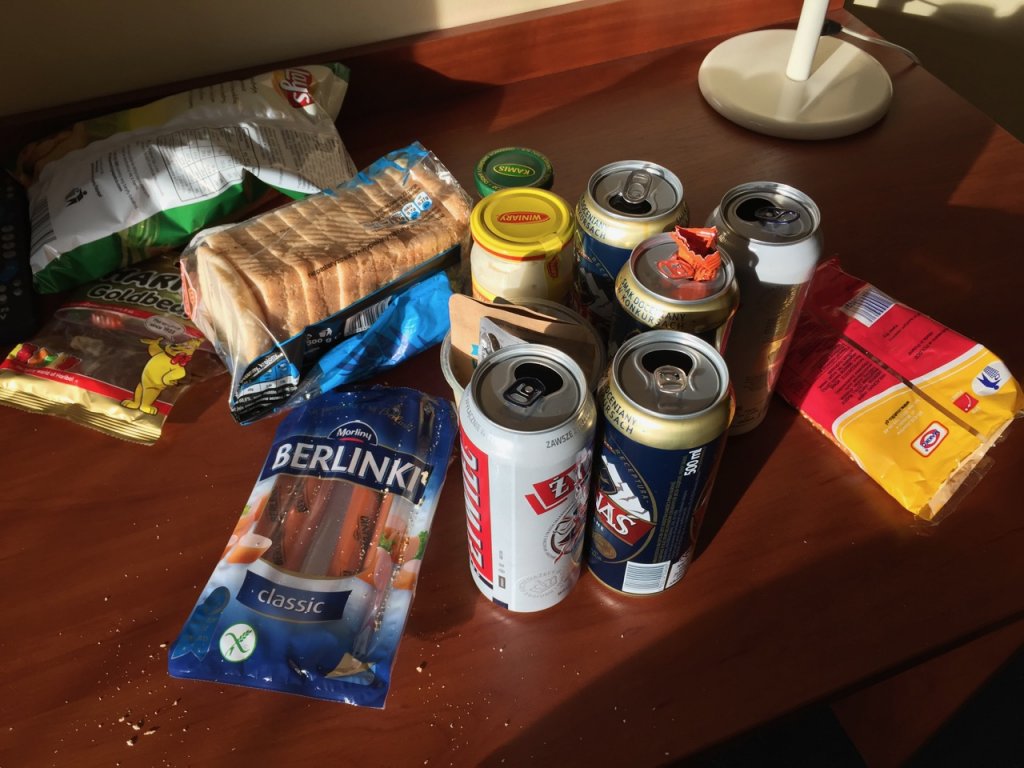
    This is my life now. Spreading mustard and mayonaise onto long-life bread with a shoehorn, placing sweaty pre-cut cheese squares in-between the slices and chowing down on a hotel-room made sandwich, while swigging from a can of strong European lager. This is the life of a business traveller who can’t really afford the expenses – I’m faking it until I make it. I’d be sleeping in my car… if I had a car.

    It’d be fairly easy to look back on the journey that started with near-certainty that I was going to get sued for non-payment of rent, whilst also being evicted… of course, I had no money. I still don’t have any money. I have negative money. I have negative negative LOTS OF DEBT MONEY. When I get paid, things won’t be so bad. When I’ve been paid for a few months, things will look positively rosy. “That wasn’t so bad” you’ll say. You’re wrong. It was bad.

    Things are often a lot easier said than done.

    A lot of the experiences in my life have been awful at the time, but later on I’ve been able to laugh about the dire straits I was in. In fact, the only way I’ve been able to come to terms with some ridiculous stuff I’ve been through is to tell my hair-raising tales of near-death experiences and destruction to the world. You might think that I glorify events of the past, or wear bad stuff as a badge of honour. That’s not true, but what am I supposed to do with all those negative experiences? Am I supposed to walk around with a glum face and tell everybody how terrible I am? Am I only alive to serve as a living reminder to people that they shouldn’t make bad choices like I did?

    Choices.

    Yes. Do you really believe in free will? I imagine that you believe in Santa Claus too. There’s no free will. Our choices are always heavily biased. We’re cornered and coerced. Would I have gone back to IT consulting for an investment bank in London if I wasn’t flat broke? Am I making free will choices, or am I just doing what I’ve got to do to survive?

    Survival.

    My version of survival probably looks pretty ridiculous to you. The kind of money that’s going to be coming my way soon is pretty obscene – banks pay very well. So, does that mean that I’m not surviving? Am I actually completely fine and dandy? I’m just making a fuss about nothing, right? In fact, if you saw the numbers, you might be angered; you might conclude that I’ve been fine all along… nothing to worry about and never in any danger.

    A friend often challenges me on why I would keep myself on the endangered species list. Why would I continue to advertise my distress? Surely I’m safe and secure now. Well, how long ago was it that I was made homeless, jobless, having some dealings with the police, locked up on a psych ward and facing certain bankruptcy with mountainous debts?

    So, I got a job. I worked that job. I did a good job. Money is on the way now. Case closed?

    Actually, can you imagine how stressful it was to have to hit the ground running and pretend like I’ve got my shit together all of a sudden? Just because I’m pretty damn good at acting like I’m a cool customer and I can handle anything that life throws at me, the reality is that my inner monologue goes pretty much like this: “shit! shit! shit! everything’s on fire! everything’s too hard! it’ll never work! everything’s ruined and it’ll never be fixed! it’s too hard! I can’t do it!”.

    Of course, a lot of people find new countries, new cities, new jobs, new work colleagues, new offices, new challenges, new accommodation and the stress of the unfamiliarity of circumstances, to make them very anxious. I’m not the only one who feels stressed and anxious when taken out of my comfort zone. I’m not the first person ever to have butterflies in their tummy about a new job.

    Ha ha.

    If only it was just a new job. Try plucking homeless unemployed bankrupt drug addicts who are known to the police, up from locked psych wards, giving them a scrub down, putting them in a suit and plonking them at a desk in another country. See how many times that works out for you.

    To top it all off, there is the ever-present danger – and there still is – that I’ll run out of money before that first payment lands in my bank account. If you think it’s just a case of budgeting you’re an idiot. You can’t budget if the numbers just don’t add up – sometimes there just isn’t enough money to pay for everything. Sometimes, you can’t afford to go to work, because you can’t afford to get there. Catch 22.

    If you think that I’m not a representative example, you’re right. Most people will fall at one of the many hurdles. Most people would find themselves marginalised and excluded and blacklisted and without a hope of ever recovering their poise; hope of ever returning to normal life. You’re right. I’m not most people. I’m not special though. I’m not different.

    I cashed in one of my “get out of jail free” cards. I don’t have any aces left up my sleeve. I’ve called in pretty much every favour. I had help, of course. People don’t survive without help.

    Arguably I wasn’t a very worthy cause to help. Arguably, I’m arrogant and ungrateful; I credit myself where no credit is due – surely the situation I find myself in today is entirely thanks to other people, and I’m just a passenger… I’ve been gifted everything I’ve got from generous people; I haven’t worked a day in my life.

    To a large extent, I agree that luck and other people’s generosity are the main factors in my life. So what? Would you prefer me dead?

    Of course, I question my utility; I question the value of my productive output. I’m not rescuing children from burning orphanages after all, am I? Isn’t it about time that I built a school in Africa or distributed food and clean water in some war-torn area flooded with refugees? With all my software development expertise, why haven’t I created an app that cures cancer, or programmed a supercomputer to find the solution to world hunger? Isn’t it about time that I stopped being so pleased with myself and did something to help other people? Isn’t it high time that I stopped being so selfish and self-centred?

    Easier said than done.

    Take a look around. OK so your friend Sharon did a fun run that raised a lot of money for spastics, but she went on and on about it A LOT, going on about how fucking amazing she is for having done that, didn’t she? Those 30 minutes that she spent puffing and panting, running around the school sports field hasn’t changed anything has it? Did that rock concert that you went to succeed in ending poverty? That’s right… you were really philanthropic, by going to see those bands play. How wonderful of you.

    So many of us say “I’d like to do more, but I’m struggling myself”. It’s true, people really are struggling to find the time and the money to get through ordinary life, let alone perform selfless self-sacrificing philanthropic amazing acts of charity. There isn’t a culture of helping each other. We mainly eye each other up suspiciously: are our peers getting more money than us? Why does SHE have a bigger house than me? Why are THEY getting a new car this year?

    It’s pretty easy to take a superficial glance at a person and say “WHY ARE YOU JUST SITTING THERE? GET UP AND DO SOMETHING”. We’ve got all the solutions to other people’s problems, haven’t we? Isn’t it the easiest thing in the world, solving other people’s problems? If only people would listen, right?

    I am thinking about changing my alarmist “suicide note” blog title to simply read this: addict.

    I want people to stigmatise me. I want people to jump to the wrong conclusions. I want everybody who thinks they’ve got an easy answer to come forward and ‘save’ me from myself. “Have you tried not taking drugs?” being one amazing suggestion that I’d never thought of before.

    I’ve failed to wean myself off sleeping pills. I’ve failed to stay off the pregabalin – painkillers – that I worked so hard to quit. I started drinking again, and I’ve been drinking a whole bottle of wine every night. I’m an addict, even though you might take a lazy glance at my life and conclude that I’m perfectly fine.

    As I journey back to Wales for a Christmas break, having completed a nervy few weeks back at work, you could be forgiven for thinking that my life’s back on track. Talking to me, you’d think that I’ve overcome all those obstacles that would normally cause a person to stumble and trip – a mentally ill homeless junkie bankrupt known-to-the-police type person. You’d be forgiven for thinking I’m normal. You’d be forgiven for thinking I’m just like you.

    I am normal.

    I am an addict.

    Surely this is cognitive dissonance. Addicts aren’t normal, right? Well, how’s about this one: I don’t even abuse substances. Why on earth would I label myself as an addict? Surely I’ve won? Surely I’ve broken free from everything that threatened to destroy me? Why would I want to publicly wear the most awful label that we can give to a person?

    I’m not going to write a world-changing app. If apps had the capacity to change the world for the better, they’d have done it. I’m not going to start a world-changing charity. If charity had the capacity to change the world for the better, it’d have succeeded.

    So am I giving up?

    Am I putting on my oxygen mask before helping others?

    The answer is neither. I’m not doing either of those things. I neither accept that the world’s fucked and there’s nothing I can do about it, nor do I believe that I have to help myself before helping others. It’s true that my situation was unbearable, and it will continue to be unbearable for some time. I’m going through some awful stuff, even if you think my life is blessed and I live a charmed existence.

    There’s a family in Wales who’ve helped me. They’ve seen me during periods when it appears to them like I’m not helping myself. They’ve torn their hair out with frustration that I’ve been stubborn at times, when there’s been obvious solutions that have been right there, just waiting for me to reach out and grab them. The whole world’s problems could be solved overnight if only people would listen, right? Simple. Things are really simple, right?

    The asceticism of my life – making my own sandwiches in a hotel room – seems like an obvious solution to a problem to you. No knife to spread the mayonaise on the bread? No worries, here’s another solution for you…

    However, if you have to actually live with a person while they go through the millions of trials and tribulations in their life, then you start to get a sense that things are not as simple as they appear at first. The case of getting my passport back from a bank in Manchester being a particularly illustrative example.

    I’m about to spend Christmas in the bosom of a loving family, living on a gorgeous farm in the Welsh countryside. Of course, things aren’t all about me. Christmas is about family; it’s about giving, not receiving. How must this family feel though?: they’ve succeeded. They’ve nursed me back to health. Money is on the way. I’m back in the saddle, aren’t I?

    January.

    January is my nemesis. Of course, I’m not the only person on planet earth to feel down in January. Of course, we all have winter blues and credit card bills hitting the doormat in January. Great. Let’s just see how things go, shall we? I’ll be back to living out of a suitcase in January.


    Tags:

  • Three Stops from Dagenham

    This is a story about my 2,500 mile round-trip…

    Snowy tree path

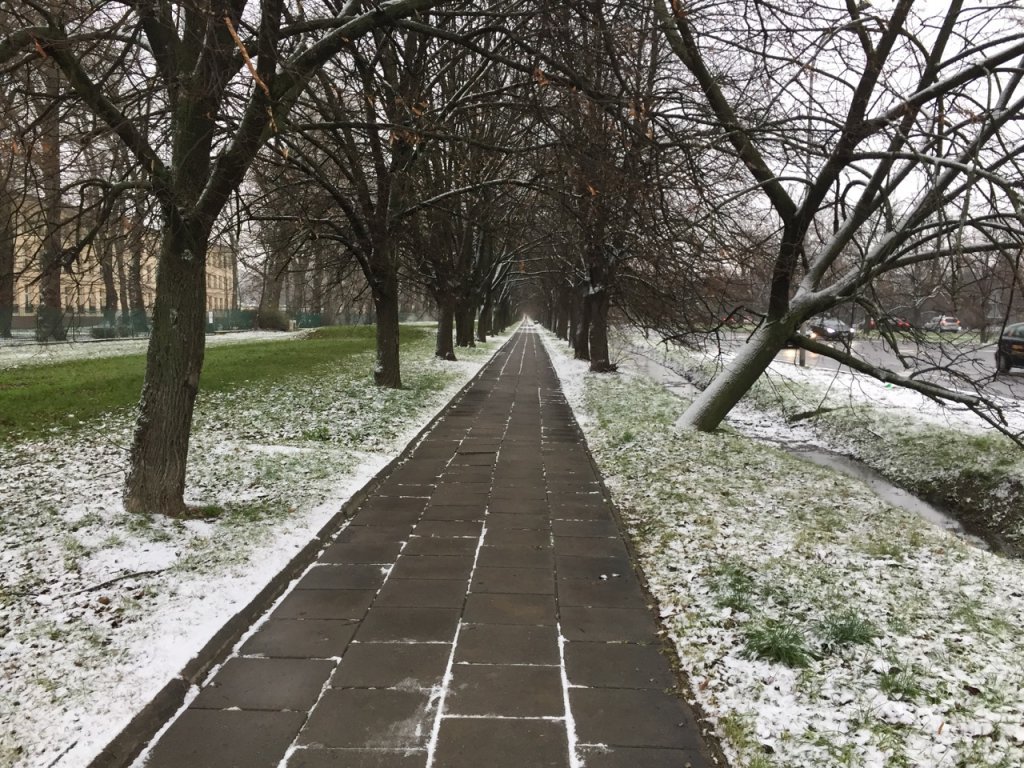
    Two weeks ago, the local Community Mental Health Team (CMHT) was phoning me to see if they could potentially admit me to hospital. I had revealed to a psychiatrist that I was having suicidal thoughts, opting to be fully honest – as advised by my doctor friend who was accompanying me – as opposed to saying what I needed to in order get what I wanted. Perhaps it’s good that I was honest, because therapy’s not quick, and the only pills that work have a tendency to send me a little hypomanic.

    So, I’m still unmedicated. It’s been 6 months.

    The danger was that I’d become so depressed that I’d commit suicide. My hunch was that my suicidal thoughts were being driven by the fact that my life was disintegrating and I had absolutely no control over it. Doctors can’t act on hunches. I can though, and I was right – as soon as I started earning money and there was hope that I wasn’t facing financial ruin, a lot of my suicidal thoughts disappeared.

    Another danger is that I’ll start getting delusions of grandeur. However, we should examine quite closely just how delusional I really am. Am I really delusional?

    The phone rang. I answered it. A man told me he had a project. Could I do it? I replied that I could. How much money did I want? I told him. Could I start on Monday? I said I could. I didn’t speak to him again, until I met him for the very first time, 1,200 miles from home.

    If you think that my mental illness is about some kind of lifelong condition that I need to take tablets for, you’re wrong. Every single thing in my life – my environment – predisposes me towards mood instability. If you think about the kind of feast and famine stressfest that my boom and bust financial situation has given me, then perhaps you can start to see that I harbour no delusions. My days were numbered. Only bankruptcy and a life of poverty lay ahead, quietly pill popping and watching daytime television, while collecting my meagre benefit cheques. Then, suddenly: an investment banking IT contract lands in my lap.

    “Yes, but you’re resting on your laurels; relying on your reputation” I hear you cry.

    It’s true that if it wasn’t for friends who’ve vouched for my good character, I would have been screwed long ago. However it’s a non sequitur to say that I’m able to hide my mental illness by burning bridges. How did I build my reputation in the first place, if I’m no use to anybody?

    If you were to read through the two and a half years that I’ve been writing my story, you’ll see that I have burnt some bridges. However, you’ll also see that my actions are always quite deliberate. I often burn bridges to stop me going back to places. If you look at my whole working life in its entirety, you’ll see that the big wads of cash that I get offered to do work that’s utterly incompatible with my mental health, is always too much of a temptation. Even places where I’ve spectacularly burnt bridges, my name isn’t total mud. It’s been very hard to completely destroy my reputation and good standing, and make myself un[re]employable.

    Are you getting the idea at all? Are you understanding the theme?

    Perhaps my most astonishing rags-to-riches feat was when I went from homeless and bankrupt, to working on the number one project for the biggest bank in Europe. The exertion of it cost me my sanity. The exhaustion of living in a 14-bed dormitory and working 120-hour weeks; trying to keep my suit and shirts clean and crisply pressed hanging up on my bunk; trying to save up enough money to get myself a place to live… it was too much. I burnt out and plummeted into suicidal depression when I ran out of energy to keep up appearances. However, can you imagine how I felt, when I upgraded from a hostel bunk bed to my own 2-bedroom apartment on the banks of the River Thames, with glorious panoramic views over London. Do you think you’d be mentally ‘well’ enough to cope with that kind of life turnaround?

    Stress and sleep deprivation will have fairly predictable effects on most people. To deprive a person of sleep and then declare that they are mentally unwell seems disingenuous. What about taking a person who believes they’re a complete failure and parachuting them into a life of opulent wealth? Do you think that it would have an effect on somebody, if they miraculously avoided certain financial ruin, destitution and homelessness? What happens when the mentally ill junkie homeless bankrupt loser reinvents themself overnight?

    Of course, we don’t normally let people sort themselves out.

    Criminals, the mentally ill, addicts and alcoholics are very keen to club together with their own kind. Like crabs in a bucket, any crab that tries to escape will be pulled back down by the others. I shan’t be adding a link to this website on my CV anytime soon. Joining any kind of community where I’m encouraged to wallow in my shame and define myself by my shortcomings, seems like a terrible idea.

    In defiance of those who tell me I have delusions of grandeur for expecting more than a pot to piss in, I continue to pursue a two-part strategy: I’m doing incredibly well remunerated work and I’m candidly sharing my story publicly.

    “Who are you to tell your story? You’re nobody. You’re not famous” I hear you grumble.

    “Who are you to earn so much? You’ve failed. You should earn peanuts” I hear you protest.

    Don’t you understand? The whole system is set up to make you feel inadequate; unworthy. Every exam you ever sat; every job interview you’ve ever attended – the whole sham was concocted to make you feel grateful for the pittance you receive. The fact that you feel like you’re not allowed to write your autobiography or otherwise blow your own trumpet, is by design – you’re supposed to feel like a nobody. You’ve been indoctrinated to feel worthless.

    On my travels – and I don’t mean geographically – I’ve encountered a lot of people who’ve been less fortunate than the investment banking types who I’d usually come into contact with. The only difference between me and my fellow hostel mates, is that they never believed they’d even get within 100 feet of the front doors of a massive investment bank, let alone land a job there. The difference is attitude: act like you’re supposed to be there. Life’s all a confidence trick.

    Over the past couple of weeks, I’ve faced the horrendous realisation that I’m unexceptional. I mean, I’m on the right side of the bell curve, but I’m not an outlier. What special achievements set me apart? What proof have I got of my intellect? Of course, the answer is that I’m distinctly average; perhaps even a little below average in some areas, thanks to excessive consumption of drugs and alcohol. I should have been swinging towards hypomania, but instead I’ve been suffering from an almighty self-doubt crisis.

    Imposter syndrome has driven me to try harder; to concentrate. Anxiety and the sheer terror that I’m incapable of doing the job I’ve been doing for 20 years, is being slowly replaced by the welcome return of some belief in my own abilities.

    Of course, now comes the threat of overconfidence. Perhaps now I’ll swing hypomanic? Perhaps soon I’ll declare myself Jesus Christ re-incarnated? Perhaps those doctors were right all along, and only pills can prevent the inevitable mood swing upwards?

    I don’t think so.

    I worked on a long project last year and I was stable. The role was incredibly boring, and it was very hard to stay motivated, but money got me out of bed in the morning and money kept me at my desk until the end of the working day. Last year was a triumph of money’s ability to restore mental health, through wealth. It’s no accident that the countries with the biggest rich-poor gap also have the worst depression and anxiety. Anybody who tells you that rich people get depressed too, or that poor Africans are really happy is just perpetuating anecdotal nonsense – being poor in a rich country is incredibly toxic to mental wellbeing.

    It’s true that I’ve sorted myself out financially a few times now, only to throw it all away, but that’s dual-diagnosis not mental illness. Bipolar has allowed me to have a lovely life. I don’t want to change from feast and famine; highs and lows. However, undoubtably I’ll be tempted to take drugs again once my bank balance is replenished.

    If you’re wondering what’s going to stop me from relapsing into addiction, once I’ve dug myself out of the hole, then I’m afraid you’re going to have to wait. Recovery from an acute episode of dual-diagnosis – depression, hypomania and substance dependency – is well beyond what I’d planned to write in this single essay. I’m going to have to revisit this topic, because it’s fascinating to me: my life depends on it.

    My train from London to Wales fast approaches Swansea, completing my 2,500 mile roundtrip. Of course, it’s been a much, much longer journey than that.


    Tags:

  • Long Case

    This is a story about medical notes…

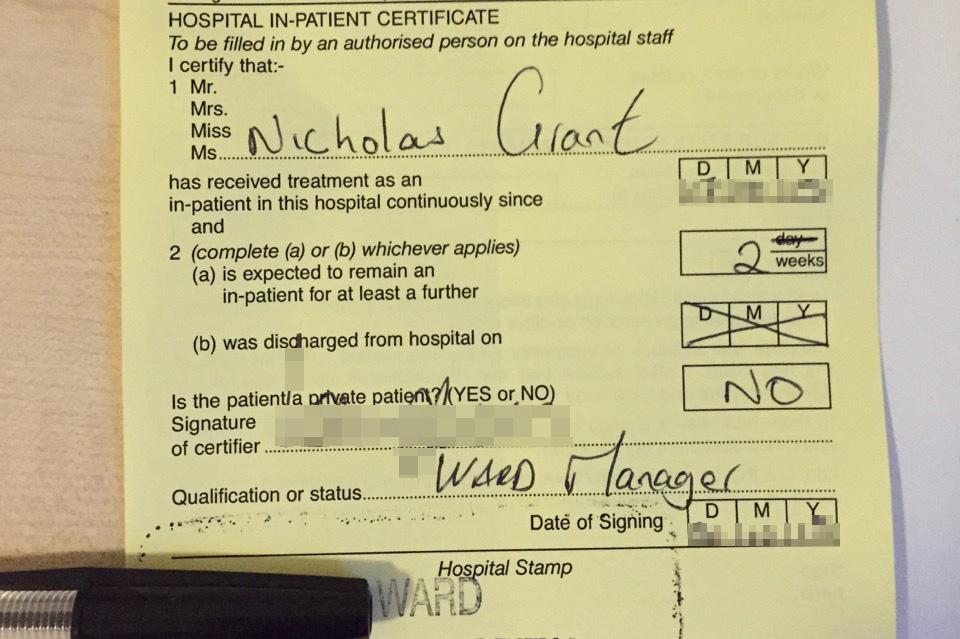
    Hospital Note

    My ex-wife – a biochemist by way of undergraduate degree – once screamed at me in an incoherent rage because I had innocently asked her “how big is a protein?” having wondered how many nanometers across, the average protein molecule measured. The sheer audacity of me asking such a question enraged her, perhaps because free thinking is expressly forbidden in an academic world which promotes rote-learning of facts and examinations graded to a marking scheme, ahead of learning.

    (The answer, by the way, is roughly 3 nanometres in radius).

    When I attempt to answer a difficult question, I sometimes pause and chuckle. “What is consciousness?” came one question. Although I was desperate to talk about weakly interacting subatomic particles, General Relativity and nuclear fusion, I somehow managed to constrain myself to a meaningless analogy, while keeping quiet about my “mind’s eye” which could picture every piece of information that captured my entire existence, smeared out in a infinitely thin sphere at the event horizon of a singularity, across all meaningful spacetime for the entire universe that I will ever perceive, which would have been rather a mouthful to express.

    Just as one may cram for an exam the night before, I’ve attempted to only ever amass the prerequisite knowledge that may be considered the minimum viable to navigate whatever situations I have had to endure to reach my goals. Education has never seemed like an end in and of itself, given that our understanding of the fundmental nature of reality is evolving, and the Standard Model of particle physics is rather long in the tooth. Although I find it quite delightful that there are quarks named strange, charm and beauty in the particle zoo, I would find it rather frustrating to dedicate years of my life, obtaining a degree and writing a thesis using tools which may soon look as clunky and outdated as Newton’s inverse-square law of gravity.

    The mathematicians will mock physics as simply being applied mathematics. The physicists will mock chemistry as simply being applied physics. The chemists will mock biology as simply being applied chemistry, and so on.

    Computers are now capable of solving equations and modelling real-world phenomena, potentially making algebra and calculus into dying arts, along with handwriting and long-division. The Fractal Geometry of Nature has revealed that cold rational calculating machines can produce simulations that imitate reality, through repeating patterns. Massive computational power does not only aid human discovery of hidden algebraic equations.

    Amid much fanfare, computer software is touted as potentiating new drug discovery by simulating molecular binding, protein folding, rapid gene sequencing and personalised medicine. However, we seem to have forgotten that half the planet is impoverished & hungry, and vast numbers of those who are fortunate enough to live in advanced, wealthy & technologically advanced societies, are suffering from an epidemic of anxiety, depression and other mental health issues that is bad enough to drive vast numbers of men in the prime of their life to commit suicide: the biggest killer of males under the age of 45 in the UK – more than road traffic accidents, drug-related deaths, physical disease, murder, accidents and all the other causes of death.

    One should consider that I took leave of my senses in 2008, but since that time I have only managed to attract two clinical diagnoses – convenient medical short-hand – although I have acquired a third which is perhaps the bluntest instrument of the three, and much more of a pejorative than a diagnosis.

    “Substance abuse” is a catch-all term which serves me well when I haven’t the time & energy to go into detail. Given humanity’s long history of self-intoxication, some physicians would consider themselves to be well-versed in the matter. Even the most insulated amongst us, will have struggled to escape contact with a drunk in our lives. We quickly forget, of course, that psychiatry is an extremely young discipline. The isolation, refinement and synthesis of molecules which can short-circuit brain mechanisms, is something that dates back only 70 or 80 years, along with the branch of medicine chiefly concerned with treatment of matters of the mind.

    The brain: the most complicated organ in the human body – estimated to have up to a quadrillion neuronal synapses – is often considered only in terms of its vital function as central nervous system, insofar as the same fatty grey matter helps other species to fuck, fight, flee and feed. This does not, however, tell us much about human consciousness, and even less still about pathological thought.

    I once sat down and hand-wrote 12 pages of notes, from memory, of every General Practice doctor, psychiatrist and hospital, which I had attended during a 7 year period. Although I kept things as brief as I could, with names, dates and locations, as well as diagnoses and medications, there was a great deal to write. I’m not a complete hypochondriac – there were important notes about my episodes of depression and hypomania, where my mental health had caused me to become significantly dysfunctional.

    Perhaps your mind is now skipping ahead – as mine often does – and you’re attempting to finish my sentences. Presumably, you’re trying to guess the punchline of the joke. I assume you’ve already got more than enough information to diagnose and treat me.

    I’m second-guessing myself here, and I’m struck by the egotism and “navel gazing” of the very act of being sufficiently appraised of my own medical history that I should remember such a level of detail. Who the hell am I to take an interest in my own diagnosis and treatment? Where’s my certificate, framed on the wall? Where’s the photo of me wearing a mortar board & gown, and clutching a scroll of parchment with a red ribbon tied around it?

    When I think about where I should spend my precious time and effort, I’m not motivated by the prospect of being an understudy to a failure. While psychiatry continues to produce dismal outcomes for humanity, in terms of the epidemic of mental health problems, addiction and general societal collapse under the weight of stress and burnout, I’m reluctant to follow in the path of those who are not succeeding in improving the human condition. It should however be noted that I do not for a single moment, criticise the well-meaning intent of those in the healthcare professions, nor do I mean to discredit the lifesaving work that takes place every single day.

    The idea of using myself as a case study seems quite ridiculous, but one must consider that it would be unethical to – for example – risk a person’s life when there is a treatment available that has been proven to be more effective than placebo.

    With a sample size of one, perhaps nothing useful can be gleaned from my first-hand experiences, but I have attempted to corroborate my findings with other evidence wherever possible. I have deliberately avoided areas where another data point would make no difference: what use would it be if I too experienced anorgasmia as a result of SSRI medication, for example?

    A great deal of our knowledge regarding the anatomy of the human brain has been gleaned from unethical experiments on unconsenting psychiatric patients – lobotomies, testing of medications and induced seizures. Animal studies have been gratuitously gruesome, with a great deal of unnecessary suffering inflicted upon primates. I’m not an anti-vivisection nutcase, but there must be very tangible goals to justify the means of obtaining the results.

    To bathe a brain in psychoactive molecules that will cross the blood-brain barrier, is barbaric when we consider that the theoretical reasons why drugs have the effect that they do – the theories have so often been disproven. The ‘chemical imbalance’ theory that said that depressed brains had lower levels of serotonin, and that SSRIs would increase levels of synaptic serotonin, has been conclusively disproven, yet it is still a widely-circulated myth.

    The much-vaunted sequencing of the human genome looks like a ridiculous white elephant of a project, when we consider that epigenetic gene expression had been discovered to allow genetically identical animals to exhibit completely different physical characteristics, depending on the environment that they have been exposed to.

    In a collapsing global economy, education is one of the few sectors that’s not feeling the pinch, and good solid science is getting drowned out in a sea of noise: pointless research. There are already excellent animal models which demonstrate that overpopulation and otherwise horrible living conditions, will produce a “behavioural sink” and addiction, in individuals who would otherwise lead happy healthy lives.

    It has seemed fairly obvious to me from the start, that my mental health problems have stemmed from the ethical objections I had to the conduct of financial services organisations, and the role of global capitalism in ruining billions of human lives, in pursuit of unrestrained, unregulated and immoral profits, to the exclusion of any and all consideration of long-term consequences. In short: my problems should not be medicalised. I’m having a sane reaction to an insane world.

    While this essay goes well beyond the “answer A, B or C” multiple-choice options on the prescriptive menu that is on offer, I feel that this does not invalidate the points I am making.

    To have invested heavily in a mainstream education, would be to risk becoming incoherent with rage whenever somebody was so impertinent as to ask a thoughtful question – questions that spring into a mind that’s unconstrained by the narrow status quo viewpoint, rote-learned while kowtowing to those with the necessary credentials to approve clones of themselves.

    This is not “my ignorance is as good as your knowledge” anti-intellectualism, but instead a suggestion that we don’t need so many people who’ve all read exactly the same books and sat more-or-less exactly the same tests. Moving towards intellectual homogeny is as dangerous as book burning, in my opinion.

    In conclusion: this is a convoluted way of saying that you’re unqualified to judge me, although you’re possibly technically correct if you say that my problems are mostly of my own making.


    Tags:

  • Penultimate Day

    This is a story about relapse…

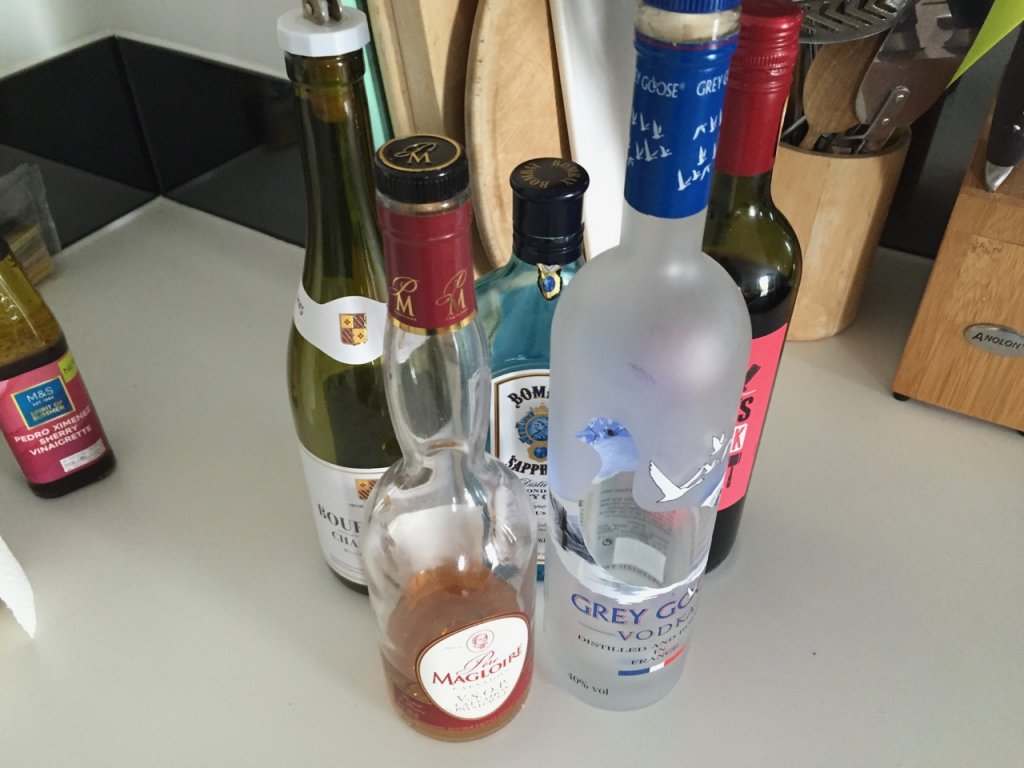
    Booze

    I’ve downed a whole pint of cold crisp refreshing lager before I’ve even realised I’ve done it. How I came to be in the bar in the first place is unclear, but I’ve greedily drained the contents of the pint glass and replaced it on the tabletop. A sense of “what have I done?” sweeps over me. Although I feel guilty – I have let people down; I have failed – I immediately decide to have another pint, and another, and another… until I wake up.

    This morning was the first morning all year – more or less – that I didn’t wake up and immediately think about reaching for a packet of pills.

    “Addict!”

    Hold your horses – things are a little bit more complicated. What would you do if you suffered from chronic pain? Would you just grin and bear it?

    Perhaps the medication I have been taking for pain has inadvertently helped me to stay off the booze. Now that I only have one more day before I stop taking pain medication, a subconscious desire to get drunk has returned with a vengeance.

    Every time I see beer & wine, I imagine that it would taste amazing and I get a mild craving to consume some. However, thankfully I can remember that alcohol didn’t taste very nice after I stopped drinking for a period of over 4 months.

    There’s no reason why I’d stop taking my prescribed pain medication and become a teetotaller, except that I want to clear my head – I’m desperate to see what my brain is like, without the intoxicating chemicals I’ve been putting into my body.

    My dream last night was very vivid, and the feeling that I had accidentally failed in my mission to temporarily abstain from mind-altering substances, was the strongest feeling: I was devastated. Then, in my dream I decided that if I was going to fail, I was going to fail spectacularly.

    The fact of the matter is that I haven’t failed at all. I’m spectacularly successful. Very few people are able to beat the demon drink, and especially not at the same time as quitting physically addictive medications and overcoming a heap of other shit too. I’m a motherfucking world-leading expert on sobriety and getting clean.

    Skin-crawling anxiety, suicidal depression and a warped perception of time, means that the hands of the clock barely move as I wait for my brain to recover sufficiently, so that I can feel slightly better.

    I wait. I wait and I wait and I wait.

    To say that I’m white-knuckling the journey to being totally clean from all substances, is cruel and unkind. To accuse me of being some kind of “dry drunk” or to suggest that I’ll always be an alcoholic and an addict is ridiculous. If labels and stigmas are going to follow me around forever, I’ll be more than happy to return to substance abuse. I aim to confound prejudices – there’s no point in suffering pointlessly.

    Trust me – I’m suffering a million times worse than I ever did before, even when I was in the depths of stimulant psychosis. Even when I was in deep shit and completely messed up, that lasted for the blink-of-an-eye versus the round-the-clock awfulness I’m having to endure at the moment. I might’ve thought I was going to die at times, but now I really wish I had died.

    Tomorrow I have 24 little hours to endure and then my recovery starts properly – every day after tomorrow takes me a little bit closer to normal brain chemistry. Every day that I manage to stay clean & sober after tomorrow will allow my body to restore itself to its natural state of homeostasis.

    It’s going to be like the world’s shittest Christmas Eve.


    Tags:

  • Help the Homeless

    This is a story about unintended consequences…

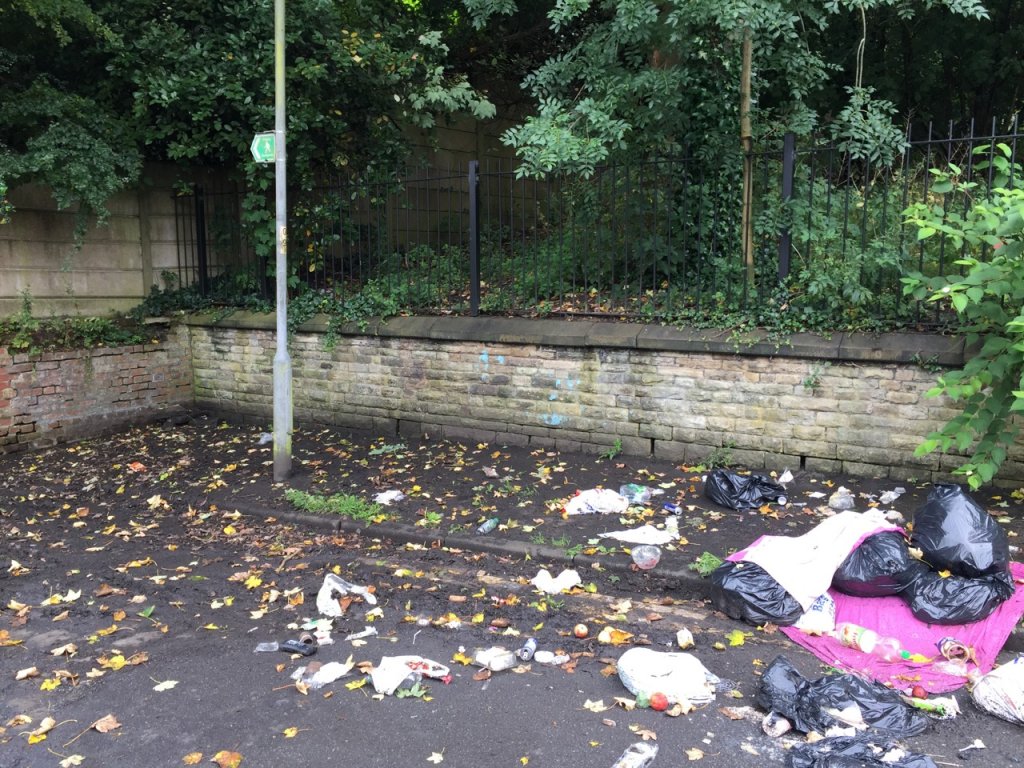
    Trash strewn in the street

    The UK’s notorious tabloid rag, The Sun interviewed a grieving father & husband and quoted him as saying “I should never have let the bastard near my family” with reference to a homeless man who had been taken in by his wife. The British press variously reported that the woman – later murdered by the homeless man she’d tried to help – had given “her husband’s dinner” to her killer, who also killed her son and badly injured her husband.

    Quite unbeknownst to me, this news story had received widespread coverage at exactly the same time as I was taken in by a Good Samaritan – what risk, one wonders, to her children & husband if this is any kind of precedent?

    Scanning the column inches for similarities between myself and the perpetrator of the double murder, the newspapers reported mental illness and drug abuse. My Good Samaritan collected me from a secure psychiatric institution on the day when the crescendo of media coverage reached its peak. During the car ride to the family home I explained that I had seen illegal drugs used by my parents on a daily basis, and we agreed that to do that in front of children is not normal, right or proper.

    Perhaps my gracious hosts have been hoodwinked. Perhaps I have fabricated a story about my sweet innocence and a set of unfortunate circumstances that have come about through no fault of my own. Given the extraordinary amount that I have written, it seems like a rather elaborate ruse, to write extensively about my chequered past, even when it has clearly caused me more harm than good. Is it not true that I’ve left my readers in no uncertain doubt about my every misdemeanour?

    Further digging through the archives of the internet, I found a newspaper which reported that the aforementioned homeless murderer had been diagnosed with borderline personality disorder (BPD). BPD was casually tossed into the mix by one psychiatrist that I met, as a possible additional diagnosis for my own mental health problems. The only official diagnoses I’ve received are clinical depression and bipolar disorder, but adjustment disorder also featured in some of my recent paperwork, although this did not appear on my hospital discharge summary.

    I’m mindful that further comparison is not at all useful, and I find myself to be extremely stressed about what the kind family who has taken me in, might think about the fact that this matter has been on my mind. When I read the grieving husband’s words “I wish my wife had never set eyes on him” I do worry that I never asked my own Good Samaritan “what does your husband think?” but then wouldn’t the atmosphere now be a little strange if the reply had been “he’s got some reservations”?

    I would say that I have never searched my soul for any kind of malice, as extensively as I have done knowing that I would be residing under the same roof as a happy family with several kids. If I had the slightest suspicion that my behaviour could be erratic, then I would not find it conscionable to expose a family to any danger that I might pose.

    That said, I’m aware that bonding with the family is taking place. I’m still deeply troubled by almost unbearable levels of anxiety, and suicidal thoughts intrude whenever I consider what the future holds. I’m hopeful that my state of mind will improve when my medication changes are done. I am however mindful that in the worst-case scenario, I do pose a risk to my own life, and although I would put some time & distance between myself and the family, it would be incorrect to say that it would have no effect on them if I were to end my life prematurely.

    The question of whether to accept help is as difficult as that of whether to offer assistance to those who are in need. I’m incredibly lucky to not only receive aid, but also to be able to openly discuss the obstacles and difficulties involved.

    You may be surprised to learn that these 700 or so words are some of the most carefully chosen I have written, out of over 700,000. I have been shown a great deal of love, care, respect and trust, and this is why the anger, bitterness, rejection and hurt of the past, that usually flows out from me onto these pages, has been replaced with a daunting sense of responsibility towards those who I am now close with.

    I’m going to publish now, because it’s been agonisingly difficult to write this.


    Tags:

  • Habit Forming

    This is a story about breaking the cycle…

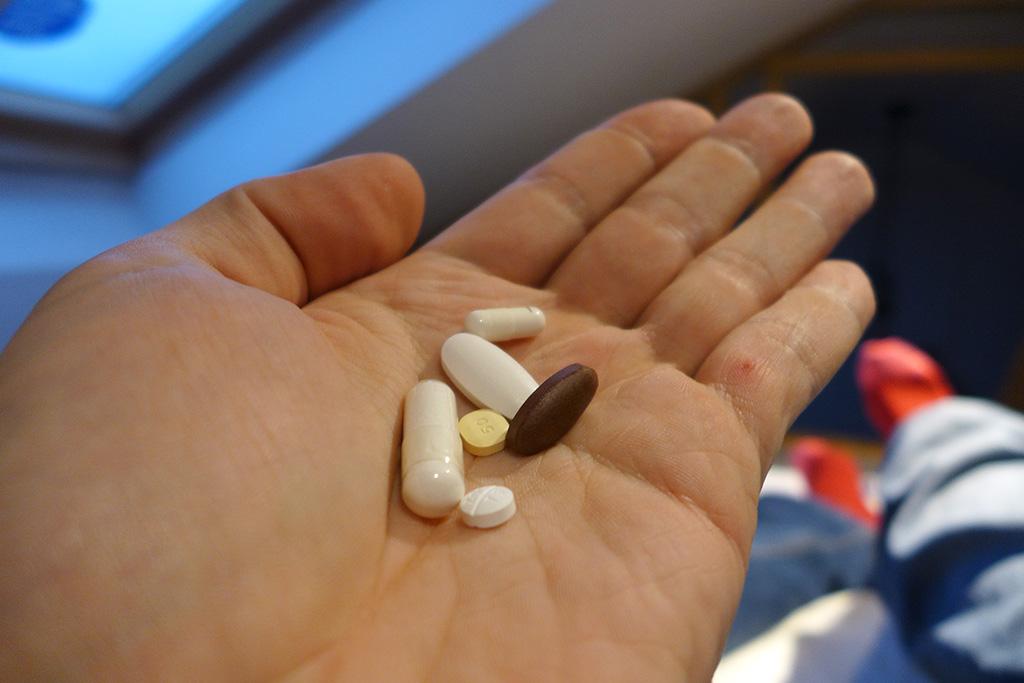
    Handful of capsules

    Two of these medications are addictive. Half of these tablets are dietary supplements that can be bought from a health food store. As I stop taking three prescribed medications, withdrawal side effects that I’m suffering from include: insomnia, anxiety and panic attacks. Why stop?

    If you’re doing something that seemingly provides no benefit to your life, but is hard to stop, then why are you doing it?

    The list of things that I could be said to have enjoyed habitually has grown to an extensive list that includes sex, spending money, alcohol, stimulant drugs, benzodiazepines, sleeping pills, painkillers, pornography, computer games, reading, arguing with people, work, masturbation, driving fast, junk food, music and just about anything else that makes life liveable. Strangely, my current day-to-day life includes almost none of these things.

    Given my natural tendency to binge on anything I enjoy, perhaps it is abstinence that I am now taking perverse pleasure in the over-indulgence of. I barely have the words to describe how truly dreadful it is to be withdrawing from the most addictive chemicals on the planet – abstaining from alcohol & benzodiazepines can be so hard on your body and mind, that you will die from seizures. Why on earth would I choose to go without the things that would salve the aching that my body has for anxiety & stress alleviating substances?

    It was suggested to me that my choice to go without all the things that would help me feel better, is akin to a kind of self-harm. Writing this now, I’m inclined to agree. All the stress and anxiety that I have avoided for years is all hitting me like a sledgehammer. Everything I’ve ever enjoyed and seen as a reason for living, is barred from me for reasons of self-denial.

    Perhaps this is a kind of meditation. Like a monk who takes a vow of celibacy, through this difficult period maybe I will learn something that I would not be able to whilst indulging in the terrestrial temptations.

    There is a deliberate alteration of my behaviour, of course. I have decided to deny myself alcohol and my prescribed medications (yes, this is in agreement with my doctor, yawn). I could very easily continue to drink alcohol and take pregabalin, not to mention illegal narcotics and prescription drugs which I could obtain through the black market, but I choose not to. I do not stop because I have an incentive to do so; I stop because it is hard and it is interesting – I’d gotten a little bored of my wanton excesses.

    I could write and write and write – perhaps the armchair psychologists amongst you will speculate that I have simply transferred all of my multiple addictions into an addiction to writing.


    Tags:

  • Care Quality

    This is a story about being inspected…

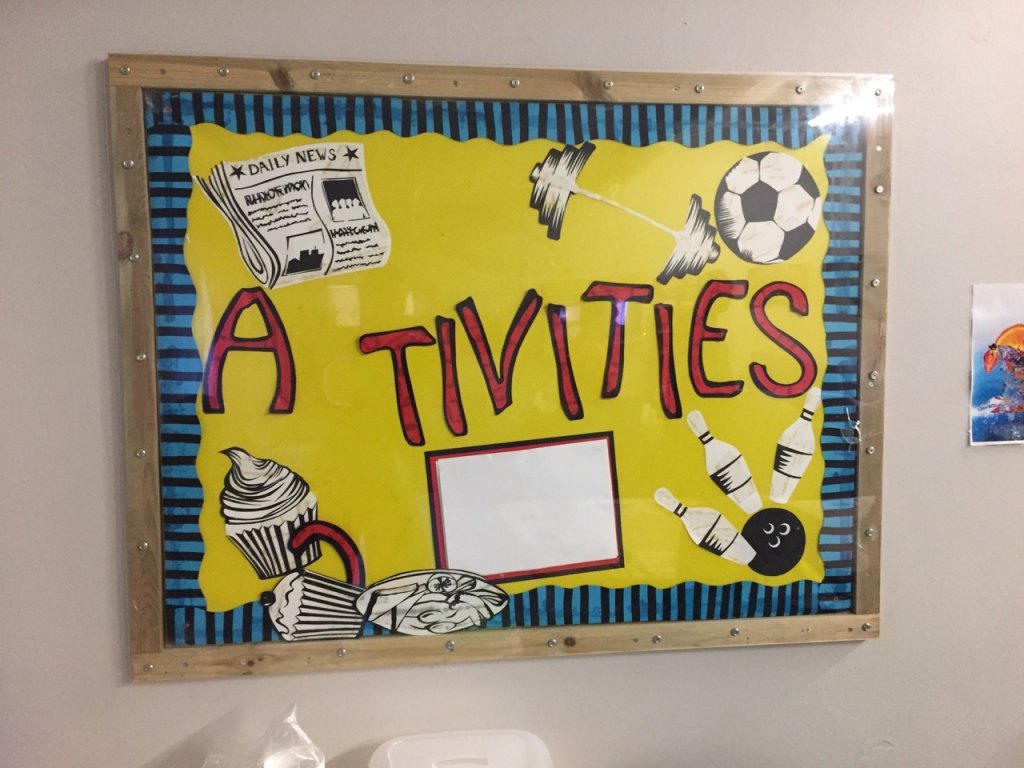
    A tivities

    Today the psych ward is being inspected by the Care Quality Commission (CQC) and the staff are so nervous that some of them feel physically sick. I try to reassure one nurse that they’re doing their best, despite staff shortages and rampant drug use – the synthetic cannabinoid called Spice is ubiquitous throughout prisons and psych wards.

    There’s always somebody peering over your shoulder, sneeringly judging you. Is it any wonder that paranoia takes hold in a mind, destroying it? The United Kingdom has an exceptional ability to track the movement of its citizens, using simple conventional CCTV – no spy satellites even needed.

    In the free West, we deride the Stasi and the KGB. We talk about China’s vast number of people employed to snoop on their own citizens, but we don’t acknowledge the work of GCHQ and the NSA. Have we forgotten Edward Snowden’s revelations so quickly? The Government read your fucking emails and the police – the regular ordinary police – have a backdoor into Facebook to read all your private messages.

    Nothing to hide, nothing to fear. If you believe that, why do you feel stressed if a police car is following you when you’re driving, and a sense of relief when the police overtake you and disappear over the horizon? You have insurance; you’ve had your car’s roadworthiness tested; you’ve paid your road tax… nothing to worry about, right?

    It was only a short time ago that I was deeply indoctrinated by my schooling, that had shaped me into a meek conformist – I was fearful of defying any of society’s rules and regulations. A family friend wanted to go fishing with me, and I said we needed to obtain a permit. “Our prisons are full of people who got caught fishing without a license” this friend laughed. “What are you in here for? Murder. What are you in here for? Fishing without a license” he continued jovially.

    The city centre is crammed with 50,000 protestors preparing to march. I walk past a police cordon and I can hear a police officer yelling at me that I can’t go the way I’m going, but I know that he’ll be busy dealing with my obedient friend who will have stopped per the instructions. I keep walking, pretending to be unable to hear the entreaties to return. The policeman lets my friend go and we walk to the head of the march.

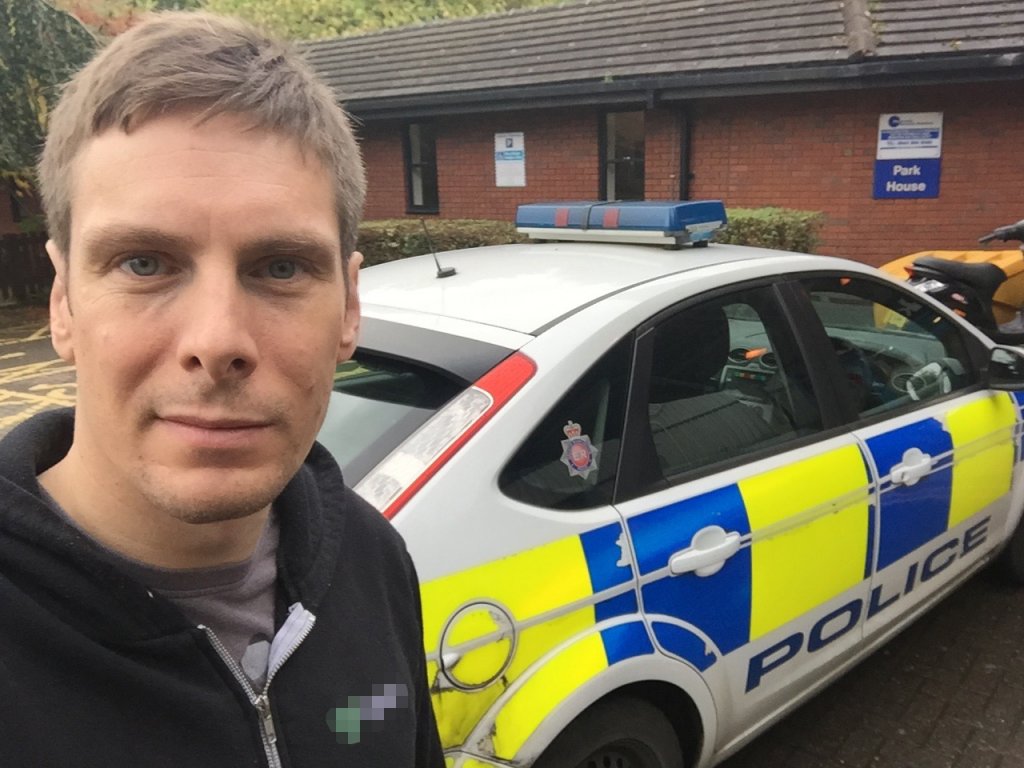
    Police car

    I’m sure that anarchy would be a disaster for sick and vulnerable people. I have no desire to see civilised society crumble. We can’t all do whatever the fuck we want, whenever the fuck we want. Perhaps if everybody acted like I did, it would be the end of the world as we know it.

    “Don’t walk” says the sign in the United States. I jaywalk with gay abandon. Even in Manchester people look at me like I’m mad and suicidal, for the way I cross the road. However, it’s done with such confident aplomb that nobody challenges me. I notice that people who are surrounded by plenty of steel and glass and plastic, such that they would suffer no injury at all if they killed me to death with their motor vehicle, do not give a single fuck about whether I live or die. In London, a motorist will slow down or even brake, to avoid killing a pedestrian, but these provincial plebs treat human lives with no such sanctity.

    To live in a crowded city is to be humbled by humanity. To be detained against your will on an underfunded psych ward is to humbled, also. In the city, you are forced to confront your pathetic meaningless existence, as an ant crawling in its nest would be, if it had the faculties to perceive itself and its surroundings. But an ant’s nest is akin to a row of gleaming skyscrapers, insofar as being a testament to what can be achieved by a society working together. On the psych ward, you are forced to confront your powerlessness over forces greater than yourself – society will exclude its troublemakers.

    Perhaps you think I would endorse heroin being sold in supermarkets and that babies’ pacifiers should be replaced with crack pipes?

    As six police officers pinned me to the ground and my bum was injected with lorazepam, in the Accident & Emergency department of a hospital, I noticed a cleaner and a security guard nearby – some of the lowest paid people in society are often completely unacknowledged for the role they play in maintaining the division between the peasants and the aristocracy. My face was inches from the floor, but the policeman’s trousered knee on my head was clean and so was the linoleum. Circles of red and green blinked at me – the police bodycams, videotaping the whole gruesome specatcle. I’d fallen from grace, but I hadn’t slipped anywhere near the bottom – it’s a long way down.

    A friend whose judgement I trust and respect, tells me that I should drop the bad boy image of “the guy who got fucked up in Manchester”. She knows that people are watching and I’m misrepresenting myself. She knows that people are lazy and won’t look any deeper than the superficial image that I present.

    Is my life – and the way I document it – by accident or by design? Do you imagine that when I’m writing, I don’t think at all about how things are going to be perceived? The joke’s on you if you don’t read what I write with the prerequisite pinch of salt.

    If you just dip in at random – like a care quality inspector – then you will get a random impression. On a good day you’ll get a good impression. On a bad day you’ll get a bad impression.

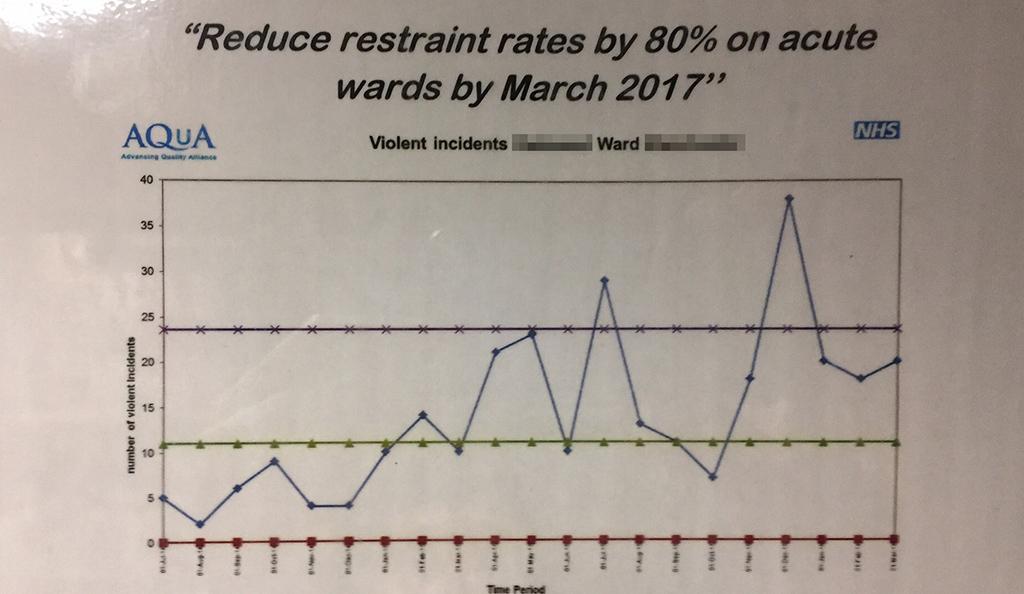
    Violent restraints

    Do you think the graph above shows that things are improving? No. No it does not. Things are getting worse. Much, much worse. The data above shows conclusively that during the period under examination, there was a fourfold increase in the very metric that was supposed to be cut by 80%.

    Do you remember blue tablet man? Well, anyway, he assaulted a nurse for giving him a yellow tablet (5mg of diazepam) instead of a blue tablet (10mg of diazepam).

    A drugs dog sweeps the ward. The patients believe the dog can sniff out cigarette lighters. I ask the handler if the dog can sniff Spice and he confirms that it can. There’s Spice everywhere on the ward, despite its deleterious effect on the mental health of susceptible individuals – prodromal schizophrenia can turn into fully-blown psychosis under the influence of the powerful synthetic cannabis, making it all the more concerning that it’s so widespread on an acute psychiatric ward.

    The patients here are the lucky ones and they know it. Everybody agrees it’s better to be here with a warm dry bed and three hot meals a day. Everybody agrees it’s better to be here, where the chances of being beaten up and/or robbed are minimal. With winter on its way, months of unimaginable suffering lie ahead of Manchester’s homeless population, which has increased 1,100% in just 7 years – and a huge number of them smoke Spice.

    Abandon hope all ye who entered the world from the mid-1990s onwards. What are the prospects for the youth of today, and the glut of graduates who were promised that indebting themselves and spending three or four years at university would be a good move?

    Does it not seem like an obvious reaction to a decline in living standards, to retreat into drugged-up oblivion?

    We’re sifted and sorted and dissected by tests. We’re examined, inspected and measured in every conceivable way. We never have any respite from the world’s desire to label us, grade us and monitor us. The pressure to meet the expectations placed upon us is relentless. Some of us will crumble and have nervous breakdowns or be paralysed by anxiety disorders. Some of us will rebel and kick back at the suffocating environment that’s desperate to eject and marginalise anybody who doesn’t neatly fit in a box. Lots of subcultures have sprung into existence, with members exchanging knowing looks – these people are so much happier now that they have rejected the stereotype they were supposed to embody.

    It saddens me that the hard-working staff on the ward are anxious and on best behaviour, when the other 364 days a year I know that they try their very hardest. This is just one of many psych wards, where the macro problems are greater than anything that can be influenced in the microcosms.

    If you’re going to randomly dip in, be careful to not make a lazy judgement based on a small sample size.


    Tags: