computing – Page 7 – Nick Grant

Tag: computing

  • Loss of Confidence

    This is a story about getting out of practice…
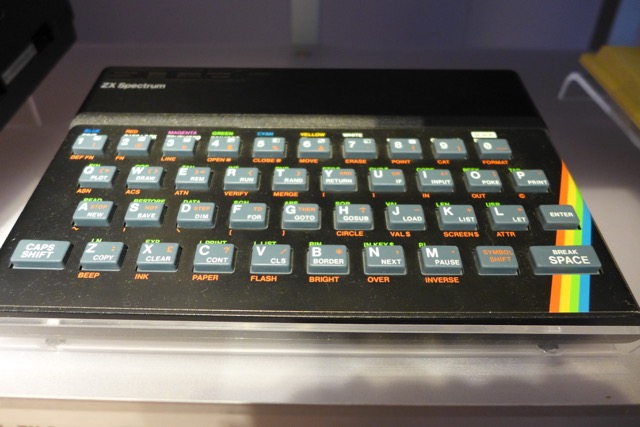
    ZX Spectrum

    My friend Ben taught me how to program a computer when we were kids. I floundered on my own for a while when our family moved away from Oxford, to Dorset, but eventually I had managed to write a couple of computer games before I even had any proper lessons at school and college.

    I’ve been a professional programmer for the best part of 20 years, but my recent ups and downs really hurt my confidence, and also meant that my skills got a bit rusty. It is a little bit like riding a bike, but the jargon changes and the syntax of what you have to type looks subtly different, but it’s all still the same binary ones and zeros underneath the covers.

    I nearly had a meltdown today, when I was set a programming test that’s the sort of thing that you’d give to a first year Computer Science student. I feel a little insulted that I’m being asked to do things like that, when I’ve got such a strong CV. However, IT is riddled with managers, architects and other people who haven’t touched code for years and years. I guess it’s a test to see if you can roll your sleeves up and get hands on or not.

    I’m getting really worried that there’s a tech bubble that’s going to burst, and bring down the whole economy. When I think that there are so many jobs that are centred around social media marketing, digital campaigns and mining the vast amounts of data that are gathered about website users and their browsing habits… it’s all a lot of bullshit. At the end of the day, people have lost sight of the fundamental principle of creating products and services that add value to the real economy.

    Why is it that a company can have a massive valuation and raise loads of money, just because the number of people using their website is growing exponentially? Why is it that a bank, or other financial services company, can be one of the most profitable enterprises in the world, when they don’t actually produce anything of tangible value? The markets are just supposed to route money efficiently around the real economy, to grease the wheels of commerce.

    I started to get panicky all of a sudden, and worry that I won’t be able to get myself into a position to weather the storm before it hits. But then, when you think about it, it doesn’t matter unless you’re just coming up to retirement and hoping to cash in your casino chips and sit on your arse for the rest of your days until you die.

    I don’t begrudge people their retirement, but considering the huge population growth, the massively extended life expectancy, plus the low birth rates, retiring at the same age as the previous generation is just not feasible.

    It is really sad when somebody retires, and they’re so burnt out that they hardly get to enjoy it. It seems that life is very much lived backwards. When we are young, fit, healthy, energetic and full of life, we are also heavily indebted and have to work as many hours as we can just to pay the rent and try to keep a car on the road so we can get to work. Then, when we retire, we have heaps of time and money (hopefully) but our health is failing and death is stalking us.
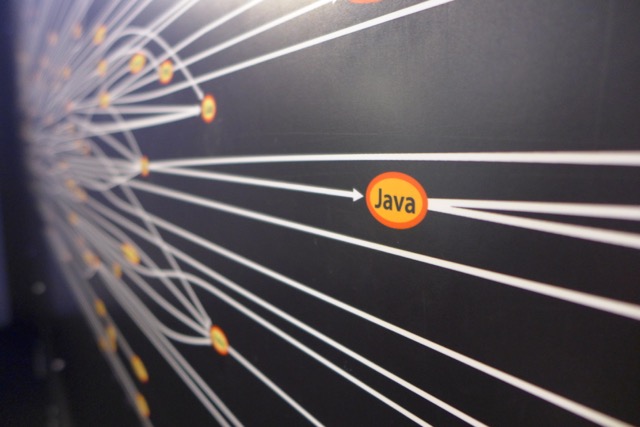
    Java Roots

    But I’m only talking in abstract terms, because something different happened to me. I didn’t quite catch the ultimate wave, but I caught the tail end of a pretty wild ride. For those lucky enough to get into IT at some point from the 1960s to the 1990s, we have enjoyed boom times that seem to have kept rolling.

    Perversely, I was a little disappointed when the millenium bug didn’t cause every computer in the entire world to explode, as the clock struck midnight and we rolled into Y2K. By the year 2000, I was already bored and disillusioned with programming, and I had even applied to University to retrain as a Clinical Psychologist.

    It seems churlish, to be dissatisfied in my position. At the age of 20 I was an IT contractor, taking advantage of the fact that there was a huge brain drain, as most of the best programmers were working on fixing the millenium bug. I had a 20 minute phone interview, and then started work a few days later… doubling my salary in the blink of an eye.

    In a way though, you have to consider the bigger picture. How many years of my life were spent locked away indoors, hunched over a keyboard, because I was unpopular and ostracised at school? The bullying I endured was pretty relentless until I finally got to college, so in a way, I have always felt some entitlement to the wealth that compensated those miserable years.

    Money doesn’t buy you maturity though, and it doesn’t repair low self-esteem. It does, however, broaden your horizons. As the year 2000 rolled into 2001, I was taking 5-star luxury holidays around the world. I didn’t rub people’s noses in it, but I hadn’t yet begun to feel that the debt of karma that the Universe owed me had started to balance out.

    I bought a yacht and moored it in an expensive marina in Hampshire, age 21, but this still didn’t seem exceptional to me. I still felt that I had somehow missed out on a lot of what other people had done: to feel popular, to feel fashionable, to feel loved, and have girlfriends that you really fancied. I still had crushing inadequacies and a poor self-image.

    Getting into kitesurfing gave me work:life balance and brought me a social group that finally meant I started to feel like I had friends I’d chosen, rather than just the group of geeks, thrust together for strength in numbers, against a world hostile to us outcasts.

    The dead time at work, when I had previously just been struggling with boredom, was now filled with planning kitesurfing trips and chatting with my friends on the kiteboarder forum. My bosses were still happy that the work was getting done, but I was spending 80% of my time and energy looking at wind and tide forecasts, reading and writing forum posts.
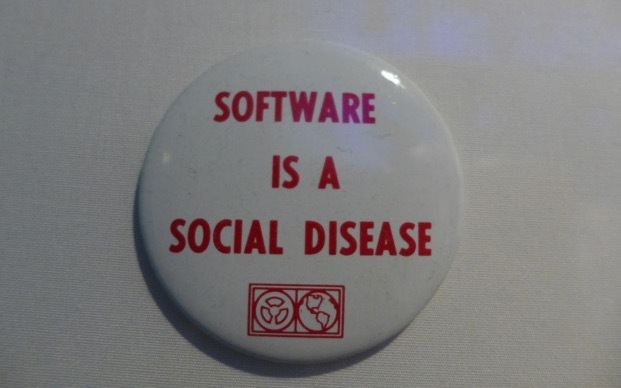
    Software Badge

    Moving to the coast meant access to the beach every day, and eliminated the need to experience kitesurfing vicariously midweek, through an internet discussion forum. However, it also meant I no longer had anything entertaining during the boredom.

    Eventually, the boredom led to me obsessing about my job, and pushing hard for promotion, and then to burnout. Work:life balance is important.

    I’ve been trying to piece everything back together again in a way that’s not simply hopelessly nostalgic for bygone years. If I can get on an even keel again financially, of course I can start going on kitesurfing trips again, but the really important thing that I lost was the social aspect, and having another passion as well as work, that could keep me busy midweek.

    A lot of my fear of getting back into the working routine is that I know that simply living to work is not healthy or sustainable, and I really have very little passion for IT anymore… it’s just a job, and a job that I can do blindfolded with one arm tied behind my back.

    I am sorry if I come across as ungrateful for my opportunities, but there’s more to life than a well paid job, and I have so few of the other elements that make up a happy little life.

    Would you believe that some of my happiest times in recent years have been when living in the park or the hostel? There was at least a group of other no-fixed-abode bums like me, and we formed strong social bonds. Having a group of friends turns out to be a lot more important than a healthy bank balance.

    So, getting back to work is a necessary evil, but it won’t stabilise me and give me any quality of life, you might be surprised to learn.

    I overcame that fear, and did that technical test, and I impressed myself that I can still apply myself when I need to. However, it seems a shame that our modern lives drive us to live to work, rather than work to live. I feel certain that this must be behind the mental health epidemic that is sadly getting worse and worse.
    Revolution is Coming

    I’m going to grow carrots, come the revolution

    Tags:

  • Back to Work

    This is a story about returning to normality…

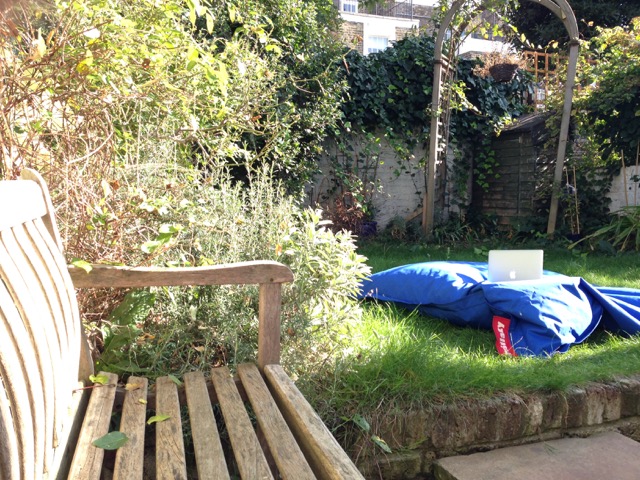
    Garden Coder

    One week from today I’m going to start circulating my CV and generally getting back in touch with my network to try and find some work. It’s been a surprisingly long road, getting back on my feet.

    I’ve picked an arbitrary date to try and get back into the swing of the working world. I certainly don’t feel very well. I’m tired all the time. I still need help and support to deal with things, which are otherwise overwhelming to me.

    However, I seem to have an on/off switch inside me. When I’m powered down in the ‘off‘ position, you would barely believe how dysfunctional I am. Just getting out of bed and getting some food is considered a highly productive day. Pathetic, I know.

    Something triggers me to switch gears from neutral, to top speed. The ‘on’ switch gets thrown and then the only problem is slowing me down enough to try and stop me from burning out. Next week is going to be a blur of activity, and if things go right, then there will be at least 3 or 4 months of frenetic activity before the circuitboards melt.

    There are lots of bits of data that are graphable to see these two poles in my behaviour. Whether it’s my bank balance or my activity data, collected by the movement sensors in my watch & phone, they all show the same thing: peaks and troughs.

    Sadly, I would say that the peaks and troughs are getting more and more extreme though. I was certainly having some very odd thoughts and ideas when I was getting really tired last year, but I was in the middle of a highly productive phase. I had great difficulty biting my tongue, and thinking about the medium to long term benefits that would selfishly suit me best.

    It’s quite possible that I’ve totally busted my brain by just asking way too much of it. I’ve tried to be really kind to it for long periods, to see what difference that makes, but it’s a bit like a tube of toothpaste that’s open at both ends… you can put the cap on one end, but the toothpaste still oozes out of the other end when you squeeze it.

    There’s so much pressure in modern life. There’s no opportunity to stop and catch your breath. Just as soon as I’m physically able to drag myself into an office for 8 hours a day, and not fall asleep in every meeting, I have to get back in the saddle and earn another load of cash, knowing that my episodes of stability are increasingly rare.

    It’s really strange, but I think that I used to know what was best for my health, and be really strict with employers, way before I got sick. The idea of working weekends was really offensive to me, and having to do on-call work, or late nights was something I’d only do very occasionally, and there had to be the bait of a big bonus or promotion on the table if I was going to do it.

    I used to be really good at managing my long-term health. I made sure I took all my holiday allowance every year, and I made sure I always had something to look forward to. I was also really strict about maintaining a good work:life balance. I was fit and active, spending most weekends at the beach, kitesurfing. I was sociable and had all the right elements to create a fulfilling healthy life.

    Nowadays, if I can work, I work. I live for work. When I’m not working, I’m just eating and sleeping. My existence is isolated, unhealthy. I dare not spend any money. I dare not take a holiday. I don’t feel like a whole, functional person… and I don’t see my friends. I feel worthless.

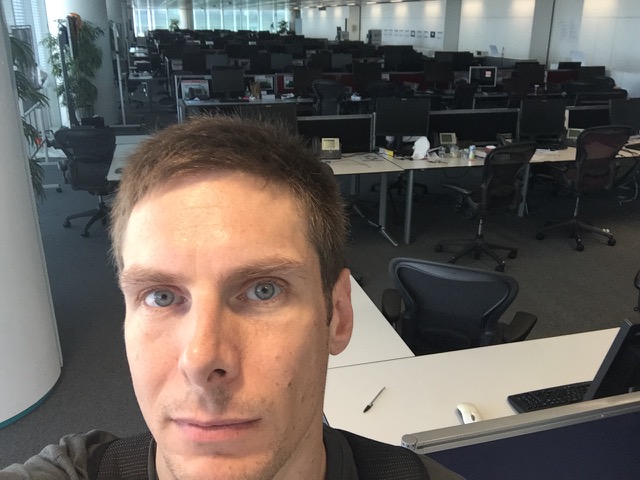
    Empty Office

    Frankly, when I am working, I’m way too intense at the moment. It doesn’t take me very long to get a handle on an organisation and its objectives, and to understand the team and technology. From there, I seem to fall into my old pitfalls of becoming cynical and overly outspoken. Plus, I’m always in such a rush to get everything done… there isn’t an IT project in the world that isn’t late or overbudget.

    It’s hard when you’ve worked at a particularly demanding level, managing your own team or department, or even running your own company… and then you’ve got to slot into a massive corporate environment. It’s hard to get back into the mindset of the wage-slave. It’s hard to remember how to achieve the difficult balance between getting stuff done, and just terrifying the hell out of senior management, because things are happening at breakneck pace.

    There was one particular piece of work that I was doing, and I knew there was a really important deadline to hit. There was a TV screen setup, which would light up green when we had succeeded and hit our deadline. I was working away in one of the meeting rooms, away from distractions on the open office floor. I knew that there was going to be a really tricky period to navigate with some of the senior management, who didn’t understand what I was doing.

    My very worst fears were confirmed when the senior management came rushing into the meeting room to say that there had been cheering in the office, because I’d made the screen go green. I then had to tell them that it was only because I had done some contingency work in preparation for the proper work. The pained and stressed look on their faces was unbearable, but I knew I only had 10 or 15 minutes to wait until the real ‘green light‘ popped up, hopefully.

    There then followed a very strained 10 minutes where I attempted to explain that I had done something to give us a retreat route, in case there were problems further down the line. The senior managers felt that I had done something cavalier, they felt misled, they were confused, they were disappointed, they didn’t understand… this continued for 12 or so minutes.

    Then the screens went green again, much to my relief. There we go. Job done, that was the event that they should be cheering. I had just been killing time explaining what I’d done, because I had a great deal of confidence that everything was going to be OK.

    Such is the way with IT. The explaining takes the time. The work is normally trivial.

    It takes time to get used to working with me. I tend to work on the principle that it’s easier to ask forgiveness than ask for permission. I just put a great deal of pressure on myself to make sure that I get things right when I’m sticking my neck out.

    I’m pretty unencumbered by fear, especially now I’ve been to hell and back a few times. This could be part of the general broken brain problem I’ve got. I have absolutely no fear of being reprimanded… I stick to my guns when I know I’m right, and my hunches are normally right too. There are so many times when there is enormous pressure to say or do the wrong thing, and the middle ground is to simply button your lip, say nothing, go along with some madness.

    I’m not very good at going along with amateur hour.

    Lift Selfie

    I was working such long hours that I was staying in a hotel just minutes away from the office. I even had to take my washing to work with me

    Tags:

  • The Child Addict

    This is a story about baby’s ruin…

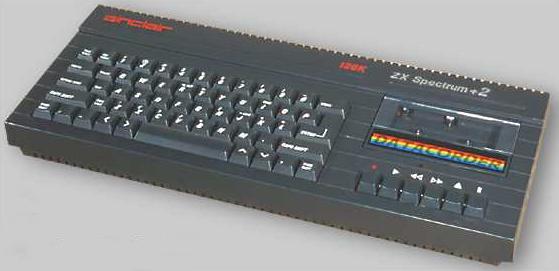
    Amstrad Spectrum

    I don’t really believe in ‘addictive personalities‘. Sure there are people who go through periods of sensation seeking or hedonism, but all our brains have the same reward mechanisms that can be short-circuited by all manner of things, not all of which are psychoactive chemicals.

    One of the first things that I became addicted to was sugar. Now, I have all kinds of problems with this statement. Glucose is one of the 3 things that every cell in your body requires to function, along with oxygen and water. Sure, as an organism, you’re going to require all kinds of amino acids, proteins, salt etc. etc., but you’re not going anywhere without sugar.

    Sure, we can gorge ourselves on sugar. We can have too much of a good thing. Soda containing high fructose corn syrup contains ridiculous amounts of sugar, and we can slurp at huge paper cups containing many fluid ounces, with little difficulty. Our bodies have a seemingly insatiable appetite for sugar.

    It rots our teeth and makes us fat and gives us diabetes, but still, we can’t get enough of it, especially when we’re young. Show me the child who doesn’t have a sweet tooth and I’ll show you a lying parent, or a parent who has been a particularly mean and brutal disciplinarian in training their child to lie.

    The faster a child can grow to full adult size, the less chance there is of it being eaten by a predator or succumbing to a survivable disease. Of course children are going to be programmed to seek out sugar. They’re the easiest calories for the body to convert straight to energy, to power those restless limbs.

    Our ability as a species to provide fruit, honey, cane sugar and sugar beet refined into pure sugar granules, at all times of the year and in virtually limitless quantities, has resulted in huge numbers of overweight blubbery children, probably with rotted teeth. However, that’s not to say that nature would exactly deem them unhealthy. The first set of teeth that a child gets are deciduous and a good thick coat of blubber will keep them warm in winter, meaning less chance of catching cold.

    So it was, that I came to become addicted to lemon Polos. You know, the mints with the hole in them that come in the distinctive green wrappers with silver foil. Yeah, at one time they made some sweet lemon alternatives to the mints, and I used to buy them using some lunch money that I set aside, so I could feed my daily sugar habit.

    To use the parlance of ignorant idiots, I was a sugar addict. I used to love the refined sugar of sweets. Lemon Polos were my drug of choice, and I used to get some of the daily calories required by my body, by eating these sweet drugs. My teeth are fine, my pancreas is fine, my weight is fine… I don’t seem to have come off badly from this addiction, but maybe lemon Polos were a gateway drug for later addictions. We may never know.

    Just like the infamous Lemmon 714 Quaalude from The Wolf of Wall Street these lemon Polos are so rare that Google Image Search doesn’t even have a decent resolution picture for me to plagiarise.

    But that wasn’t my only childhood addiction.

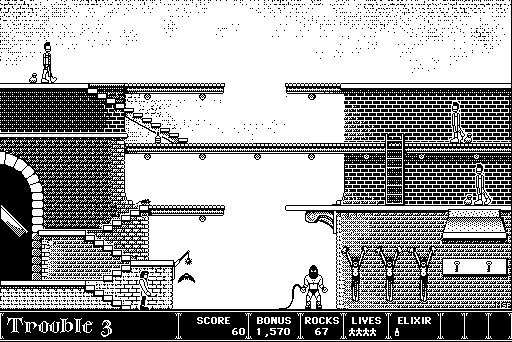
    Dark Castle

    Dark Castle on my friend Joe’s Dad’s Macintosh, was probably the beginning of a love affair with computer games, that was to last my entire childhood, and only tail off in my late teens. Some would probably say that computer games were an addiction, but I couldn’t get my fix whenever I wanted until I had my own computer.

    To begin with, Joe used to make the character in Dark Castle run and jump and climb up and down. I used to control the character’s aim and make him throw rocks to take out the bats that would wake up and fly at you to try and bite you and kill you. It was the first example of a co-operative computer game, that I know of.

    And that was how it began, the relationship with computer games. It was always a social affair. You need somebody else to play Pong against or else it’s no fun. It’s more fun when you’re taking turns to play a computer game, and you’re competing with one another to beat the same obstacles and each other’s scores.

    I remember enjoying watching other children play arcade games immensely, although I don’t recall having any coins of my own to be able to play them. I used to like just hanging out by these machines, watching the demo sequence, seeing the high score table, listening to the music. I can even kind of hum the little melodies for some kind of helicopter shoot ’em up and a driving game that seem to have gotten stuck in my head for the best part of 30 years.

    I loved the demos. When I eventually had my own computer – The ZX Spectrum +2 128k – and I could fully indulge my addiction, I seemed to prefer the demo games that you got ‘free‘ with a copy of a computer games magazine, to the full games. These little bitesize tasters were always just hard enough to hold your intrigue, and you could amass a huge collection of different minigames very quickly.

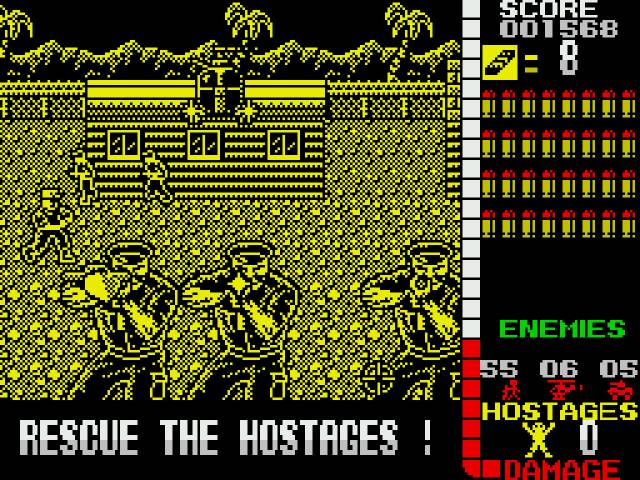
    QAOP and space bar were the controls for everything from Olympic Games ‘simulations‘ where you had to bash alternating keys as fast as you could to make your character sprint or row or cycle, to flight simulators and racing games, and of course the many shoot ’em up variants.

    Operation Dog

    Ok, so there were violent undertones to nearly every game that there was out there. Whether you were shooting aliens or people, or doing Kung Fu or whatever, there was usually some kind of baddie that was getting shot or bashed or otherwise killed.

    Seeing as I haven’t carried these murderous, violent tendencies over into adult life, I’d say that being brought up on a diet of computer games hasn’t reprogrammed me as some kind of killing machine, but I’m just one data point.

    I do sometimes worry that with the rise and rise in popularity of the Call of Duty franchise as well as its incorporation of drone control, and general glorification of warfare and combat, that there are a generation out there who would love nothing more than to be killing real people at the push of a button.

    Lots of unimaginative kids have got the idea that being a computer games tester must be the ultimate job, from the incorrect conclusion that all it must entail is sitting around playing your favourite computer games but getting paid to do it. However, being a drone controller must be a bit like playing Call of Duty, blowing people up using a joystick. Only those people are real.

    Anyway, computer games were a very real addiction for me, for a while, with me having cravings to play them, and staying awake for far to long in order to ‘binge‘ play a new game. Good computer games have been designed in such a way that they are just hard enough to keep you coming back again and again to try and beat an obstacle that was just out of reach on your previous go. They are engineered to be addictive. The more addictive, the more a game is considered to be a classic or of high quality.

    But it’s from this addiction to computer games that I fumbled my way into programming, and into a lucrative career. I started to become disinterested in games when I started work as a full-time programmer, and I was doing real life battlefield simulations for the Ministry of Defence. Perhaps the lemon Polos and the computer games had set me up though, to turn into the 32 year old drug addict that I later became.

    Or perhaps we all have the same weaknesses, the same hardware, the same software. Perhaps we can all become reprogrammed by things that press our buttons.

    ZX Coder

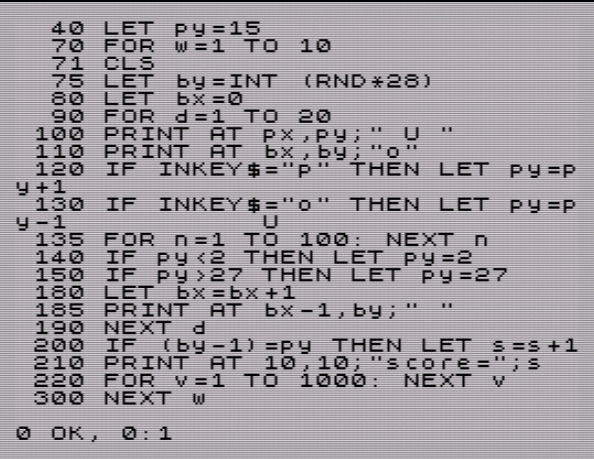
    If you’re geeky like me you’ll be able to see that “O” and “P” have been coded as buttons you can press. Presumably “Q” and “A” appear later in the program. I have no idea what this code does except print a score.

    Tags:


  • Coder’s Block

    This is a story about grinding to a halt…

    Mining Shelf

    I have been enjoying writing immensely, and continuing this blog is certainly no chore. Words still flow effortlessly, but I am floundering a little, as I try to avoid repetition and decide what direction to go in next.

    I really need to get another job/contract, and the easiest work to find would be as a programmer. I hate programming other people’s systems. They usually haven’t stopped to answer the simple question: are we solving the problem in the right way?

    Most computer systems that ever get created for a company are CRUD systems. That means they can Create, Read, Update and Delete data. Think about it… how many companies know your name and address? They all want that exact same data. Think how hard it is when you move house, change address, to update all those companies to send their correspondance to the right place.

    The thing about creating CRUD software, is that if you’ve done it once, you’ve done it the same as you’re going to do a million times after that. They’re all the same. Garbage in, garbage out. Ok, user interfaces have gotten prettier, and we now employ people specifically to work on User Experience (UX) but it’s solving the same old problem in the same old way.

    I specialised in something called Straight-Through Processing (STP). The idea that the processing of transactions should be fully automated, wherever possible. This at least means that you’re not doing yet another CRUD user interface, and you’re building elegant pure software solutions, not just trying to stop a halfwit user from doing something they’re not supposed to in the system.

    Software still gets boring and repetitive. Most of the software challenge is change management. If you can control the change so that the software is well versioned and releases are well managed, then everything gets much more stable. The amount of time actually spent programming is minimal. It’s actually kicking arses and taking names that takes the time. Most corporate systems have been over-complexified by the cowboys and the have-a-go heros.

    If I had an hour to spend writing an extra feature, or an hour to analyse some rats nest of a mess that nobody’s owning, I’ll go for the mess every time. Still, it’s all thankless work though, and there is no novelty, no sense of achievement in doing something you’ve done a zillion times before.

    Mining Pool

    Bitcoin and Blockchain really fascinated me, since 2011, when I read the famous paper “Bitcoin: A Peer-to-Peer Electronic Cash System“.

    Bitcoin has everything the frustrated programmer could possibly wish for. The original source code is in C++ for a start, which is just a joy to behold… the seemingly impenetrable world of templatised code, where the templates are a complete black art, developed into a style completely unique to each developer.

    Algorithms are enticing little puzzles. The one-way hash is particularly interesting to anybody who likes the idea of being a codebreaker or hacker. Trying to find the weaknesses in encryption and hashing is a mathematical, formal logic and computer science challenge. I love thinking about how to reverse engineer a problem like that.

    But it’s brain-exhausting stuff, having to think about bit shifts, and the endian-ness of your numbers, and all the myriad complexities of a hardcore problem. I can’t spend too long thinking about things before I start to worry I’m going to need to take a drill to my skull to try and relieve some pressure.

    Using statistical analysis to reduce an important algorithm to an equation with known co-efficients, could make you rich and famous, at least amongst geeks. However, it’s the challenge for your mind that’s the reason why you’d tackle such a problem. The intellectual stimulation, the incurable curiosity.

    Once you start thinking about Bitcoin though, it’s hard to stop. It’s hard to leave a problem that hasn’t completely defeated you. When you know there are still things that you want to try, approaches that might work, it’s like an addiction… you keep going back to the hard problem, again and again. Pandora’s Box is open and you can’t unsee the things you’ve seen.

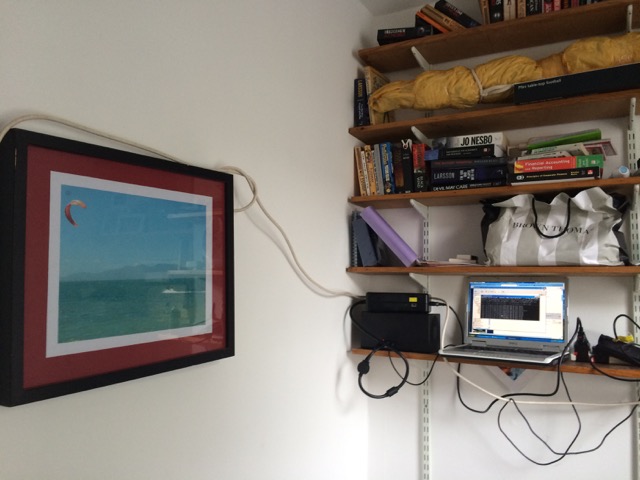
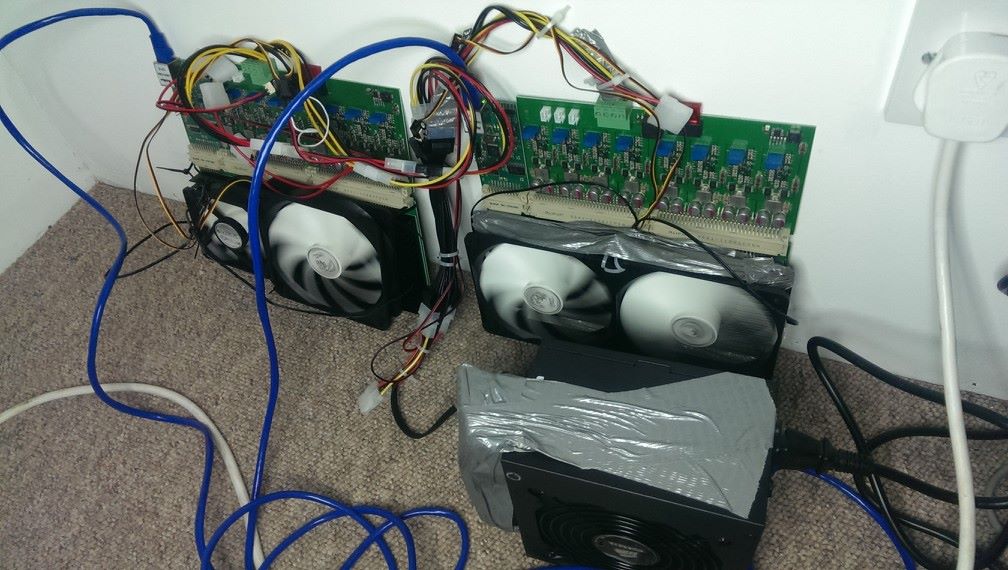
    Hashpower

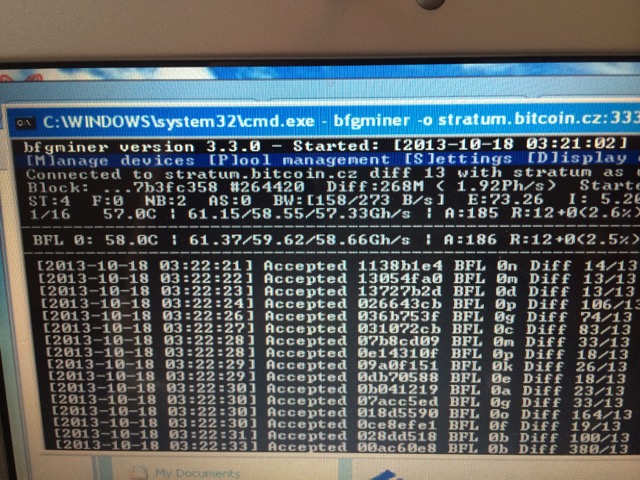
    Mining never really made me much money, but speculating on the cryptocurrency brought substantial rewards

    Tags:


  • Alternative Calendar

    This is a story about clean slates…

    Apple Pencil

    Life is like a line of dominos all perched precariously upright. People have filled massive areas – like basketball courts – with row after perfect row after perfect row of these surprisingly weighty little objects. Watching a huge ‘wave’ fan out as all the dominos fall over, after just the very first one looks very pretty from a distance.

    Let’s imagine I’m 1/10th the size of a domino, and I’m staring up at these skyscrapers. I couldn’t lift them or knock them over. I’d assume it was something like stonehenge: an unnatural arrangement of things, so much bigger than human scale.

    When the seismic event finally happened, and the first one was pushed so that it would fall over and cause the other one to fall, you wouldn’t be able to believe your eyes and ears. That something so heavy and seemingly stable, could topple over would be amazing. It would seem to take ages to accelerate and smash into its neighbour. Then with an almighty crash, most of the energy would be transferred and the next one would fall to the ground.

    Looking at the two fallen objects, they would seem now to be permanently in this collapsed heap. The idea of re-standing something up that’s so big and balancing it again… unthinkable, impossible. People who never saw the objects upright, would be amazed when you told them that they were, at one time, defying gravity.

    Every event can be traced back to something that started a chain reaction.

    I now own the world’s most expensive pencil. Well, I don’t – technically it’s capital expenditure on a business asset. I was having a cashflow crisis when my business insurance expired. That means that when my Macbook Air had its 3rd major hardware failure, and is completely broken, there is no policy for me to claim on.

    Her Majesty’s Revenue Collectors have come up with 2 ways to get businesses to invest in new assets. Firstly, I’m on a scheme where if I spend over £2k on a single invoice, I get the VAT back (£334). Secondly, I can buy assets rather than pay tax. So if my Corporation Tax bill was £2,000, I would buy assets instead of paying the bill.

    This is how my company came to own an iPad Pro as well as the Apple Pencil. I don’t even like drawing on it… I much prefer the feel of graphite on paper. It’s good for more accurate ‘white board’ type stuff, where you’re sketching out technical ideas, but it’s still plastic slipping all over really shiny glass, with no sense of how hard you’re pressing down.

    So I have the Mac Pro now, instead of the Air. The main difference is that it’s nearly a completely blank slate. I’ve decided that I’m not going to rush to fill it up with Adobe Photoshop, Windows & Microsoft Excel etc. etc.

    I have a backup of old photos and things, so I’m not panicking too much about lost data yet. I can find most things somewhere in ‘the cloud’ but I still have a habit of creating local notes for myself, and not putting code into github.

    I wrote a piece of code that basically simulates a CPU, so I could track bits through left and right shifts. Theoretically, it could be used to solve ‘impenetrable’ algorithms like SHA, which have such a cascade of effects from changing just one bit, leave the end result unrecognisably different from the unaltered starting data. This code is lost.

    I wrote my own blockchain (e.g. Bitcoin) in Java, so I could reverse-engineer the problem, and figure out some theoretical attacks on the cryptocurrency. This code is lost.

    I’m not really worried about losing code. If I had to do it again, it would improve immeasurably, and take me a fraction of the time. I might also gain a new insight, understand something a bit better, or completely restructure things, so they are elegant and simple.

    There will be little notes, half-finished graphic design projects, other people’s example work they gave me on a USB stick… they’ll be gone. One day soon, I’m going to say to myself “I know what I can use here” and I won’t have it. No biggie. I am going to start taking more regular backups from now on though.

    I also have a clean slate in terms of where I go from here. A contact thinks I can get Undercover Manic Depressive published in serial form, which means I’d be a paid author… how cool is that?

    Self-publishing in digital form is cool ‘n’ all and I did it as an experiment to see how hard it was. It took me 5 or 6 hours to write 12,000 words, sign up with Amazon, upload, create a cover… and that was it! My incomplete book with terrible formatting and zero editing is published and can be bought for $3. I don’t think it’s going to compare to actually seeing a book I wrote on bookshelves, if it happens.

    Cashflow is a disaster… paying rent left me with £40 and my company probably can’t afford to pay salaries at the moment. My salary of £676 is about 70% of my rent, but I needed a new laptop, and at least this way I can keep writing on a half-decent machine with a familiar keyboard.

    Yes, it seems ridiculous to risk eviction and bankruptcy, to sit by the River Thames, writing, on a brand new laptop. Do you know how long I’ve been out of full-time work, in total, since my 17th birthday? It’s less than 2 years. So, any of you who went to Uni or had a couple of gap yahs can get off your high horse. I genuinely did earn this. Sadly, it was my ex who nicked the profits and my parents who’ve had to reach into their pockets and give me just enough to do nothing except be stressed and not able to reach escape velocity.

    Getting up to go to a job that feels like it conflicts with my values, ethics or has simply reached the point where I’m sick of the lack of passion and expertise, gave me a ‘direct debit‘ life where everything got paid on time every month, and I never had to borrow any money. In fact, I had tens of thousands of savings, and spent tens of thousands more on the poison dwarf (ex) and it was killing my soul. I feel I have died a thousand deaths and I fear not one more.

    Yes, it’s upsetting that this disruption means missing out on time with friends, my sister, my niece and maybe my mum. People might think it’s selfish, immature, irresponsible… those certainly weren’t adjectives that were being applied to me when I skipped University, and missed out on all those sweet girls, drunken nights, reading books, writing and just thinking and being challenged by something different every day.

    If you want to know about deferred gratification, ask me.

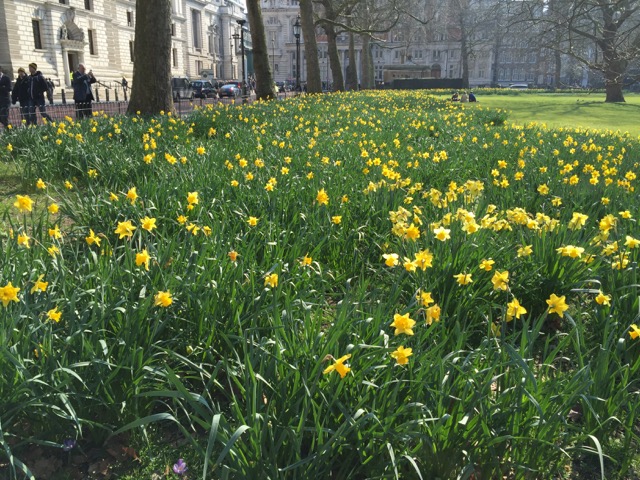
    Daffodils

    This is the kind of stuff there’s no space or time for in Canary Wharf or The City. I needed to stop and smell the roses, and we ask so much of our children with homework and good grades to get into a good Uni to get a good job etc. etc. that there are some people who just don’t know how to say “I feel I’m not getting what I need in life to stay alive, but I have never had chance to explore what that is“.


    Tags:

  • Everything is Fucked

    This is a story about a technology catastrophe…

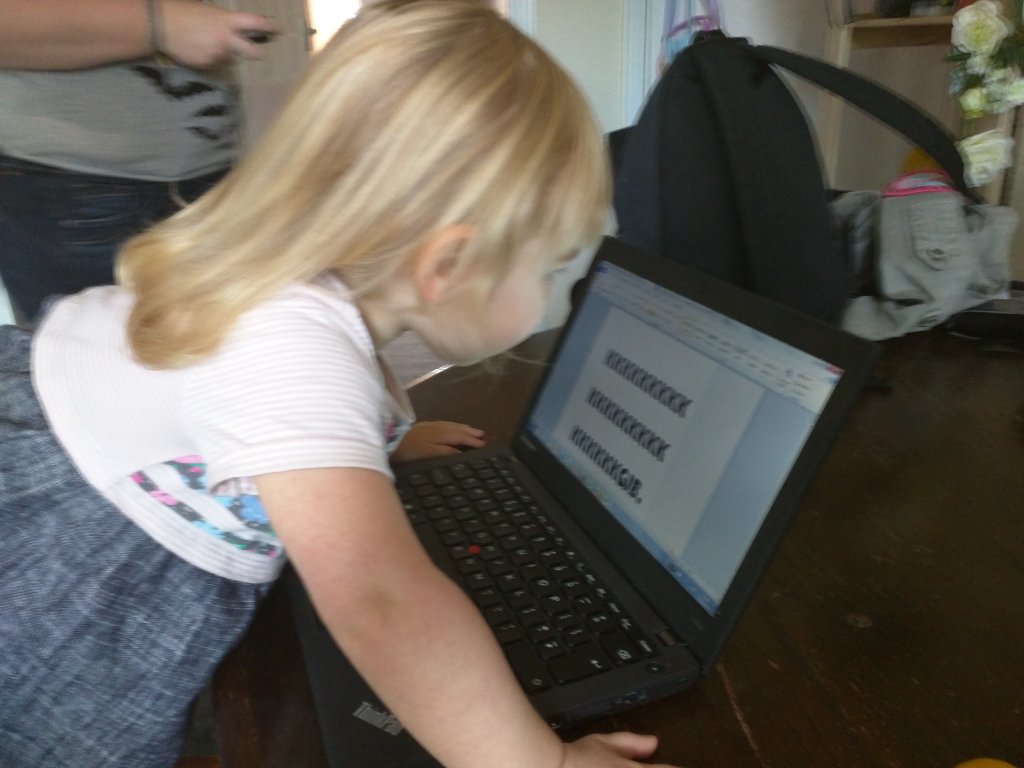
    They Start Them Young

    I dropped my iPhone in the bath. I will leave it to your imagination as to why I had it in the bath and was not concentrating on holding onto it very well.

    I then moved my entire home directory into a directory called asnas.coredump and hid it in another user’s directory. To make sure the directory could not be seen or accessed by anybody except the superuser, I changed the permissions to 000.

    I then deleted the old account and renamed the new one to be me.

    Seemed like a good idea at the time. I’m sure digital forensics would have just looked at the command history and gone straight to the right place, but my brain was very, very tired.

    Then my laptop keyboard stopped working. The letter ‘a’ would often come out as ‘p’. Things would be in caps when caps lock was not on. Things wouldn’t be in caps when I held down shift.

    I then tried to get into Gmail. I’ve protected my Gmail with a Yubikey One-Time-Password. Only I had now lost the software to read the OTP from the Yubikey. Somebody had changed my Facebook password (worrying… because it’s the same as the Gmail one).

    With no Gmail, loads of my passwords couldn’t be reset.

    This is not the worst of it. I found my Yubikey and the software, and got into Gmail. HOWEVER, I have a second Gmail account for business, which I have protected using Google Authenticator, which is a mobile app that runs on my soggy phone.

    I need to get to Barclays to reset my PIN which I locked out because of my soggy brain. Without that I can’t get into Online Banking to download my statements to upload them into Freeagent and avoid a £150 fine from HMRC for late filing. Also, I have no phone or business email to discuss such things.

    My business insurance expired only a short time ago, and so did my AppleCare, so it’d be £2k+ to replace phone & laptop if required. I’m hoping I can just do an out-of-warranty on the phone which is a mere £260 and if the keyboard and the trackpad are still screwy I’ll replace them for I’m guessing around the same amount.

    Currently, I’ve lost all my photos, all my documents, all means of communication beyond email and Facebook messenger – WHEN I HAVE MY LAPTOP SWITCHED ON. I’ve lost the manuscripts to 2 books (one incomplete) and a shittonne of useful code & design work.

    Why don’t I back up? Well. Supposedly iCloud has all my photos, but it appears to just have the iPhone ones. I normallly do all my docs in Google, but my manuscripts were in Pages (locallly). I don’t really have an excuse though. This has f**ked me.

    Trying not to cry.


    Tags:


  • Is It Art?

    This is a story about having to go back to work…

    An Art

    In my desperation to physically express my anguish, I smeared my own blood all over a canvas, from a deep gash in my wrist. The critics were not impressed.

    Now I don’t do much of anything. I’m just kind of hoping the world will go away. It’d be nice if some sort of Y2K virus wiped out all the computer systems, and everybody was unchained from their keyboards, wandered outside into the daylight, rubbing their strained eyes and blinking at the brightness of the sky, and started to talk to each other about more than office chit-chat.

    I remember on 9/11 we all kinda remembered that it’s OK to talk to strangers. That when shit is going down, you’d better make the best job you can of things with those around you. I remember that the most emotionally affected people were those who were furthest away from their kids. Why do we have to commute miles away from our kids, and be ‘busy’ for 40+ hours a week?

    ‘Busy’ eh? Well, if you can directly point at the impact you have on somebody’s life, maybe you are busy. When I was an electrician, I could flick a switch at the end of a job, and they would have lights, electric showers, ovens, hobs, extractor fans, under-floor heating, sockets that they could plug electrical appliances into, storage heaters, immersion heaters, electric towel rails, dishwashers, somewhere to plug the washing machine and the fridge into, power to the garage, power to the shed, power to the hot tub, power to the swimming pool, lights in the garden, lights to illuminate the driveway. Yeah, I was busy.

    Probably about the ‘busiest’ I’ve ever felt as a programmer was when 500,000 people downloaded one of my games. It only took me a day to develop though, and it didn’t really do much, so I don’t feel very proud. I wrote some utility to help field engineers set up the software on a load of busses. That was a bit better, and every time I see that model of bus ticket machine, I know that my software probably configured it… but it still feels a long way from ‘useful’.

    There’s a real disjoint between programmers and users, especially as we’re now trying to build companies with millions, if not billions of users (Facebook has 1.16bn monthly users). Personally, I was happier when I was teaching pensioners how to use Microsoft Word, back when I was a teenager.

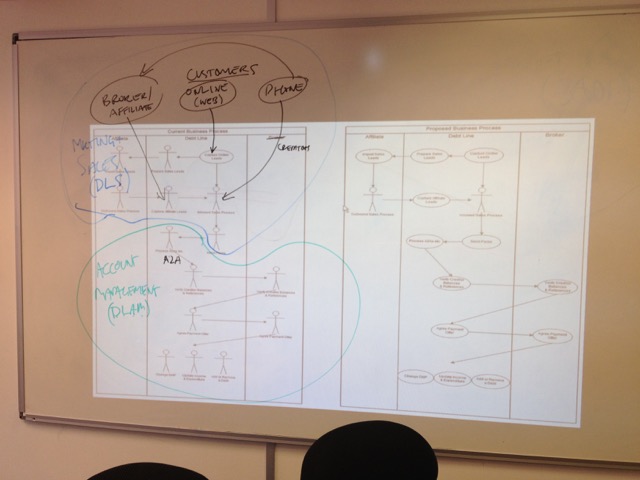
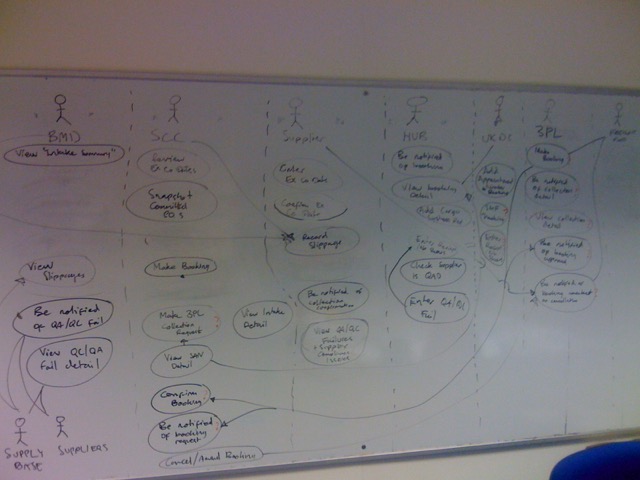
    Workflow

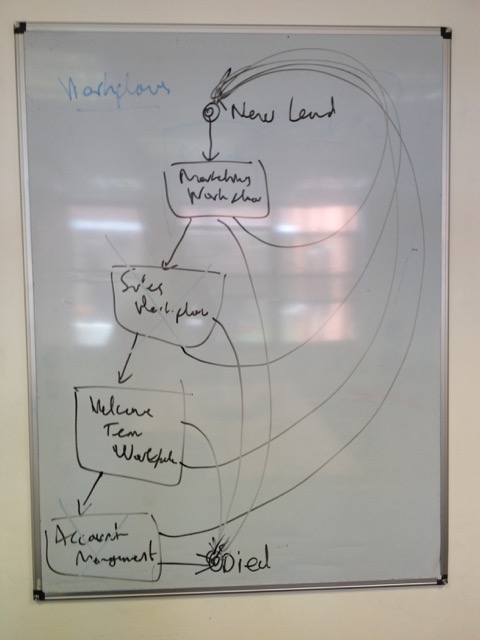
    It’s my own fault to some extent. I draw out the workflow of a company, and wherever I see a stick man (a person) I devise some way to get rid of them, to automate their job. Human workflow computer systems are a pain in the arse. You need pretty user interfaces, and you have to train people how to use the systems. As a software engineer, you want data in, data out.

    I’ve even taken to modelling customers in the most brutal state-transition diagram imaginable.

    Market Until Death

    What that diagram basically says is “keep marketing our products to a person until they’re dead“.

    Most software engineers don’t build in the ‘dead‘ end-state of their customer, and their software handles dead customers very inelegantly. My designs have baked death in from the very first whiteboard sketches.

    I went to work for a company that was almost entirely run by stick men. They were very busy.

    Stick Man Hell

    I wasn’t too enamoured with the task of wrestling control away from the busy people who were, to all intents and purposes, making a reasonable job of running a UK company with stores in every major town. The problem was that they wanted to expand into Europe. The stick man system didn’t scale.

    So, I’m confused. I like directly helping people with their software woes. I even like building large complicated high volume data processing systems. I just don’t like making software so the stick men can keep ‘busy’ doing their stick man tasks. Building a user interface so that a human can mis-type a figure, or press a button in error… that’s like hell to me.

    I used to draw Heath Robinson type contraptions as a kid. I might do one today or tomorrow. It’s got to be a damn sight better use of brain power than the garbage-in-garbage-out systems that companies like paying me to design and build.

    Jaded.


    Tags:

  • Runway

    This is a story about getting airborne…

    San Fran Sunset

    In startups, we talk a lot about runway. That is, how much money you have left to pay all your bills before you go bankrupt. The thing about doing a startup is, you don’t make money from day one. You raise some money, build a product then try to get the revenue up higher than the bills… and you need to do all that before you run out of runway.

    Most ordinary working-class folks know a lot about runway. They know that they have to pay their rent, bills and then make the remaining money last for things like food and transport, until payday. Every single month there is uncertainty about whether they’re going to be able to get to work, if their money runs out before payday. That’s called running out of runway.

    A lot of low-paid jobs pay weekly. That’s useful for something called cashflow smoothing. It means that your cashflow looks like lots of little peaks that aren’t very high. If you got paid the same money on a monthly basis, you’d see a massive spike on payday, and then cash would slope down, down, down for a whole month, before spiking again.

    If you run a limited company or a public company, you could pay yourself wages, weekly, monthly, whatever, but wages attract income tax. Income tax is 45% for people in the highest tax band. So if I wanted to do some cashflow smoothing, it’s going to cost me 45% of the money I worked hard to earn. That’s quite a waste of money if there’s another way to pay myself that doesn’t attract such high taxes.

    Generally, I have to work for a month, then I can invoice my client for the days worked. My invoice is payable within 30 days, but it basically takes a whole extra month to get the money into my limited company.

    Ok, great. Now I can pay myself wages… but I’ll have to pay 45% tax and loads of national insurance. On the one hand, I really need some cash, because I’ve already lived for over two months without a single penny of income, but the main person who’s going to get rich out of that arrangement is the taxman.

    So I work another two months, plus the month for the invoices to be paid. That means that I have three months worth of invoices paid into my limited company. Now it’s time to pay myself a dividend. Limited companies can pay dividends from their profits once every quarter. So, to maximise your dividends, you need to have 3 months of invoices paid into your limited company.

    But that means that you’ve been working for 4 months, and not been paid a penny. Harsh man. However, the tax savings are considerable. This is not about me being a tightass with taxes. I always paid full taxes, and then when I got sick, there were no state benefits available to me, despite being under the limit for savings etc. etc. The state safety net just didn’t exist when I was homeless and penniless, so fuck the government. I now save the tax and try and set it aside for when I’m sick.

    Now, OK, you have your dividend… 3 months pay. You’re feeling pretty rich, right? Well, if you’ve been living in a hostel, you might like to now get a flat. That’ll be 6 weeks rent as a deposit, a month’s rent in advance, and probably about £500 in estate agent fees. There goes £6,000 of your hard-earned cash.

    What about how you lived for those 4 months with no income? How did you do that? I guess you probably had to borrow money. So, you use your remaining dividend to pay off all those debts you ran up, staying alive.

    So, what now? Well, you’ll have to work for another 4 months, and then pay yourself another dividend, and live off what’s left after you got yourself a flat and paid off your debts. Oh, there isn’t anything left? Oh dear.

    The thing is, the system is fairly well tuned to fuck you. I can borrow money more cheaply than the tax, but the interest is compound, so it works out about the same. I could take a wage and pay the tax, but then I’ll have less money left to pay off the debts. Between the banks and the taxman, you’re f**ked.

    It’s true, each quarter things get a little better. I was planning on working for about 9 months, and then I would have been quite nicely sorted, but if you think that it’s stressful waiting for payday, try waiting for 4 months for payday.

    That’s the life of an IT contractor. I’m an IT contractor. That’s what I do, for a living. Yes, I could bake bread, stack shelves or work in a warehouse… are you fucking stupid? There’s nothing wrong with those jobs, but if I wanted to burn money surely it would make more sense for me to do some IT contracting and then literally set fire to £50 notes. Jeeps, you must have a degree in Economics from Oxford if you think that it’s a smart idea to not work the highly paid job I’m qualified and experienced to do, and instead work a job that doesn’t cover my cost of living and is stopping me from getting the highly paid job that I’m qualified for. I’m sure that you’ll be getting a tenured professorship any day now, with original thinking like that.

    My cashflow is lumpy, and I don’t have much runway, but at least this time I have the flat already, and a friend who can count higher than the 3 deformed stumps on their retarded hand has helped me to make sure I don’t end up driven to suicide by the stress of being let down by liars again.

    My plan was to start the contract hunt in the second week of January, when people were coming back from their holidays. I’m over 2 weeks late and sick as hell, but it’ll be OK. I somehow got the HSBC job looking like this:

    Discharge

    Yes, that’s a hospital wristband. Arms are pincushions as usual from double canula and providing a gazillion blood samples (June 2015)

    Tags:

  • Race to the Bottom

    This is a story about selling eyeballs…

    Laser Eye Cat

    You ever wonder why your email is free, Facebook is free, YouTube is free, most of the stuff you can find on the internet is free?

    Most companies need to have either a freemium or an ad-supported business model now. Most businesses must endure an army of freetards, who demand the highest possible product standards, but aren’t prepared to pay a penny. They will spend their precious time criticising you and your product, but they won’t spend a single cent.

    In the fierce race to capitalise a market, to monopolise, to acquire the biggest number of users, companies must invest so much in their products, and not hamper growth by introducing advertising too intrusively, or by making people pay.

    There’s really only one place that things can end up: the biggest players dominate everything, and have to fight over a finite amount of ad revenue and market insight data. Eventually, one tech company can do it all, own it all, dominate the entire market.

    At the moment Facebook is the clear favourite for me. I spend far more time looking at curated content on Facebook, than I do searching for new content via Google or on YouTube. I’m interested in what my friends are interested in. My Facebook feed contains far more things that I’m interested in than I can possibly read and watch during my waking hours. There simply isn’t enough time left for me to do my own content discovery.

    Facebook has also started to take over from my use of email and instant messaging services. It’s a kinda convenient one-stop-shop for staying in touch with my network of friends and family. It’s all nicely bundled together in one place. You can cancel your account any time you want, but you can never leave.

    Google’s arse is being well and truly kicked at the moment, in terms of growth. Facebook knows so much about us, the advertising can be super targeted. Facebook knows where I’ve been, who I’ve been there with, when I went there, how often I go there. It knows where I went to school, what I studied. It knows who my family are. It knows who I stay most in contact with. It knows what I ‘like‘ and what links I click on. It knows what videos I watch, and what content I scroll right past.

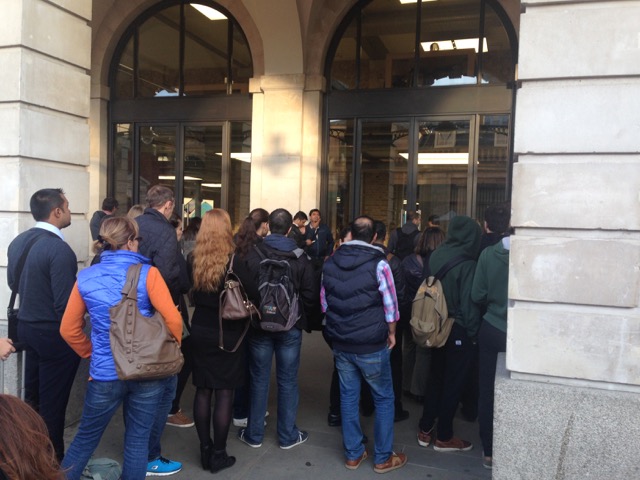
    Apple Store Covent Garden

    Ok, so I’m an early adopter. I sometimes queue up to get Apple products on the day they launch. Apple are presently the world’s biggest company, by market capitalisation (number of shares in issue, multiplied by the share price) but they’re far more anti-competitive than Microsoft ever were. Safari comes pre-installed on my Macbook and I never get asked if I would like a different browser.

    Apple are trying to dominate the ad space by forcing app developers to go through their iAds platform and blocking any other advertising. They’re trying to leverage their strong position as a software and hardware platform, to gain the biggest share of the lucrative advertising revenue. Eventually, they’re going to land up in legal hot water.

    Facebook is far better placed to become the dominant platform for advertisers and companies looking to gain market insight. It’s entirely fair that when I use a free website, that the terms and conditions state that they can show me adverts and use my data. It’s not fair that when I buy a £600 smartphone, it somehow limits what I can see on the internet. It’s not fair if Apple start selling my private location data, my phone usage habits etc.

    In the bizarre world of the battles between the world’s largest tech companies, you might be surprised to learn that for every Google Android phone sold, Microsoft make the most profit. That’s because Google have to pay patent royalties to Microsoft. The important silicon chips inside your smartphone, make a healthy profit for a company that didn’t even manufacture them. That company is ARM, who license the chip designs to manufacturers, and take a royalty payment for every chip that gets made.

    The legal battles that are brewing will eclipse everything ever seen before. The amount of money that is at stake is unprecedented.

    But what happens if you extrapolate? Well, basically, you will probably get given a free phone, the whole concept of paying for software or subscription services will completely disappear, but your privacy, your data will be completely up for grabs to the highest bidder, along with your eyeballs, which will be continually bombarded by targeted ads.

    Ancillary industries, like music and film production, and writing, will be consumed into this dominant giant, and high quality content will only exist as the bait for your eyeballs. You won’t be able to read another book without there being some kind of product placement having been woven into the plot. Authors have to eat too.

    The fact is, that the era of the busker or the indie musician is over. People think that the number of Facebook fans that you have or the number of Twitter followers is somehow directly monetisable, so the idea of chucking 50 pence into a hat or paying for music is unthinkable to the freetard army.

    Naturally, with all the advertising money washing around, people who are creating content, simply because they are creative individuals with time and talent on their hands, are simply drowned out in a sea of noise created by the paid content creators. You have no money to market your content, so nobody will even find it or consume it. There’s no reason for it to exist, if it’s not pushing some product or service.

    In fact, traditional goods & services are having their revenues squeezed. Why would you buy a travel guidebook when you have TripAdvisor and a load of ad-supported websites that you can browse on your smartphone, virtually anywhere in the world? The fact that the travel guidebook at least maintains a degree of commercial impartiality is missed by many people, who will end up eating in restaurants or staying in hotels that have paid to be written about.

    We don’t tend to pay at all, or pay very little, for our news sources. That means that those news outlets are getting the lions share of their revenue from advertising, which exercises at least a kind of censorship over unfavourable news coverage, if not outright direction over how real life events are reported. How can you trust news sources with such commercial interests behind them?

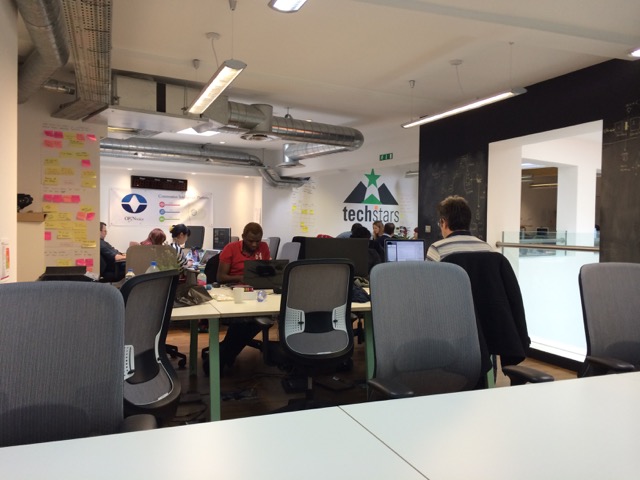
    TechStars Warner Yard

    You might think that because I’ve hacked away at some bit of software, making an app or a website, in some trendy co-working space in the heart of Tech City, that’s the reason why it’s trending on Twitter, that’s the reason it’s ‘going viral‘. Actually, most social media campaigns – even the viral ones – are planned and executed by a sophisticated service industry that caters to those who wish to market themselves using the modern mediums.

    I often wonder what the point of Twitter is. I have a bot that follows somebody, and their bot messages me back to say thanks for following them. Are there any real people on Twitter, or is it all bots, releasing content at strategically timed intervals, and doing their robotic interactions in a way that’s been designed to appear humanlike?

    We have loads of stats & data that tell us about content engagement. How much do we mould ourselves, and how we act, in order to increase that engagement? How often do we think about how many ‘likes‘ we’re going to get on a Facebook comment, just before we hit the ‘post‘ button.

    Frankly, I’ve tried to detach myself. I’m just writing relatively blindly. I can see how many Facebook likes I get and I can see how many link clicks I get on Twitter, but broadly speaking, I have no idea how many people read what I write, when they read it, where they’re based in the world. If I did have those stats, that data, it could start to corrupt the integrity of what I’m trying to do.

    That’s the most interesting thing of all to me. That I’ve been able to write the equivalent of two novels of content, and publish it into the public domain, with barely anybody noticing. That shows just how much noise there is out there. That shows just how much content everybody is churning out, into the ether. I could have whispered all my secrets into the hollow of an ancient tree that was about to be felled, for all the difference it would have made to the world.

    It felt daring at first, churning this stuff out. But now there’s just this dawning realisation that everybody’s doing the same thing. There’s so many “me too!” folks and wannabe authors, musicians and filmmakers out there in the big wide world, that you can really say or do anything you want, safe in the anonymity of noise.

    Headphones

    Welcome to the global silent disco. Headphones on, zoned out


    Tags:

  • Due Diligence

    This is a story about social engineering…

    Bus Stop Club

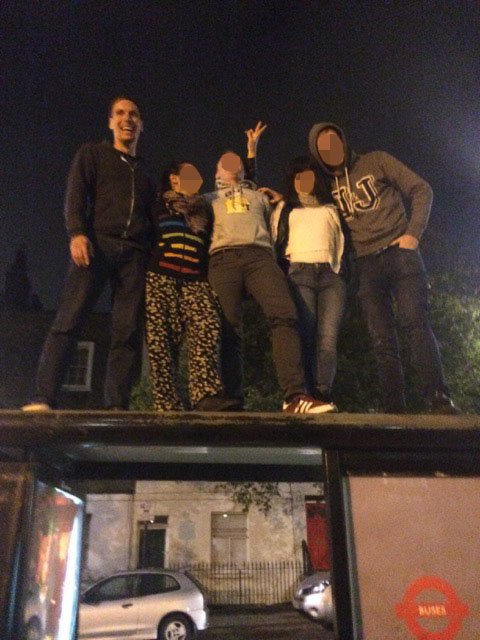
    The first rule of bus stop club is: you don’t talk about bus stop club. The second rule of bus stop club is: you don’t talk about bus stop club. The third rule of bus stop club is: don’t jump off the bus stop… it’s quite high.

    I work on the Customer Due Diligence project for HSBC. We are expected to do due diligence on 48 million customers in 61 countries worldwide. HSBC is not very good at due diligence, mainly because they won’t listen to the experts.

    When I was employed – as a disguised employee – by HSBC to work on the project, I was no fixed abode (homeless) and I was at the limit of my overdraft and credit cards. I had no income. I guess that technically made me bankrupt… except that it took me 4 days to get the job. That’s a record… it normally takes me less.

    When you are honest, hard working, dedicated, an expert, passionate and have integrity, you don’t tend to have a lot of problems finding work. My main problem is finding anything that I’m interested in doing. Making the lives of 48 million customers a little better, and trying to save 245,000 jobs and create 13,000 new jobs is interesting to me. That’s why I got up and went to the interview with HSBC.

    So, this sounds super arrogant. Yes, sorry. There’s absolutely no doubt that I’m only a very small cog in a very big machine. However, try buying a Rolex watch and removing one of the little cogs and see if it still works.

    Teamwork is what gets stuff done, but every member of the team needs to be valued equally. Equality is important. Valuing people is important. Everything is awesome when we are part of a team. Everything is better when we stick together.

    Nick in Blue

    Here’s me going to my interview… just opposite the bus stop where me and my other homeless friends hung out. I actually wasn’t going to go… there were far more interesting projects at Meganews Corporation, Mega Credit Card, Mega TV Station, Mega Investment Bank(s), Mega Petroleum Company… London is not short of roles for software engineers. The agent convinced me to get up, have a shower, get dressed and go to the damn interview. I was glad that I did.

    The way the whole system is set up with economic incentives, meant that rules were probably bent in terms of background checks. Nobody cared that my credit score was probably terrible – living on your credit card because society has abandoned you, is not great for your computer credit score. Nobody cared that I was no fixed abode (homeless) because the whole thing was arranged via email and mobile phone.

    I guess this was an experiment in social mobility. I can tell you where all the ‘gates‘ are that will prevent the ‘wrong sort‘ of people from getting ahead. I did nothing illegal or fraudulent. I was just trying to get myself off the streets. I was just trying to move from surviving to thriving. I was barely surviving. I had countless hospital admissions in 2014 and 2015. Living on the streets and in hostels is hard.

    Imagine being in a 14-bed dormitory with your one suit. Imagine how many people there are snoring in that room. Imagine how many people want to use the one bathroom in the morning. Imagine people knocking your ironed shirt off the bunk bed where it was hanging up, onto the dirty floor. Just put it in the washing machine, right? Oh… you share that washing machine with 120 people? Oh dear.

    Nice View

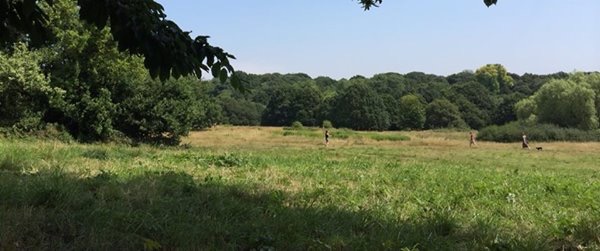
    I used to go and sleep in Royal Kensington Park Gardens or on Hampstead Heath just to get some damn peaceful sleep. The sound of snoring and smell of sweaty bodies just gets too much to bear at times. Yes, sleeping under the stars and waking up to beautiful views like the one above is kinda sh1ts and giggles… when the weather permits.

    Yes, you have to be very in tune with nature, with the weather and the seasons, if you want to survive. You also need some really high quality gear. The only reason why I was able to cope through a pretty rough patch is that I’m well trained and disciplined. I have the Dorset Expeditionary Society to thank for that.

    I can live small and neat. Take only photographs, leave only footprints. Park rangers used to leave me alone because I would be camping out with nothing but respect for my environment and mindful of the fact that I’m just one of millions of Londoners using the incredible green spaces.

    Fundamentally, we are animals. We are animals that need to sleep and eat. We need to be warm and feel comforted by the presence of each other… we are social animals after all. We were not supposed to be isolated in a concrete jungle, surrounded by glass and steel and right-angles that would never appear in a natural setting.

    I am also seasonally affected. I think it’s bad enough to say that it qualifies as Seasonal Affective Disorder (SAD). When the clocks go back and the days get shorter, I feel the need to hibernate. I get tired & depressed. Especially if my employer is not particularly supportive about me taking time out to top up the sunshine that I need to live. I’m literally solar powered… we all are.

    Jungle Kitty

    Frankie the cat in his natural habitat. He loved his garden. So did I (June 2007)

    Tags: