career – Page 3 – Nick Grant

Tag: career

  • I ❤️ a Crisis

    This is a story about the proverbial hitting the fan…

    Hotdesk

    It’s often said that most fires are started by bored firemen who want to be heroes, but there are too few fires to fight. Eventually, when we’ve prepared for the worst for a very long time, it is us ourselves who precipitate a crisis, because we can’t stand waiting for the blows to rain down upon us any longer.

    Similarly, my profession incorporates a lot of planning for disasters. Quite literally, part of my job is to consider what would happen in event of nuclear holocaust, tsunami, hurricane or other apocalyptic event. If I wasn’t planning for disasters to happen, I wouldn’t be doing my job right.

    I am not, by the way, planning to launch any kind of nuclear attack.

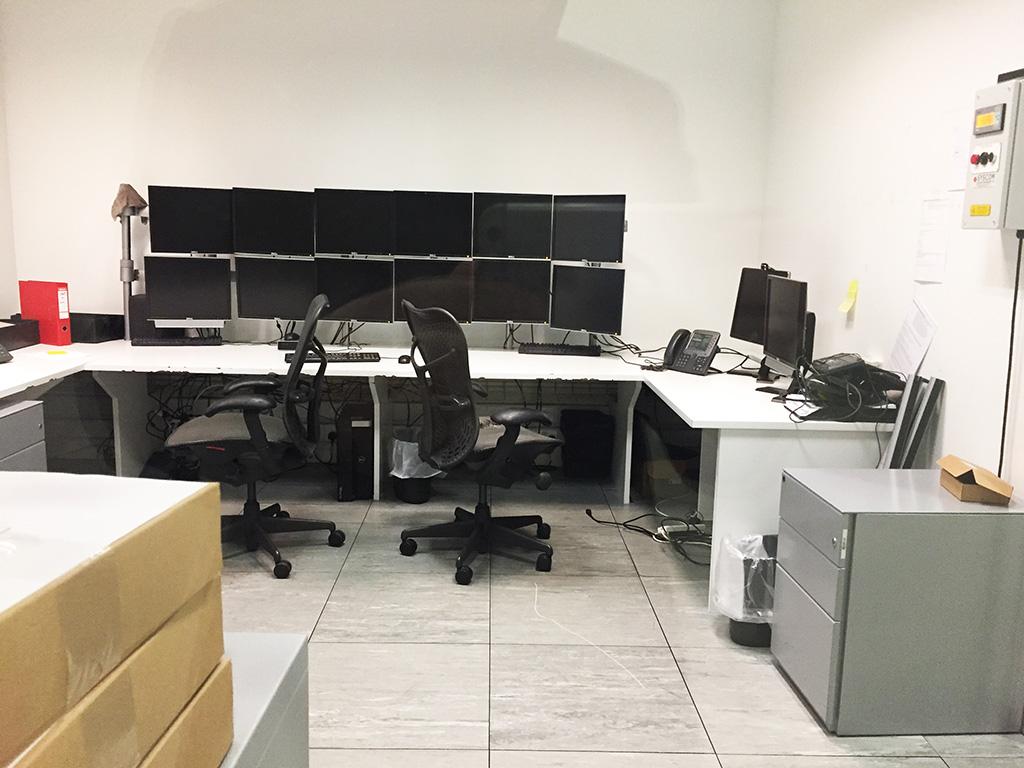
    Banks have lots of empty desks like the ones pictured above. These are disaster recovery desks. In the event of a disaster, in theory, the financial markets could continue to function: the traders who have survived the disaster would be able to make their way to the nearest building which still has power and data, to carry on working. This is business-as-usual for the banking and wider financial services sector: it happily plans for the destruction of civilisation, while ensuring that asset prices are still protected. The world might burn to the ground, but at least the shareholders retain most of their paper wealth, is the ethos.

    The thing I live in fear of the most is: boredom.

    I was incredibly worried that the next 6 months of my life were going to be excruciatingly boring. It’s my professional duty to ensure things are as boring as possible. I’m paid handsomely to ensure that things go smoothly and successfully, but it makes for a pretty boring life. I much prefer life when everything’s on fire. It’s bloody brilliant when everyone’s losing their cool all around me, and I get to have some fun being the hero, fixing stuff; enjoying some pressure and excitement. But, it would be unprofessional of me to deliberately – or at least provably – cook up a crisis.

    Now, a situation has fallen in my lap. Instead of dreading the next few months, I’m looking forward to working my butt off to sort things out, with a high-pressure drop-dead deadline. This is the stuff I really relish. This is the sort of stuff that gets me out of bed in the morning, as well as the generous remuneration.

    I love it when stuff goes wrong.


    Tags:

  • What Next?

    This is a story about dreams…

    Penny

    Here is money. Don’t spend it all at once. A starving African child would be grateful to have this money. A boomer could buy a house, go out to the cinema, get a taxi home and still have change left, from this money.

    A conversation I keep having with a friend who also suffers from existential angst, ennui and general loathing of the rat race, is what I’d do if I was free from the tyranny of rent/mortgage and career considerations. My friend thinks that things would be no different, except perhaps I would be bored. I disagree, but I don’t have an easy answer. I have no burning desire to re-train as a landscape gardener or a vet. I have no desire to swap one career – profession – for a different one.

    Having had a 23 year long career, and previously – as a child – suffered the consequences of my parents being lazy loser drop-out druggie bums, who refused to get a job and stop scrounging off their parents. My childhood experiences certainly made me want to go a very different way with my life: to be a valuable, productive member of society; to make a contribution; to have a career and a profession. Now, I want to drop out. I want to drop out of the rat race. I want to be a bum; a tramp even.

    The time I spent homeless was chaotic, traumatic and stressful at times, but I have very fond memories of a lot of the time, where I connected with people, community; I had a social life. Life was enjoyable. Now it is not.

    The friends who I have, who are free from the tyranny of a bullshit job which they can’t afford to lose, lest they lose their home, their money, their credit rating and their dignity… they are not bored. They are busy. They spend time talking to people, about stuff other than how horrible the commute to the office is, and other job-related stuff. They find people they like and they hang out with them, instead of being coerced into spending the vast majority of their waking hours, corralled together with people who are equally resentful about having the prime years of their lives robbed so cheaply.

    The gap-year-university-I-built-a-school-in-africa-yah-boo-jolly-hockey-sticks brigade are perhaps happy with their lives, because they had pleasant privileged upbringings, in private or selective schools, surrounded by other socioeconomically advantaged kids at all stages, including when they went to university, which continued into first jobs… marry the girl of your dreams and you’ve always got plenty of money for a house, car, holiday, and school fees for the next generation to carry on doing what you’ve always done – the best of everything, always.

    We must consider that I never went travelling and I never went to university. Couldn’t afford it.

    I enjoyed a bit of the London young professional scene, but it’s quite an uphill battle if you don’t have your group of university buddies as a social group.

    I found a group of kitesurfers, who became my social group, which was wonderful.

    But it all went wrong. They’ve all got kids now, but I’m divorced. The childless man, who doesn’t fit in anywhere. People have moved on with their lives.

    Being homeless was great. Homeless people are a community. It’s important to be part of a community.

    Obviously I don’t aim to be homeless, but I am considering it. Such is the extreme level of my misery, that I feel like I’d be happier homeless; cut loose from the tyranny of capitalism, rent/mortgage, career, salary, job, office, commute and all the rest of it, which makes no sense when none of the rewards are there – I’m not supporting a family, I’m not raising children, I’m not benefitting from any work-related social life.

    What next? Seriously, I just want to drop out, and to find other drop-outs; other people who couldn’t stand the rat race so much, that they ditched their mortgages/rent, careers and other things which are like a miserable trap, unless you are coerced into that system, because you need to provide a decent home for a child to grow up in, which my parents never did. I can be a nomad and at least I won’t be fucking up any children’s lives.


    Tags:

  • 5 Year Blogging Anniversary

    This is a story about writing…

    Platform 9.75

    To date, I have written and published 1,357,076 words on this blog. Today is the 5 year anniversary of me starting this blog. I have published 1,086 blog posts, which is an average of 4 per week. I think many writers would be pleased to write and publish something at least 4 days a week. I’m quite proud of my achievement.

    Here are some facts about the past 5 years, in chronological order:

    • I was homeless when I started, on September 6th, 2015
    • I was £21,000 in debt when I started
    • I rented a super cool apartment by the River Thames in late September, 2015
    • I was locked up for a week – voluntarily – on a secure psych ward in October 2015
    • I flew to San Francisco to visit the Golden Gate Bridge, at the end of October 2015
    • Hospitalised for a few weeks with kidney failure, caused by DVT, January 2017
    • Moved to Manchester in July 2017
    • Suicide attempt on September 9th, 2017. Hospitalised in a coma in intensive care
    • Sectioned and held involuntarily on a psych ward, waiting for an appeal for 12 days
    • Won my appeal, but stayed on the psych ward voluntarily for another two weeks
    • Became homeless again
    • Moved to Swansea in October 2017, still homeless
    • Lived in a load of AirBnBs in London midweeek, due to work
    • Debt reached its peak of £54,000. I only had £23 left to spend.
    • Rented an apartment in Swansea with lovely panoramic sea views, in March 2018
    • Moved to Cardiff in March 2019
    • Suicide attempt on December 18th, 2019
    • Hospitalised with kidney failure for almost 3 weeks – discharged January 2020
    • August 2020 my peak of £54,000 debt is fully repaid. I am debt free.
    • I have £300 of savings, having subtracted all taxes and other monies owed

    Here are some other interesting facts about the last 5 years:

    • I’ve worked 44 months out of 60 (73% of the time)
    • I’ve earned £530,000
    • I’ve paid £240,000 in tax
    • I’ve paid £83,000 in rent
    • I’ve paid £50,000 interest on debt

    The numbers are actually pretty impressive, for somebody who’s been so sick, homeless and generally suffering a very chaotic stressful life. I’m surprised I’ve been such a generous contributor to the economy, actually. I’ve philantropically handed out vast sums of money to banks, governments and landlords. I am, truly, a ragged-trousered philanthropist.


    Tags:

  • Pattern Recognition

    This is a story about AI…

    Eyes passim

    You might think that it’s incredible that a chess grandmaster could look at a chess board for 30 seconds, and then be able to place all the pieces on another board, in exactly the same positions as they were on the board they only saw for a brief time. That they can do this is not a sign of intelligence, but of pattern recognition, which is an acquired skill, honed through thousands of hours of practice. That’s not to say that it’s not impressive, but it’s the hardware – the human brain that we all possess – that’s impressive, not the individual.

    I don’t think we can all become chess grandmasters, if we want to. For us to want to spend those thousands of hours to develop the pattern recognition in our brains, we’d need to be motivated. It’s beyond the scope of this essay to explore why some people memorise wild birds, train timetables, telephone numbers, or a whole host of other useless trivia, but let’s just say that it’s personal to the individual; some people just really like trains.

    The patterns I wanted to write about today, are not like the patterns that can be discerned on a chess board, telling a grandmaster the story of how that particular game developed, and where it is heading. The pattern I wanted to write about is the boom and bust cycle of my mood, which has been going on for enough time now, that I feel like I can somewhat second-guess where things are going.

    An ever-present worry is that the possibility of escaping the cycle will slip through my fingers, as it has done so many times before. In fact, it seems – from past events – to be an inescapable cycle; I’m eternally doomed to never escape.

    Principally, I worry that I’m getting too cocky and arrogant; to certain of myself at work; too comfortable. Long gone are the days when I bit my tongue and tried to keep my head down. Long gone are the days when I was diplomatic and non-confrontational.

    It feels a lot like a very regrettable period in 2015, when I felt certain that I was making an invaluable contribution to the organisation, project and team that I was a part of. While that might true, beyond a reasonable doubt, I was plagued with mental health problems. I suffered bouts of weird paranoia. I was emotionally fragile. I was unpredictable. I had some very strange thoughts about what was going on. I flipped wildly between doing a good job, and some rather odd obsessions.

    Eventually, I broke down, was hospitalised, then suddenly decided to fly to San Francisco, then decided that I didn’t want to come back, so I sent a series of really provocative emails, hoping to get sacked, which didn’t work… until it did.

    Perhaps it’s unlikely that such an extreme set of events will ever repeat itself. I was hospitalised at Christmas and yet I bounced back from that, thanks in no small part to how kind and supportive my colleagues and the wider organisation I’m involved with, have been. My struggles with mental health have reached the point of colleagues needing to ‘have a word’ but I hope that things have quietened down since then, instead of continuing to escalate.

    There’s nothing I can particularly point to in 2015 which was driving my mental health to deteriorate, versus my present predicament. In 2015 I was homeless, and then managed to rent myself an apartment, which was – perhaps – an enormous stress, which finally caused me to lose my mind, temporarily. In 2015 my finances were much more distressed than they are today, although my situation is still not rosy: some debts and tax liabilities still hang over me like a dark cloud, although in theory I have the money to cover those costs.

    In 2015 I knew I couldn’t step off the treadmill for a single second, or else I would be ruined. This, of course, was too much pressure and I crumbled. My guardian angel was kind enough to avert disaster, but who could have foretold that a kind person with deep pockets would appear in my hour of need, to help me avoid bankruptcy, destitution, devastation, ruination and all the rest?

    Today, I’m probably at break-even point. If I couldn’t work tomorrow, or for the next few months, I might perhaps be able to avoid sinking deep into debt, but it would feel just as bad as 2015, because I’ve fought so hard for so long, to get back on my feet. I suppose things are a little different, because I’ve worked virtually non-stop for 3 years, without a major incident, except for the hospitalisation at Christmas, which – mercifully – hasn’t completely derailed me.

    I wish I could just put myself into “sleep mode” for the next 6+ months. Wake me up when the boring waiting game part is over. Wake me up when I have some financial security.


    Tags:

  • Who Am I?

    This is a story about identity…

    Punting

    I’m always rather taken aback by anybody who asks who I am, given that I’ve written and published more than 1.3 million words, which have exhaustively documented who I am… or so I thought.

    I suppose for an ordinary middle-class person, the question “who are you?” is really one of a few standard questions, which allow a person to be quickly bracketed; pigeon holed. Let’s explore those questions, and the answers.

    “What do you do?” – this is the classic middle-class question. The question could be rewritten more accurately as “how do you sell your labour to the capitalists?”. The thrust of this question is to establish whether a person has a respectable job. If you’re a solicitor, an accountant, a doctor or suchlike, then you are a person of interest because several assumptions can be made, which means a lot of subsequent questions can be skipped. Really, the question we’d love to ask is “how rich are you?” but it seems a little vulgar, so middle-class people take a rather indirect route in an attempt to establish an answer.

    My answer to “how rich are you?” is that I have £26,000 in my bank account, I own a car worth £1,500 and a handful of possessions worth no more than a few thousand pounds. My salary is £732 per month. I am not rich.

    My answer to “what do you do?” would rather obfuscate the fact that I am not rich, because I am a company director and IT consultant.

    “Where did you go to university?” – this is another classic middle-class question. Obviously an Oxbridge education means that you’re most likely rich, because most Oxbridge students are rich. There are the red-brick universities, such as Manchester and Birmingham, the Oxbridge reject universities like Durham and Exeter, and the highly regarded universities such as Imperial, UCL and suchlike. Then, there are the Russel Group universities, which are respected. If you went anywhere else, you’re probably poor and/or stupid. It would seem more direct to ask “are you stupid?” but this is considered rude.

    My answer to “are you stupid?” is no.

    My answer to “where did you go to university?” is nowhere, which is rather confusing, as this would seem to suggest that I wasn’t clever enough; my exam results weren’t adequate. Nope. I had unconditional offers from some of the best universities in the UK. I didn’t go because I wanted and needed to earn money, which I did by getting onto a graduate training programme with the UK’s number one aerospace and defence company, age 17, despite not having a university degree. See – not stupid.

    “Where do you live?” – yet another middle-class cliché. Of course, the real question is “how much is your house worth?”. Through indirect questions, the questionner is attempting to establish whether you own a big house in a desirable area, which is likely to indicate that you’re rich.

    My answer to “how much is your house worth?” is that I don’t own a house. See earlier answers.

    My answer to “where do you live?” is a leafy suburb of Cardiff; certainly an extremely desirable area. Oh, and for a bonus, I live in a 4 bedroom house with period features, worth about £350,000… but of course, I don’t own it. Well, frankly nobody owns their house, do they… except old people. The bank owns the house and they let you live there as long as you pay the mortgage. It’s not yours. The title deeds at the Land Registry state who the owner is: the bank.

    “What do you drive?” – this is one of the more shallow and transparently money-obsessed questions, but one that very often gets asked; a surefire attempt to socioeconomically bracket somebody… to feel the thickness of their wallet. Again, you might as well ask “are you rich?” but we already asked that one, so maybe the question should be more “what status symbols do you own?”.

    My answer to “what status symbols do you own?” is none. I don’t have an expensive watch. I don’t have a flashy expensive car. I suppose my pedigree cat perhaps qualifies as a status symbol, but I don’t think of that cute little ball of fluff in that way.

    My answer to “what do you drive?” is an 11-year-old car, with a big dent in it where an idiot drove into it in an otherwise empty car park, which I haven’t been bothered to fix yet… because, well, it’s an 11 year old car, so who cares? Of course I like cars. I could spend some of my £26,000 on a fancy car, but I won’t, mostly because I hardly drive anywhere.

    Those are pretty much the only questions that seem to matter to the middle-class people who are trying to size me up. They’re certainly not trying to get to know me so these questions are sufficient to bracket me, somewhat.

    Of course, the real answer to “who are you?” is much more complex. So complex, in fact, that 1.3 million words doesn’t even begin to answer it.

    If you think that I’m a self-centred narcissist, you’re probably right, but I’ve lived with suicidal depression and come close to dying enough times to feel that I’m somewhat entitled (emphasis to underscore my extreme self-centred narcissism) to leave some kind of record of who I was behind, to survive me after I’m gone. I don’t have any easily recognisable and understood label, which I can affix to myself: my profession is poorly understood and often labelled as “geek” or “nerd” or something else undesirable, even though it powers the modern world; without IT consultants – software engineers like me – you wouldn’t be reading this right now, because the internet wouldn’t exist. You’re welcome. I’m an alumnus of a prestigious technology accelerator programme, which was held at the University of Cambridge, but of course as you know, I can’t claim to be a graduate; I merely beat thousands of other applicants for one of ten precious places; I merely wowed Cambridge Union Society and some packed lecture theatres. What label should I wear?

    Loser, I expect.


    Tags:

  • My First Jobs: Defence and Banking

    This is a story about guilt…

    Conscience

    The ethical benchmark by which I try to judge myself is that of a schoolfriend who’s a renowned thinker and writer, and an exceptionally clever and thoughtful person; a real inspiration. I’m occasionally reminded that he reads my blog, which is an incredible privilege, but also makes me more acutely aware of my shortcomings in the ethical department.

    As the title of this essay suggests, my first job was in defence. In my defence – pun intended – I was 17 years old, and my motivation was to achieve some degree of independence such that I might later be able to choose what I wanted to do with my life. I don’t feel like I ever had the opportunity to think “what do I want to do with my life?”. It seems fairly commonplace amongst the sons and daughters of middle-class families, that their children find a subject that they find interesting, which they pursue academically at university. I never had any financial support from my family, to pursue any dreams, so I was forced to make pragmatic decisions. There was the opportunity to study for a degree while I was at my first job, but a job’s a job… I had no passion for making weapons of mass destruction, so I wasn’t motivated to study the subject academically.

    I distinctly remember imagining a day when I might find out that a vessel had been sunk by Spearfish or Tigerfish torpedos, and I considered how I would feel if there was loss of life, directly attributable to my work. I suppose I should have thought about it beforehand, but I didn’t – I just wanted and needed a salary; I needed to pay my rent and bills.

    In all honesty, I didn’t quit my job in ethical protest at the defence industry. I quit because I was getting ripped off – I was very underpaid for my skills and experience, and I resented that.

    Where could I get paid the most?

    Banking.

    I’m not proud of it, but my thought process really was as simple as asking myself: where can I get paid the most?

    I suppose just about anybody would think “investment banking” when quizzed on where a person might find the highest salary. The late 1990s was not quite the loadsamoney heyday of the yuppies, which was ushered in by Margaret Thatcher, but the City was still awash with money. My motivation was pure greed and avarice, one might say. I put little or no thought into the ethics of my career decision, I freely admit.

    In my defence – pun still intended – I was leaving the defence industry, so surely anything I chose would be more ethical than that; more ethical than designing and building weapons of mass destruction.

    With hindsight, usury inflicts as much misery and suffering as war.

    But.

    It would take many years before I understood that.

    My first job in the City of London was everything you would expect it to be: an extremely macho and male-dominated environment, with plenty of booze, drugs, strippers and escorts. Awash with cash, our lifestyles were offensively lavish. It was pure vulgarity, writ large.

    I was still young, of course… only my second job, but you must also remember that I skipped university because I couldn’t afford it when I was 17. But then… but then… I was wearing golden handcuffs.

    I kept thinking about going to university to pursue a subject I was interested in. Psychology or psychopharmacology, perhaps. I applied and was offered a place at some very prestigious institutions. However, I couldn’t face being poor again. I couldn’t give up the lavish lifestyle, once I’d had a taste of it.

    It was several more years before I found myself working on a project related to the confirmation and settlement of credit default swaps for the investment bank which processed 70% of all trades. Quadrillions of dollars of credit swaps flowed through systems I designed and built. I didn’t really think about it too much, as I was too busy being an engineer: Once the rockets are up, who cares where they come down? That’s not my department.

    I was laid low with depression, which kicked in at the exact same time as the credit crunch and the global financial crisis of 2007/8. I often say I was at ground zero, because it’s true.

    I still don’t ask myself whether what I’m doing is ethical: I’m an engineer, and I like to build stuff; it’s only with hindsight that I see the ethical problems. A schoolfriend suggested I sabotage the project I’m working on, which is ‘big government’ stuff, but it seems benign to me… perhaps I’ll see things differently, when it’s too late.

    I absolutely do not pass the ethics test. I feel like my defence is a flimsy version of: “if I didn’t do it, somebody else would have done”. I feel like I’m a Nazi saying “I was just following orders”.


    Tags:

  • Sick Of The Sound Of My Voice

    This is a story about verbal diarrhoea…

    Boardroom

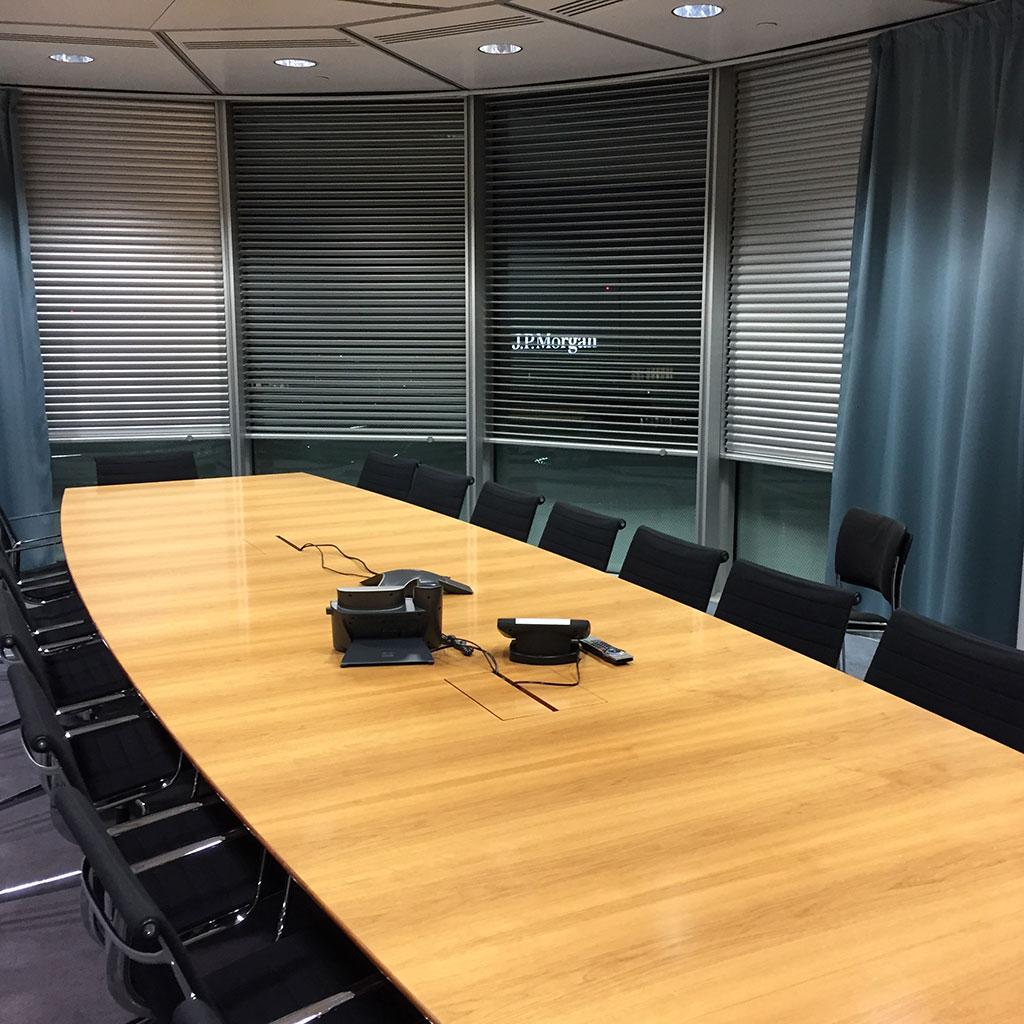
    It doesn’t take a lot to trigger somewhat uncontrollable hypomania in me – lack of sleep, general exhaustion, stress, anxiety, unusual circumstances, the company of people who I need to impress, a rare opportunity to make a contribution to something important… all these things contribute to my ability to shut the fuck up being severely compromised.

    On an incredibly regular basis, during an away-day with colleagues to discuss strategy for an important project, I told myself firmly that I had been speaking far too much, and that I must keep quiet. It’s not that I didn’t have anything useful, valuable and with merit to say. The problem was that I was by far the most heard voice in the room and my contribution was disproportionate. I wouldn’t say it was hard for others to get a word in edgewise, but my colleagues were far more hesitant and considered, and it’s probable that the more shy and retiring types failed to speak, when they might otherwise have had their say, if I hadn’t been present.

    In many ways, it was a terrible idea that I should have attended the away day. My profile in the organisation I’m currently working for is already sufficiently elevated, and I’m well respected. There was no need for me to put my head further above the parapit. Nobody likes a blabbermouth, especially in a large organisation where there might be some individuals whose original optimism, energy and gusto has been eroded over many years of long service, leaving them a little jaded and disengaged: it’s just a job, and they’ve long-since lost the drive and determination to change the world, which they had before joining the working world.

    I’m not sure what the extent of the disaster is, having confirmed in no uncertain terms to the most influential and important people on a major project – which I was hoping to be heavily involved in – that my presence is quite overbearing; I am far too outspoken.

    I hope that I’m rescued somewhat by the fact that, as a consultant, it’s my job to volunteer an expert opinion. Surely, if I sat quietly nibbling on biscuits and sipping sparkling water, not saying very much, then I wouldn’t be a very good consultant.

    Of course, my bipolar disorder presents major difficulties in the rather tame, mild-mannered and extremely slow-moving environment of a giant organisation. The speed with which I form thoughts and communicate well-articulated ideas, is somewhat of a steamroller. I’m well aware that nobody wanted to spend a day locked in a meeting room, listening to my hypomanic ranting.

    By good fortune, I spent the journey home with three colleagues who were subjected to my hypomania for the whole day, and the atmosphere was pleasant. On the final leg of the journey, I was alone with a colleague who I very much like and admire, and I imagine that there was time for him to perhaps say something, if my behaviour had been outrageously egregious, to the point that I had caused a major problem.

    Alas, I don’t really have any objective view on anything. I have colleagues who like and respect me, who might have a quiet word in my ear if I was in danger of overstepping the mark, but in the whole gigantic organisation where I currently work, I only have one friend, colleague and confidante, who I think would report back to me any words of warning, if I was being a royal pain in the ass, and widely disliked. I can’t be certain, but I hope that person would say something to me, if they heard my name was mud.

    On the basis of my own perceptions, I have embarrassed myself and my mask has slipped: surely my colleagues are in no doubt that I have a mental illness, which causes me to suffer periods of racing thoughts and pressured speech, where I cannot shut the fuck up and pipe down. I fear that I have used up all the goodwill and damaged a reputation which took a very great deal of time and effort to accumulate, in the space of a single hypomanic day.

    I note that my adored, respected and admired colleague, who I work more closely with than anybody else, has been somewhat irritable since that day, where perhaps I embarrassed them, seeing as it was them who invited me along as their guest.

    Who really knows? Who knows how well received a person with bipolar disorder really is in a big organisation? Us bipolar people are certainly revered and adored when there are tight deadlines and we are hyper-productive, but we are also surely hated when we are far too outspoken and full of manic energy, when others are just wanting to plod along, getting on with business as usual.

    For now, everything seems OK, but I have no idea how much I’ve damaged my reputation, and more importantly, my popularity and the perception that my colleagues had of me; previously as a competent and capable highly productive member of the team, but now perhaps simply as an unhinged madman and pain in the ass to work with.


    Tags:

  • Give a Job to a Busy Person

    This is a story about workload…

    Gas Meter

    The original idiom – which I have adapted to make it more inclusive – says that if you want a job doing, you should give it to a busy man. I notice that this is fairly true, from my anecdotal observations: the busier I am, the easier it is for me to deal with extra work being given to me.

    One year ago I had the intolerable task of sitting quietly trying not to get noticed, and trying to keep my mouth shut. I knew that the very best thing I could do for my career and my bank balance, was not to rock the boat; not to attempt to say or do anything useful. The best thing I could do was act as a very expensive seat warmer. I was paid for being present, not for being useful or productive.

    One year ago, seemingly minor things made me exceedingly anxious. If I had to get my car tested for roadworthiness, have a haircut, deal with the gas company, or any one of a million ordinary everyday tasks, I would find it unbelievably stressful, and I struggled to cope.

    I have started to work 100+ hours a week again. To say that I’m busy would be a massive understatement. I am hyper-productive for the maximum amount of hours which human physiology allows for, without sleep deprivation causing me to have a psychotic episode. Unable to sleep, it’s quite usual for me to open my laptop and start working in the middle of the night. I wake up well before my alarm clock. I am running in overdrive mode at the moment, also more commonly known as a manic episode.

    Of course, with mania, I get very impatient and irritable about things which are not on the critical path. For example, I was asked to update a spreadsheet which detailed the activities I’ve been doing during the past couple of weeks, and how long I spent on each activity. To me, this is the most ridiculous waste of my time, given that 100% of my time has been spent on productive activities for one single organisation, so I really don’t give a toss about how it’s sliced and diced – all my valuable time has gone to benefit the organisation who wants me to waste time on an unproductive exercise, which leaves me less time to do productive activities. It’s idiotic to get your highly paid staff to spend their time doing activities which are not valuable, when instead they could be doing something useful.

    The argument would be that timesheets and suchlike are the way that we calculate how much to pay people, but this is demonstrably absurd. If the number of hours worked had any kind of relationship with the value delivered, then I would agree that it’s important for us to record or time worked on task accurately, but there IS NO relationship between remuneration and hours worked. If I work the same number of hours as some of my colleagues, I am paid 5 or 6 times as much. Am I 5 or 6 times more productive and valuable? Sometimes I am less valuable, sometimes I am more valuable, and sometimes – although it’s exceptionally rare – my remuneration tallies with the value that I’m delivering.

    One of my colleagues said to me “you’ve got too much time on your hands” when he saw something I’d been doing, which he thought was a waste of time. Later, that piece of work I’d done turned out to be one of the most valuable things that anybody in the team ever produced – something that benefits every member of the team every single day, and perhaps many many other members of other teams, and indeed the whole organisation.

    Value and productivity are very hard to measure. “Bums on seats” culture is dreadful. The number of hours that staff spend at their place of work has no bearing on how productive and valuable they are.

    In the teams I get involved with, I try to instill a culture of “think it… do it”. I want people to implement any innovative ideas the moment they have them. If the ideas turn out to be duds, so what? It only takes one or two great ideas that really pay off, to more than outweigh the small amount of wasted time doing things which had little value. So much time is wasted talking about priorities, and the pros and cons of doing something, and agonising over whether it could or should be done. The culture I bring to teams and organisations is one where everybody’s encouraged to build stuff, even if it gets thrown away; even if it’s silly!

    It’s much better for people to be productive and have their brains being kept busy, than looking busy. It’s so much better for people’s sense of job satisfaction, sense of purpose, sense of pride, sense of ownership, and a multitude of other great qualities that we want from the people in our teams and organisations.

    There’s no obvious value in the text-based adventure game which I hid inside one of our systems, as an easter egg, but the value is in the cultural tone that it sets: it’s OK to build stuff; don’t be afraid; don’t be so serious… this is supposed to be fun and intellectually challenging.

    As it turned out, now we have several tools which imitate the game I built, which perform useful functions for the organisation. Instead of attempting to “win” a “game”, the objective is to find and fix problems, using the available clues, which is pretty much what every IT professional does for a day job, but it’s a lot better if there’s a half-decent interface to help with that task. Computer games are always brilliant at having the learning curve set to make them accessible, and they take advantage of the best available features: if all you have is a computer terminal that can print text and accept typed commands, then you can still create a brilliant game, even without fancy 3D graphics and sound.

    I’m busy as hell, and you might say that the 2 hours I spent writing an adventure game were wasted, but in fact it was time well spent. The 5 minutes I spent battling with a spreadsheet where I had to record the hours I spent working on things, was a total waste of time and quite corrosive to the great working culture I’m trying so hard to create.


    Tags:

  • Harsh

    This is a story about being horrible to people…

    Hand wash

    One of my bosses, from 18 years ago, has been a source of inspiration. He is – or at least he was when I knew him – one of the bluntest, rudest and most intimidating people you’d ever be likely to meet. I have never aspired to be rude, mean or to treat people badly, but I don’t suffer fools gladly and I get rather impatient and intolerant of the hard-of-thinking.

    It struck me that I had written quite a lot that could be misconstrued as harshly critical of my colleagues. I wanted to address that.

    Firstly, I do suffer from bouts of delusions of grandeur, as a result of my bipolar disorder. I can quite often, during episodes of mania, decide that I’m a virtuoso; a genius. There’s little to burst my bubble, in terms of evidence, in that I can easily point to multiple great achievements throughout my career, and I haven’t yet been defeated by a technology challenge. This means I’m good but not necessarily great. I have no idea what the distinction is, but my brain tells me that I’m great when I’m in one of those moods. In fact, my brain tells me I’m the best and in the absence of another person who makes me feel inferior, it’s hard to deflate my ego and get my rampaging delusions of grandeur under control. I’m sure that I’m not the smartest person in the room but without concrete evidence to the contrary, I can get carried away.

    It sounds like I’m making excuses; blaming my mental illness. Well, I do try to stay humble and keep some perspective. I do try to stop my head from swelling too much; stop my ego from getting out of control.

    Secondly, I’m under a lot of pressure. Work is not just a job to me – it’s an opportunity to prove that I’m not a no-good waste-of-space washed-up has-been useless junkie alcoholic homeless bankrupt mentally ill enemy of society. If I can prove beyond all reasonable doubt that I can make a substantial, exceptional contribution to a major project, then I will have a massive achievement to point to as proof that I have some worth, which will help my self-esteem enormously.

    Thirdly, I’m equally capable of being a “dull-eyed dim-witted brain-dead zoned-out zombie trudging along with the herd”. I’m equally capable of becoming demotivated and just turning up for the paycheque. I’m equally capable of doing a half-assed job. I’m totally capable of being very unproductive. I can spend forever procrastinating; not producing anything useful. When I make disparaging remarks, I’m not criticising individuals – I’m criticising the dreadful effect that working in a big organisation has on people, in terms of robbing them of any opportunity to learn, develop and get passionately involved in a project where they feel like they can make a difference.

    I do see incompetence, which annoys me, but the people who I am angry with are the highly paid consultants who claim to be experts, but are clearly a waste of money. It annoys me that I work with brilliant graduates and rubbish consultants, when the graduates are so underpaid, which is unfair. It annoys me that I have to waste my time cleaning up mess made by people who should be the best of the best. It annoys me that I have to do extra work, because of a highly paid consultant’s incompetence, when the organisation and the team really would be much better off without them.

    When my brain gets accelerated up to top speed, I can be incredibly productive, but I can also be incredibly mean. I start to believe that I can do everything myself and that everybody else is just an annoyance; a hinderance. That’s wrong. That’s a symptom of my illness. I do need my team. I do need other people. I am glad to have my colleagues… well, most of them anyway.

    I can say all sorts of stupid regrettable things when I’m suffering an episode of mania. I can be really mean and harsh when I’m in full swing. I really hope that nobody’s suffering too badly when they feel the sharp end of my tongue. I really hope none of my colleagues are reading this and thinking that I believe they’re useless idiots, because the truth is that I think almost all my colleagues (with the exception of one or two aforementioned overpaid consultants) are brilliant people who I’m really lucky to work with.

    I know that it doesn’t matter how much of a brilliant engineer you are, if you can’t get along with people then your skills are useless. People with amazing technology skills are plentiful, but the valuable ones are the people who place nice with others. I know I struggle at times, and I really hope I haven’t done too much damage and that my colleagues can forgive me.


    Tags:

  • I Will Work Harder

    This is a story about overwork…

    Pound notes

    It occurred to me that most working people use their monthly take-home income to work out affordability. Everything is paid for monthly by most of the wage-slave salarymen and women, across the country. Each month, there’s a rent or mortgage payment, a car payment, a loan payment, a mobile phone payment, a broadband internet payment and myriad other monthly payments. Everything is worked out based on whether those monthly payments are affordable, as opposed to thinking about the value of the thing in question.

    Instead of thinking “I can’t afford a £250,000 house because I only earn £25,000” people think that they earn £1,711 per month, and so that’s the maximum they can pay in monthly instalments. If the mortgage is £1,000, the car is £150, the loan is £100 and the other stuff is £250 per month, then that’s £1,500 total, leaving a balance of £250 disposable income every month. That’s how wage slaves do the maths. That’s how wage slaves calculate what’s affordable.

    I’m a bit weird.

    I own my car. I own my phone. I buy things. I don’t pay monthly.

    If I was to think about my monthly net income – after tax – and then live a lifestyle which was in accordance with that income, then I wouldn’t be driving a rusty 14-year-old bottom of the range old banger of a car. I wouldn’t be living in a rented house. I wouldn’t be worrying about the affordability of things, because my monthly net income is vastly more than my monthly net financial commitments.

    This is, of course, provided that I’m well enough to work.

    My health has proven unreliable. My mental health has been a huge obstacle to steady reliable dependable consistent work, day after boring monotonous terrible day. My ability to work cannot be taken for granted.

    So, I work as hard as I can, whenever I’m able to. I earn as much as I can, while I’m able to.

    I don’t make any financial commitments. I don’t take on any debt.

    This means that I enjoy none of the fruits of my labour.

    I have zero status symbols to remind me that I’m very good at my job, and I’m handsomely rewarded for my efforts.

    Perhaps one day I will buy a house and a shiny new car, but I always think “what if I get sick?”. I can’t stand the thought of having giant financial obligations, such as a mortgage and car repayments, if I’m too unwell to be able to work. My life has enough pressure and stress in it without the added headache of needing to earn a certain amount of cash every single month, lest my home and car get repossessed and my credit rating get destroyed.

    It’s pretty soul destroying, working really hard but feeling, weirdly, really poor. Everybody is zooming around in fancy flash new cars, paid for in monthly instalments, while I pootle along in my rusty banger. Everybody is doing home improvements to the houses that are owned by the banks and building societies, while I’m in a rented house with ugly curtains and in desperate need of being redecorated.

    I suppose I have nothing to complain about, because I’m making very rapid progress. If I’m lucky, then I will start to get on top of everything and my financial situation will improve with incredible speed. I need a load of luck, because my income looks like it’s going to come to a screeching halt at the end of the month, as things currently stand. The demands for my cash skyrocket if I have to leave where I live to go somewhere where there’s more jobs – I will be paying double rent, double bills, and I will have two deposits, all of which drains my limited funds.

    Because I want my life to be better, I will work as hard as I possibly can to get into a better situation. I’ll work from the moment I wake up until the moment I fall asleep, 7 days a week, if somebody is going to pay me decent money. It’s only because I think it would be detrimental in the medium-term and result in a net loss of earnings, that I don’t work every hour I possibly can. Somebody would query my timesheet and gigantic bill if I started working 100+ hours a week, although I could very much use the money.

    I had this situation in 2015, during the same time of year. I was authorised to work unlimited overtime, so I worked 7 days a week. I burnt out and became very mentally ill. Things did not end well.

    I’ve worked very hard to build a good reputation for myself, and I need to preserve that. I need to hang on to the gains I’ve made. I need to avoid losing my mind. A quick glance at my blog from 2015 tells me that I had a catastrophic breakdown around the middle of October 2015, so I will aim to get to Christmas without incident. I will aim to calm things down. I will aim to look after myself. I will aim to be sensible with how hard I work and how hard I push myself, and attempt to maintain some stability.

    I really need to take a holiday.

    When the clocks change, that’s a terrible time for me. The end of daylight saving is dreadful for me.

    It would be ideal if I could secure my contract so that I know I have a source of income, and I could take a holiday around the time that the clocks go back. That would be ideal. That would be perfect for my health. That’s what I need.

    I don’t think it’s going to be possible.

    I need to keep going.

    I need to keep working as hard as ever.

    I need to work EVEN HARDER because I have to get through this difficult period where my contract is ending. I need to get my contract extended or find a new contract. I need to find some work locally or else move to Bristol or London. I need to keep the money rolling in. I need to keep going.

    It’s been a very long, very hard road. I’m very tired.


    Tags: